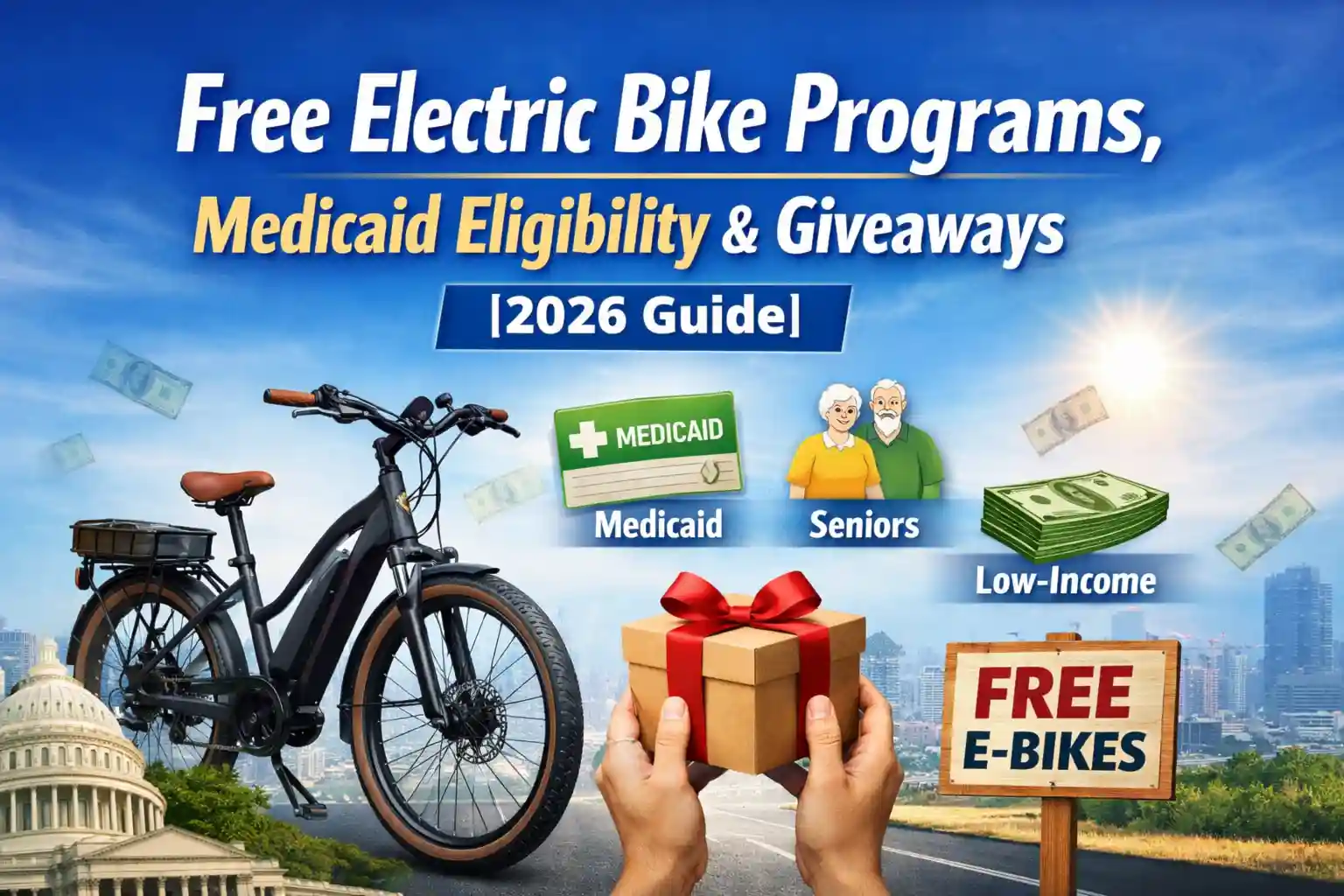
Free Electric Bike Programs, Medicaid Eligibility & Giveaways [2026 Guide]
Last Updated on July 30, 2026 by Kristina
Have you ever imagined cruising through the city on a free electric bike, feeling the breeze and enjoying the benefits of eco-friendly transportation? E-bikes are transforming the way we commute—combining pedal power with an electric motor for a smooth, effortless ride.
Whether you’re navigating busy streets or enjoying weekend adventures, the right bike can make all the difference. If comfort is high on your list, you might also want to explore our Most Comfortable City E-Bikes before deciding which model to go for. In this guide, we’ll focus on how to get a free electric bike—covering options for seniors, low-income riders, and even those wondering if Medicaid recipients can qualify—along with details on government programs, nonprofit initiatives, giveaways, and trade-in offers.
Free Electric Bikes
Free electric bikes are available through government rebates, nonprofit programs, employer incentives, and limited giveaways, but they are not guaranteed for everyone.
Medicaid does not offer a nationwide free e-bike program. However, some state and local programs use Medicaid eligibility, low-income status, senior status, or veteran status to qualify riders for free or heavily discounted e-bikes.
Most free e-bike programs work by:
- Offering rebates or vouchers that cover part or all of the cost
- Prioritizing low-income households, seniors, veterans, and essential workers
- Running limited-time programs with capped funding
Availability depends on your location, income level, and how quickly you apply.
📖 Read Next
1. Free E-Bike Government Programs & Rebates
If you’re searching for a free e-bike for seniors, a free e-bike for low-income riders, or wondering if people on Medicaid can get a free e-bike, government incentives may be your best starting point. Across the U.S., federal, state, and local programs are making electric bikes more accessible than ever—sometimes even at zero cost.
Federal E-Bike Incentives – The E-BIKE Act
At the federal level, the proposed E-BIKE Act (H.R.1019) aims to provide a 30% refundable tax credit on the purchase of a new electric bicycle, up to $1,500. While this bill is still under consideration, it reflects growing national interest in making e-bikes more affordable.
Key points about the E-BIKE Act:
- Applies to new e-bikes with motors under 750 watts.
- Available to individuals and their dependents.
- Intended to help more Americans choose sustainable, car-free transportation.
If passed, this could significantly lower your cost—or even cover most of it—depending on the model you choose.
(Tip: If comfort is just as important as cost, check out our guide to the Most Comfortable City E-Bikes to compare models before buying.)
State & City Free E-Bike Programs
Many states and cities already have free e-bike programs or rebate incentives in place, especially for seniors, low-income residents, and those on government assistance programs.
Here are a few examples:
- California – The California E-Bike Incentive Project offers up to $2,000 in vouchers for qualifying residents, with extra incentives for low-income households.
- Vermont – Statewide rebates of up to $800 are available for eligible residents.
- Denver, Colorado – The city’s popular program offers $1,100–$1,700 vouchers for income-qualified applicants, often making the e-bike completely free.
You can see a complete breakdown of every state’s current rebates and free bike programs in our State-by-State Electric Bike Rebates Guide.
Medicaid, Seniors & Low-Income Eligibility
A common question is: Can people on Medicaid get a free e-bike? Medicaid itself does not provide electric bikes, but some state and local transportation, health, or mobility programs use Medicaid eligibility as a way to identify low-income applicants.
While there’s no nationwide Medicaid e-bike program, some state-level health and wellness initiatives partner with transportation agencies or nonprofits to provide free or heavily discounted e-bikes for people on Medicaid, seniors, or those who meet low-income criteria.
Examples include:
- Community health programs offering free e-bikes to help patients access care.
- City sustainability grants that prioritize low-income applicants.
- Senior mobility projects providing free or subsidized e-bikes to improve independence.
If you fall into one of these categories, check both your state’s transportation department and your local Medicaid office for current offerings.
Pro Tip: If you do qualify for a rebate or free bike program, be ready to apply early—many of these programs have limited funding and fill up quickly.
DIY Build Your Own Electric Bike
Wanting an electric bike but can’t afford one? Consider building your own from the ground up.
Instead of relying on pricey pre-built models or conversion kits, you can create a fully custom eBike by sourcing individual components — motor, battery, frame, controller, and more — and assembling them yourself. It’s a challenging project, but it can dramatically cut costs and give you full control over performance and design.
Important: DIY e-bikes must still comply with local wattage, speed, and safety laws to remain legal on public roads and paths.
2. Free E-Bikes for Seniors & Veterans
There are targeted initiatives offering free e-bikes for seniors and free e-bikes for veterans. These are often run by nonprofit groups, veteran organizations, or city wellness programs.
Benefits include:
- Improving mobility and independence
- Providing exercise opportunities
- Reducing transportation costs
If you’re a senior or veteran, reach out to local veteran groups, aging councils, or bike advocacy organizations to see if they have current openings.
Free e-bike programs for seniors and veterans are growing in popularity, helping improve mobility and independence. Stay safe while riding with these E-Bike Safety Tips.
3. Nonprofit Organizations & Bike Cooperatives
Many free e-bike programs are community-driven. Local nonprofits and bike co-ops often refurbish donated e-bikes and give them to residents who can’t afford one.
These groups sometimes prioritize:
- Low-income families
- People with disabilities
- Students or workers with limited transportation
They may also include free classes on e-bike maintenance, riding safety, and theft prevention.
Some nonprofits also provide safety equipment—like helmets, reflective gear, and locks—alongside free bikes. If you’re getting a new e-bike, make sure you protect it with one of the Best E-Bike Locks for Theft Prevention.
4. Promotional Giveaways & E-Bike Contests
If you’re wondering how to get a free e-bike without qualifying for income-based programs, try entering a free e-bike giveaway.
Ways to find them:
- Follow e-bike brands and local bike shops on Instagram, Facebook, and TikTok.
- Search Google for “free e-bike giveaway 2026” or “electric bike contest.”
- Sign up for newsletters from e-bike review blogs.
Avoid Free E-Bike Scams
Legitimate free e-bike programs do not ask for sensitive personal or financial information.
Be cautious if a “free e-bike” offer:
- Asks for your Social Security number or bank details
- Requires you to pay shipping, processing, or “activation” fees
- Requests payment through gift cards, crypto, or wire transfers
- Comes from social media accounts with no official website
Always verify programs through city websites, nonprofit organizations, or well-known e-bike brands before applying.
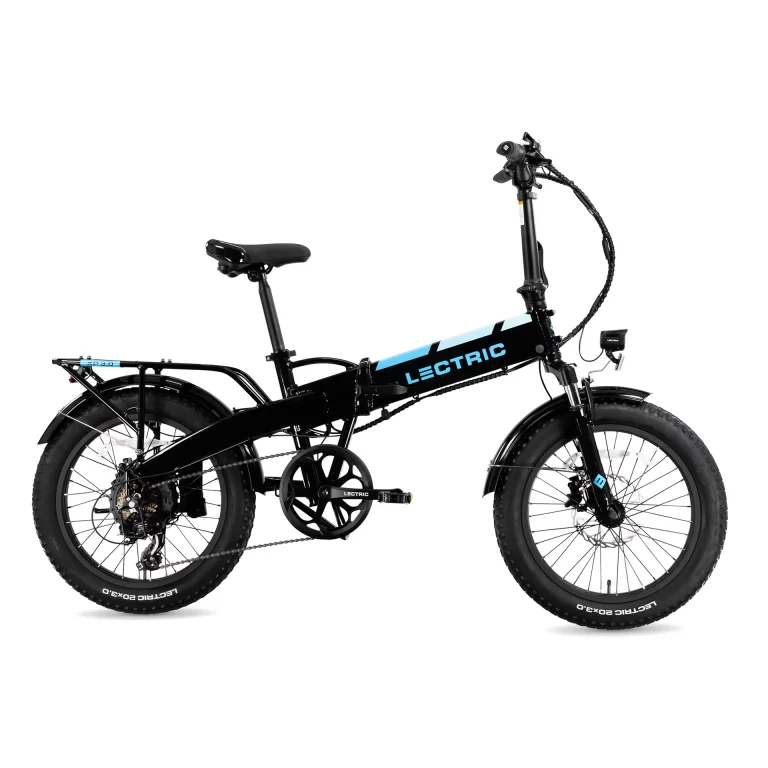
Popular brands like Rad Power, Aventon, and Lectric sometimes host contests and giveaways on social media. If you’re curious about Lectric’s best-selling model, check out our Lectric XP 4 Review.
5. Employer Incentives
Some companies offer employees free electric bikes or subsidies for commuting. These workplace wellness or green transportation programs may cover:
- A full e-bike purchase
- Safety gear like helmets and locks
- Maintenance vouchers
Ask your HR department about sustainable commuting benefits.
6. Trade-In and Buy-Back Programs
A few e-bike retailers run trade-in programs where you swap an old bicycle or scooter for a free or deeply discounted electric bike. Even if the old bike isn’t worth much, these programs can cut costs significantly.
Some trade-in programs even let you swap your current e-bike for a new one at a discount. If your battery is the only thing holding you back, here’s How to Change Your Electric Bike Battery without needing a mechanic.
7. Local & Regional Programs in Canada and the U.S.
If you’re in Canada, look for:
- Free e-bike for Canadians programs funded by municipalities
- Provincial rebates that cover up to 100% of the cost for eligible groups
U.S. readers should check local announcements—sometimes even small towns run free bikes from government pilot programs.
FAQs
A: Not directly through Medicaid, but some local programs use Medicaid eligibility as a qualifier for low-income e-bike programs.
A: Yes. Many nonprofits and city initiatives offer free e-bikes for seniors to improve mobility and independence.
A: Follow e-bike brands on social media, sign up for cycling newsletters, and watch for seasonal contests.
A: Yes—some Canadian cities and provinces offer free or heavily discounted e-bikes to residents through rebate or lending programs.
A: Being low-income, a senior, a veteran, or living in a high-pollution area often increases eligibility.
Before applying for a free or discounted e-bike, it helps to understand which models are reliable, legal, and easy to maintain. If you’re unsure what to look for, start with my E-Bike Buying Guide, which explains bike types, motor limits, battery sizes, and what features matter most for beginners
Conclusion
In 2026, getting a free electric bike isn’t just a dream—it’s possible through government incentives, nonprofit programs, giveaways, and workplace perks. Whether you’re on Medicaid, a senior, a veteran, or simply an eco-conscious commuter, there’s likely an option near you.
Take the next step:
- Check your state or city’s transportation website for rebates.
- Contact local nonprofits about free bike programs.
- Enter a few e-bike giveaways this month—you might just win.
And if you do get a free e-bike, be sure to learn your local e-bike laws, understand how to maintain it properly, and ride safely so you can get the most out of your new ride.
Stay Updated on Free Programs & Giveaways
Many e-bike rebate programs, pilot projects, and nonprofit giveaways open and close quickly.
👉 Sign up for free updates on new e-bike programs, rebates, and giveaways
🚲 Explore Low-Cost & Refurbished Options
Some riders find success through:
- Refurbished or used e-bikes
- Local bike co-ops and nonprofit bike shops
- Entry-level e-bikes designed for commuting and daily errands
👉 See affordable electric bike options for everyday transportation
📍 Learn the Rules Before You Ride
Free or assisted e-bikes still follow local regulations.
Please Protect Your Personal Information
Do not post your home address, phone number, Medicaid number, Social Security number, email address, or other private information in the comments.
Comments submitted to this website may be visible to the public. Any comment containing personal or sensitive information may be edited or withheld from publication to protect your privacy.
Electric Bike Explorer does not distribute free e-bikes, approve Medicaid benefits, accept applications, or collect personal information for assistance programs. Please contact the program or organization listed in the article directly for application details.

Kristina is not just an enthusiast but a true authority on electric bikes. Nestled in the coastal beauty of Virginia, Kristina has found the perfect backdrop for her passion for electric biking. As a dedicated wife and homeschooling mom, her life revolves around family, faith, and the thrill of adventure.
Originally hailing from Ohio, Kristina's journey with electric bikes began as a curiosity and quickly evolved into a deep expertise. Her blog is a testament to her love for electric biking, combining her fascination for eco-friendly transportation with her coastal lifestyle.
When she's not cruising the beach on her electric bike, you'll find Kristina indulging in her other loves: long walks along the shore, getting lost in a good book, and cherishing moments with her loved ones. With a heart as big as her love for animals, especially cats, Kristina brings a unique perspective to the electric bike world, grounded in her strong faith in God and her dedication to a sustainable lifestyle.
Through her blog, Kristina shares her extensive knowledge of electric bikes, offering valuable insights, tips, and recommendations to fellow enthusiasts. Whether you're a seasoned rider or a newcomer to the electric bike scene, Kristina's blog is your go-to source for all things electric biking, fueled by her passion, expertise, and the scenic beauty of coastal Virginia.




To whom it may concern:
I’m truly grateful if you could help me.
I am on ssdi and can not afford a car.
I only received $700 a month, and a ebike would surely help me get around to my doctor appointments, and going the store.
Sincerely:
Hello Robert,
I can understand you wanting to buy an ebike. Ebikes are a great affordable alternative to cars. Depending on where you are located, your local area might offer rebates to buy an ebike. Some areas also are providing grants for low income individuals to purchase an ebike. I would suggest you get in contact with your local Social Services dept in your area and inquire of grants or rebates for ebikes.
I’m poor I need a E Bike I’m also 50 can someone please help me?
Hello Kenneth,
Depending on where you live, you might qualify for a grant. You should contact your local Social Services dept for any information regarding grants or rebates for electric bikes for low income individuals
Hi my name is Albert Estrella,I was wondering if you guys would be willing to donate an e bike, for a us soldier coming home from military,her name is Agana Williams a nurse in the US army shes been gone for 4 years and I think it would be a great way to help with PTSD, God bless and i hope you all can help me
Hello Albert,
I can understand you wanting to give an ebike to your friend upon returning from serving in the military. What an amazing gesture! I would advise you to look into your area to see if your area qualifies for grants or rebates for purchasing an electric bike. Your local social services department might have some relevant information or be able to help you find some. A couple other options you can look into are: convert an existing bike into an electric one by using an electric conversion kit, or to search for a used electric bike.
I would love to have a ebike for work
I would love ebike
I’d be really grateful if it was possible if I could get an e-bike I’m on ssi and it would be easier to get to and from appointments
That’s completely understandable – getting to appointments can be really hard without reliable transportation, and an e-bike could definitely help with that.
I’m not able to provide one directly, but there are a few options that may be worth looking into:
1. Local nonprofits and community programs
Some organizations help with transportation needs, especially for medical access.
Community action agencies
Disability support groups
Local churches or outreach programs
They sometimes offer assistance or can point you to resources in your area.
2. State or local transportation programs
If you’re receiving SSI, you may qualify for non-emergency medical transportation (NEMT) through Medicaid (if you’re enrolled). This usually provides rides to appointments rather than an e-bike, but it can still help in the short term.
3. Vocational Rehabilitation (state program)
Each state has a Vocational Rehabilitation (VR) program that helps people with disabilities access work or maintain independence. In some cases, they can help with transportation solutions if there’s a clear need.
4. E-bike rebates or local programs (location-dependent)
Some states and cities offer e-bike rebates or pilot programs, but these aren’t available everywhere and often have limited funding. It’s worth checking if your state has one.
5. Lower-cost options locally
If buying is the route you want to go, you might find more affordable options through:
Facebook Marketplace or Craigslist
Local bike shops (some sell used or refurbished bikes)
Bike co-ops or community repair shops
If you’d like, feel free to share your state and I can check if there are any specific programs available where you are.
I really want one
I’m a veteran and I’m on Social Security and disability. I could definitely use an E bike thank you.
Thank you for your service. I’m sorry to hear things have been difficult. While there isn’t one nationwide free e-bike program guaranteed for everyone, there are some programs, nonprofits, local grants, and community giveaways that may be worth checking depending on where you live. Veterans, seniors, and people on disability can sometimes qualify for mobility or transportation assistance programs as well.
If you’d like to share your city and state, I’d be happy to help point you toward options in your area. I truly hope you’re able to find something that helps.
I want an e bike because I get bored in my home
I’m sorry you’re feeling bored and isolated at home. An e-bike can be a great way to get outside, exercise, and explore your community.
Electric Bike Explorer does not provide free e-bikes or accept applications, but this article lists programs, giveaways, and other resources that may help. Availability depends on where you live, so I recommend checking the local programs and organizations mentioned in the guide.