
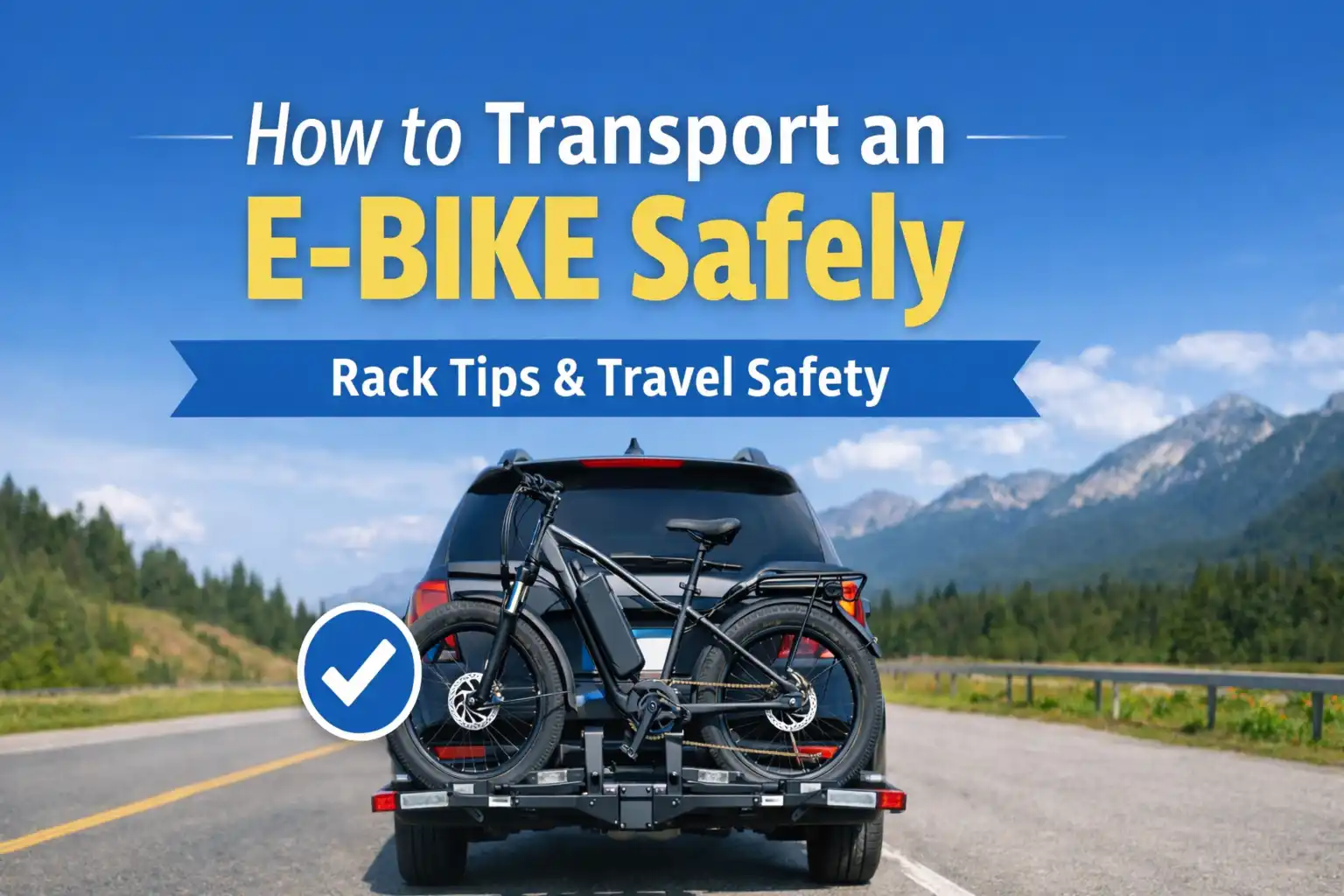
How to Transport an E-Bike Safely – E-Bike Rack Safety & Transport Tips
Last Updated on March 16, 2026 by Kristina
When it comes to transporting an e-bike, safety is crucial. Electric bikes are heavier and bulkier than traditional bicycles, and they require extra care to ensure they are securely loaded onto a car rack without causing damage.
Most electric bikes weigh between 50 and 80 pounds, which means using the wrong rack or loading method can lead to instability during transport.
In this guide, you’ll learn:
- the safest ways to transport an e-bike
- how to choose the right e-bike rack
- tips to prevent swaying and scratches
- how to protect your e-bike during long trips
Whether you are planning a short ride or a longer road trip, these e-bike rack safety tips will help you transport your electric bike safely and efficiently.
If you are still learning about different types of electric bikes, see our
➡ E-Bike Buying Guide
E-Bike Rack Safety Guide: Choosing the Right Rack
Before transporting an e-bike, it’s important to choose the right car rack that suits the size and weight of your electric bike.
E-bike racks are specifically designed to handle the additional weight of an electric bike, so investing in a rack designed for heavier bikes is important.
According to guidance from the PeopleForBikes, racks designed for electric bikes provide better stability and support for heavier frames and batteries.
What Are the Safest Car Racks for E-Bikes?
The safest car racks for electric bikes are those designed with heavy-duty construction and stable mounting systems.
| Rack Type | Pros | Cons |
|---|---|---|
| Platform Racks | Best for heavy bikes, easy loading, secure wheel placement | More expensive, takes more storage space |
| Hitch Racks | Very stable and secure | Requires hitch receiver |
| Trunk Racks | Budget-friendly and compact | Less stable for heavy e-bikes |
For most riders, platform-style hitch racks provide the safest and easiest loading experience.
E-Bike Rack Installation Safety
Proper installation is essential for safe transport.
Always follow the manufacturer’s instructions and make sure:
- the rack is firmly attached
- straps are secure
- weight limits are not exceeded
The National Highway Traffic Safety Administration recommends properly securing cargo to prevent road hazards.
You should also periodically inspect your rack for loose bolts or worn straps.
How to Load an E-Bike onto a Car Rack
Loading an e-bike onto a rack requires a little extra attention because of the bike’s weight.
Remove the Battery
Removing the battery reduces the overall weight and protects it from vibration damage.
Most e-bike batteries weigh 5 to 10 pounds, which makes the bike easier to lift.
Position the Bike Correctly
When using a platform rack, make sure the bike sits flat and centered.
Avoid placing the bike at an angle.
Secure the Bike
Use wheel straps or tie-downs to hold the bike firmly in place.
Double Check Everything
Before driving, confirm that the bike is fully secure and cannot move.
🎬 Watch: How to Load and Secure an E-Bike on a Rack
This video demonstrates how to properly secure an e-bike to a rack.
Interactive Tool: E-Bike Rack Weight Compatibility Calculator
Use this quick tool to check whether your rack can safely support your electric bike.
E-Bike Rack Compatibility Calculator
Do You Need a Ramp Rack for Your E-Bike?
Many riders underestimate how difficult it can be to lift a heavy e-bike onto a rack.
Use this tool to see whether a loading ramp rack may be helpful.
E-Bike Ramp Rack Helper
Recommended Ramp Rack for Heavy E-Bikes
If your electric bike weighs over 70 pounds, lifting it onto a rack can be difficult.
A rack with a loading ramp allows you to roll the bike onto the rack instead of lifting it.
➡ 200 lb Capacity Tire Clamp E-Bike Rack with Ramp
This rack is designed for riders transporting fat tire bikes, cargo e-bikes, and heavy commuter models.
Key Features
• 200 lb total capacity
• integrated loading ramp
• tri-lock stability system
• tire clamp system with no frame contact
• supports fat tires up to 5 inches wide
• foldable design for trunk access
Ramp racks are especially helpful for fat tire e-bikes and cargo e-bikes.
Top Mistakes When Transporting an E-Bike
Avoid these common mistakes.
Using a Rack Not Designed for E-Bikes
Standard racks often cannot handle heavy electric bikes.
Leaving the Battery Installed
Extra weight increases vibration and stress on the rack.
Not Securing the Wheels
Loose wheels allow the bike to bounce during travel.
Overtightening Frame Clamps
Too much pressure can damage aluminum frames.
How to Prevent an E-Bike from Swaying on a Car Rack
Preventing sway helps keep the bike stable.
Tips include:
- using multiple tie-down straps
- using wheel stabilizers
- tightening straps evenly
Many e-bike racks include built-in anti-sway systems.
Tips for Removing an E-Bike Battery When Transporting
Removing the battery is one of the best transport precautions.
Remove the Battery Before Loading
This reduces rack load.
Store the Battery Safely
Store it in a cool, dry location.
Avoid Extreme Temperatures
Lithium-ion batteries should not be exposed to excessive heat.
Guidance from the U.S. Consumer Product Safety Commission recommends safe handling of lithium batteries.
How to Avoid Scratches When Transporting an E-Bike on a Car Rack
Scratches are one of the most common concerns when transporting an electric bike. Because e-bikes often have larger frames, integrated batteries, and wider tires, they can rub against racks or other bikes during transport.
Taking a few precautions can help protect your bike’s frame and finish.
Use Padded Straps
Many racks use straps to hold the bike in place. Wrapping straps with soft padding or protective sleeves prevents direct contact with the frame and reduces the chance of scratches.
Protect Vulnerable Areas
Areas like the frame tubes, handlebars, and fork are more likely to contact the rack or another bike. Using foam tubes, microfiber cloths, or protective covers can add an extra layer of protection.
Double Check Bike Placement
If you are transporting more than one bike, make sure they are positioned so they do not rub against each other during travel. Slight adjustments in positioning can prevent paint damage.
How to Protect Your E-Bike from Wind Damage During Transport
When an e-bike is mounted on a car rack, it is exposed to strong wind pressure and road debris, especially at highway speeds. Over time, this wind exposure can affect sensitive components like displays, wiring, and accessories.
Taking a few precautions can help protect your electric bike while it is being transported.
Use a Protective Cover
A lightweight bike cover can help shield the frame, motor area, and electronics from wind, rain, and road debris. Look for covers designed for transport that secure tightly so they do not flap in the wind while driving.
Secure Loose Accessories
Accessories such as phone mounts, mirrors, bags, or lights should either be removed or tightened before transport. Strong wind can loosen these items or cause them to break.
Position the Bike Facing Forward
If possible, position the bike so the front wheel faces forward. This helps reduce wind resistance and keeps pressure distributed more evenly across the bike.
Check the Bike During Long Trips
During long drives, stop occasionally to check the rack and make sure nothing has loosened due to wind pressure or vibration.
Taking a few minutes to protect your e-bike before transport can help prevent damage and ensure the bike arrives ready to ride.
Recommended E-Bike Racks
| Rack | Weight Capacity | Tire Width |
|---|---|---|
| Thule EasyFold XT | 65 lbs | up to 3 in |
| Hollywood Racks Sport Rider | 80 lbs | up to 5 in |
| Yakima OnRamp | 66 lbs | up to 5 in |
| Kuat NV 2.0 | 60 lbs | up to 5 in |
Related Content
➡ Best Bike Racks for E-Bikes
➡ Aventon Bike Racks Review
➡ How to Change Your Electric Bike Battery
➡ Fat Tire E-Bikes Explained
➡ Understanding E-Bike Battery Capacity
FAQs
Most standard bike racks are designed for lightweight bicycles and may not support the weight of electric bikes. It is generally safer to use a rack designed specifically for e-bikes.
Yes. Removing the battery reduces the overall weight and protects the battery from vibration damage during transport.
Platform-style hitch racks are usually considered the safest option because they support the bike from the wheels and provide better stability.
Some racks cannot support wide tires. Fat tire e-bikes often require racks designed to support 4 to 5 inch tires.
Most electric bikes weigh between 50 and 80 pounds, while cargo and fat tire models may weigh even more.
Using wheel straps, stabilizers, and properly tightening frame clamps can help prevent movement during transport.
E-Bike Transport Precautions: Quick Safety Checklist
Before hitting the road, take a moment to run through this quick safety checklist. A few simple steps can prevent damage to your bike and help ensure safe transport.
Check Rack Weight Limits
Make sure your bike rack is rated to handle the weight of your electric bike. Many standard racks are designed for lightweight bicycles and may not support heavier e-bikes.
Secure the Bike Firmly
Confirm that wheel straps, frame clamps, and tie-downs are tight. The bike should not shift or move once it is mounted on the rack.
Remove the Battery When Possible
Removing the battery reduces the overall weight of the bike and helps protect it from vibration during transport.
Stop Occasionally to Inspect the Rack
If you are driving long distances, stop periodically to check that the rack and straps remain secure.
Conclusion
Transporting an e-bike safely requires the right equipment and careful preparation.
By choosing a rack designed for electric bikes, securing the bike properly, and removing the battery when possible, you can travel with confidence knowing your e-bike is protected.
Following these e-bike rack safety tips will help ensure a safe and stress-free journey.

Kristina is not just an enthusiast but a true authority on electric bikes. Nestled in the coastal beauty of Virginia, Kristina has found the perfect backdrop for her passion for electric biking. As a dedicated wife and homeschooling mom, her life revolves around family, faith, and the thrill of adventure.
Originally hailing from Ohio, Kristina's journey with electric bikes began as a curiosity and quickly evolved into a deep expertise. Her blog is a testament to her love for electric biking, combining her fascination for eco-friendly transportation with her coastal lifestyle.
When she's not cruising the beach on her electric bike, you'll find Kristina indulging in her other loves: long walks along the shore, getting lost in a good book, and cherishing moments with her loved ones. With a heart as big as her love for animals, especially cats, Kristina brings a unique perspective to the electric bike world, grounded in her strong faith in God and her dedication to a sustainable lifestyle.
Through her blog, Kristina shares her extensive knowledge of electric bikes, offering valuable insights, tips, and recommendations to fellow enthusiasts. Whether you're a seasoned rider or a newcomer to the electric bike scene, Kristina's blog is your go-to source for all things electric biking, fueled by her passion, expertise, and the scenic beauty of coastal Virginia.
