Could Nevada Require Permits for E-Bike Riders? Officials Exploring Safety Options
Last Updated on March 16, 2026 by Kristina
Electric bikes continue to grow in popularity across the United States, but with that growth has also come increasing debate about safety and regulation.
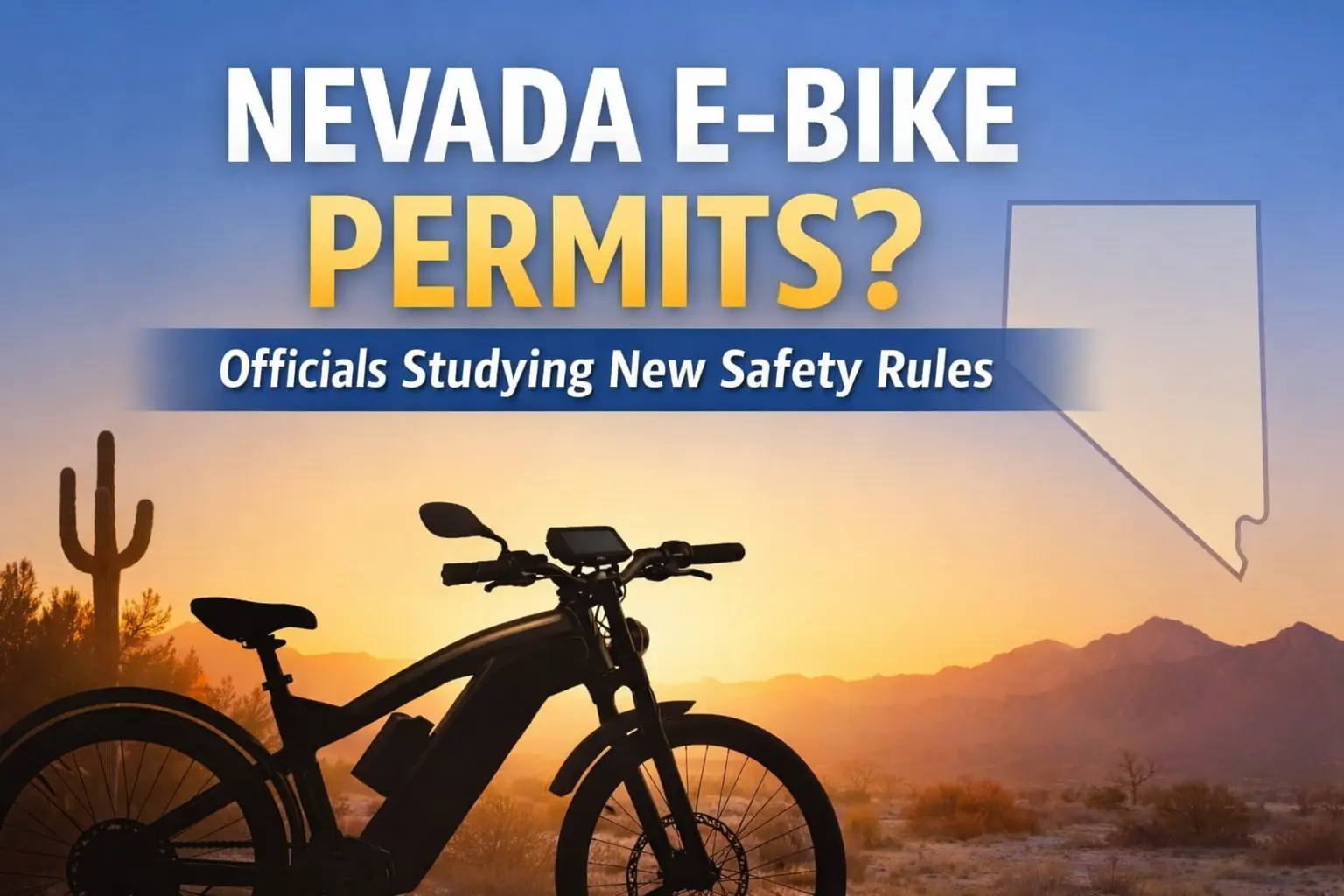
In Nevada, officials are now studying whether additional education requirements or permit systems could help address safety concerns involving e-bikes and other micromobility devices.
A recent report from Las Vegas highlights how policymakers are examining the issue as communities try to balance safety with the benefits of electric mobility.
If you want to see how regulations vary nationwide, you can also review our full ➡ state-by-state e-bike law guide, which tracks current rules across the United States.
Quick Answer
Nevada currently does not require a license or permit to ride most electric bikes.
However, state officials are studying whether education programs, safety certifications, or permit systems could help address rising safety concerns involving e-bikes and electric scooters.
At this stage, no permit requirement has been proposed as law, and the discussion is part of a broader study examining micromobility safety.
Nevada’s Current E-Bike Laws
Nevada currently follows the standard three-class e-bike system, which categorizes electric bikes based on speed and how the motor assists the rider.
Under Nevada law, most electric bikes are treated similarly to traditional bicycles, meaning riders typically do not need a driver’s license, registration, or insurance.
The three classes include:
Class 1 – Pedal assist only, up to 20 mph
Class 2 – Throttle-assisted bikes, up to 20 mph
Class 3 – Pedal assist up to 28 mph
Electric bikes that exceed these speed limits or power limits may be classified differently and could fall under moped or motorcycle regulations.
You can compare these rules with other states in our guides to ➡ Virginia e-bike laws, ➡ California e-bike laws, and ➡ Florida e-bike laws, which explain how regulations vary across the country.
Safety Concerns Driving the Debate
The discussion around potential permits is largely being driven by safety concerns, particularly involving young riders and fast-moving micromobility devices.
Officials in Clark County reported that 303 students were hit by vehicles while traveling to or from school, with about 46% of those incidents involving e-bikes or e-scooters.
Community complaints have also included:
- riders traveling at high speeds on sidewalks
- young riders using powerful throttle-equipped bikes
- dangerous riding behavior in parks or near schools
- confusion about what qualifies as a legal e-bike
As e-bikes become more common in urban areas, cities and states are increasingly examining whether existing rules are enough to address these concerns.
Why Cities Across the U.S. Are Debating E-Bike Regulations
Nevada is not alone in reviewing its e-bike laws.
Across the United States, cities are trying to figure out how to regulate rapidly growing micromobility devices, including e-bikes and electric scooters.
Some of the key issues driving these discussions include:
- higher-speed electric bikes being used on sidewalks
- powerful electric dirt bikes marketed as e-bikes
- inexperienced riders traveling faster than traditional bicycles
- uncertainty about where different classes of e-bikes are allowed
Industry organizations such as PeopleForBikes support the three-class system because it helps states create consistent rules while keeping e-bikes accessible.
If you’re unsure where e-bikes are legally allowed to ride, see our guide to ➡ where e-bikes are allowed to ride (bike lanes, sidewalks, and trails).
Could Permits Be the Solution?
Some officials believe requiring a permit or safety certification could help improve rider education and accountability.
Supporters argue that a permit system could:
- ensure riders understand traffic and safety rules
- reduce reckless riding behavior
- improve accountability for violations
However, critics worry that additional requirements could create barriers for people who rely on e-bikes as affordable transportation.
Electric bikes are increasingly used for commuting, errands, and replacing short car trips, so some advocates believe strict regulations could slow adoption.
Regulation Already Expanding Locally
Some Nevada communities have already begun tightening rules around micromobility devices.
For example, the city of Henderson recently updated its regulations to address safety concerns and clarify rules for e-bikes and scooters. Local changes include helmet requirements for riders under 18 and restrictions on dangerous riding behavior.
Nevada does not currently have a statewide helmet law for most adult e-bike riders, although local cities may adopt their own safety requirements.
Local rulemaking is becoming common across the country as cities try to address safety concerns without implementing statewide licensing requirements.
What Nevada E-Bike Riders Should Know Right Now
Although permit requirements are only being discussed, riders should still follow existing safety rules and local regulations.
Important reminders for riders include:
- follow speed limits on bike paths and shared trails
- avoid riding high-powered electric motorcycles where bicycles are allowed
- consider wearing a helmet when riding at higher speeds
- check local city rules that may apply in certain areas
Understanding local laws helps riders avoid fines and reduces the likelihood of stricter regulations in the future.
You can also compare regulations in other states using our guides to ➡ Texas e-bike laws, ➡ New York e-bike laws, and the full ➡ state-by-state e-bike law tracker.
E-Bike Safety Reminder
Electric bikes can travel significantly faster than traditional bicycles, especially Class 3 models.
To keep riders and pedestrians safe:
- slow down in crowded areas
- yield to pedestrians on shared paths
- ride predictably and follow local trail rules
- make sure your bike meets legal e-bike definitions
Responsible riding helps keep bike lanes and shared paths open to e-bikes.
My Take
From what I’ve seen covering e-bikes for years, conversations about permits often happen when a small number of reckless riders create problems that affect everyone else.
Most people using electric bikes are commuters, recreational riders, or individuals replacing short car trips. They’re not the ones riding dangerously through crowded sidewalks or parks.
In many cases, the real issue isn’t traditional electric bikes at all. Instead, it’s high-powered electric motorcycles being marketed as “e-bikes.” These machines can travel far faster than the legal 20–28 mph limits but are still sometimes used on bike paths or sidewalks.
Before states start requiring permits, a better first step may be:
- clearer enforcement of existing e-bike definitions
- cracking down on illegal high-speed electric motorcycles
- improving rider education about safe speeds and trail etiquette
Electric bikes are one of the most promising transportation technologies we’ve seen in years. They help people commute, reduce car trips, and make cycling accessible to more riders.
The goal should be safer streets without creating unnecessary barriers for responsible riders.
For more news on electric bikes click here

Kristina is not just an enthusiast but a true authority on electric bikes. Nestled in the coastal beauty of Virginia, Kristina has found the perfect backdrop for her passion for electric biking. As a dedicated wife and homeschooling mom, her life revolves around family, faith, and the thrill of adventure.
Originally hailing from Ohio, Kristina's journey with electric bikes began as a curiosity and quickly evolved into a deep expertise. Her blog is a testament to her love for electric biking, combining her fascination for eco-friendly transportation with her coastal lifestyle.
When she's not cruising the beach on her electric bike, you'll find Kristina indulging in her other loves: long walks along the shore, getting lost in a good book, and cherishing moments with her loved ones. With a heart as big as her love for animals, especially cats, Kristina brings a unique perspective to the electric bike world, grounded in her strong faith in God and her dedication to a sustainable lifestyle.
Through her blog, Kristina shares her extensive knowledge of electric bikes, offering valuable insights, tips, and recommendations to fellow enthusiasts. Whether you're a seasoned rider or a newcomer to the electric bike scene, Kristina's blog is your go-to source for all things electric biking, fueled by her passion, expertise, and the scenic beauty of coastal Virginia.