Fly-10 “E-Bike” Recall: Why Regulators Say It Isn’t Actually Legal
Last Updated on February 12, 2026 by Kristina
A growing safety and legal issue is coming into focus across the U.S. electric bike market: some vehicles sold as “e-bikes” may not legally qualify as e-bikes at all.
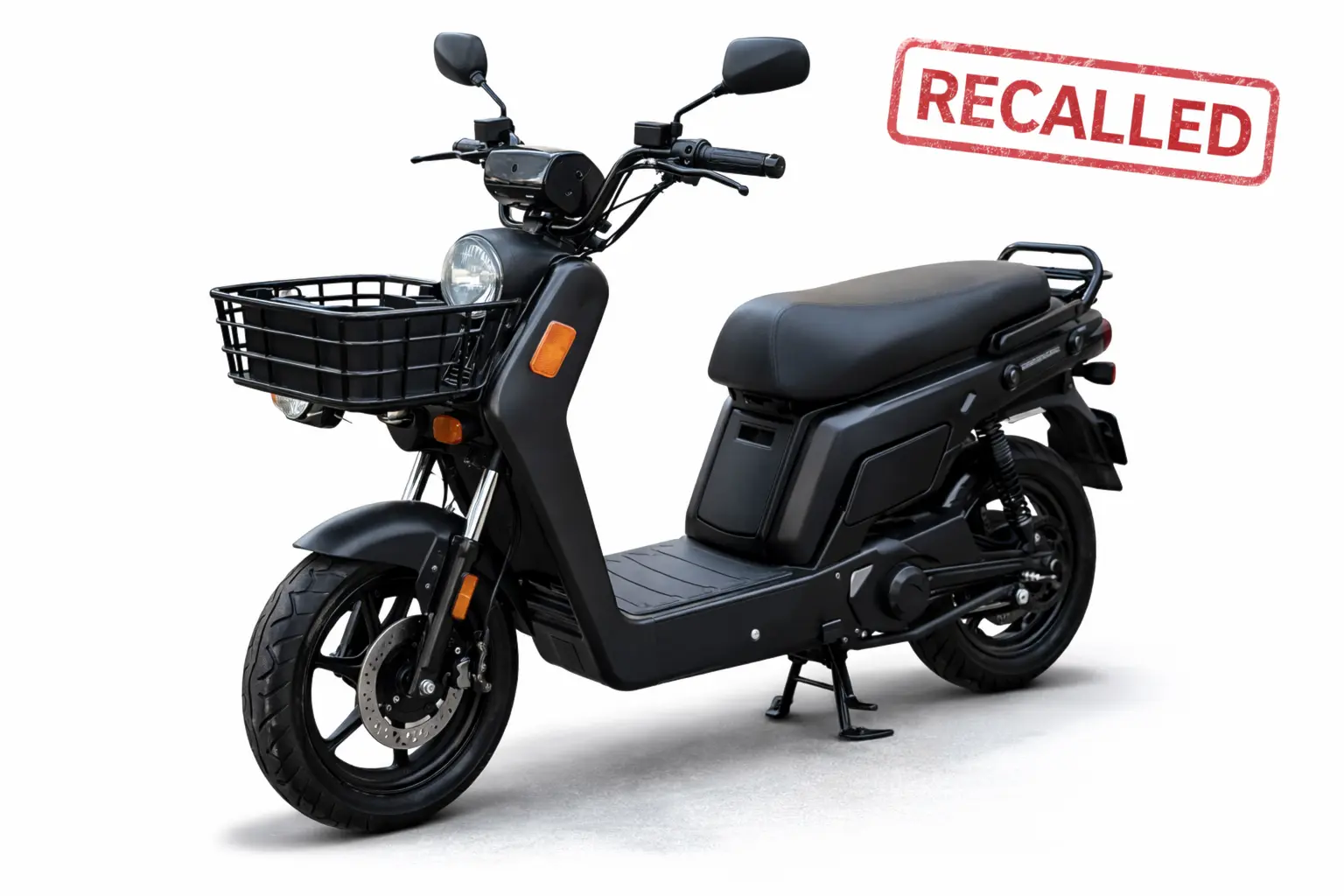
Federal regulators have ordered a recall involving one of the most widely used delivery-style electric two-wheelers in U.S. cities – the Fly-10 – after determining its braking system does not meet federal safety standards required for motor vehicles.
The case highlights a larger and increasingly important issue: the blurred line between true e-bikes and higher-powered electric mopeds.
Which Model Was Recalled
The recall specifically involves the:
Fly E-Bike Fly-10
(including FWMOTO-branded versions)
This moped-style electric vehicle has been widely marketed and sold as an e-bike, particularly to delivery riders in urban areas.
How Many Units Are Affected
According to federal recall filings:
- About 1,835 units are affected
- Includes:
- 2022–2024 Fly-10 models
- 2024 FWMOTO Fly-10 versions
These vehicles were manufactured between July 2022 and October 2024.
The Official Reason for the Recall
The recall was issued because the vehicle’s brake pads do not meet Federal Motor Vehicle Safety Standard (FMVSS) No. 122, which applies to motorcycles and motor-driven cycles.
Regulators determined the braking system does not provide sufficient stopping performance, increasing crash risk.
This safety defect is the official basis for the recall.
Why It Is Not Considered a Legal E-Bike
Although the Fly-10 was marketed as an e-bike, regulators concluded it legally qualifies as a motor vehicle rather than a bicycle.
Key factors include:
- A high-power motor reported around 2,000 watts, far exceeding the 750-watt federal e-bike limit
- A throttle-dominant design
- A moped-style frame and performance characteristics
Because of this classification, the vehicle must comply with motorcycle safety standards – which its braking system failed to meet.
Why This Matters for Riders
For consumers, the distinction between an e-bike and a motor vehicle can have significant real-world consequences.
Where you can ride
True e-bikes are typically allowed in bike lanes and shared paths. Motor-vehicle-class bikes may not be.
Licensing requirements
Vehicles classified as motor vehicles may require:
- Registration
- Insurance
- A driver’s license
Safety expectations
Higher-powered electric vehicles pose different risks than traditional pedal-assist e-bikes designed for bicycle infrastructure.
How to Tell if Your E-Bike Is Legal in the U.S.
Most legal e-bikes will meet these criteria:
- Motor rated at 750 watts or less
- Fully operable pedals that propel the bike
- Top assisted speed:
- 20 mph (Class 1 or 2)
- 28 mph pedal-assist (Class 3)
- A visible Class label on the frame
Vehicles exceeding these limits may legally be classified as mopeds or motorcycles instead.
What Happens to Owners Now
Owners of recalled Fly-10 vehicles will be offered:
- Free brake pad replacement
- Repair service at authorized dealers
- In some cases, repurchase options
Recall notifications are expected to be mailed during 2026.
Why Regulators Are Paying Closer Attention
The Fly-10 recall reflects a broader trend.
Authorities have become increasingly concerned about:
- Growth of high-power throttle-dominant vehicles
- Rising urban safety risks
- Consumer confusion about e-bike classifications
As a result, regulators are placing greater emphasis on enforcing clear distinctions between bicycles and motor vehicles.
What This Could Mean for Future E-Bike Rules
Industry experts expect the case to lead to:
- Stronger labeling requirements
- Clearer national classification standards
- Increased enforcement of power and speed limits
- More scrutiny of throttle-heavy designs
In short, the line between e-bikes and electric mopeds is likely to become more strictly defined.
FAQ: Illegal E-Bikes and Recalls
Is the Fly-10 still legal to ride?
It depends on local laws. Because it is classified as a motor vehicle, it may require registration and licensing.
Are throttle bikes illegal?
No. Many Class 2 throttle-assist e-bikes are fully legal if they meet federal power and speed limits.
Will more recalls happen?
Possibly. Regulators are increasingly reviewing high-power electric two-wheelers that fall outside e-bike definitions.
My Take: This Is a Turning Point for the E-Bike Market
This recall represents a major moment for the electric bike industry.
For years, the market expanded quickly with relatively light oversight. Manufacturers responded to consumer demand for more power and speed, often pushing the boundaries of what qualifies as an e-bike.
Now regulators are drawing clearer lines.
The biggest risk is not just safety defects – it is consumer confusion.
Many riders genuinely believe they are purchasing a legal e-bike when they are actually buying something closer to a motor vehicle. That misunderstanding can lead to unexpected fines, riding restrictions, or safety concerns.
At the same time, clearer definitions could ultimately strengthen the industry by protecting the reputation of true e-bikes as safe, accessible transportation options.
Looking ahead, we are likely to see a sharper divide between:
- Traditional pedal-assist e-bikes designed for bike infrastructure
- High-powered electric two-wheelers regulated more like motor vehicles
For riders, the most important takeaway is simple:
Know what you’re buying – and understand how it is legally classified.
For more news on electric bikes click here
You May Also Like

Kristina is not just an enthusiast but a true authority on electric bikes. Nestled in the coastal beauty of Virginia, Kristina has found the perfect backdrop for her passion for electric biking. As a dedicated wife and homeschooling mom, her life revolves around family, faith, and the thrill of adventure.
Originally hailing from Ohio, Kristina's journey with electric bikes began as a curiosity and quickly evolved into a deep expertise. Her blog is a testament to her love for electric biking, combining her fascination for eco-friendly transportation with her coastal lifestyle.
When she's not cruising the beach on her electric bike, you'll find Kristina indulging in her other loves: long walks along the shore, getting lost in a good book, and cherishing moments with her loved ones. With a heart as big as her love for animals, especially cats, Kristina brings a unique perspective to the electric bike world, grounded in her strong faith in God and her dedication to a sustainable lifestyle.
Through her blog, Kristina shares her extensive knowledge of electric bikes, offering valuable insights, tips, and recommendations to fellow enthusiasts. Whether you're a seasoned rider or a newcomer to the electric bike scene, Kristina's blog is your go-to source for all things electric biking, fueled by her passion, expertise, and the scenic beauty of coastal Virginia.