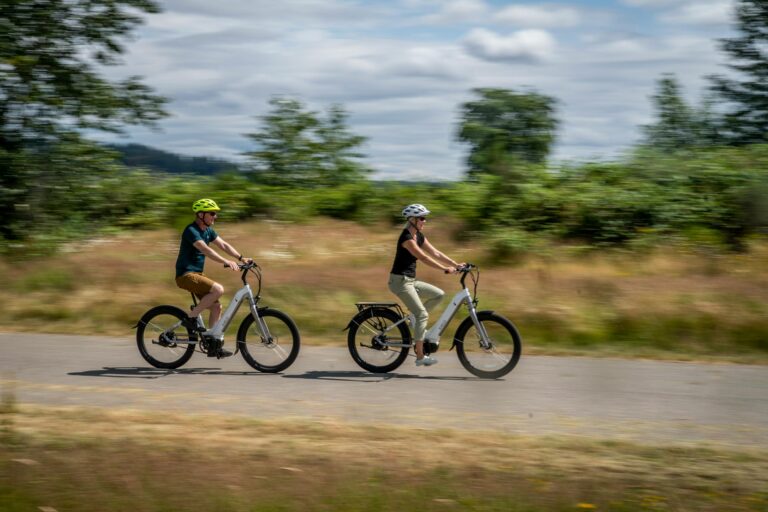

E-Bike Range Explained: Real-World Range vs “Up to 60 Miles” Claims
Last Updated on September 15, 2026 by Kristina
Introduction
If you’ve shopped for an e-bike, you’ve seen it everywhere:
“Up to 60 miles.”
It sounds clear. Reassuring. Simple.
But in real-world riding, most people do not reach that number.
In this guide, I’ll explain what range claims actually mean, what drains your battery faster than you expect, and how to estimate your realistic range before buying.
If you’re still choosing between bike types, start with the e-bike buying guide. And if battery specs feel confusing, this breakdown of how to choose the best e-bike battery for your commute explains Wh, voltage, and capacity in plain English.
Want a personalized estimate? Use the E-Bike Range Calculator to estimate your real-world mileage based on battery capacity, total weight, speed, terrain, pedal assist, throttle use, tires, temperature, wind, and battery condition.
If you’re comparing affordable models, our budget e-bikes guide also highlights bikes that offer strong real-world range for the price.
📖 Read Next
How Rider Weight Affects E-Bike Range (Real-World Examples & What to Expect)
Understanding E-Bike Battery Capacity: Amp Hours (Ah) Explained
5 Signs It’s Time to Replace Your E-Bike Battery
The Ultimate Guide to Electric Bike Chargers: Types, Features, and Recommendations
Why Your E-Bike Battery Loses Charge Overnight — and How to Fix It
How Much Range Do Most Riders Actually Get?
Most riders get roughly 50–70% of the advertised “up to” range in mixed, real-world riding.
For a deeper breakdown of typical mileage by battery size and riding style, see how far an e-bike can go in real-world riding.
If a bike claims “up to 60 miles,” many riders will realistically see something closer to:
30–45 miles, depending on:
- Assist level
- Rider weight
- Hills
- Wind
- Temperature
- Throttle use
That doesn’t mean companies are lying. It means “up to” reflects ideal testing conditions – not everyday commuting.
Why “Up To” Numbers Look So High
Most range claims assume:
- Lowest pedal assist (often PAS 1)
- Flat terrain
- Light rider
- Steady speed
- No wind
- Warm weather
- Fully inflated tires
- Brand new battery
Those conditions are possible.
They just aren’t typical.
For example, Bosch eBike Systems provides consumer-facing range tools that show how dramatically terrain, rider weight, assist level, and speed affect estimated mileage. Even their calculators demonstrate that the same battery can produce very different range outcomes depending on conditions.
Range Reality Table
Here’s what range often looks like in real-world planning:
| Advertised Range | Likely Real-World Range | Heavy / Fast / Hilly Riding |
|---|---|---|
| Up to 40 miles | 20–30 miles | 15–22 miles |
| Up to 60 miles | 30–45 miles | 20–35 miles |
| Up to 80 miles | 40–60 miles | 30–50 miles |
These are not guarantees. They are reasonable planning ranges based on common Wh-per-mile usage patterns.
The Simple Formula Behind Range
Range is basic energy math:
Battery watt-hours (Wh) ÷ Wh used per mile = Estimated miles
If your battery stores 672 Wh and you use 20 Wh per mile:
672 ÷ 20 = 33.6 miles
The key variable is how many Wh per mile you actually use.
What PAS Levels Really Mean for Range
Most “up to” tests are done in the lowest assist mode.
But most commuters ride in PAS 2 or 3.
Real-world feel:
- PAS 1 – Light help, feels like a tailwind
- PAS 2–3 – Comfortable commuting balance
- PAS 4–5 – Fast, powerful, drains battery quickly
If you ride in higher assist because you want speed or easier climbing, your energy use per mile increases significantly.
For a deeper breakdown of power expectations, see torque vs wattage explained
Typical Wh Per Mile Usage
These are common real-world bands:
- Light assist / flat terrain: 12–18 Wh per mile
- Mixed commuting: 18–25 Wh per mile
- Fast, hilly, or throttle-heavy: 25–40+ Wh per mile
- Class 3 speeds (28 mph): 30–45 Wh per mile is not unusual
Higher sustained speeds increase aerodynamic drag quickly, which significantly impacts range.
The 7 Biggest Range Killers
1. Throttle Use
Throttle-only riding can push consumption into the 25–40+ Wh per mile range.
2. Hills
Climbing increases power demand dramatically.
3. Stop-and-Go Riding
Frequent acceleration consumes more energy than steady cruising.
4. Rider Weight & Cargo
More total weight increases energy per mile.
See best e-bikes for heavy riders
5. Speed
Air resistance increases exponentially as speed rises.
6. Cold Weather
Cold reduces usable battery capacity due to increased internal resistance in lithium-ion cells.
Battery performance behavior in cold conditions is well documented by Battery University, which explains how temperature affects available energy.
7. Tire Pressure
Underinflated tires increase rolling resistance and reduce range.
What Battery Size Is Enough?
Instead of focusing on advertised miles, look at battery Wh.
360–500 Wh – Short, flat commutes
500–700 Wh – Most average commuters
700–900 Wh – Longer distances or hills
Dual battery setups – High-mileage riders
If you’re comparing options, see best commuter e-bikes
How To Know If a Bike Will Make Your Commute
Here’s a simple planning method:
- Take your round-trip distance.
- Multiply by 25 Wh per mile (a safe mixed-riding estimate).
- Compare that number to the battery Wh.
Example:
12 mile commute × 25 Wh = 300 Wh needed.
If the battery is 500 Wh, you have margin.
If it’s 360 Wh, range could feel tight in cold weather or hills.
Always build in buffer. Avoid planning for zero-percent arrivals.
Why Range Anxiety Is Often Worse Than Reality
New riders often panic when the battery percentage drops quickly at first.
But:
- Voltage sag under acceleration can temporarily lower displayed percentage
- Slowing down improves efficiency
- Headwinds and hills temporarily increase consumption
Battery percentage is not always perfectly linear throughout discharge.
Marketing Language Decoded
“Up to” typically means:
- Best-case conditions
- Lowest assist level
- Ideal environment
It does not mean:
- Guaranteed commuting range
- Throttle-only range
- High-speed riding distance
This is why comparing Wh is more reliable than comparing headline miles.
Interactive Wh-Per-Mile Estimator
E-Bike Range + Round-Trip Safety Margin Calculator
Use this to estimate whether a battery will comfortably cover your round trip while keeping a reserve.
1) Your Battery
If you know Wh, enter it here and skip Voltage + Ah.
2) Your Ride
Example: 6 miles each way = 12 miles round trip.
Tip: If unsure, use 22 for normal commuting or 30 for hills/throttle-heavy riding.
3) Safety Margin
A 15–25% reserve is a smart buffer for wind, hills, and battery aging.
Planning reference:
- Light riding: 15 Wh
- Mixed commuting: 20–25 Wh
- Fast/hilly: 30–35+ Wh
Safety Reminder
Never plan a commute where your battery will be nearly empty upon arrival.
Cold weather, wind, hills, and aging batteries can all reduce usable range.
Before riding in public spaces, check your local rules inside the state-by-state e-bike laws guide
Final Takeaway
Do not buy based on the largest mileage number in bold font.
Buy based on:
- Battery Wh
- Terrain
- Speed
- Assist level
- Realistic riding style
If a bike claims “up to 60 miles,” many riders should realistically plan closer to 30–45 miles in mixed conditions unless they ride conservatively.
And if you’re unsure which setup fits your commute, start with the e-bike buying guide then explore the budget e-bikes or commuter e-bikes sections for options that match your real needs.
Not sure where to go next?
Some riders are brand new. Others are fixing a problem or thinking about a new bike. Choose what fits you.
Learn & Get Comfortable
Understand how e-bikes work and what to expect when riding.
Improve Your Current Ride
If your bike isn’t performing how you want, learn what affects speed, range, and power.
Compare Better Bikes
Looking for something that fits your riding style? Start here.
- Best Electric Bikes for Beginners
- Recommended Commuter Ebikes
- Most Comfortable City E-Bikes
- Best Fat Tire Ebikes
- Top Folding Ebikes
- Best Step Through Ebikes
- Top Cargo Electric Bikes
- Best Lightweight Ebikes
- Best Long Range Ebikes
- Top Moped Style E-Bikes
- E-bike Reviews
🛒 Ready to Buy?
Top picks and current availability from trusted brands.
👉 Still deciding?
Take our E-Bike Recommendation Quiz to get matched with the right riding style in under two minute

Kristina is not just an enthusiast but a true authority on electric bikes. Nestled in the coastal beauty of Virginia, Kristina has found the perfect backdrop for her passion for electric biking. As a dedicated wife and homeschooling mom, her life revolves around family, faith, and the thrill of adventure.
Originally hailing from Ohio, Kristina's journey with electric bikes began as a curiosity and quickly evolved into a deep expertise. Her blog is a testament to her love for electric biking, combining her fascination for eco-friendly transportation with her coastal lifestyle.
When she's not cruising the beach on her electric bike, you'll find Kristina indulging in her other loves: long walks along the shore, getting lost in a good book, and cherishing moments with her loved ones. With a heart as big as her love for animals, especially cats, Kristina brings a unique perspective to the electric bike world, grounded in her strong faith in God and her dedication to a sustainable lifestyle.
Through her blog, Kristina shares her extensive knowledge of electric bikes, offering valuable insights, tips, and recommendations to fellow enthusiasts. Whether you're a seasoned rider or a newcomer to the electric bike scene, Kristina's blog is your go-to source for all things electric biking, fueled by her passion, expertise, and the scenic beauty of coastal Virginia.