Amazon Removes High-Speed E-Bike Listings After Fatal Crashes: What This Means for Riders
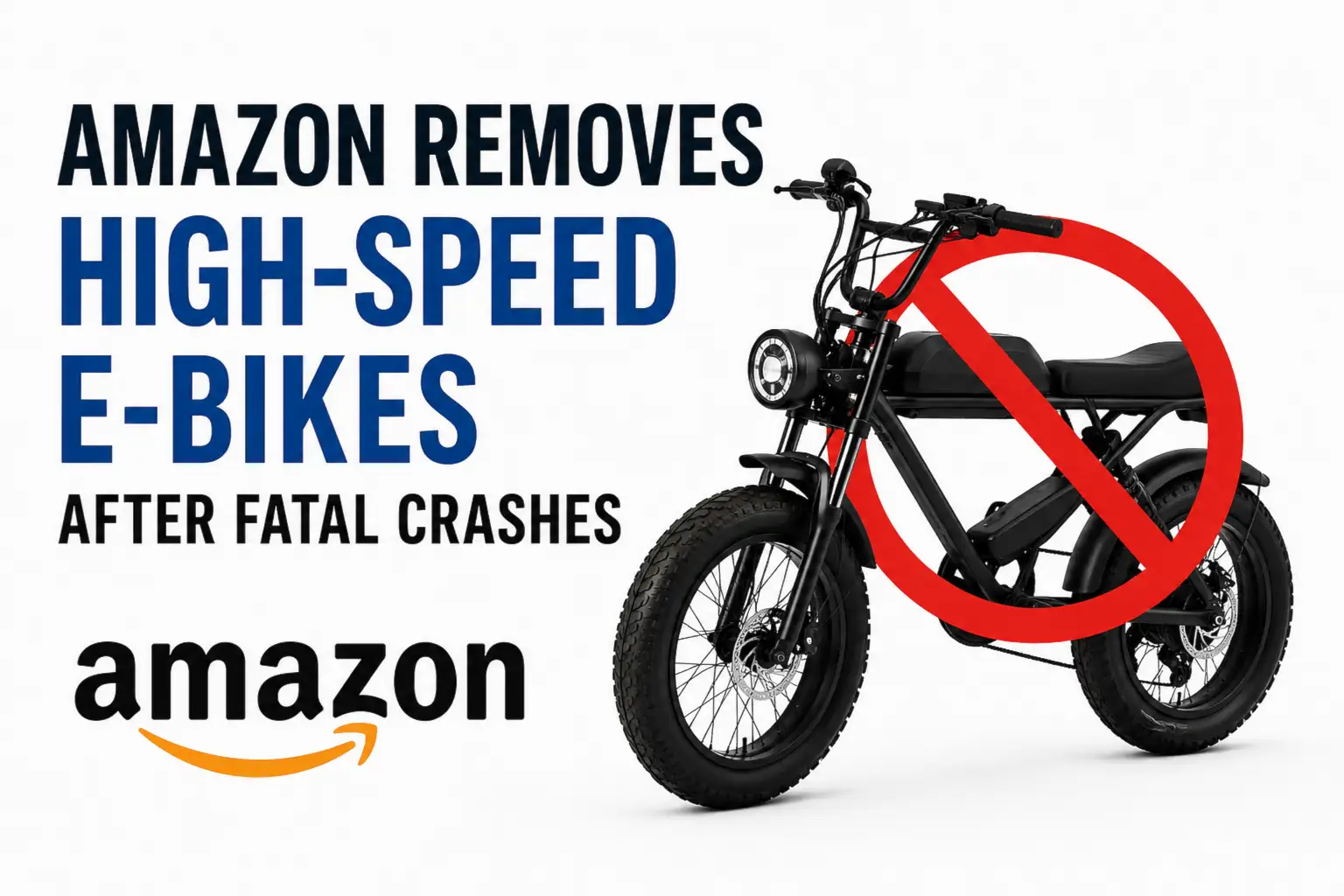
Amazon reportedly removed certain high-speed electric bike listings from California shoppers following pressure from state officials and growing concerns over deadly crashes involving teens and illegal high-powered bikes. The move comes as regulators and safety advocates increasingly warn that some vehicles being marketed as “e-bikes” may actually function more like lightweight electric motorcycles.
For riders, parents, and the e-bike industry as a whole, this could become a major turning point.
At Electric Bike Explorer, I’ve been warning for a while that the line between legal e-bikes and high-powered electric motorcycles has become increasingly blurred online. Many riders genuinely think they are buying a normal e-bike — when in reality they may be purchasing something that exceeds legal e-bike limits in many states.
And now regulators are starting to respond.
Why Amazon Removed Some High-Speed E-Bike Listings
According to reports, Amazon agreed to remove listings for certain electric bikes advertised with speeds above California’s legal e-bike limits after scrutiny from California officials and media investigations.
California law currently defines legal e-bike classes as:
| E-Bike Class | Max Speed | Notes |
|---|---|---|
| Class 1 | 20 mph | Pedal assist only |
| Class 2 | 20 mph | Throttle + pedal assist |
| Class 3 | 28 mph | Pedal assist only |
In many states, vehicles exceeding those limits may fall into moped or motorcycle categories depending on speed, power, equipment, and local law.
Officials say some of the bikes being sold online were capable of 35–50+ mph while still being marketed as e-bikes.
That distinction matters because motorcycles and mopeds often require:
- Registration
- Insurance
- Licensing
- Helmets
- Age restrictions
- DOT-approved equipment
Many riders —-especially younger teens – may not realize those rules apply.
Fatal Crashes Intensified Pressure
The push followed several high-profile crashes in Southern California involving teens riding high-powered electric bikes and electric motorcycles.
One recent crash involved a 13-year-old rider in Garden Grove who reportedly died after crashing an electric motorcycle while traveling around 35 mph. Another case involved an 81-year-old man who died after being struck by a teenager riding a high-speed electric motorcycle.
Orange County District Attorney Todd Spitzer has taken an especially aggressive stance, even pursuing criminal charges against some parents tied to illegal high-speed bikes ridden by minors.
That alone signals how seriously officials are starting to treat these cases.
Those tragedies also intensified scrutiny not just on riders, but on the rapidly growing online marketplace for high-powered electric bikes.
The Real Problem Isn’t Normal E-Bikes
This is the part many headlines miss.
Most legal commuter e-bikes are not the issue.
A normal Class 1, 2, or 3 commuter e-bike from established brands is very different from:
- High-speed electric motorcycles
- Unrestricted throttle bikes
- Modified bikes with removed speed limiters
- Heavy off-road electric motos being ridden on sidewalks or bike paths
Unfortunately, the public often lumps everything together under the phrase “e-bike.”
That creates confusion and can hurt responsible riders.
A commuter riding a Class 2 Aventon or Lectric bike responsibly in a bike lane is not the same as someone riding a high-powered electric motorcycle through neighborhoods at motorcycle-level speeds.
Those are completely different categories of vehicles.
Why Online Marketplaces Became Part of the Problem
One major issue is how easy it became to buy extremely powerful electric bikes online.
Some listings emphasized phrases such as:
- “Off-road use only”
- “E-bike”
- “50+ mph”
- “No license required”
Some bikes even included pedals primarily to resemble bicycles even though their performance more closely matched motorcycles.
Advocates say many consumers likely did not fully understand what they were purchasing.
And unlike local bike shops, online marketplaces often provide little education about:
- Local laws
- Class systems
- Licensing requirements
- Safe riding practices
- Insurance
- Age restrictions
That gap is becoming harder for regulators to ignore.
Could Other Retailers Follow?
Possibly.
If California continues increasing enforcement pressure, other marketplaces may eventually tighten restrictions too.
This could include:
- More listing removals
- Verification requirements
- Speed disclosures
- VIN requirements
- Stricter product categorization
- Age warnings
- State-specific sales restrictions
Some states are already considering tougher laws around high-powered electric motorcycles being marketed as e-bikes.
And honestly, I would not be surprised if more states begin drawing harder lines between:
- Legal e-bikes
- Mopeds
- Electric dirt bikes
- Electric motorcycles
How to Avoid Accidentally Buying an Illegal High-Speed “E-Bike”
Many buyers simply do not realize some online “e-bikes” may exceed legal e-bike classifications.
Here are a few things I strongly recommend checking before buying:
- Verify the advertised top assisted speed
- Look for a clearly labeled e-bike class sticker
- Check motor wattage and state limits
- Buy from established brands or trusted dealers
- Be cautious of bikes advertised with motorcycle-level speeds
- Confirm whether the bike is intended for public-road use
A little extra research upfront can prevent major legal, safety, and insurance issues later.
What Riders Should Do Right Now
If you own or plan to buy an e-bike, it’s becoming more important than ever to understand exactly what type of vehicle you are riding.
Check the Actual Top Speed
Don’t rely solely on the product title.
Some listings call something an “e-bike” even if it exceeds legal e-bike definitions.
Verify the E-Bike Class
Make sure the bike clearly identifies itself as:
- Class 1
- Class 2
- Class 3
And check whether your state allows that class where you ride.
👉 Not sure what’s legal in your area? Check our complete State-by-State E-Bike Laws Guide to see speed limits, helmet rules, trail access, and where different e-bike classes are allowed to ride.
Understand Local Laws
State laws vary widely.
Some areas ban throttles on trails.
Some restrict Class 3 bikes.
Some cities are increasing enforcement.
Be Careful With Modifications
Many riders unknowingly push bikes into illegal territory through:
- Speed unlocks
- Controller swaps
- Battery upgrades
- Off-road tuning kits
That can completely change the legal classification of the bike.
My Take
Personally, I think this situation was inevitable.
The industry allowed the definition of “e-bike” to become too loose for too long.
Some of these machines clearly function far more like lightweight electric motorcycles than bicycles — and eventually regulators were going to respond after enough serious crashes and public pressure.
That said, I also think there’s a danger in overreacting and treating all e-bikes the same.
Millions of people use normal Class 1, 2, and 3 e-bikes responsibly every day for commuting, recreation, transportation, and mobility assistance. Those riders should not be punished because high-speed electric motorcycles were being marketed under the same label.
Personally, I think the long-term solution is clearer separation and better education:
- Stronger labeling
- Better buyer education
- Clearer enforcement
- More distinction between e-bikes and electric motorcycles
- More parental awareness
- More rider training for teens
Right now, many parents honestly do not realize the “e-bike” they purchased can reach motorcycle-level speeds.
And many teens do not fully understand how dangerous heavier high-powered electric bikes can become at those speeds.
In my opinion, the future of the industry depends on protecting legal e-bikes while cracking down on companies and sellers blurring the line between bicycles and motorcycles.
Because if that line keeps disappearing, stricter regulations are probably coming nationwide.
For more news on electric bikes click here
External Sources
- https://www.latimes.com/california/story/2026-05-10/amazon-removes-high-speed-e-bikes-following-fatal-collisions
- https://abc7.com/post/amazon-says-sell-bikes-california-exceed-state-speed-limits-amid-rise-deadly-crashes/19078566/
- https://www.foxla.com/news/amazon-halts-e-bike-sales-in-california

Kristina is not just an enthusiast but a true authority on electric bikes. Nestled in the coastal beauty of Virginia, Kristina has found the perfect backdrop for her passion for electric biking. As a dedicated wife and homeschooling mom, her life revolves around family, faith, and the thrill of adventure.
Originally hailing from Ohio, Kristina's journey with electric bikes began as a curiosity and quickly evolved into a deep expertise. Her blog is a testament to her love for electric biking, combining her fascination for eco-friendly transportation with her coastal lifestyle.
When she's not cruising the beach on her electric bike, you'll find Kristina indulging in her other loves: long walks along the shore, getting lost in a good book, and cherishing moments with her loved ones. With a heart as big as her love for animals, especially cats, Kristina brings a unique perspective to the electric bike world, grounded in her strong faith in God and her dedication to a sustainable lifestyle.
Through her blog, Kristina shares her extensive knowledge of electric bikes, offering valuable insights, tips, and recommendations to fellow enthusiasts. Whether you're a seasoned rider or a newcomer to the electric bike scene, Kristina's blog is your go-to source for all things electric biking, fueled by her passion, expertise, and the scenic beauty of coastal Virginia.