Everett City Council Approves New E-Bike Rules for Helmets, Sidewalks and Trails
Last Updated on July 25, 2026 by Kristina
EVERETT, Washington – July 25, 2026: The Everett City Council has approved new rules for electric bikes, motorized scooters and other powered transportation devices. The measure establishes helmet and age requirements, limits higher-speed devices on sidewalks and shared-use paths, and creates penalties for unsafe riding and illegal speed modifications. Riders can review the broader statewide requirements in my Washington e-bike law guide.
The council approved Council Bill 2606-34 on July 22, 2026. The measure would add a new chapter to the Everett Municipal Code and revise existing traffic and park rules. You can follow this story and other local regulatory developments through the Electric Bike News archive.
Current Status
Status: Approved by the Everett City Council on July 22, 2026.
The city’s July 22 agenda packet contains an unsigned version of Council Bill 2606-34, with the ordinance number, publication date and effective date still blank. The council also amended the proposal during its final consideration. As of July 25, I could verify council approval, but I could not yet confirm a signed ordinance number, publication date or effective date from an executed city document.
Until the final ordinance is published, riders should check the current Everett Municipal Code and posted signs before assuming that every new provision is already being enforced.
During final consideration, the council amended the proposal to clarify that ordinary nonmotorized scooters are not covered by the new rules. It also revised a restriction affecting motorized scooters on roads posted above 30 mph when no sidewalk or practical alternative route is available. The city’s signed, published ordinance will be the controlling version once it becomes available.
📰 How This Story Was Verified
This report is based on available official documents, agency statements, meeting records, court filings, or other primary sources, with reliable reporting used for additional context. I clearly distinguish proposals from rules that have been finally approved or taken effect.
What Everett’s Approved E-Bike Rules Cover
The approved measure creates a more detailed local framework for electric-assisted bicycles and other powered devices. It uses Washington’s Class 1, Class 2 and Class 3 e-bike system while creating additional categories for devices that do not fit neatly within the state’s e-bike definition.
Under Washington law, a legal electric-assisted bicycle must have functioning pedals, a motor rated at no more than 750W and meet one of the following classifications:
- Class 1: Pedal assistance that stops at 20 mph.
- Class 2: A motor that can propel the bike without pedaling but stops assisting at 20 mph.
- Class 3: Pedal assistance that stops at 28 mph, with a required speedometer.
Everett also distinguishes lower-speed micromobility devices from higher-speed powered transportation devices. One important dividing line is whether a device can exceed 20 mph using motor power alone.
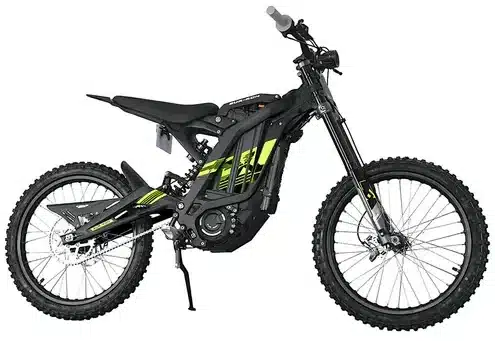
This matters because a motorcycle-style electric vehicle with no functioning pedals, excessive motor power or throttle-only capability above the legal limit may not qualify as an e-bike. Washington’s revised state definition, effective June 11, 2026, also excludes vehicles that can exceed 20 mph using motor power alone and vehicles designed, manufactured or marketed to be easily reconfigured so they no longer meet the state’s e-bike requirements.
Where Class 1 and Class 2 E-Bikes Could Be Ridden
Under the approved measure, Class 1 and Class 2 e-bikes may generally use Everett streets, road shoulders, bicycle lanes and shared-use paths, subject to posted restrictions and other traffic rules.
In city parks, Class 1 and Class 2 e-bikes may be ridden only in areas that the Parks Department designates as open or in locations already authorized for motor vehicles, such as parking lots. Riders must follow all posted park signs.
On sidewalks and shared-use paths where riding is permitted, the approved rules require riders to:
- Yield to pedestrians and human-powered devices.
- Give an audible warning before passing.
- Remain at or below 15 mph.
- Slow to 10 mph or less when within 50 feet of pedestrians or in congested areas.
Those local speed requirements are important because riding a Class 1 or Class 2 e-bike does not mean a rider can travel at the bike’s full assisted speed in every permitted location.
Class 3 E-Bikes Would Face More Access Restrictions
Class 3 e-bikes may use streets, road shoulders and designated bicycle lanes, but they would generally be prohibited on Everett sidewalks and shared-use paths.
The measure contains a limited exception when there is no alternative to traveling over a sidewalk or shared-use path as part of a city street. Riders should not treat that exception as general permission to use pedestrian facilities.
Class 3 e-bikes are also subject to stricter age and helmet requirements. A rider must be at least 16, and every Class 3 operator must wear a helmet regardless of age.
Downtown Everett Sidewalk Riding Would Be Restricted
The approved measure prohibits riding bicycles, e-bikes and covered powered transportation devices on sidewalks within Everett’s central business district.
The defined downtown area is generally bounded by Broadway Avenue to the east, West Marine View Drive to the west, Everett Avenue to the north and Pacific Avenue to the south. The boundary sidewalks themselves are excluded from that definition.
Limited exceptions allow a person to use the sidewalk as necessary to enter or leave adjacent property or where the city has clearly designated a section as a shared-use path or mobility corridor.
This restriction is broader than a Class 3-only sidewalk rule. It also affects conventional bicycles and lower-speed e-bikes within the designated downtown area.
Helmet and Age Requirements
Everett’s approved measure creates several requirements aimed particularly at younger riders:
- All riders younger than 16 must wear a helmet when operating any class of e-bike or covered powered transportation device.
- Children younger than 11 may operate an e-bike only while under the direct supervision of someone age 18 or older.
- Anyone younger than 16 is prohibited from operating a Class 3 e-bike.
- Anyone operating a powered transportation device capable of exceeding 20 mph solely through its motor must wear a helmet.
A driver’s license is not required to operate a legal electric-assisted bicycle under Washington law. That does not necessarily apply to electric motorcycles, mopeds or other vehicles that fall outside the state’s e-bike definition.
Rules can vary substantially between states and cities. Riders traveling outside Washington can compare classifications and requirements through my state-by-state e-bike law guide.
Speed Modifications and Required Equipment
The measure prohibits intentionally modifying a motor, controller, software, gearing or sensor to change an e-bike’s class or increase its assisted speed beyond the manufacturer’s specifications.
If a modification legally changes the bike’s classification, its class label must be replaced before the bike is operated. A bike that exceeds the state limits for Class 1, Class 2 or Class 3 may be presumed to have been unlawfully modified unless the rider can provide documentation from the manufacturer or a certified technician showing that it remains compliant.
Legal e-bikes must also meet applicable class-labeling, lighting and braking requirements. Class 3 bikes must have a speedometer, and e-bikes ridden during hours of darkness must comply with Washington lighting rules.
Parking and Public Charging Rules
An e-bike cannot be parked in a way that blocks a building entrance, bus stop or accessibility ramp. The approved measure also requires at least 3 feet of sidewalk clearance.
Riders may not plug an e-bike, scooter or other covered device into a public electrical outlet unless the outlet has been specifically designated for charging. This provision applies to the use of public power, not ordinary charging on private property with the owner’s permission.
Fines, Impoundment and Reckless Riding
Most violations would be subject to a $50 fine for a first offense and $150 for subsequent offenses. More serious violations could bring larger penalties:
- Negligent operation: A $250 traffic infraction when a rider’s conduct endangers or is likely to endanger a person or property.
- Illegal modification or tampering: A $250 traffic infraction.
- Reckless endangerment: A gross misdemeanor when conduct creates a substantial risk of serious physical injury to another person.
A court may order restitution of up to $5,000 for an infraction. Police may also take custody of a device for public-safety or evidentiary reasons. An impounded device carries a $50 administrative processing fee before it can be released.
For a first juvenile violation, the city may allow an approved safety course to replace a civil penalty when a course is available.
The measure also addresses adult responsibility. An adult may not knowingly authorize a young rider to operate a device in violation of the age restrictions. A separate $250 infraction may apply when an adult knowingly provides a covered device to a rider younger than 16 who then commits reckless endangerment.
Why Everett Approved the Measure
City documents say Everett was trying to create consistent rules for a growing range of electric bikes, scooters and motorcycle-style devices. The ordinance findings cite increasing injury numbers and concerns about head injuries, youth riders and the difficulty of identifying high-powered devices that resemble ordinary e-bikes.
In its legislative findings, Everett said the city had the fifth-highest e-bike hospitalization rate and the third-highest electric-scooter hospitalization rate among Washington cities. The city also reported that the Everett Fire Department responded to 49 electric-device injury calls during the preceding 12 months.
These are figures cited by the city to explain the measure. They do not establish that every incident involved the same device type, legal e-bike class, rider behavior or cause.
City officials told The Daily Herald that education and public outreach would be prioritized over proactive enforcement, while the measure would give police tools to address serious or repeated violations.
Who Would Be Most Affected?
The rules would have the greatest practical effect on parents, younger riders, Class 3 owners and people using motorcycle-style electric devices that can exceed 20 mph under motor power alone.
Daily commuters should pay particular attention to the downtown sidewalk boundary, shared-use path limits and the requirement to slow near pedestrians. Riders using city parks must also look for signs showing which areas are open to e-bikes.
People shopping for a bike for a child or teenager should confirm the bike’s actual class, throttle behavior, motor output and maximum assisted speed before purchasing it. Marketing terms such as “e-bike” do not determine how Everett or Washington law classifies the vehicle.
My Take
I think Everett’s strongest decision was separating legal lower-speed e-bikes from devices that can travel above 20 mph using motor power alone. Treating every electric two-wheeler as if it has the same speed, weight and legal status creates confusion for riders and makes sensible enforcement more difficult.
The proposed 15 mph shared-path limit and requirement to slow near pedestrians are also practical. However, riders will need clear maps and signs, especially around the downtown boundary, city parks and paths where different rules apply. Education will be just as important as penalties if Everett wants residents to understand the ordinance before receiving a citation.
Sources
- Everett City Council agenda for July 22, 2026
- Everett Council Bill 2606-34 and proposed municipal-code language
- Washington Chapter 159, Laws of 2026 – electric-assisted bicycles and electric motorcycles
- The Daily Herald report on Everett’s approval and council amendments

Kristina is not just an enthusiast but a true authority on electric bikes. Nestled in the coastal beauty of Virginia, Kristina has found the perfect backdrop for her passion for electric biking. As a dedicated wife and homeschooling mom, her life revolves around family, faith, and the thrill of adventure.
Originally hailing from Ohio, Kristina's journey with electric bikes began as a curiosity and quickly evolved into a deep expertise. Her blog is a testament to her love for electric biking, combining her fascination for eco-friendly transportation with her coastal lifestyle.
When she's not cruising the beach on her electric bike, you'll find Kristina indulging in her other loves: long walks along the shore, getting lost in a good book, and cherishing moments with her loved ones. With a heart as big as her love for animals, especially cats, Kristina brings a unique perspective to the electric bike world, grounded in her strong faith in God and her dedication to a sustainable lifestyle.
Through her blog, Kristina shares her extensive knowledge of electric bikes, offering valuable insights, tips, and recommendations to fellow enthusiasts. Whether you're a seasoned rider or a newcomer to the electric bike scene, Kristina's blog is your go-to source for all things electric biking, fueled by her passion, expertise, and the scenic beauty of coastal Virginia.