Could a Hypershell Exoskeleton Replace an E-Bike? CNET Tested the Idea
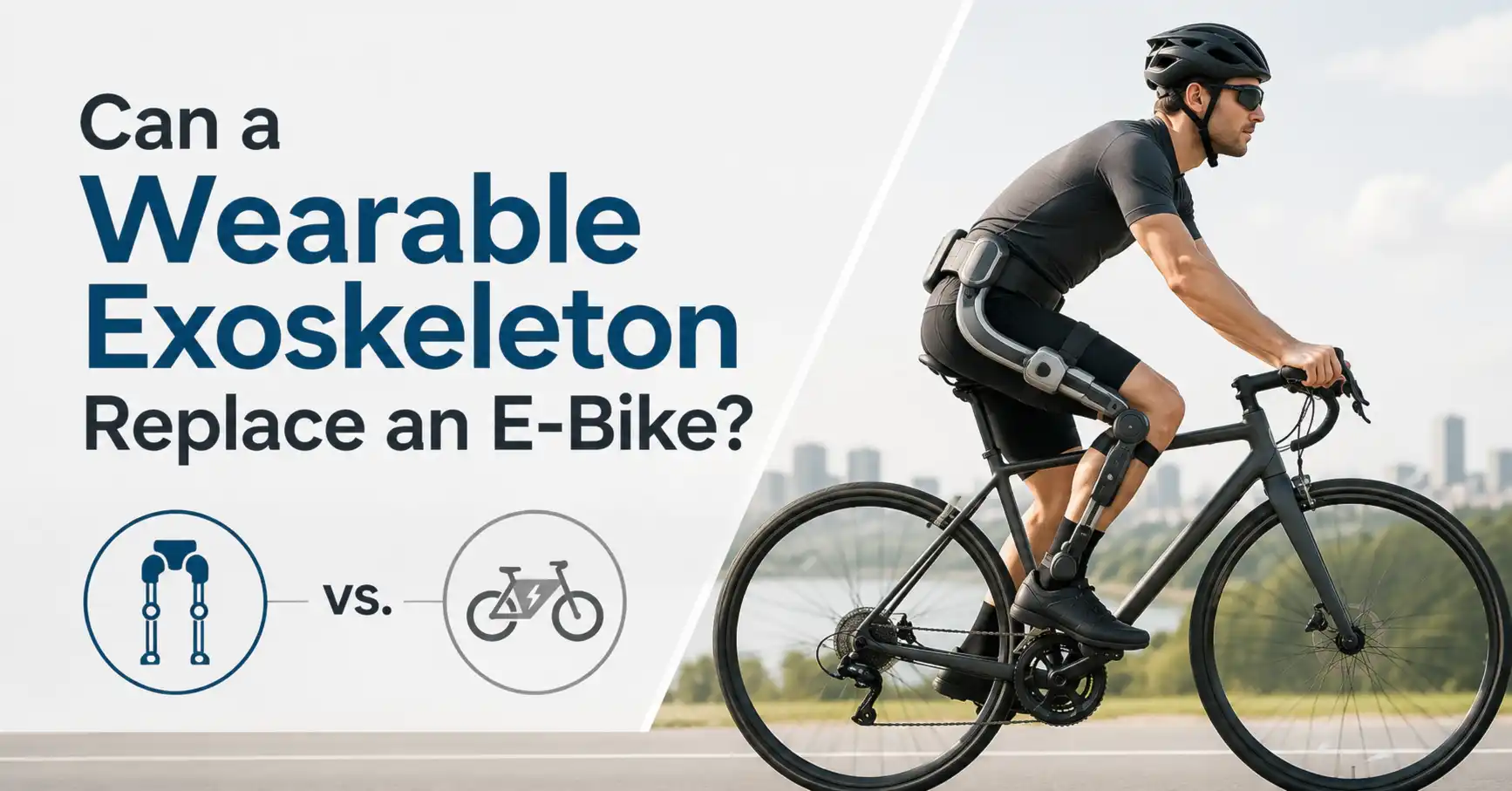
A new CNET test is getting attention in the cycling and e-bike world because it asks a pretty interesting question: could a wearable exoskeleton make a regular bicycle feel more like an e-bike?
The product in question is the Hypershell exoskeleton, a powered wearable device that straps around the rider’s waist and legs. Instead of putting the motor on the bike, like a traditional electric bike, the Hypershell assists the rider’s leg movement directly.
That sounds futuristic, and I can see why people are curious. A lot of riders already wonder if they really need to buy an e-bike, convert a regular bike, or look for some type of electric bike alternative. But after looking at CNET’s third-party test and supporting product information, I do not think a wearable exoskeleton is ready to replace an e-bike for most riders.
Before going further, I want to be very clear: I did not personally test the Hypershell exoskeleton, and I did not personally compare it against an e-bike. This article is based on CNET’s third-party hands-on report, along with supporting information from Hypershell, WIRED, and PeopleForBikes.
What Is the Hypershell Exoskeleton?
The Hypershell is a powered wearable exoskeleton designed to support movement during outdoor activities like walking, hiking, climbing, and cycling. Instead of using a motor built into a bicycle wheel or drivetrain, the device assists the motion of your legs.
Hypershell’s current lineup includes the Hypershell X Ultra S, which the company lists with up to 1,000 watts of power, 12 intelligent modes, a listed weight of 2,538 grams, and a price of $1,999. Hypershell also lists the X Ultra S with a claimed assisted range of 30 km ×2, although real-world range will depend on terrain, assist level, battery setup, and how the device is being used.
WIRED also reviewed the Hypershell X Ultra S and reported that the model uses a dual-battery setup, delivers up to 1,000 watts and 22 Newton-meters of torque, and has a maximum assisted pace of 15.5 mph. WIRED noted that all three newer X Series models use Hypershell’s AI-based HyperIntuition control system, which is designed to adjust torque in real time based on movement.
In simple terms, the Hypershell is not an e-bike. It is wearable mobility technology.
That difference matters.
Why CNET’s Test Is Interesting for E-Bike Riders
The reason this caught my attention is because the CNET test looked at whether wearing a powered exoskeleton could make a regular bike ride feel closer to riding an e-bike.
That is a fair question. E-bikes can be expensive, heavy, and sometimes difficult to store. Some riders may already own a regular bicycle and wonder if there is a simpler way to get electric assist without buying a full electric bike.
A wearable exoskeleton sounds like it could solve that problem. You could keep your regular bike, strap on the exoskeleton, and get help pedaling.
But based on the third-party testing that has been reported so far, the answer seems to be: it can help, but it is not the same as riding an e-bike.
That is the part I think riders need to understand before getting too excited about the idea.
Hypershell Exoskeleton vs E-Bike: The Main Difference
The biggest difference between a Hypershell exoskeleton and an e-bike is where the power goes.
With an e-bike, the motor assists the bicycle. Depending on the model, the motor may be in the rear hub, front hub, or mid-drive system. That power helps move the bike forward.
With a wearable exoskeleton, the device assists your body. It helps your legs move, but the bicycle itself is still a regular bicycle.
That means the riding experience is very different.
An electric bike can help with:
- hill climbing
- starting from a stop
- carrying groceries or cargo
- commuting longer distances
- reducing fatigue
- keeping a steady pace
- riding into wind
- helping seniors or newer riders feel more confident
A wearable exoskeleton may reduce some leg effort, but it does not give the bike a motor, e-bike battery, pedal assist sensor, controller, display, throttle, integrated lights, cargo rack, or e-bike braking system.
That is why I would not describe the Hypershell as a true e-bike replacement. It is more of a wearable assist device that may make pedaling feel easier in certain situations.
🎬 Watch: Powerful Exoskeleton vs MTB
I also found this video helpful for seeing the idea in action: “POWERFUL EXOSKELETON VS MTB – EASIEST ELECTRIC BIKE CONVERSION EVER?”
Just like the CNET report, this is third-party testing, not my own personal test. But it gives a good visual look at how a powered exoskeleton may assist a rider on a mountain bike and why some people are comparing this type of technology to an electric bike conversion.
What Other Testing Has Found
WIRED’s review is helpful because it gives more context beyond the CNET test. WIRED found that cycling mode does work if the bike is in the right gear, but the reviewer also said it was not as effortless as riding a traditional electric bike. WIRED also noted that the assistance maxes out at 15.5 mph and that getting on a bike with a crossbar can be awkward while wearing the device.
That lines up with what I would expect.
An exoskeleton may help your legs turn the pedals, especially on hills or when you are trying to keep a rhythm. But it does not create the same smooth, built-in electric assist feeling that you get from a purpose-built e-bike.
With a good electric bike, everything works together: the motor, battery, controller, drivetrain, brakes, frame, and display. The bike is designed around the assist system.
With an exoskeleton, you are adding powered assistance to your body and then using that movement to pedal a regular bike. That may help, but it is a different kind of help.
Could a Hypershell Exoskeleton Be Useful for Some Riders?
Yes, I do think this kind of technology could be useful for some people.
A wearable exoskeleton could make sense for someone who wants one device for multiple activities. Unlike an e-bike, the Hypershell is not limited to cycling. Hypershell markets the device for hiking, walking, stairs, cycling, snow activities, photography, urban mobility, and more. The company also claims cycling support can reduce physical exertion, although that is a company claim and not the same as independent long-term rider testing.
That is where the Hypershell has an advantage over a traditional e-bike. You cannot take your e-bike motor off and use it for walking or hiking. But a wearable exoskeleton could potentially help in more than one situation.
I could see it appealing to:
- tech enthusiasts
- hikers who also ride bikes
- people who want help on hills
- riders who already own a regular bike
- people curious about wearable mobility devices
- outdoor users who want assistance beyond cycling
But for the average rider who mainly wants easier biking, I still think an e-bike is the more practical choice.
Why It Probably Will Not Replace E-Bikes for Most Riders
For most everyday riders, I do not see a Hypershell exoskeleton replacing an e-bike.
The first issue is simplicity. An e-bike is straightforward. You get on, choose your pedal assist level, and ride. Many e-bikes also include a throttle, lights, fenders, racks, hydraulic brakes, and a display.
With a wearable exoskeleton, you have another device to charge, wear, adjust, fit, store, and carry. You also have to think about comfort, battery life, sizing, clothing, and whether it works well with your specific bike frame.
The second issue is ride feel. A regular e-bike assists the bike directly. A wearable exoskeleton assists your leg movement. Those are not the same experience.
The third issue is practicality. If someone is commuting, carrying cargo, riding to the store, or replacing short car trips, an e-bike is built for that job. A wearable exoskeleton may help with pedaling, but it does not make the bicycle itself more capable.
The fourth issue is cost. If the Hypershell X Ultra S is around $1,999, that puts it in the same price range as many solid electric bikes. At that point, many riders may decide they would rather buy a complete e-bike than a wearable device that still requires a regular bicycle.
What About E-Bike Laws?
Another thing to think about is how e-bikes are already understood in many laws and trail rules.
In many places, e-bike rules are based on the three-class system. PeopleForBikes explains that Class 1, Class 2, and Class 3 electric bicycles generally include fully operable pedals and a motor with a power rating of less than 750 watts, although exact access rules can vary by location.
A wearable exoskeleton is different. It is not built into the bike, and it may not fit neatly into the same rules used for e-bikes. That could create questions about where it can be used, especially on trails, bike paths, parks, or areas with specific e-bike restrictions.
I am not saying it is illegal to ride with one. I am saying it is a newer type of device, and the rules may not be as clear as they are for standard e-bikes.
As always, riders should check local rules, trail policies, and park regulations before assuming any powered device is allowed.
Is This the Future of Cycling?
I think wearable mobility technology is worth watching.
E-bikes were once seen as unusual too. Now they are common for commuting, recreation, camping, state parks, RV travel, senior riders, and everyday errands. It is possible that exoskeleton technology could become lighter, cheaper, and more comfortable over time.
But right now, I see the Hypershell as a different kind of product.
It is not really an e-bike replacement. It is more like a powered wearable assist device that may also work for cycling.
That difference is important for anyone shopping for an electric bike alternative. If your goal is to ride farther, climb hills easier, commute, carry cargo, or replace car trips, I would still start with an e-bike buying guide before looking at wearable exoskeletons.
My Take
My take is that the Hypershell exoskeleton is fascinating technology, but I would not choose it over an e-bike for most riders.
I can see why people are interested in it. The idea of strapping on powered assistance and using it for biking, walking, hiking, and climbing is definitely interesting. For someone who loves new technology or wants one device for multiple outdoor activities, it could be worth watching.
But if someone asked me whether they should buy a Hypershell instead of an e-bike, I would tell them to think carefully about how they actually ride.
If the goal is biking farther, climbing hills with less effort, commuting, carrying cargo, or replacing short car trips, I still think a regular e-bike makes more sense.
An e-bike is built around the ride. The motor, battery, frame, brakes, controller, tires, and drivetrain are all designed to work together. With an exoskeleton, you are adding power to your body and hoping that transfers well to the bike.
That may help in some situations, but it is not the same as riding a well-built electric bike.
So for now, I would call the Hypershell an interesting e-bike alternative to watch, but not a true e-bike replacement.
For more news on electric bikes click here

Kristina is not just an enthusiast but a true authority on electric bikes. Nestled in the coastal beauty of Virginia, Kristina has found the perfect backdrop for her passion for electric biking. As a dedicated wife and homeschooling mom, her life revolves around family, faith, and the thrill of adventure.
Originally hailing from Ohio, Kristina's journey with electric bikes began as a curiosity and quickly evolved into a deep expertise. Her blog is a testament to her love for electric biking, combining her fascination for eco-friendly transportation with her coastal lifestyle.
When she's not cruising the beach on her electric bike, you'll find Kristina indulging in her other loves: long walks along the shore, getting lost in a good book, and cherishing moments with her loved ones. With a heart as big as her love for animals, especially cats, Kristina brings a unique perspective to the electric bike world, grounded in her strong faith in God and her dedication to a sustainable lifestyle.
Through her blog, Kristina shares her extensive knowledge of electric bikes, offering valuable insights, tips, and recommendations to fellow enthusiasts. Whether you're a seasoned rider or a newcomer to the electric bike scene, Kristina's blog is your go-to source for all things electric biking, fueled by her passion, expertise, and the scenic beauty of coastal Virginia.