Parents Face Charges in Youth E-Moto Cases as E-Bike Safety Scrutiny Grows
Last Updated on August 14, 2026 by Kristina
UNITED STATES – August 14, 2026
Parents are being pulled more directly into the legal consequences surrounding youth e-bike and e-moto crashes, but there is an important distinction families need to understand: some of the most serious criminal cases involve illegal high-powered electric motorcycles, not ordinary Class 1, Class 2, or Class 3 electric bikes. Families in California can review my California e-bike laws guide for current class, speed, throttle and age rules.
Orange County District Attorney Todd Spitzer told the Associated Press that, as of August 14, his office had more than two dozen open investigations involving parents and had brought charges against four parents in cases involving children and electric vehicles.
The issue comes as new research continues to raise concerns about younger riders. My report on the California e-bike injury study explains how riders age 14 and younger represented a larger share of reported e-bike injury cases and how moderate-to-severe injuries were more common among the recorded e-bike cases than among conventional bicycle cases.
You can also follow the latest Electric Bike News reports as cities, states, prosecutors, schools and retailers respond to the growing safety debate.
Current Status: Some Parents Are Facing Criminal Charges
This is not a new nationwide law that automatically makes a parent criminally responsible whenever a child crashes an e-bike.
Instead, prosecutors in Orange County, California, are examining individual cases in which they allege parents knowingly allowed children to operate illegal electric motorcycles or helped modify vehicles beyond legal limits.
On May 13, Orange County District Attorney Todd Spitzer announced a specialized prosecution unit called RIDE SAFELY, short for Smart Accountability for E-Bikes and E-Motos and Law Enforcement for Youth.
According to the Orange County District Attorney’s RIDE SAFELY announcement, the unit reviews potential criminal cases involving juveniles and adults, including parents accused of knowingly allowing children to operate illegal e-motorcycles.
The Associated Press reported on August 14 that Spitzer said his office had more than two dozen open investigations involving parents and had brought charges against four parents.
Those are criminal allegations, not convictions. Each case depends on its own facts, and anyone charged with a crime is presumed innocent unless proven guilty.
Watch: Orange County Launches Its RIDE SAFELY Crackdown
This NBC Los Angeles report explains why Orange County created its new prosecution unit and how officials are approaching illegal e-bike and e-motorcycle cases involving young riders and parents.
Video: NBC Los Angeles, May 13, 2026. If the embedded video does not display, watch the NBC Los Angeles report on YouTube.
One Case Now Includes an Involuntary Manslaughter Charge
One of the most serious Orange County cases followed an April 16 collision in Lake Forest, California.
According to the Orange County District Attorney’s Office, a 14-year-old boy was operating a Surron Ultra Bee electric motorcycle when he struck 81-year-old Ed Ashman, a Vietnam veteran and substitute teacher. Prosecutors allege that the teenager had been doing wheelies before the collision.
Ashman died from his injuries on April 30.
Prosecutors subsequently upgraded charges against the boy’s mother, Tommi Jo Mejer, to include involuntary manslaughter in addition to other charges. The District Attorney alleges that Mejer had previously been warned that her son could not legally operate the vehicle.
The complete allegations are detailed in the Orange County District Attorney’s May 1 case announcement.
As of August 14, Mejer has not been convicted. Her arraignment was postponed again on June 30 and is currently scheduled for September 15, 2026, according to FOX 11 Los Angeles.
Importantly, this case involves an electric motorcycle, according to prosecutors. It should not be treated as evidence that parents who allow children to ride ordinary legal e-bikes automatically face the same criminal exposure.
Another Father Was Charged After a 12-Year-Old’s Crash
In a separate case, Orange County prosecutors charged a Yorba Linda father after his 12-year-old son was seriously injured while riding a modified electric motorcycle.
According to the District Attorney’s Office, prosecutors allege that the boy ran a red light and was struck by a car while riding an electric motorcycle that he and his father had unlawfully modified.
The District Attorney said the modifications allowed the vehicle to travel at speeds of up to 60 mph.
The father was charged with felony child endangerment and abuse and misdemeanor contributing to the delinquency of a minor. He pleaded not guilty, according to the Associated Press.
The allegations are detailed in the Orange County District Attorney’s March 3 case announcement.
These cases show why the words “e-bike” and “e-moto” cannot safely be used interchangeably.
The Biggest Question for Parents: Is It Actually an E-Bike?
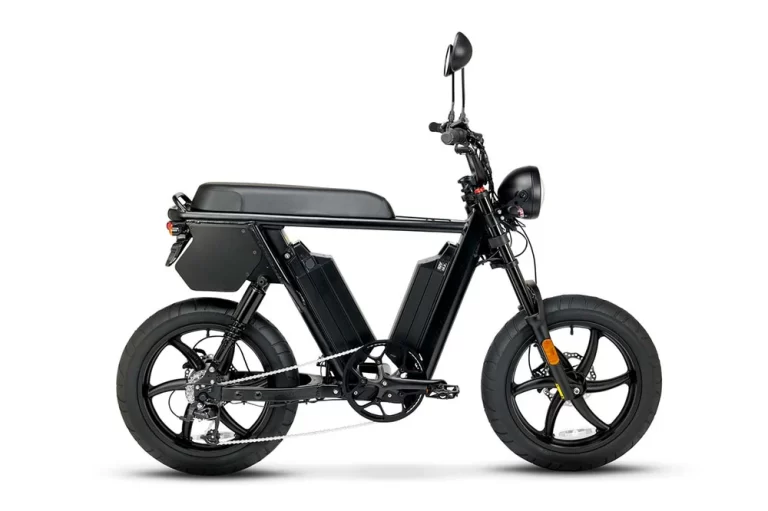
Some electric motorcycles look similar to e-bikes, and products sold online may be described using e-bike terminology even when they do not qualify as legal electric bicycles.
California Attorney General Rob Bonta issued a consumer alert about e-bike safety and legal requirements on April 14 addressing this problem.
Under California law, vehicles that exceed the state’s e-bike limits may instead be treated as mopeds or motorcycles. Among the important limits, California’s legal e-bike framework requires fully operable pedals and limits motor power to 750W. Pedal assistance may not continue beyond 28 mph, while throttle assistance may not continue beyond 20 mph.
Vehicles outside those limits can trigger different licensing, registration, age and equipment requirements depending on their legal classification.
California allows younger riders to operate qualifying Class 1 and Class 2 e-bikes under statewide law, subject to local restrictions. Class 3 riders must be at least 16 years old and are subject to additional requirements.
That makes checking the actual vehicle more important than relying on the name used in an online listing.
Legal E-Bikes and High-Powered E-Motos Are Not the Same Thing
The difference matters for both safety and public policy.
A conventional legal e-bike operates within bicycle-style power and assisted-speed limits. A high-powered electric motorcycle can be much more powerful and faster and may require motorcycle licensing, registration and other equipment.
Treating every electric two-wheeler as the same type of “e-bike” can lead to bad purchasing decisions and confusing regulations.
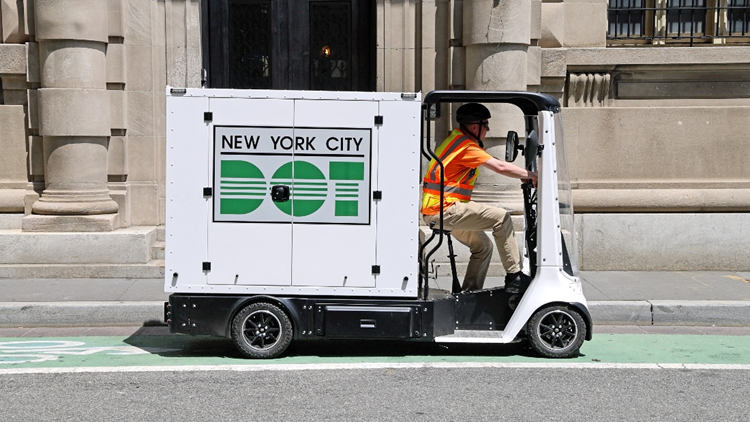
We have already seen this issue in New York City. On August 5, the city issued cease-and-desist orders to 42 online retailers accused of selling prohibited high-speed electric vehicles into New York City.
My report on New York City’s illegal e-bike and e-moto sales crackdown explains what officials are targeting and why the action is not a blanket ban on legal e-bikes.
The New York City Mayor’s Office announcement says the targeted products exceeded existing legal limits involving speed, weight or other requirements.
For parents shopping online, the lesson is simple: a seller calling something an e-bike does not necessarily make it one.
New Injury Data Adds to the Concern
The parental-accountability debate is also happening against the backdrop of rising reported e-bike injuries.
A UC San Diego study published July 17 analyzed 4,035 reported e-bike collisions and 58,332 conventional bicycle collisions in California from 2018 through 2024.
Riders age 14 and younger accounted for 15.6% of the injured e-bike group compared with 10.2% of the injured conventional bicycle group. Moderate-to-severe injuries were also more common among the e-bike cases.
The UC San Diego study summary says researchers used California Highway Patrol collision records to examine the statewide trend.
Those numbers require context. The study analyzed reported collision records rather than the total number of e-bike trips, miles ridden or hours of exposure, so it cannot determine the injury risk per trip or per mile.
Researchers identified e-bike cases through collision-report coding and vehicle brand information. That leaves the possibility of missing or misclassified vehicles as agencies adapted to newer electric vehicle types. The study also did not provide separate injury comparisons for Class 1, Class 2 and Class 3 e-bikes.
Those limitations matter when higher-powered e-motos are increasingly being discussed alongside conventional e-bikes.
Local Governments Are Also Putting More Responsibility on Families
Criminal prosecution is the most serious example, but it is not the only way parents are becoming part of e-bike enforcement.
San Diego’s new rules took effect on August 13, 2026, adding a minimum age of 12 for riders operating Class 1 and Class 2 e-bikes in covered city areas. Class 3 e-bikes were already restricted to riders age 16 and older under California law.
As a practical result, children under 12 may not operate Class 1, Class 2 or Class 3 e-bikes on covered San Diego roadways, bike paths, trails, parks or boardwalks.
The city established a 60-day grace period through October 12, 2026 before citations begin. Violations can result in a $25 fine, with an approved safety-course option available under the city’s rules. Parents or legal guardians may share liability for citations involving unemancipated minors.
My updated report on the San Diego e-bike age rules explains the age restriction, warning period, fines and safety-training provisions.
Readers can also check the City of San Diego’s current e-bike laws and safety guidance.
That is very different from an Orange County felony prosecution, but both developments show that officials increasingly expect parents to understand what their children are riding.
What Parents Should Check Before a Child Rides
Check the Actual Vehicle Classification
Look for the bike’s permanent class label, motor rating, assisted-speed limit, throttle capability and operable pedals.
Do not rely only on the product name.
Check Your Child’s Age
Age rules vary by state and sometimes by city or county.
A bike that a teenager can legally operate in one place may have additional restrictions somewhere else.
Watch for Speed-Unlocking Features
Be especially cautious with products that advertise easily removable speed limits, “off-road” modes, controller modifications or instructions for increasing assisted speed beyond legal e-bike limits.
Modifying a legal e-bike can change its legal classification.
Require a Helmet and Riding Practice
Even where the law does not require a helmet for every rider, a properly fitted helmet is a basic safety precaution worth taking seriously.
Young riders should also practice braking, turning, scanning for traffic, signaling and controlling the bike before riding around cars and pedestrians.
Check School and Local Rules
Cities, parks, trails, schools and campuses may impose restrictions beyond statewide e-bike law.
Before assuming a bike is allowed, check the rules for the places where the child will actually ride.
The Responsibility Does Not Stop With Parents
It would be too simple to frame this entire problem as parents versus prosecutors.
Retailers have responsibilities too.
Manufacturers and sellers should make vehicle classifications, motor power, assisted speed and important licensing or age requirements clear before someone buys a product.
Governments also have a role in creating understandable rules and safer infrastructure, and young riders still have a responsibility to follow traffic laws.
New York City’s decision to target online sellers shows another side of the issue. Instead of focusing exclusively on riders or parents, officials are also trying to prevent noncompliant vehicles from being sold as though they were ordinary street-legal e-bikes.
That broader approach may become increasingly important as electric motorcycles and electric bicycles continue to appear alongside each other in online shopping results.
📰 How This Story Was Verified
This report is based on available official documents, agency statements, meeting records, court filings or other primary sources, with reliable reporting used for additional context. I clearly distinguish proposals from rules that have been finally approved or taken effect.
For this report, I reviewed Orange County District Attorney announcements concerning the RIDE SAFELY prosecution unit and parent criminal cases, the California Attorney General’s e-bike consumer alert, UC San Diego’s statewide injury research, official New York City and San Diego information, court-status reporting from FOX 11 Los Angeles, NBC Los Angeles coverage and Associated Press reporting published August 14, 2026.
My Take
I think parents should know what their children are riding, but this issue becomes much harder to understand when completely different vehicles are marketed under the same “e-bike” label.
A legal Class 1 commuter bike and a high-powered electric motorcycle capable of dramatically higher speeds should not be treated as though they create the same risks or require the same level of rider experience.
The Orange County cases are also a warning that allegedly ignoring known legal restrictions can lead to consequences far beyond a traffic ticket when someone is seriously injured or killed. At the same time, these are pending criminal cases, and the allegations still have to be proven in court.
I also do not think responsibility should stop at the family’s front door. Sellers should accurately identify what they are selling, manufacturers should not blur vehicle categories, communities need understandable rules, and young riders need education before being turned loose in traffic.
For parents, the safest starting point is not simply asking, “Is this called an e-bike?”
Ask instead: What is this vehicle legally, how fast can it actually go, and is my child legally and realistically prepared to operate it?
Sources
Associated Press – Kids keep getting hurt and killed on e-bikes. Should parents be held responsible? – August 14, 2026
Orange County District Attorney – RIDE SAFELY E-Bike/E-Motorcycle Prosecution Unit – May 13, 2026
Orange County District Attorney – Charges upgraded to involuntary manslaughter in Lake Forest e-motorcycle case – May 1, 2026
Orange County District Attorney – Yorba Linda parent child-endangerment case – March 3, 2026
California Department of Justice – E-bike safety and legal requirements consumer alert – April 14, 2026
UC San Diego – Statewide California e-bike injury study summary – July 20, 2026
New York City Mayor’s Office – Cease-and-desist orders involving 42 online retailers – August 5, 2026
City of San Diego Police Department – Current e-bike laws and safety rules
FOX 11 Los Angeles – Mejer arraignment postponed to September 15, 2026 – June 30, 2026
NBC Los Angeles – Orange County to crack down on e-bike, e-motorcycle use – May 13, 2026

Kristina is not just an enthusiast but a true authority on electric bikes. Nestled in the coastal beauty of Virginia, Kristina has found the perfect backdrop for her passion for electric biking. As a dedicated wife and homeschooling mom, her life revolves around family, faith, and the thrill of adventure.
Originally hailing from Ohio, Kristina's journey with electric bikes began as a curiosity and quickly evolved into a deep expertise. Her blog is a testament to her love for electric biking, combining her fascination for eco-friendly transportation with her coastal lifestyle.
When she's not cruising the beach on her electric bike, you'll find Kristina indulging in her other loves: long walks along the shore, getting lost in a good book, and cherishing moments with her loved ones. With a heart as big as her love for animals, especially cats, Kristina brings a unique perspective to the electric bike world, grounded in her strong faith in God and her dedication to a sustainable lifestyle.
Through her blog, Kristina shares her extensive knowledge of electric bikes, offering valuable insights, tips, and recommendations to fellow enthusiasts. Whether you're a seasoned rider or a newcomer to the electric bike scene, Kristina's blog is your go-to source for all things electric biking, fueled by her passion, expertise, and the scenic beauty of coastal Virginia.