The Ultimate Guide to Charging Your Electric Bike Safely and Efficiently
Last Updated on February 11, 2026 by Kristina
Electric bikes (e-bikes) are changing the way we commute and explore the outdoors. They’re convenient, sustainable, and fun. But one crucial aspect determines how far and how well you ride: charging your e-bike battery correctly.
In this complete guide, you’ll learn how to charge your electric bike the right way, avoid common mistakes, and extend your battery’s lifespan. Whether you’re new to e-bikes or a seasoned rider, these tips will help you charge smarter and ride longer.
Charging Basics: How It Works
Charging an e-bike means transferring power from a charger to your bike’s battery. Most e-bikes use lithium-ion batteries and come with a specific charger. Always use the manufacturer-approved charger for best results.
Key Terms to Know:
- Voltage (V): Determines power force.
- Current (A): Determines power flow rate.
- Watt-hours (Wh): Overall energy capacity (V x Ah).
⚡ Battery Types and Charging Needs
Most e-bikes today use Li-ion batteries. They’re lightweight, efficient, and long-lasting. Others include NiMH or NiCd, but they’re less common.
Charging Tips by Battery Type:
- Li-ion: Avoid full discharges, use partial top-ups.
- NiMH/NiCd: Can tolerate full discharges, but charge fully afterward.
Step-by-Step Charging Instructions
- Use the correct charger.
- Plug into a wall outlet (avoid extension cords when possible).
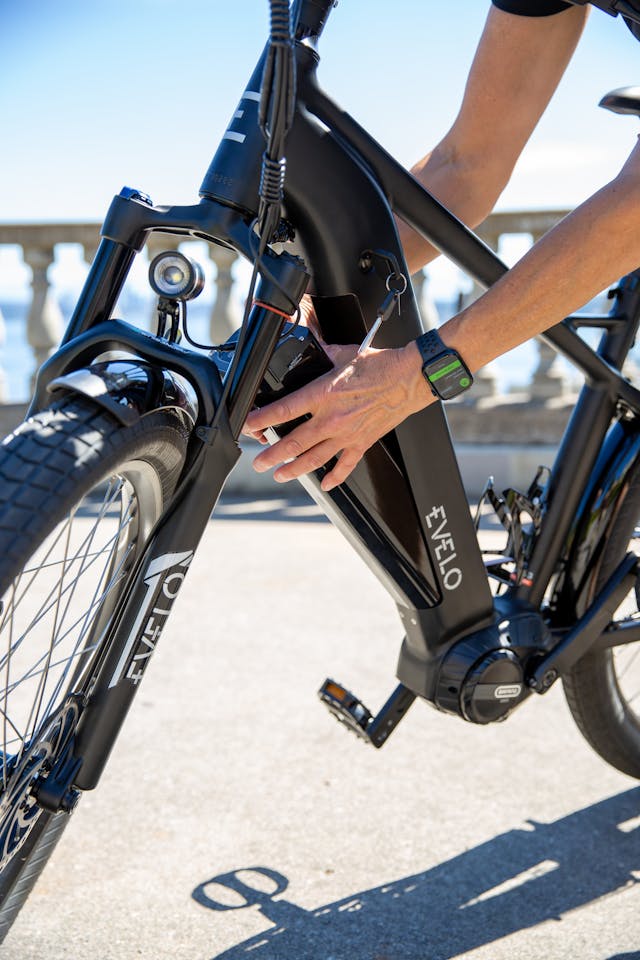
- Connect charger to battery port securely.
- Monitor the progress via indicator lights.
- Unplug when fully charged (most chargers auto shut-off, but don’t leave it plugged in for days).
Common Charging Mistakes to Avoid
- Using incompatible chargers
- Charging in extreme temperatures
- Leaving battery plugged in indefinitely
- Letting battery drain to 0% regularly
- Ignoring manufacturer instructions
Fast Charging: Pros, Cons, and Safety
Fast charging is great for quick top-ups, but it generates more heat and can degrade battery life if overused.
Fast Charging Tips:
- Only use certified fast chargers
- Avoid fast charging daily
- Monitor for overheating
- Stick to moderate temperatures
Best Charging Practices for Daily Commuters
- Top up regularly (don’t wait for empty)
- Charge overnight occasionally, not constantly
- Store and charge in a cool, dry place
- Keep a portable charger if you commute long distances
Environmental Factors That Affect Charging
- Hot environments: May slow charging and reduce battery health
- Cold environments: Charging may stop below freezing
- Moisture: Avoid charging in rain or high humidity
Tips to Maximize Battery Lifespan
- Keep charge between 20% and 80% for daily use
- Avoid full discharges unless necessary
- Store half-charged if unused for weeks
- Clean battery terminals periodically
⚠️ What If Your Battery Isn’t Holding a Charge?
- Check for loose or corroded connections
- Test with a known working charger
- Perform a battery diagnostic (some e-bikes include this feature)
- Contact your manufacturer or local e-bike service center
Charging Time by Battery Size
| Battery Capacity (Wh) | Approx. Charging Time (Standard 2A Charger) |
|---|---|
| 250Wh | 2–3 hours |
| 500Wh | 3–4.5 hours |
| 750Wh | 4–6 hours |
| 1000Wh | 6–8+ hours |
Note: Times vary based on charger power and battery condition.
Optimize Charging for Your Riding Routine
- Short trips: Partial charges daily
- Long rides: Full overnight charge
- Errands/commutes: Opportunistic top-ups during work or breaks
FAQs
A: Yes, if you’re using the original charger and storing the bike in a safe, moderate-temperature location. Just unplug it in the morning.
A: No. In fact, partial charging is ideal for lithium-ion batteries.
A: Only if it’s recommended by the manufacturer. Always match the correct voltage and amperage.
A: Most chargers have indicator lights that change from red to green. Some smart chargers also beep or display status.
Final Thoughts
Proper charging is more than plugging in a cable. It’s the key to better performance, longer battery life, and safer rides. Follow your manufacturer’s instructions, avoid extreme temperatures, and make charging part of your daily riding routine.
Stay powered, ride further—and enjoy every mile!
RELATED CONTENT
External Sources
- Electric Bike Forums: Join online forums and communities dedicated to electric biking, where you can engage with fellow riders, share experiences, and exchange tips on charging practices. Websites such as Electric Bike Review (electricbikereview.com/forum/) and Pedelecs (pedelecs.co.uk/forum/) offer valuable insights and discussions on electric bike charging and maintenance.
- Manufacturer Websites: Visit the websites of electric bike manufacturers to access comprehensive guides, FAQs, and support resources tailored to specific bike models. Manufacturers such as Bosch (bosch-ebike.com/us/service/) and Shimano (bike.shimano.com/en-EU/e-bike/) provide detailed information on battery care, charging recommendations, and troubleshooting tips.
- Research Studies and Articles: Explore academic research studies and articles published in reputable journals and publications to gain a deeper understanding of electric bike battery technology and charging optimization. Websites like IEEE Xplore (ieeexplore.ieee.org/) and ScienceDirect (sciencedirect.com/) host a wealth of scholarly articles on topics ranging from battery management systems to charging infrastructure development.
- Consumer Reports: Consult consumer advocacy organizations and product review websites for unbiased evaluations and recommendations on electric bike chargers and accessories. Websites like Consumer Reports (consumerreports.org/) and Wirecutter (nytimes.com/wirecutter/) offer expert reviews and ratings based on rigorous testing and analysis.
- Government Resources: Explore resources and guidelines provided by government agencies and organizations focused on sustainable transportation and energy efficiency. Websites such as the U.S. Department of Energy’s Alternative Fuels Data Center (afdc.energy.gov/) and the European Union’s Clean Mobility Package (europa.eu/european-union/topics/transport_en) offer valuable insights into electric bike charging infrastructure, regulations, and initiatives.

Kristina is not just an enthusiast but a true authority on electric bikes. Nestled in the coastal beauty of Virginia, Kristina has found the perfect backdrop for her passion for electric biking. As a dedicated wife and homeschooling mom, her life revolves around family, faith, and the thrill of adventure.
Originally hailing from Ohio, Kristina's journey with electric bikes began as a curiosity and quickly evolved into a deep expertise. Her blog is a testament to her love for electric biking, combining her fascination for eco-friendly transportation with her coastal lifestyle.
When she's not cruising the beach on her electric bike, you'll find Kristina indulging in her other loves: long walks along the shore, getting lost in a good book, and cherishing moments with her loved ones. With a heart as big as her love for animals, especially cats, Kristina brings a unique perspective to the electric bike world, grounded in her strong faith in God and her dedication to a sustainable lifestyle.
Through her blog, Kristina shares her extensive knowledge of electric bikes, offering valuable insights, tips, and recommendations to fellow enthusiasts. Whether you're a seasoned rider or a newcomer to the electric bike scene, Kristina's blog is your go-to source for all things electric biking, fueled by her passion, expertise, and the scenic beauty of coastal Virginia.