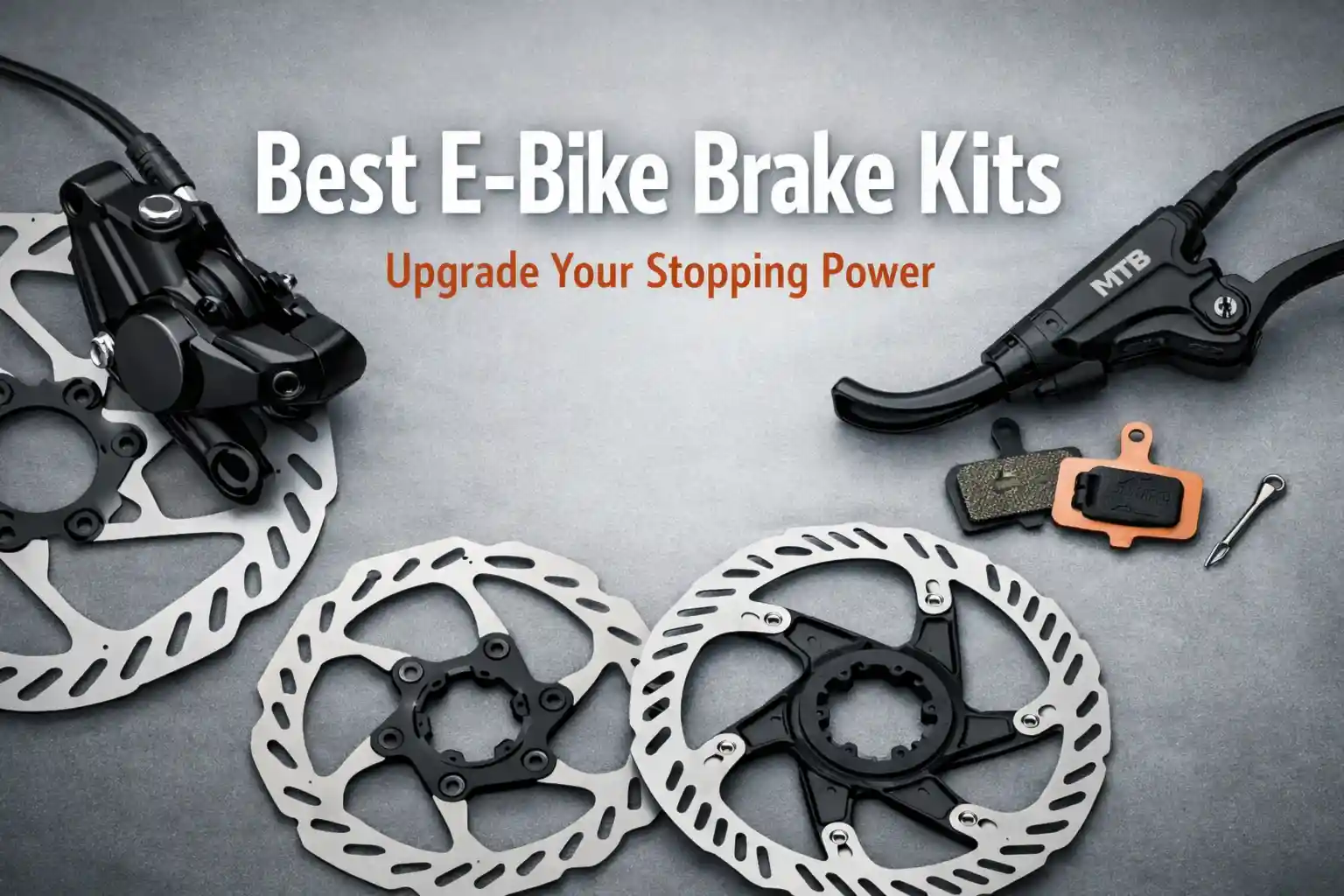
Best E-Bike Brake Kits (2026 Guide for Safe, Reliable Stopping Power)
Last Updated on May 18, 2026 by Kristina
Disclosure: As an Amazon Associate, I earn from qualifying purchases. This comes at no extra cost to you and helps support the content on this site.
Introduction
Upgrading your e-bike brake kit is one of the most important safety improvements you can make – especially if you ride at higher speeds, carry cargo, or ride in traffic.
Stock brakes on many e-bikes, especially budget models, are often underpowered for real-world riding conditions. A heavier bike, faster speeds, and longer stopping distances all put more demand on your braking system than many riders realize.
If you’re still learning how different components affect performance, start here:
👉 Read the E-Bike Buying Guide
👉 Understand braking basics: E-Bike Brakes Not Working (Common Fixes)
This guide breaks down the best e-bike brake kits, how to choose the right one, when an upgrade is worth it, and how to estimate your real-world braking demands before you buy.
📖 Read Next
E-Bike Troubleshooting & Maintenance Guide
E-Bike Battery Guide: Types, Charging, Range, Lifespan, and Care
Understanding eBike Voltage: 36V vs 48V vs 52V — Which Is Right for You?
Top 10 E-Bike Maintenance Mistakes That Damage Your Motor (and How to Avoid Them)
E-Bike Software Updates: Why They Matter & How to Get Them
How to Build Your Own Ebike From Scratch
Best E-Bike Brake Kits Compared (Quick Picks)
| Brake Kit | Best For | Brake Type | Power Level | Price Range |
|---|---|---|---|---|
| Shimano MT200 | Most riders / commuters | Hydraulic | ⭐⭐⭐⭐ | $ |
| Magura MT5 / MT7 | High-speed / heavy e-bikes | Hydraulic (4-piston) | ⭐⭐⭐⭐⭐ | $$$ |
| Zoom HB-100 / HB-875 | Budget upgrades | Hybrid | ⭐⭐⭐ | $ |
| TRP Spyre | Low-maintenance riders | Mechanical | ⭐⭐⭐ | $$ |
Quick recommendations:
- Best for most riders: Shimano MT200
- Best for speed, hills, and cargo: Magura MT5 / MT7
- Best budget brake upgrade: Zoom HB-100 / HB-875
- Best simple mechanical option: TRP Spyre
👉 Want a personalized recommendation? Try the E-Bike Brake Upgrade Selector Tool
How This Guide Helps You Choose
We evaluate brake kits based on:
- real-world stopping power (not just manufacturer claims)
- consistency under heat and repeated braking
- compatibility with common e-bike setups
- ease of installation and maintenance
- long-term reliability and parts availability
We prioritize safety-first recommendations and practical use over marketing claims.
A Quick Safety Reminder Before You Upgrade
E-bikes are heavier and faster than standard bicycles, which increases stopping distance and brake load.
That matters even more if you:
- ride above 20 mph
- carry cargo or passengers
- ride in hilly areas
- ride frequently in traffic
The U.S. Consumer Product Safety Commission (CPSC) emphasizes proper braking systems and maintenance as a key part of bicycle safety.
👉 You can also review local riding rules here: E-Bike Laws by State
If you’re still deciding whether upgrading your brakes is worth it:
Read: 5 Reasons Why Electric Bike Riders Should Upgrade to Disc Brakes
Which E-Bike Brake Kit Should You Choose?
A Simple Decision Guide
If you usually ride under 20 mph
A quality mechanical brake or entry-level hydraulic setup is often sufficient.
If you regularly ride 20–28 mph
Hydraulic brakes are strongly recommended for consistent stopping power.
If you ride fast, downhill, or carry heavy loads
A 4-piston hydraulic system with larger rotors provides better heat management and control.
If you want simpler maintenance
TRP Spyre is a solid mechanical upgrade.
If you want better stopping with less hand effort
Shimano MT200 is one of the most common upgrade paths.
If your brakes feel weak, inconsistent, or noisy, upgrading to a full hydraulic brake kit can dramatically improve stopping power and safety.
Not Sure If You Need a Brake Upgrade?
Instead of guessing, use the tools below.
- The first tool estimates braking demand
- The second estimates stopping distance under different conditions
👉 Then use the Brake Upgrade Selector Tool to choose the best setup.
E-Bike Braking Demand Calculator
Not sure if your current brakes are actually strong enough?
This quick calculator gives you a simple, real-world estimate of how much braking demand your setup creates based on your weight, bike weight, speed, and terrain.
Instead of guessing, this helps you understand when:
- your current brakes may be enough
- a hydraulic upgrade is recommended
- a stronger setup (like 4-piston brakes) may be safer
E-Bike Braking Demand Calculator
This tool provides a simplified estimate based on general riding conditions. It does not calculate exact braking force or account for factors like brake pad condition, rotor size, tire grip, or rider technique. Use this as a general guideline only, and prioritize safety when evaluating your braking system.
E-Bike Stopping Distance Calculator
Once you understand your braking demand, the next step is understanding how far your e-bike may actually take to stop.
This calculator gives you a real-world estimate of stopping distance based on your speed, weight, terrain, and brake type.
It helps show why:
- higher speeds dramatically increase stopping distance
- heavier riders and cargo require stronger braking
- hills and wet conditions can reduce stopping performance
This is especially useful for commuters, cargo riders, and anyone riding above 20 mph
E-Bike Stopping Distance Calculator
This calculator provides an estimated stopping distance using simplified assumptions. Actual stopping distance depends on many variables including rider reaction time, tire traction, brake condition, rotor size, weather, and road surface. Results should be used for general awareness only—not as a precise safety measurement.
According to general braking physics, stopping distance increases roughly with the square of speed, which is why higher speeds dramatically increase stopping distance.
Already Know You Want to Upgrade?
👉 Use this next the E-Bike Brake Upgrade Selector Tool
👉 Explore more tools: E-Bike Tools Hub
Best E-Bike Brake Kits (Detailed Picks)
Shimano MT200 - Best Overall for Most Riders
Reliable hydraulic braking with consistent performance for commuting and everyday riding.
Best for: commuters, casual riders, general upgrades
Magura MT5 / MT7 - Best for High-Speed and Heavy E-Bikes
Stronger braking systems designed for higher loads and more demanding riding conditions.
Best for: cargo bikes, hills, heavier riders, higher speeds
Zoom HB-100 / HB-875 - Best Budget Upgrade
Hybrid system offering improved braking feel over basic mechanical setups.
Best for: entry-level upgrades and budget riders
TRP Spyre - Best Mechanical Upgrade
Dual-piston mechanical system with more even braking than many basic mechanical brakes.
Best for: riders who want simpler maintenance
Hydraulic vs Mechanical E-Bike Brakes
Hydraulic brakes generally provide:
- stronger braking force
- better modulation
- less hand fatigue
Mechanical brakes offer:
- simpler maintenance
- lower cost
- easier adjustments
Real-World Brake Performance: What Actually Changes
Before Upgrading
- longer stopping distances
- reduced confidence at speed
- more hand effort
- potential brake fade on hills
After Upgrading
- more consistent braking
- improved control
- better performance in repeated stops
- improved downhill confidence
How to Choose the Right E-Bike Brake Kit
Choosing the right brake kit isn’t just about power—it’s about compatibility, riding style, and how you actually use your e-bike.
Before upgrading, here’s what to check.
1. Rotor Size Compatibility
Your rotor size directly affects stopping power.
- 160mm → basic braking (lighter riders, flat terrain)
- 180mm → stronger braking for commuting
- 203mm → maximum stopping power (hills, cargo, higher speeds)
💡 Larger rotors provide better leverage and heat dissipation, which is especially important on heavier e-bikes.
2. Brake Mount Type (Frame Compatibility)
Most e-bikes use one of these:
- Post mount (most common on e-bikes)
- Flat mount (less common, more road-style setups)
Make sure your brake kit matches your frame or uses the correct adapter.
3. Cable vs Hydraulic Routing
- Mechanical brakes use cables
- Hydraulic brakes use fluid-filled hoses
Before upgrading:
- check how your cables/hoses are routed
- make sure your frame supports the new system
- confirm hose length is sufficient
Improper routing can reduce performance and damage components over time.
4. Frame and Fork Clearance
Not all frames support larger rotors or bigger calipers.
Before upgrading:
- check maximum rotor size your frame allows
- ensure calipers won’t interfere with frame or fork
- confirm adapter compatibility
5. Match the Brake to Your Riding Style (Most Important)
This is where many riders go wrong.
- Casual / flat riding → mechanical or entry hydraulic
- Commuting / traffic riding → hydraulic recommended
- Hills / cargo / higher speeds → 4-piston hydraulic + larger rotors
If you’re unsure, use the calculators above to estimate your braking demand.
Quick Shortcut (Most Riders)
If you don’t want to overthink it:
- Most riders → Shimano MT200 (best overall upgrade)
- Heavy / fast / hills → Magura MT5 or MT7
- Budget upgrade → Zoom HB-100
Not Sure What Fits Your Bike?
Instead of guessing, use the tools below to make a confident decision:
👉 Start here: E-Bike Buying Guide
👉 Get a recommendation: E-Bike Brake Upgrade Selector Tool
The calculators above help you understand if you need an upgrade
The selector tool helps you decide what to buy
Installation Guide
Upgrading your e-bike brakes is doable for many riders, but getting the details right is important for safety and performance.
🎥 Watch this quick walkthrough before installing your brake kit:
Seeing the process makes it much easier to understand caliper alignment, hose routing, and proper setup—especially if this is your first upgrade.
Tools You May Need
- Allen/hex key set
- Torque wrench (recommended for safety)
- Cable cutters (for mechanical brakes)
- Hydraulic bleed kit (for hydraulic systems)
- Rotor adapters (if upgrading rotor size)
Step 1: Remove Old Brake Components
- Remove the brake calipers from the frame/fork
- Remove brake levers from the handlebars
- Disconnect cables or hydraulic hoses
💡 Tip: Take a quick photo before removing everything so you can reference routing later.
Step 2: Install New Brake Levers
- Slide new levers onto handlebars
- Position at a comfortable angle (usually 30–45° downward)
- Lightly tighten so you can still adjust later
Step 3: Install Brake Calipers
- Mount calipers onto frame or fork mounts
- Do not fully tighten yet (you’ll align them later)
Step 4: Route Cables or Hydraulic Hoses
- Follow the same path as the original setup
- Avoid sharp bends or kinks
- Secure with clips or frame guides
⚠️ Poor routing can reduce braking performance or damage hoses over time.
Step 5: Align the Calipers (Critical Step)
This is where many riders go wrong.
- Spin the wheel
- Squeeze the brake lever firmly
- While holding the lever, tighten caliper bolts
- Release and check for rubbing
If you hear rubbing:
- Loosen slightly and re-center
- Repeat until the rotor spins cleanly
Step 6: Tighten to Proper Torque
If possible, use a torque wrench and follow manufacturer specs.
Over-tightening can damage components
Under-tightening can be unsafe
Step 7: Test Before Riding
- Squeeze brakes firmly
- Roll bike slowly and test stopping
- Check for noise, rubbing, or weak braking
👉 Never take a full-speed ride without testing first
Hydraulic Brake Note
If installing hydraulic brakes:
- You may need to bleed the system to remove air
- Air in the system causes a spongy lever feel
If you’re unsure, a local bike shop can handle this quickly and safely.
If your brakes still feel weak or inconsistent after installation:
See: How to Fix Brakes on an Electric Bike (Step-by-Step Guide)
⚠️ How to Bed In New Brake Pads (Don’t Skip This)
New brake pads don’t reach full performance until they’re properly bedded in.
Step-by-Step Bedding Process
- Ride at about 10–15 mph
- Apply firm braking (do NOT lock wheels)
- Slow down to walking speed
- Repeat 10–15 times
What Bedding In Actually Does
- Transfers a thin layer of pad material onto the rotor
- Improves friction and braking consistency
- Reduces noise and vibration
- Helps prevent uneven wear
Signs Your Brakes Are Properly Bedded
- Stronger stopping power
- Smooth, consistent braking
- Less squealing
Common Bedding Mistakes
- Only braking lightly
- Not repeating enough cycles
- Fully locking the wheel
- Skipping the process entirely
Skipping this step is one of the biggest reasons new brakes feel “weak”
Common Mistakes Riders Make
Avoiding these mistakes can save you time, money, and safety issues.
Skipping Pad Bedding
Leads to:
- weak braking
- noisy brakes
- poor performance
Poor Caliper Alignment
Leads to:
- rotor rubbing
- uneven pad wear
- reduced braking efficiency
Choosing the Wrong Rotor Size
- Too small → less stopping power
- Too large → compatibility issues
Common upgrades:
- 160mm → basic
- 180mm → stronger braking
- 203mm → heavy-duty / high-speed
Mixing Incompatible Components
Examples:
- mismatched brake levers and calipers
- incompatible hose fittings
- incorrect mounting standards
Not Accounting for Rider Weight and Speed
This is one of the most overlooked issues.
A heavier rider + faster speeds = significantly more braking demand
Ignoring Early Warning Signs
If you notice:
- squealing
- weak braking
- inconsistent feel
Don’t ignore it — these are often early signs your setup needs adjustment or upgrading.
👉 See: E-Bike Brakes Not Working (Fixes)
Should You Upgrade Your Brakes or Replace Your Bike?
Upgrading your brakes is often one of the best improvements you can make—but in some cases, it may make more sense to upgrade the entire bike instead.
Here’s how to decide.
When a Brake Upgrade Makes Sense
A brake upgrade is usually the right move if your e-bike:
- still rides well overall
- has a solid frame and motor
- just lacks stopping power
- came with basic or entry-level brakes
Example:
If your bike feels good but takes too long to stop, upgrading to a hydraulic brake kit can dramatically improve safety and confidence.
In most cases, this is the highest-value upgrade you can make for everyday riding.
When Replacing the Bike May Be the Better Option
You may want to consider replacing your e-bike if it has multiple limitations, not just weak brakes.
Signs it may not be worth upgrading:
- multiple low-end components (brakes, drivetrain, suspension)
- weak overall performance (motor + battery limitations)
- poor compatibility with upgrades
- frame or design limitations
- frequent maintenance issues
Example:
If your bike has weak brakes and poor range and low power, upgrading just the brakes may not solve the bigger problem.
Cost Comparison: Upgrade vs Replace
| Option | Typical Cost | What You Get |
|---|---|---|
| Brake Upgrade | $80 – $300+ | Better stopping power |
| Full Bike Upgrade | $800 – $2,000+ | Improved performance, range, comfort, and safety |
A brake upgrade is much cheaper - but only solves one part of the system.
Quick Decision Guide
- Upgrade brakes → if your bike is good overall but lacks stopping power
- Replace bike → if multiple parts are holding you back
If You’re Considering a New Bike
If you're starting to feel like your current bike is limited, it may be worth comparing modern options.
👉 See: Best Budget E-Bikes
👉 See: Best Commuter E-Bikes for Daily Riding
These guides break down:
- real-world performance
- braking quality
- value for the price
A Smart Middle Ground
In some cases, the best approach is:
Upgrade your brakes now
Plan a bike upgrade later
This gives you:
- immediate safety improvement
- time to choose the right next bike
Frequently Asked Questions
If your e-bike takes too long to stop, feels weak at higher speeds, or requires pulling the levers very hard, your brakes may not be sufficient. Squealing, fading on hills, or inconsistent stopping are also signs it’s time to upgrade.
Yes, hydraulic brakes provide stronger, more consistent stopping power with less hand effort. They are especially worth it for heavier e-bikes, commuters, and riders who travel at higher speeds or on hills.
Most e-bikes can be upgraded, but you need to check compatibility. Make sure your frame supports the brake type, your rotor size is compatible, and your routing can accommodate hydraulic hoses.
Yes. Larger rotors (like 180mm or 203mm) provide more stopping power and better heat dissipation. This is especially helpful for heavier riders, cargo bikes, and downhill riding.
Brake pad lifespan varies based on riding style and conditions, but most last between 500–1,500 miles. Riding in wet, hilly, or high-speed conditions will wear them out faster.
New brakes often feel weak if they haven’t been properly bedded in. Bedding transfers material onto the rotor and improves braking performance. Skipping this step is one of the most common mistakes.
Many riders can install mechanical or basic hydraulic brake kits themselves. However, if you’re unsure about alignment, torque, or bleeding hydraulic systems, a bike shop is the safest option.
2-piston brakes are lighter and sufficient for casual riding
4-piston brakes provide stronger, more even braking power
4-piston systems are better for heavier e-bikes, higher speeds, and demanding terrain.
Yes. E-bikes are heavier and often travel faster, which increases braking demand and leads to faster wear on pads and rotors.
For most riders, hydraulic brake kits like Shimano MT200 offer the best balance of performance, reliability, and value. Riders who carry heavy loads or ride at higher speeds may benefit from higher-end options like Magura or 4-piston systems.
Final Thoughts: Choosing the Right E-Bike Brake Upgrade
Upgrading your e-bike brakes isn’t just about performance—it’s about safety, control, and confidence every time you ride.
For many riders, especially those riding faster e-bikes or carrying extra weight, stock brakes simply aren’t designed for real-world conditions.
Here’s the simple takeaway:
- If your brakes feel weak → upgrade them
- If you ride faster, heavier, or on hills → hydraulic brakes are worth it
- If your bike has multiple limitations → consider upgrading the bike instead
Best Choice for Most Riders
If you want a safe, reliable upgrade without overthinking it:
Shimano MT200 is the best choice for most e-bike riders
It offers a strong balance of:
- performance
- reliability
- affordability
Not sure where to go next?
Some riders are brand new. Others are fixing a problem or thinking about a new bike. Choose what fits you.
Learn & Get Comfortable
Understand how e-bikes work and what to expect when riding.
Improve Your Current Ride
If your bike isn’t performing how you want, learn what affects speed, range, and power.
Compare Better Bikes
Looking for something that fits your riding style? Start here.
- Best Electric Bikes for Beginners
- Recommended Commuter Ebikes
- Most Comfortable City E-Bikes
- Best Fat Tire Ebikes
- Top Folding Ebikes
- Best Step Through Ebikes
- Top Cargo Electric Bikes
- Best Lightweight Ebikes
- Best Long Range Ebikes
- Top Moped Style E-Bikes
- E-bike Reviews
🛒 Ready to Buy?
Top picks and current availability from trusted brands.
👉 Still deciding?
Take our E-Bike Recommendation Quiz to get matched with the right riding style in under two minute
External Sources

Kristina is not just an enthusiast but a true authority on electric bikes. Nestled in the coastal beauty of Virginia, Kristina has found the perfect backdrop for her passion for electric biking. As a dedicated wife and homeschooling mom, her life revolves around family, faith, and the thrill of adventure.
Originally hailing from Ohio, Kristina's journey with electric bikes began as a curiosity and quickly evolved into a deep expertise. Her blog is a testament to her love for electric biking, combining her fascination for eco-friendly transportation with her coastal lifestyle.
When she's not cruising the beach on her electric bike, you'll find Kristina indulging in her other loves: long walks along the shore, getting lost in a good book, and cherishing moments with her loved ones. With a heart as big as her love for animals, especially cats, Kristina brings a unique perspective to the electric bike world, grounded in her strong faith in God and her dedication to a sustainable lifestyle.
Through her blog, Kristina shares her extensive knowledge of electric bikes, offering valuable insights, tips, and recommendations to fellow enthusiasts. Whether you're a seasoned rider or a newcomer to the electric bike scene, Kristina's blog is your go-to source for all things electric biking, fueled by her passion, expertise, and the scenic beauty of coastal Virginia.