
Best E-Bikes for Deer Hunting: 5 Picks for Trails, Gear, and Access
Last Updated on August 5, 2026 by Kristina
📚 Research-based buying guide: I have not personally tested every bike in this guide. These recommendations are based on current manufacturer specifications, safety documentation, warranty and return policies, independent testing, service information, and available rider feedback.
Prices, specifications, and availability checked August 4, 2026
Introduction
Getting to a deer stand quietly is only part of choosing an e-bike for hunting. The bike also needs enough traction for wet leaves and soft ground, controlled power at low speed, dependable brakes under load, practical cargo capacity, and a battery that will not leave you pushing an 80- or 90-lb bike back to the truck.
My top overall choice is the Bakcou Mule SD because its high-torque mid-drive, modular rack, dual-battery option, and hunting-focused design make it the most complete tool in this group. Hunters working with a smaller budget should look closely at the Kingbull Hunter 2.0S, while the Velotric Nomad 2X stands out for its unusually high manufacturer-rated payload and towing figures.
This guide is narrower than my broader best hunting e-bikes guide. It focuses specifically on deer hunting, including stand access, scouting, gear transport, rough trails, and the practical limits of hauling game. New buyers may also want to review my complete e-bike buying guide before comparing motor types, battery sizes, brakes, and frame fit.
👉 Short on time?
See today’s e-bike deals and limited-time discounts, then compare top picks below.
Comparison Chart
| Model | Price checked | Motor | Battery | Bike weight | Payload | Best use | Main tradeoff |
|---|---|---|---|---|---|---|---|
| Bakcou Mule SD | $5,799 preorder | 750W/1000W mid-drive, 160 Nm | 52V 20Ah; second-battery option | 90 lb with battery | Not clearly published on the product page | Steep terrain, heavy gear, hunting accessories | Very expensive and currently preorder-only |
| Kingbull Hunter 2.0S | $899 sale price | 750W hub, 1300W peak claim | 48V 18Ah, 864Wh | 77 lb | 400 lb; 150 lb rear rack | Budget stand access and forest roads | Cadence sensor and front suspension only |
| Puckipuppy Labrador Pro | From $1,499.99 | 750W hub, 1350W peak claim | 48V 20Ah, about 960Wh | 85.7 lb | 400 lb | Rough trails at a midrange price | Heavy and no clearly published towing limit |
| Velotric Nomad 2X | $2,199-$2,299 | 750W hub, 1400W peak, 105 Nm | Long-range integrated battery | Check current configuration | 560 lb; 120 lb rear rack | Heavy riders, gear, and manufacturer-rated towing | Large, heavy, and towing claim is not independently verified |
| Aventon Aventure.3 | Check current price | 750W hub, 1440W boost claim, 80 Nm | 733Wh | 76 lb | 400 lb total limit | Hunting access plus everyday riding | Not a purpose-built game-hauling platform |
Manufacturer range, peak-power, payload, rack, and towing figures are not guarantees. Cold weather, mud, hills, tire pressure, rider weight, cargo, speed, and assist level can reduce real-world performance substantially.
How I Chose These Deer-Hunting E-Bikes
This is a research-based buying guide. I have not personally tested all five bikes together under identical hunting conditions. I compared current official specifications, battery capacity, motor type, brakes, suspension, tires, bike weight, payload information, cargo options, certification statements, availability, and the way each model fits a distinct deer-hunting use case.
I gave extra weight to controlled low-speed performance, traction, loaded stopping ability, practical range, accessory support, and transport considerations. I did not rank a bike higher because of an affiliate relationship, a dramatic peak-power number, or an unverified range claim.
🔎 Why You Can Trust This Guide
I compare official specifications, safety information, independent testing, support policies, and real-world rider feedback. Affiliate relationships do not determine which products I recommend or how they are ranked. You can read more about how Electric Bike Explorer reviews and ranks e-bikes.
Want to See More Electric Bike Explorer in Google Search?
Add Electric Bike Explorer as a preferred source to see more of our e-bike law guides, safety updates, reviews, buying guides, and troubleshooting posts when they are relevant to your searches.
1. Bakcou Mule SD – Best Overall for Serious Deer Hunting

The Bakcou Mule SD is the most hunting-focused bike in this comparison. Its Bafang M620 mid-drive is listed at 750W/1000W with 160 Nm of torque, which is the type of power delivery I would prefer for steep climbs and slow, loaded riding. Because a mid-drive uses the bike’s gearing, the rider can select a lower gear instead of asking a hub motor to pull every hill at one fixed drive ratio.
The included battery is 52V 20Ah. Bakcou’s modular rack can accept an additional 15Ah or 20Ah battery, creating up to 40Ah of combined capacity. The bike also has quad-piston hydraulic brakes with 203mm rotors, an 11-speed drivetrain, 24- or 26-inch fat-tire options, and a listed weight of 90 lb with the battery.
Bakcou lists a folding cargo trailer among the recommended accessories. That confirms a compatible trailer option is available, but the Mule SD product page does not provide a specific maximum towing capacity. I would not treat trailer compatibility as proof that any load or harvested animal is automatically safe to tow.
The biggest issue is price and timing. The bike was listed at $5,799 on August 4, 2026, with estimated August 2026 shipping for preorders. Bakcou Connect is included for the first year and currently costs $99 per year afterward, so connected security and tracking add a potential continuing ownership cost.
Why It Stands Out
- High-torque mid-drive for hills and controlled loaded riding
- Large 52V 20Ah battery with a second-battery option
- Strong four-piston brakes and 203mm rotors
- Modular hunting-oriented rack and compatible cargo trailer
- 24- and 26-inch wheel options
Tradeoffs
- Far more expensive than the other recommendations
- 90 lb with the battery
- Preorder status means delivery timing should be confirmed
- No specific towing limit published on the main product page
Best for: Hunters who regularly ride steep or difficult terrain and are willing to pay for a purpose-built platform.
2. Kingbull Hunter 2.0S – Best Budget Deer-Hunting E-Bike

The Kingbull Hunter 2.0S offers a lot of practical capacity for its current sale price. Kingbull lists a 750W rear-hub motor with a 1300W peak claim, an 864Wh battery, hydraulic brakes, 26 x 4-inch tires, a 400 lb maximum payload, and a notably high 150 lb rear-rack limit.
The rack rating is useful for packs, clothing, tools, and properly secured hunting equipment, but it should not be confused with trailer capacity. I also omitted a torque number because Kingbull’s published materials have not been fully consistent on that specification. Leaving out a disputed figure is more useful than presenting false precision.
The Hunter 2.0S uses a cadence sensor rather than a torque sensor. That usually means assistance arrives according to crank movement instead of responding proportionally to pedal pressure. It can work well on roads and open trails, but it may feel less natural when inching through roots, turning tightly, or trying to control power on slick ground.
Why It Stands Out
- Low current sale price for a full-size fat-tire e-bike
- 864Wh battery and up to 80 miles of manufacturer-claimed range
- 400 lb total payload and 150 lb rack rating
- Hydraulic brakes and included rear cargo platform
- 77 lb weight is lighter than several hunting-oriented competitors
Tradeoffs
- Hub motor is less mechanically advantaged than a mid-drive on steep climbs
- Cadence sensor can be less precise at low speed
- Front suspension only
- Published maximum range assumes ideal conditions
Best for: Hunters who need affordable access across private roads, farm lanes, gravel, and moderate trails without paying premium hunting-bike prices.
Read my full review of the Kingbull Hunter 2
3. Puckipuppy Labrador Pro – Best Full-Suspension Value

The Puckipuppy Labrador Pro is the value pick for riders who want front and rear suspension. The official specifications list a 750W motor with a 1350W peak claim, a 48V 20Ah battery, torque-plus-cadence sensing, hydraulic disc brakes, 26 x 4-inch tires, an 8-speed drivetrain, and a 400 lb maximum load.
The 48V 20Ah battery works out to about 960Wh. Puckipuppy claims a range of 40 to 80 miles, but the upper figure should be treated as an ideal-condition estimate. A heavy rider, cold morning, deep mud, soft tires, high assist, and a loaded rack can cut that figure dramatically.
Puckipuppy lists the bike at 85.7 lb and states that the battery is certified to UL 2271 and the e-bike to UL 2849 through SGS. I am attributing those certification statements to the manufacturer rather than claiming Electric Bike Explorer independently confirmed the underlying certification records.
Why It Stands Out
- Full suspension at a midrange price
- Torque and cadence sensors for more adaptable assistance
- Large 48V 20Ah battery
- 400 lb maximum load
- Manufacturer-listed UL 2849 and UL 2271 certification through SGS
Tradeoffs
- 85.7 lb is difficult to lift onto many racks
- No clearly published game-trailer towing limit
- Range varies widely with conditions
- Direct-to-consumer service may be less convenient than a broad dealer network
Best for: Hunters who want full suspension for rough or rutted access trails without moving into premium hunting-bike pricing.
Read my full review of the Puckipuppy Labrador Pro
4. Velotric Nomad 2X – Best for High Payloads
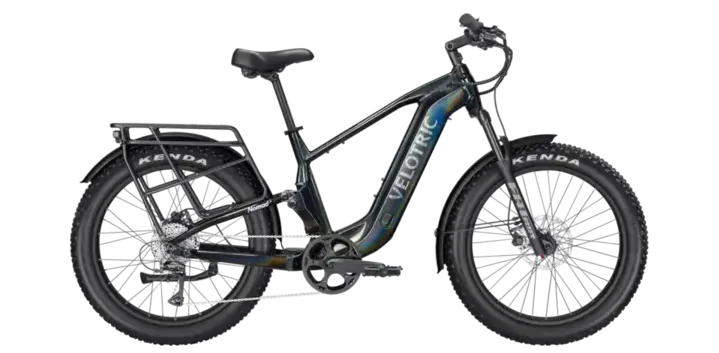
The Velotric Nomad 2X has the strongest published load figures in this comparison. Velotric lists a 560 lb total payload, a 120 lb rear-rack rating, and a 1000 lb maximum towing capacity. That towing figure is a manufacturer claim and has not been independently tested by Electric Bike Explorer, so buyers should verify the approved hitch, trailer, terrain, braking limits, warranty conditions, and safe operating instructions before towing anything substantial.
The motor is listed at 750W nominal, 1400W peak, and 105 Nm. Full air suspension, 4-inch fat tires, and the high load ratings make the Nomad 2X interesting for larger riders and hunters who carry substantial equipment. Velotric also claims up to 75 miles of range.
The key distinction is that payload, rack capacity, and towing capacity describe different loads. A 560 lb payload does not mean the rack can hold 560 lb, and a towing claim does not guarantee safe braking on a muddy descent. Trailer weight distribution and tongue weight matter, too.
Why It Stands Out
- 560 lb manufacturer-rated total payload
- 120 lb rear-rack rating
- 1000 lb manufacturer-claimed towing capacity
- 105 Nm motor and full air suspension
- Useful for heavier riders and substantial equipment loads
Tradeoffs
- Towing figure is not an independent Electric Bike Explorer test
- Large full-suspension fat bike requires a properly rated vehicle rack
- Higher purchase price than the Kingbull and Puckipuppy picks
- Extreme loads require conservative speed and braking decisions
Best for: Hunters who need unusually high rider-and-cargo capacity and are prepared to verify every towing component before use.
Read my full review of the Velotric Nomad 2X
5. Aventon Aventure.3 – Best Hunting and Everyday Crossover

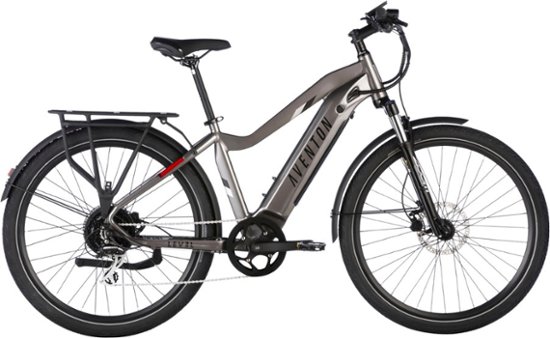
The Aventon Aventure.3 is not as hunting-specific as the Bakcou, but it is easier to justify when the same bike will also be used for recreation, errands, neighborhood riding, or commuting. Aventon lists a 750W hub motor, up to 1440W in boost mode, 80 Nm of torque, a 733Wh battery, a 76 lb bike weight, and a 400 lb total weight limit.
The claimed range is up to 65 miles. The bike also includes connected features such as GPS location, remote shutdown, vibration monitoring, geofencing, and lost-bike reporting. Aventon states that certain connected functions require 4G service, with a complimentary subscription during the first year after product registration. Buyers should check the current renewal price before treating those services as a permanent included feature.
This is the bike I would choose for moderate hunting access rather than technical backcountry hauling. The broad dealer presence and polished everyday features are advantages, but it does not have the Mule SD’s hunting rack system or a clearly promoted game-trailer role.
Why It Stands Out
- Balanced all-terrain and everyday-use design
- 750W motor, torque sensor, and 733Wh battery
- 400 lb total weight limit
- GPS and connected anti-theft functions
- Broader service and dealer options than many direct-to-consumer brands
Tradeoffs
- Not purpose-built for game retrieval
- Connected features may require a paid 4G subscription after the first year
- 76 lb still requires a heavy-duty rack
- Up-to-65-mile range is a manufacturer claim
Best for: Hunters who want one fat-tire e-bike for moderate stand access and regular recreational or practical riding.
Read my full review of the Aventon Aventure 3
Other Deer-Hunting E-Bikes to Consider
Puckipuppy Bulldog
The Puckipuppy Bulldog is worth considering when dual-battery endurance matters more than keeping bike weight low. It is better suited to large private properties and long access-road routes than hunters who must frequently lift the bike.
Kingbull Rover 2.0
The Kingbull Rover 2.0 is the Kingbull alternative for riders who want full suspension. The Hunter 2.0S remains my main Kingbull recommendation because its lower price and hunting-oriented positioning create a clearer value case.
Himiway D7 Pro
The Himiway D7 Pro is a powerful full-suspension mid-drive alternative for rough terrain. Its size, weight, price, and transport requirements make it a more specialized choice than the five main recommendations.
How to Choose an E-Bike for Deer Hunting
Choose the Motor for Your Terrain
A mid-drive is usually the better mechanical choice for steep climbs, especially when the rider can shift into a low gear. A rear-hub motor is simpler and often less expensive, making it suitable for flatter private land, gravel roads, and moderate trails. My e-bike motor guide explains the practical differences in more detail.
Look Beyond the Claimed Range
Battery capacity in watt-hours is more useful than a maximum-range headline. A 48V 20Ah battery is about 960Wh, while a 36V 20Ah battery is about 720Wh. Real range falls with cold temperatures, hills, soft tires, mud, cargo, throttle use, high assist, and repeated starts. See my guide to e-bike battery capacity and watt-hours before comparing range claims.
Separate Payload, Rack Capacity, and Towing Capacity
Payload generally includes the rider and everything carried on the bike. Rack capacity applies only to the rack. Towing capacity applies to a trailer and should come with instructions about the hitch, trailer, speed, grade, tongue weight, and braking. Never assume a high payload automatically means a bike can tow a deer.
Demand Strong Brakes
Hydraulic disc brakes are the minimum I would want for a heavy fat-tire hunting bike. Larger rotors and four-piston calipers can provide more control under load, but maintenance and pad condition still matter. Test braking with progressively heavier legal loads in a safe area before entering steep terrain.
Check Fit and Transport Weight
Most bikes in this guide weigh 76 to 90 lb before adding a rack bag, second battery, tools, or trailer hardware. Confirm that your hitch rack is rated for the full loaded bike and can accommodate fat tires and the wheelbase. Removing the battery can make lifting easier, but it does not turn a very heavy bike into a lightweight one. Use the e-bike size calculator as a starting point for frame fit.
Fat Tires Help, but They Are Not Magic
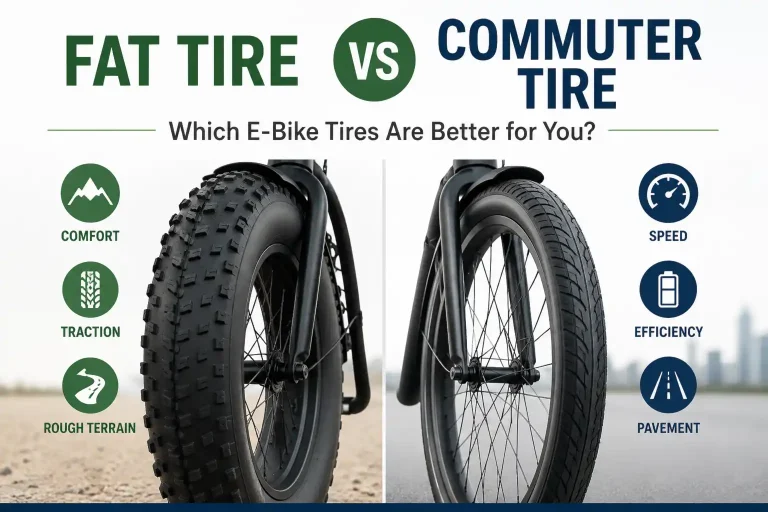
Four-inch tires can improve flotation and traction on sand, snow, and soft ground. They also add rolling resistance, weight, and transport bulk. Riders staying on firm farm roads or maintained gravel may not need the most aggressive tire available. My fat-tire e-bike guide covers the broader advantages and compromises.
Gear Up for a Safer Deer-Hunting Ride
The right accessories can make a hunting e-bike more useful without overloading it. Before heading into the woods, consider adding:
- Waterproof panniers or a rack bag for clothing, food, tools, and scent-control gear.
- A manufacturer-approved cargo trailer for equipment or legal game transport. Confirm the bike’s towing limit, hitch requirements, tongue weight, and braking guidance first.
- A fat-tire repair kit with tire plugs, patches, tire levers, a compact pump, and a compatible spare tube.
- A high-output front light and red rear light for early-morning access and the ride back after sunset.
- A handlebar mirror for checking approaching vehicles on forest roads and shared access routes.
- A GPS tracker for locating the bike if it is moved or stolen near a trailhead, camp, or parked vehicle.
- A heavy-duty lock for securing the bike when you leave it unattended.
- A properly rated hitch rack that can support the bike’s full weight, wheelbase, and fat tires.
- A certified e-bike helmet for protection on loose gravel, roots, mud, and uneven trails.
Before buying: Check the bike’s payload, rear-rack limit, trailer instructions, accessory compatibility, and total loaded weight. Payload, rack capacity, and towing capacity are separate ratings.
Are E-Bikes Legal on Deer-Hunting Land?
Do not assume that an e-bike is allowed simply because conventional bicycles are allowed. Rules can depend on the bike’s class, motor output, throttle, route designation, land manager, state hunting regulation, disability accommodation, and whether the property treats e-bikes as motorized vehicles.
- U.S. Forest Service: E-bikes are generally allowed on roads and trails open to motor vehicles. Additional routes require local designation.
- Bureau of Land Management: Access on non-motorized routes depends on a site-specific management decision. Check the local field office and current travel map.
- National Park Service: Park superintendents can establish local access and restrictions. E-bikes remain prohibited in wilderness areas.
- National wildlife refuges: Access depends on the refuge manager’s compatibility determination and the specific routes opened to bicycles and e-bikes.
- State and private land: Wildlife agencies, state forests, leased land, clubs, and property owners may impose separate rules.
Start with the State-by-State E-Bike Law Guide, then confirm the current rule with the agency or owner responsible for the exact road or trail.
Legal note: This guide is for general information and is not legal advice. Trail and hunting rules can change, and posted restrictions control.
Common Deer-Hunting E-Bike Mistakes
- Buying only by motor wattage: Sensor response, gearing, torque delivery, brakes, tires, and total weight often matter more than the largest peak number.
- Planning around maximum claimed range: Leave a substantial battery reserve for cold weather, hills, detours, and heavy cargo.
- Confusing rack capacity with towing capacity: These are different ratings and require different hardware.
- Ignoring the return trip: A route that feels easy unloaded can become difficult after adding gear or a legal trailer load.
- Using an underrated vehicle rack: The e-bike, battery, rack bag, and accessories can exceed the carrier’s per-bike limit.
- Assuming the bike is silent: E-bikes are quieter than many gas vehicles, but motors, chains, tires, brakes, clothing, and cargo still make noise.
- Skipping access research: A legal e-bike can still be prohibited on a particular trail or hunting property.
Frequently Asked Questions
What is the best e-bike for deer hunting?
The Bakcou Mule SD is my best overall choice for serious deer hunting because of its high-torque mid-drive, large battery, strong brakes, modular rack, and compatible hunting accessories. It is expensive, so riders on flatter land may get better value from the Kingbull Hunter 2.0S.
Can an e-bike haul a deer?
Some e-bikes can pull an approved trailer, but the manufacturer must support the load and hitch system. Confirm trailer weight, cargo weight, tongue weight, route grade, braking limits, and local access rules. Do not infer towing capacity from the bike’s payload or rack rating.
Is a mid-drive better than a hub motor for hunting?
A mid-drive is usually better for steep terrain because it can use the bike’s gears. Hub motors can be practical and less expensive for roads, fields, and moderate trails. The better choice depends on terrain, load, service access, and budget.
How much battery capacity should a hunting e-bike have?
For longer off-road trips, I would generally look for at least 700Wh and prefer roughly 850Wh to 1000Wh when the bike is heavy or the route is hilly. A second-battery option can be valuable, but carrying more battery also adds weight.
Do I need full suspension?
No. Full suspension improves comfort and wheel control on rough trails, but it adds price, weight, and maintenance. Front suspension is often enough for maintained gravel roads, farm lanes, and smoother access trails.
What accessories are useful for deer hunting?
A properly rated rear rack, waterproof panniers, bright lights, a mirror, tire repair supplies, a compact pump, secure tool storage, and an approved trailer can be useful. See my guide to the best e-bike accessories for general safety and ownership equipment.
My Take
For steep terrain and serious backcountry use, I would choose the Bakcou Mule SD if the price and preorder timing were acceptable. Its mid-drive, large battery system, brakes, and hunting-oriented accessories create a more complete package than a general-purpose fat-tire bike.
The Kingbull Hunter 2.0S is the value winner. It gives hunters a large battery, substantial rack rating, hydraulic brakes, and full-size fat tires at a much lower price, but its cadence sensor and hub motor make it better suited to moderate terrain. The Puckipuppy Labrador Pro is the better choice when full suspension matters, while the Velotric Nomad 2X deserves attention from riders who need high published load ratings and are prepared to verify its towing system carefully.
The Aventon Aventure.3 makes the most sense when deer hunting is only one part of the bike’s job. It is easier to recommend as an all-around purchase, but I would not choose it over the Bakcou for repeated steep, loaded trips.
Before buying, confirm the current price, delivery date, rider fit, total bike weight, rack compatibility, replacement-battery cost, warranty exclusions, trailer instructions, connected-service fees, and the exact land-access rules where you hunt.
Disclosure: As an Amazon Associate, I earn from qualifying purchases. This comes at no extra cost to you and helps support the content on this site.
External Sources
- Bakcou Mule SD official product page
- Kingbull Hunter 2.0S official product page
- Puckipuppy Labrador Pro official product page
- Velotric Nomad 2X official product page
- Aventon Aventure.3 official product page
- U.S. Forest Service e-bike guidance
- Bureau of Land Management e-bike guidance
- National Park Service e-bike guidance
- U.S. Fish and Wildlife Service refuge e-bike guidance

Kristina is not just an enthusiast but a true authority on electric bikes. Nestled in the coastal beauty of Virginia, Kristina has found the perfect backdrop for her passion for electric biking. As a dedicated wife and homeschooling mom, her life revolves around family, faith, and the thrill of adventure.
Originally hailing from Ohio, Kristina's journey with electric bikes began as a curiosity and quickly evolved into a deep expertise. Her blog is a testament to her love for electric biking, combining her fascination for eco-friendly transportation with her coastal lifestyle.
When she's not cruising the beach on her electric bike, you'll find Kristina indulging in her other loves: long walks along the shore, getting lost in a good book, and cherishing moments with her loved ones. With a heart as big as her love for animals, especially cats, Kristina brings a unique perspective to the electric bike world, grounded in her strong faith in God and her dedication to a sustainable lifestyle.
Through her blog, Kristina shares her extensive knowledge of electric bikes, offering valuable insights, tips, and recommendations to fellow enthusiasts. Whether you're a seasoned rider or a newcomer to the electric bike scene, Kristina's blog is your go-to source for all things electric biking, fueled by her passion, expertise, and the scenic beauty of coastal Virginia.