Amazon and Luckeep Face $1 Million Lawsuit Over Alleged E-Bike Brake Failure
Last Updated on August 5, 2026 by Kristina
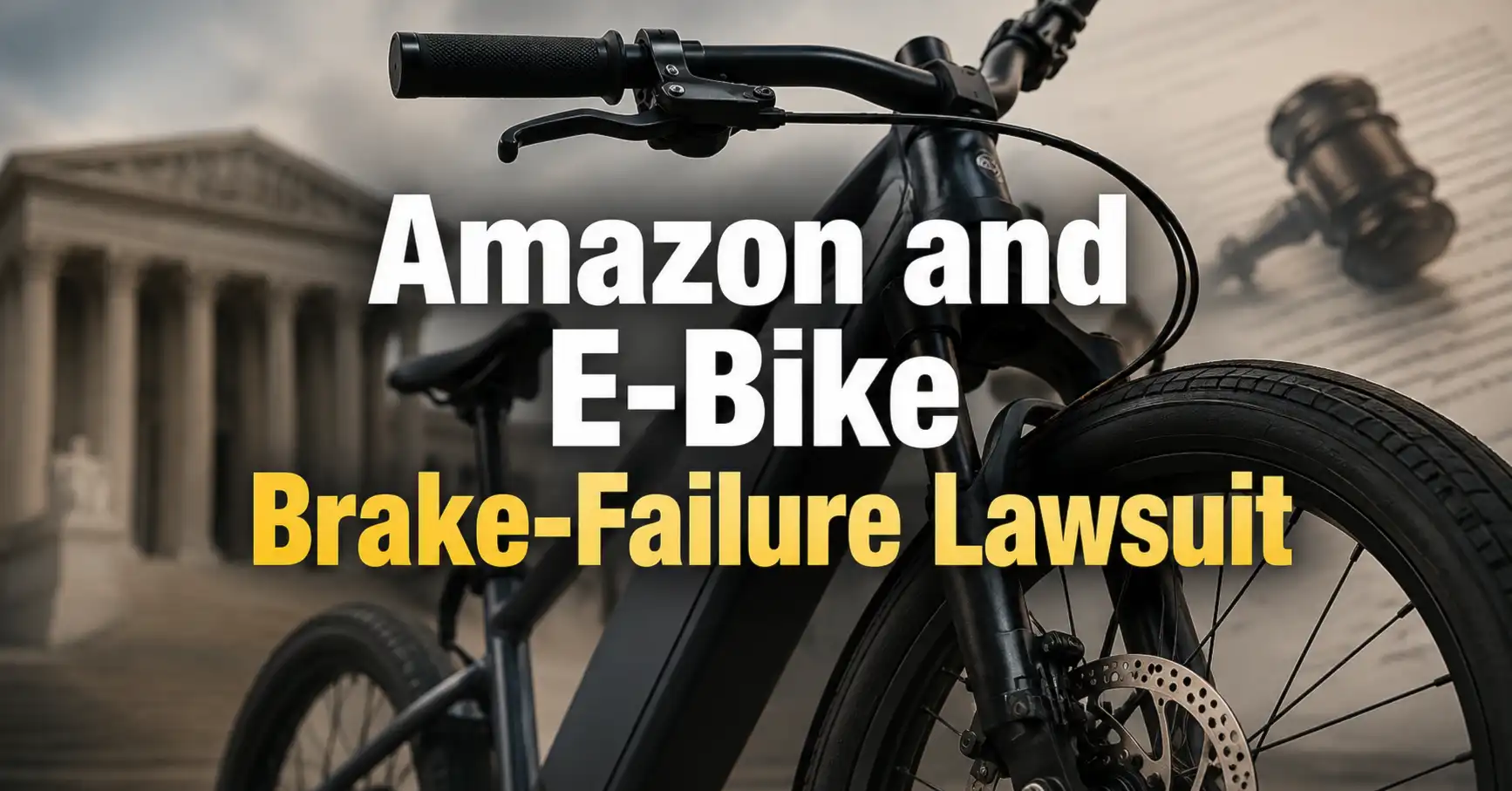
A Virginia Beach woman has filed a $1 million product liability lawsuit against Amazon and ZX Motors Inc., the company that operates the Luckeep e-bike brand in the United States. The lawsuit alleges that the brakes on a newly purchased folding e-bike failed during the rider’s first trip, causing her to crash and suffer facial and body injuries.
These claims remain allegations. The available court docket does not show that a judge or jury has determined that the e-bike was defective or that Amazon, ZX Motors, Luckeep, or the manufacturer is legally responsible.
Quick Case Details
| Detail | Information |
|---|---|
| Plaintiff | Kiara Dixon of Virginia Beach, Virginia |
| Defendants | Amazon.com Services LLC and ZX Motors Inc., doing business as Luckeep and Luckeepbike Inc. |
| E-bike involved | Luckeep folding Class 3 e-bike |
| Purchase date | June 2024 |
| Purchase price | $899.94 |
| Alleged incident date | July 4, 2024 |
| Damages requested | $1 million, interest, and court costs |
| Federal case number | 2:26-cv-00771 |
| Court | U.S. District Court for the Eastern District of Virginia |
| Current status | Pending personal injury product liability case |
The lawsuit was initially filed in June 2026 in the Circuit Court for the City of Norfolk. Amazon transferred the case to the U.S. District Court for the Eastern District of Virginia on July 20, 2026. The federal docket identifies Judge Mark S. Davis as the presiding judge and shows that the plaintiff requested a jury trial.
What the Lawsuit Alleges Happened
According to reporting from Bicycle Retailer and Industry News, Dixon purchased the Luckeep folding Class 3 e-bike through Amazon in June 2024 for $899.94.
The e-bike reportedly arrived partially assembled. The lawsuit alleges that two principal components had to be connected before the bike could be ridden and that the package contained only one page of assembly instructions.
The instructions allegedly did not explain that the brakes might require adjustment, inspection, or testing before the first ride.
The following month, Dixon reportedly rode the e-bike down her street and around the block for the first time. As she approached her home, she allegedly applied the brakes, but they did not engage.
The lawsuit says the e-bike then struck a curb in front of her residence, throwing her onto her face and the front of her body.
The allegations have not been established through a court ruling, settlement, or jury verdict.
What the Plaintiff Claims Was Wrong With the E-Bike
The lawsuit alleges that the e-bike was unsafe and that the included instructions did not adequately explain whether the braking system required adjustment or testing before use.
The publicly available federal docket categorizes the case as a personal injury product liability lawsuit. However, the basic docket listing does not provide the full text of every legal claim or defense that may be raised as the case proceeds.
Amazon and ZX Motors will have the opportunity to dispute the allegations, present evidence, and raise any available defenses.
Who Is Named in the Lawsuit?
The defendants listed in the federal court docket are:
- Amazon.com Services LLC
- ZX Motors Incorporated, doing business as Luckeep and Luckeepbike Inc.
Bicycle Retailer reports that Luckeep is owned and operated in the United States by ZX Motors Inc. and is associated with Chinese manufacturer Jiangsu Zhongxing Motorcycle Co.
A product being sold through Amazon does not automatically establish that Amazon manufactured it or is legally responsible for an alleged defect. Amazon’s potential liability may depend on its role in the sale, distribution, fulfillment, marketing, or handling of the product, along with the laws applied to the case.
Those questions will have to be addressed through the legal process.
What the Plaintiff Is Requesting
Dixon is requesting:
- $1 million in damages
- Interest beginning July 4, 2024
- Court costs
- A jury trial
- Any other relief the court considers appropriate
The amount requested in a lawsuit is not necessarily the amount that will be awarded. The case could ultimately be dismissed, settled, tried before a jury, or resolved in another way.
Why This Lawsuit Matters for E-Bike Buyers
The case highlights an important concern for buyers of direct-to-consumer e-bikes: many arrive mostly assembled but still require the owner to install, connect, tighten, inspect, or adjust safety-critical components.
An e-bike may look ready to ride while still needing work on its brakes, handlebars, front wheel, pedals, stem, or other parts.
That does not mean all e-bikes sold through Amazon or other online retailers are unsafe. It does mean buyers should not assume that a partially assembled e-bike is ready for normal road use immediately after it is removed from the box.
Before riding a new e-bike, check that:
- Both brake levers produce firm and consistent braking force.
- The front and rear brakes engage properly.
- The brake levers do not pull completely against the handlebars.
- Brake cables or hydraulic hoses are correctly connected.
- The calipers, brake pads, and rotors appear properly positioned.
- The front and rear wheels are securely installed.
- The stem and handlebars are tight and aligned.
- The pedals are installed on the correct sides and fully tightened.
- The tires are inflated within the manufacturer’s recommended range.
- The motor stops providing power when the brakes are applied, when brake cutoff sensors are included.
My New E-Bike Owner’s Guide explains the setup, inspection, and safety checks new owners should complete before their first full ride.
Test the Brakes Before Your First Full Ride
A basic brake test should begin with the motor turned off.
Stand beside the e-bike and squeeze the front brake lever while trying to roll the bike forward. Repeat the test with the rear brake. Each brake should resist the corresponding wheel’s movement.
Next, ride at walking speed in a flat, open area away from traffic, pedestrians, hills, and obstacles. Apply the brakes gradually and confirm that the bike stops smoothly and predictably.
Do not continue riding when:
- A brake lever reaches the handlebar.
- One or both brakes provide very little stopping force.
- The brake response changes unexpectedly.
- A brake cable appears loose, disconnected, or damaged.
- Hydraulic fluid is visible around a lever, hose, or caliper.
- A brake rotor, caliper, wheel, or lever appears loose.
- The bike pulls sharply to one side during braking.
- The assembly instructions are missing or unclear.
For help identifying common braking problems, see my guide to why e-bike brakes feel weak.
A professional safety inspection may be the best option for anyone who is unfamiliar with bicycle assembly or is uncertain whether the brakes have been adjusted correctly.
Has Luckeep Issued a Recall?
As of August 5, 2026, I did not find a CPSC recall or formal federal product safety warning specifically naming Luckeep e-bikes.
That does not prove that no complaints or individual incidents have been reported. It means I did not locate a Luckeep recall or warning in the publicly searchable CPSC information available when this article was reviewed.
The CPSC recall and safety-warning database is updated as new actions are announced, so riders should check it periodically for information affecting their specific brand and model.
The filing of a lawsuit is not the same as a recall. This case involves allegations concerning one rider and one e-bike. It does not establish that every Luckeep e-bike has the same alleged problem.
Anyone who believes an e-bike has a serious safety defect should stop riding it, photograph or record the problem, preserve the purchase and assembly records, and contact the seller and manufacturer.
Consumers can also report potentially unsafe products through SaferProducts.gov, which is operated by the CPSC.
My Take
The most concerning allegation in this case is not simply that the e-bike was purchased through Amazon. It is the claim that a partially assembled Class 3 e-bike came with extremely limited instructions that did not explain whether the brakes required adjustment or testing.
Class 3 e-bikes can provide motor assistance at speeds of up to 28 mph. A rider should never approach those speeds until the brakes, wheels, handlebars, stem, pedals, tires, and electrical controls have been inspected and tested.
At the same time, it is important not to reach conclusions before the evidence has been reviewed. The lawsuit explains what Dixon alleges happened. It does not yet establish whether the brakes contained a manufacturing defect, whether an assembly or adjustment problem was involved, or whether any of the defendants will ultimately be held liable.
The practical lesson for riders is straightforward: do not treat a boxed e-bike as fully ready to ride simply because most of it arrives assembled. Test the brakes at very low speed, follow the manufacturer’s instructions, and arrange a professional inspection whenever the instructions are incomplete or you are uncertain about the assembly.
What Happens Next?
The case is pending in the U.S. District Court for the Eastern District of Virginia.
The defendants will have an opportunity to respond to the allegations. Depending on how the case develops, the parties may exchange evidence concerning the e-bike, braking system, assembly instructions, product listing, purchase and fulfillment records, medical documentation, and circumstances of the alleged crash.
As of August 5, 2026, the publicly available docket does not show a court ruling finding that the Luckeep e-bike was defective or that Amazon or ZX Motors caused Dixon’s injuries.
Electric Bike Explorer will update this report if the court issues a significant ruling, the parties announce a settlement, or a related recall or federal safety warning is released.
For more news on electric bikes click here

Kristina is not just an enthusiast but a true authority on electric bikes. Nestled in the coastal beauty of Virginia, Kristina has found the perfect backdrop for her passion for electric biking. As a dedicated wife and homeschooling mom, her life revolves around family, faith, and the thrill of adventure.
Originally hailing from Ohio, Kristina's journey with electric bikes began as a curiosity and quickly evolved into a deep expertise. Her blog is a testament to her love for electric biking, combining her fascination for eco-friendly transportation with her coastal lifestyle.
When she's not cruising the beach on her electric bike, you'll find Kristina indulging in her other loves: long walks along the shore, getting lost in a good book, and cherishing moments with her loved ones. With a heart as big as her love for animals, especially cats, Kristina brings a unique perspective to the electric bike world, grounded in her strong faith in God and her dedication to a sustainable lifestyle.
Through her blog, Kristina shares her extensive knowledge of electric bikes, offering valuable insights, tips, and recommendations to fellow enthusiasts. Whether you're a seasoned rider or a newcomer to the electric bike scene, Kristina's blog is your go-to source for all things electric biking, fueled by her passion, expertise, and the scenic beauty of coastal Virginia.