Why Are My E-Bike Disc Brakes Rubbing? What to Check First
Last Updated on November 17, 2026 by Kristina
If your e-bike disc brake scrapes while you’re off the brake lever, turn the bike off and look through the caliper as you slowly turn the wheel by hand. Watch for the rotor touching a pad once per turn or rubbing continuously. If it started right after a flat repair, check wheel seating before adjusting the caliper. If the wheel binds or braking feels weak, stop riding and have it checked.
A scrape can also come from a tire touching a fender or another part near the wheel. If you can’t see contact at the brake, use the wheel bearing and wheel drag guide to help narrow down the noise.
What the rubbing pattern can tell you
| What you notice | What to check first |
|---|---|
| A scrape at the same point each turn | Watch whether the rotor moves side to side and touches a pad at that spot. A bent rotor is one possibility. |
| A steady scrape with the lever released | Look for a pad staying close to or touching the rotor. Check wheel seating before suspecting caliper alignment or pad clearance. |
| Rubbing that began after a flat repair | Check that the axle is fully seated and secured according to the bike manual. A change in wheel position can shift the rotor within the caliper. |
| Rubbing that began after squeezing the lever with the wheel out | On a hydraulic brake, the pads may have moved closer together. If the rotor won’t slide between them, avoid forcing the wheel in. Check the brake maker’s instructions or take it to a shop. |
| Noise only when braking | Use the brake squeal guide to narrow down braking noise. If you hear harsh grinding or braking feels weak, stop riding. |
How to check e-bike disc brake rub
- Turn the bike off and let the brakes cool. Support the bike so it can’t tip. If you can’t safely lift the affected wheel, have a shop inspect it. Turn it by hand from the tire and keep your fingers clear of the rotor and spokes.
- Check the wheel before touching the caliper. If the axle looks out of position or the wheel feels loose, stop. Follow the bike maker’s wheel installation instructions, including the specified torque where applicable. On a hub-motor wheel, also look for a pinched or strained motor cable if the problem began after a tire change.
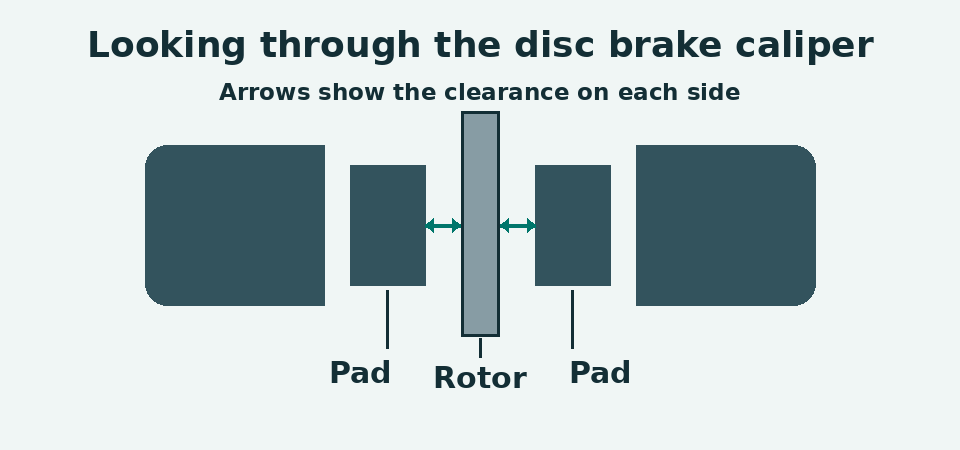
- Look through the caliper. Shine a flashlight from behind it so you can see the gap on both sides of the rotor. Turn the wheel slowly and watch a full rotation. If the rotor looks straight but stays close to one pad, caliper position or pad clearance is worth checking. If the gap closes at the same point every turn, look for visible rotor movement and have the rotor checked if you’re unsure.
- Check what happens after one squeeze. With the wheel installed, squeeze and release the brake lever, then spin the wheel again. If rubbing starts or gets worse after release, the brake may need service. Tell the mechanic if the rubbing changes after each lever pull.
Park Tool’s hydraulic disc brake video starts its diagnosis at 0:57. Watch that section to see how to check the gap with the wheel turning. Use your bike maker’s instructions for axle installation and your brake maker’s instructions for adjustments.
What to do once you locate the rub
If the wheel is properly seated and the rotor appears straight, use the instructions for your exact brake model to check caliper alignment and pad clearance. Mechanical disc brakes can have one or two adjustable pads, and the setup differs by caliper. Park Tool’s guides explain how to inspect clearance on hydraulic disc brakes and mechanical disc brakes. The EBE brake repair guide covers broader adjustment and pad-service steps.
For a new bike or a brake still under warranty, contact the seller or manufacturer before making adjustments or taking the brake apart. If the rotor is visibly damaged after a hit, let a shop determine what needs replacement. Keep chain lube and spray lubricants away from the rotor and pads.
When to stop riding
- The wheel binds or takes significant effort to turn by hand because of the rubbing.
- The wheel or axle is loose, or brake mounting hardware has shifted.
- The rotor is cracked or visibly deformed, or you see hydraulic fluid leaking.
- The brake feels weak, the lever pulls unusually far, or you hear harsh metal-on-metal grinding.
Arrange service before riding again if any of these apply. Shimano’s hydraulic disc brake safety instructions warn against using a cracked or deformed rotor or a brake that is leaking fluid.
What to tell the bike shop
- Which wheel rubs and whether it scrapes constantly or once per turn.
- When it started, especially after a flat repair, wheel removal, transport, or an impact.
- Whether squeezing and releasing the lever changed the sound, and whether braking felt weaker or the lever felt different.
- Your e-bike make and model, plus the brake model if you know it.
Use the E-Bike Repair Directory to find a shop, and confirm it works on your model before bringing the bike in.
Tools that help you see the problem
A small flashlight makes the rotor-to-pad gap easier to see, and a white card behind the caliper gives you a contrasting background. If you’re following a manufacturer-approved adjustment, use a torque wrench that covers the specified range for your hardware.
Why You Can Trust Electric Bike Explorer
This guide draws on manufacturer safety instructions and professional bicycle service references. The checks start with what you can see and hear at the wheel, with guidance on when a brake needs professional inspection.
Sources
- Park Tool hydraulic disc brake alignment
- Park Tool mechanical disc brake alignment
- Shimano hydraulic disc brake user manual

Kristina is not just an enthusiast but a true authority on electric bikes. Nestled in the coastal beauty of Virginia, Kristina has found the perfect backdrop for her passion for electric biking. As a dedicated wife and homeschooling mom, her life revolves around family, faith, and the thrill of adventure.
Originally hailing from Ohio, Kristina's journey with electric bikes began as a curiosity and quickly evolved into a deep expertise. Her blog is a testament to her love for electric biking, combining her fascination for eco-friendly transportation with her coastal lifestyle.
When she's not cruising the beach on her electric bike, you'll find Kristina indulging in her other loves: long walks along the shore, getting lost in a good book, and cherishing moments with her loved ones. With a heart as big as her love for animals, especially cats, Kristina brings a unique perspective to the electric bike world, grounded in her strong faith in God and her dedication to a sustainable lifestyle.
Through her blog, Kristina shares her extensive knowledge of electric bikes, offering valuable insights, tips, and recommendations to fellow enthusiasts. Whether you're a seasoned rider or a newcomer to the electric bike scene, Kristina's blog is your go-to source for all things electric biking, fueled by her passion, expertise, and the scenic beauty of coastal Virginia.