
Best Electric Bikes for Teens in 2026: 8 Picks From Lightweight to Moped-Style
Last Updated on August 13, 2026 by Kristina
Updated August 13, 2026. Electric bikes can give older teens more independence for school, work, sports, and neighborhood trips, but I would not choose one based on speed or styling alone. For a teen rider, fit, braking, weight, electrical safety, manufacturer age guidance, and local e-bike rules matter just as much as motor power and range.
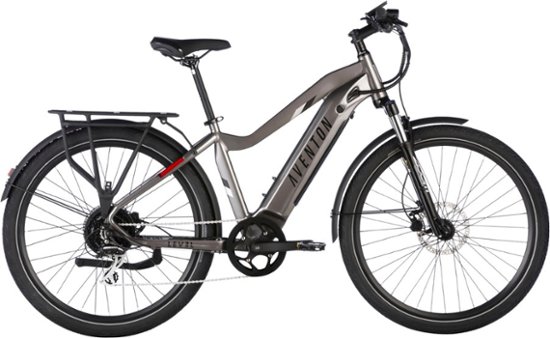
For most families, I would start with a 20 mph Class 1 or Class 2 bike that the rider can comfortably control at low speed. My top overall pick is the Aventon Soltera 3 ADV because it is unusually light for an e-bike and keeps the focus on bicycle-like handling rather than motorcycle-like speed. If you are new to electric bikes, my complete E-Bike Buying Guide explains the major motor, battery, brake, and fit choices, and the State-by-State E-Bike Law Guide can help you check age, class, helmet, and riding rules where you live.
⭐ Quick Picks: Best Electric Bikes for Teens in 2026
- Best overall for older teens: Aventon Soltera 3 ADV
- Best budget folding bike for teens 16+: Lectric XP Lite2
- Best for comfort and easy control: Electra Townie Go! 7D EQ
- Best folding bike for shorter teens: RadExpand 5 Plus
- Best moped-style cargo pick with hands-on EBE experience: HappyRun G70
- Best premium moped-style pick for teens 16+: SUPER73 Z Adventure Series SE
- Best performance moped-style pick for ages 18-19 only: Ride1Up Revv1 HT
- Budget moped-style option for experienced older riders, with major caveats: Talon T757
👉 Short on time?
See today’s e-bike deals and limited-time discounts, then compare top picks below.
Quick Comparison Chart
| Bike | Current Price* | Weight | Motor | Battery | Speed / Class | Fit / Age Notes | Key Strength | Major Tradeoff |
|---|---|---|---|---|---|---|---|---|
| Aventon Soltera 3 ADV | $1,499 | 37 lb | 250W nominal / 500W peak | 36V 9.6Ah | Class 1, 20 mph | Sizes begin around 5’1″; confirm local age rules | Light, bicycle-like handling | No throttle |
| Lectric XP Lite2 | From $799 | 49 lb | 300W nominal / 819W peak | 48V; 375Wh or 672Wh | 20 mph | Approx. 4’8″-6’2″; manufacturer says 16+ | Affordable, light and folds | Smaller wheels and still 49 lb |
| Electra Townie Go! 7D EQ | $1,699.99 | 46.1 lb | 250W | Integrated battery | Class 1, 20 mph | Electra says its e-bikes are for ages 16+ | Comfortable, upright control | Less power/range than heavier moped bikes |
| RadExpand 5 Plus | $1,899 | 72.5 lb | 750W rear hub | 720 Wh | Class 1/2 switchable, 20 mph | 4’10”-5’10”; Rad says 16+ | Great shorter-rider fit and folding design | Very heavy for a folding bike |
| HappyRun G70 | From $1,379 | 98 lb | 750W, 2000W peak listed | Dual 48V 13Ah, 26Ah total | Current version: up to 20 mph | HappyRun lists 5’1″-6’5″; no clear minimum rider age verified | Dual batteries, cargo/passenger versatility and hands-on EBE experience | Extremely heavy; current version differs substantially from the bike I reviewed |
| SUPER73 Z Adventure Series SE | Current inventory pricing | 75 lb | 500W nominal | 720 Wh | 20 mph | 5’1″-6’8″; manufacturer says 16+ | Premium moped styling and strong teen appeal | Heavy and expensive |
| Ride1Up Revv1 HT | Current pricing varies | Heavy moped-style platform | 750W nominal rear hub | 52V 20Ah | Ships Class 2 at 20 mph; higher-speed private-road mode | 18+ ONLY under Ride1Up’s safety terms | Strong brakes, suspension and moped appeal | Higher-speed modes require significant caution |
| Talon T757 | $649 | 84 lb | 750W | 48V 13Ah | 20 mph throttle; 28 mph PAS; 32 mph claimed off-road | Experienced older riders only; verify local law | Very affordable moped styling | Mechanical brakes, weight and high-speed capability |
*Prices and availability were checked in August 2026 and can change. Confirm the current model, configuration, specifications, and price with the manufacturer before purchasing.
🔎 How I Chose These Electric Bikes for Teens
This is a research-based buying guide. I compared current manufacturer specifications, published age guidance, battery and electrical-safety information, braking equipment, bike weight, rider fit, class settings, warranty and support information, and whether each model is still current.
I also looked at how each bike would work for a younger rider in everyday use, especially low-speed control, lifting weight, stopping ability, fit, and whether higher-speed modes could create additional safety or legal concerns.
I did not rank bikes higher simply because they are faster or have more motorcycle-like styling. Excess weight, unclear certification language, weak braking equipment, confusing class settings, or limited support can all lower a bike’s recommendation.
For more about the standards I use when evaluating and comparing electric bikes, see how Electric Bike Explorer reviews and ranks e-bikes.
Want to See More Electric Bike Explorer in Google Search?
Add Electric Bike Explorer as a preferred source to see more of our e-bike law guides, safety updates, reviews, buying guides, and troubleshooting posts when they are relevant to your searches.
Who This Guide Is For – and Who It Is Not For
This guide is for parents and older teens looking for a manageable electric bike for commuting, school, recreation, and short everyday trips. I focused on fit, braking, weight, speed, manufacturer age guidance, electrical safety, and whether the bike makes sense for a younger rider in normal use.
It is not a guide to high-speed e-motos, electric dirt bikes, or modified bikes that may fall outside normal e-bike classifications. Before buying, check rider fit with the E-Bike Size Calculator and review the differences between Class 1, Class 2, and Class 3 e-bikes.
Best Everyday Electric Bikes for Teens
Aventon Soltera 3 ADV – Best Overall for Older Teens

The Soltera 3 ADV is the bike I would start with for an older teen who wants a normal-looking bicycle for commuting, school, work, or neighborhood riding. At only 37 lb, it is dramatically easier to control, maneuver, carry, and park than many 70-90 lb fat-tire and moped-style e-bikes.
Aventon lists a 250W nominal motor with 500W peak output and a Class 1 top assisted speed of 20 mph. Hydraulic disc brakes, integrated lighting, turn signals, and the lighter frame all make more sense to me for a developing rider than simply buying the most powerful machine available.
Important age note: I am not assigning an Aventon-specific 16+ minimum to this model because I could not verify a clear current Soltera-specific manufacturer minimum that I am comfortable presenting as a firm rule. Check your state and local laws, then decide whether the rider has the size, balance, judgment, and braking skill to control the bike safely.
Key specs: 37 lb; 250W nominal / 500W peak rear hub motor; Class 1; 20 mph assist; hydraulic disc brakes.
Why it stands out: The low weight matters. A 37 lb e-bike behaves far more like a traditional bicycle than the moped-style bikes farther down this list.
Tradeoffs: Teens who want a throttle or motorcycle look may find it less exciting, and the smaller motor is not designed to deliver the same acceleration as a 750W fat-tire bike.
✅ Pros
- Very light for a full-size e-bike
- 20 mph Class 1 setup
- Hydraulic disc brakes
- Integrated lights and turn signals
- Better bicycle-like handling than most moped-style choices
❌ Cons
- No throttle
- May not satisfy a teen specifically shopping for moped styling
- Local age and helmet rules still need to be checked
Read my full review of the Aventon Soltera 3 ADV
Lectric XP Lite2 – Best Budget Folding Bike for Teens 16+
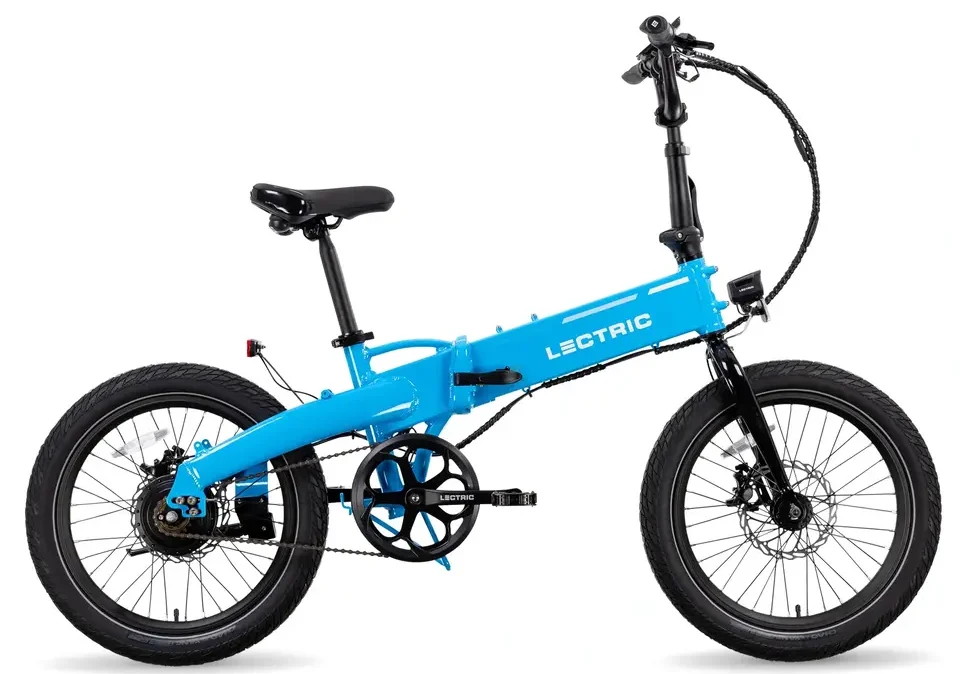
The Lectric XP Lite2 is one of the strongest values here for a teen who needs something compact. Lectric lists the complete bike at about 49 lb and recommends it for riders approximately 4’8″ to 6’2″. The company also states that riders must be at least 16 years old.
The 20 mph speed cap is another reason I prefer it over faster folding bikes for younger riders. It is still an e-bike that needs responsible handling, but it is not built around a 28-35 mph performance pitch.
Key specs: About 49 lb; 300W nominal rear hub motor; 20 mph; folding frame; battery capacity varies by selected version.
Why it stands out: It combines a lower purchase price, compact storage, broad fit range, and a relatively moderate 20 mph configuration.
Tradeoffs: Folding does not mean effortless to carry. At roughly 49 lb, many teens will still need help lifting it into a trunk or carrying it up stairs.
✅ Pros
- One of the more affordable established-brand options
- Folds for storage and transport
- Broad published rider-height range
- 20 mph top speed
- Explicit 16+ manufacturer age guidance
❌ Cons
- Still fairly heavy to carry
- Small wheels can feel different from a standard bicycle
- Battery and feature package depend on the selected configuration
Read my full review of the Lectric XP Lite 2
Electra Townie Go! 7D EQ – Best for Comfort and Easy Control
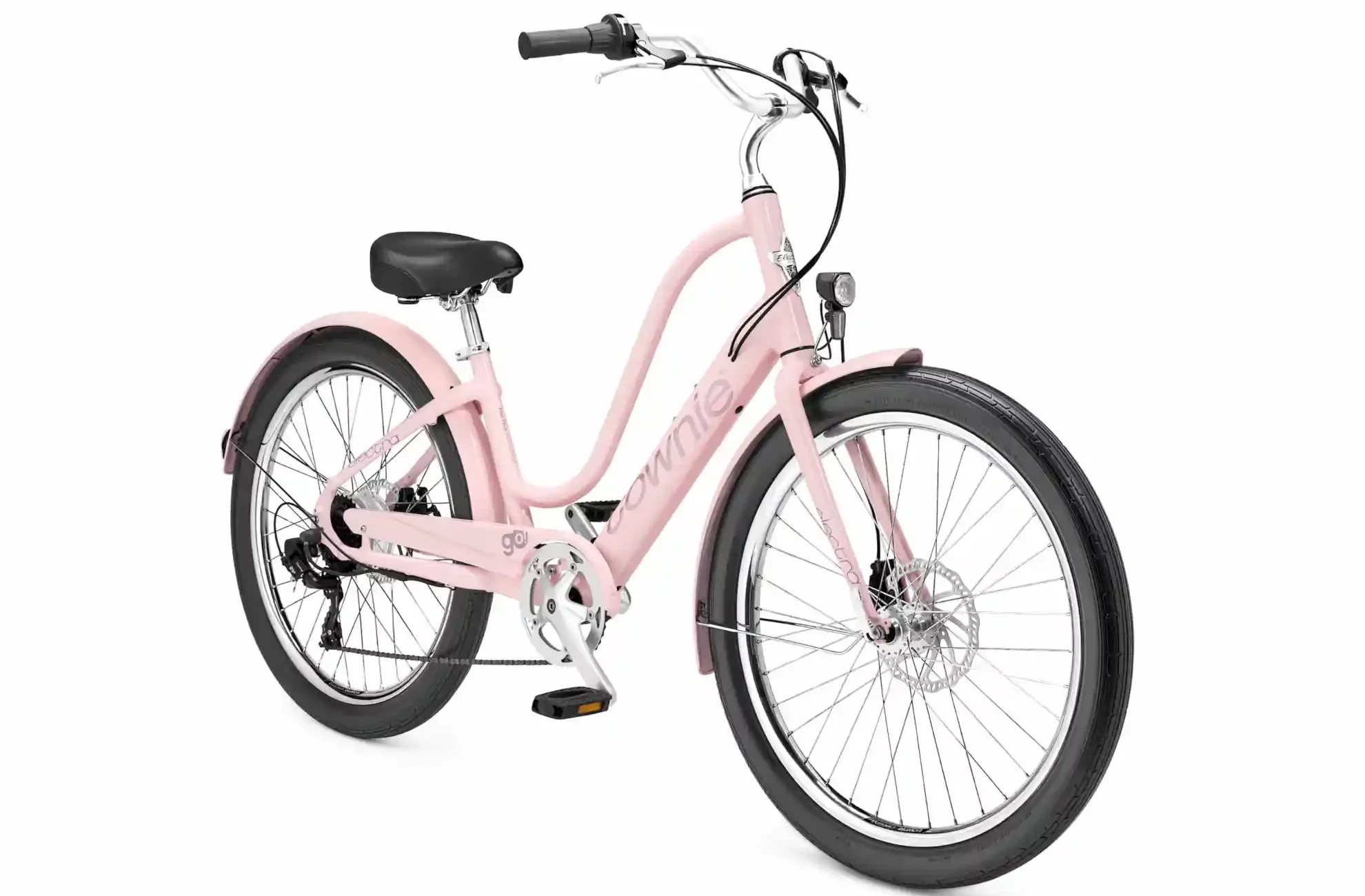
The specific bike I am recommending here is the Townie Go! 7D EQ Class 1 model. Electra now sells other Townie Go models with throttles and different weights, so make sure you are looking at the correct 7D EQ version rather than assuming all current Townie Go bikes share the same specifications.
The Townie platform is known for its relaxed upright position and Flat Foot Technology, which can make stopping and putting a foot down feel less intimidating for some riders. The 7D EQ uses a 250W motor and is listed as a 20 mph Class 1 e-bike. Electra states that its electric bikes are intended for riders age 16 and older.
Key specs: Approximately 46.1 lb; 250W motor; 250 Wh battery; Class 1; 20 mph.
Why it stands out: Comfort and confidence. A rider who feels stable and relaxed is often better served than one sitting on an oversized, high-powered fat-tire bike.
Tradeoffs: The smaller battery and lower-power setup are better suited to everyday pavement riding than long high-speed trips.
✅ Pros
- Comfort-focused geometry
- Class 1, 20 mph assistance
- Reasonable weight compared with moped-style bikes
- Dealer-network advantage for fit and service
- Electra states e-bike riders should be 16+
❌ Cons
- More expensive than budget direct-to-consumer options
- Modest battery capacity
- Must be careful not to confuse the 7D EQ with newer throttle Townie Go models
Rad Power RadExpand 5 Plus – Best Folding Bike for Shorter Teens
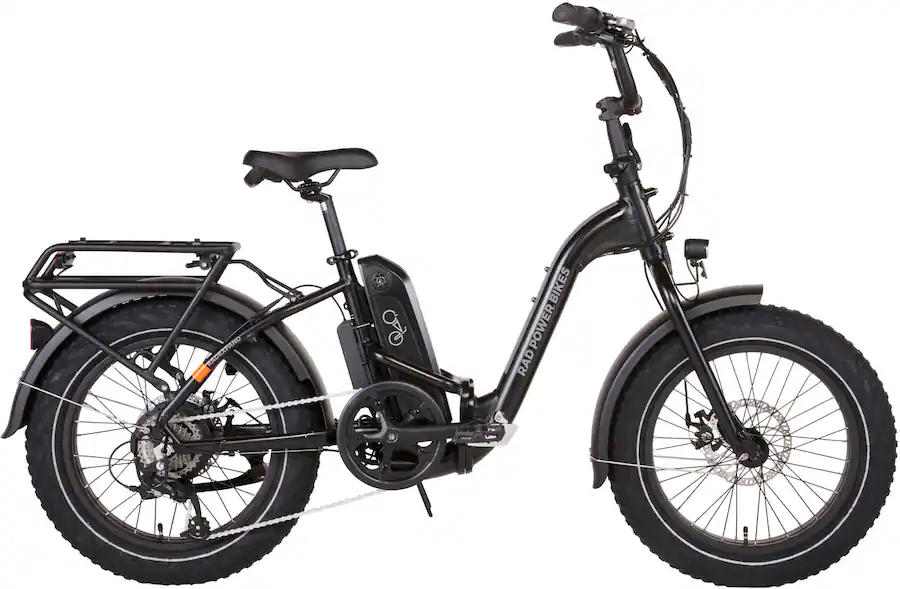
The RadExpand 5 Plus can work well for a shorter older teen because Rad lists a rider-height range of roughly 4’10” to 5’10”. It ships as a Class 2 bike with a 20 mph limit and can also be switched into Class 1 operation.
The drawback is weight. At 72.5 lb, it is much heavier than the XP Lite2 and Soltera 3 ADV. Folding a bike does not automatically make it portable, and a 72.5 lb machine can be difficult for a teen to carry, load into a vehicle, or control if it begins to tip.
Rad says riders must be at least 16 years old.
Key specs: 72.5 lb; 750W rear hub motor; 720 Wh battery; 20 mph; Class 1/Class 2 configurable; claimed range approximately 20-60 miles.
Why it stands out: Its short-rider fit, folding frame, large battery, and established support make it useful for families who specifically need those features.
Tradeoffs: Weight is the big one. I would make sure the teen can maneuver and stabilize the bike comfortably before buying.
✅ Pros
- Fits shorter riders than many full-size e-bikes
- 20 mph limit
- Class 1 or Class 2 configuration
- Large 720 Wh battery
- Manufacturer says riders must be 16+
❌ Cons
- 72.5 lb is very heavy for a folding bike
- Higher price than the XP Lite2
- May be awkward for a smaller teen to lift or catch if it tips
Read my full review of the Rad Power RadExpand 5 Plus
Best Moped-Style Electric Bikes for Teens
Moped-style e-bikes are popular because they look more like small motorcycles, but that appearance can encourage families to focus on acceleration and speed instead of fit and control. I would be much more selective with this category.
Also remember that moped styling does not determine legal classification. The motor, assisted speed, throttle operation, pedals, class settings, and state or local definitions determine how the vehicle may legally be treated. For more options, see my guide to moped-style electric bikes.
HappyRun G70 – Best Moped-Style Cargo Pick With Hands-On EBE Experience
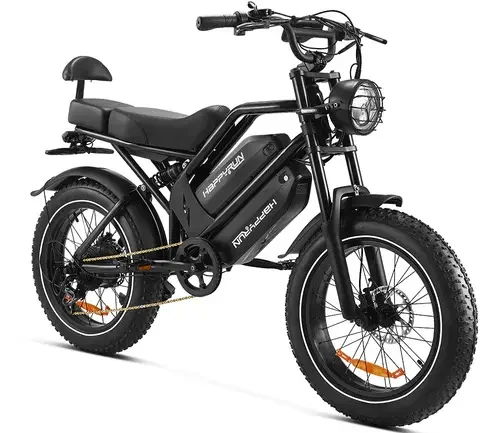
The HappyRun G70 is a particularly interesting choice for this guide because I have personally spent time with and reviewed this bike. It combines the moped-style look many teens like with dual batteries, full suspension, hydraulic disc brakes, fat tires, passenger or cargo capability, and a long claimed range.
There is one important distinction parents need to understand: the current HappyRun G70 is not configured the same way as the G70 I originally reviewed in 2025.
My review bike used a 1000W motor with 2000W peak output and reached 36 mph during my testing. HappyRun’s current G70 product page now lists a 750W motor, up to 2000W peak output, dual 48V 13Ah batteries for 26Ah total capacity, and a top speed of 20 mph.
For this teen buying guide, I actually prefer the direction of the current model. A factory-listed 20 mph configuration is much easier for me to recommend for an older teen than the 36 mph version I tested, assuming the rider meets local age requirements and can comfortably handle the bike.
Hands-on note: My personal riding impressions come from the earlier, higher-powered G70 configuration. I have not personally tested the newer 20 mph version, so I am separating those firsthand observations from HappyRun’s current specifications.
When I rode the earlier G70, I liked the hydraulic braking performance, full suspension, comfortable seat and grips, lighting, turn signals, and the versatility of the dual-battery cargo design. The hydraulic brakes gave me good stopping confidence even on such a heavy bike, and the suspension helped smooth out rougher pavement and mixed surfaces.
The biggest concern for a teen is weight. HappyRun currently lists the G70 at about 98 lb. My review bike was similarly heavy, and I found that smaller riders could have difficulty mounting and dismounting it. Although HappyRun now lists a recommended rider-height range beginning at 5’1″, my experience with the earlier G70 makes me cautious about recommending it solely from a height chart. I would want a smaller teen to sit on and handle the bike before buying if possible.
The current G70 also uses two 48V 13Ah batteries for 26Ah of combined capacity, and HappyRun claims up to 85 miles of range. It has 20 x 4-inch fat tires, front and rear hydraulic disc brakes, full suspension, a half-twist throttle, NFC unlocking, front and rear turn signals, and a removable rear passenger seat that can be converted for cargo use. HappyRun currently states that the G70 is UL 2849 certified.
Key specs for the current G70: 750W rear hub motor with up to 2000W peak output; dual 48V 13Ah batteries; 26Ah total battery capacity; up to 20 mph; approximately 98 lb; hydraulic disc brakes; full suspension; 20 x 4-inch fat tires; 330 lb total payload; claimed range up to 85 miles; recommended rider height 5’1″-6’5″.
Why it stands out: Few bikes in this guide combine moped styling, dual batteries, passenger/cargo versatility, hydraulic brakes, suspension, and a current 20 mph configuration. I also have firsthand experience with the G70 platform rather than judging it entirely from a specification sheet.
Tradeoffs: At approximately 98 lb, this is by far one of the heaviest bikes I would consider for a teen. I would only recommend it for a mature older teen who is physically comfortable handling the weight. HappyRun does not currently give me a clear minimum rider age on the G70 product page, so parents should confirm manufacturer guidance and applicable state and local laws before buying.
✅ Pros
- Current model is listed at a more teen-manageable 20 mph
- Dual batteries provide substantial capacity and flexibility
- Hydraulic disc brakes
- Full suspension and 20 x 4-inch fat tires
- Passenger seat can convert to cargo use
- Front and rear lighting and turn signals
- NFC unlocking
- HappyRun states the current G70 is UL 2849 certified
- I have firsthand experience with the G70 platform
❌ Cons
- Extremely heavy at approximately 98 lb
- Current model differs materially from the faster version I personally reviewed
- Smaller teens may still struggle despite the published 5’1″ minimum height
- No clear current manufacturer minimum rider age verified
- Real-world range will be lower than the maximum claimed range under many riding conditions
For a larger, mature older teen who wants a moped-style bike with serious range and cargo versatility, I think the current 20 mph G70 is much easier to justify than the earlier high-speed version. But I would still prioritize fit and low-speed control over the specification sheet. A 98 lb e-bike needs to feel manageable before a parent considers it a good match.
Read my full review of the Happyrun G70
SUPER73 Z Adventure Series SE – Best Premium Moped-Style Pick for Teens 16+
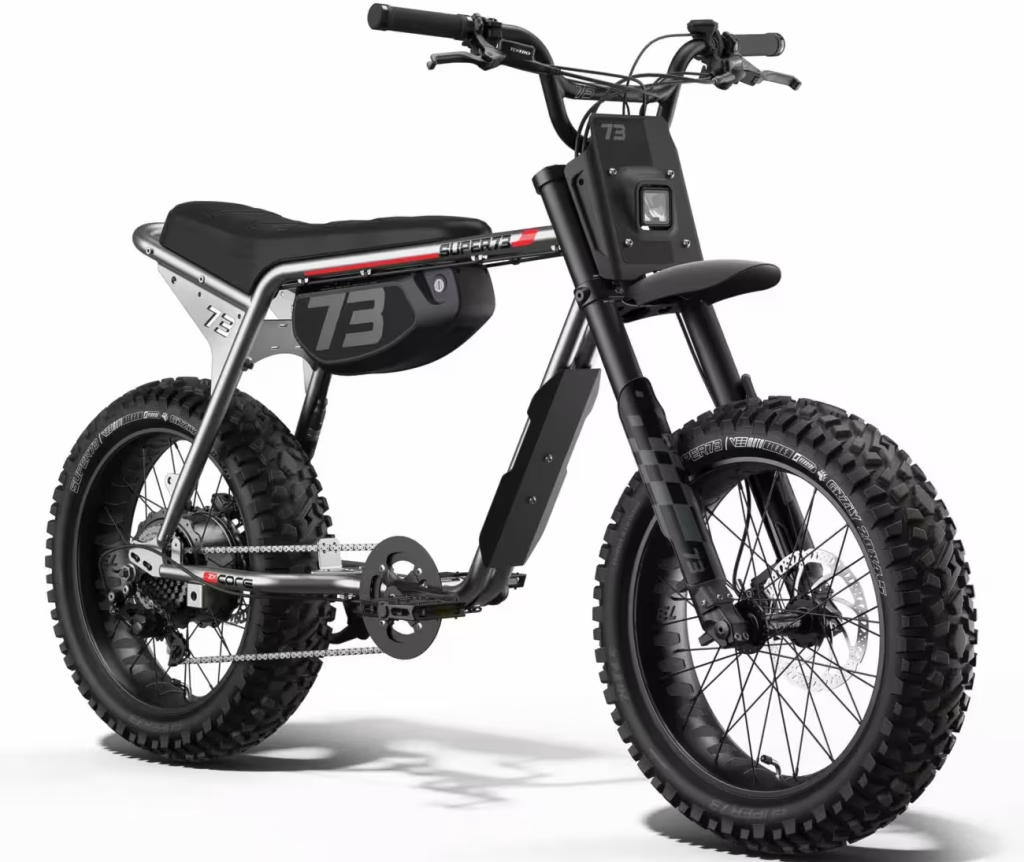
The SUPER73 Z Adventure Series SE is one of the more convincing choices for a teen who strongly prefers the moped look. SUPER73 lists a 20 mph top speed, approximately 75 lb weight, a 500W nominal motor, 720 Wh battery, and a minimum rider age of 16.
That does not make a 75 lb bike harmless, but the combination of an explicit age policy and 20 mph configuration makes it easier to evaluate than a model marketed primarily around 30-40 mph capability.
Key specs: About 75 lb; 500W nominal motor; 720 Wh battery; 20 mph; claimed range about 35-45 miles depending on conditions and mode.
Why it stands out: It gives teens the motorcycle-inspired look without making extreme speed the central feature.
Tradeoffs: It is still heavy and relatively expensive, and parents need to verify local rules governing moped-style bikes.
✅ Pros
- Strong teen appeal
- 20 mph configuration
- Manufacturer specifies 16+
- Large 720 Wh battery
- Established brand and accessory ecosystem
❌ Cons
- About 75 lb
- Premium price
- Fixed-style seating can make precise fit more important
Ride1Up Revv1 HT – Best Performance Moped-Style Pick for Ages 18-19 (18+ ONLY)
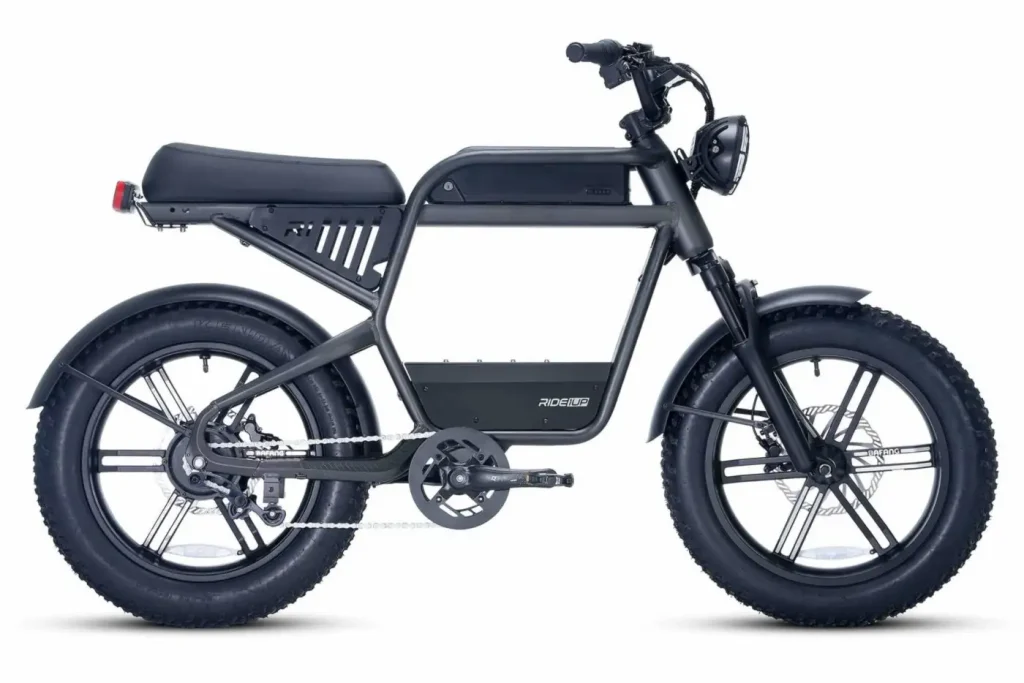
Important: Ride1Up’s current terms require riders to be at least 18 years old. That means this bike only belongs in a teen buying guide for 18- and 19-year-old riders. I would not recommend it for a minor.
The Revv1 HT ships programmed as a Class 2 e-bike with a 20 mph limit, which is the configuration I would recommend for normal public-road use where Class 2 e-bikes are permitted. Ride1Up also provides access to higher-speed modes intended for private-property use, and that is exactly why parents and young adult riders need to understand the settings before treating this as an ordinary bicycle.
Key specs: 750W nominal rear hub motor; 52V 20Ah battery; ships Class 2 at 20 mph; hydraulic brakes; suspension; higher-speed private-property mode available.
Why it stands out: It is one of the most complete moped-style platforms here, with stronger braking, suspension, and performance hardware.
Tradeoffs: It is not for minors, and its ability to operate beyond normal e-bike speeds creates legal and safety concerns if used improperly.
✅ Pros
- Ships in a 20 mph Class 2 configuration
- Hydraulic brakes
- Moped-style suspension and comfort
- Strong performance for an 18- or 19-year-old rider who understands the rules
❌ Cons
- 18+ ONLY
- Can be unlocked beyond normal e-bike speeds
- Heavy
- Local laws may sharply limit where higher-speed modes can be used
Talon T757 – Budget Moped-Style Option for Experienced Older Riders, With Major Caveats
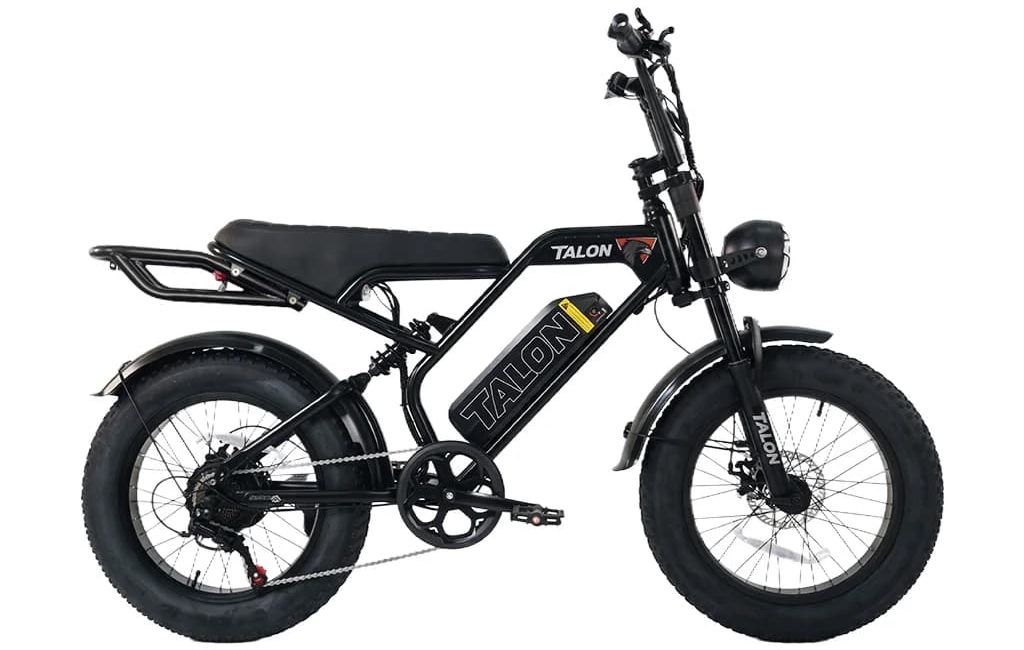
The Talon T757 is inexpensive and has the look many older teens want, but it is the recommendation here that requires the most caution. Talon currently lists a 750W motor, 48V 13Ah battery, approximately 84 lb weight, 20 mph throttle operation, up to 28 mph pedal assist, and a claimed 32 mph off-road speed.
It also uses mechanical disc brakes rather than the hydraulic brakes found on several other heavy moped-style choices. For a machine this heavy and capable of these speeds, that matters to me.
Certification wording matters: Talon says the T757 is “tested to meet UL2849 and UN38.3 standards.” I would not rewrite that as “UL 2849 certified” without independent confirmation of the certification status.
Key specs: Approximately 84 lb; 750W motor; 48V 13Ah battery; 20 mph throttle; up to 28 mph pedal assist; claimed 32 mph off-road; 330 lb payload; mechanical disc brakes.
Why it stands out: It is a low-cost route into the moped-style category.
Tradeoffs: Weight, mechanical brakes, higher-speed capability, and less-clear certification wording prevent me from recommending it as a general-purpose first e-bike for a teen.
✅ Pros
- Very low current sale price
- Moped-style appearance
- 750W motor
- 330 lb listed payload
❌ Cons
- About 84 lb
- Mechanical disc brakes
- 28-32 mph capability requires legal and maturity checks
- Do not interpret “tested to meet” as confirmed UL certification
Read my full review of the Talon T757
Why I Did Not Include 40-50 MPH “E-Bikes”
Some motorcycle-style electric machines are marketed alongside e-bikes even though their speed and power can move them outside normal electric-bicycle classifications. For example, HappyRun currently markets the G100 Pro with a claimed top speed around 50 mph and a 6000W motor. I do not consider that an ordinary recommendation for a teen looking for an electric bicycle for public-road or bike-path use.
Before buying any fast moped-style machine, check whether your state would classify it as an e-bike, moped, motor-driven cycle, or motorcycle. Registration, licensing, insurance, helmet, roadway, and age rules may be completely different.
How to Choose an Electric Bike for a Teen
1. Start With Age Rules, Not Motor Power
There is no single national teen age rule that answers every e-bike situation. State laws vary, local governments can add restrictions, and manufacturers may set their own minimum rider ages. Check all three before ordering.
2. Fit Matters More Than the Marketing Photo
A teen should be able to start, stop, turn, and put a foot down without fighting the bike. Manufacturer height charts are useful starting points, but inseam, reach, frame shape, seat design, and bike weight also matter. Use the e-bike size calculator before buying online.
3. Treat 20 MPH as Real Speed
Twenty miles per hour can produce a serious crash. A 20 mph Class 1 or Class 2 bike is not a toy, and a heavier 70-90 lb model carries more momentum than a conventional bicycle.
4. Pay Attention to Brake Type
For heavier or faster bikes, I strongly prefer hydraulic disc brakes. Mechanical disc brakes can work well when properly adjusted, but the margin for poor setup or neglected maintenance becomes more concerning as bike weight and speed increase.
5. Check Electrical Certification Carefully
Do not treat every use of the letters “UL” as equivalent. Look for whether the entire e-bike electrical system is actually certified to UL 2849, whether only the battery is certified, or whether the manufacturer simply says the product is “tested to” a standard. Those phrases do not necessarily mean the same thing.
If electrical safety is a priority, my guide to UL-certified e-bikes explains what to look for.
6. Think About Bike Weight Before Buying
Weight affects far more than transport. A heavy bike can be harder to balance at low speed, harder to stop from tipping, difficult to walk with a flat tire, and almost impossible for some teens to carry upstairs.
7. Check Replacement Parts and Service
A low purchase price is less attractive if you cannot source a replacement battery, display, controller, brake part, charger, or proprietary component later. Dealer support can also matter if the family does not want to handle assembly and maintenance at home.
8. Confirm the Legal Class Before Riding
A Class 1 bike generally provides pedal assistance up to 20 mph. A Class 2 bike generally allows throttle assistance up to 20 mph. Class 3 commonly provides pedal assistance up to 28 mph, but state definitions and access rules can vary. Check the current e-bike laws in your state rather than assuming a manufacturer’s class label tells you everywhere the bike can be ridden.
Essential E-Bike Gear (Quick Picks)
Before you choose your e-bike, these are the accessories most riders end up needing for safety and everyday use:
Common Mistakes Parents and Teens Make
- Buying the fastest bike in the budget. Faster is not automatically better, especially for a new rider.
- Assuming moped styling determines legality. Classification depends on the actual motor, speed, throttle, pedals, settings, and local law.
- Ignoring manufacturer age limits. A bike that physically fits may still be outside the brand’s intended age range.
- Buying a 75-95 lb bike without considering handling. Weight matters every time the rider parks, turns, lifts, or catches the bike.
- Unlocking speed modes immediately. A setting intended for private property can create legal and safety problems on public streets and paths.
- Assuming every UL-related marketing claim means full certification. Verify exactly what has been certified and by whom.
- Skipping a proper helmet. See my guide to helmets for e-bike riders and confirm the helmet requirements in your area.
- Ordering without checking fit. Rider-height ranges are only a starting point.
Frequently Asked Questions
What is the best electric bike for a teenager?
For many older teens, I prefer a lighter 20 mph bicycle-style model such as the Aventon Soltera 3 ADV over a very heavy high-speed moped-style bike. The right choice still depends on the rider’s age, height, maturity, route, local laws, and manufacturer age guidance.
Can a 14- or 15-year-old ride an e-bike?
It depends on the state, city, e-bike class, trail or property rules, and the manufacturer’s own age restrictions. Do not assume that a bike advertised online is legal or manufacturer-approved for a 14- or 15-year-old simply because the rider fits it.
Is a Class 3 e-bike a good first e-bike for a teen?
Usually not my first choice. Class 3 bikes can assist to 28 mph where legal, and many jurisdictions impose additional age, helmet, or access restrictions. I generally prefer starting an inexperienced teen on a properly sized 20 mph Class 1 or Class 2 bike.
Are moped-style e-bikes safe for teens?
They can be appropriate for some older, mature riders when the bike is legal, properly sized, kept in an appropriate speed mode, and equipped with strong brakes and safe electrical components. The biggest concerns are often weight, speed capability, fixed seating position, visibility, and the temptation to unlock higher-speed settings.
Should a teen get a throttle?
A throttle can be convenient when starting from a stop or maneuvering, but it also lets the motor propel the bike without pedaling. Some parents may prefer Class 1 pedal-assist only for a new rider, and local rules may treat throttle-equipped bikes differently.
How heavy is too heavy for a teen e-bike?
There is no single cutoff, but I become much more cautious once a bike moves into the 70-90 lb range. The rider should be able to walk it, stabilize it, turn at low speed, and handle it safely if the motor is off.
Does a teen need a helmet on an e-bike?
Helmet laws vary by state, age, and e-bike class, but I recommend a properly fitted helmet for every teen e-bike rider regardless of whether local law requires one.
How can I tell whether an e-bike battery is safe?
Look for clear third-party certification information, use only the correct charger, follow the manufacturer’s charging instructions, and stop using or charging a battery that is swollen, damaged, unusually hot, leaking, sparking, or producing a strong odor. The U.S. Consumer Product Safety Commission recommends following manufacturer age and weight limits, checking equipment condition, wearing a helmet, and following local traffic rules.
My Take
If I were choosing an electric bike for an older teen, I would still start with the simplest question: What bike can this rider comfortably control every day? That is why the Aventon Soltera 3 ADV remains my best overall pick. At 37 lb with a 20 mph Class 1 setup and hydraulic disc brakes, it is much closer to the feel of a traditional bicycle than the 70- to 100-lb moped-style bikes in this guide.
For a teen who really wants the moped look, I think the SUPER73 Z Adventure Series SE is one of the easier models to evaluate because SUPER73 clearly lists it for riders 16+ and keeps the current configuration at 20 mph. It is still heavy, so fit and low-speed control matter, but it gives teens the style they may actually want without making extreme speed the main attraction.
The HappyRun G70 deserves special mention because it is the one moped-style bike in this guide that I have personally ridden and reviewed. My review bike was the earlier, more powerful version that reached 36 mph during my testing, while HappyRun’s current G70 is now listed with a 750W motor and a 20 mph top speed. I have not personally tested this newer configuration, so I would not assume it rides exactly like the version I reviewed. However, my hands-on experience with the G70 platform did give me confidence in its hydraulic braking, suspension, comfort, lighting, and overall versatility.
My biggest concern with the G70 for a teen is still its weight. At about 98 lb, this is a substantial bike. I would only consider it for a mature older teen who can comfortably mount it, maneuver it at low speed, walk it if necessary, and control it without relying on motor power. For the right rider, though, the current 20 mph version is much easier for me to consider than the faster G70 I originally tested.
The Lectric XP Lite2 is probably the most practical choice for families trying to keep the price and weight lower, while the Electra Townie Go! 7D EQ makes a lot of sense for a rider who values comfort and an easy, upright riding position. The RadExpand 5 Plus can work especially well for a shorter teen, although its 72.5 lb weight is something I would take seriously before ordering.
I would treat the last two moped-style bikes much more cautiously. The Ride1Up Revv1 HT belongs only on this list for 18- and 19-year-old riders because Ride1Up currently requires riders to be 18+. The Talon T757 is inexpensive and visually appealing, but its roughly 84 lb weight, mechanical disc brakes, and advertised 28-32 mph capability make it a much more demanding choice than the lighter 20 mph bikes at the top of this guide.
The biggest takeaway is that the best teen e-bike is not necessarily the one with the most power, the longest range, or the most motorcycle-like styling. I would prioritize fit, braking, manageable weight, a sensible speed configuration, electrical safety, manufacturer age guidance, and local law before anything else. A bike that a teen can confidently control at 10 mph is a better choice than one that looks impressive on paper but becomes difficult to manage in the real world.
Disclosure: As an Amazon Associate, I earn from qualifying purchases. This comes at no extra cost to you and helps support the content on this site.

Kristina is not just an enthusiast but a true authority on electric bikes. Nestled in the coastal beauty of Virginia, Kristina has found the perfect backdrop for her passion for electric biking. As a dedicated wife and homeschooling mom, her life revolves around family, faith, and the thrill of adventure.
Originally hailing from Ohio, Kristina's journey with electric bikes began as a curiosity and quickly evolved into a deep expertise. Her blog is a testament to her love for electric biking, combining her fascination for eco-friendly transportation with her coastal lifestyle.
When she's not cruising the beach on her electric bike, you'll find Kristina indulging in her other loves: long walks along the shore, getting lost in a good book, and cherishing moments with her loved ones. With a heart as big as her love for animals, especially cats, Kristina brings a unique perspective to the electric bike world, grounded in her strong faith in God and her dedication to a sustainable lifestyle.
Through her blog, Kristina shares her extensive knowledge of electric bikes, offering valuable insights, tips, and recommendations to fellow enthusiasts. Whether you're a seasoned rider or a newcomer to the electric bike scene, Kristina's blog is your go-to source for all things electric biking, fueled by her passion, expertise, and the scenic beauty of coastal Virginia.