Best Class 1 E-Bikes for 2026: 7 True Pedal-Assist Picks
Last Updated on October 3, 2026 by Kristina
📚 Research-based buying guide: I have not personally tested every bike in this guide. These recommendations are based on current manufacturer specifications, safety documentation, warranty and return policies, independent testing, service information, and available rider feedback.
Introduction
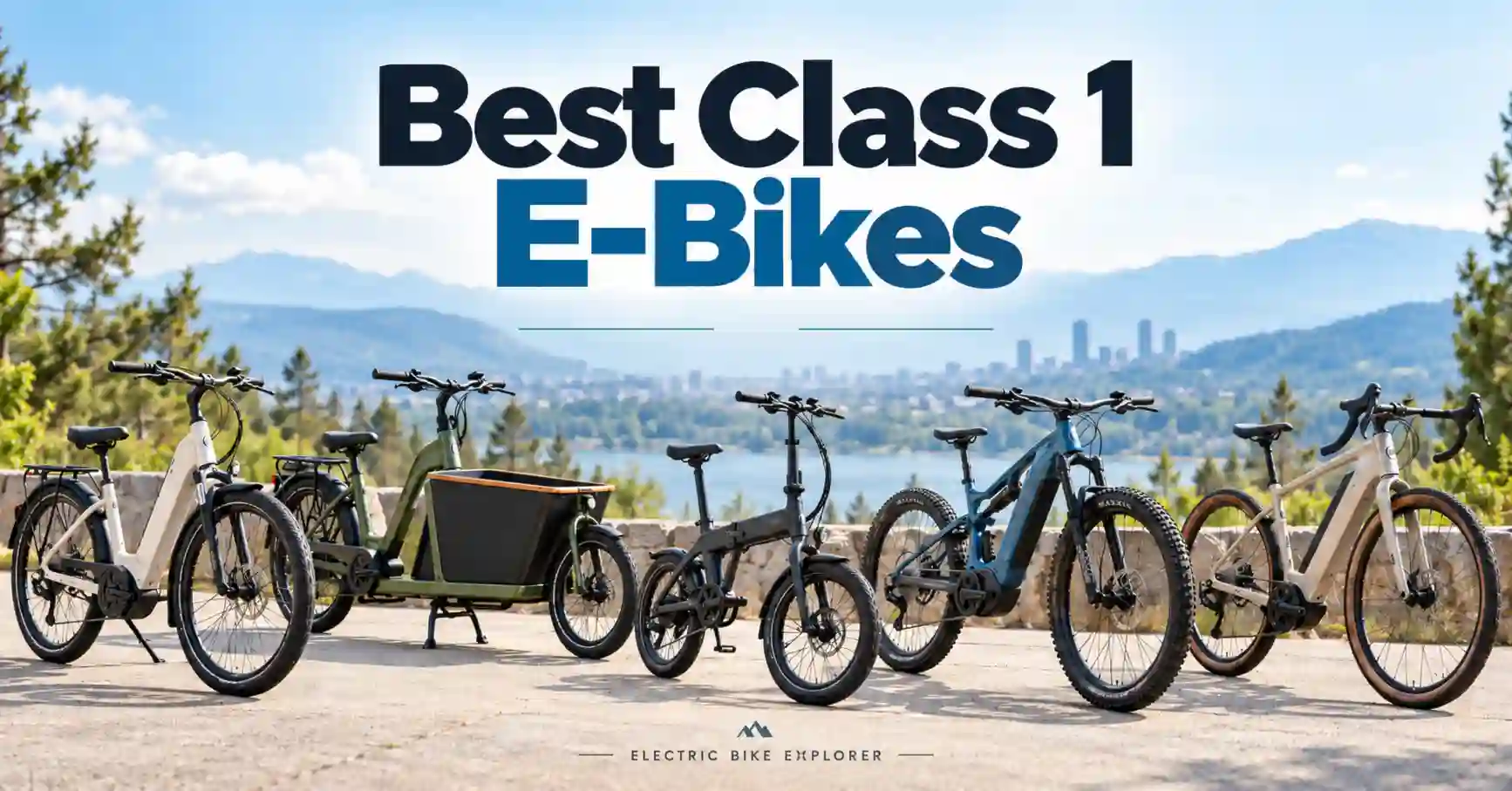
If you want an electric bike that still feels like a bicycle, a true Class 1 e-bike is a great place to start. Under the common U.S. three-class framework, a Class 1 e-bike uses pedal assist only and stops providing motor assistance at 20 mph. There is no throttle driving the bike without pedaling.
That sounds simple, but shopping for one is not always simple. Some bikes are advertised as Class 1 even though they ship with a throttle or can be reconfigured into a different class. For this guide, I used a stricter standard: the bikes below are current pedal-assist models that fit the Class 1 definition in their U.S. configuration.
If you are still comparing motor types, fit, batteries, brakes, and other basics, start with my complete e-bike buying guide. You can also review my explanation of Class 1, Class 2, and Class 3 e-bikes before deciding which class makes the most sense for where you ride.
Price and specification note: Prices, specifications, colors, bundles, financing, and availability can change. Prices in this guide were checked October 3, 2026. Manufacturer range figures are claims or estimates, not guaranteed real-world results.
⭐ Quick Picks: Best Class 1 E-Bikes for 2026
- Best Overall: Gazelle Ultimate T10
- Best for Comfort: Cannondale Mavaro 3 Low StepThru
- Best Everyday Commuter: Marin Sausalito E1
- Best Cargo: Tern HSD P5i Gen 3
- Best Folding: Tern Vektron Q9
- Best Electric Mountain Bike: Specialized Turbo Levo 4 Alloy
- Best Lightweight / Gravel: Salsa Confluence Flat Bar Altus
👉 Short on time?
See today’s e-bike deals and limited-time discounts, then compare top picks below.
Best Class 1 E-Bikes Comparison
| Bike | Price Checked | Motor / Torque | Battery | Weight | Fit / Capacity | Best For | Main Tradeoff |
|---|---|---|---|---|---|---|---|
| Gazelle Ultimate T10 | $3,499 | Bosch Active Line Plus / 60 Nm | 540 Wh | 57.3 lb excluding battery | Approx. 4’10”-6’4″ across listed frame sizes | Best overall | Heavy once the battery is included |
| Cannondale Mavaro 3 Low StepThru | $2,999 sale price | Bosch Active Line Plus / 50 Nm | 500 Wh | Not listed by Cannondale | Low-step; SM-XL | Comfort | 50 Nm is modest for very steep hills or heavy loads |
| Marin Sausalito E1 | $3,499 MSRP | Bosch Active Plus, 250W / 50 Nm | 545 Wh | Not listed by Marin | S-XL; standard frame, with a separate step-through version available | Everyday commuting | Rigid fork and premium commuter price |
| Tern HSD P5i Gen 3 | $4,999 | Bosch Performance Line / 75 Nm | 545 Wh | 61.9 lb | 4’11”-6’7″; 419 lb max gross vehicle weight | Cargo and passenger use | Expensive and heavy |
| Tern Vektron Q9 | $2,999 sale price | Bosch Active Line Plus / 50 Nm | 400 Wh | Manufacturer-listed weight varies by equipment configuration | 4’10”-6’5″ | Folding and travel | Smaller battery than the full-size picks |
| Specialized Turbo Levo 4 Alloy | $4,999.99 | Specialized 3.1 / 105 Nm, 810W peak | 840 Wh | Varies by size | S1-S6 | Technical trail riding | Overkill for pavement and casual riding |
| Salsa Confluence Flat Bar Altus | $2,099.99 sale price | MAHLE X35+ / 40 Nm | 250 Wh | 32.5 lb, size Large | XS-XL | Lightweight gravel and fitness riding | Smaller battery and mechanical disc brakes |
How I Chose These Class 1 E-Bikes
I started with the classification. For this guide, I did not include a bike simply because it can be limited to 20 mph in an app. I looked for current U.S. models that are pedal-assist bikes without a throttle and that stop motor assistance at 20 mph.
From there, I compared official specifications, safety information, independent testing, support policies, warranty coverage, replacement-parts availability, fit, bike weight, motor performance, battery capacity, brakes, and real-world rider feedback. I also checked whether each model is still current and reasonably available.
I wanted the final list to cover different kinds of Class 1 riders rather than filling it with seven nearly identical commuters. That is why the picks include a comfort bike, everyday commuter, compact cargo bike, folding bike, full-suspension eMTB, and lightweight gravel-oriented model.
Affiliate relationships do not determine which bikes I recommend or how they are ranked. You can read more about the process in how Electric Bike Explorer picks and ranks e-bikes.
If you are still deciding which type of e-bike fits you best, my Best Electric Bikes guide compares the major categories.
Who This Guide Is For – and Who It Is Not For
This guide is for riders who want a pedal-assist e-bike without a throttle and who are comfortable with motor assistance ending at 20 mph. Class 1 bikes can be a good fit for commuting, recreational riding, fitness, rail trails, and some natural-surface trails where Class 1 e-bikes are allowed.
This guide is not for riders who want throttle operation or motor assistance up to 28 mph. If either of those features matters to you, a Class 2 or Class 3 e-bike may be a better match.
Class 1 status does not automatically mean an e-bike is allowed on every trail, bike path, park, or boardwalk. Access rules can vary by state, city, park, trail system, and land manager. Before riding, check my state-by-state e-bike law guide and confirm any local trail or park rules that apply.
1. Gazelle Ultimate T10 – Best Overall Class 1 E-Bike

Price checked October 2, 2026: $3,499
The Gazelle Ultimate T10 is my best overall pick because it combines a well-supported Bosch mid-drive system with practical commuter equipment, a comfortable low-step frame, hydraulic disc brakes, suspension, lights, a rack, and a 540Wh integrated battery.
Gazelle identifies the Ultimate T10 within its Class 1 lineup. The current model uses a Bosch Active Line Plus mid-drive motor with up to 60 Nm of torque and a 20 mph assist cutoff. Gazelle lists up to 85 miles in Eco mode, but that is a manufacturer estimate. Real-world range can be much lower depending on assist level, hills, rider weight, wind, tire pressure, temperature, and cargo.
The current U.S. product page lists the bike at 57.3 lb excluding the battery. That distinction matters. This is not a lightweight e-bike, and anyone who has to carry it up stairs should not choose it based on the 57.3 lb number alone.
Gazelle also lists the bike as Intertek ETL Listed. Its current warranty information includes up to 10 years on the frame and non-suspension fork against covered defects, 5 years on suspension forks and paint, and 2 years on other parts subject to the warranty terms. Warranty service is handled through Gazelle dealers.
Why it stands out
The Ultimate T10 feels like a complete transportation package rather than a bare e-bike that needs another few hundred dollars in accessories. The Bosch system, adjustable cockpit, suspension seatpost, air fork, rack, lights, fenders, and integrated lock make it particularly strong for commuting and everyday riding.
Tradeoffs
The main drawback is weight. It also costs much more than entry-level Class 1 bikes, and riders who only need a short flat commute may not get enough value from the premium equipment.
2. Cannondale Mavaro 3 Low StepThru – Best Class 1 E-Bike for Comfort
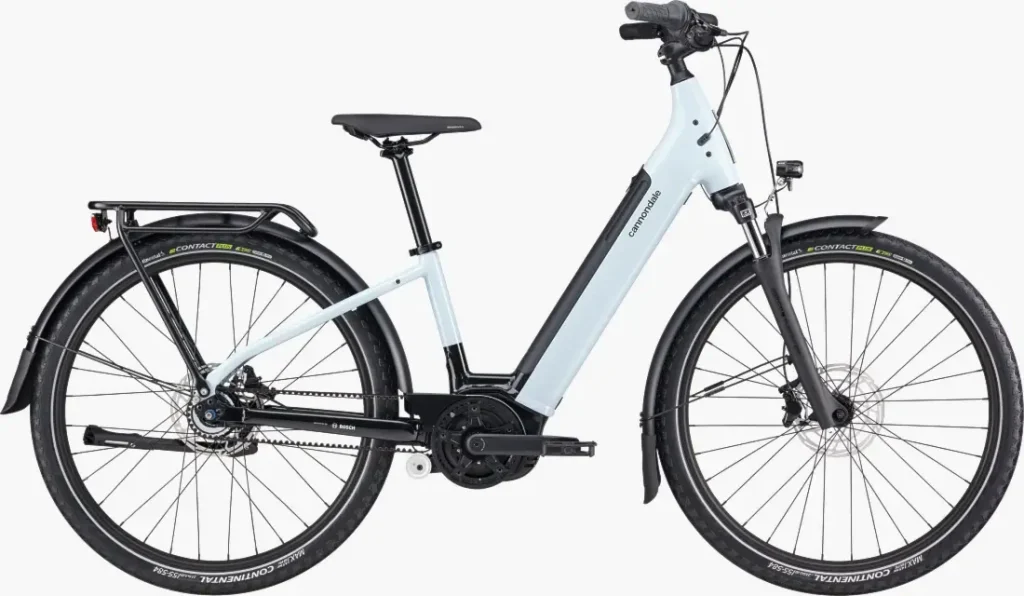
Price checked October 3, 2026: $2,999 sale price
The Cannondale Mavaro 3 Low StepThru is the comfort-first choice in this group. It combines a low-step aluminum frame with a 63 mm SR Suntour Mobie suspension fork, wide tires, an upright cockpit, full-coverage fenders, lights, and a rear rack.
Cannondale’s U.S. product page specifies Bosch Active Line Plus pedal assist up to a maximum of 20 mph and does not list a throttle, which fits the Class 1 definition used in this guide. The Smart System motor provides up to 50 Nm of torque and uses a removable 500Wh Bosch PowerTube battery. Cannondale claims up to 70 miles of assisted range.
The drivetrain is especially appealing for comfort-focused riders who want less routine maintenance. A Gates CDX belt drives a Shimano Nexus 7-speed internal gear hub, so there is no exposed derailleur and chain to clean and lubricate in the usual way. The Mavaro also uses hydraulic disc brakes with 180 mm rotors front and rear.
Cannondale lists UL 2849 certification for the electrical system. It also advertises a 15-day return period for qualifying Cannondale purchases and a limited lifetime frame warranty under its current terms. Cannondale does not clearly publish a complete-bike weight on the current product page, so I would confirm weight with the dealer if lifting or transport matters.
Why it stands out
The Mavaro combines low-step access, suspension, a belt drive, internal gearing, Bosch support, and practical commuter equipment in one package. At its current sale price, it also undercuts several similarly equipped premium comfort bikes.
Tradeoffs
The 50 Nm motor is better suited to ordinary commuting and recreational riding than very steep hills or heavy cargo. The $2,999 price is also a sale price, so value can change if the promotion ends.
3. Marin Sausalito E1 – Best Everyday Commuter
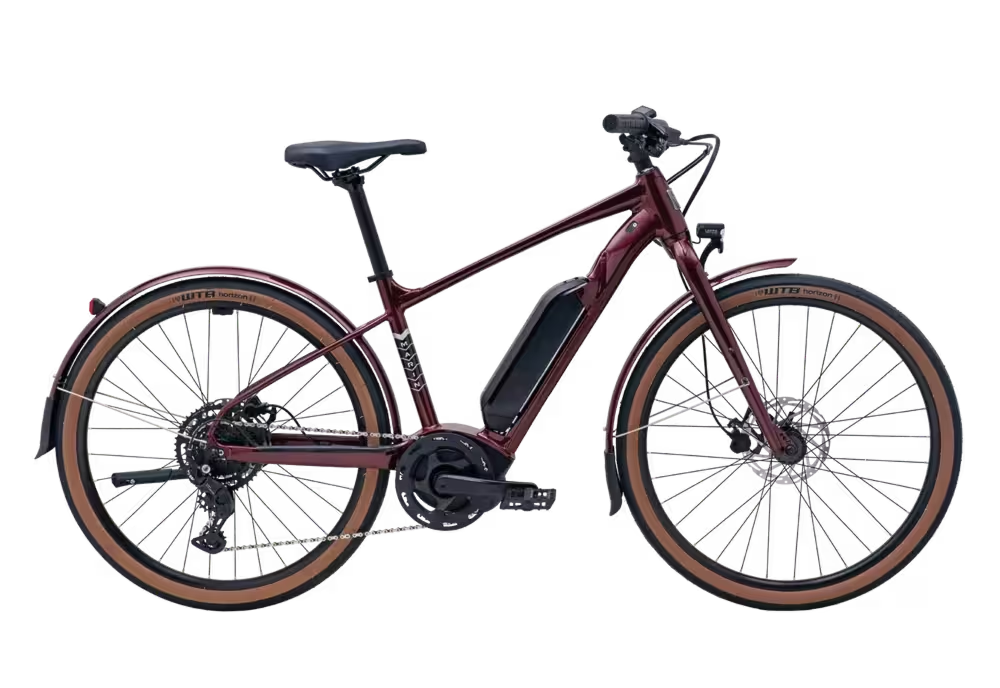
Price checked October 3, 2026: $3,499 MSRP
The Marin Sausalito E1 is my everyday commuter pick for riders who want a straightforward Class 1 hybrid with Bosch support, wide gearing, hydraulic brakes, and practical urban equipment without moving into a heavy cargo-bike format.
Marin explicitly lists the Bosch Active Plus motor as Class 1 in North America, with a 20 mph assist cutoff, 250W rating, and 50 Nm of torque. The bike uses a 545Wh Bosch PowerPack battery. Marin gives a very broad manufacturer range estimate of 25 to 93 miles, so I would treat the upper end as an ideal-condition figure rather than an everyday expectation.
The Sausalito E1 uses a Shimano CUES 9-speed drivetrain and Tektro hydraulic disc brakes with 180 mm rotors front and rear. Marin says the current model includes fenders and lights as standard. The standard frame is offered in sizes S through XL, and Marin also sells a separate step-through Sausalito E1 ST.
Marin does not clearly list a complete-bike weight on the current U.S. product page, so riders who need to carry the bike should confirm the actual assembled weight before buying.
Why it stands out
The Sausalito E1 has a clean, conventional hybrid-bike layout and an explicitly documented Class 1 Bosch system. The 545Wh battery, hydraulic brakes, broad 9-speed gearing, fenders, and lights make it easy to understand as a daily commuter rather than a niche e-bike.
Tradeoffs
The rigid steel fork is simpler than the suspension setup on the Mavaro, and $3,499 is a substantial price for a commuter with a 50 Nm motor. Riders who prioritize maximum comfort may prefer the Cannondale, while riders who need cargo capacity should look at the Tern HSD.
4. Tern HSD P5i Gen 3 – Best Class 1 Cargo E-Bike
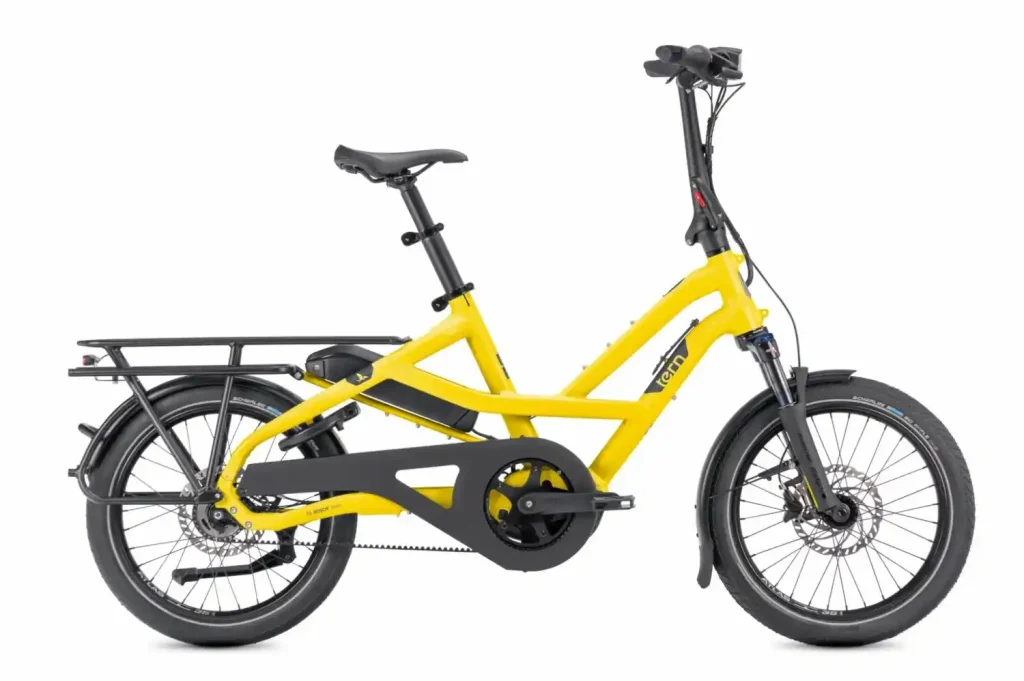
Price $4,999
The current HSD P5i Gen 3 is my cargo pick because it combines compact dimensions with serious carrying capacity. Tern rates the bike for a 419 lb maximum gross vehicle weight and its rear rack for 176 lb. The cockpit adjusts to fit riders from about 4’11” to 6’7″.
The Bosch Performance Line motor provides up to 75 Nm of torque and assists to 20 mph in the U.S. The bike uses a 545Wh Bosch PowerPack battery, and Tern claims a range of about 35 to 67 miles depending on conditions and assist use.
The P5i also uses a Shimano Nexus 5 internal gear hub and Gates CDX belt drive. Magura hydraulic disc brakes use 180 mm rotors front and rear. Tern lists the complete bike at 61.9 lb.
Safety documentation is a major strength here. Tern says the HSD is third-party tested and certified to UL 2849 for the complete e-bike system, while the frame and fork are certified to EN 17860 using the stated cargo-bike load. The Atlas H rear rack is also listed with ISO 11243 certification.
Why it stands out
This is the most useful pick here for carrying a child, adult passenger within the rated setup, groceries, or daily cargo while remaining much shorter than a traditional longtail. If cargo is your priority, also compare it with the models in my cargo e-bike buying guide.
Tradeoffs
The HSD P5i is expensive and heavy. Its compact 20-inch wheels and cargo-focused geometry also make it a very different ride from a conventional full-size commuter, so a test ride is especially useful.
5. Tern Vektron Q9 – Best Folding Class 1 E-Bike
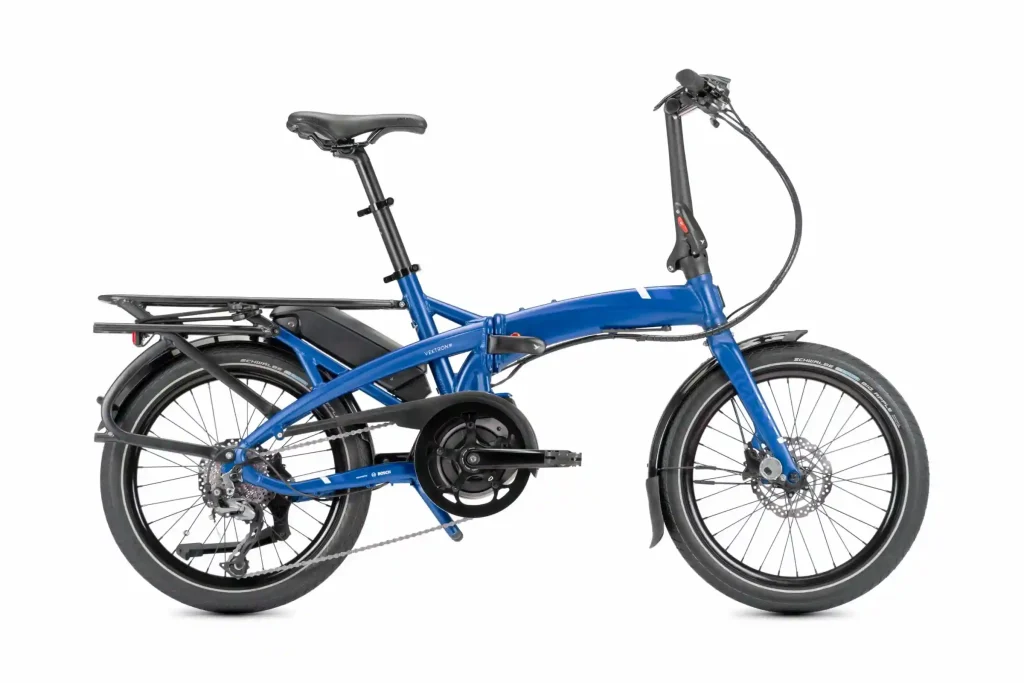
Price checked October 2, 2026: $2,999 sale price
The Vektron Q9 is the strongest folding option in this group for riders who want a Bosch-powered Class 1 bike that can fit into smaller storage spaces, RVs, or certain multimodal travel setups.
Tern explicitly lists the U.S. Vektron Q9 motor as Class 1. The Bosch Active Line Plus system provides 50 Nm of torque and assistance to 20 mph, paired with a 400Wh battery. Tern lists a manufacturer-estimated range of about 35 to 70 miles.
Its adjustable cockpit is designed to fit riders from approximately 4’10” to 6’5″. It also includes hydraulic disc brakes and an integrated rear rack. Tern states that the frame is EN 15194 compliant through third-party testing.
Why it stands out
The Vektron is a real transportation bike that happens to fold, rather than an ultra-light folding bike built around minimal equipment. It gives you Bosch support, useful carrying capacity, lights, fenders, and a broad fit range.
Tradeoffs
The 400Wh battery is the smallest among the heavier full-size transportation bikes in this guide. The current $2,999 price is also a sale price, and return terms can depend on where you purchase. Tern’s U.S. store states that dealer purchases follow the dealer’s policies and that discounted store items may have different return restrictions, so confirm the policy before buying.
For more compact options, see my best folding e-bikes guide.
6. Specialized Turbo Levo 4 Alloy – Best Class 1 Electric Mountain Bike

Price checked October 2, 2026: $4,999.99
The Turbo Levo 4 Alloy is in a completely different category from the commuters above. It is a full-suspension electric mountain bike designed for trail riding, with 160 mm of front suspension travel, 150 mm at the rear, mixed 29-inch front and 27.5-inch rear wheels, and a large 840Wh battery.
Specialized identifies the Levo 4 as a Class 1 e-bike in the U.S. The Specialized 3.1 motor is listed at 105 Nm of torque and 810 watts peak power. Peak power is not the same thing as a nominal motor rating, so I would not compare that 810W number directly with a nominal wattage figure from another brand.
The Levo 4 uses Specialized’s S1-S6 sizing rather than a traditional small-to-extra-large system. That gives riders more flexibility to choose handling characteristics, but it also makes a proper fit consultation especially worthwhile.
Why it stands out
For technical trail riding, this is easily the most capable bike in the guide. Its motor torque, battery capacity, suspension, geometry adjustments, and trail-specific chassis put it far beyond a hybrid bike with knobby tires.
Tradeoffs
It is expensive and specialized for off-road use. If most of your riding is pavement, rail trail, or commuting, you would be paying for suspension travel and trail capability you may never use. Also remember that Class 1 status does not guarantee access to every mountain-bike trail. Check the land manager’s rules before riding.
Compare other trail options in my electric mountain bike guide.
7. Salsa Confluence Flat Bar Altus – Best Lightweight / Gravel Class 1 E-Bike
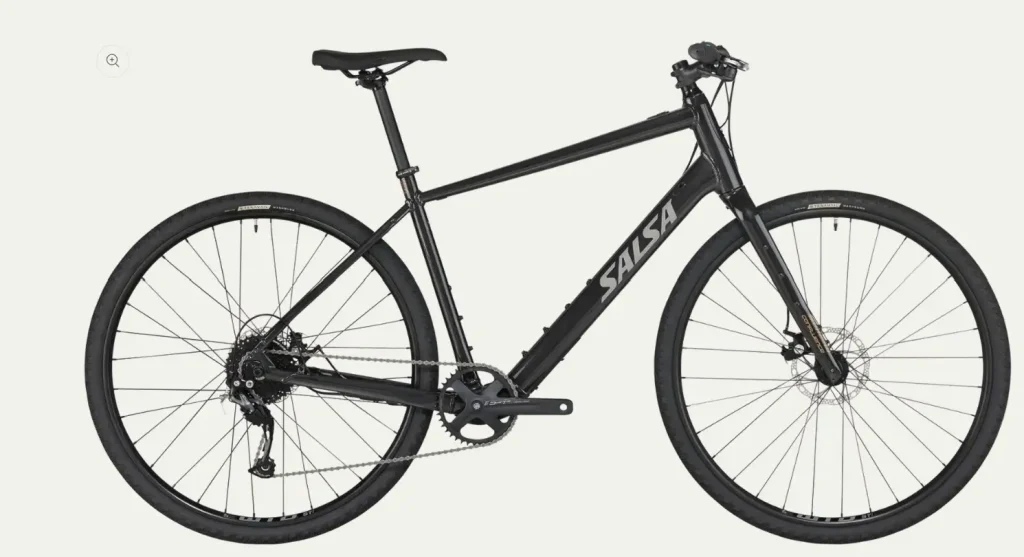
Price checked October 2, 2026: $2,099.99 sale price
The Salsa Confluence Flat Bar Altus is the outlier in this group in the best possible way: Salsa lists a complete size Large at 32.5 lb. That is dramatically lighter than the transportation-oriented Gazelle and Tern models.
The MAHLE X35+ rear-hub system provides 40 Nm of torque. Salsa explicitly lists the bike as Class 1, with no throttle and a 20 mph maximum assist speed. Battery capacity is 250Wh, and the specification table gives an estimated 40-mile range.
There is one source inconsistency worth knowing about. Salsa’s specification table lists a 40-mile range estimate, while other manufacturer material has referenced up to 45 miles under ideal conditions. I would treat both as estimates and plan around the lower number unless your riding conditions are unusually favorable.
The bike uses a 1×9 Shimano Altus drivetrain and mechanical disc brakes. Salsa says the model meets UL 2849 and UL 2271 certification requirements. It is offered from X-Small through X-Large.
Why it stands out
The Confluence is the best choice here for a rider who wants an e-bike that remains reasonably easy to lift, pedal beyond the assist cutoff, and use for fitness-oriented riding, gravel paths, and light bikepacking.
Tradeoffs
The 250Wh battery is small compared with the other picks, and 40 Nm is modest. The mechanical disc brakes are also less premium than the hydraulic systems on most of this list.
Why Some Popular E-Bikes Are Not on This List
I deliberately excluded a few models that can appear in Class 1 search results. The Electra Townie Go! 7D EQ is now archived rather than a current model. The TENWAYS CGO600 Pro was marked sold out on its U.S. product page when I checked it.
I also excluded bikes that ship as throttle-equipped Class 2 or 3 models even if an app or settings menu can limit them to 20 mph. Those bikes may still be good products, but they muddy the purpose of a guide built specifically around true pedal-assist-only Class 1 choices.
How to Choose a Class 1 E-Bike
Start with where you can actually ride it
Class 1 often receives broader trail and path access than higher-speed or throttle-equipped e-bikes, but there is no universal rule. State law, city rules, park policy, and trail-manager rules can all differ. Verify the exact place you plan to ride.
Choose the right motor for your terrain
A 40-50 Nm system can work very well for flatter commuting and fitness riding. Heavier riders, steep hills, cargo, and mountain biking benefit from more torque. Do not judge the bike by wattage alone – torque, gearing, controller behavior, cadence support, and overall bike weight all affect how strong an e-bike feels.
My e-bike motor guide explains the practical differences between hub motors and mid-drives.
Do not ignore bike weight
Weight matters most when you stop riding. A 60 lb bike may feel stable and easy under power but become difficult on stairs, a repair stand, an RV rack, or a vehicle carrier. Also check whether the manufacturer’s stated weight includes the battery, rack, pedals, and other installed equipment.
Check fit before buying
A low-step frame does not automatically mean a bike fits a shorter rider, and a one-size bike does not fit everyone equally well. Check standover, saddle height, reach, handlebar adjustment, and how much the bike weighs when you are maneuvering it at low speed.
You can use the Electric Bike Explorer size calculator as a starting point, but a test ride is still useful when possible.
Compare batteries by watt-hours
Watt-hours are more useful than amp-hours alone when comparing battery capacity. A 250Wh lightweight bike and an 840Wh eMTB serve completely different missions. Bigger is not automatically better because battery capacity adds weight and cost.
Look at braking and safety documentation
Hydraulic disc brakes are common on heavier and faster-feeling e-bikes because they provide strong braking with relatively low hand effort. Mechanical discs can still work well on a lighter bike, but setup and adjustment matter.
For electrical safety, look for clear evidence rather than vague wording. Tern documents UL 2849 certification for the HSD, Salsa lists UL 2849 and UL 2271 for the Confluence, Cannondale lists UL 2849 for the Mavaro 3, and Gazelle lists the Ultimate T10 as Intertek ETL Listed. If electrical certification is a top priority, see my guide to UL-certified e-bikes.
Think about service before you need it
A good e-bike is not just a motor and battery. Ask where replacement batteries come from, whether local shops service the drive system, what the frame and electronics warranties cover, and who handles a claim. Dealer-oriented brands can cost more upfront but may be easier to support over time.
Essential E-Bike Gear (Quick Picks)
Before you choose your e-bike, these are the accessories most riders end up needing for safety and everyday use:
Common Class 1 E-Bike Buying Mistakes
- Assuming every 20 mph e-bike is Class 1. A throttle-equipped 20 mph bike is generally Class 2 under the common three-class framework.
- Assuming Class 1 is legal everywhere bicycles are legal. Trail and park managers can restrict e-bikes independently.
- Buying too much motor and suspension for pavement. A full-suspension eMTB can be wonderful on trails and unnecessary for a three-mile urban commute.
- Ignoring lifting weight. Check whether the published weight includes the battery and accessories.
- Treating claimed range as a promise. Hills, temperature, rider weight, tire pressure, wind, assist level, and cargo can all change range substantially.
- Skipping the return policy. Dealer purchases and sale-priced bikes may have different terms than direct online purchases.
- Buying without checking fit. Rider-height charts are useful, but reach and low-speed confidence matter too.
Class 1 E-Bike FAQs
What makes an e-bike Class 1?
Under the common U.S. three-class framework, a Class 1 e-bike provides motor assistance only while the rider is pedaling and stops assisting at 20 mph. State definitions can differ, so check the law where you live and ride.
Do Class 1 e-bikes have throttles?
Not under the standard three-class definition. A throttle that propels the bike without pedaling generally moves the bike into Class 2 or another legal category depending on local law.
Can a throttle bike be set to Class 1 mode?
Some e-bikes let you disable the throttle or change speed settings. Whether that changes the bike’s legal classification depends on the law and the specific bike. For this guide, I avoided that gray area and selected pedal-assist-only models.
Is 20 mph fast enough?
For commuting, recreational riding, rail trails, and fitness use, 20 mph assistance is enough for many riders. You can still coast or pedal faster than 20 mph – the motor simply stops adding assistance above the cutoff.
Are Class 1 e-bikes allowed on mountain-bike trails?
Sometimes. Access depends on the trail manager. Some systems allow Class 1 eMTBs while others prohibit all e-bikes or limit them to specific routes. Check the managing agency rather than relying on the class label alone.
Do Class 1 e-bikes need a license or registration?
Requirements vary by jurisdiction. Many states that use the three-class system treat qualifying Class 1 e-bikes more like bicycles than motor vehicles, but you should confirm your state’s current rules and any local restrictions.
Is a mid-drive better than a hub motor for Class 1?
Neither is automatically better. Mid-drives can use the bike’s gears and often feel natural on hills, while hub motors can be simple, quiet, and cost-effective. Your terrain, maintenance preferences, bike weight, and budget matter more than the motor location alone.
My Take
If I were choosing one Class 1 e-bike for the widest range of everyday riders, I would start with the Gazelle Ultimate T10. It balances a proven Bosch mid-drive system, practical commuter equipment, good fit coverage, strong braking, dealer support, and enough battery for substantial daily riding without becoming as specialized as the cargo and mountain-bike picks.
The exceptions are important. Choose the Cannondale Mavaro 3 Low StepThru if comfort and a low-maintenance belt-and-internal-hub drivetrain matter most. Choose the Marin Sausalito E1 if you want a straightforward Class 1 commuter with a larger 545Wh battery and hydraulic brakes. Choose the Tern HSD P5i Gen 3 if you need to carry a passenger or serious cargo. Choose the Vektron Q9 if storage and folding matter. The Turbo Levo 4 Alloy is the clear trail specialist, while the Salsa Confluence is the bike I would look at when low weight and a more bicycle-like feel are priorities.
The most important thing is not to buy a Class 1 e-bike just because the class number sounds safer or more legal. Match the bike to your terrain, fit, lifting needs, service options, and the actual access rules where you plan to ride.
Disclosure: As an Amazon Associate, I earn from qualifying purchases. This comes at no extra cost to you and helps support the content on this site.

Kristina is not just an enthusiast but a true authority on electric bikes. Nestled in the coastal beauty of Virginia, Kristina has found the perfect backdrop for her passion for electric biking. As a dedicated wife and homeschooling mom, her life revolves around family, faith, and the thrill of adventure.
Originally hailing from Ohio, Kristina's journey with electric bikes began as a curiosity and quickly evolved into a deep expertise. Her blog is a testament to her love for electric biking, combining her fascination for eco-friendly transportation with her coastal lifestyle.
When she's not cruising the beach on her electric bike, you'll find Kristina indulging in her other loves: long walks along the shore, getting lost in a good book, and cherishing moments with her loved ones. With a heart as big as her love for animals, especially cats, Kristina brings a unique perspective to the electric bike world, grounded in her strong faith in God and her dedication to a sustainable lifestyle.
Through her blog, Kristina shares her extensive knowledge of electric bikes, offering valuable insights, tips, and recommendations to fellow enthusiasts. Whether you're a seasoned rider or a newcomer to the electric bike scene, Kristina's blog is your go-to source for all things electric biking, fueled by her passion, expertise, and the scenic beauty of coastal Virginia.