E-Bike Maintenance Checklist: Weekly, Monthly & Yearly Tasks
Last Updated on September 6, 2026 by Kristina
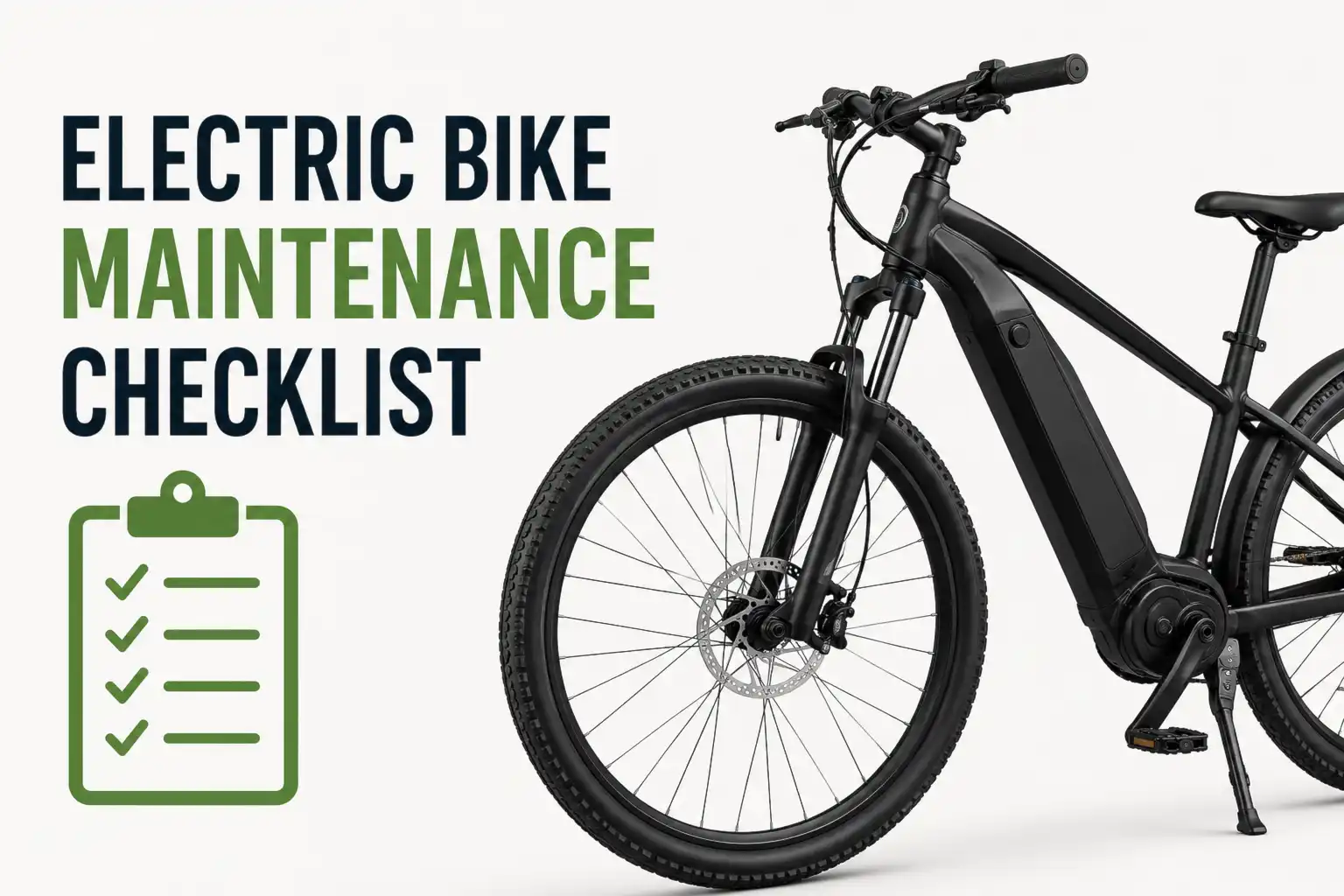
Regular e-bike maintenance does not have to be complicated. The most useful routine is usually a short pre-ride check, a few weekly and monthly inspections, and a more complete seasonal or yearly review based on how much and where you ride.
I would rather spend a minute finding a soft tire, loose wheel, weak brake, or damaged cable at home than discover it on the road. This checklist gives you a practical baseline, but your bike manufacturer’s manual is the final authority when its service schedule or torque specifications differ.
If you are trying to diagnose a specific problem rather than maintain a working bike, start with my e-bike troubleshooting and maintenance guide. You can also use the free e-bike tools hub for calculators and diagnostic tools.
🔧 How This Guide Was Researched
This guide is based on manufacturer instructions, established safety guidance, technical references, and common maintenance practices. Exact intervals vary by bike, mileage, terrain, weather, component type, and manufacturer, so treat this schedule as a practical baseline rather than a universal service schedule.
Safety First
Stop riding and inspect the bike if you notice a loose wheel, brake failure, damaged tire, cracked frame or fork, steering play, electrical damage, unusual battery heat, swelling, leaking, smoke, sparks, or a strong chemical odor. Do not open a lithium-ion battery pack. Use only the charger supplied or approved by the manufacturer, and follow the battery maker’s charging instructions.
E-Bike Maintenance Schedule at a Glance
| When | What to check |
|---|---|
| Before every ride | Tires, brakes, wheel security, lights, battery security, controls, visible damage |
| Weekly | Tire condition, drivetrain cleanliness, brake feel, visible fastener looseness, lights and accessories |
| Monthly | Brake pad wear, chain and drivetrain wear, wheel condition, cables/hoses, electrical connectors, suspension condition |
| Every 3-6 months | More detailed drivetrain, brake, wheel, bearing, suspension, and electrical inspection based on use |
| Seasonally | Weather-related cleaning, lubrication, tire setup, battery storage planning, corrosion checks |
| Yearly | Comprehensive inspection or tune-up, sooner for high-mileage, cargo, off-road, or harsh-condition riding |
This is a starting point, not a substitute for the service schedule in your owner’s manual. Electra/Trek, for example, recommends regular inspections and an annual tune-up, while other brands may specify different intervals for brakes, suspension, bearings, or drive-system components. See the manufacturer’s current electric bike maintenance guidance as one example.
The 60-Second Before-Every-Ride Check
My priority before every ride is simple: tires, brakes, wheels, battery, controls, and anything that looks or feels different from the previous ride.
1. Check the tires
Look for obvious underinflation, cuts, embedded debris, sidewall damage, or an unusual bulge. Use a gauge when the pressure feels questionable. The best pressure depends on tire size, rider and cargo weight, terrain, rim limits, and the bike or tire manufacturer’s recommendations. Do not assume the highest number printed on a tire is the ideal riding pressure.
If you want a starting point for comparing pressures, use my e-bike tire pressure calculator, then stay within the limits specified for your bike, rim, and tire.
2. Squeeze both brakes
Both levers should feel consistent and provide strong braking before they reach the handlebar. If a lever suddenly pulls farther than normal, feels spongy, or braking power has dropped sharply, inspect the system before riding.
3. Check wheel security
Make sure both wheels are seated correctly and that the axle, thru-axle, or quick-release mechanism is secure according to the manufacturer’s instructions. If you are unsure about the correct setup or torque, check the manual rather than guessing.
4. Check the battery and controls
Make sure the battery is properly latched, the display powers on normally, and there are no new error messages. Electra/Trek includes tire inflation, brake function, and e-bike system checks in its pre-ride checklist.
5. Look for anything new
A fresh rattle, wobble, rubbing sound, fluid leak, cracked part, loose rack, or damaged cable deserves attention. I would rather investigate a small change early than wait for it to become a roadside failure.
Weekly E-Bike Maintenance
Inspect tire condition
Look for cuts, embedded glass, sidewall cracking, worn tread, and slow leaks. Tire pressure can change with temperature and time, so check it more often when the weather changes quickly.
Clean the drivetrain when needed
Wipe excess dirt from the chain, chainring, cassette, and derailleur. Relubricate based on the lubricant manufacturer’s instructions and riding conditions. Wet, dusty, muddy, or salty riding usually requires more frequent cleaning than dry pavement.
Mid-drive e-bikes can put substantial motor-assisted load through the chain and cassette because motor power passes through the drivetrain. Hub-motor e-bikes do not transmit motor power through the chain in the same way, so chain wear should not be described as identical across every e-bike.
Check braking feel
Notice whether either brake feels weaker, noisier, or different from the previous week. Do not spray chain lubricant, polish, or cleaner onto rotors or brake pads.
Look for looseness instead of tightening everything
I do not recommend simply tightening every bolt on a schedule. Visually inspect critical hardware, racks, fenders, stems, handlebars, cranks, pedals, and accessories for movement or looseness. If a fastener needs attention, use the manufacturer’s torque specification and the correct tool.
Monthly E-Bike Maintenance
Inspect brake pad wear
Check the pads according to the brake manufacturer’s instructions. Replace them before the friction material reaches the specified wear limit. If you cannot see or measure the pads confidently, this is a good job for a bike shop.
Check chain and drivetrain wear
Inspect the chain for corrosion, stiff links, poor shifting, or excessive wear. A chain-wear gauge can help on derailleur drivetrains. Replacing a worn chain at the appropriate point can help reduce wear on more expensive cassette and chainring components.
If shifting has become inconsistent, use my e-bike shifting troubleshooting tool before making random adjustments.
Inspect wheels and spokes
Spin each wheel and look for obvious side-to-side wobble, damaged spokes, rim damage, or tire seating problems. Cargo bikes and bikes ridden on rough roads may need more frequent wheel checks because loads and impacts can be higher.
Inspect cables, brake hoses, and connectors
Look for rubbing, kinks, cuts, loose plugs, corrosion, or damaged insulation. Do not disconnect electrical components unless the manufacturer says they are user-serviceable.
Check suspension condition
If your e-bike has a suspension fork or rear shock, wipe the stanchions clean and inspect for leaks, damage, or abnormal play. Follow the suspension manufacturer’s service interval rather than using a generic e-bike interval.
Battery and Charging Maintenance
The battery is one of the most expensive components on an e-bike, so I treat battery care as both a maintenance and safety issue.
Use only the correct charger
The U.S. Consumer Product Safety Commission recommends using the charger supplied with the product or a replacement specifically approved by the manufacturer, following the manufacturer’s instructions, being present while charging, and not charging while sleeping. See the current CPSC micromobility battery-safety guidance.
Inspect the battery before charging
Do not charge a battery that is swollen, leaking, unusually hot, badly damaged, emitting smoke, or giving off a strong chemical odor. Move away from the battery and follow emergency guidance when appropriate.
Follow the exact storage instructions for your battery
There is no single storage percentage that applies to every e-bike battery. Bosch currently recommends roughly 30-60% charge for long-term storage on applicable systems, while Shimano documentation for some systems recommends approximately 70% and periodic recharging during extended storage. Follow the instructions for your exact battery rather than copying a number from another brand.
You can review Bosch’s current battery storage guidance and Shimano’s battery user manual as examples of why storage recommendations can differ.
For a broader explanation of battery condition, try my e-bike battery health checker and my guide to e-bike battery capacity.
How to Clean an E-Bike Safely
Routine cleaning helps you spot damage and can help reduce buildup from dirt, mud, road salt, and grime. Gentle cleaning is more important than blasting the bike with pressure.
Bosch specifically warns against using a steam jet or high-pressure cleaner on its e-bike systems. Its guidance recommends gentler cleaning with a sponge or brush and removing removable electronic components when appropriate. See Bosch’s e-bike cleaning guidance.
- Power the bike off.
- Remove the battery or removable display if the manufacturer recommends doing so.
- Use a damp cloth, soft brush, or low-pressure hand cleaning method.
- Avoid spraying water directly into connectors, bearings, displays, charging ports, or other sensitive areas.
- Keep degreasers and lubricants away from brake rotors and pads.
- Dry the bike and relubricate the chain when needed.
Every 3-6 Months and Seasonal Checks
The amount of service needed here depends heavily on mileage and conditions. A daily commuter in rain and road salt may need attention far sooner than a recreational bike ridden a few times a month in dry weather.
Inspect steering and bearing play
Check for looseness or unusual movement at the headset, hubs, pedals, cranks, and other rotating parts. If you are unsure whether movement is normal, have a qualified shop inspect it.
Review brake and drivetrain wear
Look beyond basic function. Check whether pads, rotors, chain, cassette, chainring, cables, or hoses are approaching replacement.
Prepare for weather changes
Cold, rain, snow, heat, dust, and road salt can all change maintenance needs. My winter e-bike riding guide covers cold-weather battery care, traction, salt cleanup, and winter safety in more detail.
Check the app or manufacturer support channel when relevant
Firmware does not need to be checked on an arbitrary monthly schedule. If your bike uses connected software, install updates when the manufacturer recommends them or when a service issue requires them.
Yearly E-Bike Maintenance
A comprehensive yearly inspection is a useful baseline for many riders, but it is not a universal rule. High-mileage commuters, cargo bikes, mountain bikes, and bikes used in harsh weather may need professional service more often. Low-mileage recreational bikes may follow a different schedule specified by the manufacturer.
Electra/Trek currently recommends an annual tune-up as part of its e-bike maintenance guidance. Your own manufacturer may set different intervals.
A more complete inspection can include:
- Brake pad, rotor, hose, and cable condition
- Wheel trueness, spokes, hubs, and axle security
- Chain, cassette, chainring, derailleur, and shifting condition
- Headset, crank, bottom bracket, pedal, and bearing play
- Suspension service status
- Frame, fork, rack, and attachment-point inspection
- Battery mount, wiring, connectors, display, and drive-system condition
- Software or diagnostic checks when the manufacturer supports them
Common E-Bike Maintenance Mistakes
Using a pressure washer
High-pressure water can drive moisture and contamination into areas where you do not want it. Use the cleaning method specified by the bike and drive-system manufacturer.
Overtightening bolts
More torque is not automatically safer. Use the specified torque value, especially on stems, handlebars, cranks, seatposts, motor mounts, and carbon components.
Lubricating contaminated brakes
Keep chain oil, aerosol protectants, polish, and degreaser away from brake rotors and pads.
Ignoring a new noise
A click, grind, rub, rattle, or knock may be minor, but it is still information. I prefer to investigate a new sound before it becomes harder to diagnose.
Using an incompatible charger
Voltage, connector shape, communication protocols, and battery-management requirements can differ. A charger that physically fits is not necessarily safe or compatible.
Useful Maintenance Tools
- Tire-pressure gauge and compatible pump
- Correct hex and Torx tools for the bike
- Torque wrench for manufacturer-specified fasteners
- Chain-wear gauge for compatible drivetrains
- Clean rags and soft brushes
- Bike-specific chain lubricant
- Basic tire repair supplies appropriate to your wheel and tire setup
For troubleshooting beyond routine maintenance, the troubleshooting hub is a good starting point. You can also use the e-bike error code finder when your display shows a code.
When to Stop Riding and Call a Shop
A maintenance schedule should never override a safety warning. Stop riding if you notice:
- A wheel that is loose or not seated correctly
- Sudden loss of braking power
- A tire bulge, exposed casing, severe cut, or repeated rapid pressure loss
- Cracks or serious damage in the frame, fork, handlebar, stem, or wheel
- Steering that binds, knocks, or has significant play
- Electrical wiring that is cut, melted, crushed, or sparking
- A battery that is swollen, leaking, smoking, unusually hot, or strongly odorous
- Repeated drive-system shutdowns or an error that the manufacturer says requires service
If the problem is not obvious, use my error code finder or the e-bike tools hub, but do not keep riding through a safety-critical fault just because the bike still powers on.
Printable-Style E-Bike Maintenance Checklist
Before every ride
- Check tire condition and pressure
- Squeeze both brakes
- Confirm wheel security
- Check battery latch and display
- Test lights when needed
- Look for fresh damage, leaks, loose accessories, or unusual noises
Weekly
- Inspect tires more closely
- Clean and lubricate the drivetrain as conditions require
- Check brake feel
- Inspect visible hardware for looseness
- Check racks, fenders, lights, and accessories
Monthly
- Inspect brake pad wear
- Check chain and drivetrain wear
- Inspect wheels and spokes
- Look over cables, hoses, and electrical connectors
- Inspect suspension condition if equipped
Seasonally or every 3-6 months
- Inspect bearings and steering play
- Review brake and drivetrain replacement needs
- Adjust cleaning and lubrication for weather conditions
- Follow the battery maker’s storage guidance
- Check manufacturer software or service notices when relevant
Yearly or as required by your manufacturer
- Complete a comprehensive safety inspection or tune-up
- Check wheel, bearing, brake, drivetrain, suspension, and electrical condition
- Service sooner if mileage, cargo use, off-road riding, or harsh weather warrants it
Frequently Asked Questions
How often should I maintain an electric bike?
Do a basic safety check before each ride, inspect common wear items regularly, and follow the manufacturer’s service schedule for your exact bike and components. Weekly, monthly, seasonal, and yearly checks are a useful baseline, but mileage and riding conditions matter more than the calendar alone.
Do e-bikes need more maintenance than regular bikes?
Not always. An e-bike has additional electrical components, and mid-drive systems can add drivetrain load, but actual maintenance needs depend on design and use. Tires, brakes, chains, wheels, suspension, and bearings still require the same kind of attention they do on other bicycles.
Can I wash an e-bike with water?
Generally, gentle cleaning is appropriate when it follows the manufacturer’s instructions. Avoid high-pressure or steam cleaning unless the manufacturer specifically allows it. Keep water away from open charging ports and sensitive electrical connections.
How should I store my e-bike battery?
Follow the exact battery manufacturer’s instructions. Storage charge level and temperature recommendations differ between systems, so there is no universal percentage that applies to every e-bike battery.
How often should an e-bike get a professional tune-up?
An annual comprehensive inspection is a useful baseline for many riders, but high-mileage, cargo, mountain, or all-weather bikes may need professional attention more often. The manufacturer’s service schedule should take priority.
My Take
The most valuable maintenance habit is not memorizing a giant schedule. It is noticing change. A tire that suddenly loses pressure, a brake lever that feels different, a wheel that develops play, or a motor that starts making a new noise deserves attention.
I would rather do small inspections consistently than wait for one big yearly service to catch everything. At the same time, I do not recommend unnecessary wrenching. If a fastener is secure, a brake is working properly, and the manufacturer does not call for adjustment, there is no benefit in taking things apart just because a calendar says it is Tuesday.
Use this checklist as a practical routine, then let the manufacturer’s manual win whenever it gives a more specific instruction. That approach can help you catch wear earlier, reduce avoidable problems, and keep the bike safer and more dependable without turning routine ownership into a full-time job.
Sources and Further Guidance
- U.S. Consumer Product Safety Commission – Micromobility battery safety
- Bosch eBike Systems – Cleaning an e-bike
- Bosch eBike Systems – Battery storage guidance
- Shimano – Battery user manual
- Electra/Trek – Pre-ride checklist
- Electra/Trek – Electric bike maintenance guidance
- Electric Bike Explorer – E-bike motor guide

Kristina is not just an enthusiast but a true authority on electric bikes. Nestled in the coastal beauty of Virginia, Kristina has found the perfect backdrop for her passion for electric biking. As a dedicated wife and homeschooling mom, her life revolves around family, faith, and the thrill of adventure.
Originally hailing from Ohio, Kristina's journey with electric bikes began as a curiosity and quickly evolved into a deep expertise. Her blog is a testament to her love for electric biking, combining her fascination for eco-friendly transportation with her coastal lifestyle.
When she's not cruising the beach on her electric bike, you'll find Kristina indulging in her other loves: long walks along the shore, getting lost in a good book, and cherishing moments with her loved ones. With a heart as big as her love for animals, especially cats, Kristina brings a unique perspective to the electric bike world, grounded in her strong faith in God and her dedication to a sustainable lifestyle.
Through her blog, Kristina shares her extensive knowledge of electric bikes, offering valuable insights, tips, and recommendations to fellow enthusiasts. Whether you're a seasoned rider or a newcomer to the electric bike scene, Kristina's blog is your go-to source for all things electric biking, fueled by her passion, expertise, and the scenic beauty of coastal Virginia.