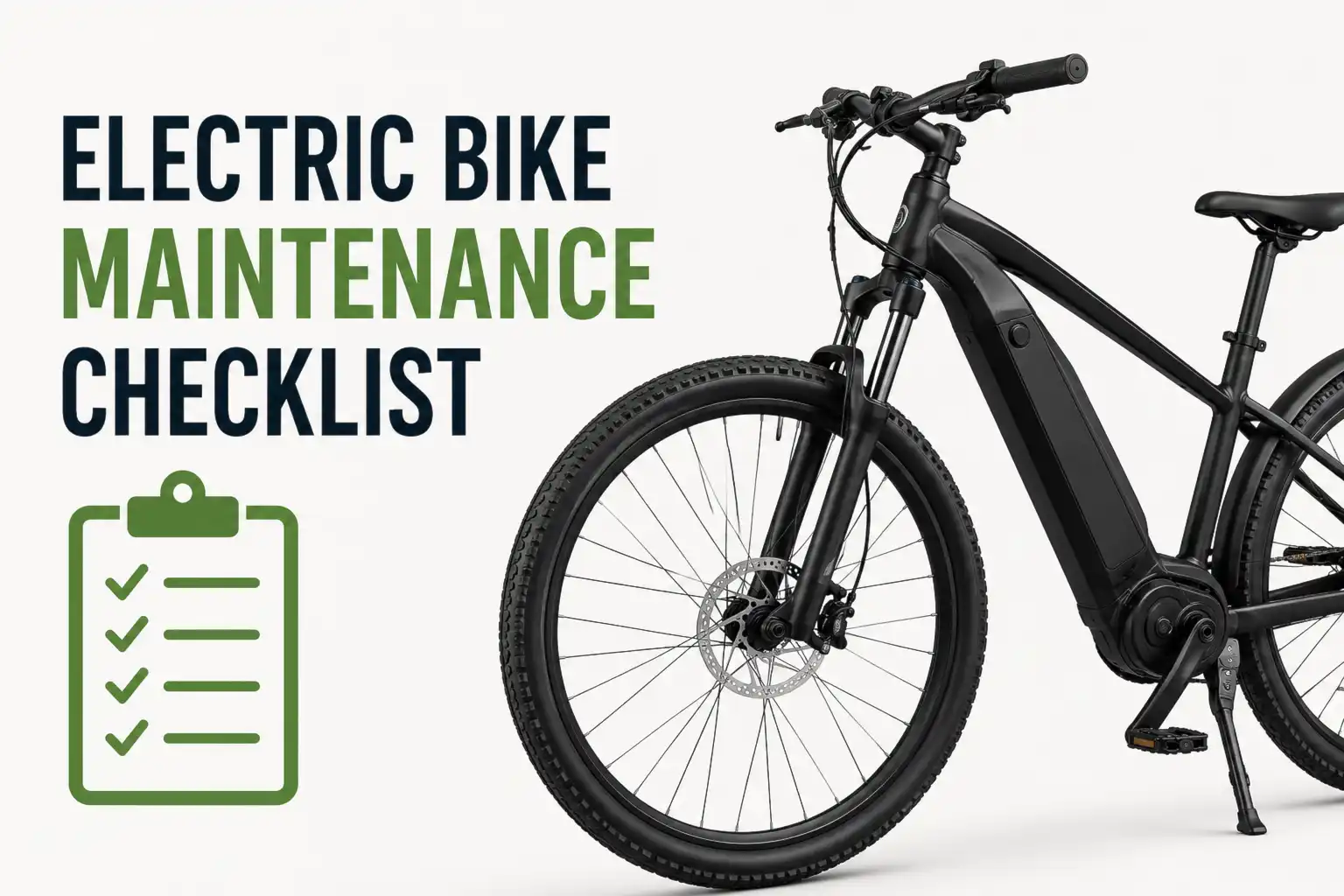
Electric Bike Maintenance Checklist: The Complete Guide to Keeping Your E-Bike Running Like New
Last Updated on June 6, 2026 by Kristina
Electric bike maintenance doesn’t have to be complicated, but ignoring basic e-bike care can lead to expensive repairs, reduced battery life, poor performance, and even safety issues.
I’ve learned that a few minutes of routine electric bike maintenance can prevent many of the most common problems riders experience. Whether you ride daily for commuting, weekend adventures, or occasional recreational rides, following a regular e-bike maintenance checklist can help your bike last longer and perform better.
In this guide, I’ll walk you through a complete electric bike maintenance checklist, including daily, weekly, monthly, seasonal, and annual maintenance tasks. I’ll also explain which maintenance items you can handle yourself and when it’s worth visiting a professional bike shop.
If you’re new to e-bikes, I also recommend reading:
• Start Here: Beginner E-bike Resources
• How Long Do E-Bike Batteries Last?
• E-Bike Troubleshooting & Maintenance Guide
Electric Bike Maintenance Checklist at a Glance
A proper electric bike maintenance checklist should include:
✓ Tire pressure checks
✓ Brake inspections
✓ Wheel security checks
✓ Chain cleaning and lubrication
✓ Battery care and charging practices
✓ Bolt and fastener inspections
✓ Motor and electrical connection checks
✓ Drivetrain cleaning
✓ Suspension maintenance (if equipped)
✓ Regular safety inspections
Most riders can complete basic weekly maintenance in less than 15 minutes, while more detailed inspections should be performed monthly and seasonally.
Why Regular Electric Bike Maintenance Matters
Unlike traditional bicycles, electric bikes combine mechanical components with electrical systems, batteries, controllers, sensors, and motors.
That means neglecting maintenance can affect much more than ride quality.
Routine e-bike maintenance helps:
• Extend battery lifespan
• Improve riding range
• Prevent unexpected breakdowns
• Reduce repair costs
• Improve braking performance
• Protect electrical components
• Increase overall safety
• Preserve resale value
I’ve found that riders who stay ahead of maintenance issues usually spend far less on repairs than riders who wait until something breaks.
How We Researched This Guide
This guide was created using manufacturer maintenance recommendations, bicycle industry best practices, battery safety guidance, and resources from bicycle advocacy organizations.
We reviewed maintenance recommendations from Bosch, Shimano, PeopleForBikes, Trek, Specialized, REI Co-op, and the Consumer Product Safety Commission (CPSC) to help ensure accuracy.
As with all maintenance-related content on Electric Bike Explorer, this guide is intended for educational purposes and should not replace professional mechanical advice.
The Complete Electric Bike Maintenance Checklist At a Glance
Before Every Ride
□ Check tire pressure
□ Test front and rear brakes
□ Check wheel security
□ Verify battery charge level
□ Inspect lights and reflectors
□ Check quick-release levers and axle nuts
□ Look for visible damage
□ Confirm display and controls are functioning properly
Weekly Maintenance
□ Clean frame and components
□ Check chain condition
□ Lubricate chain if needed
□ Inspect brake pads
□ Check tire wear
□ Verify all bolts remain tight
□ Inspect wiring connections
Monthly Maintenance
□ Deep clean drivetrain
□ Check spoke tension
□ Inspect rotors for wear
□ Examine battery contacts
□ Verify suspension settings
□ Check derailleur adjustment
□ Inspect cables and housing
Every 3-6 Months
□ Replace worn brake pads if needed
□ Replace worn chain if needed
□ Inspect bearings
□ Check wheel trueness
□ Perform comprehensive safety inspection
Annually
□ Professional tune-up
□ Battery health evaluation
□ Drivetrain wear assessment
□ Suspension service (if applicable)
□ Comprehensive electrical system inspection
Building an E-Bike Maintenance Kit
If you’re starting from scratch, these are the items I would prioritize first:
- Floor pump with pressure gauge
- Hex key set
- Chain lubricant
- Microfiber cloths
- Tire levers
- Spare tube
- Portable pump
- Multi-tool
These basic items can help you handle many common electric bike maintenance tasks without a trip to the bike shop.
Before Every Ride Checklist
Check Tire Pressure
Proper tire pressure affects range, comfort, traction, handling, and safety.
Underinflated tires create more rolling resistance, causing the motor and battery to work harder. Overinflated tires can reduce traction and make rides uncomfortable.
I recommend checking tire pressure before every ride if possible, especially on fat tire e-bikes, or at least several times per week for regular riders.
Refer to the tire sidewall for the manufacturer’s recommended pressure range.
You can also use our Tire Pressure Calculator to find a recommended starting point based on rider weight and riding conditions.
Test Your Brakes
Before every ride:
• Squeeze both brake levers
• Verify firm lever feel
• Ensure brakes engage smoothly
• Listen for unusual noises
• Confirm the bike stops quickly
If your brakes feel soft, spongy, or weak, address the issue before riding.
You may also find these guides helpful:
• Why Are My E-Bike Brakes Not Stopping Well?
• E-Bike Brake Upgrade Guide
• E-Bike Stopping Distance Calculator
Check Wheel Security
Before riding, make sure:
• Quick-release levers are fully closed (if equipped)
• Thru-axles are secure
• Axle nuts are properly tightened
• Wheels sit straight in the dropouts
A loose wheel can create a serious safety hazard, so it is worth taking a few seconds to verify everything is secure before heading out.
Verify Battery Charge Level
Check your battery’s charge level before heading out.
Avoid repeatedly running lithium-ion batteries completely empty, as deep discharges may shorten battery lifespan over time.
If you’re planning a longer ride, use our:
• E-Bike Range Calculator
• Can I Make It Home Tool
to estimate whether your current charge level is sufficient.
Inspect Lights and Safety Equipment
Verify that:
• Headlights work properly
• Taillights function correctly
• Turn signals operate if equipped
• Reflectors remain visible
• Mirrors are secure
• Horns or bells function properly
Being visible is one of the simplest ways to improve rider safety.
Weekly Electric Bike Maintenance Tasks
Weekly maintenance is where you can catch many small issues before they become expensive repairs.
For riders who use their e-bike several times per week, these checks usually take less than 15 minutes and can significantly improve reliability. Establishing a regular e-bike maintenance schedule can help you avoid unexpected breakdowns and extend the lifespan of key components.
Clean Your E-Bike
Keeping your electric bike clean does more than improve appearance.
Dirt, road salt, mud, sand, and debris can accelerate wear on moving components and may contribute to corrosion over time.
When cleaning your e-bike:
✓ Use a soft brush or microfiber cloth
✓ Use bike-specific cleaners when possible
✓ Wipe down the frame, wheels, and drivetrain
✓ Clean around the motor area carefully
✓ Dry the bike thoroughly afterward
Avoid pressure washers whenever possible. High-pressure water can force moisture into bearings, motors, battery compartments, displays, and electrical connectors that are designed to resist rain and splashes but not concentrated water pressure.
If your e-bike gets wet during a ride, wipe it down afterward and allow it to dry completely before charging or storing it.
Inspect and Lubricate the Chain
The chain is one of the hardest-working components on any electric bike.
Because e-bikes often place additional torque through the drivetrain, chain maintenance becomes even more important than it is on many traditional bicycles.
Look for:
• Rust
• Stiff links
• Excessive dirt buildup
• Squeaking noises
• Dry chain rollers
If the chain appears dry, noisy, or dirty, clean it first and then apply a quality bicycle chain lubricant designed for your riding conditions.
For most riders:
• Dry lubricant works well in dry and dusty conditions
• Wet lubricant works better in rainy or muddy conditions
After applying lubricant:
- Rotate the pedals several times.
- Allow the lubricant to penetrate the chain.
- Wipe away excess lubricant.
Using too much chain lubricant can actually attract dirt and accelerate drivetrain wear.
Check Tire Condition
While checking tire pressure, also inspect the tires themselves.
Look for:
• Cracks in the sidewalls
• Embedded glass or debris
• Uneven tread wear
• Bulges or deformities
• Excessive tread wear
Replacing worn tires before they fail can help prevent flats and improve traction.
Worn tires can also increase stopping distances, especially on wet pavement.
This is particularly important for commuters, heavier riders, and riders who regularly travel at higher speeds.
Inspect Brake Pads and Rotors
Your brakes are one of the most important safety systems on an electric bike.
Check brake pads for:
• Excessive wear
• Uneven wear patterns
• Contamination from oil or lubricant
• Cracks or damage
Also inspect brake rotors for:
• Excessive scoring
• Warping
• Rust buildup
• Loose mounting bolts
• Cracks near the braking surface
If you hear persistent squealing, scraping, or grinding noises, further inspection may be necessary.
If braking performance suddenly decreases, stop riding until the issue has been identified and corrected.
Check Bolts and Fasteners
Electric bike vibrations can gradually loosen hardware over time.
At least once per week, visually inspect:
• Handlebar bolts
• Stem bolts
• Seatpost clamp
• Rack mounting bolts
• Fender hardware
• Motor mounting hardware (if accessible and visible)
• Accessory mounts
Do not overtighten bolts.
When available, follow the manufacturer’s recommended torque specifications.
If you frequently ride rough roads, gravel paths, or off-road trails, consider checking critical fasteners more often.
Inspect Electrical Connections
Electrical problems often start as loose or damaged connections.
Look for:
• Loose connectors
• Connectors that have partially worked loose
• Pinched wires
• Damaged cable insulation
• Corrosion
• Moisture intrusion
Pay particular attention to areas where cables enter the frame or connect to the display, controller, battery, and motor.
If a connector appears damaged, avoid riding until it has been inspected.
Many display errors, intermittent power losses, and sensor problems can be traced back to loose or damaged wiring connections.
Check the Battery Mount and Contacts
Your battery should fit securely in its mounting system without excessive movement.
Inspect:
• Battery locking mechanism
• Battery mounting rails
• Visible battery contacts
• Signs of corrosion or dirt buildup
If the battery feels loose while riding, address the issue promptly.
A properly secured battery helps prevent connection issues and unnecessary wear on electrical contacts.
✅ Weekly E-Bike Maintenance Checklist
If you only have 10 minutes each week, focus on these five tasks first:
- Clean the bike.
- Check tire pressure and tire condition.
- Lubricate the chain if needed.
- Inspect brake pads.
- Verify bolts remain secure.
These simple routine e-bike maintenance tasks can prevent many of the most common electric bike problems before they affect your ride.
Monthly Electric Bike Maintenance Tasks
Monthly maintenance goes beyond basic cleaning and inspections.
This is the time to perform a more detailed electric bike inspection and look for wear that may not be obvious during your weekly checks.
If you ride daily, commute long distances, carry cargo, or regularly ride off-road, you may want to perform some of these tasks more frequently.
Deep Clean the Drivetrain
Even if you clean your e-bike weekly, dirt and grime can gradually build up in the drivetrain.
At least once per month, perform a deeper cleaning of:
• Chain
• Cassette or freewheel
• Chainrings
• Derailleur pulleys
Removing built-up grime can improve shifting performance and reduce wear on expensive drivetrain components.
A clean drivetrain also helps maximize the efficiency of both your pedaling effort and the motor system.
Check Chain Wear
E-bike chains often wear faster than chains on traditional bicycles because they are subjected to additional motor-assisted forces.
Using a chain wear checker tool can help determine whether the chain needs replacement.
Replacing a worn chain before it becomes excessively stretched may help:
• Improve shifting performance
• Reduce drivetrain noise
• Extend cassette life
• Lower long-term maintenance costs
If you ride frequently or put high mileage on your e-bike, chain wear should become a regular part of your maintenance routine.
Inspect Wheel Trueness and Spokes
Spin each wheel and watch for side-to-side wobble.
Look for:
• Bent rims
• Excessive wheel wobble
• Loose or damaged spokes
• Cracked spoke nipples
You can also gently squeeze pairs of spokes together to identify unusually loose spokes.
If you notice significant wheel wobble or multiple loose spokes, consider having the wheel inspected by a qualified bicycle mechanic.
Inspect Brake System Components
Monthly brake inspections should go beyond a quick visual check.
Inspect:
• Brake pad thickness
• Rotor condition
• Brake hose routing
• Brake mounting bolts
• Brake lever operation
Hydraulic brake systems should maintain a firm lever feel.
If the lever feels excessively soft or pulls unusually close to the handlebar, further inspection may be necessary.
Check Derailleur Adjustment and Shifting Performance
Ride through all available gears and look for:
• Delayed shifts
• Skipped gears
• Chain noise
• Hesitation during shifting
Minor shifting issues often become worse over time if ignored.
Keeping the drivetrain properly adjusted can improve efficiency and reduce unnecessary wear.
Examine Cables and Housing
For bikes equipped with mechanical shifting systems, inspect cable housing for:
• Cracks
• Kinks
• Corrosion
• Fraying cable ends
Damaged cables can affect shifting performance and may eventually fail.
Inspect Suspension Components (If Equipped)
If your electric bike has front suspension or a suspension seatpost, inspect for:
• Oil leakage
• Damaged seals
• Unusual noises
• Excessive play
• Visible damage
Wipe suspension stanchions clean after riding and follow the manufacturer’s maintenance recommendations.
Check Battery Contacts and Mounting Hardware
Battery connections play a critical role in reliable e-bike performance.
Inspect:
• Battery contacts
• Battery mounting hardware
• Locking mechanisms
• Battery compartment cleanliness
If dirt or debris is present, carefully clean the area according to the manufacturer’s recommendations.
Never use excessive force or metal tools on battery contacts.
Verify Display and Control Functions
At least once per month, verify that all electronic systems operate correctly.
Check:
• Display operation
• Assist level selection
• Walk mode (if equipped)
• Throttle operation (if equipped)
• Integrated lighting systems
• Turn signals (if equipped)
Addressing small electrical issues early can help prevent larger problems later.
Check for Manufacturer Firmware Updates
Some e-bike systems from manufacturers such as Bosch, Shimano, Brose, Specialized, Yamaha, and others may occasionally receive firmware updates.
Firmware updates can sometimes improve:
• System reliability
• Battery management
• Error handling
• Motor performance
Follow the manufacturer’s recommendations regarding firmware updates and installation procedures.
📋 Monthly E-Bike Maintenance Checklist
If you only have time for a few monthly maintenance tasks, prioritize these:
- Deep clean the drivetrain.
- Check chain wear.
- Inspect wheel condition and spokes.
- Verify braking performance.
- Check battery mounting and contacts.
These monthly electric bike maintenance tasks can help identify wear before it turns into a costly repair and keep your e-bike performing at its best.
Seasonal Electric Bike Maintenance
Weather, temperature, and riding conditions can have a significant impact on your electric bike. While weekly and monthly maintenance should remain consistent throughout the year, each season presents unique maintenance challenges.
Following a seasonal e-bike maintenance checklist can help improve reliability, protect your battery, and reduce component wear.
Spring E-Bike Maintenance Checklist
Spring is a great time to give your electric bike a thorough inspection, especially if it spent time in storage during the winter months.
At the beginning of the riding season:
✓ Check tire pressure and tire condition
✓ Inspect the battery for signs of damage
✓ Clean and lubricate the drivetrain
✓ Test all lights and electrical systems
✓ Check brake performance
✓ Inspect bolts and fasteners
✓ Look for corrosion on metal components
If your bike has been sitting for several months, take a short test ride before heading out on a longer trip.
This is also a good time to use our Battery Health Checker to evaluate your battery’s condition.
Summer E-Bike Maintenance Checklist
Summer often means longer rides, higher speeds, and increased battery usage.
Hot weather can place additional stress on batteries and other components.
During the summer:
✓ Check tire pressure more frequently
✓ Inspect brake pads regularly
✓ Keep the battery out of direct sunlight when parked
✓ Clean dust and debris from the drivetrain
✓ Monitor battery temperature during long rides
✓ Carry extra water for both yourself and your bike cleaning needs
If possible, avoid leaving your e-bike or battery inside a hot vehicle for extended periods.
Most lithium-ion batteries perform best when stored and operated within the temperature ranges recommended by the manufacturer.
For additional tips, see our guides on Summer E-Bike Maintenance and How Hot Is Too Hot for an E-Bike Battery?
Fall E-Bike Maintenance Checklist
Fall often brings wet roads, falling leaves, and shorter daylight hours.
As riding conditions change, pay extra attention to visibility and traction.
Recommended fall maintenance tasks include:
✓ Check lights and reflectors
✓ Inspect tires for adequate tread depth
✓ Replace worn brake pads
✓ Apply fresh chain lubricant
✓ Verify fenders remain secure
✓ Inspect rain-exposed electrical connections
Wet leaves can be surprisingly slippery, so maintaining good tire condition and braking performance becomes even more important.
Winter E-Bike Maintenance Checklist
Winter riding introduces additional maintenance challenges, especially in areas where roads are treated with salt or de-icing chemicals.
If you ride during the winter:
✓ Clean road salt off the bike as soon as possible
✓ Dry the bike thoroughly after wet rides
✓ Inspect metal components for corrosion
✓ Store the battery indoors when practical
✓ Check tire pressure regularly
✓ Monitor battery performance in cold weather
Cold temperatures can temporarily reduce available battery range. This is normal and does not necessarily indicate a problem with the battery.
If you live in an area with harsh winters and do not ride regularly during the colder months, proper storage becomes especially important.
Long-Term E-Bike Storage Tips
If you plan to store your electric bike for several weeks or months:
✓ Clean the bike before storage
✓ Store the bike in a dry location
✓ Avoid extreme heat and freezing temperatures
✓ Check tire pressure periodically
✓ Store the battery partially charged according to the manufacturer’s recommendations
✓ Recharge the battery periodically if recommended by the manufacturer
For many lithium-ion batteries, storing the battery at a moderate charge level rather than fully charged or completely empty is considered best practice. However, always follow the guidance provided by your battery manufacturer.
🌦️ Seasonal E-Bike Maintenance Checklist
As the seasons change, focus on these key maintenance tasks:
- Inspect battery condition and storage practices.
- Check tires for wear and proper inflation.
- Clean and lubricate the drivetrain.
- Test brakes and lights.
- Remove dirt, moisture, and road salt before they cause damage.
A few minutes of seasonal electric bike maintenance can help prevent costly repairs and keep your e-bike ready for riding year-round.
Annual Electric Bike Maintenance Checklist
Even if your electric bike appears to be running well, a more comprehensive inspection should be performed at least once per year or more frequently for high-mileage riders.
An annual e-bike service helps identify wear that may not be obvious during routine maintenance and can prevent small problems from becoming expensive repairs.
If you ride daily, commute year-round, carry heavy cargo, or regularly ride off-road trails, some of these inspections may be appropriate more often than once per year.
Schedule a Comprehensive Safety Inspection
At least once per year, perform a thorough inspection of your entire bike.
Inspect:
• Frame condition
• Fork condition
• Wheels and rims
• Tires
• Brake system
• Drivetrain components
• Battery mounting system
• Electrical wiring
• Display and controls
Look for cracks, excessive wear, corrosion, damaged components, or anything that appears abnormal.
If you discover structural damage, stop riding until the issue has been properly evaluated.
Evaluate Drivetrain Wear
The drivetrain is one of the most heavily used systems on an electric bike.
During your annual inspection, evaluate:
• Chain wear
• Cassette wear
• Chainring wear
• Derailleur condition
• Shifting performance
Many riders replace chains more frequently than once per year, but an annual drivetrain evaluation helps identify components approaching the end of their service life.
Replacing worn drivetrain components before they fail can improve shifting performance and help reduce long-term maintenance costs.
Inspect Wheel Bearings and Hubs
Wheel bearings help your wheels rotate smoothly and efficiently.
Check for:
• Excessive play
• Rough rotation
• Grinding sensations
• Unusual noises
If the wheels do not spin smoothly or show signs of bearing wear, further inspection may be needed.
Many modern hub bearings are sealed and require little routine maintenance, but they should still be inspected periodically.
Inspect Headset and Bottom Bracket Bearings
Over time, bearings throughout the bike can develop wear.
Check for:
• Steering looseness
• Rough steering movement
• Clicking noises
• Side-to-side play
• Unusual resistance
Addressing bearing issues early can help prevent additional wear and improve ride quality.
Evaluate Brake System Condition
Annual brake inspections should include more than simply checking pad wear.
Inspect:
• Brake pads
• Rotors
• Brake hoses
• Brake cables (if equipped)
• Brake mounting hardware
• Lever feel and operation
Hydraulic brake systems may eventually require brake bleeding according to the manufacturer’s recommendations and actual riding conditions.
If braking performance feels inconsistent, further inspection may be warranted.
Inspect Suspension Components (If Equipped)
Suspension systems require periodic maintenance to continue performing properly.
Inspect:
• Fork stanchions
• Dust seals
• Suspension hardware
• Oil leaks
• Excessive play
• Damaged components
Follow the suspension manufacturer’s recommended service intervals whenever possible.
Suspension maintenance requirements vary significantly between brands and models.
Evaluate Battery Performance
Battery health naturally changes over time.
Consider:
• Current range compared to when the bike was new
• Charging performance
• Physical condition of the battery case
• Battery mounting security
• Error messages or warning indicators
A modest reduction in range over time is normal for lithium-ion batteries.
However, sudden or severe range loss may indicate a problem that requires further evaluation.
You may also find these resources helpful:
• How Long Do E-Bike Batteries Last?
Inspect the Electrical System
At least once per year, inspect all major electrical components.
Check:
• Wiring harnesses
• Connectors
• Battery contacts
• Display operation
• Control buttons
• Sensors
• Integrated lighting systems
Look for corrosion, damage, loose connectors, or signs of moisture intrusion.
Many electrical issues are easier and less expensive to address when discovered early.
Consider a Professional Tune-Up
Many riders perform their own routine maintenance, but a professional tune-up can provide an additional layer of inspection.
A qualified bicycle mechanic may be able to identify issues that are easy to miss during home maintenance.
Professional inspections are particularly valuable if:
• You ride frequently
• Your bike has accumulated significant mileage
• You notice unusual noises
• Shifting performance has declined
• Braking performance has changed
• Electrical issues have appeared
📅 Annual E-Bike Service Checklist
If you’re planning your yearly electric bike service, focus on these priorities:
- Perform a full safety inspection.
- Evaluate drivetrain wear.
- Inspect bearings and wheel condition.
- Check battery health and electrical systems.
- Schedule professional service if needed.
An annual electric bike maintenance review can help keep your e-bike safe, reliable, and ready for another season of riding.
E-Bike Battery Maintenance Checklist
Your battery is one of the most expensive components on your electric bike.
Proper battery care can help maximize performance, improve reliability, and extend battery lifespan. While all lithium-ion batteries gradually lose capacity over time, good maintenance habits can help slow that process.
Fortunately, battery maintenance is usually simple and requires very little time.
Follow Proper Charging Practices
One of the best things you can do for your e-bike battery is follow the manufacturer’s charging recommendations.
For most riders, this means:
✓ Using the charger supplied by the manufacturer
✓ Charging in a dry, well-ventilated area
✓ Keeping the battery away from extreme heat
✓ Disconnecting the charger after charging is complete if recommended by the manufacturer
✓ Inspecting charging cables periodically for damage
Avoid using damaged chargers, damaged charging ports, or aftermarket chargers that are not approved for your battery system.
Avoid Extreme Temperatures
Lithium-ion batteries perform best within moderate temperature ranges.
Excessive heat can accelerate battery degradation, while extremely cold temperatures can temporarily reduce available range.
To help protect your battery:
✓ Avoid storing batteries in direct sunlight
✓ Avoid leaving batteries inside hot vehicles
✓ Store batteries away from heat sources
✓ Allow batteries to warm to room temperature before charging if they have been exposed to freezing temperatures
If your battery becomes unusually hot during charging or use, discontinue use and follow the manufacturer’s safety guidance.
Store the Battery Properly
If your e-bike will not be used for an extended period, proper storage becomes important.
Before long-term storage:
✓ Clean the battery exterior
✓ Store the battery in a dry location
✓ Avoid freezing temperatures
✓ Avoid prolonged exposure to excessive heat
✓ Follow the manufacturer’s recommendations regarding storage charge levels
Many manufacturers recommend storing lithium-ion batteries at a partial state of charge rather than fully charged or completely discharged, but recommendations vary by manufacturer.
Keep Battery Contacts Clean
Dirty or corroded battery contacts can sometimes contribute to connection problems.
Periodically inspect:
• Battery terminals
• Battery mounting rails
• Charging port covers
• Visible electrical contacts
If cleaning is necessary, follow the manufacturer’s recommendations and avoid using excessive moisture.
Never use metal tools to scrape battery contacts.
Monitor Battery Performance
Pay attention to how your battery performs over time.
Watch for:
• Significant range reductions
• Charging problems
• Unusual warning messages
• Sudden shutdowns
• Physical damage
• Swelling or deformation
A gradual reduction in range over several years is normal.
However, sudden changes in battery performance may indicate an issue that requires further evaluation.
Protect the Battery During Transportation
If you transport your e-bike on a vehicle rack, consider removing the battery when practical and when permitted by the manufacturer.
Removing the battery can:
• Reduce weight on the rack
• Protect the battery from weather exposure
• Reduce vibration-related stress
• Improve security
Always transport the battery according to the manufacturer’s recommendations.
Avoid These Common Battery Mistakes
Many battery problems can be prevented by avoiding a few common mistakes.
Try to avoid:
- Leaving the battery exposed to extreme heat
- Using unapproved chargers
- Ignoring signs of physical damage
- Storing the battery in wet environments
- Charging a battery that appears damaged
- Continuing to use a battery that has been involved in a significant crash without inspection
When in doubt, follow the battery manufacturer’s guidance and err on the side of caution.
🔋 Battery Care Best Practices
To help maximize battery life:
- Use the correct charger.
- Avoid excessive heat and freezing temperatures.
- Store the battery properly during long periods of inactivity.
- Keep contacts clean and protected.
- Monitor battery performance for unusual changes.
Good battery maintenance can help extend the life of one of the most expensive components on your electric bike and improve long-term riding reliability.
You may also find these resources helpful:
Common Electric Bike Maintenance Mistakes
Many e-bike repairs can be traced back to a handful of common maintenance mistakes.
The good news is that most of these issues are preventable. By avoiding a few bad habits, you can improve reliability, extend component life, and reduce repair costs.
Here are some of the most common electric bike maintenance mistakes I see riders make.
Ignoring Tire Pressure
Tire pressure is one of the easiest maintenance items to check, yet it is often overlooked.
Riding with underinflated tires can:
• Reduce riding range
• Increase rolling resistance
• Accelerate tire wear
• Increase the risk of pinch flats
• Make the motor work harder
Overinflated tires can reduce traction and ride comfort.
Checking tire pressure regularly takes only a few minutes and can have a noticeable impact on ride quality and efficiency.
Waiting Too Long to Lubricate the Chain
A dry chain creates unnecessary friction and accelerates drivetrain wear.
Many riders wait until the chain becomes noisy before applying lubricant.
Instead, make chain inspection part of your regular e-bike maintenance routine.
Proper chain lubrication can help:
• Improve shifting performance
• Reduce drivetrain wear
• Lower operating noise
• Extend component life
Remember that too much lubricant can attract dirt, so always wipe away excess lubricant after application.
Using a Pressure Washer
Pressure washers may seem like a quick way to clean an electric bike, but they can force water into areas that are designed to resist rain and splashes rather than concentrated water pressure.
Potential problem areas include:
• Bearings
• Motor housings
• Battery compartments
• Electrical connectors
• Display units
A bucket of water, soft brush, bike cleaner, and microfiber cloth are usually safer choices.
Ignoring Strange Noises
Unusual sounds are often an early warning sign that something needs attention.
Common warning noises include:
• Clicking
• Grinding
• Squealing
• Rattling
• Knocking
Not every noise indicates a major problem, but unusual sounds should be investigated rather than ignored.
Addressing a small issue early can often prevent a more expensive repair later.
Neglecting Brake Inspections
E-bikes are generally heavier and often travel faster than traditional bicycles.
That means brake performance becomes even more important.
Waiting until braking performance noticeably declines can increase safety risks.
Inspect brake pads, rotors, and brake operation regularly, especially if you ride frequently or carry cargo.
Storing the Battery Improperly
Battery storage habits can affect long-term battery health.
Common mistakes include:
• Leaving the battery exposed to extreme heat
• Storing the battery in wet conditions
• Ignoring manufacturer storage recommendations
• Storing a visibly damaged battery
Following proper battery care practices can help maximize battery lifespan and performance.
Ignoring Loose Bolts and Hardware
Electric bike vibrations can gradually loosen components over time.
Loose hardware may lead to:
• Unwanted noises
• Poor handling
• Accessory failures
• Component damage
Regularly inspect critical fasteners such as handlebars, stems, racks, fenders, and seatpost clamps.
When available, follow the manufacturer’s torque specifications.
Delaying Small Repairs
One of the most expensive maintenance mistakes is postponing minor repairs.
Small issues often become larger issues when ignored.
Examples include:
• Worn brake pads
• Loose spokes
• Damaged cables
• Minor shifting problems
• Loose accessories
Addressing problems early is usually less expensive and helps keep your e-bike safe to ride.
Forgetting to Inspect the Bike After a Crash
Even a minor fall can damage components that are not immediately obvious.
After any crash or significant impact, inspect:
• Frame
• Fork
• Handlebars
• Wheels
• Brakes
• Battery mounting system
• Electrical wiring
If anything appears damaged, stop riding until the issue has been evaluated.
You may also find our guide on What to Do After an E-Bike Crash helpful.
⚠️ Avoid These Common E-Bike Maintenance Mistakes
Avoid these maintenance habits:
- Ignoring tire pressure.
- Riding with a dry chain.
- Using a pressure washer.
- Ignoring strange noises.
- Neglecting brake inspections.
- Delaying small repairs.
- Storing batteries improperly.
Avoiding these common electric bike maintenance mistakes can save money, improve safety, and help your e-bike last longer.
Essential E-Bike Maintenance Tools and Supplies
You don’t need a professional bike shop to perform basic electric bike maintenance.
In fact, most routine e-bike upkeep can be handled with a small collection of affordable tools and supplies.
Having the right tools on hand makes it easier to inspect your bike regularly, perform simple maintenance tasks, and identify problems before they become expensive repairs.
Basic E-Bike Maintenance Tools
Every rider should consider keeping these tools available:
✓ Floor pump with pressure gauge
✓ Portable tire pump
✓ Hex key (Allen wrench) set
✓ Tire levers
✓ Patch kit or spare tube
✓ Microfiber cloths
✓ Chain lubricant
✓ Bike cleaning brushes
✓ Bicycle-specific cleaner
✓ Multi-tool for roadside adjustments
These basic tools can handle many of the maintenance tasks covered in this guide.
Helpful Advanced Tools
As you become more comfortable maintaining your e-bike, you may find additional tools useful.
Examples include:
• Torque wrench
• Chain wear checker
• Bike repair stand
• Cable cutters
• Digital tire pressure gauge
• Spoke wrench
• Cassette removal tools
• Chain breaker tool
Many of these tools are not essential for beginners but can make maintenance easier for riders who perform more of their own repairs.
Why a Torque Wrench Matters
Many modern electric bikes use aluminum frames and components that can be damaged if bolts are overtightened.
A torque wrench helps ensure bolts are tightened according to the manufacturer’s specifications.
This can be particularly useful for:
• Handlebars
• Stems
• Seatposts
• Accessory mounts
• Rack hardware
• Some battery mounting systems
When a torque specification is provided by the manufacturer, it is generally best to follow that specification.
Cleaning Supplies Worth Keeping
Routine cleaning is one of the easiest ways to reduce wear and keep your electric bike looking and performing its best.
Helpful cleaning supplies include:
• Microfiber towels
• Soft brushes
• Bike-specific degreaser
• Bike-specific cleaner
• Chain cleaning tool (optional)
• Bucket and sponge
Avoid harsh solvents, abrasive cleaning products, or chemicals that are not recommended by the manufacturer.
Flat Tire Repair Essentials
Flat tires are one of the most common issues e-bike riders encounter.
Consider carrying:
• Spare tube
• Tire levers
• Portable pump or CO₂ inflator
• Multi-tool
• Patch kit
If you ride long distances or commute regularly, carrying basic flat repair supplies can help prevent being stranded.
Safety Equipment for Maintenance
Whenever performing maintenance, consider:
• Wearing safety glasses when appropriate
• Using gloves when working with lubricants and cleaners
• Supporting the bike securely before working on it
• Removing the battery when performing maintenance near electrical components if recommended by the manufacturer
Always follow your manufacturer’s safety guidance when working on your e-bike.
Helpful Apps for Tracking E-Bike Maintenance
Many riders track maintenance based on time, but tracking mileage can be just as important.
Several apps can help you monitor rides, battery usage, and maintenance intervals.
Popular options include:
• Bosch eBike Flow
• Shimano E-Tube Project
• Strava
• Ride with GPS
• Manufacturer-specific companion apps
These tools can help you monitor mileage, schedule maintenance reminders, track battery performance, and keep records of service history.
I find mileage tracking especially useful for commuters and high-mileage riders who may wear through chains, brake pads, and tires more quickly than occasional riders.
When to Visit a Bike Shop
Many routine maintenance tasks can be performed at home with basic tools and a little practice.
However, some repairs require specialized tools, technical knowledge, or diagnostic equipment that most riders do not have access to.
Knowing when to seek professional help can save time, prevent additional damage, and help keep your e-bike safe to ride.
Persistent Brake Problems
Brakes are one of the most important safety systems on any electric bike.
If you experience:
• Poor stopping performance
• Persistent brake rubbing
• Brake fluid leaks
• Soft hydraulic brake levers
• Grinding noises that do not improve after inspection
• Uneven braking
it may be time to have the system inspected by a qualified bicycle mechanic.
Hydraulic brake systems, in particular, may require specialized tools and procedures for proper servicing.
Wheel Truing and Spoke Repairs
A small amount of wheel wobble can sometimes be corrected with spoke adjustments, but improper adjustments can make the problem worse.
Consider professional service if:
• The wheel has noticeable side-to-side movement
• Multiple spokes are loose
• A spoke has broken
• The rim appears bent
• The wheel no longer tracks straight
Proper wheel truing requires experience and can significantly affect ride quality and safety.
Major Drivetrain Problems
Minor shifting adjustments are often manageable at home.
However, professional assistance may be helpful if you experience:
• Persistent chain skipping
• Difficulty shifting despite adjustments
• Excessive drivetrain wear
• Bent derailleur components
• Repeated drivetrain failures
A mechanic can often identify the root cause more quickly than trial-and-error troubleshooting.
Electrical System Issues
Electrical problems can be more difficult to diagnose than traditional bicycle issues.
Consider professional evaluation if you experience:
• Repeated error codes
• Intermittent power loss
• Display failures
• Motor cutouts
• Battery connection problems
• Water-related electrical issues
• Wiring damage
Many e-bike systems contain proprietary components that require manufacturer-specific diagnostic procedures.
Battery Concerns
If you notice any of the following, discontinue use and seek guidance from the manufacturer or a qualified service provider:
• Battery swelling
• Cracked battery housing
• Burn marks
• Unusual odors
• Excessive heat during charging
• Significant physical damage
Do not attempt to open, modify, or repair a lithium-ion battery yourself.
Damaged batteries can present serious safety hazards.
Suspension Service
Many suspension forks and rear shocks require periodic servicing based on manufacturer recommendations.
Professional service may be beneficial if you notice:
• Oil leaks
• Excessive play
• Reduced suspension performance
• Unusual noises
• Damaged seals
Some suspension maintenance procedures require specialized tools and replacement parts.
Bearing Service
While riders can often identify bearing problems during inspections, servicing bearings may require specialized tools.
Consider professional service if you notice:
• Grinding sensations
• Excessive play
• Rough steering
• Persistent clicking
• Resistance when components rotate
This can apply to wheel bearings, headset bearings, bottom bracket bearings, and suspension pivot bearings on certain bikes.
Frame Damage
Any suspected frame damage should be taken seriously.
Seek professional evaluation if you find:
• Cracks
• Deep dents
• Structural deformation
• Damage near welds
• Impact damage after a crash
Continuing to ride a damaged frame can create a significant safety risk.
Professional Tune-Up Benefits
Even experienced riders sometimes benefit from a professional inspection.
A comprehensive tune-up may include:
• Safety inspection
• Brake adjustment
• Drivetrain adjustment
• Wheel inspection
• Bearing evaluation
• Bolt torque verification
• Electrical system review
Professional service intervals vary depending on riding frequency, mileage, terrain, weather exposure, and manufacturer recommendations.
When to Seek Professional Help
Consider visiting a bike shop if you experience:
- Persistent brake problems.
- Wheel or spoke issues.
- Electrical system faults.
- Battery concerns.
- Suspension problems.
- Frame damage.
- Mechanical issues you cannot confidently diagnose.
There is nothing wrong with handling routine maintenance yourself. In fact, many riders successfully perform basic e-bike maintenance at home. But knowing when to seek professional assistance can help protect your investment and keep your electric bike operating safely and reliably.
⚠️ Warning Signs Your E-Bike Needs Attention
Don’t wait for your next scheduled maintenance check if you notice any of the following:
- Jerky or unresponsive motor performance
- Sudden drops in battery range
- Error codes on the display
- Unusual clicking, grinding, squealing, or rattling noises
- Brake levers that feel soft or pull too close to the handlebar
- Loose or wobbling components
- Flickering displays or electrical issues
If something feels different than normal, it’s worth investigating. Small problems are often easier and less expensive to fix before they become major repairs.
Electric Bike Maintenance Schedule Chart
If you’re wondering how often to perform specific maintenance tasks, use this e-bike maintenance schedule as a general guideline.
Keep in mind that riders who commute daily, ride off-road, carry heavy loads, or regularly ride in wet conditions may need to perform certain maintenance tasks more frequently.
| Maintenance Task | Before Every Ride | Weekly | Monthly | Seasonally | Annually |
|---|---|---|---|---|---|
| Check tire pressure | ✓ | ||||
| Test brakes | ✓ | ||||
| Check wheel security | ✓ | ||||
| Verify battery charge level | ✓ | ||||
| Inspect lights and controls | ✓ | ||||
| Clean bike | ✓ | ||||
| Inspect chain | ✓ | ||||
| Lubricate chain as needed | ✓ | ||||
| Inspect tire condition | ✓ | ||||
| Check bolts and fasteners | ✓ | ||||
| Inspect electrical connections | ✓ | ||||
| Check battery mounting system | ✓ | ✓ | |||
| Deep clean drivetrain | ✓ | ||||
| Check chain wear | ✓ | ||||
| Inspect wheel condition and spokes | ✓ | ||||
| Check shifting performance | ✓ | ||||
| Inspect suspension components | ✓ | ||||
| Review battery storage practices | ✓ | ||||
| Prepare for seasonal weather conditions | ✓ | ||||
| Comprehensive safety inspection | ✓ | ||||
| Evaluate drivetrain wear | ✓ | ||||
| Inspect bearings | ✓ | ||||
| Inspect electrical system | ✓ | ||||
| Consider professional tune-up | ✓ |
How Often Should You Service an E-Bike?
There is no single maintenance schedule that applies to every rider.
Factors that can affect maintenance frequency include:
• Total mileage
• Rider weight
• Terrain
• Weather conditions
• Riding style
• Cargo loads
• Manufacturer recommendations
For example, a rider who uses an e-bike for daily commuting may need to inspect brakes, tires, and drivetrain components more frequently than someone who rides only on weekends.
Signs Your E-Bike Needs Maintenance Sooner
Don’t rely solely on a maintenance calendar.
Your bike may need attention sooner if you notice:
• Unusual noises
• Reduced braking performance
• Shifting problems
• Decreased battery range
• Loose components
• Tire damage
• Error messages on the display
• Excessive drivetrain wear
Addressing these warning signs early can often prevent more expensive repairs later.
📅 Recommended E-Bike Maintenance Schedule
If you’re not sure where to start:
- Before every ride, check tires, brakes, wheels, battery, and lights.
- Every week, clean and inspect the bike.
- Every month, perform a deeper drivetrain and safety inspection.
- Every season, prepare the bike for changing weather conditions.
- Every year, perform a comprehensive inspection and evaluate major wear components.
Following a consistent electric bike maintenance schedule can help improve safety, extend component life, and keep your e-bike performing at its best.
Mileage Matters Too
While maintenance schedules are often organized by weeks, months, and seasons, mileage can also play an important role.
Riders who commute daily or log hundreds of miles each month may need to inspect components more frequently than riders who use their e-bike occasionally.
Pay particular attention to:
• Chain wear
• Brake pad wear
• Tire wear
• Drivetrain performance
• Wheel condition
• Battery performance
High-mileage riders often reach wear points much sooner than the average recreational rider.
Rather than focusing only on the calendar, combine your maintenance schedule with regular mileage tracking for the best results.
FAQs
Most riders should perform basic maintenance checks before every ride, weekly inspections of key components, and more detailed monthly inspections. The ideal service schedule depends on factors such as mileage, riding conditions, weather exposure, terrain, and manufacturer recommendations. Riders who commute daily or ride frequently may need maintenance more often than occasional riders.
There is no universal schedule because lubrication needs vary based on riding conditions and weather. Many riders inspect their chain weekly and lubricate it whenever it appears dry, noisy, or dirty after cleaning. Riding in wet, muddy, or dusty conditions may require more frequent chain maintenance than riding on clean, dry pavement.
In many cases, a gentle stream of water from a garden hose can be used to rinse dirt from an e-bike, but high-pressure spray should be avoided. Never use a pressure washer because it can force water into bearings, electrical connectors, motors, displays, and battery compartments. After washing, dry the bike thoroughly before storing or charging it.
Most modern hub motors and mid-drive motors require very little routine maintenance from the rider. Instead, maintenance usually focuses on keeping the bike clean, inspecting wiring and connectors, and following the manufacturer’s recommendations. If you notice unusual noises, error codes, power loss, or performance changes, further inspection may be necessary.
Chain lifespan varies significantly depending on riding style, terrain, rider weight, motor power, maintenance habits, and weather conditions. Because electric bikes place additional forces on the drivetrain, chains may wear faster than those on traditional bicycles. Regular cleaning, lubrication, and chain wear inspections can help maximize chain life.
For long-term storage, many manufacturers recommend removing the battery and storing it indoors in a dry location with moderate temperatures. Storage recommendations vary between battery systems, so it is always best to follow the guidance provided by your battery manufacturer.
Brake pad life depends on factors such as rider weight, terrain, riding speed, weather conditions, brake type, and how frequently the brakes are used. Rather than following a fixed replacement schedule, inspect brake pads regularly and replace them when they become excessively worn or braking performance declines.
Most modern e-bikes are designed to handle normal rain and wet road conditions. However, riders should avoid submerging electrical components, directing high-pressure water at the bike, or exposing the battery to unnecessary moisture. After riding in the rain, it is a good idea to dry the bike and inspect it for dirt, debris, and moisture buildup.
Ideally, tire pressure should be checked before every ride, especially on fat tire e-bikes and for riders covering longer distances. At a minimum, riders should check tire pressure several times per week because tires naturally lose air over time. Proper tire pressure can improve efficiency, comfort, traction, and battery range.
A gradual reduction in range over several years is normal for lithium-ion batteries. However, signs that a battery may require further evaluation include significant range loss, charging problems, unexpected shutdowns, unusual warning messages, excessive heat, swelling, or visible damage. If any of these issues occur, follow the manufacturer’s recommendations and discontinue use if safety concerns are present.
Many riders successfully perform routine maintenance themselves, including cleaning, lubrication, tire checks, and basic inspections. However, professional servicing can be helpful for complex repairs, hydraulic brake work, wheel truing, suspension servicing, electrical diagnostics, and annual inspections. The need for professional service depends on the rider’s experience, tools, and comfort level performing repairs.
Final Thoughts
Electric bike maintenance does not have to be complicated.
In my experience, a few minutes of routine maintenance each week can help prevent many of the most common e-bike problems before they turn into expensive repairs.
The key is consistency.
Checking tire pressure, inspecting brakes, cleaning the drivetrain, monitoring battery health, and performing regular safety inspections can help improve reliability, extend component life, and keep your e-bike riding smoothly.
Whether you ride occasionally on weekends or use your electric bike for daily commuting, following a simple e-bike maintenance schedule can help protect your investment and reduce unexpected downtime.
Remember that every e-bike is different. Always follow the maintenance recommendations provided by your bike, motor, and battery manufacturers, especially when it comes to charging, storage, firmware updates, and component service intervals.
Most importantly, don’t ignore small problems.
Unusual noises, shifting issues, reduced braking performance, loose components, or changes in battery behavior are often early warning signs that something needs attention. Addressing these issues early is usually easier and less expensive than waiting for them to become major repairs.
A well-maintained e-bike is generally safer, more reliable, and more enjoyable to ride.
Disclosure: As an Amazon Associate, I earn from qualifying purchases. This comes at no extra cost to you and helps support the content on this site.
Not sure where to go next?
Some riders are brand new. Others are fixing a problem or thinking about a new bike. Choose what fits you.
Learn & Get Comfortable
Understand how e-bikes work and what to expect when riding.
Improve Your Current Ride
If your bike isn’t performing how you want, learn what affects speed, range, and power.
Compare Better Bikes
Looking for something that fits your riding style? Start here.
- Best Electric Bikes for Beginners
- Recommended Commuter Ebikes
- Most Comfortable City E-Bikes
- Best Fat Tire Ebikes
- Top Folding Ebikes
- Best Step Through Ebikes
- Top Cargo Electric Bikes
- Best Lightweight Ebikes
- Best Long Range Ebikes
- Top Moped Style E-Bikes
- E-bike Reviews
🛒 Ready to Buy?
Top picks and current availability from trusted brands.
👉 Still deciding?
Take our E-Bike Recommendation Quiz to get matched with the right riding style in under two minute
Kristina is not just an enthusiast but a true authority on electric bikes. Nestled in the coastal beauty of Virginia, Kristina has found the perfect backdrop for her passion for electric biking. As a dedicated wife and homeschooling mom, her life revolves around family, faith, and the thrill of adventure.
Originally hailing from Ohio, Kristina's journey with electric bikes began as a curiosity and quickly evolved into a deep expertise. Her blog is a testament to her love for electric biking, combining her fascination for eco-friendly transportation with her coastal lifestyle.
When she's not cruising the beach on her electric bike, you'll find Kristina indulging in her other loves: long walks along the shore, getting lost in a good book, and cherishing moments with her loved ones. With a heart as big as her love for animals, especially cats, Kristina brings a unique perspective to the electric bike world, grounded in her strong faith in God and her dedication to a sustainable lifestyle.
Through her blog, Kristina shares her extensive knowledge of electric bikes, offering valuable insights, tips, and recommendations to fellow enthusiasts. Whether you're a seasoned rider or a newcomer to the electric bike scene, Kristina's blog is your go-to source for all things electric biking, fueled by her passion, expertise, and the scenic beauty of coastal Virginia.