E-Bike Motor Makes Grinding Noise: Causes, Fixes & When to Stop Riding
Last Updated on July 7, 2026 by Kristina
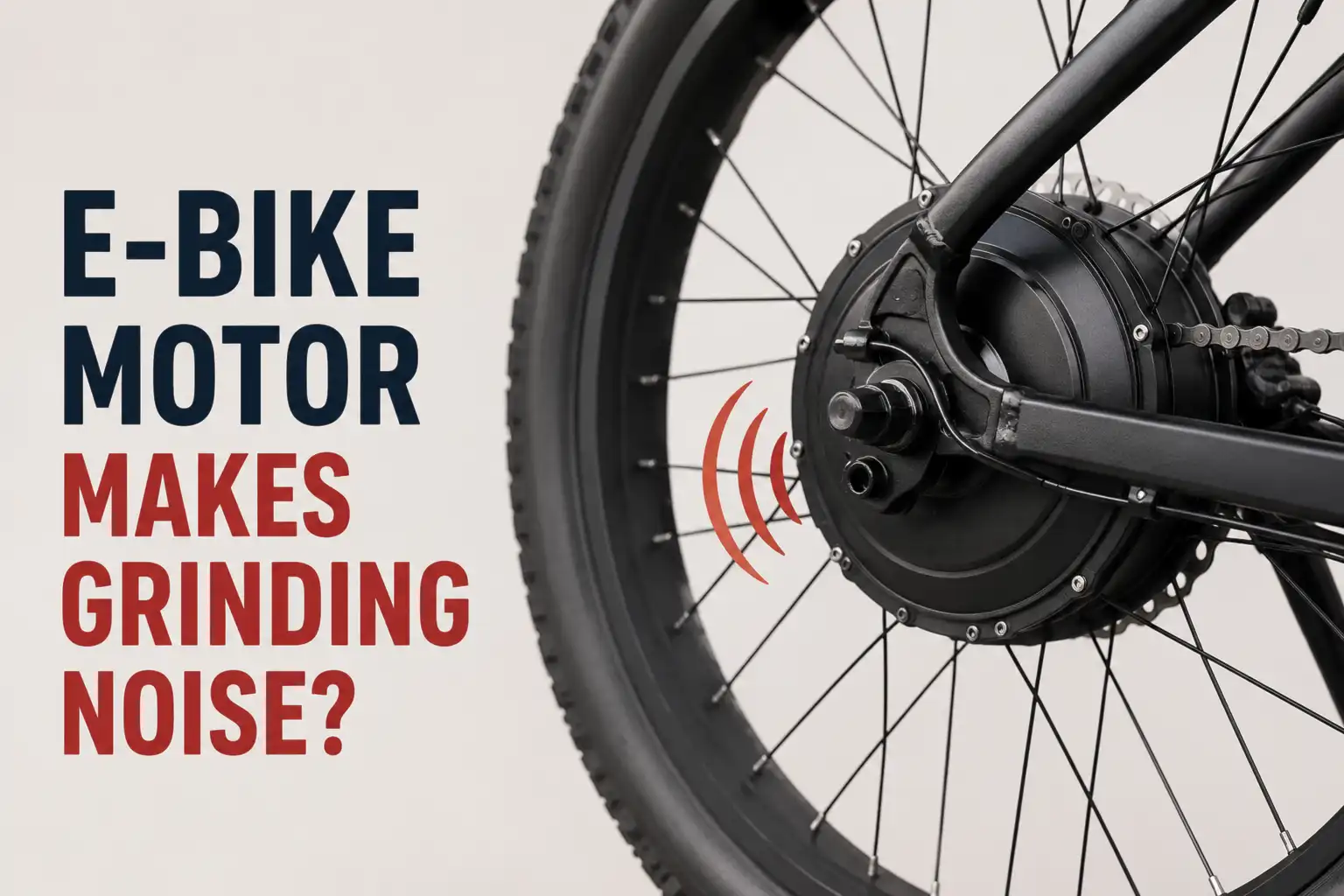
If your e-bike motor makes a grinding noise, it can be a little unsettling. A soft hum or light whir from an electric bike motor can be normal, but a harsh grinding, scraping, growling, or metal-on-metal sound is something I would not ignore.
The tricky part is that the sound is not always coming from the motor itself. Many “e-bike motor grinding noise” problems are actually caused by brake rub, loose spokes, drivetrain wear, a loose axle, a misaligned wheel, a bent rotor, or something rubbing near the hub motor.
If you are new to diagnosing e-bike problems, I recommend starting with my full E-Bike Troubleshooting & Maintenance Guide. You may also want to compare this issue with my guides on why your e-bike feels slow, e-bike clicking noises, and the E-Bike Motor Guide.
In this guide, I’ll walk through the most common reasons an electric bike motor makes a grinding noise, what you can safely check first, and when it is time to stop riding and contact the manufacturer or a bike shop.
Why Is My E-Bike Motor Making a Grinding Noise?
An e-bike motor grinding noise is usually caused by one of these issues:
- brake rotor rubbing against the pads
- a bent or dirty brake rotor
- loose spokes or wheel movement
- worn hub motor bearings
- worn internal gears in a geared hub motor
- chain, cassette, derailleur, or drivetrain wear
- loose axle nuts or poor wheel seating
- a loose brake rotor, fender, rack, or accessory
- debris stuck near the wheel or motor
- controller, wiring, hall sensor, or phase wire problems
- internal motor damage
If the grinding noise is new, loud, getting worse, or happens with power loss, heat, wobbling, burning smell, or error codes, I would stop riding until the bike is inspected.
🔍 Why You Can Trust Electric Bike Explorer
Electric Bike Explorer is dedicated to providing honest, well-researched, and easy-to-understand information for e-bike riders. Whenever possible, I personally test the e-bikes, accessories, and products I review. When I can’t test something directly, I rely on careful research, manufacturer specifications, real-world rider feedback, official sources, and trusted industry information.
For law guides, I review state statutes, local ordinances, transportation agencies, park rules, and official government resources whenever possible. For e-bike news, I review the original reporting along with available town documents, meeting agendas, proposed ordinances, police statements, government notices, and other primary sources. I also make a clear distinction between a proposal, an approved rule, and a law that has already taken effect.
For troubleshooting and safety guides, I focus on practical explanations, common rider experiences, manufacturer guidance, and safe maintenance practices.
My goal is to help you make informed decisions, understand the rules where you ride, solve common e-bike problems, and get the most out of your electric bike safely.
Want to know how I score bikes and research my guides? Read my full review and ranking process
First Test: Does the Grinding Happen With the Power Off?
Before blaming the motor, I would do this quick test first.
Turn the e-bike completely off, lift the noisy wheel, and spin it by hand. If you still hear grinding, scraping, rubbing, or growling with the power off, the problem is probably mechanical.
That could mean:
- brake rotor rub
- a bent rotor
- debris near the wheel
- tire or fender rubbing
- loose spokes
- wheel bearing wear
- a loose rack, strap, or accessory
- a wheel that is not seated correctly
If the wheel is quiet with the power off but starts grinding when the throttle or pedal assist kicks in, then I would look more closely at the motor system, wiring, controller, hall sensors, axle hardware, or internal motor parts.
Important Safety Note
Do not put your fingers near the spokes, chain, brake rotor, cassette, or tire while the wheel is spinning. E-bike wheels can be heavy, and a powered wheel can move suddenly if the throttle or pedal assist activates.
I also would not spray lubricant into the hub motor. You can clean and lubricate the chain, inspect the brakes, and check external parts, but sealed motor bearings, internal gears, and wiring should usually be handled by the manufacturer, warranty support, or a qualified e-bike repair shop.
Is a Grinding E-Bike Motor Dangerous?
It can be.
A soft motor whine is usually normal. A sudden grinding noise is different. Grinding can mean something is rubbing, loose, worn, misaligned, or under too much stress.
I would be especially cautious if the grinding sound comes with:
- loss of power
- jerky acceleration
- motor cutting in and out
- a hot motor or controller
- a burning smell
- wheel wobble
- brake scraping
- vibration through the frame
- a new error code on the display
If your display shows an error code, use my E-Bike Error Code Finder before replacing parts.
E-Bike Grinding Noise Diagnosis Chart
| What You Hear | When It Happens | Most Likely Cause | First Thing to Check |
|---|---|---|---|
| Grinding when the wheel spins | With power off | Brake rub, debris, bearing issue | Spin wheel by hand |
| Grinding only under throttle | During acceleration | Hub motor, axle, controller, wiring, internal gears | Check axle nuts and wiring |
| Grinding only when pedaling | Pedaling with or without assist | Chain, cassette, derailleur, crank, bottom bracket | Inspect drivetrain |
| Grinding going uphill | Under heavy load | Motor strain, gears, bearings, brake rub, low tire pressure | Stop and inspect before hard riding |
| Scraping sound near wheel | Constant or once per wheel rotation | Brake rotor, fender, tire rub, loose spoke | Look for rubbing parts |
| Grinding with weak power | Motor feels rough or cuts out | Controller, phase wire, hall sensor, motor issue | Check connectors |
| Growling or rough hub feel | Worse with speed | Bearing wear | Lift wheel and feel for rough rotation |
| Clicking plus grinding | Rhythmic under load | Loose spoke, rotor bolt, freewheel, gear issue | Check wheel and hardware |
| Buzzing or cogging | Only when power is applied | Hall sensor, controller, or phase wire issue | Check wiring and error codes |
Sound Clue Chart: Scraping vs Grinding vs Buzzing
Different sounds can point you in different directions.
| Sound | What It May Mean |
|---|---|
| Light scraping | Brake rotor rub, fender rub, tire contact, debris |
| Harsh grinding | Worn bearing, brake problem, internal gear issue, metal-on-metal contact |
| Growling | Bearing wear, rough hub rotation, drivetrain strain |
| Buzzing or cogging | Electrical motor issue, controller issue, hall sensor issue, phase wire issue |
| Clicking or pinging | Loose spoke, rotor bolt, chain issue, freewheel, accessory rubbing |
| Crunching under load | Internal geared hub issue, chain/cassette slip, drivetrain wear |
This chart is not a perfect diagnosis, but it can help you narrow down where to look first.
Step 1: Decide If It Is Really the Motor
Before assuming your motor is bad, I would first ask one simple question:
Does the grinding happen with the power off?
Turn the e-bike off, lift the wheel, and spin it by hand. If you still hear grinding with no power, the issue is probably mechanical. That could mean brake rub, a bent rotor, tire contact, a loose spoke, a rough bearing, or debris near the wheel.
If the wheel is quiet with the power off but grinds when you use pedal assist or throttle, then the motor system becomes more suspicious.
This is where many riders get confused. Hub motors are built into the wheel, so a brake, spoke, rotor, tire, or fender issue can sound like it is coming directly from the motor.
Common Causes of an E-Bike Motor Grinding Noise
1. Brake Rotor Rubbing Against the Pads
This is one of the first things I would check.
A scraping or grinding sound near the motor may actually be the disc brake rotor rubbing against the brake pads. This can happen if the caliper is slightly misaligned, the rotor is bent, the wheel is not seated straight, or the brake pads are contaminated or worn.
Canyon’s disc brake troubleshooting guide explains that scraping or grinding can happen when the rotor is not centered between the brake pads, often because the brake caliper is not centered correctly.
Signs it may be brake rub
- grinding happens even when the motor is off
- sound changes when you lightly squeeze the brake lever
- rotor looks slightly wavy
- wheel slows quickly when spun by hand
- sound is coming from the brake side of the wheel
- the noise started after removing or reinstalling the wheel
What to check
Look through the brake caliper and see if the rotor has equal space on both sides. Also check that the wheel is fully seated in the dropouts.
If the rotor is rubbing badly or the brake feels weak, I would not keep riding until it is fixed.
🎬 Helpful Video: How to Fix Disc Brake Rubbing
If the grinding sound seems to be coming from the wheel area, brake rotor rub is one of the first things I would check. This video gives a simple visual walkthrough of how brake rubbing can happen and how the caliper may need to be adjusted.
After watching, remember that brakes are a safety item. If the rotor is badly bent, the brake feels weak, or you are not comfortable adjusting it yourself, it is better to have a bike shop look at it.
2. Loose Axle Nuts or Wheel Not Seated Correctly
A loose hub motor axle is more serious than a simple rattle.
Hub motors put torque through the axle and dropouts. If the axle nuts are loose, the wheel may shift slightly under power. That can create grinding, clunking, scraping, or a rough vibration when you accelerate.
This can happen on rear hub motors and front hub motors. With a front hub motor, I would be extra careful because the motor torque is being applied at the front fork.
Signs of a loose axle or wheel seating issue
- grinding gets worse under throttle
- rear or front wheel looks slightly crooked
- tire rubs one side of the frame, fork, or fender
- brake rotor rub appears suddenly
- bike feels unstable under power
- you hear a clunk when starting from a stop
- the noise started after a tire change or flat repair
What to check
Power the bike off. Check that the wheel is centered, the axle nuts are secure, and any torque washers or torque arms are seated correctly.
If you are not comfortable checking this, take it to a bike shop. I would not ride an e-bike with a loose motor wheel.
3. Loose Spokes or Wheel Tension Problems
Loose spokes can make a surprising amount of noise on an e-bike.
Because a hub motor is built into the wheel, the spokes handle motor torque, rider weight, bumps, and braking forces. If a spoke loosens, the wheel can flex under load and create clicking, pinging, scraping, or grinding sounds.
Signs it may be spokes
- noise repeats once per wheel rotation
- sound is worse when accelerating
- sound changes when carrying cargo
- wheel looks slightly out of true
- one spoke feels much looser than the others
- the sound is more noticeable when turning or climbing
What to check
Lightly squeeze pairs of spokes together and listen for loose or dull-sounding ones. Spin the wheel and watch for side-to-side movement.
I would not randomly tighten spokes too much. Small spoke adjustments matter. If several spokes are loose, it is better to have the wheel tensioned correctly.
For a similar noise issue, see my guide on e-bike clicking noises and common causes.
4. Dirty, Dry, or Worn Drivetrain
Not every grinding noise comes from the electric system.
If the sound happens while pedaling, especially in certain gears, the problem may be the chain, cassette, derailleur, chainring, or crank area. E-bikes can be harder on drivetrains than regular bikes because the motor adds extra force, especially on mid-drive e-bikes.
Park Tool’s noisy drivetrain guide explains that bike noises can come from many drivetrain areas, including pedals, cranks, chain, cassette, derailleur, and other moving parts.
Signs it may be drivetrain-related
- grinding only happens while pedaling
- noise changes when you shift gears
- chain looks dry, rusty, or dirty
- bike skips under load
- sound is worse going uphill
- noise is near the crank, chain, or cassette
- the grinding stops when you coast
What to check
Check the chain for dirt, rust, stiff links, or dryness. Look at the cassette and chainring teeth. If the chain skips, grinds, or rubs in certain gears, the derailleur may need adjustment.
Related internal links:
- E-Bike Clicking Noise? Common Causes and How to Fix Them
- Why Is My E-Bike Slow? Full Diagnostic Tool
5. Worn Hub Motor Bearings
A rough bearing can make a growling or grinding sound.
Hub motor bearings allow the wheel to spin smoothly around the axle. Over time, bearings can wear out, dry out, corrode, or become contaminated by water and grit.
Signs of worn bearings
- grinding or growling gets worse with speed
- wheel feels rough when spun by hand
- sound happens with the motor off
- wheel has side-to-side play
- noise got worse after rain, washing, or muddy riding
- the hub area feels rough or gritty
What to check
With the bike powered off, lift the wheel and spin it slowly. Feel for roughness, drag, or wobble. If the wheel feels gritty or loose, the bearing may need service.
This is usually not a beginner repair, especially on sealed hub motors. I would contact the e-bike brand, a local shop, or a motor repair specialist.
6. Worn Internal Gears in a Geared Hub Motor
Many rear hub e-bikes use geared hub motors. These motors have internal reduction gears, often made from nylon or composite material.
A little motor whine can be normal. But loud grinding, crunching, or slipping under load can point to worn internal gears.
Signs of possible internal gear wear
- grinding happens mainly under throttle or pedal assist
- sound is worse going uphill
- motor spins but power feels weak
- bike jerks or slips under load
- noise disappears when coasting
- sound has a crunchy or mechanical feel
- the grinding gets worse when carrying weight
Upway notes that motor-like noises can come from several places, including brake rub, dry chains, loose racks, worn bearings, damaged wiring, gear wear, or the motor itself.
What to do
If you suspect internal motor gear damage, I would stop riding hard. Continuing to ride could cause more damage inside the motor.
Check your warranty before opening anything. Opening a hub motor yourself can void coverage on some bikes.
7. Mid-Drive Motor Grinding Noise
A mid-drive e-bike motor sits near the crank instead of inside the wheel. Because it sends power through the chain and cassette, a mid-drive grinding noise can be harder to diagnose.
The motor may be fine, but the drivetrain may be worn, dirty, or out of adjustment.
Common mid-drive grinding noise causes
- dirty or worn chain
- worn cassette
- chainring wear
- derailleur misalignment
- loose crank arm
- bottom bracket issue
- motor mounting issue
- internal drive unit wear
When to be careful
If your mid-drive motor makes a grinding noise only under heavy pedaling load, do not keep forcing it uphill in a high gear. Shift to an easier gear and reduce assist.
If the sound continues, stop and inspect the drivetrain first. Mid-drives can wear chains and cassettes faster because both rider power and motor power go through the drivetrain.
For motor basics, see my E-Bike Motor Guide.
8. Loose Brake Rotor Bolts
A loose rotor can create scraping, clicking, or grinding that sounds like motor trouble.
This is especially common if the sound comes from the rear wheel and changes when braking.
Signs of a loose rotor
- grinding or ticking once per wheel rotation
- brake feels pulsing or uneven
- rotor has slight side-to-side movement
- sound changes when braking
- noise started after brake work or wheel removal
What to check
Look at the rotor bolts and make sure the rotor is not loose. Use the correct tool and torque specs for your bike if you tighten anything.
If you are unsure, have a shop check it. Brakes are not an area where I like to guess.
9. Fender, Rack, Tire, or Cable Rubbing
Sometimes the fix is simple.
A fender, rack strap, loose cable, zip tie, reflector, bag strap, or tire contact point can make a repeating scrape that sounds like a motor grinding noise.
Signs it may be something rubbing
- sound repeats once per wheel rotation
- noise changes after hitting a bump
- sound started after installing accessories
- tire has a shiny rub mark
- fender looks slightly bent
- cable is touching the tire or spokes
- pannier strap or bungee cord is near the wheel
What to check
Look around the tire, spokes, brake rotor, motor cable, rack, and fender. Make sure nothing is touching the moving parts.
This is one reason I always like to check the outside of the bike before assuming the motor is failing.
10. Controller, Wiring, Hall Sensor, or Phase Wire Issue
If the grinding sound comes with weak power, jerking, buzzing, vibration, cogging, or cutting out, the problem may be electrical instead of mechanical.
The controller tells the motor how to deliver power. If there is a wiring issue, loose connector, hall sensor problem, or phase wire problem, the motor may run rough.
This may not always be a true mechanical grinding noise, but many riders describe the rough motor feel as grinding, buzzing, or rumbling.
Signs of electrical motor trouble
- motor buzzes but does not pull normally
- bike jerks when accelerating
- motor cuts in and out
- display shows an error code
- throttle response feels uneven
- grinding or buzzing only happens when power is applied
- bike feels weak even though the battery is charged
What to check
Power the bike off and inspect accessible motor connectors. Look for loose plugs, bent pins, water, corrosion, damaged wires, or pulled cables.
If you suspect the controller, see my guide on how to tell if your e-bike controller is bad.
If you see an error code, use my E-Bike Error Code Finder.
11. Water, Mud, Sand, or Debris Near the Motor
E-bikes are not all built with the same level of water resistance.
If the grinding noise started after riding through rain, puddles, sand, mud, or after washing the bike, debris or moisture could be part of the problem.
What to check
Inspect around the brake rotor, cassette, derailleur, hub shell, motor cable exit point, and spokes. Clean the area gently and dry the bike.
Avoid blasting the motor, battery, controller, or display with high-pressure water.
If the bike continues to grind after drying and cleaning, have it inspected.
12. The Motor Is Being Overloaded
A grinding or strained sound can also happen when the motor is working too hard.
This does not always mean the motor is broken, but it does mean something needs attention.
Common overload situations
- climbing steep hills in a hard gear
- carrying heavy cargo
- riding with low tire pressure
- starting from a stop in high assist
- using throttle hard from a dead stop
- riding into strong wind
- using a low-powered motor beyond its comfort zone
If your e-bike also feels sluggish, check my Why Is My E-Bike Slow? diagnostic guide.
How to Troubleshoot an E-Bike Motor Grinding Noise Step by Step
Step 1: Stop and listen carefully
Do not keep riding hard if the grinding sound is loud or new. Find a safe place to stop.
Ask yourself:
- Did the sound start suddenly?
- Is it constant or only under power?
- Is it worse uphill?
- Does it happen when braking?
- Does it happen with the motor off?
Step 2: Turn the e-bike off
Power the bike down before touching moving parts or connectors.
If your bike has a removable battery, remove it only if it is safe and practical to do so.
Step 3: Spin the wheel by hand
Lift the noisy wheel and spin it slowly.
Listen for:
- scraping
- rubbing
- clicking
- growling
- wobbling
- brake contact
If the noise happens with the power off, check brakes, spokes, tire clearance, fenders, rotor, axle, and bearings first.
Step 4: Check the brake rotor
Look through the caliper. The rotor should sit between the pads without heavy contact.
A tiny occasional scrape may happen on some bikes, but constant grinding should be fixed.
Bicycling.com notes that e-bikes can put more demand on brakes because of their added weight, speed, cargo use, and frequent stopping. That is one reason I would always check brake pads and rotors when chasing a grinding or scraping sound.
Step 5: Check the tire, fender, and accessories
Look for anything touching the tire, spokes, rotor, or chain.
This includes:
- fender stays
- rack bolts
- pannier straps
- bungee cords
- reflectors
- loose cable ties
- motor cable
- brake cable
- kickstand parts
Step 6: Check the axle and wheel seating
Make sure the wheel is centered and secure.
If the motor wheel shifts under power, stop riding and get it fixed.
Step 7: Check the chain and drivetrain
If the grinding happens while pedaling, inspect the chain, cassette, derailleur, crank, and pedals.
A dirty or dry drivetrain can make an e-bike sound much worse than it really is.
Step 8: Look for error codes
If the motor grinds and the display shows an error code, write the code down before turning the bike off.
Then check the manual or use the E-Bike Error Code Finder.
Step 9: Test gently in a safe area
If everything looks secure and the grinding is mild, test the bike slowly in a safe area.
Do not test at full throttle or on a hill. Listen for whether the sound changes with:
- pedal assist level
- throttle
- braking
- gear choice
- rider weight
- turns
- bumps
Step 10: Contact the manufacturer or a shop
If the grinding continues, especially under motor power, contact the brand or a qualified e-bike repair shop.
Do not open a sealed motor unless you know what you are doing and understand the warranty risk.
Helpful Tools & Accessories for Troubleshooting Your E-Bike
Before replacing expensive parts, I recommend having a few basic tools on hand. They’re inexpensive, useful for routine maintenance, and can make diagnosing common e-bike problems much easier.
- Digital Multimeter – Helps check basic voltage at the battery or charger, but it does not prove the battery is healthy under load. Only use one if you know how to avoid shorting the terminals.
- Portable Bike Pump – Keeps your tires properly inflated, reducing strain on the motor when climbing hills.
- Digital Tire Pressure Gauge – Lets you verify your tire pressure for better efficiency and hill-climbing performance.
- Hex Key (Allen Wrench) Set – Useful for tightening loose components, battery mounts, and accessories.
- Bike Repair Multi-Tool – A compact tool for making quick adjustments at home or on the trail.
- Electrical Contact Cleaner – Helps clean battery terminals and electrical connectors if dirt or corrosion is causing poor contact.
- Dielectric Grease – Can help protect some connector seals from moisture, but use it sparingly and only where appropriate. Do not pack random electrical plugs or battery terminals with grease.
- Head Lamp or Small Flashlight – Helps you inspect battery contacts, wiring plugs, and connector pins more clearly.
- Zip Ties – Good for securing loose wires after you confirm everything is working correctly.
- Bike Repair Stand – Can hold your e-bike steady while you inspect the pedal sensor, wiring, and crank area.
➡️ View all recommended e-bike accessories
Still Stuck After Trying These Steps?
Some electrical issues aren’t obvious and can take time to track down – especially with controllers, wiring harnesses, or battery systems.
👉 Get help from a verified e-bike expert and pinpoint the issue faster
Do Not Do This When Your E-Bike Motor Is Grinding
When riders hear a grinding noise, it can be tempting to try quick fixes. Some of those quick fixes can make the problem worse.
I would avoid:
- spraying lubricant into the hub motor
- pressure washing the motor area
- riding hard to “see if it clears up”
- ignoring wheel wobble
- opening the motor before checking the warranty
- tightening spokes randomly without knowing wheel tension
- continuing to ride with weak brakes
- pulling hard on motor wires
- riding with loose axle nuts
- replacing the motor before checking external causes
A grinding sound is a clue. The goal is to narrow it down safely, not guess and throw parts at the problem.
When to Stop Riding Immediately
I would stop riding immediately if:
- the grinding sound is loud or sudden
- the rear or front wheel wobbles
- the motor wheel feels loose
- the motor cuts out
- the controller gets hot
- you smell burning
- the bike shows an error code
- the brakes feel weak
- the sound gets worse under load
- the wheel is hard to spin
- the motor feels like it is slipping
A grinding sound can start as a small issue, but if something is loose or failing, riding can turn it into a bigger and more expensive repair.
Can I Ride My E-Bike If the Motor Is Grinding?
I would only ride it if the sound is very mild, consistent, and clearly coming from something harmless like a slightly rubbing fender that you can fix right away.
I would not keep riding if the grinding is:
- new
- loud
- getting worse
- paired with power loss
- paired with heat
- coming from the motor under load
- happening while climbing hills
- paired with wheel wobble
- paired with brake problems
When in doubt, stop and inspect first.
Hub Motor Grinding Noise vs Mid-Drive Grinding Noise
Hub Motor Grinding Noise
A hub motor grinding noise usually feels like it is coming from the front or rear wheel.
Common causes include:
- brake rub
- loose spokes
- worn bearings
- loose axle
- worn internal gears
- tire or fender contact
- wiring or controller issues
Mid-Drive Motor Grinding Noise
A mid-drive grinding noise usually feels like it is coming from the crank area.
Common causes include:
- dirty chain
- worn cassette
- derailleur misalignment
- loose crank
- worn chainring
- bottom bracket issue
- internal motor issue
If you are not sure which type you have, my E-Bike Motor Guide explains hub motors, mid-drive motors, power, torque, and how the systems work.
What If the Grinding Noise Started After a Tire Change?
If the noise started right after replacing a tire, fixing a flat, or removing the wheel, I would check these first:
- wheel fully seated in the dropout
- axle nuts tightened correctly
- brake rotor centered
- rotor not bent during wheel removal
- motor cable not pulled or pinched
- torque washers installed correctly
- tire not rubbing the frame or fender
- brake caliper still aligned correctly
This is especially important on rear hub motor e-bikes because the motor cable and axle hardware need to be positioned correctly.
What If the Grinding Noise Happens Only Going Uphill?
Grinding uphill usually points to a load-related problem.
That could mean:
- brake rub gets worse under frame flex
- spokes are shifting under torque
- the motor axle is moving slightly
- internal hub gears are slipping
- the drivetrain is worn
- the motor is being overloaded
- tire pressure is too low
- the controller or motor is struggling
If your e-bike also shuts off on hills, see my guide on E-Bike Cuts Out While Riding.
What If the Grinding Noise Happens Only When Accelerating?
Grinding during acceleration can be more serious because that is when the motor is under load.
Possible causes include:
- loose axle nuts
- worn geared hub motor gears
- worn bearings
- controller or phase wire problem
- brake rub under torque
- loose spokes
- drivetrain slip
If the bike feels weak, jerky, or delayed when accelerating, I would stop riding and inspect it before continuing.
What If the Grinding Noise Started After Rain or Washing?
If the sound started after rain, puddles, mud, or washing the bike, moisture or debris may be involved.
Check for:
- grit near the brake rotor
- mud around the derailleur or cassette
- water near connectors
- debris near the motor cable exit
- brake pad contamination
- rough bearing feel
Let the bike dry fully, clean the drivetrain, and inspect the brakes. If the motor still grinds under power, contact the brand or a repair shop.
How to Prevent E-Bike Motor Grinding Problems
You cannot prevent every motor issue, but basic maintenance helps a lot.
Here are the habits I would focus on:
- keep the drivetrain clean and lubricated
- check tire pressure regularly
- inspect brake rub before long rides
- check spokes after the first few rides on a new e-bike
- avoid pressure washing the motor area
- avoid full-throttle starts under heavy load
- shift to easier gears on hills, especially with mid-drives
- listen for new sounds before they get worse
- keep connectors dry and secure
- follow the manufacturer’s service recommendations
A little maintenance can help you catch small noises before they turn into bigger repair bills.
FAQs
If your e-bike motor grinds when accelerating, it may be caused by brake rub, loose spokes, loose axle nuts, worn hub motor gears, worn bearings, drivetrain slip, or a controller/wiring issue. If it gets worse under throttle or pedal assist, stop and inspect the bike before riding hard again.
A soft whir, hum, or light motor tone can be normal. A loud grinding, scraping, clunking, or crunching sound is not something I would treat as normal.
A rear hub motor grinding noise may come from the motor itself, but it can also come from the brake rotor, spokes, tire, fender, cassette, axle hardware, or wheel bearings.
A front hub motor grinding noise can come from the motor, brake rotor, fork area, axle hardware, bearings, spokes, tire rub, or fender contact. I would also check that the front wheel is fully seated and secure before riding.
If the grinding happens only when pedaling, check the chain, cassette, derailleur, chainring, crank arms, pedals, and bottom bracket before blaming the motor.
A bad controller or wiring issue can make the motor run rough, buzz, jerk, cog, or cut out. Some riders describe this as grinding, even though it may be an electrical rough-running issue rather than metal-on-metal grinding.
A low battery usually causes reduced power, voltage sag, cutouts, or sluggish acceleration. It usually does not cause true mechanical grinding by itself, but a weak battery can make other issues more noticeable under load.
If your battery is also acting strange, read E-Bike Not Holding Charge? Causes, Fixes & When to Replace the Battery.
Usually, no. I would not open a sealed hub motor unless you have the tools, parts, experience, and warranty clearance to do it. Many grinding noises are caused by external parts, and opening the motor can create more problems if done incorrectly.
It depends on the cause. A simple brake adjustment, fender adjustment, or chain cleaning may be inexpensive. A wheel bearing, internal hub gear, controller, or motor replacement can cost much more. That is why I would start with the simple external checks first.
If the bike is still under warranty, yes. Contact the e-bike brand first, especially if the noise seems to come from the motor, controller, display, wiring, battery, or internal electronics. They may ask for a video of the noise, your order number, mileage, and error codes.
My Take:
My biggest advice is not to jump straight to “the motor is bad.”
A lot of grinding sounds that seem like motor failure are actually caused by something outside the motor, such as brake rotor rub, a loose spoke, a dry chain, a loose axle nut, a bent fender, tire rub, or a rack strap touching the wheel.
But I also would not keep riding through a real grinding sound. E-bikes are heavier and more powerful than regular bikes, and small problems can get worse quickly when motor torque is added.
My personal approach would be simple:
- Stop riding hard.
- Turn the bike off and spin the wheel by hand.
- Check the brakes, tire, fender, spokes, axle nuts, and drivetrain.
- Look for error codes if the display shows one.
- Contact the manufacturer or a shop if the noise continues under power.
A soft motor hum can be normal. A sudden grinding, scraping, growling, or metal-on-metal sound is not something I would ignore.
Disclosure: As an Amazon Associate, I earn from qualifying purchases. This comes at no extra cost to you and helps support the content on this site.
External Sources
Canyon – Disc brakes rubbing and scraping/grinding noise
https://www.canyon.com/en-us/support-articles/fix_squeaking_and_scraping_disc_brakes.html
Park Tool – Troubleshooting a noisy drivetrain
https://www.parktool.com/en-us/blog/repair-help/troubleshooting-a-noisy-drivetrain
Bicycling – E-bike brake maintenance and why e-bikes can wear braking parts faster
https://www.bicycling.com/bikes-gear/a71229880/ebike-brake-maintenance/
Upway – Why is my e-bike motor making noise?
https://upway.co/blogs/news/why-is-my-ebike-motor-making-noise
PeopleForBikes – E-bike safety standards and UL battery/e-bike system context
https://www.peopleforbikes.org/news/cpsc-update-from-peopleforbikes–understanding-the
Bosch eBike Systems Help Center – Motor system support context
https://help.bosch-ebike.com/us/help-center/performance-line-for-the-smart-system

Kristina is not just an enthusiast but a true authority on electric bikes. Nestled in the coastal beauty of Virginia, Kristina has found the perfect backdrop for her passion for electric biking. As a dedicated wife and homeschooling mom, her life revolves around family, faith, and the thrill of adventure.
Originally hailing from Ohio, Kristina's journey with electric bikes began as a curiosity and quickly evolved into a deep expertise. Her blog is a testament to her love for electric biking, combining her fascination for eco-friendly transportation with her coastal lifestyle.
When she's not cruising the beach on her electric bike, you'll find Kristina indulging in her other loves: long walks along the shore, getting lost in a good book, and cherishing moments with her loved ones. With a heart as big as her love for animals, especially cats, Kristina brings a unique perspective to the electric bike world, grounded in her strong faith in God and her dedication to a sustainable lifestyle.
Through her blog, Kristina shares her extensive knowledge of electric bikes, offering valuable insights, tips, and recommendations to fellow enthusiasts. Whether you're a seasoned rider or a newcomer to the electric bike scene, Kristina's blog is your go-to source for all things electric biking, fueled by her passion, expertise, and the scenic beauty of coastal Virginia.