E-bike Throttle Not Working? Here’s How to Fix It
Last Updated on October 7, 2026 by Kristina
E-bike throttle not working? Before assuming you need a new throttle or controller, check the brake levers, your bike’s settings and error codes, the battery status, and any accessible throttle connections. A brake cutoff signal, a setting that disables throttle operation, or a loose plug can create symptoms that look like a failed part.
I’ll walk through the safest checks first and explain when to stop and ask for professional help. For other electrical or mechanical issues, start with my E-Bike Troubleshooting and Maintenance Guide. If you’re new to this control, my beginner’s guide to e-bike throttles explains how a throttle sends a request for motor assistance.
Quick Answer: What to Check First
- Stop riding if acceleration is unpredictable, the throttle sticks, the brakes do not operate correctly, or wiring looks damaged.
- Check that both brake levers return fully and that nothing is pressing them against the motor cutoff switches.
- Read the display for an error code, warning, or throttle-disabled setting. Follow the manual for your exact bike and display.
- Confirm the battery is sufficiently charged for normal operation, securely installed, and showing no damage. There is no universal 40% throttle requirement.
- With the bike powered off, visually inspect accessible throttle cables and connectors for looseness, pinching, moisture, or damage. Reconnect only where your owner’s manual permits.
- If a manufacturer-approved shutdown and restart does not help, contact its support team before buying parts.
Safety First: When to Stop Troubleshooting
Power off the bike before inspecting electrical connections. Remove the battery only if your manufacturer’s instructions permit it, and never remove it while the system is powered on. Keep fingers, tools, clothing, and loose cables away from moving wheels and drivetrain parts. Do not activate the throttle while holding or walking beside an unsecured bike.
Stop using or charging the bike if you notice smoke, unusual heat, swelling, leaking, sparks, damaged wiring, a chemical smell, or a battery that has been submerged or seriously impacted. Do not open a lithium-ion battery or bypass a brake cutoff or other safety device. Seek qualified service or emergency assistance as appropriate. See the CPSC’s official micromobility safety information for additional battery and riding precautions.
Why an E-Bike Throttle Stops Working
The throttle sends a request to the controller, which determines how the motor responds. Brake switches, display settings, sensors, the battery, wiring, and controller behavior can interrupt that request. A symptom points to possible causes, not a confirmed diagnosis.
| What you notice | Possible causes | Safest first check |
|---|---|---|
| Display is on, but throttle does nothing | Brake cutoff active, throttle disabled in settings, connector issue, or failed throttle | Check brake lever return, display warnings, and manual |
| Pedal assist works, but throttle does not | Throttle setting, throttle cable or control, or model-specific operation | Check settings and inspect accessible throttle connection with power off |
| Neither throttle nor pedal assist works | Brake cutoff, battery or power issue, controller fault, or another system error | Check error code, brake levers, and battery status |
| Motor cuts out while climbing or accelerating | Battery voltage drop, poor connection, protection behavior, overheating, or controller or motor problem | Stop riding, record the symptoms and error codes, and seek service |
| Throttle responds intermittently | Loose or damaged wiring, moisture, sticking control, or electrical fault | Power off and inspect for visible damage; do not ride if operation is unpredictable |
| Throttle seems to work with the wheel raised, but not under riding load | Battery, connection, system protection, controller, or other load-dependent issue | Do not assume controller failure; request a qualified load diagnosis |
Step-by-Step E-Bike Throttle Troubleshooting
1. Check the Brake Levers and Motor Cutoff
Many e-bikes use brake switches that stop motor assistance when a brake is applied. If a lever is stuck, misadjusted, or not returning completely, the system may act as though you’re still braking. With the bike safely stopped and powered off, make sure the levers return normally and the mechanical brakes operate properly.
Do not unplug or defeat a brake cutoff to make the throttle work. If a lever or switch is faulty, stop riding and arrange a proper repair. My brake cutoff sensor troubleshooting guide explains the symptoms in more detail.
2. Read Error Codes and Check Throttle Settings
Write down any display error code before trying a restart. Consult the owner’s manual or official brand support page for the exact meaning. Some systems disable throttle operation in PAS 0, after certain configuration changes, or until a model-specific starting condition is met. Walk mode and throttle mode are not interchangeable.
For example, Lectric’s first-ride guidance tells riders to select a pedal-assist level above 0 before using the throttle. That instruction is for Lectric’s documented operation, not a universal rule for every e-bike. Aventon documented both older throttle-after-pedal and newer throttle-on-demand configurations. Check your exact model, year, display, and manual rather than guessing.
Avoid changing unfamiliar service settings just to restore throttle operation. Ask the manufacturer for the correct procedure, especially if a setting affects the bike’s legal operating class.
3. Check the Battery and Power Status
A display may illuminate even when the battery or electrical system cannot deliver sufficient power to the motor under load. Check the battery level and any error message using your manufacturer’s procedure. If the battery is removable, confirm it is properly seated and locked according to the manual. Do not touch damaged contacts or open the pack.
There is no general rule that a throttle requires more than 40% battery charge, and replacing or swapping batteries is not a safe shortcut unless the manufacturer confirms compatibility. If the bike repeatedly shuts off under load, have the battery and electrical system assessed.
4. Inspect Accessible Throttle Cables and Connectors
Switch the bike off first. Follow the throttle cable visually from the handlebar and check for pinches, cuts, stretched sections, crushed insulation, or obvious connector damage. Folding bikes deserve particular attention around the folding or steering area because cables can become trapped.
If your manual identifies a user-serviceable quick connector, inspect it without forcing or twisting it. Reconnect only as instructed, matching the alignment marks and making sure the plug seats fully. If pins are bent, contacts are corroded, or moisture is trapped inside, stop and seek service rather than pushing harder or spraying cleaners indiscriminately. Lectric’s official E008 throttle guidance describes the brand’s own connector check.
5. Check Whether the Throttle Moves and Returns Normally
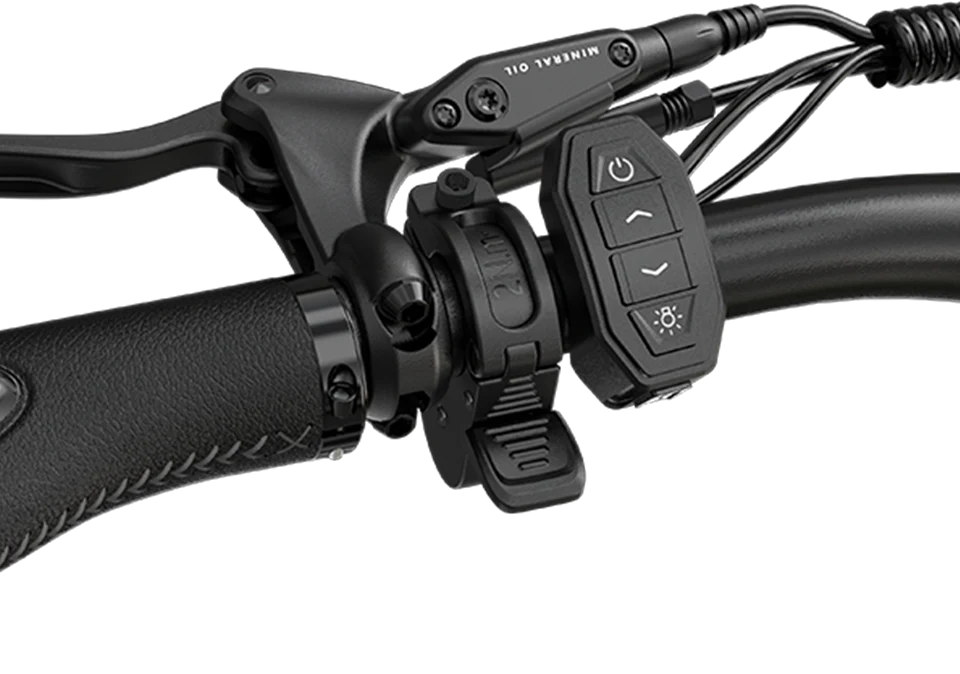
With the bike powered off, gently move the thumb or twist throttle through its normal travel. It should move freely and return to its resting position. Inspect for a cracked housing, a displaced grip, or anything rubbing against the control. A throttle that sticks, binds, or has visible impact damage should not be used until repaired or replaced correctly.
Intermittent response or an unusual feel does not prove the internal Hall sensor is damaged. The problem could also involve wiring, a connector, settings, or another component. Avoid opening the throttle or soldering its internal wiring as a beginner repair.
6. Use Only the Manufacturer’s Restart Procedure
If the bike has no signs of physical or electrical damage, follow the owner’s manual to shut it down and restart it. Some models have a specific reset process. Holding a power button for 10 seconds or removing the battery is not a universal reset method and should not be described as one.
If a fault persists after the approved restart, record the exact symptoms and contact the manufacturer or a qualified e-bike shop. The E-Bike Troubleshooting Tool can help organize those symptoms before a support call.
When Electrical Testing Needs a Professional
Some throttles use low-voltage signal wiring that a trained technician can test with the correct service information. But pin locations, wire colors, voltage ranges, and diagnostic procedures are not interchangeable between manufacturers or controller designs. Probing the wrong terminals can damage components or create an unexpected motor response.
For that reason, I do not recommend a universal red-wire/black-wire/green-wire multimeter test. A qualified technician can check the correct throttle signal, power supply, controller inputs, and battery behavior under appropriate conditions. My guide to telling controller, battery, and motor problems apart explains why one symptom is rarely proof of a failed part.
Why Throttle Problems Can Be Worse in Cold or Wet Weather
Low temperatures can reduce battery performance, and water intrusion can damage electrical connectors. But there is no universal cutoff at 40°F, and every motor or controller does not respond the same way. Follow the battery’s stated temperature limits, especially before charging a cold battery.
If your bike was exposed to heavy rain, flooding, or a serious impact, stop and inspect it before use. A wet or damaged electrical system may need professional service. Do not assume leaving it to dry overnight will make it safe, and do not direct heat into a battery or electrical connector.
When to Repair or Replace a Throttle
Not every nonworking throttle needs replacement. A properly reconnected, undamaged plug or an incorrect model-specific setting may resolve an issue without buying a part. However, a cracked control, sticking mechanism, damaged connector, or confirmed failed signal may justify replacement after the bike’s other systems have been checked.
Use a replacement that the bike or system manufacturer confirms is compatible. Matching the outside connector shape, nominal voltage, or thumb-versus-twist style is not enough. The pinout, signal behavior, controller, display, mounting position, and firmware can matter. If uncertain, use an approved replacement and qualified installation instead of splicing wires.
Useful Tools and Prevention Tips
- Keep your owner’s manual and any error-code reference handy.
- Use a flashlight to inspect cable routing and visible connector damage with the bike off.
- Check that cables are not pinched after adjusting handlebars or folding the frame.
- Avoid pressure washing throttle housings and electrical connectors.
- Inspect throttle return, brakes, and cable condition as part of your routine pre-ride checks.
- Use only manufacturer-approved replacement parts and electrical servicing instructions.
When to Call the Manufacturer or an E-Bike Shop
Seek help when the throttle sticks or accelerates unexpectedly, braking or brake cutoffs are unreliable, the bike repeatedly loses motor power, connectors or cables are damaged, a battery shows warning signs, or an error code persists after the safe checks above. Explain whether pedal assist still works, when the problem started, whether it follows rain or an impact, and which warning appears on the display.
Do not continue road testing an unpredictable throttle to narrow down a diagnosis. If the throttle has failed but the bike otherwise seems rideable, ask the manufacturer or technician whether the bike can safely be used without that control. Safe braking and predictable operation must come first.
How This Guide Was Researched
This guide is based on manufacturer instructions, established safety guidance, technical references, and common rider experiences. Stop using or charging the bike if you notice smoke, swelling, unusual heat, damaged wiring, sparks, or a strong chemical odor.
Not sure where to go next?
Some riders are brand new. Others are fixing a problem or thinking about a new bike. Choose what fits you.
Learn & Get Comfortable
Understand how e-bikes work and what to expect when riding.
Improve Your Current Ride
If your bike isn’t performing how you want, learn what affects speed, range, and power.
Compare Better Bikes
Looking for something that fits your riding style? Start here.
- Best Electric Bikes for Beginners
- Recommended Commuter Ebikes
- Most Comfortable City E-Bikes
- Best Fat Tire Ebikes
- Top Folding Ebikes
- Best Step Through Ebikes
- Top Cargo Electric Bikes
- Best Lightweight Ebikes
- Best Long Range Ebikes
- Top Moped Style E-Bikes
- E-bike Reviews
🛒 Ready to Buy?
Top picks and current availability from trusted brands.
👉 Still deciding?
Take our E-Bike Recommendation Quiz to get matched with the right riding style in under two minute
E-Bike Throttle Troubleshooting FAQs
This can be a load-dependent electrical problem, but it does not prove the controller is bad. Battery condition, connections, system protection, and other faults may be involved. Ask a qualified shop to diagnose it safely.
It depends on the e-bike and its settings. Some models disable throttle at PAS 0, while others operate differently. Check the manual for your exact model.
Possibly, if the manufacturer confirms the bike can operate safely without it and the brakes and other controls work normally. Do not ride if the throttle sticks, power is unpredictable, or another safety fault is present.
Cold can reduce battery performance, but there is no single temperature at which every e-bike throttle stops working. Check your manufacturer’s temperature limits and seek service if the problem persists.
You need a throttle confirmed compatible with your exact e-bike system. Connector shape and voltage alone do not establish compatibility; the wiring, signal, controller, and display can matter.
Sources
- Aventon – Throttle Not Functioning and No Error Code
- Aventon – Throttle After Pedal and Throttle On-Demand Changes
- Lectric eBikes – E008 Throttle Error Troubleshooting
- Lectric eBikes – First Ride and Throttle Operation
- Rad Power Bikes – Motor Operation and Brake Cutoff Guidance
- U.S. CPSC – Micromobility Safety Guidance

Kristina is not just an enthusiast but a true authority on electric bikes. Nestled in the coastal beauty of Virginia, Kristina has found the perfect backdrop for her passion for electric biking. As a dedicated wife and homeschooling mom, her life revolves around family, faith, and the thrill of adventure.
Originally hailing from Ohio, Kristina's journey with electric bikes began as a curiosity and quickly evolved into a deep expertise. Her blog is a testament to her love for electric biking, combining her fascination for eco-friendly transportation with her coastal lifestyle.
When she's not cruising the beach on her electric bike, you'll find Kristina indulging in her other loves: long walks along the shore, getting lost in a good book, and cherishing moments with her loved ones. With a heart as big as her love for animals, especially cats, Kristina brings a unique perspective to the electric bike world, grounded in her strong faith in God and her dedication to a sustainable lifestyle.
Through her blog, Kristina shares her extensive knowledge of electric bikes, offering valuable insights, tips, and recommendations to fellow enthusiasts. Whether you're a seasoned rider or a newcomer to the electric bike scene, Kristina's blog is your go-to source for all things electric biking, fueled by her passion, expertise, and the scenic beauty of coastal Virginia.