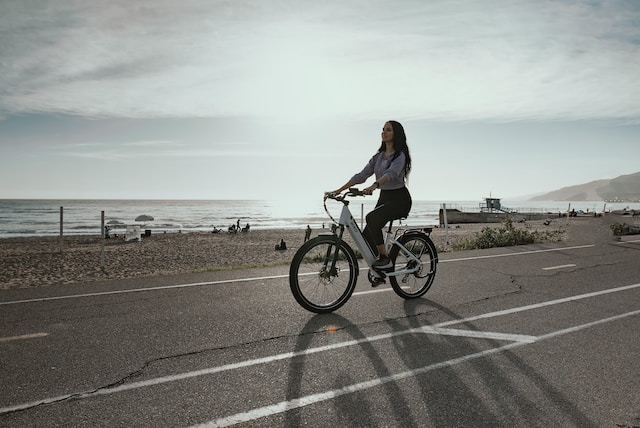
Are E-Bikes Good for Commuting? 5 Reasons They Work
Last Updated on September 19, 2026 by Kristina
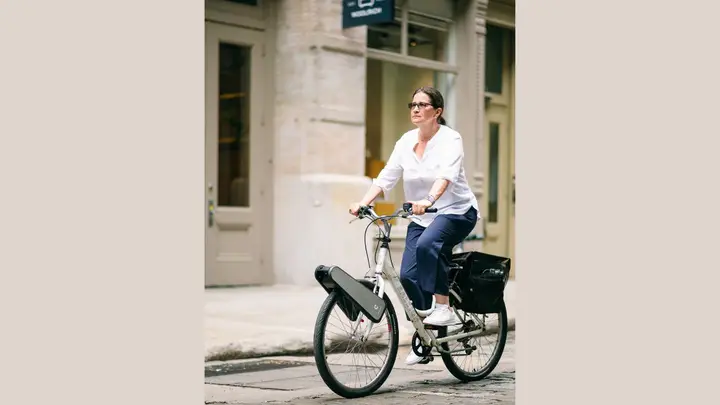
Yes, e-bikes can be a very practical option for commuting – especially when they replace short or medium car trips, make hills easier, or let you use a safer bike route that avoids some traffic and parking delays. But they are not automatically faster, cheaper, or safer for every rider. The real benefit depends on your route, distance, storage, weather, local rules, and the bike you choose.
If you are comparing models, start with my best commuter e-bikes guide. For a broader look at route planning, gear, and day-to-day setup, see my complete electric bike commuting guide.
Here are five practical reasons e-bikes work well for many commuters, along with the tradeoffs worth checking before you make the switch.
1. E-Bikes Can Make Some Commutes Faster and More Predictable
Pedal assist can help you maintain a steadier pace than you might on a conventional bike, especially on hills, into headwinds, or over longer distances. In some cities, bike lanes and multi-use paths can also help riders avoid parts of a congested driving route.
That does not mean an e-bike will always beat a car, bus, or train. Traffic signals, route quality, distance, secure parking, and local bike access all affect door-to-door travel time. For many riders, the bigger advantage is predictability: you are less exposed to parking searches and some traffic delays.
- Hills become easier: Motor assistance can reduce the effort needed to keep moving at a useful commuting pace.
- Longer bike trips become more realistic: Assistance can make distances that feel impractical on a regular bike more manageable.
- Route choice may improve: A safe bike lane or greenway can sometimes offer a more consistent trip than a congested driving route.
Route safety still matters more than shaving a few minutes off the trip. The Federal Highway Administration highlights separated bicycle infrastructure as one way to reduce conflicts between people riding and motor vehicles.
2. They Can Reduce Some Commuting Costs
An e-bike can lower transportation costs when it replaces trips that would otherwise require gasoline, parking, rideshare fares, or transit tickets. Charging the battery is generally inexpensive compared with fueling a car, and an e-bike does not need oil changes or many of the systems a car requires.
But an e-bike is not free transportation. You still need to budget for the purchase price, tires, brake pads, chains or belts, tune-ups, locks, helmets, replacement parts, and eventually a replacement battery. Whether the bike saves you money depends mainly on how often it actually replaces a more expensive trip.
- Potential fuel savings: Most relevant if the e-bike replaces regular car trips.
- Potential parking savings: Useful where workplace or downtown parking is expensive, provided you have secure bicycle parking.
- Lower operating complexity than a car: There are fewer expensive vehicle systems to maintain, although bicycle maintenance still matters.
I would not assume an e-bike will “pay for itself” within a set number of months or years. The break-even point varies too much by purchase price, mileage, maintenance, parking costs, and the trips you actually replace.
3. They Can Reduce Emissions When They Replace Car Trips
E-bikes have no tailpipe emissions while you ride them. When an e-bike replaces a gasoline-car trip, that can reduce the direct emissions associated with that trip.
That does not make an e-bike impact-free. Manufacturing the frame, motor, electronics, and battery has an environmental footprint, and charging electricity also has upstream impacts that vary by power source. Lifecycle research still finds important environmental advantages in many scenarios, particularly when an e-bike substitutes for higher-emission travel rather than replacing walking or a conventional bicycle trip.
The practical takeaway is simple: the environmental benefit depends heavily on what trip the e-bike replaces. Replacing routine car commutes is where the case is strongest.
4. They Add Physical Activity With Adjustable Effort
Pedal-assist e-bikes can make it easier to build physical activity into a normal workday. The motor reduces how hard you have to push, but you can still pedal and choose how much assistance you want.
Recent research continues to support that e-bike riding can provide meaningful physical activity. A 2026 systematic review found that e-cycling commonly reached at least moderate exercise intensity even though it generally required less exertion than conventional cycling. A separate real-world study of regular e-bike commuters also measured moderate-to-vigorous activity during commuting rides.
- Adjustable assistance: Increase support for hills, headwinds, or days when you want a lighter effort.
- More practical workday exercise: Riding can add movement to a trip you already need to make.
- Less all-or-nothing effort: Riders can reduce assistance when they want more exercise and increase it when conditions get harder.
Throttle-equipped e-bikes can work differently, and local class rules vary. If you rely heavily on a throttle without pedaling, the physical-activity benefit will naturally be lower.
5. They Give Commuters More Transportation Flexibility
E-bikes can fill the gap between walking, conventional cycling, public transit, and driving. You can adjust the assistance level to the terrain, carry work gear with a rack or panniers, and use the bike for errands before or after work.
Some riders also combine an e-bike with a bus or train for a longer commute. Check the transit agency’s current rules first because restrictions can vary by bike size, battery type, peak-hour policy, rack capacity, and whether e-bikes are allowed onboard.
Local riding rules matter too. Before choosing a class or route, check my state-by-state e-bike law guide and confirm any city, trail, campus, or property-specific restrictions that apply to your commute.
When an E-Bike Commute May Not Be a Good Fit
An e-bike can be a strong commuting tool, but there are situations where another option may make more sense.
- Your route feels unsafe: A fast road with no shoulder or bicycle infrastructure may not be a sensible daily route just because an e-bike can keep a higher speed.
- You have nowhere secure to store the bike: Theft risk can outweigh the convenience if your workplace does not offer a safe parking option.
- You must carry the bike up several flights of stairs: Many commuter e-bikes are much heavier than conventional bicycles.
- Your round trip pushes the battery too close to its limit: Cold weather, hills, speed, rider weight, cargo, tire pressure, and high assist settings can all reduce real-world range.
- Your transit connection does not accept the bike: Confirm the actual policy before planning a mixed bike-and-transit commute.
- Local rules do not fit the bike you are considering: Class, speed, throttle, age, helmet, path, or sidewalk restrictions may affect where you can ride.
Before Your First E-Bike Commute
A little planning makes a big difference. I would check these items before relying on an e-bike for work every day:
- Ride the route once when you are not in a hurry. Look for safer streets, protected lanes, difficult intersections, construction zones, and places where the route becomes uncomfortable.
- Plan for the full round trip. Do not base your decision only on the manufacturer’s maximum claimed range. Use my e-bike range calculator as a planning tool and leave a useful battery reserve.
- Confirm secure parking. Use a quality lock and think about whether the battery, display, lights, bags, or other removable items need to come inside with you.
- Plan for weather. Rain gear, lights, reflective equipment, fenders, and appropriate tires may matter more for a daily commuter than another performance feature.
- Think about what you carry. A rack, panniers, basket, or cargo setup can be much more comfortable than wearing a heavy backpack every day. My e-bike accessories guide covers practical safety and comfort gear.
- Check fit and bike weight. Make sure you can comfortably mount, stop, maneuver, park, and move the bike where you actually live and work.
My Take
I think e-bikes make the most sense for commuters who have a reasonably safe route, secure parking, and a distance that feels inconvenient by conventional bike but wasteful by car. Pedal assist can make hills, headwinds, and longer rides much easier to handle without turning the trip into a completely passive ride.
I would not buy one on the assumption that it will automatically save money, beat traffic, or make every route safer. Start with the route first, then check realistic range, storage, bike weight, local rules, and the cost of owning the bike. If those pieces line up, an e-bike can be an excellent daily transportation tool.
If you are ready to compare options, see my current commuter e-bike recommendations or use the Electric Bike Buying Guide to work through motor type, battery size, fit, brakes, and other buying decisions.
Sources
- PubMed – systematic review of e-cycling exercise intensity and physical activity
- PubMed Central – real-world physical activity during e-bike commuting
- Federal Highway Administration – separated bicycle infrastructure and safety
- Transportation Research Part D – lifecycle environmental impacts of e-bikes
Want more e-bike tips?
Sign up for Electric Bike Explorer newsletter updates on commuting, buying, maintenance, safety, and practical e-bike ownership.

Kristina is not just an enthusiast but a true authority on electric bikes. Nestled in the coastal beauty of Virginia, Kristina has found the perfect backdrop for her passion for electric biking. As a dedicated wife and homeschooling mom, her life revolves around family, faith, and the thrill of adventure.
Originally hailing from Ohio, Kristina's journey with electric bikes began as a curiosity and quickly evolved into a deep expertise. Her blog is a testament to her love for electric biking, combining her fascination for eco-friendly transportation with her coastal lifestyle.
When she's not cruising the beach on her electric bike, you'll find Kristina indulging in her other loves: long walks along the shore, getting lost in a good book, and cherishing moments with her loved ones. With a heart as big as her love for animals, especially cats, Kristina brings a unique perspective to the electric bike world, grounded in her strong faith in God and her dedication to a sustainable lifestyle.
Through her blog, Kristina shares her extensive knowledge of electric bikes, offering valuable insights, tips, and recommendations to fellow enthusiasts. Whether you're a seasoned rider or a newcomer to the electric bike scene, Kristina's blog is your go-to source for all things electric biking, fueled by her passion, expertise, and the scenic beauty of coastal Virginia.