How to Tell If an E-Bike Battery Is Dangerous – Warning Signs, Risks & Safety Guide
Last Updated on February 13, 2026 by Kristina
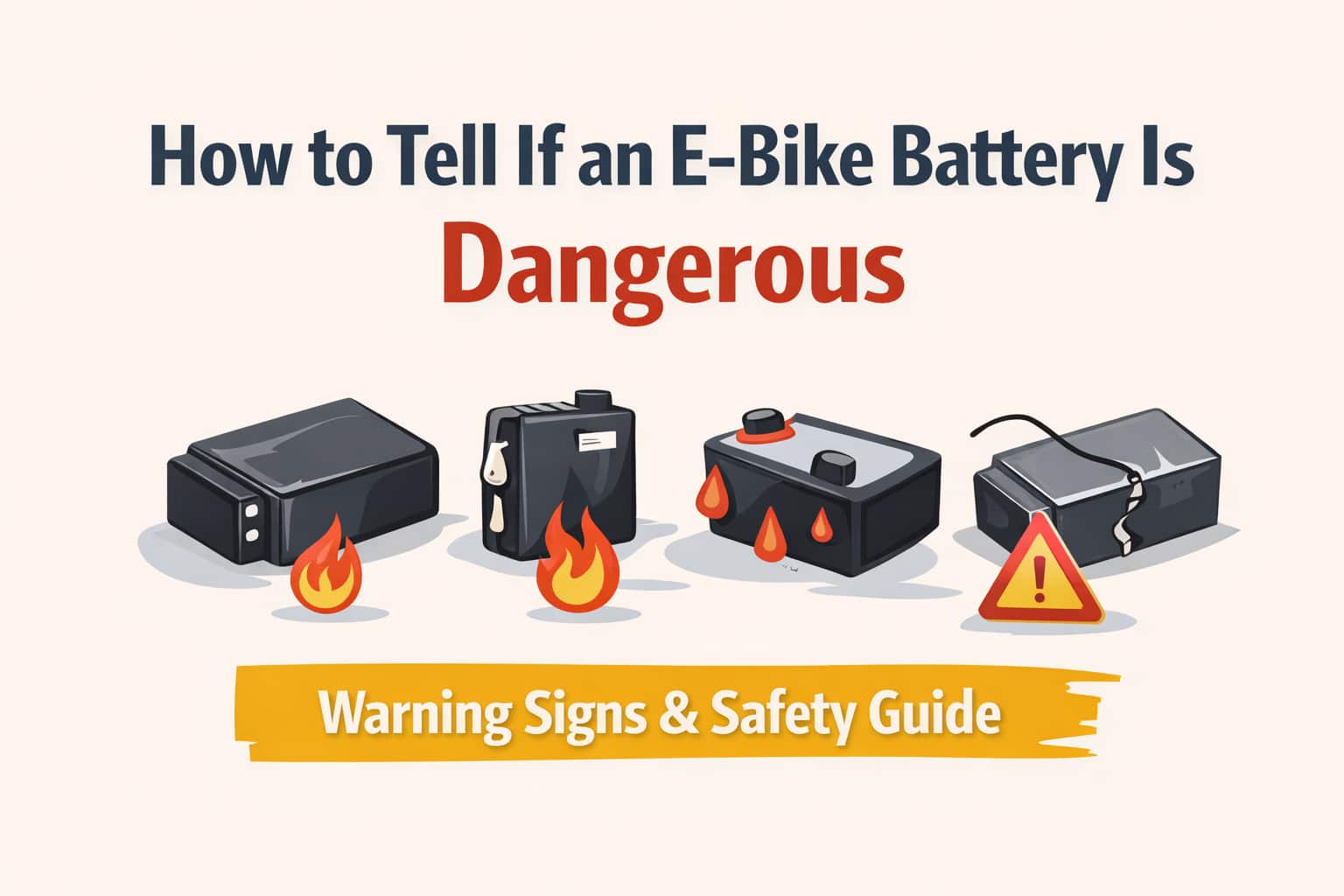
The biggest signs an e-bike battery may be dangerous are swelling, overheating while charging, strange smells, cracks, leaking fluid, or using a non-original charger or replacement battery. If any of these appear, stop using the battery immediately and move it away from flammable materials. Batteries that lack recognized safety certification or come from unknown manufacturers also carry significantly higher risk.
🟢 Why You Can Trust This Guide
This guide is based on fire department safety advisories, consumer safety agencies, certification standards, and documented lithium-ion battery failure patterns. It focuses on real-world warning signs riders can actually spot, not marketing claims or brand hype.
📖 Read Next
How to Choose the Best eBike Battery for Your Commute (With Top Picks)
Understanding E-Bike Battery Capacity: Amp Hours (Ah) Explained
5 Signs It’s Time to Replace Your E-Bike Battery
The Ultimate Guide to Electric Bike Chargers: Types, Features, and Recommendations
Why Your E-Bike Battery Loses Charge Overnight — and How to Fix It
How Long Do E-Bike Batteries Last?
E-Bike Battery Charging Mistakes
E-Bike Battery Health Checker
Introduction
E-bike batteries are generally safe when they are well-built, properly matched to the bike, and charged with the correct equipment. Risk increases when a battery is damaged, rebuilt, poorly manufactured, or charged with incompatible hardware. This guide explains how to recognize warning signs early, how to identify higher-risk batteries before something happens, and what to do if anything seems off.
If you’re still comparing bikes, start with the e-bike buying guide because battery quality is one of the biggest hidden safety differences between models. And if you want realistic expectations for battery performance, read e-bike range explained to understand real-world vs advertised range.
This short news segment explains why uncertified and third-party e-bike batteries have been linked to fires and what experts say riders should watch for.
Quick Battery Risk Self-Check Tool
Add 1 point for every YES
- Not original manufacturer battery
- Charger is not original or approved
- Battery older than 3 years
- Bike has been dropped or crashed
- Stored in extreme heat or freezing temps
- Gets hot during charging
- Purchased from unknown seller
Results
| Score | Risk Level | Meaning |
|---|---|---|
| 0–1 | Low | Normal monitoring |
| 2–3 | Moderate | Inspect closely |
| 4–5 | High | Stop using until checked |
| 6+ | Dangerous | Replace immediately |
Note: This is a practical screening tool, not an official certification or fire-risk rating.
One of the Strongest Real-World Risk Factors
One of the most consistent patterns seen in incident investigations is:
Unknown battery origin
Batteries with no traceable manufacturer, no certification listing, no documentation, or no support contact tend to carry significantly higher real-world risk than verified products.
Visual Danger Sign Chart
| Warning Sign | What It Indicates | Risk |
|---|---|---|
| Swelling | Internal gas buildup | Severe |
| Cracks | Structural damage | Severe |
| Leaking | Electrolyte exposure | Severe |
| Burn marks | Past overheating | Severe |
| Chemical smell | Cell failure beginning | Severe |
| Hot while charging | Electrical resistance | High |
| Connector heat | Loose contact/arcing | High |
| Sudden fast charging | Capacity damage | Moderate |
Important: Many battery failures show warning signs beforehand – but not all. Treat any single red flag as a stop sign.
Why These Signs Matter
These symptoms reflect internal chemical or electrical problems:
- Swelling = gas formation inside cells
- Corrosion = resistance buildup and heat
- Cracks = internal separator damage
- Odor = venting gases from stressed cells
Lithium battery failures often happen after these warning signals appear, not without them.
Certified vs Uncertified Battery Comparison
| Certified Battery | Higher-Risk Battery |
|---|---|
| Listed safety certification | No certification info |
| Traceable manufacturer | Unknown origin |
| Matched charger included | Generic charger |
| Documented compatibility | No specs listed |
| Warranty/support | No contact info |
| Proper labeling | Vague labeling |
Certifications That Actually Matter
Two commonly referenced safety standards for e-bikes:
UL 2849
Evaluates the full electrical system including battery, charger, and motor working together.
UL 2271
Evaluates the battery pack itself for electrical and fire safety.
Legitimate manufacturers clearly document certifications tied to specific models.
Physical Damage Warning Signs
Stop using the battery immediately if you notice:
- Swelling or bulging
- Cracks in the casing
- Fluid residue
- Discoloration or melting
- Corroded terminals
- Burning or chemical smell
- Hissing or popping sounds
Fire safety agencies specifically list these as warning indicators.
Charging Behavior Warning Signs
Some batteries look fine but behave unsafely when charging.
Red flags include:
- Battery becomes hot to the touch
- Charger brick overheats
- Plug gets hot
- New smell appears
- Charging becomes unusually fast
A battery may feel slightly warm during normal charging. It should never feel hot.
Safe Temperature Guidance (General Lithium-Ion)
Always follow manufacturer instructions if listed.
| Situation | Practical Guidance |
|---|---|
| Charging | About 41°F–113°F (5°C–45°C) |
| Storage | Cool dry location, room temp ideal |
| Long storage | About 50% charge |
Charging a frozen battery can damage it internally even if it appears to work afterward.
Where Higher-Risk Batteries Commonly Come From
Many unsafe batteries originate from:
- Marketplace sellers without verification
- Used batteries with unknown history
- Rewrapped or rebuilt packs
- Discount replacement batteries
- “Upgrade” batteries promising more capacity
A battery claiming significantly more capacity than the original manufacturer offered may have reduced safety margins.
What Happens When a Battery Fails
Lithium battery fires behave differently than normal fires. They may:
- Ignite suddenly
- Burn extremely hot
- Produce toxic smoke
- Reignite after being extinguished
Many incidents are traced back to prior damage or misuse rather than spontaneous failure.
Battery Age vs Safety Risk
| Age | Typical Risk Trend |
|---|---|
| 0–1 years | Low |
| 2–3 years | Moderate wear |
| 3–5 years | Increased risk |
| 5+ years | Consider replacement |
Capacity loss is normal with age. Rapid or unusual degradation is not.
Replace vs Monitor Guide
Replace Immediately
- Swelling
- Cracks
- Smell
- Water exposure
- Overheating
Monitor
- Slight range loss
- Minor cosmetic scratches
- Mild warmth during charging
Safe Charging Habits That Reduce Risk
Best practices:
- Use correct charger
- Plug directly into wall outlet
- Charge in open area
- Keep away from flammable materials
- Avoid unattended charging
- Avoid extreme temperatures
Common Myths
Myth: Only cheap e-bikes are dangerous
Truth: Any damaged lithium battery can fail.
Myth: If it works it’s safe
Truth: Functionality does not guarantee safety.
Myth: Fires only happen while charging
Truth: Damaged batteries can ignite even when not plugged in.
Quick Safety Rule
No swelling. No smell. No heat. Correct charger. Certified battery.
If any of these change – stop using it.
What To Do If You Suspect a Dangerous Battery
- Stop using and charging it
- Move it away from flammable items if safe
- Do not store near exits
- Check for recalls or safety notices
- Dispose at proper battery recycling or hazardous waste facility
Never place lithium batteries in trash or general recycling.
Final Thoughts
Most dangerous battery situations are preventable. Many incidents show warning signs beforehand, but not all. The safest riders are not the ones with the most expensive bikes – they are the ones who recognize problems early and act quickly.
Knowing what to watch for is the most effective safety upgrade you can make.
Not sure where to go next?
Some riders are brand new. Others are fixing a problem or thinking about a new bike. Choose what fits you.
Learn & Get Comfortable
Understand how e-bikes work and what to expect when riding.
Improve Your Current Ride
If your bike isn’t performing how you want, learn what affects speed, range, and power.
Compare Better Bikes
Looking for something that fits your riding style? Start here.
- Best Electric Bikes for Beginners
- Recommended Commuter Ebikes
- Most Comfortable City E-Bikes
- Best Fat Tire Ebikes
- Top Folding Ebikes
- Best Step Through Ebikes
- Top Cargo Electric Bikes
- Best Lightweight Ebikes
- Best Long Range Ebikes
- Top Moped Style E-Bikes
- E-bike Reviews
🛒 Ready to Buy?
Top picks and current availability from trusted brands.
👉 Still deciding?
Take our E-Bike Recommendation Quiz to get matched with the right riding style in under two minute
External Sources
Recommended safety authorities for further reading:
- U.S. Consumer Product Safety Commission safety guidance
- Fire department lithium-ion battery advisories
- UL electrical safety certification standards
- Transportation safety agencies monitoring micromobility risks

Kristina is not just an enthusiast but a true authority on electric bikes. Nestled in the coastal beauty of Virginia, Kristina has found the perfect backdrop for her passion for electric biking. As a dedicated wife and homeschooling mom, her life revolves around family, faith, and the thrill of adventure.
Originally hailing from Ohio, Kristina's journey with electric bikes began as a curiosity and quickly evolved into a deep expertise. Her blog is a testament to her love for electric biking, combining her fascination for eco-friendly transportation with her coastal lifestyle.
When she's not cruising the beach on her electric bike, you'll find Kristina indulging in her other loves: long walks along the shore, getting lost in a good book, and cherishing moments with her loved ones. With a heart as big as her love for animals, especially cats, Kristina brings a unique perspective to the electric bike world, grounded in her strong faith in God and her dedication to a sustainable lifestyle.
Through her blog, Kristina shares her extensive knowledge of electric bikes, offering valuable insights, tips, and recommendations to fellow enthusiasts. Whether you're a seasoned rider or a newcomer to the electric bike scene, Kristina's blog is your go-to source for all things electric biking, fueled by her passion, expertise, and the scenic beauty of coastal Virginia.