Hub Drive vs Mid-Drive for Heavy Riders: Which E-Bike Motor Is Better?
Last Updated on May 13, 2026 by Kristina
If you’re a heavier rider trying to choose the right electric bike, the type of motor matters a lot more than most people realize.
One of the biggest questions I see is whether a hub-drive e-bike or a mid-drive e-bike works better for heavy riders, especially for hills, acceleration, comfort, battery range, and long-term reliability.
The truth is: both can work well, but they excel in different situations.
If you’re still narrowing down which type of e-bike fits your riding style, start here first:
👉 E-Bike Buying Guide
You may also want to read:
👉 What E-Bike Motor Torque Actually Means
👉 Torque vs Wattage: What Matters More?
👉 Best E-Bikes for Heavy Riders
Who This Guide Is For (and Who It’s Not)
This guide is for you if:
- You’re comparing the best e-bike motor for heavy riders
- You ride hills, bridges, or steep neighborhoods
- You want better climbing power or smoother acceleration
- You’re worried about motor strain or overheating
- You want a more comfortable and reliable ride long term
This guide may not be for you if:
- You only ride short flat bike paths occasionally
- You’re choosing between lightweight performance road e-bikes
- You already know exactly what motor system you want
📖 Read Next
DIY Troubleshooting: E-Bike Motor Not Engaging
Which E-Bike Motor Is Easier to Maintain Long-Term? Hub vs Mid-Drive Guide
Top 10 E-Bike Maintenance Mistakes That Damage Your Motor
Electric Bike Maintenance for Beginners
Why Some E-Bikes Feel More Powerful (Even With the Same Watt Motor)
Motor Power Calculator – How Many Watts Does Your E-Bike Need?
Hub Drive vs Mid-Drive for Heavy Riders: Quick Comparison
| Feature | Hub Drive | Mid-Drive |
|---|---|---|
| Hill Climbing | Good | Excellent |
| Flat Terrain | Excellent | Excellent |
| Maintenance | Lower | Higher |
| Efficiency | Moderate | High |
| Budget Friendly | Excellent | Moderate |
| Natural Pedaling Feel | Moderate | Excellent |
| Heavy Rider Hill Performance | Moderate | Excellent |
| Throttle Feel | Excellent | Moderate |
| Long Climbs | Moderate | Excellent |
| Drivetrain Wear | Lower | Higher |
Which Motor Type Is Usually Better for Heavy Riders?
For most heavier riders riding hills, carrying cargo, or covering longer distances regularly, mid-drive motors usually perform better overall.
However, that does not mean hub-drive e-bikes are bad.
A quality hub-drive e-bike can still work extremely well if:
- You mainly ride flatter terrain
- You want lower maintenance
- You prefer lower cost
- You use throttle frequently
- You don’t need aggressive hill climbing
In my experience, the biggest difference shows up when climbing hills or carrying extra weight consistently.
That’s where mid-drive systems usually pull ahead.
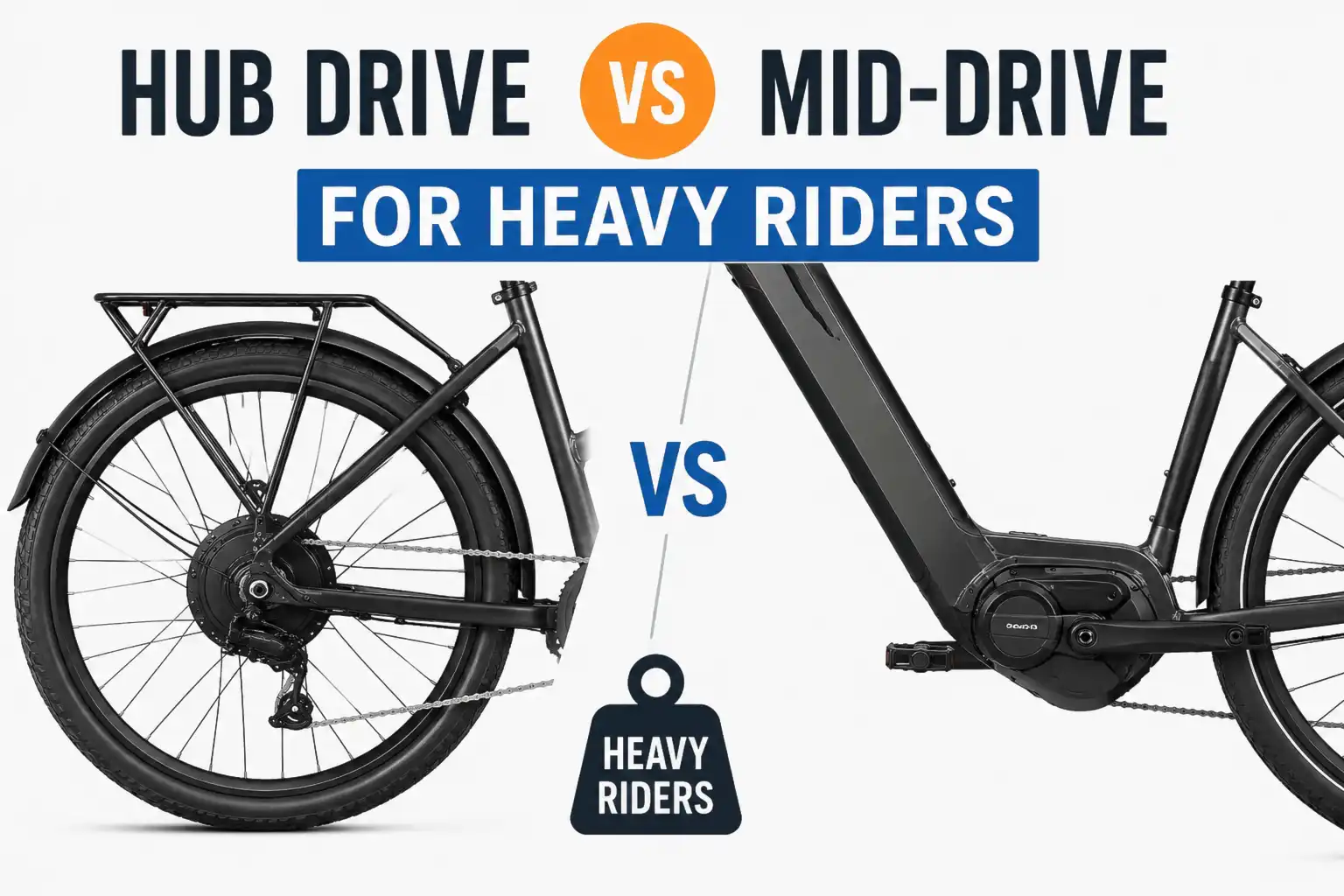
What’s the Difference Between Hub Drive and Mid-Drive?
Hub-Drive Motors
Hub motors sit inside the wheel hub, usually the rear wheel.
The motor pushes the wheel directly without using the bike’s gears.
You’ll commonly see hub motors on:
- Budget e-bikes
- Fat tire e-bikes
- Folding e-bikes
- Throttle-heavy commuter bikes
Mid-Drive Motors
Mid-drive motors sit near the pedals at the bike’s crank area.
These motors work through the bike’s gears, similar to how your legs do while pedaling.
You’ll commonly see mid-drives on:
- Premium commuter e-bikes
- Cargo e-bikes
- Mountain e-bikes
- Performance-focused models
For a deeper breakdown of how motor systems work, Bosch has a good technical overview here:
Bosch eBike Systems Motor Guide
🎥 Want to see the real-world difference between hub-drive and mid-drive e-bikes? This video gives a helpful visual breakdown of how both systems perform on hills, acceleration, and everyday riding.
Why Mid-Drives Usually Handle Heavy Riders Better
Better Hill Climbing
This is the biggest advantage.
Because mid-drive motors use the bike’s gearing, they can stay in a more efficient power range while climbing.
That means:
- Less strain on the motor
- Better torque delivery
- Smoother climbing
- Lower overheating risk
For heavier riders in hilly areas, this can make a huge difference in ride feel.
Many hub motors struggle on long steep climbs because they cannot leverage the drivetrain gearing the same way.
This is one reason many riders searching for the best motor for climbing hills eventually lean toward mid-drive systems.
Torque Matters More Than Wattage for Heavy Riders
A lot of riders focus only on wattage numbers, but torque is often more important for heavier riders.
Higher torque helps with:
- Starting from stops
- Hill climbing
- Carrying cargo
- Fighting headwinds
- Reducing sluggish acceleration
You’ll commonly see:
- Hub drives: roughly 40–90Nm torque
- Mid-drives: roughly 60–120Nm torque
Premium systems can exceed these ranges.
For reference:
F=ma
More rider weight requires more force to accelerate efficiently, which is why torque becomes so important.
If torque numbers confuse you, read:
👉 What E-Bike Motor Torque Means for Real Riders
Real-World Example: How Motor Type Changes the Ride
Rider Example 1
- Rider weight: 180 lbs
- Terrain: Mostly flat
- Commute: 5 miles each way
A quality 750W hub-drive e-bike will probably feel powerful and smooth.
This type of rider may never truly need a mid-drive system.
Rider Example 2
- Rider weight: 300+ lbs
- Terrain: Hilly
- Riding style: Grocery hauling + longer rides
This is where a mid-drive often becomes noticeably better.
The climbing power, lower-speed torque, and efficiency usually feel smoother and less strained during longer rides.
Hub Drives Are Often Better for Simplicity and Budget
Despite the advantages of mid-drives, hub motors still have several benefits for heavier riders.
Lower Cost
Hub-drive e-bikes are usually much cheaper.
You can often get:
- Larger motors
- Bigger batteries
- Fat tires
- Higher weight capacities
…for significantly less money than comparable mid-drive bikes.
That’s one reason many heavier riders still choose hub-drive models.
Hub Motors Often Feel Stronger on Throttle
If you ride heavily using throttle instead of pedal assist, hub motors often feel more satisfying.
That instant push can feel powerful and smooth on flat terrain.
This is especially true with:
- 750W hub motors
- Fat tire e-bikes
- High-amperage controllers
For many casual riders, that’s completely enough.
Mid-Drives Usually Feel More Natural While Pedaling
One thing I notice immediately on most mid-drive bikes is how natural the power delivery feels.
Instead of feeling like the bike is “pulling” or “pushing” you forward, the assistance feels more connected to your pedaling effort.
That matters more than people expect on longer rides.
Mid-drive systems also tend to:
- Climb better at lower speeds
- Handle hills more efficiently
- Preserve battery range better in steep terrain
- Maintain smoother cadence
Can Heavy Riders Overheat an E-Bike Motor?
Heavy riders can place more sustained load on motors, especially during:
- Long hill climbs
- Hot weather
- Cargo hauling
- Slow uphill riding
- Full-throttle riding
Mid-drive motors generally handle heat better on hills because they can use the bike’s gears more efficiently.
Some hub motors can overheat faster when pushed hard continuously at low speeds, especially with heavy riders on steep climbs.
This becomes more noticeable when combining:
- Steep hills
- Heavy cargo
- Fat tires
- Hot weather
- Long climbs without cooling breaks
If you regularly climb steep hills, motor cooling and efficiency become much more important than raw wattage numbers alone.
Battery Range Differences for Heavy Riders
Heavier riders naturally use more battery power.
That’s normal.
But motor type affects efficiency too.
Mid-Drives Usually Use Battery Power More Efficiently
Because mid-drives use gears efficiently, they often consume less battery on hills.
That can help offset the extra energy demands from rider weight.
Hub Drives Can Drain Faster Under Heavy Load
Hub motors sometimes pull high current continuously when climbing slowly.
That can:
- Heat the motor faster
- Reduce efficiency
- Drain batteries quicker
This becomes more noticeable on:
- Long hills
- Cargo hauling
- Heavy riders + fat tire setups
- Hot weather riding
The U.S. Department of Energy explains how weight, terrain, and efficiency affect electric transportation energy use:
U.S. Department of Energy Vehicle Efficiency Basics
You may also want:
👉 E-Bike Range Explained Guide
Reliability and Maintenance Differences
Hub Drives Usually Require Less Maintenance
Hub motors are simpler systems overall.
There’s less drivetrain stress because the motor does not run through the chain and cassette.
That means:
- Less chain wear
- Less drivetrain wear
- Lower maintenance costs
For casual riders, this can be a major advantage.
Mid-Drives Can Wear Chains Faster
Because mid-drive motors apply power through the drivetrain, they usually wear out:
- Chains
- Cassettes
- Chainrings
…faster than hub drives.
Heavier riders producing high torque can accelerate this wear even more.
That doesn’t make mid-drives bad.
It just means maintenance matters more.
What Matters More Than Motor Type for Heavy Riders
Even the best motor will struggle if the bike itself is poorly equipped for heavier riders.
I always recommend paying attention to:
- Payload capacity
- Brake rotor size
- Tire width
- Wheel strength
- Spoke quality
- Frame stability
- Battery size
A well-built hub-drive e-bike can absolutely outperform a poorly designed mid-drive bike in real-world riding.
That’s why overall bike quality matters just as much as motor placement.
Which Motor Is Better for Hills?
Best Choice for Steep Hills: Mid-Drive
If you regularly climb:
- Mountain roads
- Bridges
- Steep neighborhoods
- Long inclines
…a mid-drive is usually worth it.
The climbing difference can feel dramatic.
That’s why many riders searching for the best e-bike for overweight riders in hilly areas eventually choose mid-drive systems.
Which Motor Is Better for Flat Terrain?
Best Choice for Flat Commuting: Hub Drive
If your rides are mostly:
- Bike paths
- City streets
- Flat suburbs
- Casual commuting
…a good hub-drive e-bike may be all you need.
Many heavier riders are perfectly happy with hub-drive commuters.
Which Motor Type Is Best for Your Situation?
Best for Heavy Riders on Steep Hills
Mid-drive e-bike
Why:
- Better climbing efficiency
- Lower overheating risk
- Better low-speed torque
- More natural power delivery
Best Budget Option for Heavy Riders
Hub-drive e-bike
Why:
- Lower upfront cost
- Simpler maintenance
- Strong throttle feel
- Great for flatter terrain
Best for Cargo Hauling
Mid-drive e-bike
Why:
- Better low-speed climbing
- Handles weight more efficiently
- Better hill starts
Best for Mostly Flat Commuting
Hub-drive e-bike
Why:
- Lower maintenance
- Affordable
- Smooth throttle acceleration
- Excellent for city riding
Recommended E-Bikes for Heavy Riders
Always verify the manufacturer’s official payload rating before buying. Some e-bikes have powerful motors but lower total weight capacities than riders expect.
Aventon Aventure 3

Best For: Comfortable mixed-terrain riding with strong hub-drive power.
A good choice for heavier riders wanting fat tires, upright comfort, and strong acceleration on pavement and light trails.
👉 Read Review: Aventon Aventure 3 Review
Velotric Discover 3
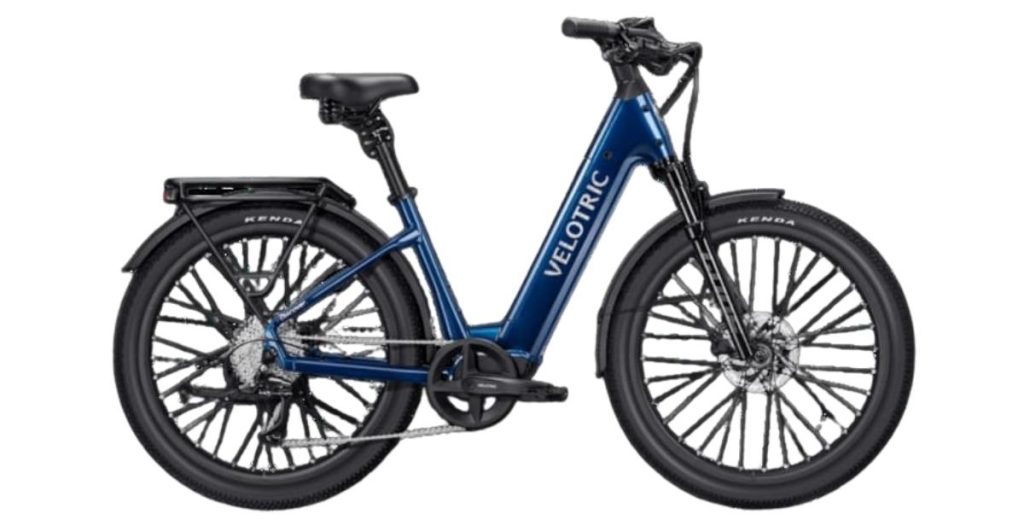
Best For: Comfortable commuting and everyday riding.
The upright riding position and smooth power delivery make this a solid option for larger riders wanting a relaxed commuter.
👉 Read Review: Velotric Discover 3 Review
Lectric XPedition 2

Best For: Heavy riders carrying cargo or groceries.
A strong value-focused cargo e-bike with impressive payload capability.
👉 Read Review: Lectric Xpedition 2
Specialized Turbo Vado
Best For: Premium mid-drive performance and hill climbing.
One of the smoother and more natural-feeling mid-drive systems for longer rides and steeper terrain.
👉 Read Review: Specialized Turbo Vado
Cannondale Cargowagen Neo

Best For: Heavy cargo hauling and family riding.
A premium cargo-focused mid-drive e-bike designed for carrying substantial loads more confidently.
What I’ve Noticed Riding Different Motor Types
In my experience, hub-drive e-bikes often feel more fun and punchy on flat roads, especially when using throttle heavily.
But once hills, cargo, or longer climbs enter the picture, mid-drive systems usually feel smoother, more controlled, and less strained overall.
That’s especially true for heavier riders riding regularly in hilly areas.
My Take After Comparing Both
If I were recommending an e-bike for a heavier rider doing mixed riding with hills, I’d usually lean toward a mid-drive if the budget allows.
The climbing performance, efficiency, and natural ride feel are hard to ignore.
But for flatter terrain and lower budgets, a quality hub-drive e-bike can still be an excellent choice.
I think many riders overcomplicate this decision.
The best motor setup depends more on:
- Terrain
- Riding style
- Budget
- Rider expectations
…than internet debates about which system is “better.”
Quick Recommendation Summary
Choose a Hub Drive If You Want:
- Lower cost
- Simpler maintenance
- Strong throttle feel
- Mostly flat riding
- Casual commuting
Choose a Mid-Drive If You Want:
- Better hill climbing
- Higher efficiency
- Better torque delivery
- Longer steep rides
- More natural pedaling feel
Related Guides on Electric Bike Explorer
👉 Best Commuter E-Bikes for Heavy Riders
👉 E-Bike Battery Capacity Explained
👉 How Far an E-Bike Really Goes on One Charge
👉 Best Fat Tire E-Bikes Guide
👉 Best Cargo E-Bikes Guide
External Sources
- Bosch eBike Systems Motor Guide
- U.S. Department of Energy Vehicle Efficiency Basics
- PeopleForBikes Electric Bike Resources

Kristina is not just an enthusiast but a true authority on electric bikes. Nestled in the coastal beauty of Virginia, Kristina has found the perfect backdrop for her passion for electric biking. As a dedicated wife and homeschooling mom, her life revolves around family, faith, and the thrill of adventure.
Originally hailing from Ohio, Kristina's journey with electric bikes began as a curiosity and quickly evolved into a deep expertise. Her blog is a testament to her love for electric biking, combining her fascination for eco-friendly transportation with her coastal lifestyle.
When she's not cruising the beach on her electric bike, you'll find Kristina indulging in her other loves: long walks along the shore, getting lost in a good book, and cherishing moments with her loved ones. With a heart as big as her love for animals, especially cats, Kristina brings a unique perspective to the electric bike world, grounded in her strong faith in God and her dedication to a sustainable lifestyle.
Through her blog, Kristina shares her extensive knowledge of electric bikes, offering valuable insights, tips, and recommendations to fellow enthusiasts. Whether you're a seasoned rider or a newcomer to the electric bike scene, Kristina's blog is your go-to source for all things electric biking, fueled by her passion, expertise, and the scenic beauty of coastal Virginia.