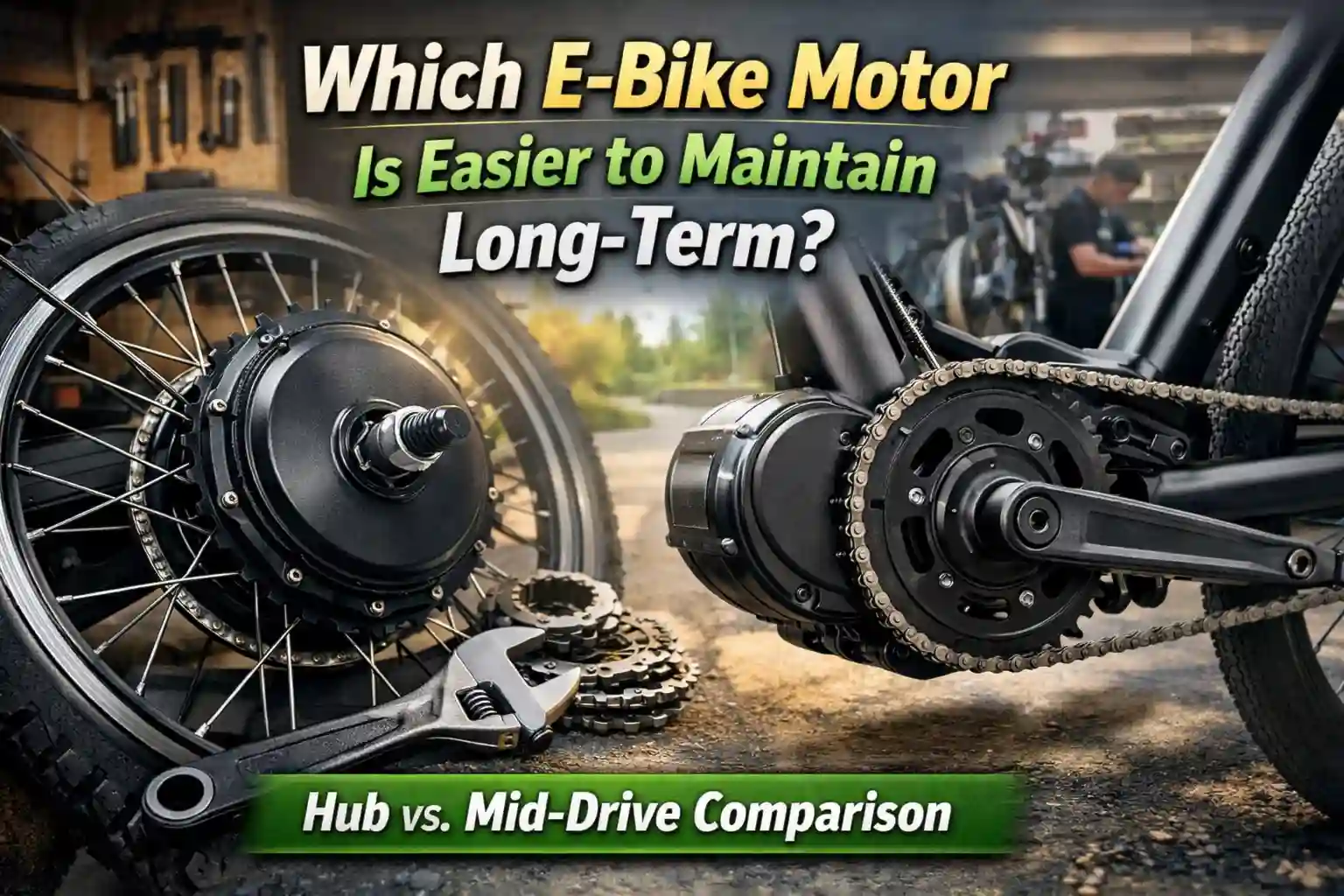
Which E-Bike Motor Is Easier to Maintain Long-Term? Hub vs Mid-Drive Guide
Last Updated on January 21, 2026 by Kristina
Introduction
Choosing an e-bike motor is not just about power or speed. It is about what happens years later when parts wear out, batteries age, and repairs become part of ownership.
Some motor systems are simple, affordable, and forgiving. Others offer performance and climbing power but come with higher long-term costs and service requirements.
In this guide, I break down which e-bike motors are easiest to maintain, cheapest to repair, and most realistic for long-term ownership, based on real-world serviceability rather than marketing claims.
If you are still in the research phase, start with the E-Bike Buying Guide to understand how motor choice fits into comfort, range, and long-term reliability.
Long-Term Ownership Recommendation
Best choice for most riders who want low stress and low repair costs: Geared rear hub motors
Best for riders who want climbing performance and have service access: Brand-name mid-drive motors
Best for riders who value durability over efficiency: Direct drive hub motors
If you plan to keep your e-bike for many years and handle minor repairs yourself, hub motors offer the most predictable and affordable ownership experience.
Who This Guide Is For (and Who It’s Not)
This guide is for you if:
- You want an e-bike that can last 5+ years
- You care about repair costs and parts availability
- You want the option to do basic maintenance yourself
- You ride regularly and want predictable ownership
This guide may not be for you if:
- You only care about maximum power and performance
- You plan to upgrade bikes every 1 to 2 years
- You want a dealership-only ownership experience
If performance and daily commuting are your main goals, you may want to explore the Best Commuter E-Bikes Guide for models that prioritize power and ride feel.
The Three Main E-Bike Motor Types
1. Geared Hub Motors (Front or Rear)
This is the most common motor type on budget and mid-range e-bikes.
How it works:
The motor sits inside the wheel hub and uses internal gears to multiply torque.
What usually wears out:
- Internal nylon gears after several thousand miles
- Bearings over time
What stays simple:
- Does not interact with your chain or cassette
- Entire motor can be replaced as a complete wheel unit
- External wiring is accessible and often standardized
Long-term takeaway:
Low stress, low cost, and high DIY friendliness.
If you want a deeper technical breakdown of how hub systems compare to crank-driven motors, this hub drive vs mid drive guide explains how each design affects riding feel, efficiency, and long-term wear.
2. Direct Drive Hub Motors
These are larger, heavier motors with no internal gears.
How it works:
The motor directly spins the wheel using magnets and copper windings.
What usually wears out:
- Bearings
- Controller components
What stays simple:
- No gears to fail
- Extremely durable design
- Very long internal lifespan
Long-term takeaway:
Built like a tank, but heavier and less energy efficient than geared hubs.
3. Mid-Drive Motors
These motors sit at the crank and drive the bike through the chain and gears.
How it works:
The motor uses your bike’s drivetrain, shifting through gears just like your legs.
What usually wears out:
- Chains
- Cassettes
- Chainrings
- Internal motor components in sealed systems
What stays advanced:
- Sophisticated electronics
- Brand-specific firmware
- Dealer service often required
Long-term takeaway:
High performance with higher ownership complexity.
For a brand-by-brand breakdown of reliability, power delivery, and real-world support networks, your guide to the best e-bike motors pairs well with this section.
Long-Term Maintenance Comparison Chart
| Motor Type | Ease of Maintenance | Typical Repair Cost | Parts Availability | DIY Friendly |
|---|---|---|---|---|
| Geared Hub | Easy | Low | High | Very High |
| Direct Drive Hub | Easy | Low-Medium | Medium | High |
| Mid-Drive | Moderate-Hard | Medium-High | Brand dependent | Low-Medium |
True Cost of Ownership Over 5 Years
Motor choice affects far more than performance. It changes what you will likely spend over the life of the bike.
Estimated Long-Term Cost Comparison
| Motor Type | Typical 5-Year Costs | What You Are Paying For |
|---|---|---|
| Geared Hub | Low | Occasional gear or controller replacement |
| Direct Drive Hub | Low-Medium | Bearings, controller, higher energy use |
| Mid-Drive | Medium-High | Chains, cassettes, chainrings, possible motor service |
Real-World Example
A daily mid-drive commuter may replace:
- Chain every 1,000 to 2,000 miles
- Cassette every 2 to 3 chains
- Chainring every few years
Hub motor riders usually deal with standard bike wear only, not motor-driven drivetrain wear.
Repair Reality Check: What Bike Shops Will Actually Fix
Hub Motors
Most bike shops will:
- Replace controllers
- Diagnose wiring
- Swap complete motor wheels
- Service all standard bike parts
Mid-Drives
Many shops will:
- Only service brands they are certified for
- Refuse sealed motor systems
- Require manufacturer approval for internal parts
What This Means for You
If you do not live near a brand-certified service shop, a mid-drive can turn a small problem into shipping delays and long wait times.
Parts Availability Scorecard
Geared Hub Motors
- Connectors: Often standardized
- Controllers: Widely available
- Motor replacements: Many third-party options
- Long-term risk: Low
Direct Drive Hub Motors
- Parts availability: Moderate
- Fewer modern models
- Heavier and less common
- Long-term risk: Medium
Mid-Drive Motors
- Parts availability: Brand locked
- Firmware: Proprietary
- Internal repairs: Often not user-serviceable
- Long-term risk: Brand dependent
Water, Weather, and Storage Impact
Hub Motors
- Better sealed housings
- Less exposed wiring
- Tolerate wet riding well
- Easy visual inspection
Mid-Drives
- Exposed sensors and wiring
- Sensitive to pressure washing
- Mud and grit can affect performance over time
Storage Tip
Regardless of motor type:
- Store indoors when possible
- Remove the battery in cold weather
- Avoid high-humidity garages
DIY Maintenance Level Guide
| Task | Hub Motor | Mid-Drive |
|---|---|---|
| Controller replacement | Easy | Moderate |
| Motor replacement | Moderate | Hard |
| Drivetrain service | Easy | Frequent |
| Diagnostics | Easy | Often dealer-only |
If you enjoy working on your own bike, hub motors reward you. If you prefer drop-off service and warranty support, mid-drives may fit better.
Buyer Mistakes That Hurt Long-Term Reliability
Common Mistakes
- Buying no-name mid-drives with no service network
- Choosing internal controllers with no access panel
- Ignoring motor branding and documentation
- Washing the bike with high-pressure water
Smart Buyer Move
Search online for:
“[Motor brand] replacement parts”
If nothing shows up, that is a red flag.
What to Look for in a Low-Maintenance E-Bike Motor
Motor placement:
Rear hub motors are easier to service than front hubs or mid-drives.
Connector type:
Look for water-resistant, plug-and-play connectors.
Brand transparency:
Avoid motors with no visible branding or documentation.
Controller access:
External controllers are easier to replace than sealed internal units.
How Power Choice Affects Wear
If you are still comparing performance specs, this breakdown of torque vs wattage explains how power delivery affects both riding feel and long-term drivetrain wear.
Higher torque mid-drives can dramatically increase chain and cassette wear if you ride in high assist modes regularly.
Serviceability Checklist
Before you buy, confirm:
- Motor brand is clearly listed
- Replacement controller is available online
- Connectors are labeled and standardized
- Warranty includes motor coverage
- A local shop will service the system
Final Verdict
If you want the easiest, cheapest, and most stress-free long-term ownership experience, a geared rear hub motor is the best overall choice for most riders.
Mid-drives offer better climbing and ride feel, but they trade simplicity for performance and long-term service dependency.
Not sure where to go next?
Some riders are brand new. Others are fixing a problem or thinking about a new bike. Choose what fits you.
Learn & Get Comfortable
Understand how e-bikes work and what to expect when riding.
Improve Your Current Ride
If your bike isn’t performing how you want, learn what affects speed, range, and power.
Compare Better Bikes
Looking for something that fits your riding style? Start here.
- Best Electric Bikes for Beginners
- Recommended Commuter Ebikes
- Most Comfortable City E-Bikes
- Best Fat Tire Ebikes
- Top Folding Ebikes
- Best Step Through Ebikes
- Top Cargo Electric Bikes
- Best Lightweight Ebikes
- Best Long Range Ebikes
- Top Moped Style E-Bikes
- E-bike Reviews
🛒 Ready to Buy?
Top picks and current availability from trusted brands.
👉 Still deciding?
Take our E-Bike Recommendation Quiz to get matched with the right riding style in under two minute

Kristina is not just an enthusiast but a true authority on electric bikes. Nestled in the coastal beauty of Virginia, Kristina has found the perfect backdrop for her passion for electric biking. As a dedicated wife and homeschooling mom, her life revolves around family, faith, and the thrill of adventure.
Originally hailing from Ohio, Kristina's journey with electric bikes began as a curiosity and quickly evolved into a deep expertise. Her blog is a testament to her love for electric biking, combining her fascination for eco-friendly transportation with her coastal lifestyle.
When she's not cruising the beach on her electric bike, you'll find Kristina indulging in her other loves: long walks along the shore, getting lost in a good book, and cherishing moments with her loved ones. With a heart as big as her love for animals, especially cats, Kristina brings a unique perspective to the electric bike world, grounded in her strong faith in God and her dedication to a sustainable lifestyle.
Through her blog, Kristina shares her extensive knowledge of electric bikes, offering valuable insights, tips, and recommendations to fellow enthusiasts. Whether you're a seasoned rider or a newcomer to the electric bike scene, Kristina's blog is your go-to source for all things electric biking, fueled by her passion, expertise, and the scenic beauty of coastal Virginia.