New Jersey E-Bike Law Faces Growing Opposition as Riders Push Back Against Sweeping Restrictions
Last Updated on May 26, 2026 by Kristina
Introduction
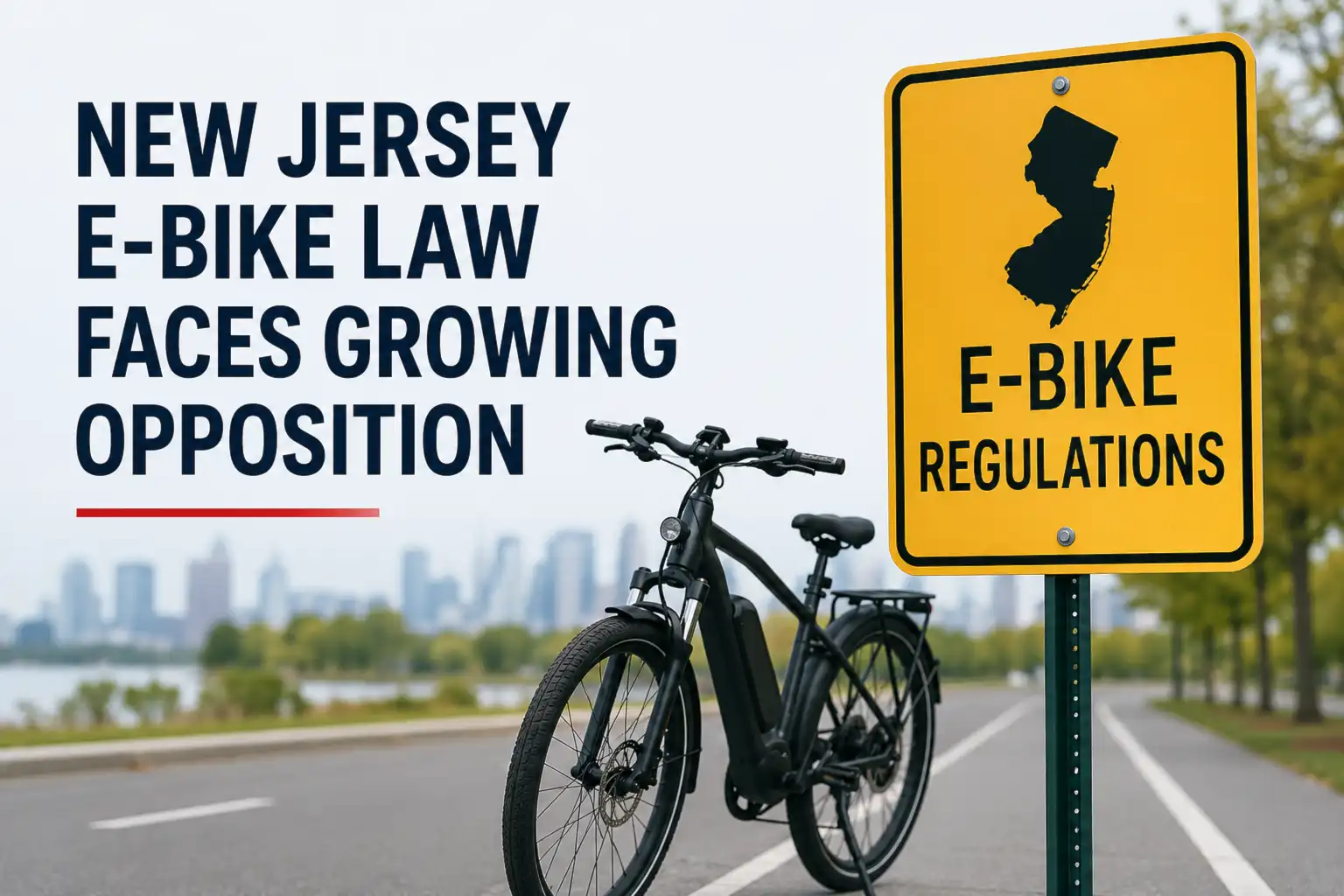
A controversial New Jersey e-bike law is facing increasing pushback as riders, transportation advocates, bike organizations, and commuters raise concerns about how the changes could affect everyday e-bike use across the state.
Supporters say the law addresses growing safety concerns and confusion around higher-powered electric vehicles. Critics argue the law may place new barriers on people who rely on e-bikes for commuting, transportation, and recreation.
The debate has quickly become one of the biggest e-bike policy stories in the country and could influence how other states approach future legislation.
What You Need to Know
New Jersey’s law now creates new requirements involving registration, licensing, age rules, and in some cases insurance for riders depending on classification. Opposition groups argue the law may make low-speed commuter e-bikes harder to use, while supporters believe stronger regulation is needed as safety concerns increase.
📌 New Jersey rider?
If you’re trying to understand exactly what applies to your bike:
→ Read our complete New Jersey E-Bike Laws Guide
→ Compare rules across the country in our State-by-State E-Bike Laws Guide
What Changed Under New Jersey’s Law?
The law creates major changes in how e-bikes are regulated within New Jersey.
Requirements include:
• Registration requirements
• Licensing requirements
• Age restrictions
• Helmet requirements
• New treatment of various e-bike categories
• Restrictions involving modifications and higher-powered vehicles
The New Jersey Motor Vehicle Commission has also published updated rider requirements and timelines as implementation continues.
For official state information:
New Jersey MVC E‑Bike Requirements
Why Opposition Is Growing
Much of the criticism centers on concerns that traditional low-speed commuter bikes are being treated too similarly to faster electric vehicles.
Transportation and cycling organizations argue many riders use e-bikes as:
• Primary transportation
• Car replacements
• Delivery vehicles
• Mobility tools
• Recreational bikes
Groups opposing the law say the requirements could create unintended burdens for:
• Lower-income riders
• Seniors
• Delivery workers
• Younger riders
• People without traditional driver’s licenses
Advocacy organizations have also argued that many public safety complaints involve modified high-speed bikes and e-motos rather than standard commuter e-bikes.
Critics Say High-Speed E-Motos and Traditional E-Bikes Are Different Problems
One recurring criticism is that modified bikes and electric motorcycles capable of significantly higher speeds may be driving many of the complaints that prompted legislation.
Opponents argue there is a meaningful difference between:
• A 20 mph pedal-assist commuter bike
• A modified throttle bike
• A high-powered electric motorcycle
Some groups believe regulations should focus more heavily on high-speed devices while preserving easier access for traditional low-speed bicycles.
Implementation Questions Still Remain
Some details surrounding implementation continue to evolve.
Questions raised include:
• Registration procedures
• Licensing procedures
• Insurance details
• Enforcement practices
• Transition timelines
State agencies continue updating guidance for riders.
⚠️ Sidewalk rules often differ from state riding rules.
Even if a bike is legal in your state, local cities can still create their own restrictions.
→ Check our guide: Can You Ride an E-Bike on Sidewalks by State?
Why Supporters Say the Law Is Necessary
Supporters point to several concerns:
• Increased complaints involving fast-moving electric vehicles
• Growth of modified e-bike usage
• Rising safety concerns involving inexperienced riders
• Increased traffic involving electric mobility devices
Officials say rapidly increasing use required updated oversight and clearer regulations.
My Take
I think this story highlights a challenge many states are now facing.
There is a real safety discussion happening around e-bikes. Some modified bikes and high-speed e-motos can absolutely create problems, especially when they are used on sidewalks or mixed-use paths.
But there is also a difference between a commuter using a Class 1 pedal-assist bike to get to work and a machine capable of motorcycle-type speeds.
The concern many riders seem to have is not necessarily safety itself. It is whether broad regulations end up affecting the people using e-bikes exactly as intended.
This is probably why so many people across the country are watching New Jersey right now. Other states may eventually use parts of this approach or decide to go in a completely different direction.
For more news on electric bikes click here

Kristina is not just an enthusiast but a true authority on electric bikes. Nestled in the coastal beauty of Virginia, Kristina has found the perfect backdrop for her passion for electric biking. As a dedicated wife and homeschooling mom, her life revolves around family, faith, and the thrill of adventure.
Originally hailing from Ohio, Kristina's journey with electric bikes began as a curiosity and quickly evolved into a deep expertise. Her blog is a testament to her love for electric biking, combining her fascination for eco-friendly transportation with her coastal lifestyle.
When she's not cruising the beach on her electric bike, you'll find Kristina indulging in her other loves: long walks along the shore, getting lost in a good book, and cherishing moments with her loved ones. With a heart as big as her love for animals, especially cats, Kristina brings a unique perspective to the electric bike world, grounded in her strong faith in God and her dedication to a sustainable lifestyle.
Through her blog, Kristina shares her extensive knowledge of electric bikes, offering valuable insights, tips, and recommendations to fellow enthusiasts. Whether you're a seasoned rider or a newcomer to the electric bike scene, Kristina's blog is your go-to source for all things electric biking, fueled by her passion, expertise, and the scenic beauty of coastal Virginia.