Best Hunting E-Bikes Under $2,000: 7 Affordable Picks Compared
Last Updated on October 17, 2026 by Kristina
📚 Research-based buying guide: I have not personally tested every bike in this guide. These recommendations are based on current manufacturer specifications, safety documentation, warranty and return policies, independent testing, service information, and available rider feedback.

Introduction
Prices and model listings checked October 15, 2026. Promotions, configurations and stock change. All listed base-bike prices were below $2,000 when researched; tax, accessories and optional batteries can add to the cost. Stock and shipping vary: Fiido’s Titan listing estimated a 6–8 week wait at the time of checking.
A hunting e-bike does not have to cost $4,000 or $5,000 to be useful. But there is a difference between riding a few miles to a deer stand on a maintained farm lane and trying to pull heavy cargo up a muddy mountain trail. Under $2,000, you can find capable fat-tire e-bikes for scouting, gear transport and access on routes where they are legal. The trick is buying for your actual route, not the biggest advertised wattage or range number.
For most hunters, I would look first at the Lectric XPeak 2.0 for its balanced controls and safety documentation. The Kingbull Hunter 2.0S is the low-cost option I’d compare closely, while the Velotric Nomad 2 stands out if a higher total weight rating is the priority. None should be assumed to be a heavy-game towing machine simply because it has fat tires.
Already comparing higher-priced purpose-built bikes? See my broader guide to the best hunting e-bikes. If you mainly hunt whitetail, my deer-hunting e-bike comparison focuses more closely on that use.
⭐ Quick Picks: Best Hunting E-Bikes Under $2,000
Best Overall Value: Lectric XPeak 2.0
Check Price →
Best Budget Option: Kingbull Hunter 2.0S
Check Price →
Best for Rougher Trails: Puckipuppy Labrador Pro
Check Price →
Best for Cargo: Fiido Titan
Check Price →
Best Large-Battery Hardtail: Mokwheel Basalt 2.0
Check Price →
Best for Higher Total Loads: Velotric Nomad 2
Check Price →
Best Hunting/Everyday Crossover: Aventon Aventure 3
Check Price →
👉 Short on time?
See today’s e-bike deals and limited-time discounts, then compare top picks below.
Comparison Chart: Hunting E-Bikes Under $2,000
| Model & Best Use | Price Checked | Battery | Total Payload* | Best Fit |
|---|---|---|---|---|
| Lectric XPeak 2.0 Best overall value | $1,499 | 720Wh | 330 lb | Access roads, moderate trails and recreational riding |
| Kingbull Hunter 2.0S Best affordable option | $999 | 864Wh | 400 lb | Forest roads, farm tracks and budget hunting |
| Puckipuppy Labrador Pro Best for rougher trails | $1,599.99 | 960Wh | 400 lb | Rutted trails and full-suspension comfort |
| Fiido Titan Best for carrying gear | $1,649 | 696Wh | 440 lb combined 264 lb rider/saddle limit | Cargo transport and optional battery expansion |
| Mokwheel Basalt 2.0 Best large-battery hardtail | $1,699.99 | 48V × 19.6Ah About 941Wh nominal | 450 lb | Longer permitted access routes |
| Velotric Nomad 2 Best for higher total loads | $1,999 | 705.6Wh | 505 lb | Heavier riders, gear and frame-style choices |
| Aventon Aventure 3 Best hunting/everyday crossover | $1,999 | 733Wh | 400 lb | Versatile all-terrain riding and dealer support |
*Payload refers to the manufacturer’s total bike load limit, not rack capacity, trailer towing capacity, or safe game-hauling ability. Prices are for the base bike and may change. Battery figures are based on published manufacturer specifications.
*Payload means the manufacturer’s total bike load limit; it is not the same as rack capacity, trailer capacity or safe game-hauling ability. Prices are for the base bike, not packages. Battery watt-hours are nominal published figures.
🔎 Why You Can Trust This Guide
I compare official specifications, safety information, independent testing, support policies, and real-world rider feedback. Affiliate relationships do not determine which products I recommend or how they are ranked. You can read more about how Electric Bike Explorer reviews and ranks e-bikes.
1. Lectric XPeak 2.0: Best overall value for most hunters

Price checked October 15, 2026: $1,499 (U.S. manufacturer listing). Motor: 750W rear hub. Battery: 720Wh.
The XPeak 2.0 is the one I would start with for a hunter who also wants a dependable trail bike during the rest of the year. Its torque sensor makes the motor respond to how hard you pedal instead of simply kicking in when the cranks turn. That matters when picking through ruts at low speed or approaching a stand without a sudden surge of assistance. Lectric also lists a quieter Stealth M24 motor, 26-by-4-inch tires, an RST Renegade fork and UL 2849 certification.
What stands out
- Torque-sensor pedal assistance and a thumb throttle
- 26 × 4-inch tires and front suspension
- 330-lb total payload; 60-lb rear rack limit
What I would watch
A 720Wh battery is reasonable for shorter approaches, not a promise of long backcountry range. The maximum rear-rack load is 60 lb, and Lectric does not make this a purpose-built game-retrieval rig. At about 75 lb with the battery installed, transport still requires planning.
Read EBE’s Lectric XPeak 2.0 review
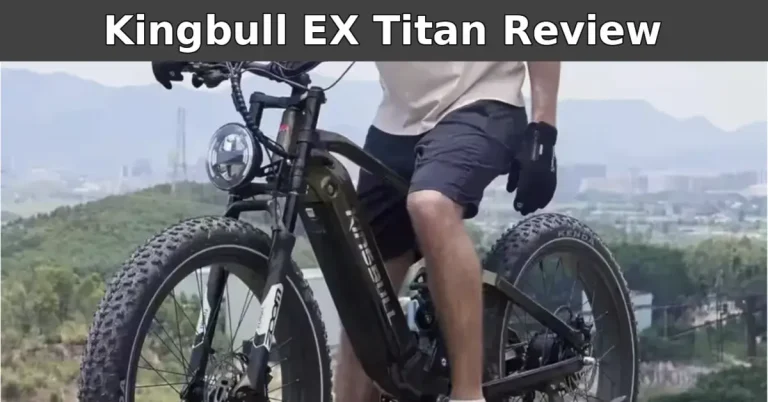
2. Kingbull Hunter 2.0S: Best affordable hunting e-bike

Price checked October 15, 2026: $999 (U.S. manufacturer listing). Motor: 750W rear hub. Battery: 864Wh.
The Kingbull Hunter 2.0S gets the basics right for considerably less money: a large 864Wh battery, fat tires, hydraulic disc brakes, a 750W hub motor and a substantial published load rating. It is a sensible place to begin if your normal ride is a maintained dirt road or a moderately uneven route to private hunting property. The price also leaves money for a helmet, lights, repair kit and a properly compatible cargo setup.
What stands out
- 864Wh battery; manufacturer-claimed range up to 80 miles
- 26 × 4-inch tires and front suspension
- 400-lb total payload; published 150-lb rear rack limit
What I would watch
Its cadence sensor is less nuanced than the torque sensors on several other picks. It is also a heavy bike at a manufacturer-listed 77 lb, and the brand’s up-to-80-mile claim is based on favorable conditions. The 150-lb rear-rack rating is a manufacturer figure—not proof that a given stand, load or trailer is safe without checking fit and handling.
3. Puckipuppy Labrador Pro: Best for bumpier trails and ride comfort

Price checked October 15, 2026: $1,599.99 (U.S. manufacturer listing). Motor: 750W rear hub. Battery: 960Wh.
There is a noticeable difference between riding a smooth gravel lane and bouncing along a washed-out access trail. That is where the Labrador Pro’s full-suspension layout becomes interesting. Puckipuppy pairs it with a 48V 20Ah battery, hydraulic disc brakes, an eight-speed drivetrain and torque-sensing assistance. A suspension bike can help keep the ride more comfortable over repeated small bumps, particularly on longer trips.
What stands out
- Full suspension and 26-inch fat tires
- 48V × 20Ah battery (960Wh nominal)
- 85.7-lb manufacturer-listed bike weight
What I would watch
At a listed 85.7 lb, this is not a bike to casually lift onto a car rack, and full suspension means additional pivots and maintenance. More suspension does not automatically mean permission to ride technical singletrack or approval to tow a game trailer. Confirm the exact rack, payload and attachment limits before loading it.
Read EBE’s Puckipuppy Labrador Pro review:
4. Fiido Titan: Best for carrying gear without spending $2,000
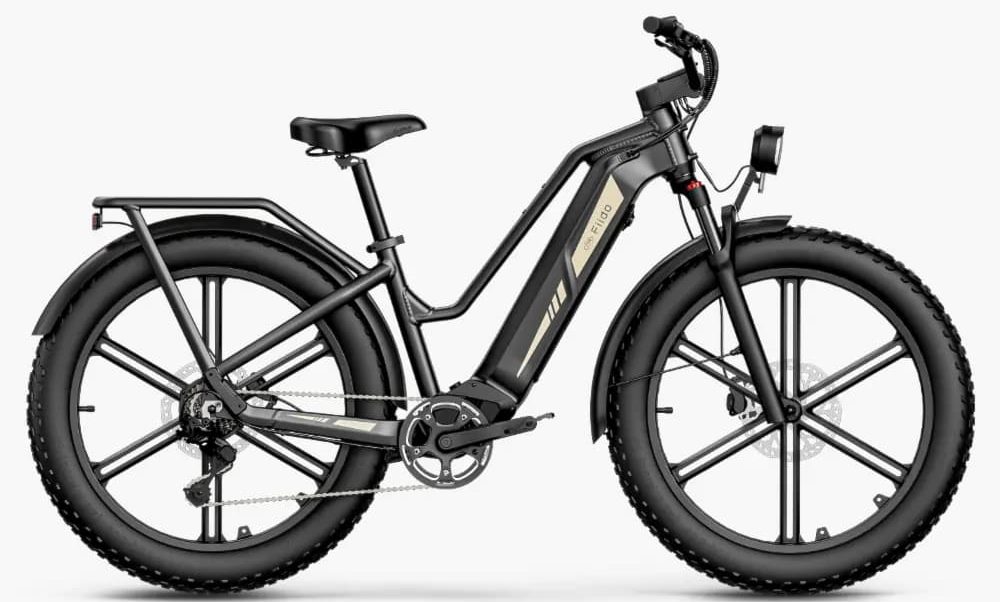
Price checked October 15, 2026: $1,649 (U.S. manufacturer listing). Motor: 750W rear hub (U.S. listing). Battery: 696Wh.
I like the Titan as a practical alternative to a camouflage-focused hunting bike. Fiido lists a 440-lb combined maximum load (264 lb at the saddle and 176 lb on the rear rack), torque-sensing pedal assist, four-piston hydraulic brakes and an integrated wheel-hub design. Its frame and optional additional battery arrangement emphasize utility and touring. If you’re hauling layers, food, a tool kit and supplies along a legal access route, thoughtful cargo capacity can matter more than a dramatic peak-wattage number.
What stands out
- 440-lb combined load (264-lb rider/saddle; 176-lb rack)
- 696Wh base battery; optional expansion costs extra
- Torque sensor and four-piston hydraulic brakes
What I would watch
The standard bike has a 696Wh battery. The company’s exceptionally long range claims refer to expanded battery configurations, not the base bike. Fiido’s listing also currently estimates 6–8 weeks for shipping, which could be inconvenient during hunting season. Extra batteries, specialized racks and accessories may push the total setup over $2,000. The Titan is a cargo-oriented fat-tire e-bike, not a substitute for a properly rated ATV or game cart.
5. Mokwheel Basalt 2.0: Best large-battery hardtail

Price checked October 15, 2026: $1,699.99 (U.S. manufacturer listing). Motor: 750W rear hub. Battery: 48V × 19.6Ah (about 941Wh nominal).
A hunter who rides several miles in and then several miles out needs to think about energy use, not just top speed. The Basalt 2.0 stands out with a manufacturer-listed 48V × 19.6Ah battery (about 941Wh nominal, though some manufacturer page text states 924.9Wh), torque/cadence sensing, hydraulic disc brakes and 26-by-4-inch tires. That battery capacity is a useful starting advantage over bikes with 700Wh-class packs if terrain, load, speed and assistance are otherwise comparable.
What stands out
- 48V × 19.6Ah (about 941Wh nominal) battery capacity
- 450-lb manufacturer-listed payload rating
- Torque/cadence sensing and fat tires
What I would watch
A larger battery does not guarantee a specific distance through mud or uphill. Mokwheel also advertises power-station accessories, but those are not automatically included with the basic bike and should not be confused with the standard purchase price. This is a substantial fat-tire bike, so confirm vehicle rack capacity before ordering.
Read EBE’s Mokwheel Basalt ST 2.0 Review
6. Velotric Nomad 2: Best for a heavier rider and substantial gear

Price checked October 15, 2026: $1,999 (U.S. manufacturer listing). Motor: 750W rear hub. Battery: 705.6Wh.
The Nomad 2 offers something many bargain hunting bikes do not: a very high 505-lb manufacturer-rated total bike load and a choice of step-through or high-step frames in different sizes. The torque/cadence sensor system, 100mm front fork, hydraulic brakes and 26-by-4-inch tires make it versatile for recreational riding and hauling moderate amounts of field equipment. The 66-lb rear-rack limit must be considered separately from the total payload.
What stands out
- 505-lb total load; 66-lb rear rack limit
- 705.6Wh battery with torque/cadence sensing
- Step-through and high-step choices
What I would watch
At $1,999, almost the whole budget goes toward the bike before accessories or applicable taxes. The 505-lb overall figure is not a trailer towing rating. Don’t confuse this Nomad 2 with the much more expensive Nomad 2X: the two have different suspension, rack capacities and specifications.
Read EBE’s Velotric Nomad 2 review
7. Aventon Aventure 3: Best hunting and everyday crossover

Price checked October 15, 2026: $1,999 (U.S. manufacturer listing). Motor: 750W rear hub. Battery: 733Wh.
Not everyone wants a bike that is used only during hunting season. The Aventure 3 is an appealing crossover for someone who rides around town, heads down gravel roads and occasionally uses an allowed hunting access route. It offers fat tires, torque-responsive assistance, a 733Wh battery, a 400-lb published total weight limit and software features such as GPS-related security functions. Aventon also advertises a broad dealer network for test rides and support.
What stands out
- 733Wh battery and 400-lb total weight limit
- 26 × 4-inch all-terrain tires
- Multiple frame styles and an advertised dealer network
What I would watch
This is not a dedicated hunting hauler, and its 76-lb manufacturer-listed weight is still substantial. The base Class 2 configuration and any permitted changes to assistance or throttle use need to be checked against local trail rules. At the $1,999 boundary, equipment, tax and transport accessories will cost extra.
Read EBE’s Aventon Aventure 3 review
What Does Your $2,000 Budget Leave for Gear?
The purchase price is only the starting point. The amounts below subtract the listed base-bike price from $2,000; they are not estimates of the final out-the-door cost. Taxes, shipping, safety equipment, racks and accessories can use up the remainder. Prices change, so recheck before ordering.
| Bike | Listed price | Remaining before tax and gear |
|---|---|---|
| Kingbull Hunter 2.0S | $999 | $1,001 |
| Lectric XPeak 2.0 | $1,499 | $501 |
| Puckipuppy Labrador Pro | $1,599.99 | $400.01 |
| Fiido Titan | $1,649 | $351 |
| Mokwheel Basalt 2.0 | $1,699.99 | $300.01 |
| Velotric Nomad 2 | $1,999 | $1 |
| Aventon Aventure 3 | $1,999 | $1 |
If $2,000 is your total spending limit rather than just the bike budget, the lowest-priced bikes leave more room for essentials. A hunting ride also needs a route plan, a suitable helmet, lights for low-light travel and a way to repair flats. Don’t sacrifice those just to buy a more expensive motor.
Which One Would I Buy for Different Hunts?
- Short whitetail trips on maintained farm lanes: I would compare the Kingbull Hunter 2.0S and Lectric XPeak 2.0 first. Spending the full $2,000 might not solve a problem you actually have.
- Rockier or frequently rutted roads: The Puckipuppy Labrador Pro is worth considering for its full suspension, provided the route is within the bike’s abilities and legal access rules.
- Gear-intensive day trips: Look closely at the Fiido Titan or Velotric Nomad 2, but make a separate list of what will actually be mounted on the rack and where it will sit.
- Longer legal access rides: The Mokwheel Basalt 2.0’s large base battery is a useful reason to compare it with lower-capacity models. Always plan an energy reserve.
- One bike for recreation and hunting season: The Aventon Aventure 3 or Lectric XPeak 2.0 would be my starting points.
Essential Hunting E-Bike Accessories
Having the right accessories can make your hunting trips easier, safer, and more convenient. Whether you’re carrying equipment to your stand, navigating remote trails, or preparing for an unexpected flat tire, these are some useful additions to consider.
1. Burley Coho XC – Off-Road Cargo Trailer
A cargo trailer can make transporting bulky hunting equipment much easier without overloading your bike’s rear rack. The Burley Coho XC features a narrow, single-wheel design that’s useful on tighter trails.
Best for: Carrying hunting gear, supplies, and equipment.
Keep in mind: Maximum cargo capacity is 70 lb. Check bike, axle, and hitch compatibility before purchasing.
Check Price – Burley Coho XC →
2. ORTLIEB Back-Roller Plus – Waterproof Pannier Bags
Keeping your hunting equipment dry and organized makes a big difference, especially when you’re traveling through wooded trails or dealing with unpredictable weather.
The ORTLIEB Back-Roller Plus panniers offer 40 liters of combined storage, making them a practical choice for carrying extra clothing, gloves, food, first-aid supplies, and other hunting essentials.
They’re made with abrasion-resistant Cordura fabric and feature waterproof roll-top closures, reflective details, and ORTLIEB’s Quick-Lock2.1 mounting system for easy attachment and removal.
Best for: Carrying hunting supplies while protecting your gear from rain, mud, and trail debris.
Keep in mind: Each pannier supports up to approximately 20 lb, but your e-bike’s rack may have a lower weight limit. Check rack compatibility before purchasing, as some e-bike racks require additional mounting hooks.
Check Price – ORTLIEB Back-Roller Plus →
3. Garmin eTrex Solar – Handheld GPS
When hunting in remote areas, cellular service isn’t always reliable. A dedicated GPS provides another way to navigate trails and locate your way back to camp or your vehicle.
Best for: Navigation and backup route tracking.
Keep in mind: Download necessary maps before heading out and don’t depend entirely on solar charging under heavy tree cover.
Check Price – Garmin eTrex Solar →
4. Park Tool TR-1 – Emergency Tire Repair Kit
Getting a flat tire several miles from your vehicle is the last thing you want. This compact kit includes tire levers and patches to help with basic puncture repairs.
Best for: Handling common tire punctures away from home.
Keep in mind: Also carry a compatible spare tube, portable pump, and necessary tools.
Check Price – Park Tool TR-1 →
5. Young Electric Heavy-Duty E-Bike Hitch Rack
Hunting e-bikes can be surprisingly heavy, especially with their large batteries and fat tires. A properly rated hitch rack makes transportation easier, particularly if you choose a model with a loading ramp.
Best for: Transporting heavy fat-tire hunting e-bikes.
Keep in mind: Verify your bike’s weight, wheelbase, tire width, and your vehicle’s hitch capacity before purchasing.
Check Price – Young Electric Hitch Rack →
Looking for more hunting gear?
From trailers and storage solutions to lighting, navigation equipment, and other useful upgrades, explore my complete guide to Best Hunting E-Bike Accessories →.
Always check accessory compatibility, weight limits, and local trail regulations before heading out.
Five Things I Would Check Before Spending the Money
1. Is the route actually open to your e-bike?
An e-bike that fits your budget can still be unusable on the hunting trail you had in mind. U.S. Forest Service, BLM, refuge and state wildlife-area rules vary by route and season. Some trails open to ordinary bicycles do not allow electric assistance. Class settings, motor rating and modifications can also matter. Check our guide to hunting with e-bikes on public land and verify your exact route and any game-retrieval restrictions with the land manager before riding.
2. Can you return with battery to spare?
Don’t buy based only on the advertised “up to 80 miles.” Sand, soft soil, high assistance, hills, cold weather and heavy cargo can cut the number significantly. A 900Wh battery offers more stored energy than a 700Wh one, but usable distance still depends on efficiency and conditions. For remote hunts, I would plan a substantial reserve and test the route before relying on it; this hunting e-bike range guide walks through the calculation.
3. What is the total load, and what goes on the rack?
Rider plus clothing plus backpack plus gear all count toward the total bike rating. Rack limits are separate. For example, a bike rated for a 500-lb total load does not necessarily support hundreds of pounds on its rack. Towing, axle/hitch compatibility, tire loading, descents and braking are separate engineering questions. Never assume you can tow a loaded game trailer unless the manufacturer confirms the bike-and-hitch combination is appropriate. See the hunting accessories and trailer guide for equipment planning.
4. Will you be able to get it home?
Many hunting-oriented bikes weigh 75–90 lb or more. That’s a lot to lift into a pickup, up a ramp or onto a receiver rack after a tiring day. Check your vehicle’s hitch tongue-weight limits, rack’s per-bike rating, wheelbase, tire width and the weight of the bike with any accessories. Removing the battery may help, but it does not eliminate transport limits.
5. Who will service it if something breaks?
A flat is inconvenient near home; it is much worse several miles from the truck. Look for obtainable replacement batteries, spokes or wheels, brake parts, derailleur components and responsive warranty service. I would rather have a slightly less flashy bike with clear documentation than a mystery-brand model with a large wattage sticker and no parts support.
What Do You Give Up Under $2,000?
Mostly specialized drivetrain and hauling features. Many bikes in this price range use a rear hub motor instead of a geared mid-drive; that can be perfectly reasonable on moderate access routes, but sustained steep loaded climbing is a different challenge. You’ll also find fewer purpose-engineered trailer systems, less predictable dealer support, and higher bike weights than some premium options. A premium hunting bike is not automatically worth the extra money, though. Pay for the features your terrain and loads genuinely require.
Frequently Asked Questions
Is a 750W e-bike enough for hunting?
For many hunters using relatively smooth legal access roads, yes. A 750W nominal hub motor can provide useful assistance. On steep terrain with heavy cargo, gearing, motor placement, battery output, traction and rider input matter at least as much as the wattage label. Neither 750W nor a high peak-watt figure proves a bike can safely tow game.
Are fat tires better for hunting?
Four-inch tires can help with traction and comfort on loose gravel or uneven ground, particularly at manufacturer-approved pressures. They also add rolling resistance, weight and bulk. Fat tires are helpful, not a guarantee of grip in slick clay or deep mud.
Can an e-bike haul a deer out of the woods?
Sometimes a properly equipped bike and compatible trailer can help move gear or game along a permitted route. But a general payload rating is not a towing approval, and land managers may prohibit off-route motorized retrieval. Get a clear written answer about your specific trail, season and transport method before planning around it.
Are hunting e-bikes quieter than ATVs?
Usually they avoid the noise of a gasoline engine, but tire noise, gears, brakes, branches and cargo still make sound. A quieter bike does not guarantee wildlife will not notice you, and quiet operation does not create an exception to access restrictions.
Should I buy a spare battery instead of a more expensive bike?
For long-but-moderate routes, an approved spare battery may be more useful than paying for extra motor power. First confirm the exact battery model is compatible, available through the manufacturer, safely transported and within your total carrying capacity. Be cautious about aftermarket batteries from unverified sources.
My Take
If I were buying one hunting-capable e-bike under $2,000, I would start with the Lectric XPeak 2.0 because the torque sensor, published safety certifications and all-around design make it a sensible middle ground. If I only needed to reach a stand on a short maintained road, I would think seriously about spending less on the Kingbull Hunter 2.0S and keeping money for safety and transport gear. If the main concern were a heavier rider or more total gear, I would compare the Velotric Nomad 2 against the exact load I need to carry.
The best value is not necessarily the bike with the biggest motor, biggest claimed mileage number or most hunting-themed photos. It’s the one that gets you to your destination and back, is legal on your route, fits your body and your equipment, and can be serviced afterward.
Read next: Best Hunting E-Bikes | Best E-Bikes for Deer Hunting | How Much Hunting E-Bike Range Do You Need? | Hunting Trailers and Accessories
Disclosure: As an Amazon Associate, I earn from qualifying purchases. This comes at no extra cost to you and helps support the content on this site.

Kristina is not just an enthusiast but a true authority on electric bikes. Nestled in the coastal beauty of Virginia, Kristina has found the perfect backdrop for her passion for electric biking. As a dedicated wife and homeschooling mom, her life revolves around family, faith, and the thrill of adventure.
Originally hailing from Ohio, Kristina's journey with electric bikes began as a curiosity and quickly evolved into a deep expertise. Her blog is a testament to her love for electric biking, combining her fascination for eco-friendly transportation with her coastal lifestyle.
When she's not cruising the beach on her electric bike, you'll find Kristina indulging in her other loves: long walks along the shore, getting lost in a good book, and cherishing moments with her loved ones. With a heart as big as her love for animals, especially cats, Kristina brings a unique perspective to the electric bike world, grounded in her strong faith in God and her dedication to a sustainable lifestyle.
Through her blog, Kristina shares her extensive knowledge of electric bikes, offering valuable insights, tips, and recommendations to fellow enthusiasts. Whether you're a seasoned rider or a newcomer to the electric bike scene, Kristina's blog is your go-to source for all things electric biking, fueled by her passion, expertise, and the scenic beauty of coastal Virginia.