Himiway D5 2.0 Review: Full-Suspension Comfort With a 92-Lb Tradeoff
Last Updated on August 24, 2026 by Kristina
📚 Research-Based Review – Built from independent sources, specs, and user reports
Introduction
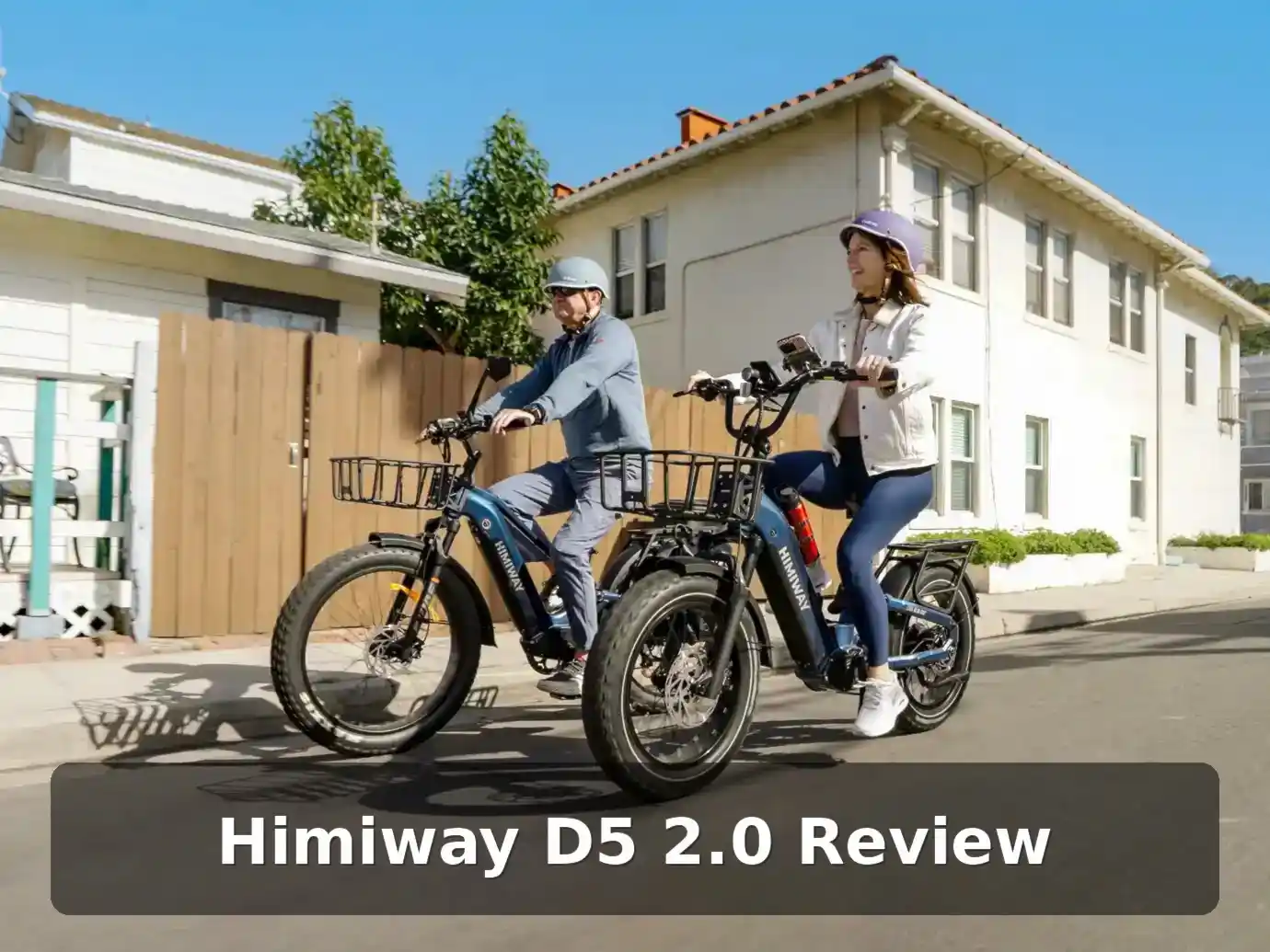
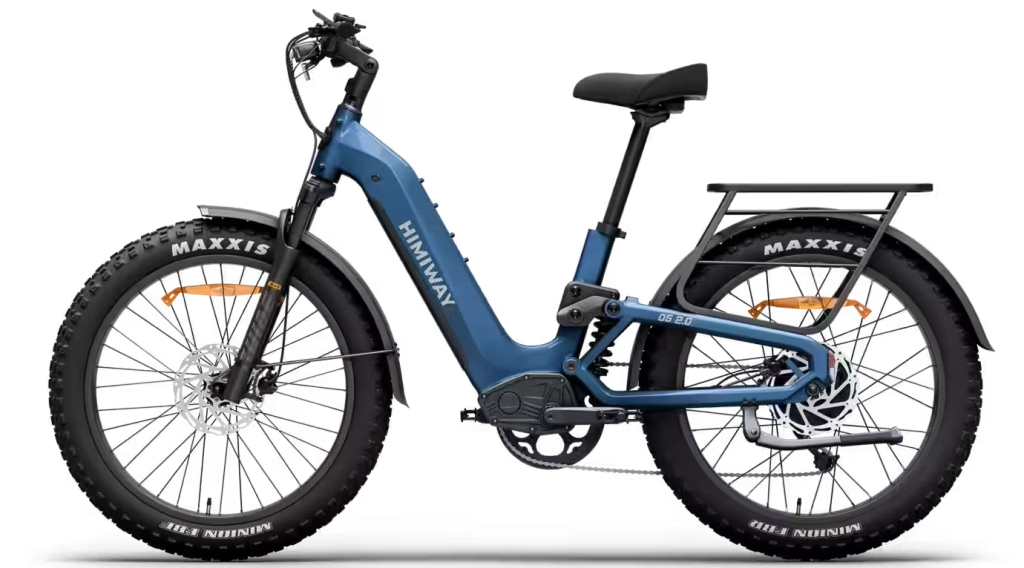
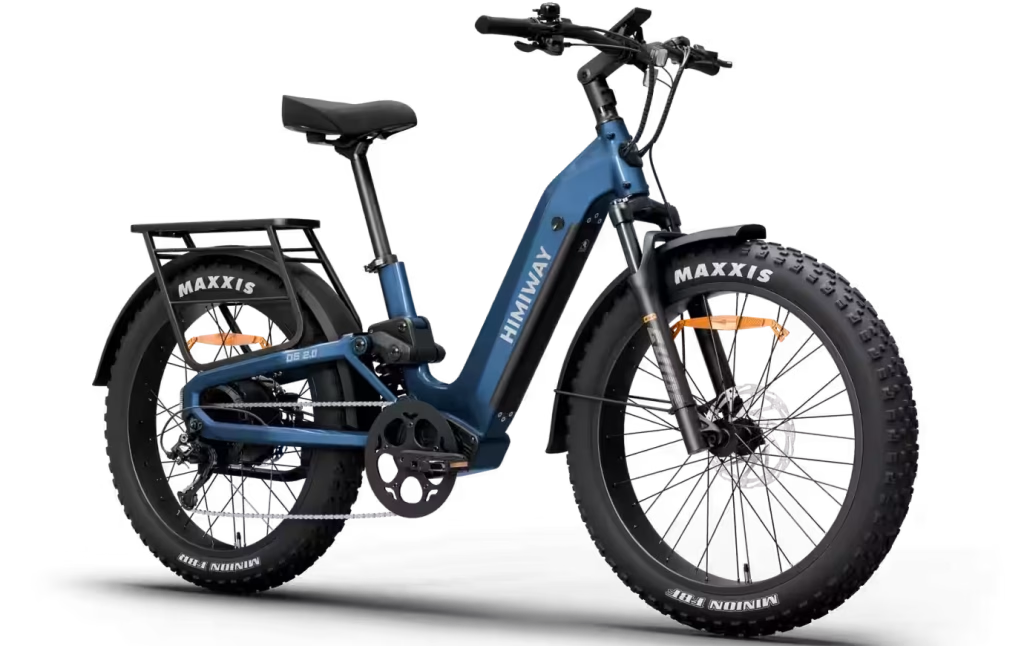
The Himiway D5 2.0 takes the big, comfort-focused fat-tire formula of the original D5 Zebra and adds some meaningful upgrades. The biggest changes are full suspension, switchable torque and cadence sensing, more ride customization, and a setup aimed at riders who want comfort on pavement, gravel, and recreational trails.
If you are familiar with the earlier model, my original Himiway D5 Zebra review explains how the previous generation was equipped. You can also compare the D5 2.0 with other large all-terrain options in my best fat-tire electric bikes guide.
As of August 19, 2026, Himiway lists the 26-inch D5 2.0 at $1,999. The current offer shows a 15Ah + 15Ah battery configuration, effectively including a second 15Ah battery with the bike. Prices, promotions, and availability can change, so confirm the package before ordering.
Quick Verdict
Overall Rating: 8.6 out of 10 – Very Good
Best for: Comfort-focused riders, heavier riders, recreational trail riders, campers, RV travelers, and anyone who wants a substantial fat-tire e-bike with a 400-lb total payload rating.
Strongest reason to buy: Full suspension combined with the ability to switch between torque-sensor and cadence-sensor riding.
Biggest tradeoff: At a listed 92 lb, this is an extremely heavy e-bike.
Review type: Research-Based Review
Evidence confidence: Moderate
Price checked: August 19, 2026
Independent testing backs up several of the bike’s biggest strengths. Ebike Escape reported a very quiet motor, strong hill performance, and clearly different riding characteristics between torque and cadence modes. A separate August 2026 Sport Fishing test put roughly 90 miles on a D5 2.0 while hauling fishing equipment and reported approximately 32-35 miles using the throttle and nearly 58 miles using pedal assist levels 2 and 3.
🔎 Why You Can Trust This Review
This is a research-based review. I have not personally tested this ebike. I reviewed the official specifications, manual, warranty, return policy, certification documents, and independent performance tests.
I clearly separate manufacturer claims from reported test results and note any specifications I could not verify. Affiliate relationships do not influence the rating or conclusion.
Learn more about how I research, review, and score electric bikes.
Who the Himiway D5 2.0 Is Good For – and Who Should Skip It
The D5 2.0 makes the most sense for someone who values comfort, stability, and carrying capacity more than low weight.
I would put it high on the list for:
- Larger or heavier riders who need the claimed 400-lb total payload capacity
- Riders dealing with broken pavement, gravel roads, and moderate recreational trails
- Campers and RV travelers who want one bike for pavement and light off-road use
- Riders who prefer a plush, substantial fat-tire bike
- People who want to choose between torque-sensor and cadence-sensor assistance
- Riders who want a rear rack, fenders, lighting, and fat tires already included
- Anyone who regularly carries gear and values a stable, planted ride
I would skip it if you regularly need to lift your e-bike, carry it upstairs, load it into a vehicle by yourself, or use a bike rack with a modest weight limit. The 92-lb weight is one of the most important things to understand before buying this bike.
I would also consider a lighter alternative if almost all of your riding is on smooth city pavement. Full suspension and 4-inch tires can improve comfort, but they also add weight and complexity that some commuters do not need.
Himiway D5 2.0 Specifications
| Specification | Himiway D5 2.0 |
|---|---|
| Price checked | $1,999 on August 19, 2026 |
| Motor | 48V 750W geared rear hub |
| Claimed torque | 90 Nm |
| Battery | 48V 15Ah – approximately 720Wh |
| Battery cells | Samsung/LG 21700 |
| Charger | 48V 3A |
| Claimed charging time | About 5.5-6 hours |
| Claimed throttle range | Up to 40 miles |
| Claimed pedal-assist range | Up to 70 miles on the current technical specifications |
| Reported range testing | About 32-35 miles throttle and nearly 58 miles using PAS 2-3 in one loaded independent test |
| Default top speed | 20 mph |
| Adjustable speed range | 4-28 mph |
| Class settings | Class 1, 2, and 3 settings listed by Himiway |
| Sensor | Switchable torque/cadence |
| Pedal assist | Auto assist plus 5 PAS levels |
| Throttle | Thumb throttle |
| Drivetrain | Current Himiway specification lists Shimano 8-speed |
| Brakes | Tektro hydraulic disc |
| Brake rotors | Current specification lists 203mm front / 180mm rear |
| Front suspension | RST hydraulic fork, 100mm travel |
| Rear suspension | 130mm rear-wheel travel |
| Tires | Current specification lists Maxxis Minion FBF/FBR 26 x 4.0, tubeless-ready |
| Bike weight | 92 lb |
| Total payload | 400 lb |
| Rear-rack capacity | Conflicting Himiway figures: 120 lb in the technical specifications and 60 lb in the product FAQ |
| Advertised rider height | 5 ft. 1 in. to 6 ft. 5 in. |
| Frame | 26-inch step-over; separate D5 2.0 ST step-through model available |
| Step-over colors | Space Grey, Midnight Blue, Olive Green |
| Front light | 120-lux integrated LED |
| Rear lighting | Rear light with braking indicator and turn-signal functions |
| Fenders | Front and rear included |
| Rear rack | MIK HD-compatible |
| Water resistance | Himiway lists IPX5 for the bike and IPX6 for the battery |
| Certification | Himiway currently states UL 2271 / UL 2849 certification in D5 2.0 materials; see certification discussion below |
| Warranty | 2-year manufacturer warranty under Himiway’s current warranty policy |
| Returns | 15-day standard return window with conditions and possible shipping/restocking charges |
| Financing | Affirm, PayPal Credit, and Klarna currently listed |
The rear-rack rating deserves special attention. Himiway’s current technical specifications list a 120-lb rear-rack capacity, but the FAQ on that same product page says the rack supports 60 lb. Because those figures conflict, I would confirm the limit directly with Himiway before carrying a heavy load, child seat, or other substantial cargo.
There is also a component difference between Himiway’s current production specifications and the bike described in Sport Fishing’s August 2026 test. That test reported Kenda tires, a Shimano 7-speed drivetrain, and 180mm brake rotors, while Himiway currently lists Maxxis tires, an 8-speed Shimano drivetrain, and 203mm front/180mm rear rotors. Himiway states that it may substitute components when advertised components are unavailable, so I use the current Himiway specifications for the component chart and the Sport Fishing article primarily for its real-world riding and range observations.
✅ Pros
- True front and rear suspension
- Switchable torque and cadence sensors
- 750W motor with a claimed 90 Nm of torque
- Independent testing supports strong hill-climbing performance
- Very quiet motor in reported testing
- 400-lb total payload rating
- Maxxis Minion 26 x 4-inch tires on the current specification sheet
- Hydraulic disc brakes
- 203mm front brake rotor on the current specification sheet
- Adjustable Class 1, 2, and 3 settings
- Comfort-focused upright setup
- Integrated rack, fenders, and lighting
- MIK HD-compatible rear rack
- Step-over and step-through versions available
- Useful real-world range results from independent testing
- Current Himiway material states UL 2271 / UL 2849 certification
❌ Cons
- 92-lb bike weight makes lifting and transportation difficult
- Advertised rider-height range may not provide ideal leg extension for every taller rider
- 720Wh standard battery is not unusually large for a bike this heavy
- Advanced display settings may feel complicated to riders who want a simple interface
- No USB charging port noted in Ebike Escape’s testing
- Himiway currently publishes conflicting 60-lb and 120-lb rear-rack limits
- Recent independent-test component descriptions do not perfectly match the current Himiway specification sheet
- Warranty replacement parts may still involve shipping or installation costs
- Full suspension and 4-inch tires add weight that pavement-only riders may not need
What Makes the D5 2.0 Different?
The feature that interests me most is not simply the 750W motor. Plenty of fat-tire e-bikes use a 750W rear hub motor.
The more unusual feature is the switchable torque and cadence sensing.
A torque sensor responds to how hard you push on the pedals. It generally gives pedal assist a more natural feel because assistance increases with rider effort.
A cadence sensor mainly detects whether the pedals are turning. It can provide stronger assistance without requiring the rider to push as hard.
The D5 2.0 lets you switch between the two systems through its controls rather than forcing you to choose one riding style when you buy the bike.
That flexibility could be genuinely useful. A rider might prefer torque mode for exercise and precise control but switch to cadence mode when tired or when trying to reduce physical effort on a long climb.
In Ebike Escape’s D5 2.0 testing, torque mode required more rider input and felt more bicycle-like, while cadence mode provided easier acceleration and made climbing with less physical effort possible.
Ride Quality and Comfort
Comfort looks like one of the D5 2.0’s strongest areas.
The front suspension offers 100mm of travel, while Himiway lists 130mm of rear-wheel travel. Combine that with 26 x 4-inch fat tires, a wide memory-foam saddle, and an adjustable stem, and the bike is clearly designed to reduce vibration and impacts rather than deliver the light, responsive feel of a conventional commuter.
Ebike Escape described the bike as substantial and planted and found the suspension particularly useful on trails and fire roads. The bike’s weight also contributes to that planted feeling once it is moving.
The same weight works against you when maneuvering the bike off the saddle, walking it through tight spaces, or loading it for transportation.
Fit deserves attention too. Himiway advertises the 26-inch D5 2.0 for riders from approximately 5 ft. 1 in. to 6 ft. 5 in., but Ebike Escape’s 6-foot tester reported that the supplied seatpost did not allow ideal leg extension. Taller riders should check actual saddle-height measurements and their inseam rather than relying on the advertised height range alone.
Motor and Performance
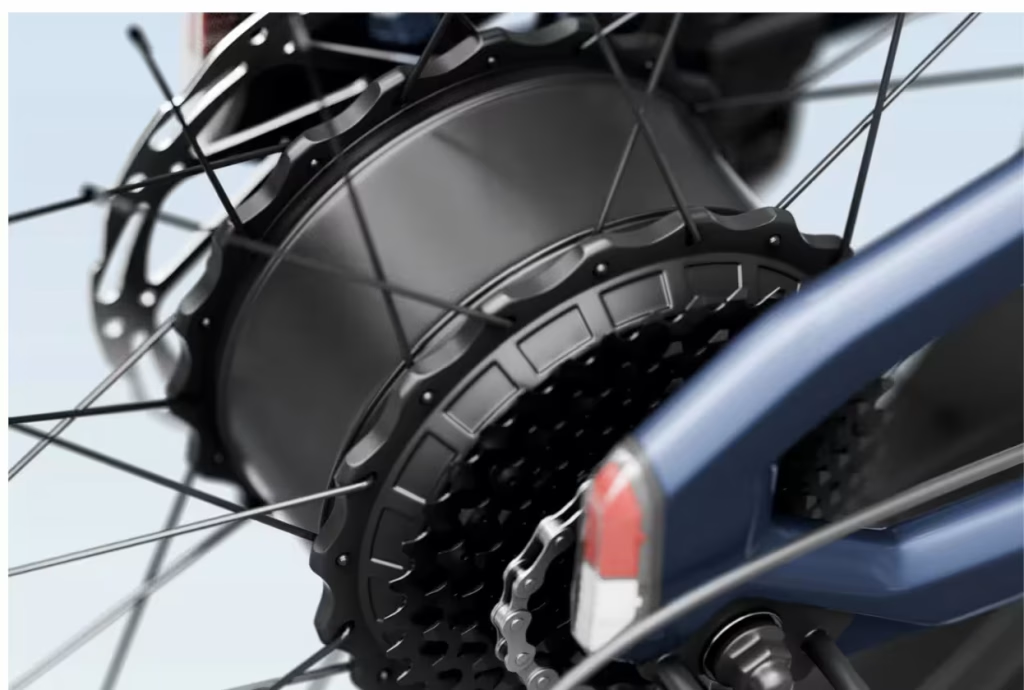
The D5 2.0 uses a 750W geared rear-hub motor with a manufacturer-listed 90 Nm of torque.
The bike ships with a 20 mph default top speed. Himiway lists an adjustable speed range from 4 to 28 mph and Class 1, 2, and 3 settings. The legal setting depends on where and how you ride, so check the differences between Class 1, Class 2, and Class 3 e-bikes and your local rules before changing the factory settings.
Independent hill testing is encouraging. Ebike Escape successfully climbed its steep test hill using the throttle alone, with speed dropping to approximately 10 mph at the slowest point. Lower assist settings in torque mode required considerably more rider effort, while cadence mode in the highest assist setting let the motor handle more of the workload.
The motor was also described as exceptionally quiet during that test.
I would still consider the D5 2.0 a recreational all-terrain e-bike rather than a substitute for a purpose-built electric mountain bike on technical singletrack.
Display, Controls, and Tech
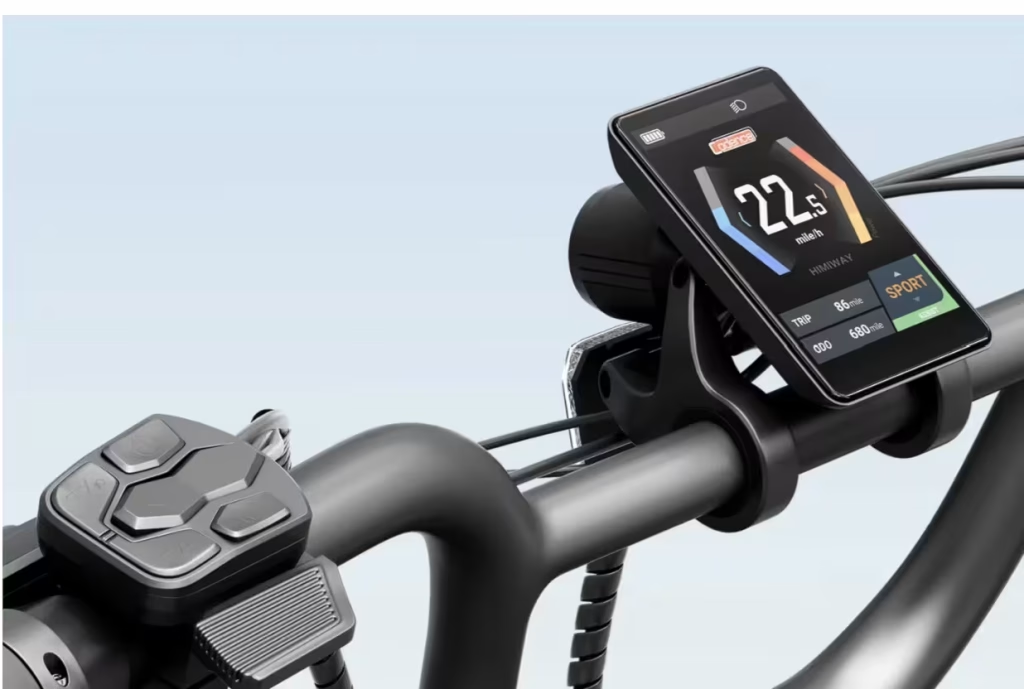
The Himiway D5 2.0 has a 3.5-inch full-color display with high-brightness output, Bluetooth connectivity, and an adjustable viewing angle. The screen is designed to remain easy to read while giving you the important riding information without requiring you to dig through menus constantly.
The display shows information such as:
- Current speed
- Battery level
- Pedal-assist level
- Trip distance
- Odometer
- Motor power output
- Headlight status
- Turn-signal status
- System error codes
The control pad sits within thumb reach on the handlebar, so you can change assistance without taking your hand off the grip.
One of the D5 2.0’s more useful technology features is its Smart Auto Mode. In Auto mode, the bike adjusts motor assistance based on riding conditions rather than requiring you to continually move between assist levels. Riders who prefer more direct control can switch back to manual operation and choose from 5 pedal-assist levels.
The controls also let you switch between the bike’s torque sensor and cadence sensor. Himiway says the change can be made while riding by holding the M button, so you do not have to stop and work through a complicated menu every time you want a different pedal-assist feel.
There is also considerably more adjustment available in the settings menu than you might expect on a fat-tire e-bike. Himiway allows riders to adjust parameters including assist power, speed limits, assist response, and the amount of assistance provided at individual levels. Once configured, the system can retain those settings.
That customization is a real advantage for riders who want to soften the bike’s power delivery or tune each assist level to their preference. The downside is that riders who prefer a very simple display may need some time to learn the available settings.
Himiway lists Bluetooth capability for the D5 2.0 display. However, I did not find clear enough current documentation describing a dedicated D5 2.0 smartphone-app experience or specific app-controlled functions, so I would not buy this bike specifically for app connectivity unless Himiway confirms those features for the exact version being sold.
Battery, Charging, and Real-World Range
The standard battery is 48V 15Ah, or approximately 720Wh.
Himiway’s current technical specifications claim up to 40 miles using the throttle and up to 70 miles using pedal assist. Those figures are manufacturer maximums, not guaranteed real-world range.
A recent Sport Fishing test provides a more useful point of comparison. The tester rode a D5 2.0 for approximately 90 miles over loose gravel, grass, mud, and canal roads while carrying fishing equipment.
Reported results were approximately:
- 32-35 miles using throttle only
- Nearly 58 miles using pedal assist levels 2 and 3
Those numbers apply only to that rider, load, terrain, bike configuration, and riding style, but they give buyers a practical comparison with Himiway’s maximum-range claims.
Himiway currently lists approximately 5.5-6 hours for a full charge with the included 3A charger.
As of August 19, 2026, the D5 2.0 product page also shows a 15Ah + 15Ah configuration as part of Himiway’s anniversary promotion. A second factory battery could substantially increase practical riding distance, but I would confirm that the extra battery is still included before ordering.
Brakes and Safety
A 92-lb e-bike with a total payload rating of 400 lb needs substantial braking hardware.
Himiway’s current specification lists Tektro hydraulic disc brakes with a 203mm front rotor and 180mm rear rotor, along with brake levers that cut motor power.
The bike also includes a 120-lux integrated headlight and rear lighting with brake-indicator and turn-signal functions.
What About UL Certification?
Himiway’s certification language has changed over time and is not perfectly consistent across its website.
Current Himiway D5 2.0 materials state that the battery is UL 2271 certified, and a July 2026 Himiway D5 2.0 article states that the model is UL 2271 / UL 2849 certified. Himiway’s general FAQ uses more cautious wording, saying its e-bikes are designed to meet UL 2849 safety standards and advising buyers to verify the certification label on the specific model.
An older August 2025 Himiway article described whole-bike certification as pending at that time. That older statement may simply reflect the certification status during the model’s earlier release period, but the differing language is worth noting.
Because I have not independently confirmed a certification database listing for the exact D5 2.0 configuration, buyers who need certification for an apartment, insurance requirement, rebate program, or local rule should verify the recognized testing-laboratory mark on the exact bike and battery they receive.
UL Solutions explains UL 2849 as a standard addressing the combination of an e-bike’s electrical drive system, battery system, and charger system. UL 2271 applies specifically to batteries used in light electric vehicles.
Essential E-Bike Gear (Quick Picks)
Before you choose your e-bike, these are the accessories most riders end up needing for safety and everyday use:
Reported Testing
I found two independent tests particularly useful because they looked at different aspects of the bike.
Ebike Escape tested acceleration, torque versus cadence response, hill climbing, and trail behavior. Its test found a very quiet motor, gentle throttle acceleration, clearly different riding behavior between the two sensor modes, and enough motor output to crest a steep hill using throttle alone.
Sport Fishing evaluated the bike from a utility perspective, putting roughly 90 miles on it while carrying fishing gear over gravel, grass, and muddy canal roads. The reported range was nearly 58 miles on moderate pedal assist and approximately 32-35 miles on throttle.
The Sport Fishing test bike did not match Himiway’s current component list in every respect, so I do not use that article to establish the components currently shipping on new bikes.
🎬 See the Himiway D5 2.0 Up Close
Photos and specifications only tell part of the story. This video gives you a closer look at the Himiway D5 2.0 so you can get a better feel for its size, controls, components, and overall design before buying.
What Riders Are Saying
Owner feedback on Himiway’s product page is strongly positive overall. Common themes include ride comfort, the full-suspension feel, motor power, stability, and appreciation for the ability to choose between torque and cadence assistance.
Because those reviews are hosted on the manufacturer’s own product page, I do not treat the overall customer rating as independent proof of long-term reliability.
The clearest drawbacks identified in independent testing are easier to quantify: the 92-lb bike is difficult to lift, Ebike Escape’s 6-foot tester wanted a longer seatpost for proper leg extension, the advanced display settings can take some learning, and that tester noted the lack of a USB charging port.
Unboxing and Assembly
The D5 2.0 requires the type of assembly commonly associated with direct-to-consumer e-bikes, including front-wheel installation and installation or adjustment of several components.
Himiway provides a dedicated D5 2.0 resource and assembly page with setup information.
The biggest practical issue is the bike’s mass. Working with a 92-lb e-bike during assembly is considerably more difficult than assembling a lightweight commuter, particularly when installing or aligning the front wheel. Having a second person available can make setup easier.
If you are not comfortable checking axle hardware, brake alignment, cockpit setup, and suspension adjustments, a professional e-bike safety inspection is worth considering.
Customer Service, Warranty, Returns, and Financing
Himiway’s current warranty policy describes a 2-year manufacturer warranty. The frame replacement warranty is 2 years, and Himiway describes the battery coverage as a 2-year prorated warranty.
The battery terms say that during the first 2 years, a battery Himiway determines to be defective will be repaired or replaced without charging for the battery itself. However, the claims section separately says customers are generally responsible for shipping costs on replacement displays, batteries, motors, and controllers, typically listed at $35-$80.
Labor is another ownership consideration. Himiway’s warranty excludes ordinary labor charges for replacing or transferring covered parts unless its after-sales team specifically authorizes the expense. Its repair-service section also says Himiway generally provides replacement parts rather than reimbursing labor at an outside repair shop.
The current return policy allows new and unused bikes to be returned within 15 days, with a $300 bike return-shipping charge listed for customer-initiated returns. A used bike showing 0-10 miles may also be returned within 15 days, but Himiway lists return shipping plus a 30% restocking fee.
Those fees are substantial enough that I would read the return policy before putting significant mileage on the bike.
Himiway’s current financing page lists Affirm, PayPal Credit, and Klarna. Available terms, interest rates, approval, and payment schedules depend on the financing provider.
Like Electric Bike Explorer?
Add Electric Bike Explorer as a Preferred Source on Google to make it easier to see more of our e-bike news, guides, reviews, and troubleshooting content in Google Search.
Price and Value
At $1,999 as checked on August 19, 2026, the D5 2.0 offers an unusual combination of features for a fat-tire bike in this price range.
Full suspension, a 750W/90 Nm motor specification, switchable sensor modes, hydraulic brakes, Maxxis fat tires, integrated cargo equipment, and a 400-lb payload rating give it more capability than a basic fat-tire cruiser.
The value becomes more attractive if Himiway’s current extra-battery promotion is still included when you order.
But the specification sheet alone should not make the decision. If you rarely leave pavement and do not need the payload capacity or rear suspension, a lighter e-bike may be easier to own, transport, and store.
The D5 2.0 earns much of its weight by adding comfort and utility. The important question is whether you will actually use those features enough to justify owning a 92-lb bike.
Should You Buy the Himiway D5 2.0?
The Himiway D5 2.0 makes a strong case for riders who want a comfortable fat-tire bike that can handle rough pavement, gravel roads, recreational trails, and substantial cargo without giving up an upright, relaxed riding position.
Its biggest advantage is the combination of true rear suspension and switchable torque/cadence sensing. Those two features let the bike adapt not only to different terrain but also to how much physical effort you want to contribute on a particular ride.
Its biggest drawback is just as clear. At 92 lb, transportation and storage require planning. I would decide how you intend to move and store the bike before ordering one.
I would also confirm the exact rear-rack limit and current component package. Himiway currently publishes conflicting rack capacities, and independent test bikes have not always matched the latest production specification sheet.
You should buy this bike if you prioritize comfort, rough-road capability, a 400-lb total payload rating, full suspension, and the flexibility to choose between torque-sensor and cadence-sensor riding.
You should skip this bike if you need an e-bike that is easy to lift, regularly carry a bike upstairs, use a lighter-duty vehicle rack, mostly ride smooth pavement, or prefer a simpler and lighter commuter.
Aventon Aventure 3
If the D5 2.0’s 92-lb weight and full-suspension design feel like more bike than you need, the Aventon Aventure 3 is a strong alternative.
Aventon’s current Aventure 3 is a lighter fat-tire platform at approximately 76 lb while still carrying a listed 400-lb payload. It also puts more emphasis on connected technology, including GPS/4G security features, app integration, and Aventon’s current Sensor Switch system for choosing between torque and cadence sensing.
I would choose the Aventure 3 instead if integrated theft protection, connected features, and easier transportation matter more to you than having true rear suspension.
Read my full review of the Aventon Aventure 3
Velotric Nomad 2
The Velotric Nomad 2 is another close competitor for riders who want a powerful fat-tire e-bike with high carrying capacity.
Velotric currently lists a 750W motor with 90 Nm of torque, a 505-lb maximum payload, and its SensorSwap system for switching between torque and cadence sensing. Unlike the D5 2.0, the Nomad 2 uses front suspension rather than a true full-suspension frame.
I would choose the Nomad 2 instead if maximum stated payload capacity and extensive pedal-assist customization matter more than rear suspension.
Read my full review of the Velotric Nomad 2
You can compare these bikes with additional options in my fat-tire e-bike buying guide.
Final Electric Bike Explorer Score: 8.6 out of 10 – Very Good
I recommend the Himiway D5 2.0 for the right rider, especially someone prioritizing ride comfort, mixed-terrain capability, and carrying capacity. I would not recommend it to anyone who has not already considered how they will handle and transport a 92-lb e-bike.
Before you buy: Confirm the current price and extra-battery promotion, verify the rear-rack limit and component package on the bike being shipped, compare your inseam with the actual saddle-height measurements, check the certification markings if they are required where you live, make sure your vehicle rack can safely carry the bike, and confirm which e-bike class settings are legal where you plan to ride.
Disclosure: As an Amazon Associate, I earn from qualifying purchases. This comes at no extra cost to you and helps support the content on this site.
📚 Read Me Next
- Compare this bike to others → Best Fat Tire E-bikes
- Not sure about budget? → Budget E-Bike Guide
- Want to learn first? → E-Bike Buying Guide
- See more ebike reviews → E-Bike Reviews
External Sources
- Himiway D5 2.0 official product page and technical specifications
- Himiway D5 2.0 owner resources and assembly information
- Himiway warranty policy
- Himiway return and refund policy
- Himiway financing information
- Himiway D5 2.0 battery and certification information
- Himiway D5 2.0 anniversary offer and current certification claims
- Himiway general FAQ and certification guidance
- Ebike Escape independent Himiway D5 2.0 performance review
- Sport Fishing August 2026 real-world Himiway D5 2.0 test
- UL Solutions explanation of UL 2849
- Aventon Aventure 3 official product information
- Velotric Nomad 2 official product information

Kristina is not just an enthusiast but a true authority on electric bikes. Nestled in the coastal beauty of Virginia, Kristina has found the perfect backdrop for her passion for electric biking. As a dedicated wife and homeschooling mom, her life revolves around family, faith, and the thrill of adventure.
Originally hailing from Ohio, Kristina's journey with electric bikes began as a curiosity and quickly evolved into a deep expertise. Her blog is a testament to her love for electric biking, combining her fascination for eco-friendly transportation with her coastal lifestyle.
When she's not cruising the beach on her electric bike, you'll find Kristina indulging in her other loves: long walks along the shore, getting lost in a good book, and cherishing moments with her loved ones. With a heart as big as her love for animals, especially cats, Kristina brings a unique perspective to the electric bike world, grounded in her strong faith in God and her dedication to a sustainable lifestyle.
Through her blog, Kristina shares her extensive knowledge of electric bikes, offering valuable insights, tips, and recommendations to fellow enthusiasts. Whether you're a seasoned rider or a newcomer to the electric bike scene, Kristina's blog is your go-to source for all things electric biking, fueled by her passion, expertise, and the scenic beauty of coastal Virginia.