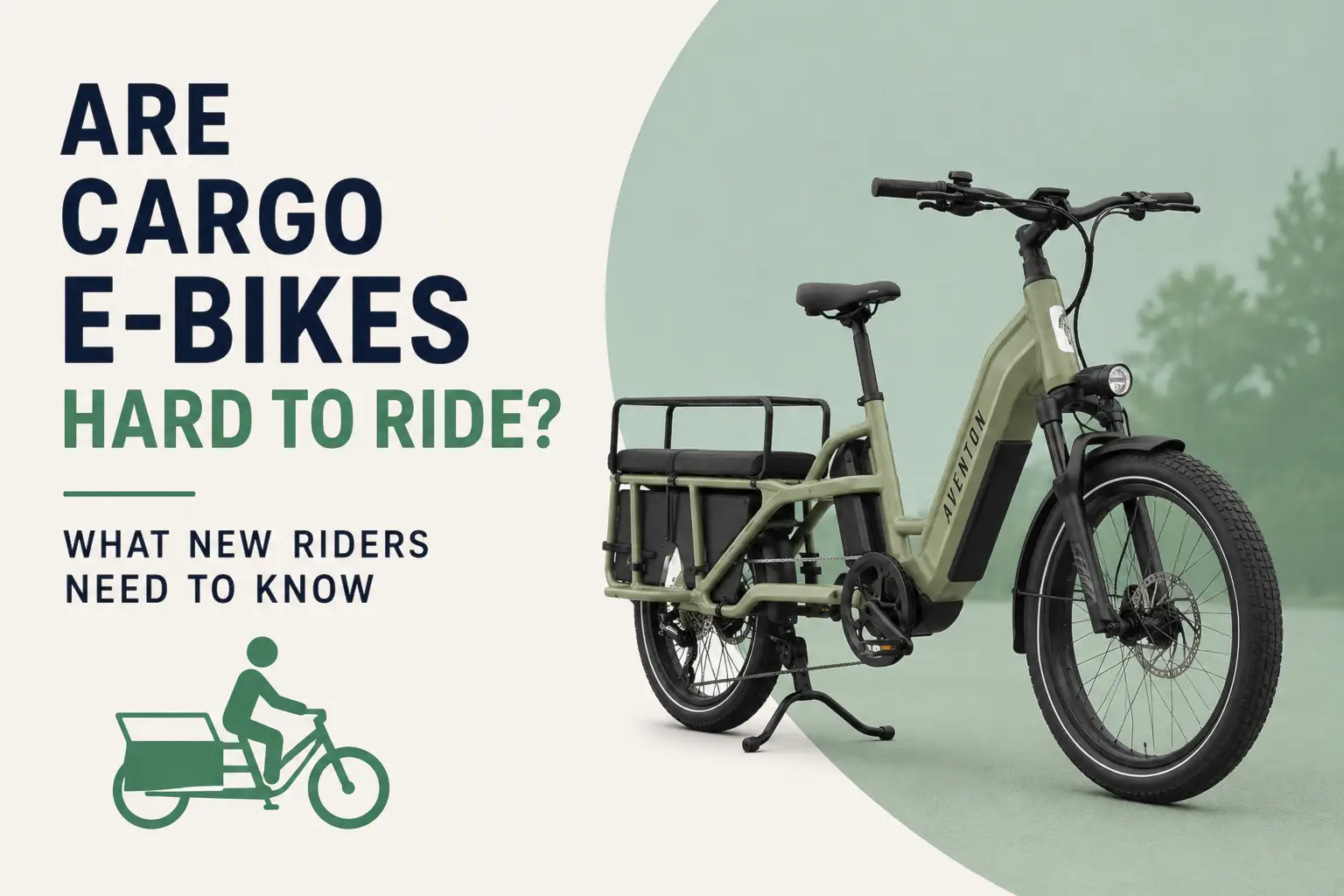
Are Cargo E-Bikes Hard to Ride? What New Riders Need to Know
Last Updated on June 9, 2026 by Kristina
Introduction
Cargo e-bikes are becoming one of the fastest-growing segments of the electric bike market. Families use them to transport kids, commuters use them instead of a second car, and businesses use them for deliveries.
But one question I hear often is:
Are cargo e-bikes hard to ride?
The short answer is no. Most riders adapt surprisingly quickly. However, cargo electric bikes do feel different than a traditional bicycle, especially when carrying passengers or heavy loads.
If you’re considering buying one, this guide explains what makes cargo e-bikes unique, what challenges new riders may face, and how long it typically takes to become comfortable riding one.
If you’re new to e-bikes, I also recommend reading our Beginner’s Guide to E-Bikes, What Is a Cargo E-Bike?, Best Cargo E-Bikes, and Are E-Bikes Safe? guides before making a purchase decision.
What You Need to Know
Cargo e-bikes are not difficult to ride, but they do require a short adjustment period. Their longer wheelbase, heavier weight, and additional cargo capacity make them feel different than a standard bicycle. Most riders become comfortable within a few rides, especially if they practice without cargo first.
Cargo E-Bike vs Traditional Bike Handling
| Riding Situation | Traditional Bike | Cargo E-Bike |
|---|---|---|
| Starting from a stop | Easy | Slightly harder |
| Slow-speed turns | Easy | Moderate |
| Parking | Easy | Moderate |
| Straight-line stability | Good | Excellent |
| Carrying groceries | Limited | Excellent |
| Carrying children | Limited | Excellent |
| Hill climbing | Depends on rider fitness | Easier with motor assist |
This comparison highlights why cargo e-bikes can feel different at first. The extra weight and longer frame require a short adjustment period, but many riders find cargo e-bikes surprisingly stable once they’re moving.
📖 Read Next
10 Cargo E-Biking Mistakes Beginners Make (and How to Avoid Them)
What Is a Cargo E-Bike?
Best Cargo E-Bikes for Grocery Runs
Are E-Bikes Safe?
Cargo E-Bike vs Trailer for Errands – Cost, Safety, and Real-World Comparison
Top Cargo E-bikes Under $1,500
High-Quality Electric Bikes Under $3,000
Best Cargo E-Bikes for Commuting in 2025: A Comprehensive Guide
Why Cargo E-Bikes Feel Different
The first thing most riders notice is that a cargo e-bike feels larger than a regular bicycle.
Most cargo e-bikes weigh between 65 and 95 pounds before cargo or passengers are added, although some heavy-duty models can exceed 100 pounds.
Common differences include:
- Longer frame
- Extended rear rack
- Higher overall weight
- Wider turning radius
- Different center of gravity
- Longer stopping distances
These characteristics can make the bike feel unusual during your first ride.
The good news is that electric assist helps offset much of the extra weight.
Once moving, many cargo e-bikes feel surprisingly stable and confidence inspiring.
Why Cargo E-Bikes Often Feel Easier Than Expected
One surprise many new riders experience is that cargo e-bikes often feel much lighter once they start moving.
At a standstill, the extra weight is obvious. However, once the motor begins providing assistance and the wheels are rolling, much of that weight becomes far less noticeable.
This is especially true on modern cargo e-bikes equipped with:
- Torque sensors
- Mid-drive motors
- Wide tires
- Low centers of gravity
- Long wheelbases designed for stability
Personally, I’ve noticed that many riders worry about weight before buying a cargo e-bike, but after a few rides they often say the bike feels much more natural than they expected.
The weight is usually most noticeable when:
- Walking the bike
- Parking
- Loading cargo
- Mounting and dismounting
Once underway, most cargo e-bikes feel stable, planted, and confidence inspiring.
What Riders Should Know
Research and industry organizations have found that cargo bikes can safely replace many short car trips while carrying children, groceries, and cargo. Riders often report that handling becomes natural after a brief learning period.
Sources: PeopleForBikes, European Cyclists’ Federation
What Is the Hardest Part of Riding a Cargo E-Bike?
For most beginners, the hardest part is not riding.
It’s maneuvering the bike at low speeds.
This includes:
- Starting from a stop
- Walking the bike
- Parking
- Tight turns
- Loading passengers
- Mounting and dismounting
Once the bike reaches normal riding speed, stability often improves significantly.
In fact, many riders say their cargo e-bike feels more stable than a traditional bike when traveling in a straight line.
Does Carrying Weight Make a Cargo E-Bike Harder to Ride?
Yes, but not as much as many people expect.
Cargo e-bikes are specifically designed to handle additional weight.
Features often include:
- Reinforced frames
- Heavy-duty wheels
- Stronger brakes
- Wider tires
- Lower center of gravity
When properly loaded, cargo bikes remain stable and predictable.
The key is distributing weight correctly.
Better Weight Distribution
- Heavy items low and centered
- Cargo secured tightly
- Balanced loads on both sides
Poor Weight Distribution
- Loose items shifting around
- Excessive weight on one side
- Overloaded rear racks
Improper loading can make any cargo bike feel unstable.
Always stay within the manufacturer’s weight limits.
You may also find our guide on How Much Weight Can an E-Bike Carry? helpful.
Are Longtail Cargo E-Bikes Easier Than Front-Loading Cargo Bikes?
Generally, yes.
There are two primary cargo bike styles.
Longtail Cargo E-Bikes
👉 Read reviews of these top cargo e-bikes:
These feel closest to traditional bicycles and are usually easiest for beginners.
Front-Loading Cargo Bikes
Examples include:
- Urban Arrow Family
- Riese & Müller Load
- Bakfiets-style cargo bikes
These place cargo or children in a front box.
Another reason front-loading cargo bikes feel different is that many use steering linkages rather than direct steering. Instead of the handlebars turning the front wheel directly, a linkage system connects the handlebars to the wheel. This design works very well but can feel unusual during the first few rides until your brain adjusts.
While they offer excellent carrying capacity, they often require a longer adjustment period because steering feels different.
Most first-time riders find longtail cargo bikes easier to learn.
How Long Does It Take to Learn to Ride a Cargo E-Bike?
Most riders adapt quickly.
A typical learning timeline looks like this:
| Experience | Adjustment Time |
|---|---|
| Experienced cyclist | 15-30 minutes |
| Casual rider | 1-3 rides |
| New cyclist | Several rides over a week |
I always recommend riding without cargo first.
Get comfortable with:
- Starting
- Stopping
- Cornering
- Parking
- Emergency braking
After that, gradually add weight.
This approach builds confidence much faster.
Do Cargo E-Bikes Tip Over Easily?
Not usually while moving.
Most cargo e-bikes are extremely stable once underway. However, low-speed riding, stopping, parking, and loading passengers are when tip-overs are most likely to occur.
They can tip over when:
- Passengers move suddenly
- Cargo shifts unexpectedly
- The bike is overloaded
- The kickstand isn’t deployed properly
A quality double-leg center kickstand can make a huge difference when loading children or groceries.
Many family-focused cargo e-bikes include one for this reason.
Are Cargo E-Bikes Safe for Carrying Children?
When equipped properly, cargo e-bikes can be a safe transportation option for families.
Many models include:
- Passenger rails
- Footboards
- Child seats
- Wheel guards
- Integrated lighting
- Powerful hydraulic brakes
For families carrying children, it’s also important to:
- Use properly installed child seats when required
- Follow the manufacturer’s passenger weight limits
- Ensure children wear properly fitted helmets
- Teach children to keep their hands and feet away from moving wheels
Always follow the manufacturer’s recommendations for passenger age, weight limits, and seating requirements.
I also recommend reviewing our guides on Are E-Bikes Safe?, How Far Does It Take an E-Bike to Stop?, and Best Helmets With Built-In Lights.
Common Mistakes New Cargo E-Bike Riders Make
Avoiding these mistakes can shorten your learning curve significantly.
Starting With a Full Load
Practice first without passengers or cargo.
Using Maximum Power Immediately
Lower assist levels help you learn bike handling.
Taking Tight Corners Too Fast
Cargo bikes need more room to turn.
Forgetting About Stopping Distance
Extra weight means braking takes longer.
Ignoring Tire Pressure
Proper tire pressure affects handling, comfort, and stability.
You can use our E-Bike Tire Pressure Calculator to dial in the correct pressure.
Who May Need More Time to Adjust?
Some riders may need a little extra practice:
- Riders under 5’2″
- Riders returning to cycling after many years
- People unfamiliar with heavier bikes
- Those transitioning from lightweight commuter bikes
That doesn’t mean cargo e-bikes aren’t suitable.
It simply means a few additional practice sessions can help build confidence.
Benefits That Often Outweigh the Learning Curve
Even though cargo e-bikes feel different initially, many riders quickly discover benefits such as:
- Replacing car trips
- Carrying groceries
- Transporting children
- Reducing fuel costs
- Running local errands
- Hauling work equipment
For many families, a cargo e-bike becomes one of the most-used vehicles they own.
You may also enjoy our E-Bike vs Car Cost Comparison guide if you’re considering replacing some driving with an e-bike.
Are Cargo E-Bikes Good for Beginners?
Yes, many cargo e-bikes are beginner friendly.
While they are larger and heavier than standard electric bikes, most new riders adapt quickly with a little practice.
Step-through cargo e-bikes such as the Aventon Abound ST and Lectric XPedition 2 are particularly beginner friendly because they make mounting and dismounting easier while maintaining stable handling characteristics.
If you’re completely new to cycling or e-bikes, I recommend spending time in an empty parking lot before carrying passengers or heavy cargo.
Practice:
- Starting and stopping
- Tight turns
- Emergency braking
- Low-speed maneuvering
- Parking
Most riders gain confidence surprisingly fast.
FAQs
Yes. Most beginners can learn to ride a cargo e-bike safely with a few practice sessions.
Yes. Cargo e-bikes are typically heavier because they are built to carry passengers and large loads.
Cargo e-bikes often have a larger turning radius, which means turns may require more space than a standard bicycle.
Yes. Cargo e-bikes can be ridden normally even when the rear rack or cargo area is empty. Many owners use their cargo e-bike both for hauling gear and for everyday riding.
Not necessarily. The electric motor does most of the work while riding. The extra weight is usually most noticeable when walking, parking, or lifting the bike rather than while actively riding.
Most cargo e-bikes are designed to feel very stable at normal riding speeds. Their longer wheelbase and lower center of gravity can actually make them feel more planted than some traditional bicycles when riding in a straight line.
Yes. Cargo e-bikes can be ridden just like a regular electric bike when the cargo area is empty. Many owners use them for everyday rides even when they aren’t carrying passengers or gear.
They can be slightly more challenging to park because of their larger size and heavier weight. However, many cargo e-bikes include sturdy double-leg kickstands that make loading and parking much easier.
Most cargo e-bikes perform very well on hills thanks to their electric motors and lower gearing. Models equipped with torque sensors or mid-drive motors often provide the most natural climbing experience when carrying heavy loads.
In many areas, yes. Cargo e-bikes are generally allowed anywhere standard e-bikes are permitted, but local regulations vary. Always check your state and local e-bike laws before riding.
For many families, a cargo e-bike can replace numerous short car trips. They are especially useful for school drop-offs, grocery runs, local errands, and recreational rides with children.
Longtail cargo e-bikes are generally the easiest style for new riders because they handle more like a traditional bicycle. Front-loading cargo bikes often require a longer adjustment period due to their unique steering characteristics.
For some households, yes. Many owners use cargo e-bikes for commuting, grocery shopping, transporting children, and running errands. While they won’t replace every trip, they can significantly reduce how often you need to drive.
Who Should Consider a Cargo E-Bike?
Cargo e-bikes can be an excellent choice if you:
- Frequently carry groceries
- Transport children
- Replace short car trips
- Commute with gear or equipment
- Want a practical vehicle for local errands
- Need to haul more than a standard e-bike can comfortably carry
You may want to consider another type of e-bike if:
- You regularly carry your bike up stairs
- Storage space is extremely limited
- You need the lightest bike possible
- You rarely carry cargo or passengers
For many riders, the added utility easily outweighs the larger size and weight.
My Take
I’ve found that many people assume cargo e-bikes are difficult to ride simply because they look large.
In reality, the learning curve is usually much smaller than expected.
The biggest adjustment is getting comfortable with the bike’s size and weight. Once that happens, most riders adapt quickly.
If you’re considering a cargo e-bike for hauling groceries, transporting kids, or replacing short car trips, I wouldn’t let concerns about handling stop you.
Just spend some time practicing in an empty parking lot before loading passengers or heavy cargo.
A few rides can make a world of difference.
Final Thoughts
So, are cargo e-bikes hard to ride?
Not really.
They feel different than a traditional bicycle, but most riders adapt within a few rides. The extra stability, carrying capacity, and versatility often outweigh the short adjustment period.
If you’re considering one, focus on practicing basic handling skills first, then gradually add cargo as your confidence grows.
For many riders, a cargo e-bike quickly becomes one of the most practical and useful bikes they’ve ever owned.
Read Next
- What Is a Cargo E-Bike?
- Best Cargo E-Bikes for Grocery Runs
- Are E-Bikes Safe?
- How Much Weight Can an E-Bike Carry? (coming soon)
- E-Bike vs Car Cost Comparison
- How Far Does an E-Bike Go?
- How Far Does It Take an E-Bike to Stop?
- Best Helmets With Built-In Lights
- Beginner’s Guide to E-Bikes
External Sources
PeopleForBikes: https://www.peopleforbikes.org
European Cyclists’ Federation: https://ecf.com
National Highway Traffic Safety Administration: https://www.nhtsa.gov
Consumer Product Safety Commission: https://www.cpsc.gov

Kristina is not just an enthusiast but a true authority on electric bikes. Nestled in the coastal beauty of Virginia, Kristina has found the perfect backdrop for her passion for electric biking. As a dedicated wife and homeschooling mom, her life revolves around family, faith, and the thrill of adventure.
Originally hailing from Ohio, Kristina's journey with electric bikes began as a curiosity and quickly evolved into a deep expertise. Her blog is a testament to her love for electric biking, combining her fascination for eco-friendly transportation with her coastal lifestyle.
When she's not cruising the beach on her electric bike, you'll find Kristina indulging in her other loves: long walks along the shore, getting lost in a good book, and cherishing moments with her loved ones. With a heart as big as her love for animals, especially cats, Kristina brings a unique perspective to the electric bike world, grounded in her strong faith in God and her dedication to a sustainable lifestyle.
Through her blog, Kristina shares her extensive knowledge of electric bikes, offering valuable insights, tips, and recommendations to fellow enthusiasts. Whether you're a seasoned rider or a newcomer to the electric bike scene, Kristina's blog is your go-to source for all things electric biking, fueled by her passion, expertise, and the scenic beauty of coastal Virginia.