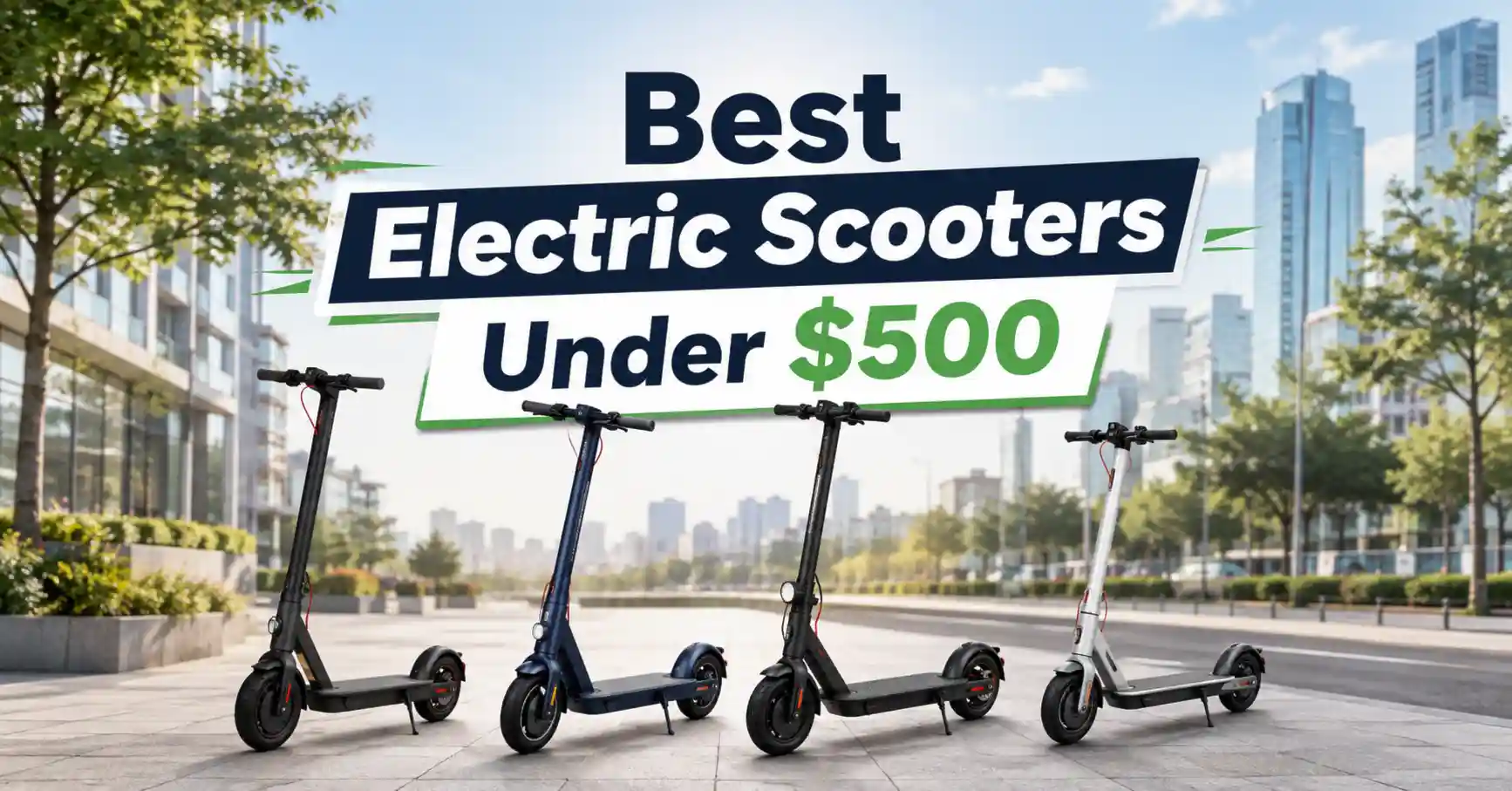
Best Electric Scooters Under $500: 6 Budget Commuter Picks
📚 Research-based buying guide: I have not personally tested every bike in this guide. These recommendations are based on current manufacturer specifications, safety documentation, warranty and return policies, independent testing, service information, and available rider feedback.
The best electric scooters under $500 can handle short commutes, campus trips, neighborhood errands, and first-mile transportation without forcing you into the cheapest no-name option. My best overall pick is the NIU KQi 200P because it combines front suspension, 10-inch tubeless tires, a useful warranty, and clearly stated UL 2272 certification at a price below $500 when checked.
Riders prioritizing suspension should also look closely at the NAVEE GT3, while the Razor C30 is the lightest choice in this guide. Before riding, check local electric-scooter rules and use a properly fitted helmet. Electric Bike Explorer’s helmet guide for electric riders and safety and visibility accessory guide are useful starting points.
Price and specification note: Prices, availability, specifications, firmware, bundles, and policies were checked on August 5, 2026. Sale prices can end without notice. Manufacturer range figures are ideal-condition claims, not guaranteed real-world results.
⭐ Quick Picks: Best Electric Scooters Under $500
Electric Scooters Under $500 Compared
| Scooter | Price checked | Top speed | Claimed range | Weight | Max rider weight | Ride setup | Main tradeoff |
|---|---|---|---|---|---|---|---|
| NIU KQi 200P | $449.10 | 20 mph | Up to 33.6 miles | 43.4 lb | 265 lb | 10-inch tubeless tires and front suspension | Heavier than several competitors |
| NAVEE GT3 | $419.99 | 20 mph | Up to 31 miles at 9 mph, or 19 miles at 20 mph | 46.3 lb | 243 lb | 10-inch tubeless tires and front-rear suspension | Heaviest scooter in this guide |
| Segway E2 Pro | $419.99 | 18.6 mph in the current U.S. manual; an older support page still lists 15.5 mph | Up to 24.9 miles at 9.3 mph; about 15.5 miles at maximum speed | 41.4 lb | 265 lb | 10-inch tubeless tires, traction control, no suspension | An older Segway support page conflicts with the current U.S. manual |
| Hiboy KS4 Pro | $379.99 | 19 mph | Up to 25 miles | 40.6 lb | 220 lb | 10-inch honeycomb tires and rear suspension | Solid tires transmit more vibration |
| TurboAnt X7 Max | $449.98 | 20 mph | Up to 32 miles with pneumatic tires | 34.2 lb | 275 lb | 10-inch tires, removable stem battery, no suspension | Full-scooter UL 2272 certification was not clear on the official page |
| Razor C30 | $349.99 | 15.5 mph | Up to 13 miles | 27.11 lb | 200 lb | 8.5-inch pneumatic front and airless rear tires | Short range and lower payload |
How I Chose These Budget Electric Scooters
This is a research-based buying guide. I did not personally ride the scooters in a controlled head-to-head test. I compared current manufacturer specifications, pricing, availability, electrical-safety information, braking systems, tire design, suspension, weight, payload, warranty coverage, return policies, replacement-part support, and practical ownership tradeoffs. The rankings are editorial judgments based primarily on those verified specifications and policies, not comparative ride-test results.
I also limited the list to one scooter per brand. That prevents several closely related models from one company from crowding out useful alternatives and gives you a better range of riding styles, support policies, and feature combinations.
Every main pick was priced below $500 on an official U.S. brand page when checked. A scooter did not receive a higher ranking simply because it advertised the longest range or fastest speed. Range claims are strongly affected by rider weight, speed, hills, temperature, tire pressure, wind, starts and stops, and battery age.
🔎 Why You Can Trust This Guide
I compare official specifications, safety information, independent testing, support policies, and real-world rider feedback. Affiliate relationships do not determine which products I recommend or how they are ranked. You can read more about how Electric Bike Explorer reviews and ranks e-bikes.
Want to See More Electric Bike Explorer in Google Search?
Add Electric Bike Explorer as a preferred source to see more of our e-bike law guides, safety updates, reviews, buying guides, and troubleshooting posts when they are relevant to your searches.
1. NIU KQi 200P – Best Overall Electric Scooter Under $500
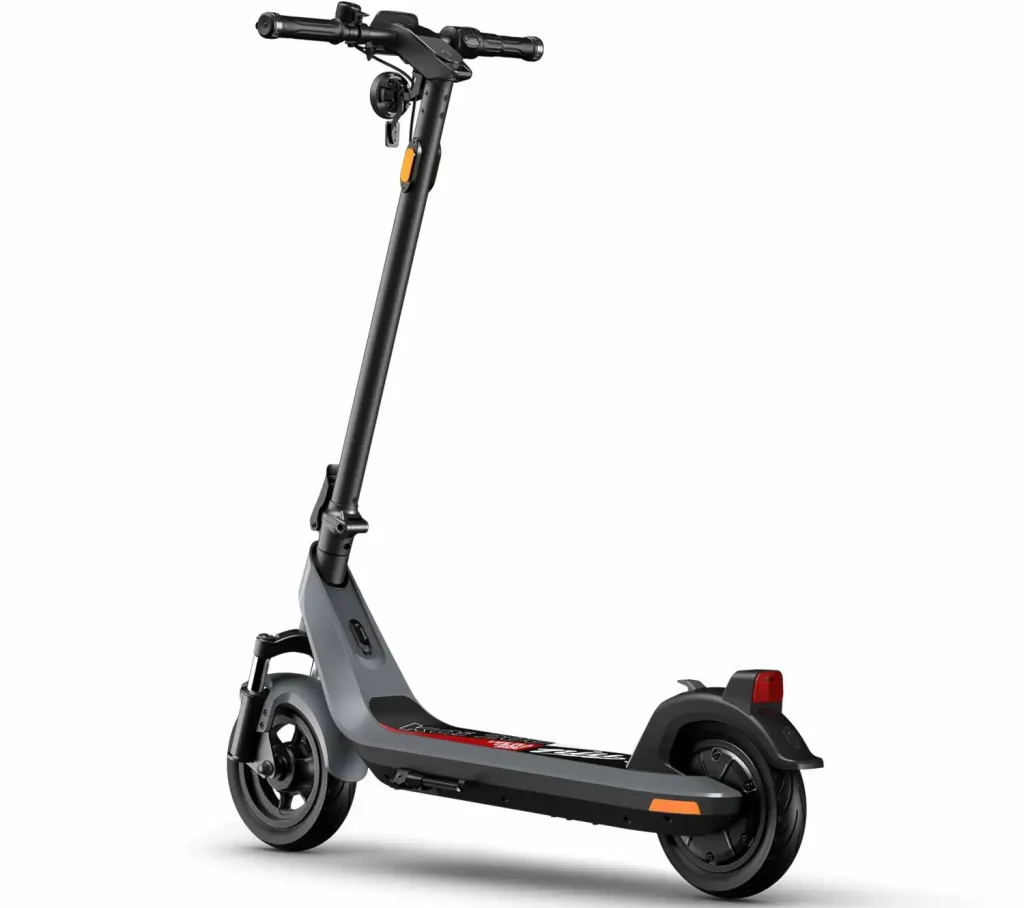
Checked price: $449.10
Best for: Riders who want the strongest all-around balance of comfort, braking, range, safety documentation, and warranty coverage.
Strongest reason to buy: Front suspension and 10-inch tubeless pneumatic tires make it better prepared for cracked pavement than most scooters at this price.
Biggest tradeoff: At 43.4 lb, it is not a scooter I would want to carry up several flights of stairs every day.
The NIU KQi 200P is my best overall choice because its specifications are unusually balanced for the price. NIU lists a 350W rated rear motor with 700W maximum output, a 20 mph top speed, a 365Wh battery, and up to 33.6 miles of claimed range.
The more important everyday features are the 32 mm front spring suspension, wide 10-inch tubeless tires, front drum brake, regenerative rear braking, turn signals, and 265 lb payload. NIU also lists IPX5 water resistance and UL 2272 certification for the scooter’s electrical system.
NIU advertises a 2-year limited warranty and a 30-day return window. That does not eliminate the need to read exclusions, but it is more reassuring than the short warranty coverage attached to some low-cost scooters.
Where it falls short: The claimed 33.6-mile range should be treated as a best-case figure. Faster riding, cold weather, hills, and heavier riders will reduce it. Its weight also makes it a better roll-and-store scooter than a carry-everywhere scooter.
2. NAVEE GT3 – Best Suspension Setup Under $500
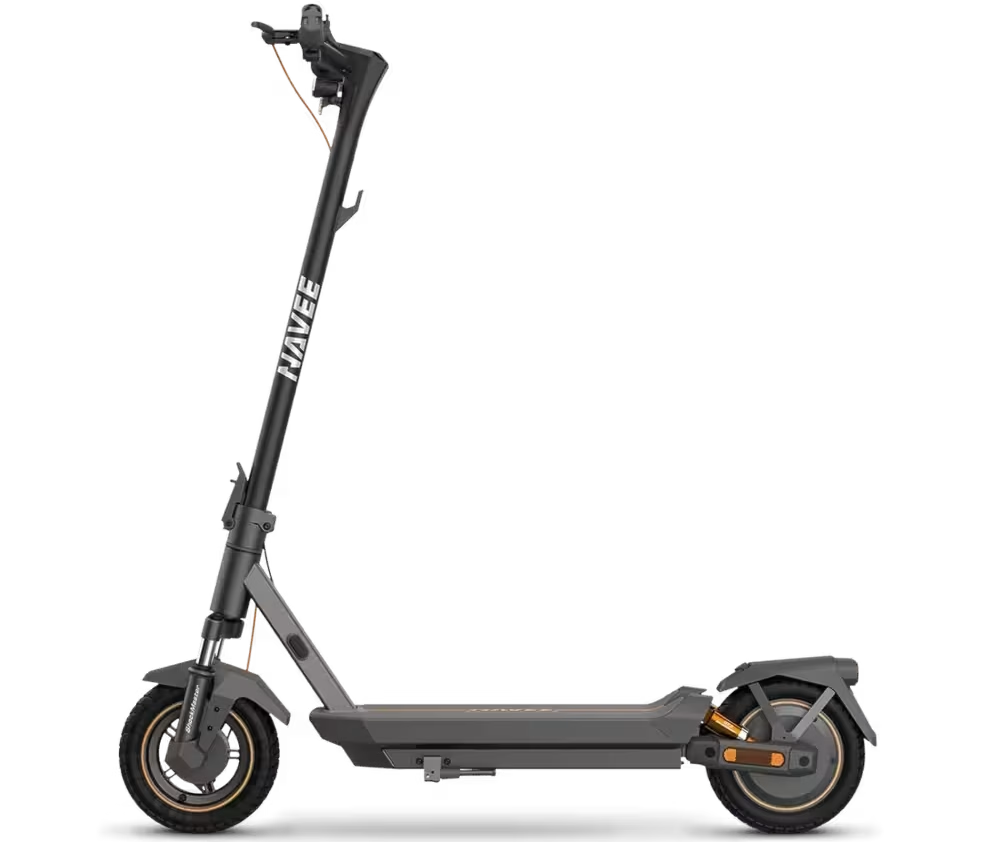
Checked price: $419.99
Best for: Riders who want front and rear suspension and do not need to carry the scooter often.
Strongest reason to buy: Front fork suspension and a rear damping cylinder give it a more complete listed suspension setup than the single-suspension or rigid designs in this guide.
Biggest tradeoff: It weighs 46.3 lb and can take about 8 hours to charge.
The NAVEE GT3 stands out on paper for its suspension system. It pairs front fork suspension with rear damping, 10-inch tubeless tires, a front drum brake, and rear electronic braking. NAVEE also includes traction control, turn indicators, and Apple Find My compatibility.
The official specifications list a 350W rated motor with 700W maximum power, a 358Wh battery, a 20 mph top speed, a 243 lb payload, and IPX5 water resistance. NAVEE’s range information is more useful than a single headline number: it lists up to 31 miles at approximately 9 mph and about 19 miles at 20 mph.
That speed-specific range disclosure makes it easier to plan realistically. The company lists a 24-month limited warranty and a 30-day money-back period, although buyers should read the policy for component exclusions and return-shipping conditions.
Where it falls short: This is the heaviest scooter in the comparison. It is a strong choice for rolling from a garage, elevator, or ground-floor storage area, but a poor match for frequent stair carrying.
3. Segway E2 Pro – Best Beginner-Friendly Feature Set
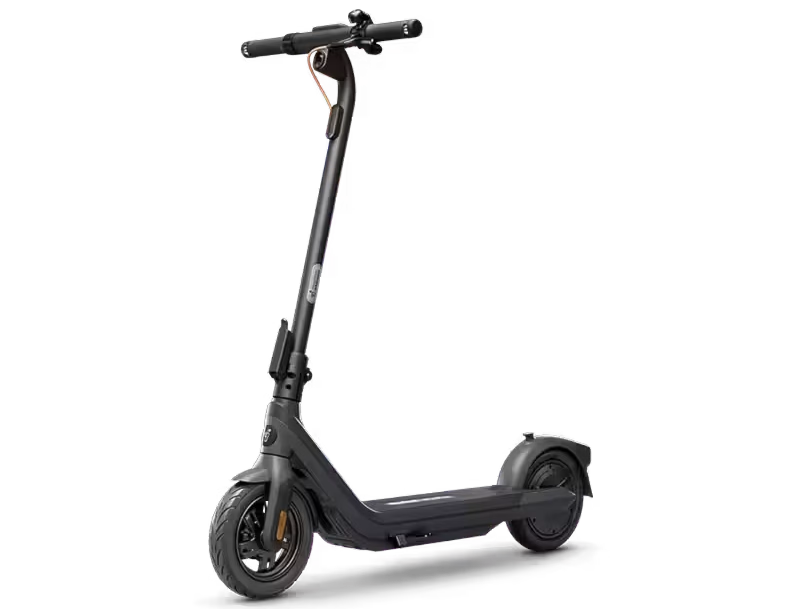
Checked price: $419.99
Best for: New riders who prioritize a familiar brand, traction control, turn indicators, and a conservative commuter setup.
Strongest reason to buy: Segway combines 10-inch tubeless tires, traction control, turn signals, and clearly stated UL 2272 testing.
Biggest tradeoff: Segway’s official U.S. store and support materials list different maximum speeds for the E2 Pro.
The Segway E2 Pro is a sensible beginner option because it emphasizes control rather than aggressive performance. Segway lists a 350W rated motor, 750W maximum output, a 275Wh battery, 10-inch tubeless pneumatic tires, a front drum brake with electronic rear braking, and a 265 lb payload.
Segway states that the E2 Pro is certified to ANSI/CAN/UL 2272 by TÜV Rheinland, and the current product manual also lists the battery as compliant with ANSI/CAN/UL 2271. Segway uses tiered component coverage: major structural parts and the wheel hub motor are listed at 2 years, the battery assembly and several electronic and braking components at 1 year, selected controls and the charger at 180 days, and several trim or wear items at 90 days.
Important specification conflict: Segway’s current U.S. store and current product manual for model 051405U list a maximum speed of 18.6 mph, up to 24.9 miles at 9.3 mph, and about 15.5 miles at maximum speed. A separate Segway support page for the same model still lists 15.5 mph and about 16.8 miles at maximum speed. I used the current U.S. product manual in the comparison table, but buyers should confirm the exact model and firmware before ordering.
Where it falls short: There is no mechanical suspension. The 10-inch pneumatic tires help, but riders on broken pavement may prefer the NIU or NAVEE.
4. Hiboy KS4 Pro – Best for Low-Maintenance Solid Tires
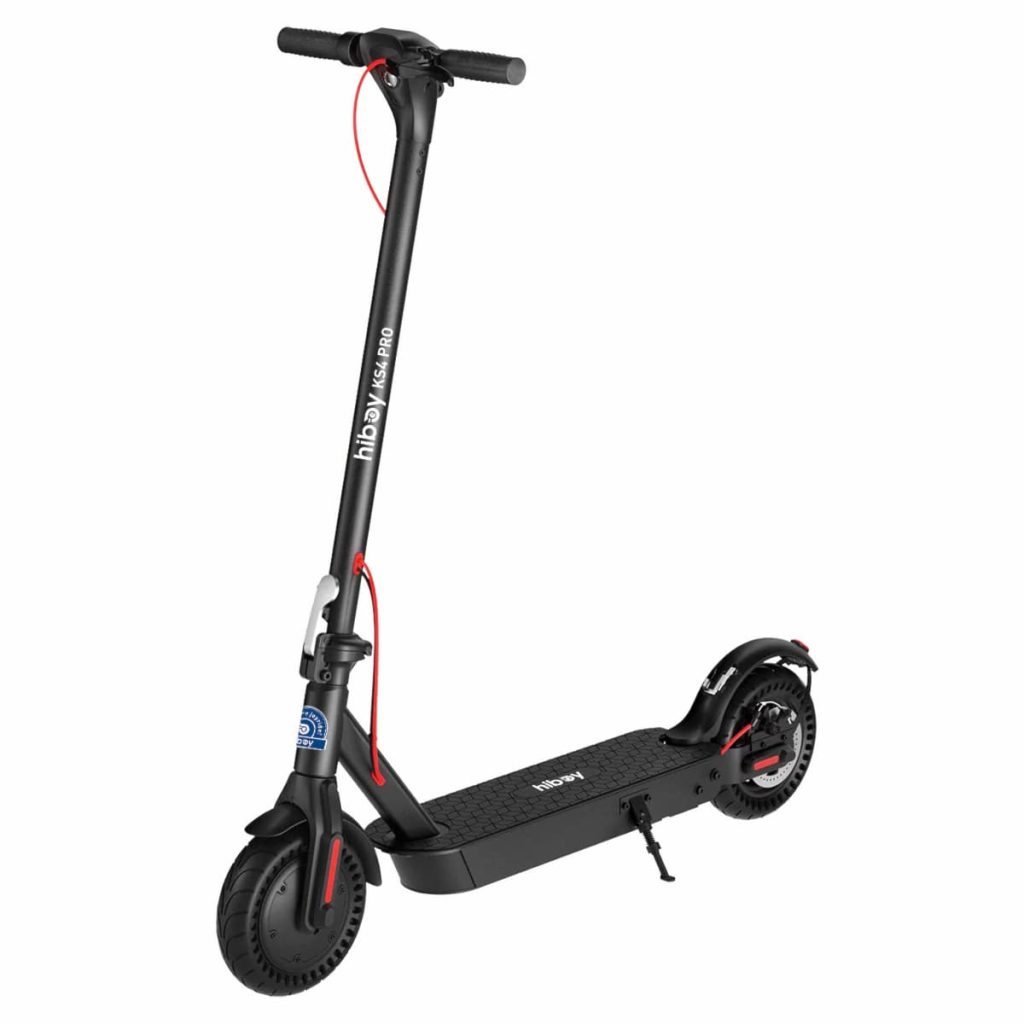
Checked price: $379.99
Best for: Riders who strongly prefer flat-free tires and want more motor output than the lightest entry-level scooters provide.
Strongest reason to buy: A 500W rated motor, rear suspension, and 10-inch honeycomb tires create a practical low-maintenance package.
Biggest tradeoff: Solid tires generally transmit more road vibration and offer less cushioning than pneumatic tires.
The Hiboy KS4 Pro lists a 500W rated motor with 750W peak output, a 19 mph top speed, up to 25 miles of claimed range, and a 36V 11.6Ah battery. It weighs 40.6 lb and supports riders up to 220 lb.
Its 10-inch honeycomb tires eliminate punctures and pressure checks. Hiboy adds dual rear suspension, a rear disc brake, front electronic braking, a headlight, brake light, and IPX4 water-resistance rating.
Hiboy lists a 1-year warranty and a 30-day return period. The KS4 Pro product page states “UL 2272 certified” in a battery section, while the site also uses broader UL 2272 language for its scooter lineup. Because UL 2272 applies to the complete personal e-mobility device electrical system, and the product page did not link a model-specific certificate, I could not independently confirm the exact scope of the claim. Buyers who require documented certification should ask Hiboy for the KS4 Pro’s certificate and testing-laboratory details before ordering.
Where it falls short: Rear suspension helps, but it cannot fully replace the comfort and wet-surface grip of quality pneumatic tires. The 220 lb payload is also lower than the NIU, Segway, and TurboAnt.
5. TurboAnt X7 Max – Best Removable-Battery Scooter Under $500
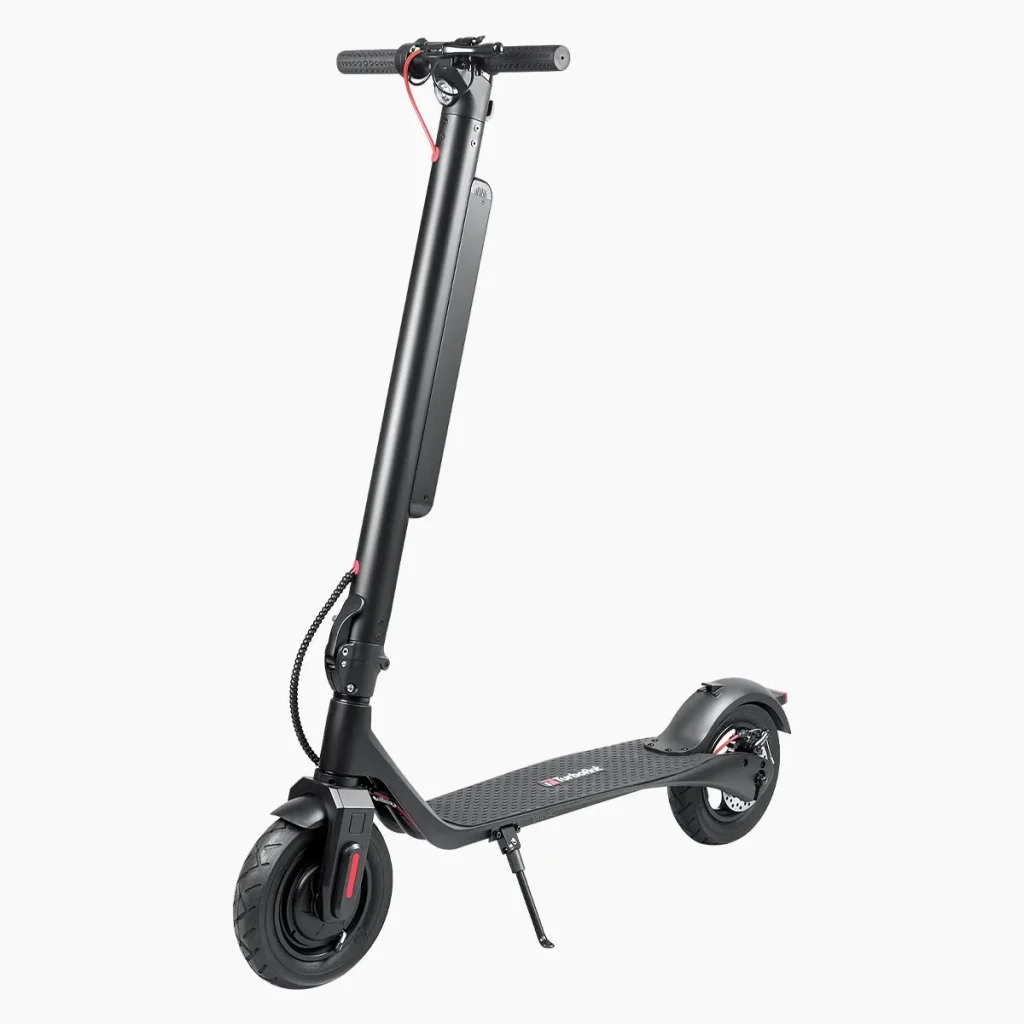
Checked price: $449.98
Best for: Apartment residents and commuters who want to remove the battery for indoor charging.
Strongest reason to buy: The removable stem-mounted battery is rare in this price range.
Biggest tradeoff: I could not verify clear full-scooter UL 2272 certification from the official product page.
The TurboAnt X7 Max is the most flexible charging option here. Its 360Wh battery can be removed from the stem, letting you leave the scooter in a garage or storage area while charging the battery in a more convenient location.
TurboAnt lists a 350W motor, 20 mph top speed, up to 32 miles of claimed range with pneumatic tires, a 275 lb payload, and a weight of 34.2 lb for the pneumatic-tire version. Buyers can also choose honeycomb tires, although that version is slightly heavier and has a lower claimed range.
The scooter uses electronic braking plus a rear disc brake, has an IPX4 rating, and carries a 12-month warranty with a 30-day return period.
Where it falls short: The battery’s stem placement adds weight high on the steering column, and the scooter has no suspension. More importantly, the official page did not clearly document UL 2272 certification for the complete scooter. A charger-level safety reference is not the same as certification of the entire electrical system, so verify this point directly if certification is a priority.
6. Razor C30 – Best Lightweight Budget Electric Scooter
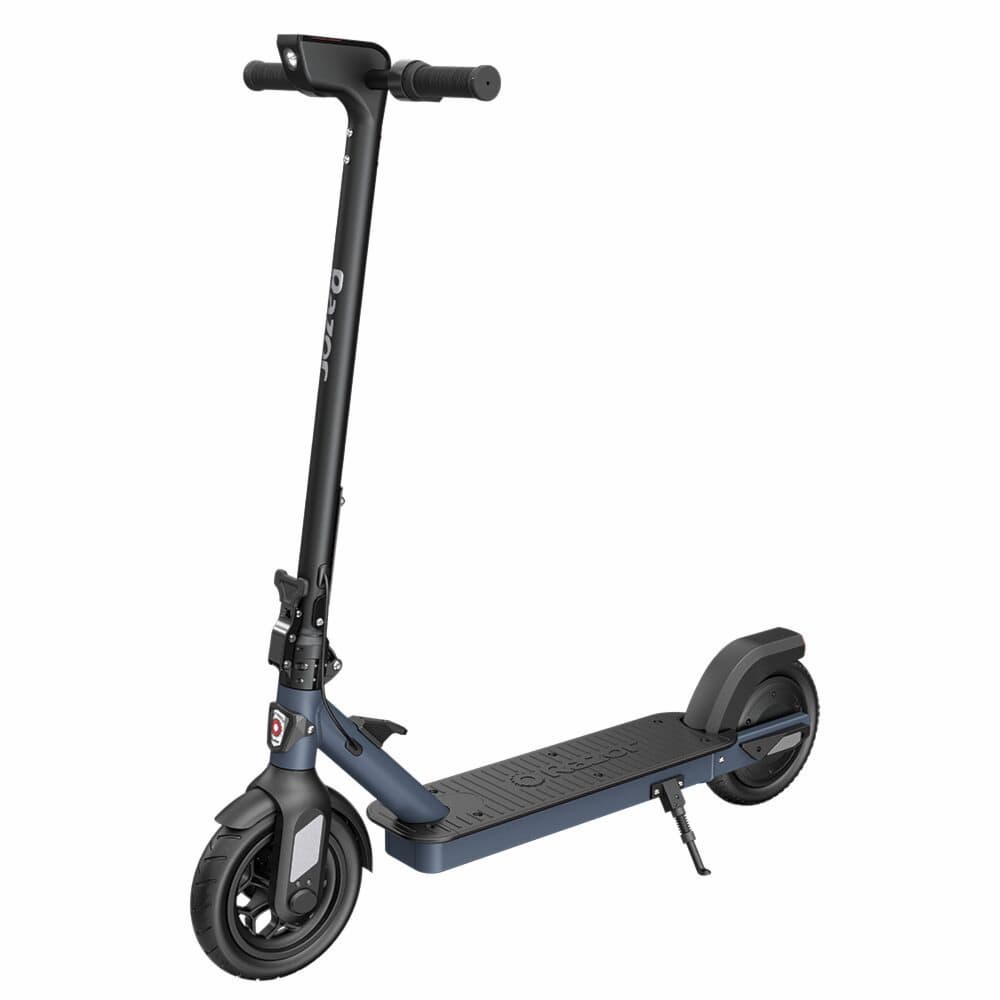
Checked price: $349.99
Best for: Smaller riders, teens age 13 and older where legally permitted, and adults under the 200 lb limit who need a light scooter for short, flat trips.
Strongest reason to buy: At 27.11 lb, it is substantially easier to lift than the other scooters in this guide.
Biggest tradeoff: Its 13-mile claimed range and 200 lb payload limit its usefulness for longer or heavier-duty commuting.
The Razor C30 is the portability pick. Razor lists a 300W rear hub motor, three speed modes, a 15.5 mph maximum speed, up to 13 miles of range, and a 27.11 lb product weight.
It uses an 8.5-inch pneumatic front tire and an airless rear tire, giving riders some front-end cushioning without requiring pressure maintenance at both ends. It also includes a headlight, brake-activated taillight, electronic rear braking, a rear fender brake, cruise control, and a folding frame.
Razor states that the C30 electrical system is certified compliant with UL 2272 by an accredited testing lab. The company also maintains a visible support system with manuals, parts, and service information.
Where it falls short: This is not the right scooter for long commutes, large riders, or steep routes. Its braking setup is simpler than the drum-and-electronic combinations on the NIU, NAVEE, and Segway. Razor accepts direct-purchase returns within 30 days only for new, unused items in the original packaging; buyers should also verify the model-specific warranty before checkout.
How to Choose an Electric Scooter Under $500
Start With Realistic Range, Not the Biggest Number
Manufacturer range tests often use light riders, low speeds, flat surfaces, mild temperatures, and freshly charged batteries. NAVEE and Segway are helpful because their official materials show how range changes at higher speeds. Plan around your full round trip and leave a battery reserve rather than expecting the advertised maximum every day.
Look for Full UL 2272 Certification
UL 2272 evaluates the electrical system of personal e-mobility devices. It is more meaningful than a vague statement that a charger or battery component is “UL certified.” Look for the exact scooter model, the certification standard, and a named testing organization. Certification reduces risk but does not make charging practices unimportant.
Choose Tires for Your Roads
Pneumatic tires generally provide better cushioning and grip, but they require pressure checks and can puncture. Honeycomb and airless tires avoid flats but transmit more vibration. Suspension helps, although a suspension system paired with solid tires may still feel firmer than large pneumatic tires.
Be Honest About Carry Weight
A 40 to 46 lb scooter may sound manageable until you face stairs, a broken elevator, or a crowded train. The Razor C30 is much easier to lift, while the NAVEE GT3 is better treated as a scooter you roll into storage.
Check Brakes, Lighting, and Visibility
A good budget scooter should have two complementary braking methods, a useful headlight, a brake light, and reflectors or turn signals where possible. Brake performance also depends on tire grip, rider weight, road conditions, adjustment, and maintenance.
Read the Warranty by Component
A “2-year warranty” does not always mean every battery, tire, controller, display, brake, and accessory receives 2 years of coverage. Read component schedules, exclusions, shipping responsibilities, and return-restocking rules before purchasing.
Electric Scooter Accessories Worth Adding
A few well-chosen accessories can make an electric scooter safer, easier to use, and more practical for everyday trips.
- Helmet: Choose a properly fitted helmet with good coverage and ventilation.
- Strong lock: A folding lock, U-lock, or heavy-duty chain can help protect the scooter during short stops.
- Front and rear lights: Extra lighting improves visibility, especially at night or in low-light conditions.
- Rearview mirror: A handlebar-mounted mirror can make it easier to monitor traffic without turning around.
- Phone mount: A secure mount is useful for navigation, but it should not block the display or controls.
- Compact tire pump: Pneumatic and tubeless tires perform best when kept at the recommended pressure.
- Basic repair kit: Tire plugs, patches, tire levers, and a small multitool can help with minor roadside problems.
- Reflective gear: A reflective vest, ankle bands, or backpack cover can make riders easier to see.
- Storage bag: A small stem or handlebar bag can carry a lock, charger, tools, and personal items without affecting steering.
See my guide to the Best E-Bike Accessories for more helmets, locks, lights, mirrors, and riding gear that may also work well for electric scooter riders. Always confirm fit and compatibility before purchasing.
Common Budget Scooter Buying Mistakes
- Buying by peak motor wattage alone: Rated output, controller programming, battery voltage, rider weight, and hill grade all affect performance.
- Ignoring the scooter’s weight: Portability depends on what you can repeatedly lift, not what you can lift once.
- Treating claimed range as guaranteed range: Fast riding and hills can cut range substantially.
- Assuming every “UL” statement covers the full scooter: Ask for the exact certification standard and model.
- Using an incompatible charger: A third-party charger with the wrong voltage, connector, or charging profile can create a serious hazard.
- Skipping local rules: Speed limits, sidewalk access, helmet rules, minimum ages, parking, and transit policies vary.
Electric Scooter Charging and Safety Basics
Use the charger supplied or specifically approved by the manufacturer. Charge on a hard, dry surface away from exits and combustible materials, and do not charge while sleeping or away from home. Stop using or charging the scooter if the battery becomes swollen, unusually hot, damaged, wet, or produces smoke, sparks, leaking, or a strong chemical odor.
The U.S. Consumer Product Safety Commission’s micromobility safety guidance recommends following manufacturer charging instructions, using the supplied or approved charger, and remaining present while charging.
Frequently Asked Questions
Is $500 enough for a good electric scooter?
Yes, especially for short urban trips. Under $500, you can find 15 to 20 mph scooters with useful brakes, lights, pneumatic tires, suspension, or connected features. The tradeoffs are usually weight, range, hill performance, warranty depth, or ride quality.
Which scooter under $500 has the best suspension?
The NAVEE GT3 has the most complete suspension setup in this group, with front fork suspension and rear damping. The NIU KQi 200P is a strong alternative with front suspension and 10-inch tubeless tires.
Which budget scooter is easiest to carry?
The Razor C30 is the lightest listed at 27.11 lb. The TurboAnt X7 Max is the next most manageable at 34.2 lb with pneumatic tires.
Are solid tires better than pneumatic tires?
Solid tires are better for avoiding flats and pressure maintenance. Pneumatic tires are usually better for comfort and grip. Riders on rough roads generally benefit from pneumatic tires, suspension, or both.
Which scooter is best for heavier riders?
The TurboAnt X7 Max lists the highest payload in this guide at 275 lb. The NIU KQi 200P and Segway E2 Pro each list 265 lb. Payload is only one factor, so heavier riders should also consider braking, hill performance, deck space, tire pressure, and realistic range.
Can I ride these scooters in the rain?
An IP rating indicates limited resistance under defined test conditions, not permission to ride through deep water or heavy storms. Water can reduce tire grip and braking performance, and warranties may exclude water damage. Follow the manual and avoid submersion, standing water, and charging a wet scooter.
My Take
The NIU KQi 200P is the strongest overall buy under $500 because it offers the fewest major compromises. Its suspension, tubeless tires, braking setup, turn signals, UL 2272 certification, and 2-year warranty create a more complete package than most budget scooters.
Based on its listed front and rear suspension, I would choose the NAVEE GT3 instead when rough pavement is the main concern and ground-floor storage is available. The Segway E2 Pro makes sense for beginners who value traction control and established support, but the official speed conflict needs to be checked before purchase. The Hiboy KS4 Pro is a practical flat-free choice, while the TurboAnt X7 Max is mainly compelling for its removable battery. The Razor C30 is the easy-to-carry option, but it is best kept to short trips and riders within its lower payload limit.
Before buying, confirm the final price, exact model number, electrical certification, warranty by component, return costs, replacement-part availability, local riding rules, and whether you can comfortably lift the scooter you choose.
External Sources
- NIU KQi 200P official product page
- NAVEE GT3 official product page
- Segway E2 Pro official store page
- Segway E2 Pro official product manual
- Segway E2 Pro official warranty manual
- Hiboy KS4 Pro official product page
- TurboAnt X7 Max official product page
- Razor C30 official product page
- Razor shipping and returns policy
- U.S. CPSC Micromobility Information Center

Kristina is not just an enthusiast but a true authority on electric bikes. Nestled in the coastal beauty of Virginia, Kristina has found the perfect backdrop for her passion for electric biking. As a dedicated wife and homeschooling mom, her life revolves around family, faith, and the thrill of adventure.
Originally hailing from Ohio, Kristina's journey with electric bikes began as a curiosity and quickly evolved into a deep expertise. Her blog is a testament to her love for electric biking, combining her fascination for eco-friendly transportation with her coastal lifestyle.
When she's not cruising the beach on her electric bike, you'll find Kristina indulging in her other loves: long walks along the shore, getting lost in a good book, and cherishing moments with her loved ones. With a heart as big as her love for animals, especially cats, Kristina brings a unique perspective to the electric bike world, grounded in her strong faith in God and her dedication to a sustainable lifestyle.
Through her blog, Kristina shares her extensive knowledge of electric bikes, offering valuable insights, tips, and recommendations to fellow enthusiasts. Whether you're a seasoned rider or a newcomer to the electric bike scene, Kristina's blog is your go-to source for all things electric biking, fueled by her passion, expertise, and the scenic beauty of coastal Virginia.