Master Your E-Bike Ride With Controller Tuning: Power, Range, and Ride Feel Explained
Last Updated on June 8, 2026 by Kristina
Most e-bikes come from the factory with a general setup designed to work for a wide range of riders. That works perfectly fine for many people, but I have found that sometimes a small adjustment in how an e-bike delivers power can completely change how it feels on the road or trail.
Maybe your e-bike accelerates too aggressively when you touch the throttle.
Maybe pedal assist feels too weak when climbing hills.
Or maybe you are trying to get more real-world battery range during longer rides.
That is where e-bike controller tuning comes in.
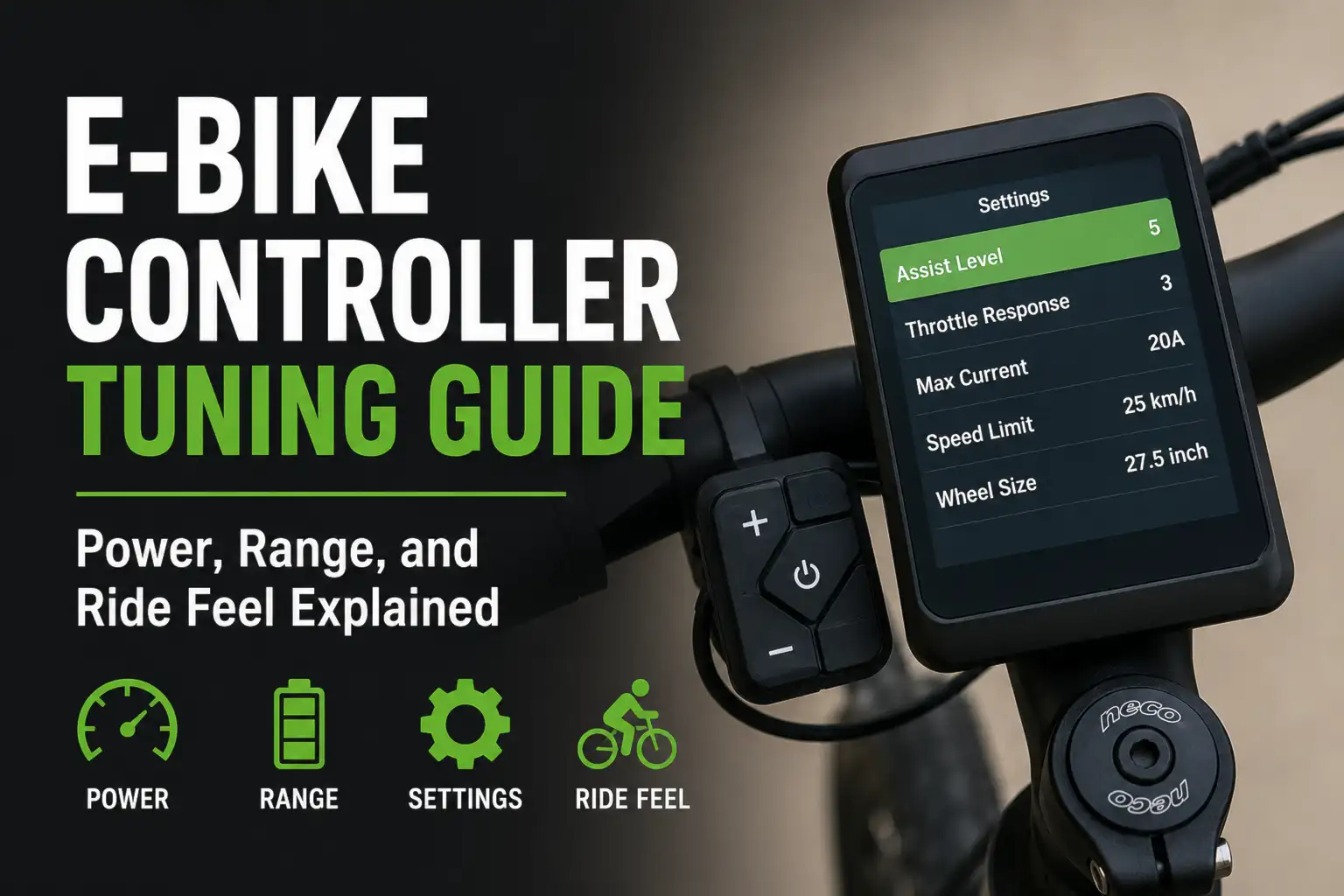
E-bike controller tuning allows some riders to adjust settings that affect acceleration, pedal assist behavior, power delivery, and battery efficiency. Small changes can sometimes make an e-bike feel smoother, more comfortable, or better suited for specific riding styles.
The important thing to understand is that not every e-bike can be tuned. Some systems allow changes through display settings or smartphone apps, while others lock users out entirely.
Before making any changes, I always recommend understanding how your bike works first.
If you’re still learning the basics, these guides may help:
→ Understanding Electric Bike Classes: A Comprehensive Guide
→ E-Bike Maintenance for Beginners
→ State-by-State E-Bike Laws Guide
In this guide I will walk through:
- What an e-bike controller actually does
- Which controller settings can be adjusted
- How tuning affects power and battery range
- Safe tuning practices
- Warranty and legal considerations
- How to personalize your ride responsibly
Quick Decision Guide
- Best for hill climbing: Moderate increase in assist response
- Best for longer range: Lower assist settings
- Best for comfort: Gentle acceleration settings
- Best for mixed riding: Balanced assist and throttle response
What Is an E-Bike Controller?
Think of the controller as the brain of your e-bike.
The controller receives information from:
- Battery
- Motor
- Throttle
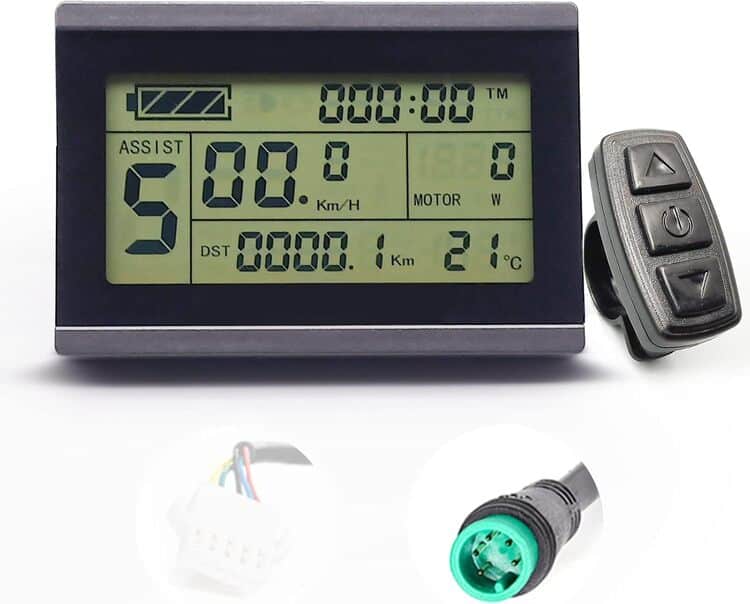
- Display
- Pedal assist sensor
- Speed sensor
The controller then decides exactly how much power reaches the motor.
Without the controller your e-bike would not know:
- How much assistance to provide
- When to deliver power
- How quickly acceleration occurs
- When to limit speed
- How to protect components
The Consumer Product Safety Commission (CPSC) recommends following manufacturer instructions for battery-powered products and electrical systems because improper modifications can create safety risks.
What E-Bike Controller Settings Actually Do
Different e-bike systems provide access to different settings.
Some of the most common include:
Throttle Response Settings
Throttle response determines how quickly motor power engages.
Higher response settings:
- Faster acceleration
- Stronger hill performance
- More immediate power
- Higher battery use
Lower response settings:
- Smoother starts
- Better comfort
- Better efficiency
- Easier control
I have found moderate settings often feel more natural during everyday riding.
→ RELATED CONTENT: What Is a Throttle on an E-Bike?
Pedal Assist Settings (PAS)
Pedal assist settings determine how much motor assistance you receive while pedaling.
Lower PAS settings:
- Better battery efficiency
- More rider effort
- More natural ride feel
- Improved range
Higher PAS settings:
- Stronger acceleration
- Less rider effort
- Easier hill climbing
- Reduced battery range
If I am riding longer distances, I usually prefer moderate pedal assist levels instead of maximum assistance because I have found the battery often lasts noticeably longer.
Want to estimate your riding distance?
→ RELATED CONTENT: E-Bike Range Calculator
Current Limits
Current limits determine the maximum amount of electrical current that the controller allows the motor to pull from the battery.
Think of this like a safety valve.
Increasing current too much may:
- Overheat the motor
- Overheat the controller
- Reduce battery lifespan
- Trigger error codes
- Damage components
- Potentially affect warranty coverage
I strongly recommend staying within manufacturer specifications.
Electrical safety standards from UL Solutions emphasize proper operating conditions for lithium batteries and electronic systems.
Speed Limit Settings
Some e-bike systems allow limited speed adjustments.
This is one area where riders should be careful.
Increasing speed settings can potentially:
- Reduce battery range
- Increase motor heat
- Affect bike handling
- Change legal classification
Before adjusting speed settings, I recommend checking:
→ RELATED CONTENT: State-by-State E-Bike Laws Guide
Always verify your specific model.
Can Your E-Bike Be Tuned?
One of the biggest misconceptions I see is assuming every e-bike allows controller tuning.
Not all systems are designed to be user adjustable.
Some manufacturers intentionally limit settings to maintain safety, reliability, and warranty protection.
| E-Bike System | Typical Tuning Ability |
|---|---|
| Generic controllers | Often adjustable |
| Bafang systems | Usually adjustable |
| Aventon | Limited settings |
| Lectric | Limited settings |
| Velotric | Limited settings |
| Rad Power | Varies by model |
| Bosch systems | Usually restricted |
| Shimano systems | Usually restricted |
Always verify your specific bike model because two bikes from the same company can have completely different tuning capabilities.
E-Bike Controller Tuning for Different Riding Styles
One of the biggest mistakes I see riders make is assuming there is one perfect controller setup for everyone.
The ideal tuning settings for someone commuting to work can be completely different from someone riding steep hills or exploring trails.
I have found that small adjustments usually create the best results.
Tuning for More Hill-Climbing Power
If you regularly ride hills, stronger motor assistance can make climbing easier.
Possible adjustments:
- Slightly increase pedal assist response
- Use moderate to higher assist levels
- Increase throttle responsiveness if available
- Maintain proper tire pressure
Higher assistance can improve climbing performance, but there is usually a tradeoff.
Possible downsides:
- Reduced battery range
- More heat generation
- Faster battery drain
If hills are a regular part of your rides, these guides may help too:
→ RELATED CONTENT: Best Commuter E-Bikes
→ RELATED CONTENT: Torque vs Cadence Sensors Explained
Tuning for Better Battery Range
Many riders immediately focus on increasing power, but battery range matters too.
I have found that smoother settings often improve overall ride quality while also helping efficiency.
Settings that may improve range:
- Lower pedal assist levels
- Softer throttle response
- Gradual acceleration
- Avoiding maximum power settings
You can estimate real-world riding distance using:
Battery safety organizations increasingly emphasize proper charging and avoiding modified battery systems because poor charging practices and altered systems may create safety risks.
Tuning for Comfort and Everyday Riding
For many riders, maximum power is not actually the goal.
Comfort settings often create:
- Smoother starts
- Less jerky acceleration
- More natural pedal feel
- Easier low-speed control
I personally think this is where many riders see the biggest improvements.
Sometimes a bike that feels “too aggressive” becomes much more enjoyable simply by reducing throttle sensitivity.
Tuning for Trail Riding
Off-road riding usually requires balance rather than maximum power.
Recommended adjustments:
- Moderate throttle response
- Controlled power delivery
- Moderate assist settings
- Predictable acceleration
Too much power can actually reduce control on rough terrain.
Real-World E-Bike Controller Tuning Examples
Daily Commuter
Typical priorities:
- Smooth starts
- Moderate assistance
- Better battery life
Suggested setup:
- PAS: Medium
- Throttle response: Moderate
- Current limits: Factory settings
Long Distance Rider
Typical priorities:
- Maximum battery efficiency
- Comfortable pedaling
Suggested setup:
- PAS: Lower to medium
- Throttle response: Lower
- Current limits: Factory settings
Heavy Rider or Frequent Hill Climber
Typical priorities:
- Better climbing support
- Strong acceleration
Suggested setup:
- PAS: Medium to higher
- Moderate throttle response
- Current limits: Stay within manufacturer recommendations
Recreational Trail Rider
Typical priorities:
- Better control
- Balanced power
Suggested setup:
- PAS: Moderate
- Throttle response: Moderate
- Smooth acceleration
Warning Signs Your Settings May Be Too Aggressive
Controller tuning should improve the ride experience.
If you notice these problems after making adjustments, your settings may be too aggressive:
- Battery drains unusually fast
- Motor becomes excessively hot
- Sudden power cutouts
- Jerky acceleration
- Error codes appear
- Reduced range
- Unusual noises
If you begin seeing display errors, these troubleshooting guides may help:
→ RELATED CONTENT: Why Does My E-Bike Display Shut Off Randomly?
→ RELATED CONTENT: How to Tell If Your E-Bike Controller Is Bad
Tuning Do’s and Don’ts: Important Safety Considerations
Safety Reminder
Always:
• Disconnect battery before hardware adjustments
• Record original settings before changing anything
• Change one setting at a time
• Test gradually
• Stay within manufacturer specifications
Many recent safety discussions involving e-bikes have focused on battery and electrical systems. The CPSC continues to emphasize proper battery use, approved chargers, and avoiding unauthorized modifications to electrical systems.
Tools That Can Help with Controller Troubleshooting
Before opening up your e-bike or working with wiring, having the right tools makes the process safer and easier:
Digital Multimeter – check battery voltage and electrical connections
👉 Check price and options on Amazon
Allen Key Set – remove panels and access controller housing
👉 Browse sets here
Dielectric Grease – protect connectors from moisture and corrosion
👉 View recommended options
Electrical Contact Cleaner – Clean dirty or corroded plugs and connectors that may interrupt signals
👉 See options here
Wire Crimper / Stripper Tool – Helpful if you need to repair damaged wiring or connector ends
👉 View recommended tools
Heat Shrink Tubing Kit – Helps protect repaired wires and create cleaner electrical connections
👉 Browse kits here
Headlamp or Rechargeable Work Light – Makes it easier to inspect wiring and connectors in tight areas
👉 Check options
Zip Ties / Cable Management Kit – Helps secure loose cables and prevent rubbing or strain on wires
👉 View options
Small Connector Pick Set – Useful for releasing stubborn electrical connectors without damaging them
👉 Browse sets here
➡ Still not sure if the controller is actually the problem? Try our E-Bike Controller Diagnostic Tool before replacing expensive parts.
🎬 Understanding Basic E-Bike Controller Functions – Watching a visual walkthrough can make controller systems much easier to understand before changing settings.
Warranty and Legality: Keep Your E-Bike Tuned and Street Legal
Controller tuning can improve the ride experience, but before changing settings it is important to think about warranty coverage and local regulations.
I have seen riders assume that changing settings is always harmless, but some manufacturers treat certain adjustments differently.
Warranty Considerations
Before changing settings, review your e-bike manufacturer’s documentation.
Things that may potentially affect warranty coverage:
- Installing non-approved controllers
- Flashing modified firmware
- Increasing current beyond specifications
- Modifying speed restrictions
- Using unauthorized software
Basic display adjustments provided by manufacturers are usually less concerning than major controller modifications, but policies vary.
I strongly recommend reviewing your specific manufacturer documentation before making changes.
Understanding E-Bike Laws
E-bike regulations vary significantly depending on where you live.
Common regulations include:
- Maximum motor wattage
- Speed limitations
- Helmet requirements
- Age requirements
- Trail access rules
For example, many areas define:
Class 1
- Pedal assist only
- Assistance up to 20 mph
Class 2
- Throttle equipped
- Assistance up to 20 mph
Class 3
- Pedal assist
- Assistance up to 28 mph
Changing speed settings or power output beyond legal definitions could potentially affect how your e-bike is classified.
To check laws for your state:
→ RELATED CONTENT: State-by-State E-Bike Laws Guide
For broader e-bike policy information, PeopleForBikes maintains extensive information on state regulations and e-bike classifications.
Can Controller Tuning Make an E-Bike Faster?
This is one of the most common questions I see.
The short answer:
Sometimes, but not always.
Several factors determine speed limits:
- Controller programming
- Motor capability
- Battery voltage
- Motor wattage
- Firmware restrictions
- Local speed limitations
I think many riders assume controller tuning automatically unlocks major speed increases.
In reality, most adjustments create more subtle changes such as:
- Improved acceleration
- Better pedal assist behavior
- Smoother ride feel
- Better efficiency
Small improvements often create a more enjoyable ride than simply chasing top speed.
Common Controller Tuning Mistakes to Avoid
Changing Too Many Settings at Once
If multiple settings are changed together, it becomes difficult to determine what actually improved or caused problems.
I recommend changing one setting at a time.
Ignoring Battery Drain
More power usually means more energy use.
If you notice range suddenly dropping after adjustments, your settings may be too aggressive.
Use:
→ RELATED CONTENT: E-Bike Range Calculator
Forgetting Original Settings
Always write down your factory settings before making adjustments.
If something feels wrong later, reverting becomes much easier.
Ignoring Heat
Excessive motor heat can indicate that settings are pushing the system too hard.
Heat is often an early warning sign before more serious problems occur.
FAQs
No. Some controllers allow adjustments through displays or apps, while others use locked systems with little or no customization.
Sometimes, but speed increases depend on controller restrictions, motor capability, and local regulations.
Yes, in some cases.
Lower pedal assist settings and smoother power delivery can improve efficiency.
Unsafe settings or exceeding manufacturer recommendations can potentially damage components.
The difficulty varies.
Some e-bikes allow simple menu adjustments while others require specialized software.
Possibly.
Always review manufacturer documentation before making changes.
Many systems allow factory resets through the display or app.
Consult your owner’s manual for specific instructions.
Sometimes. Increasing pedal assist response or adjusting acceleration settings may help provide stronger climbing assistance. Keep in mind that more power can also increase battery use and heat generation.
Controller tuning can affect both battery range and long-term battery health. Aggressive settings that constantly pull higher power may drain the battery faster and place more strain on components over time.
Some manufacturers allow limited adjustments through companion apps. Certain models from brands like Aventon, Bosch, and others may provide app-based customization, while many bikes offer little or no access.
Some e-bikes allow riders to adjust pedal assist behavior such as sensitivity or power delivery. Available settings vary by manufacturer and controller type.
Jerky acceleration can sometimes happen when throttle response or assist settings are adjusted too aggressively. Reducing responsiveness slightly often creates a smoother riding experience.
Sometimes. Incorrect settings or changes outside manufacturer limits can trigger controller or display errors.
If you begin seeing display problems, these troubleshooting guides may help:
→ Why Does My E-Bike Display Shut Off Randomly?
→ How to Tell If Your E-Bike Controller Is Bad
Not always. Some bikes allow adjustments through display menus, while others require manufacturer apps, programming cables, or specialized software.
No. Tuning changes existing settings on your current controller. Replacing a controller involves installing entirely different hardware.
Yes. Extremely cold temperatures can temporarily reduce battery performance and may make the bike feel less responsive.
You may also find helpful:
→ Why Does My E-Bike Battery Drain Fast?
Final Thoughts
I think many riders immediately assume controller tuning is mostly about trying to make an e-bike faster, but I have found that the biggest improvements often come from making the bike feel better rather than simply adding power.
Sometimes smoother acceleration creates a more comfortable commute.
Sometimes moderate pedal assist levels make rides feel more natural.
Sometimes a little extra efficiency matters more than maximum speed.
Small changes can completely change the ride experience without creating unnecessary strain on your battery or motor.
The goal is not simply more speed.
The goal is building an e-bike that feels better for how and where you actually ride.
If you decide to experiment with controller settings, I recommend keeping a few things in mind:
- Start with small changes
- Record your original settings
- Adjust one setting at a time
- Stay within manufacturer recommendations
- Prioritize safety over performance
Done responsibly, controller tuning can help transform a good e-bike ride into a much better one.
Before you head out, you may also find these helpful:
→ E-Bike Maintenance for Beginners
→ State-by-State E-Bike Laws Guide
External Sources
Consumer Product Safety Commission (CPSC)
UL Solutions Battery Safety Information
PeopleForBikes E-Bike Laws Database

Kristina is not just an enthusiast but a true authority on electric bikes. Nestled in the coastal beauty of Virginia, Kristina has found the perfect backdrop for her passion for electric biking. As a dedicated wife and homeschooling mom, her life revolves around family, faith, and the thrill of adventure.
Originally hailing from Ohio, Kristina's journey with electric bikes began as a curiosity and quickly evolved into a deep expertise. Her blog is a testament to her love for electric biking, combining her fascination for eco-friendly transportation with her coastal lifestyle.
When she's not cruising the beach on her electric bike, you'll find Kristina indulging in her other loves: long walks along the shore, getting lost in a good book, and cherishing moments with her loved ones. With a heart as big as her love for animals, especially cats, Kristina brings a unique perspective to the electric bike world, grounded in her strong faith in God and her dedication to a sustainable lifestyle.
Through her blog, Kristina shares her extensive knowledge of electric bikes, offering valuable insights, tips, and recommendations to fellow enthusiasts. Whether you're a seasoned rider or a newcomer to the electric bike scene, Kristina's blog is your go-to source for all things electric biking, fueled by her passion, expertise, and the scenic beauty of coastal Virginia.