
Puckipuppy Husky Plus Review: Is This Dual-Battery Electric Trike Worth It?
📚 Research-Based Review – Built from independent sources, specs, and user reports

Introduction
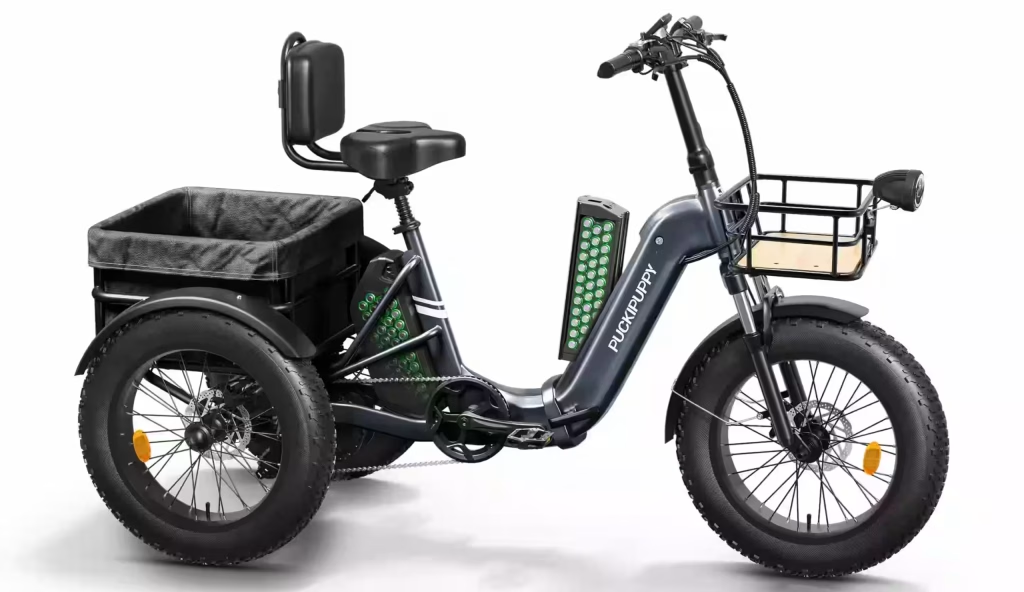
The Puckipuppy Husky Plus offers two batteries, a rear differential and a cargo-oriented three-wheel layout. Its appeal is easy to understand, but whether it makes sense depends on much more than the advertised 110-mile range. I looked at fit, load ratings, handling risks and the fine print on returns so you can decide whether it suits your riding. For alternatives, see my electric tricycle buying guide.
Quick Verdict
Overall Rating: 7.6 out of 10 – Good with Tradeoffs
Best for: Riders seeking a cargo-friendly electric trike with substantial battery capacity, ground-level storage and mostly level riding routes.
Strongest advantage: Two batteries totaling approximately 1,555Wh of nominal energy, plus a rear differential and practical cargo equipment.
Biggest drawback: Substantial weight and awkward folding, plus documented concerns from earlier tests about cornering, braking feel and component fit.
Current price: $1,899.99, checked October 21, 2026.
Review type: Research-Based Review
Evidence confidence: Moderate. Earlier independent tests provide useful riding evidence, but some describe different Husky Plus configurations from the current listing, and long-term reliability data is limited.
Rating Breakdown
| Area | Score |
|---|---|
| Motor and performance | 7.8/10 |
| Battery and range | 8.6/10 |
| Comfort and ride quality | 7.8/10 |
| Brakes and safety | 7.2/10 |
| Fit and accessibility | 7.3/10 |
| Features and usability | 8.4/10 |
| Portability and weight | 4.8/10 |
| Warranty, service and ownership | 6.5/10 |
| Price and value | 7.7/10 |
Overall Rating: 7.6 out of 10 – Good with Tradeoffs. Category scores are research-based editorial judgments, not EBE-measured performance results. The overall rating is not a simple average. The large batteries and practical equipment help, while weight, handling, ownership costs and unresolved configuration differences limit the recommendation.
🔎 Why You Can Trust This Review
I compared official specifications with Puckipuppy’s warranty and return policies, separating manufacturer claims from verified third-party results and identifying missing information. Affiliate relationships do not influence my conclusion. See how I research and rank electric bikes.
Puckipuppy Husky Plus Specifications
| Price checked October 13, 2026 | $1,899.99 shown on official Husky Plus product page; other Puckipuppy listings have shown $1,999.99 |
|---|---|
| Motor | 750W rated; 960W manufacturer-stated peak |
| Batteries | 48V 17.4Ah + 48V 15Ah (current listing); some older tests list a different front battery |
| Combined nominal energy | 1,555.2Wh (calculated) |
| Claimed range | 90-110 miles; not independently verified |
| Maximum speed | 15 mph on current listing; older tested models were reported at 20 mph |
| Weight | 120.6 lb on current manufacturer page; older independent sources report approximately 108 lb to 148 lb for their configurations, with methods and included equipment not reconciled |
| Combined load limit | 500 lb manufacturer claim; rider-only maximum unconfirmed |
| Suggested rider height | 5’0″-6’2″ |
| Saddle height | 31.5-40.2 in. listed |
| Throttle / sensor | Hand throttle / cadence |
| Brakes | Three hydraulic disc brakes, 160mm rotors |
| Drivetrain | Shimano 7-speed |
| Tires | 20 x 4 in. |
| Front suspension | 80mm, nonadjustable; seat shock absorber |
| Rear differential / parking brake | Manufacturer says both included |
| Charger | 48V 2.0A |
| Water resistance | Manufacturer claims IPX6 for trike, IPX7 for battery |
| Certification | Puckipuppy claims SGS certification to UL 2271 and UL 2849; independent model-specific certificates not examined |
Prices, stock and accessory bundles can change. Puckipuppy’s product page showed $1,899.99 in my October 13 check, while another brand listing displayed $1,999.99. Confirm the final checkout price and bundle rather than relying on an article price.
✅ Pros
- Large combined nominal battery capacity
- Three manufacturer-listed hydraulic disc brakes
- Rear differential and parking-brake features
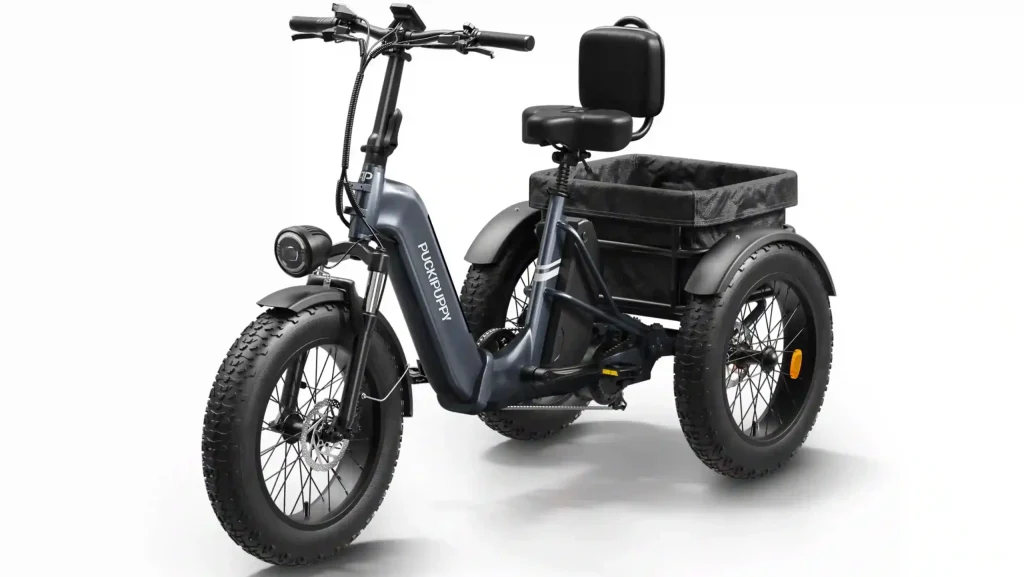
- Low-step, cargo-oriented three-wheel format
- Moderate advertised 15 mph maximum speed
❌ Cons
- Heavy at 120.6 lb
- Independent range, cornering and braking evidence is limited
- Separate maximum rider weight not established
- Returns may carry substantial fees
- Transport and storage need advance planning
- Model-specific third-party certification records not independently examined
Dual Batteries and Real-World Range
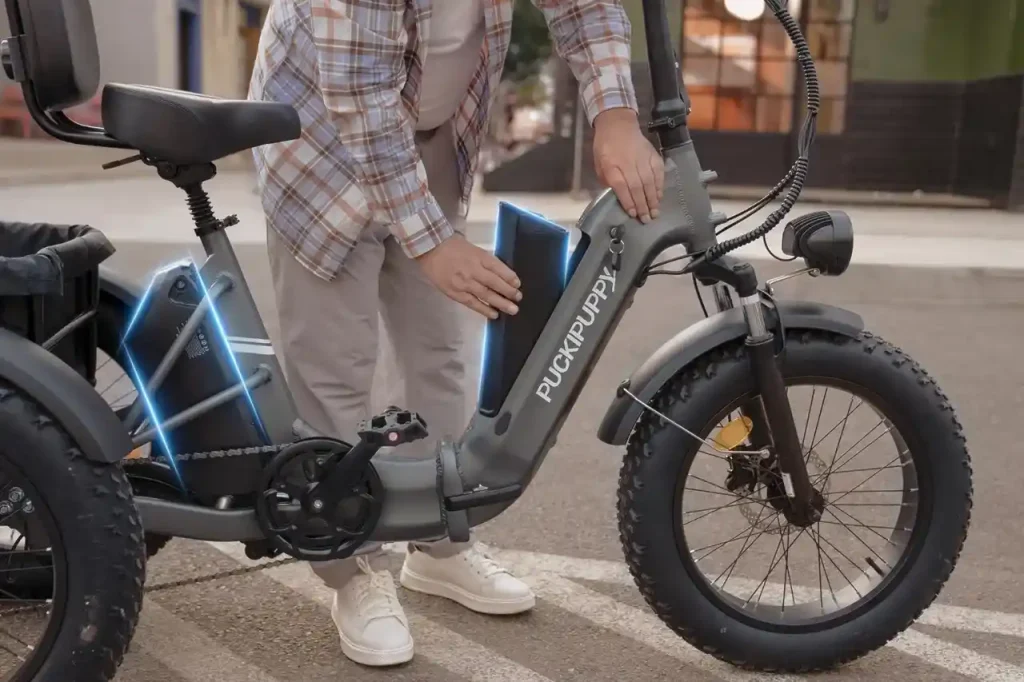
The current 48V 17.4Ah and 48V 15Ah battery specifications total 1,555.2Wh of nominal energy (48 × 32.4Ah). Earlier test bikes were described with slightly different battery sizes. Puckipuppy advertises 90-110 miles, but I could not find a controlled full-discharge independent range result for the exact current configuration. An older reviewer rode for several hours without exhausting the packs; that does not establish a 90-110-mile real-world range.
Rider and cargo weight, wind, hills, assist level, throttle use, tire pressure and temperature can substantially alter range. For battery terminology, see my guide to e-bike battery capacity.
Replacement Batteries and Charging
Puckipuppy lists a 15Ah Husky Plus replacement battery around $499, but some other brand listings differ in description and stock status. Because maximum advertised range depends on two packs, ask for exact replacement part numbers, compatibility and availability for both batteries. Confirm the correct charging and battery-switching procedure in the manual for the delivered model, and use only approved chargers and batteries.
Motor and Performance
Puckipuppy lists a 750W nominal motor with 960W peak output for the Husky Plus. Nominal and peak power describe different operating conditions, so the peak figure should not be treated as sustained output. The current product listing states a maximum speed of 15 mph, while some older hands-on test bikes were reported at 20 mph. These reports may reflect different configurations, so confirm the exact current speed specification rather than assuming an older result applies.
For errands and relaxed riding, the motor’s usefulness depends on the route and load as much as its wattage. I would not promise a particular hill-climbing speed for a heavily loaded Husky Plus without a controlled test of the current version. Steep grades, frequent starts, rider and cargo weight, traction and sustained heat all affect performance.
Pedal Assist, Throttle and Gearing
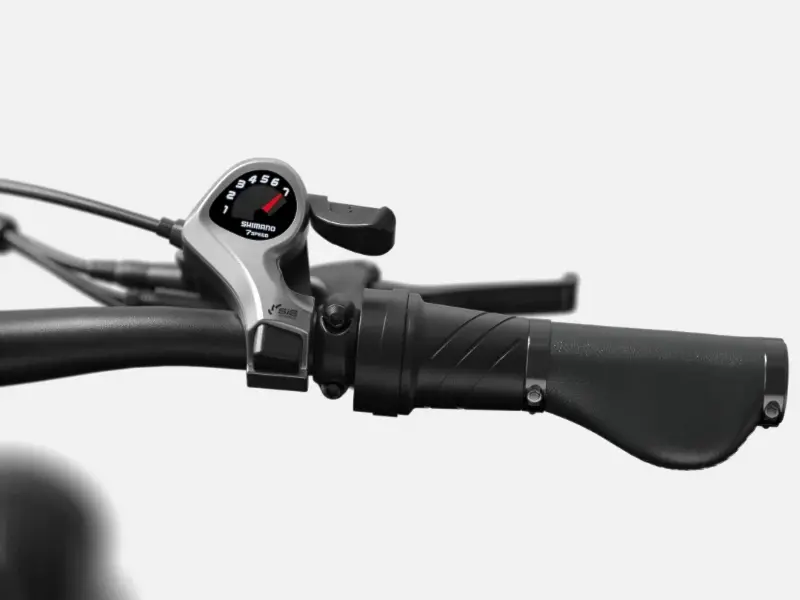
The Husky Plus uses a cadence sensor and a hand throttle. A cadence sensor responds to pedal rotation rather than measuring how firmly you press the pedals, as a torque sensor does. That can make assistance feel less directly connected to pedaling effort. Actual start-up response and throttle modulation have not been established by standardized testing for the present configuration.
The listed Shimano 7-speed drivetrain helps riders select an appropriate pedaling gear for starting, cruising or climbing. It does not change the motor’s rated output or guarantee that a loaded trike will climb a steep hill comfortably. Practice starts, stops and assistance changes in a flat, open area before riding around traffic or carrying substantial cargo.
Display and Technology
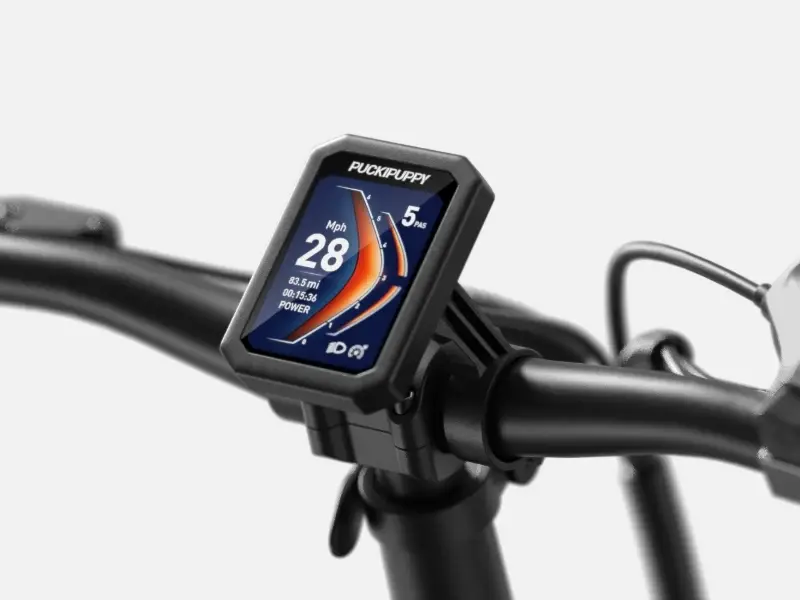
The Husky Plus has a handlebar-mounted digital display for checking riding information. Puckipuppy promotional display images illustrate information such as speed, pedal-assist level and trip data, but I have not independently confirmed every menu, unit setting or display function for the exact current Husky Plus configuration. In particular, an image showing a high speed on the screen should not be interpreted as proof of the trike’s advertised or permitted top speed.
Earlier independent reviews reported that the battery indicator could be difficult to interpret. With two batteries, it is especially important to understand what the current display is measuring and when each battery is being used. Before relying on its remaining-range information, consult the manual supplied with the trike and ask Puckipuppy to clarify battery-status indications and any assist or display settings that are not explained.
Comfort, Fit and Accessibility
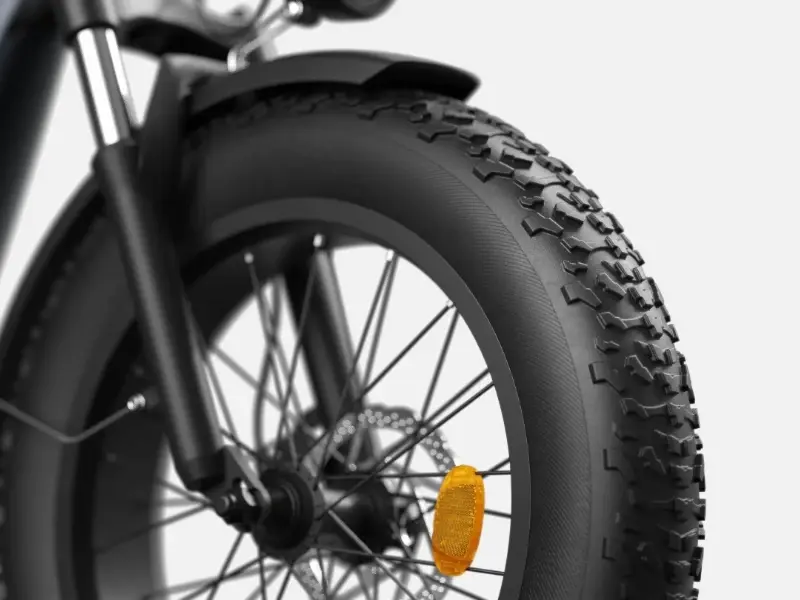
Published comfort equipment includes an 80mm nonadjustable front suspension fork, seat shock absorber, upright geometry and 20 x 4 in. tires. Puckipuppy recommends rider heights of 5’0″ to 6’2″ and lists a 31.5 in. minimum saddle height. Neither number alone confirms a comfortable fit: inseam, reach, pedaling position and ease of mounting also matter.
If you have limited mobility, consider whether you can safely steer, turn, brake and mount this specific trike, not just whether three wheels sound easier to balance.
Handling, Braking and Safety
The Husky Plus has three manufacturer-listed hydraulic disc brakes with 160mm rotors and a rear differential. The differential allows the rear wheels to rotate at different speeds while turning, which can reduce tire scrub. It does not eliminate rollover risk. In an older Husky Plus ride review, Great Lakes Bike Ski Boat described braking as adequate but not particularly quick for the heavy trike. That is an attributed observation, not a standardized stopping-distance test of the current configuration.
A conventional upright trike does not lean into corners like a two-wheeled bicycle. Turning quickly, crossing a slope sideways, clipping a raised edge or carrying cargo high can contribute to tipping. Practice slow turns and controlled stops in a level, empty area before riding in traffic. The manufacturer also lists a parking brake; confirm its operation and never treat it as a substitute for safe parking on slopes.
If you’re new to electric trikes, I recommend learning how three-wheel handling differs from riding a regular bicycle before heading out. My How to Ride an Electric Trike for Beginners guide covers starting, steering, turning, braking, and building confidence safely.
What Independent Reviewers Found
In an earlier hands-on Husky Plus review, Great Lakes Bike Ski Boat described a comfortable saddle and useful cargo equipment but less nimble turning, a heavy, awkward folding process, play in the adjustable handlebar stem and rear-fender alignment challenges. The review used different motor-speed and battery specifications than Puckipuppy’s current product page.
BikeRide’s expert-review summary also reports that some earlier Husky and Husky Plus testers encountered telescoping-stem looseness, poor fender clearance, limited fork effectiveness, hard-to-read battery indications and a bulky folded shape. Some testers felt uncertain when cornering. These are reported findings from specific earlier test units, not proof every current Husky Plus has these issues. The summary includes both the Husky and Husky Plus; findings are not necessarily specific to the current dual-battery version.
At assembly, check steering and hinge hardware, fender clearances, brake function and cable routing carefully. If steering feels loose, the brakes are ineffective or parts touch moving wheels, stop and have a qualified technician inspect the trike.
What the 500 lb Load Rating Means
Do not interpret the advertised 500 lb combined load capacity as a 500 lb rider-only allowance. Rider weight, cargo and carried accessories can contribute to the total. I could not verify a separately stated maximum rider weight or rear-basket limit. Obtain those ratings directly from Puckipuppy in writing if you plan to carry a heavier rider or substantial cargo.
My electric trikes for heavy riders guide explains why total payload and rider-specific limits must be evaluated separately.
Storage, Transport and Setup
Transport is a serious consideration. The current manufacturer page lists 120.6 lb, while older sources report substantially different figures, from about 108 lb in one review to 148 lb for the Husky Plus in BikeRide’s summary. Different builds, measurement methods and included equipment may explain some of this, but I could not establish a reliable like-for-like weight. Confirm the exact equipped and battery-removed weight before selecting a vehicle carrier.
Earlier hands-on reviewers describe a folding frame that remains heavy and bulky when folded. One reviewer found the arrangement awkward, with a rear wheel lifted off the ground in its folded position. Cable routing also needs careful attention while folding. Measure door openings, cargo area and storage floor space before ordering. A standard two-bike hitch rack is not automatically suitable for a trike this large.
Follow the current model’s included manual and have a qualified bicycle technician inspect the trike before its first ride. Earlier testers encountered fender positioning and adjustable-handlebar fit issues. Check wheel clearance, brake alignment, stem security and folding hardware instead of improvising modifications that could compromise safety.
Transporting a heavy electric trike takes more planning than loading a regular bicycle. Before purchasing a rack or trailer, read my How to Transport an Electric Trike Safely guide for practical advice on carrier compatibility, weight limits, measuring your trike, and safe loading.
Included Equipment and Promotional Bundles
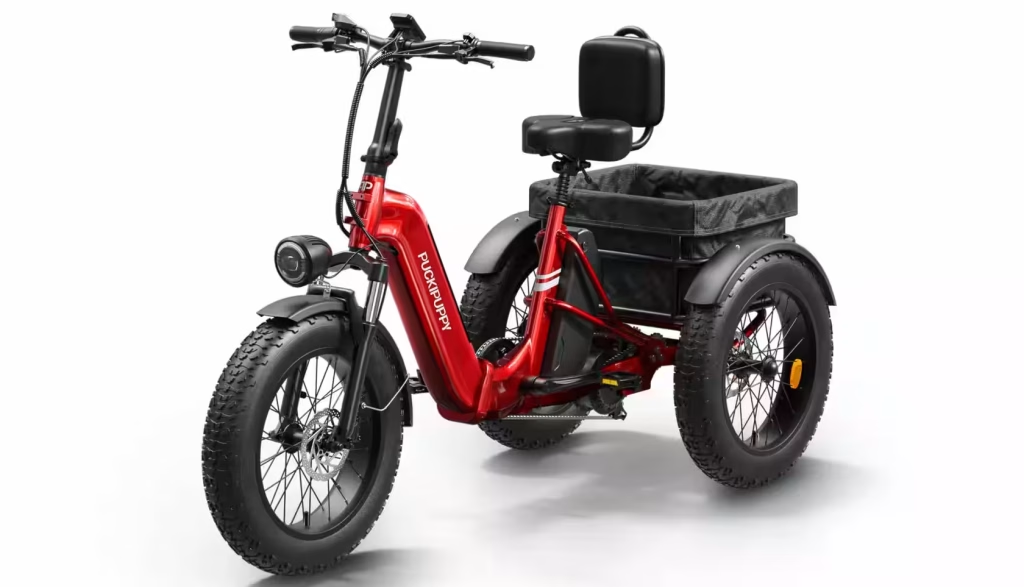
Earlier independently reviewed Husky Plus examples included a rear basket, basket bag, fenders, lights and an upright saddle with a backrest. The current manufacturer listing also advertises optional or promotional packages, including battery and accessory offers. These can change, and past test units may not match today’s box contents. Confirm standard inclusions, basket load limits and promotional extras with the seller before checkout.
UL Claims and Water Resistance
Puckipuppy says SGS certified the Husky Plus to UL 2271 (battery) and UL 2849 (e-bike electrical system). I could verify that the company makes this claim, but not an independent model-specific certificate or listing. Those are different evidence levels, and a certification claim is not proof the product cannot fail.
Its IPX6 whole-trike and IPX7 battery ratings are also manufacturer claims. Do not interpret them as permission to submerge the bike, use high-pressure spray on electrical connections or ride through deep floodwater.
Warranty, Returns and Ownership Costs
Warranty
The published US policy lists 3 years for the frame, generally 2 years for the battery and certain electronics, and 1 year for several mechanical items. Battery terms mention a 300-charge-cycle condition; the policy’s grouping and phrasing are not entirely clear, so buyers should confirm how it applies to both supplied batteries. Coverage is nontransferable and excludes categories of misuse, collision damage, wear and unauthorized repairs. Read the manufacturer warranty for the specific exclusions and claim procedure.
Returns
The advertised 15-day return window has significant conditions. The official return policy lists a $300 round-trip shipping charge plus a 5% processing fee for unopened returns. Eligible opened returns can incur $300 shipping, a 20% warehouse handling fee and a 5% processing fee. It also specifies a 20-mile limit, product-condition and original-packaging requirements, prior authorization and potentially additional repackaging charges.
For example, applying the listed 20% + 5% charges to a $1,899.99 order plus $300 shipping produces about $775 in deductions, before other charges. This is illustrative, not a guaranteed return quote. The 15-day window and potentially expensive return make fit and pre-purchase questions particularly important.
Shipping Damage, Replacement Parts and Service
Puckipuppy’s shipping policy asks customers to report shipping damage within five days of delivery; it also lists a potential $300 deduction for refusing a shipped order. Photograph the unopened carton and any damage during unpacking, retain packaging while resolving problems and contact support promptly. Before buying, confirm whether local shops can service the trike’s brakes, differential and folding assembly, and whether replacement batteries and proprietary components are available.
Recommended Accessories for the Puckipuppy Husky Plus
Before you choose your e-trike, these are the accessories most riders end up needing for safety and everyday use:
Should You Buy the Puckipuppy Husky Plus?
My Take: I would consider the Husky Plus for a rider with ground-level storage, mostly level routes and a genuine need for substantial battery capacity and cargo space. The rear differential and three hydraulic brakes are useful features, but earlier independent reviewers raise worthwhile questions about cornering confidence, folding practicality, braking feel and component fit. With the current and earlier specification differences, high weight, uncertain rider-only capacity and costly returns, I would not recommend it without confirming fit and handling expectations first.
You should consider buying this trike if you can confirm the rider and cargo limits, fit and dimensions, and are comfortable with the return terms. You should skip it if you must lift it frequently, want a lightweight travel trike or need an independently documented handling and performance assessment first.
EBE score: 7.6 out of 10 – Good with Tradeoffs. The dual batteries and cargo-oriented equipment are appealing, but weight, portability, reported handling and fit limitations, and restrictive ownership terms keep it from scoring higher. This is an evidence-based editorial rating, not a claim that I personally tested this trike.
Alternative: Mooncool TK2
The Mooncool TK2 is worth considering if reverse and manageable storage are more useful than the Husky Plus’s much larger combined battery capacity. Mooncool lists about 90.4 lb, a folding design, reverse and a 720Wh single battery. In my hands-on TK2 review I enjoyed the smooth ride and reverse function, while noting that trike handling takes practice and the saddle may feel narrow to some larger riders. Mooncool provided my review trike free of charge; that relationship is disclosed in the review. The TK2’s 450 lb combined load claim also does not establish a rider-only limit.
Read my full Mooncool TK2 review
Alternative: Lectric XP Trike 2
The Lectric XP Trike 2 is another folding electric trike worth comparing. The published version discussed in our review lists a 415 lb maximum total payload and separately identifies a 330 lb rider limit, which offers clearer rider-specific guidance than the Husky Plus documentation I found. Compare the current dimensions, weight, battery configuration, accessories and availability of service before choosing.
Before ordering, request written confirmation of the rider-only weight allowance, basket load, complete size and folding details, availability of replacement batteries, and current return costs. Also check local three-wheel e-bike access rules. Those answers matter more than headline range alone.
Read my full Lectric XP Trike 2 review
Sources: Puckipuppy Husky Plus specifications, its warranty and return policy, and earlier Great Lakes Bike Ski Boat and BikeRide reviews linked above. Manufacturer certification claims have not been independently substantiated in this review. Model versions and specifications may differ.
Frequently Asked Questions
Can a 500 lb rider use the Husky Plus?
The 500 lb manufacturer figure describes combined load capacity. I have not verified approval for a 500 lb rider. Ask the manufacturer for a separate rider-only maximum.
Will it really ride 110 miles?
That is the upper end of Puckipuppy’s advertised range, not an independently verified result. Real use may be considerably shorter.
Does a trike automatically prevent falls?
No. Trikes can tip during fast turns, sudden steering movements and when crossing uneven or sloped ground.
Does it have reverse?
I could not confirm reverse functionality from the material checked. If reverse matters to you, ask Puckipuppy to confirm it for the Husky Plus specifically.
Can I transport it on an RV?
Only with a carrier or other transport solution explicitly rated for its weight, dimensions and wheel arrangement. Verify the complete measurements before buying.
Disclosure: As an Amazon Associate, I earn from qualifying purchases. This comes at no extra cost to you and helps support the content on this site.

Kristina is not just an enthusiast but a true authority on electric bikes. Nestled in the coastal beauty of Virginia, Kristina has found the perfect backdrop for her passion for electric biking. As a dedicated wife and homeschooling mom, her life revolves around family, faith, and the thrill of adventure.
Originally hailing from Ohio, Kristina's journey with electric bikes began as a curiosity and quickly evolved into a deep expertise. Her blog is a testament to her love for electric biking, combining her fascination for eco-friendly transportation with her coastal lifestyle.
When she's not cruising the beach on her electric bike, you'll find Kristina indulging in her other loves: long walks along the shore, getting lost in a good book, and cherishing moments with her loved ones. With a heart as big as her love for animals, especially cats, Kristina brings a unique perspective to the electric bike world, grounded in her strong faith in God and her dedication to a sustainable lifestyle.
Through her blog, Kristina shares her extensive knowledge of electric bikes, offering valuable insights, tips, and recommendations to fellow enthusiasts. Whether you're a seasoned rider or a newcomer to the electric bike scene, Kristina's blog is your go-to source for all things electric biking, fueled by her passion, expertise, and the scenic beauty of coastal Virginia.