Fat Tire vs Commuter Tires: Which E-Bike Tires Are Better for Real Riders?
Last Updated on June 1, 2026 by Kristina
When most people shop for an e-bike, they focus on motor power, battery size, or top speed. But one of the biggest factors that actually changes how a bike feels day-to-day is something much simpler—the tires.
I’ve seen riders buy a powerful e-bike and still feel underwhelmed, only to realize later it was the tire setup that didn’t match how they ride. If you’re deciding between fat tire e-bikes and commuter tires, this guide breaks down the real-world differences in comfort, speed, range, cost, and usability so you can choose with confidence.
👉 If you’re still comparing bikes overall, start here: E-Bike Buying Guide
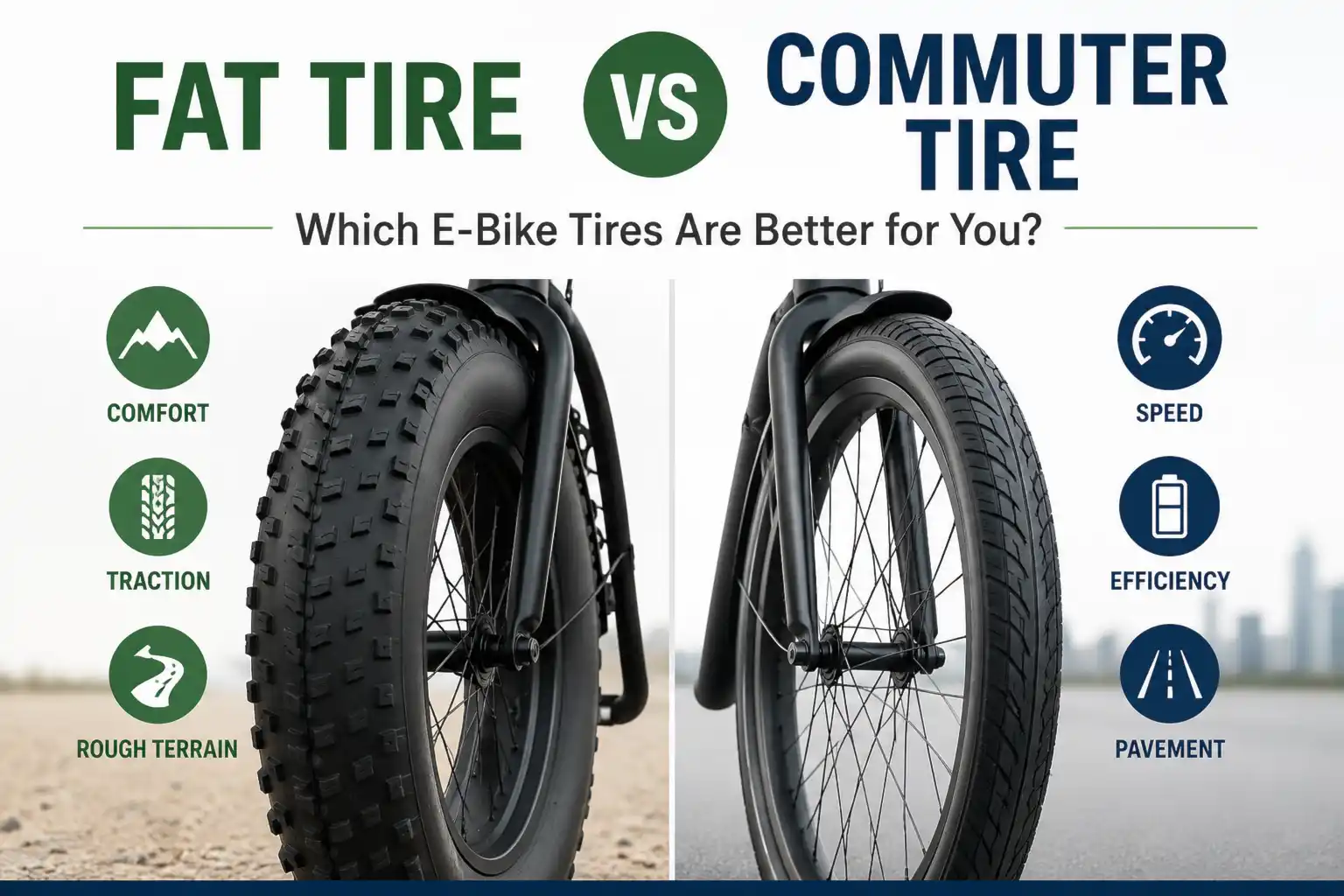
Which E-Bike Tires Should You Choose: Fat or Commuter?
Fat tires are best for comfort, traction, and rough terrain.
Commuter tires are better for speed, efficiency, and everyday pavement riding.
Quick Decision: Which Should You Choose?
If you don’t want to overthink it, here’s how it usually plays out:
Commuter tires tend to be the better choice for most riders because they’re faster, more efficient, and easier to live with day-to-day. Fat tires are a better fit if comfort and confidence matter more than speed—especially on rough or mixed terrain.
- Best for most riders: commuter tires
- Best for comfort and rough terrain: fat tires
- Best for beginners who want stability: fat tires
- Best for commuting and longer rides: commuter tires
📖 Read Next
Best Commuter Ebikes for 2026: Top Picks for Every Rider & Budget
5 Best Electric Bikes for Long-Distance Commuting
10 Common Mistakes New E-Bike Commuters Make (and How to Avoid Them)
Best E-Bike for DoorDash Delivery: Top Picks for Couriers
High-Quality Electric Bikes Under $3,000
Best Cargo E-Bikes for Commuting in 2025: A Comprehensive Guide
Who This Guide Is For (and Who It’s Not)
This guide is for you if you want a real-world answer—not just specs—on how tire choice affects your ride.
It’s especially helpful if you:
- Ride mixed terrain
- Care about comfort and range
- Aren’t sure what tire type actually fits your lifestyle
Why Tire Choice Matters More Than Most Riders Realize
Tires influence almost everything about how an e-bike rides: comfort over bumps, stability at low speeds, braking feel, and even how far your battery takes you.
A key concept here is rolling resistance—how much energy it takes to keep a tire moving. Wider, heavier tires generally increase resistance, which can reduce efficiency. The U.S. Department of Energy – Vehicle Efficiency Factors explains how weight and resistance directly impact energy use in electric vehicles.
What Counts as a Fat Tire E-Bike?
Fat tire e-bikes typically use tires around 3.8” to 5” wide. That extra width creates a larger contact patch with the ground, which improves traction and helps absorb bumps.
They’re commonly used for:
- Gravel and dirt paths
- Sand and beach riding
- Snow and wet grass
- Rough pavement and potholes
👉 Explore real world picks in our Best Fat Tire Electric Bikes guide
What Counts as a Commuter Tire?
Commuter e-bike tires are usually between 1.75” and 2.4” wide. They’re designed for efficient rolling on pavement, which makes them ideal for urban riding and longer distances.
Many commuter tires also include puncture-resistant layers—important for city use. Organizations like PeopleForBikes emphasize proper equipment and maintenance as key parts of safe, reliable riding.
👉 See top commuter options: Best Commuter Electric Bikes
Fat Tire vs Commuter Tire: Real-World Differences
In real riding conditions, the difference is less about “better” and more about how the bike feels.
Fat tires feel softer, more planted, and forgiving over rough surfaces. Commuter tires feel quicker, lighter, and more responsive—especially when accelerating or riding longer distances on pavement.
Comfort: Why Many Riders Prefer Fat Tires
Fat tires act like a form of passive suspension. The larger air volume helps absorb small impacts from cracks, potholes, and uneven roads, which can reduce fatigue and increase confidence.
From what I’ve seen, newer riders often feel more stable on fat tires—especially at slower speeds or on imperfect roads. The tradeoff is added weight and rolling resistance.
Why Commuter Tires Feel Faster and More Efficient
Commuter tires reduce rolling resistance, which improves acceleration and efficiency. Over longer rides, that translates to less effort and better battery range.
👉 If range matters to you, this guide goes deeper: E-Bike Range Explained
Battery Range Differences in the Real World
Fat tire e-bikes typically use more energy because the tires are heavier and create more resistance. Commuter tires are more efficient, which usually means more miles per charge.
👉 Battery size still matters, of course. To understand how battery capacity impacts distance, performance, and long-term use, see: Battery Capacity Explained
Real Cost of Fat Tires vs Commuter Tires
This is something many riders don’t consider upfront.
Fat tires are larger and often cost more to replace, and the lower efficiency can add up over time in terms of energy use. Commuter tires are generally cheaper, easier to source, and help maximize battery performance.
In simple terms:
Fat tires trade efficiency for comfort.
Commuter tires prioritize efficiency and lower long-term cost.
The Middle Ground: Hybrid / Plus Tires
Not every rider fits neatly into one category.
Many modern e-bikes now use tires in the 2.4” to 3.0” range. These “plus” or hybrid tires offer a noticeable boost in comfort compared to narrow commuter tires, without the full drag and weight of fat tires.
If you ride a mix of pavement and rougher roads, this can be a great balance.
Wet Weather Performance
Both tire types can perform well in the rain when properly maintained.
Fat tires generally provide more grip on uneven or slippery surfaces. Commuter tires tend to feel quicker and more responsive but can be less forgiving on rough wet roads.
The NHTSA Bicycle Safety Guidelines highlight that tire condition and maintenance are critical for safe riding—regardless of tire type.
What Tire Type Matches Your Terrain?
Match your tires to where you ride most often:
- Smooth pavement → commuter tires
- Rough city streets → hybrid or fat tires
- Gravel paths → hybrid or fat tires
- Sand → fat tires
- Snow → fat tires
Common E-Bike Tire Mistakes
A lot of riders choose based on looks instead of how they actually ride. The most common mistakes I see are:
- Choosing fat tires just for appearance
- Ignoring tire pressure completely
- Running very low PSI on pavement (hurts range)
- Using narrow tires on rough roads
- Skipping puncture protection for city riding
Tire Pressure Matters More Than You Think
Tire pressure is one of the easiest ways to improve comfort, grip, and efficiency.
Lower pressure gives you a softer ride and better traction. Higher pressure improves speed and range. The right setting depends on your weight, tire width, and terrain.
Keeping your tires properly inflated is also one of the simplest ways to improve safety and performance. 👉 For a full breakdown of care and upkeep, see E-Bike Maintenance Guide
Recommended E-Bike Tire PSI (Quick Reference)
| Rider Weight | Fat Tires (4”–5”) | Hybrid Tires (2.4”–3.0”) | Commuter Tires (1.75”–2.4”) |
|---|---|---|---|
| 120–150 lbs | 8–12 PSI | 22–30 PSI | 40–55 PSI |
| 150–180 lbs | 10–15 PSI | 25–35 PSI | 45–60 PSI |
| 180–220 lbs | 12–18 PSI | 30–40 PSI | 50–65 PSI |
| 220–260 lbs | 15–22 PSI | 35–45 PSI | 55–70 PSI |
| 260+ lbs | 18–25 PSI | 40–50 PSI | 60–75 PSI |
Start in the middle of the range and adjust based on comfort and terrain. Always stay within the PSI printed on your tire sidewall.
Tire Pressure Calculator Tool
Not sure what pressure to run? This quick calculator gives you a realistic starting range based on your weight, tire type, and terrain.
🔧 E-Bike Tire Pressure Calculator
Enter your details to get a recommended PSI range.
Disclaimer: This tool provides general estimates. Always follow your tire manufacturer’s recommended PSI range.
Want a more detailed pressure estimate? Try the full E-Bike Tire Pressure Calculator to adjust for rider weight, cargo, tire style, and riding surface.
How We Compare E-Bike Tires
When comparing fat tires and commuter tires, we focus on how they actually perform in real-world riding conditions—not just specs.
That includes:
- Comfort on rough vs smooth surfaces
- Rolling efficiency and battery impact
- Stability and rider confidence
- Maintenance and long-term usability
Ready to Upgrade Your Tires?
A good tire upgrade can noticeably improve comfort, efficiency, and overall ride quality—especially if your stock tires are worn or basic.
Commuter Tires (Best for Pavement & Range):
- Continental Contact Urban → Fast rolling, strong puncture protection, great for daily commuting
- Kenda Kwick Journey → Affordable, reliable option for everyday riding
Fat Tires (Best for Comfort & Traction):
- Maxxis Minion FBF → Excellent grip and control for trails and mixed terrain
- MOHEGIA 20” x 4.0 Fat Tire → Budget-friendly replacement for casual riding
👉 Choose based on how you actually ride – efficiency for pavement, or comfort and traction for rougher terrain.
FAQs
Generally yes, due to higher rolling resistance.
They can slightly reduce range compared to commuter tires.
Not necessarily – many modern bikes include comfort features.
Sometimes, depending on frame and rim compatibility.
Final Thoughts
For most everyday riders, commuter tires end up being the more practical choice.
Fat tires are a great option if comfort, stability, and rough terrain are part of your riding experience. Hybrid tires offer a strong middle ground.
The best tire is the one that matches how you actually ride – not just how the bike looks.
Read Me Next
External Sources
- U.S. Department of Energy – Fuel Economy & EV Efficiency
- National Highway Traffic Safety Administration – Bicycle Safety
- PeopleForBikes

Kristina is not just an enthusiast but a true authority on electric bikes. Nestled in the coastal beauty of Virginia, Kristina has found the perfect backdrop for her passion for electric biking. As a dedicated wife and homeschooling mom, her life revolves around family, faith, and the thrill of adventure.
Originally hailing from Ohio, Kristina's journey with electric bikes began as a curiosity and quickly evolved into a deep expertise. Her blog is a testament to her love for electric biking, combining her fascination for eco-friendly transportation with her coastal lifestyle.
When she's not cruising the beach on her electric bike, you'll find Kristina indulging in her other loves: long walks along the shore, getting lost in a good book, and cherishing moments with her loved ones. With a heart as big as her love for animals, especially cats, Kristina brings a unique perspective to the electric bike world, grounded in her strong faith in God and her dedication to a sustainable lifestyle.
Through her blog, Kristina shares her extensive knowledge of electric bikes, offering valuable insights, tips, and recommendations to fellow enthusiasts. Whether you're a seasoned rider or a newcomer to the electric bike scene, Kristina's blog is your go-to source for all things electric biking, fueled by her passion, expertise, and the scenic beauty of coastal Virginia.