Can You Charge an E-Bike Battery Right After a Freezing Ride?
Last Updated on November 22, 2026 by Kristina
You get home from a freezing ride, lean the e-bike against the wall, and reach for the charger. If the battery is still cold from the ride, pause before plugging it in. The temperature outside tells you it was a cold ride. Your battery manual tells you when the pack is ready to charge.
Charge only when the battery is within the charging-temperature range specified for your exact model and the charging port and connector are dry. If the pack is too cold or you’re unsure, let it warm naturally in a suitable dry location. There’s no universal 30-minute waiting period.
Can I plug it in yet?
| What you’re dealing with | What to do next |
|---|---|
| The battery is still cold, or you’re unsure whether it’s within range. | Leave it unplugged and let it warm naturally in a dry indoor space. Check the charging range in your model’s manual. |
| The battery has warmed, but there’s condensation around the charging port. | Wait until the port and charger connector are dry. |
| The battery is within its approved charging range, and the port and connector are dry. | Follow the manual’s charging steps and use the supplied or manufacturer-approved charger. |
| The battery is within range and everything is dry, but charging still won’t start. | Check the charger lights or display error against the manual, then use EBE’s charging diagnostic tool. |
Find your battery’s charging temperature range
Look up the manual for your exact bike or battery model. Search the PDF for charging temperature or operating temperature during charging. If the manual lists separate ranges for riding, charging, and storage, use the charging range for this decision.
For example, Shimano’s STEPS E6100 documentation lists 32–104°F (0–40°C) for charging and 14–122°F (−10–50°C) for discharge. That illustrates why a battery can power a ride in conditions colder than those permitted for charging. Follow the manual for your own system.
What to do when you get inside
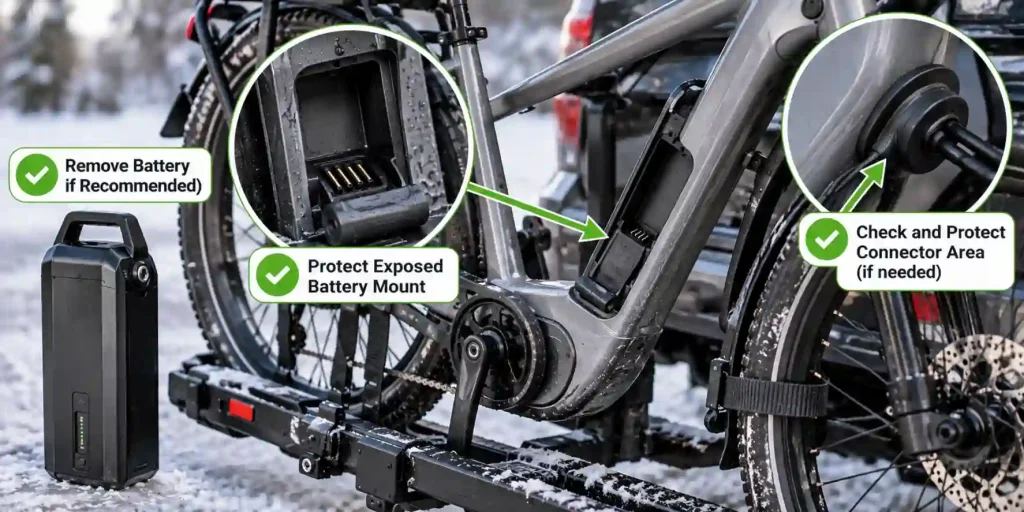
- Turn the bike off and leave the charger disconnected. If the bike came in covered in slush, follow the manual’s cleaning instructions and keep moisture away from the electrical connections.
- Let the battery warm naturally. If your battery is user-removable, take it off as directed and set it on a stable, dry surface in a suitable room-temperature location. If it’s built in, bring the whole bike into a suitable space and let it warm there. If the bike has to stay in a freezing shed, wait for suitable conditions before charging.
- Check the charge port and plug. Cold surfaces can collect condensation after moving indoors. Wait until visible moisture is gone and the port and connector are dry. Avoid inserting anything into the port. If you suspect water got inside the battery or see damaged contacts, contact the manufacturer or a qualified service shop before charging.
- Plug in once the battery is within range and everything is dry. Follow the manual’s charging sequence, use the charger supplied with the system or a manufacturer-approved replacement, and stay present while it charges. Unplug the charger when charging is complete.
How long should you wait?
That depends on how cold the pack got, how long it was outside, and where it’s warming up. A battery that sat outside through a full work shift may take longer to warm than one brought in after a short ride. Moving the bike indoors starts the warm-up. The pack itself takes time to adjust.
If you’re unsure whether the pack has warmed through, give it more time in a dry, room-temperature space and follow any model-specific instructions. Keep it away from radiators, space heaters, heating pads, and hair dryers.
Example: Your bike sat outside through an eight-hour shift
If your bike was parked outside in the cold all day, budget time for the battery to warm up before you count on a top-up. If your workplace permits indoor charging, bring the removable battery or the whole bike indoors as appropriate and follow the checks above. If you can’t bring it inside, plan to cover both legs on the charge you leave home with and leave some range in reserve. EBE’s winter e-bike riding guide covers more cold-weather ride planning.
What if the battery still won’t charge?
Once it has warmed and the connections are dry, check the manual for the charger’s indicator lights and any battery or display error. Confirm you’re using the correct charger and that the outlet has power. If charging still doesn’t start, follow EBE’s e-bike charging troubleshooting guide or use the charging diagnostic tool to narrow down the issue.
If you see swelling, cracks, leaking, or signs of water intrusion, leave it disconnected and contact the manufacturer or a qualified service shop. EBE’s battery fire prevention guide covers other warning signs to watch for.
Frequently asked questions
Can I charge an e-bike battery in an unheated garage?
Only if the battery and charging environment meet the manufacturer’s requirements. A garage can stay cold enough overnight to put the pack outside its charging range, so check the conditions when you’re actually going to plug in. If you’re putting the bike away for weeks, see EBE’s winter battery storage guide for longer-term care.
Can I plug it in and let the battery management system decide?
Follow the manufacturer’s limits yourself. Some systems block charging when the pack is too cold, but an indicator light or the presence of a battery management system doesn’t tell you that every charging condition is met.
Why You Can Trust Electric Bike Explorer
This guide draws on manufacturer documentation for charging and discharge limits and U.S. Consumer Product Safety Commission guidance for everyday charging practices. The Shimano figures are an example from a specific system. Use the current manual for your exact battery and charger.

Kristina is not just an enthusiast but a true authority on electric bikes. Nestled in the coastal beauty of Virginia, Kristina has found the perfect backdrop for her passion for electric biking. As a dedicated wife and homeschooling mom, her life revolves around family, faith, and the thrill of adventure.
Originally hailing from Ohio, Kristina's journey with electric bikes began as a curiosity and quickly evolved into a deep expertise. Her blog is a testament to her love for electric biking, combining her fascination for eco-friendly transportation with her coastal lifestyle.
When she's not cruising the beach on her electric bike, you'll find Kristina indulging in her other loves: long walks along the shore, getting lost in a good book, and cherishing moments with her loved ones. With a heart as big as her love for animals, especially cats, Kristina brings a unique perspective to the electric bike world, grounded in her strong faith in God and her dedication to a sustainable lifestyle.
Through her blog, Kristina shares her extensive knowledge of electric bikes, offering valuable insights, tips, and recommendations to fellow enthusiasts. Whether you're a seasoned rider or a newcomer to the electric bike scene, Kristina's blog is your go-to source for all things electric biking, fueled by her passion, expertise, and the scenic beauty of coastal Virginia.