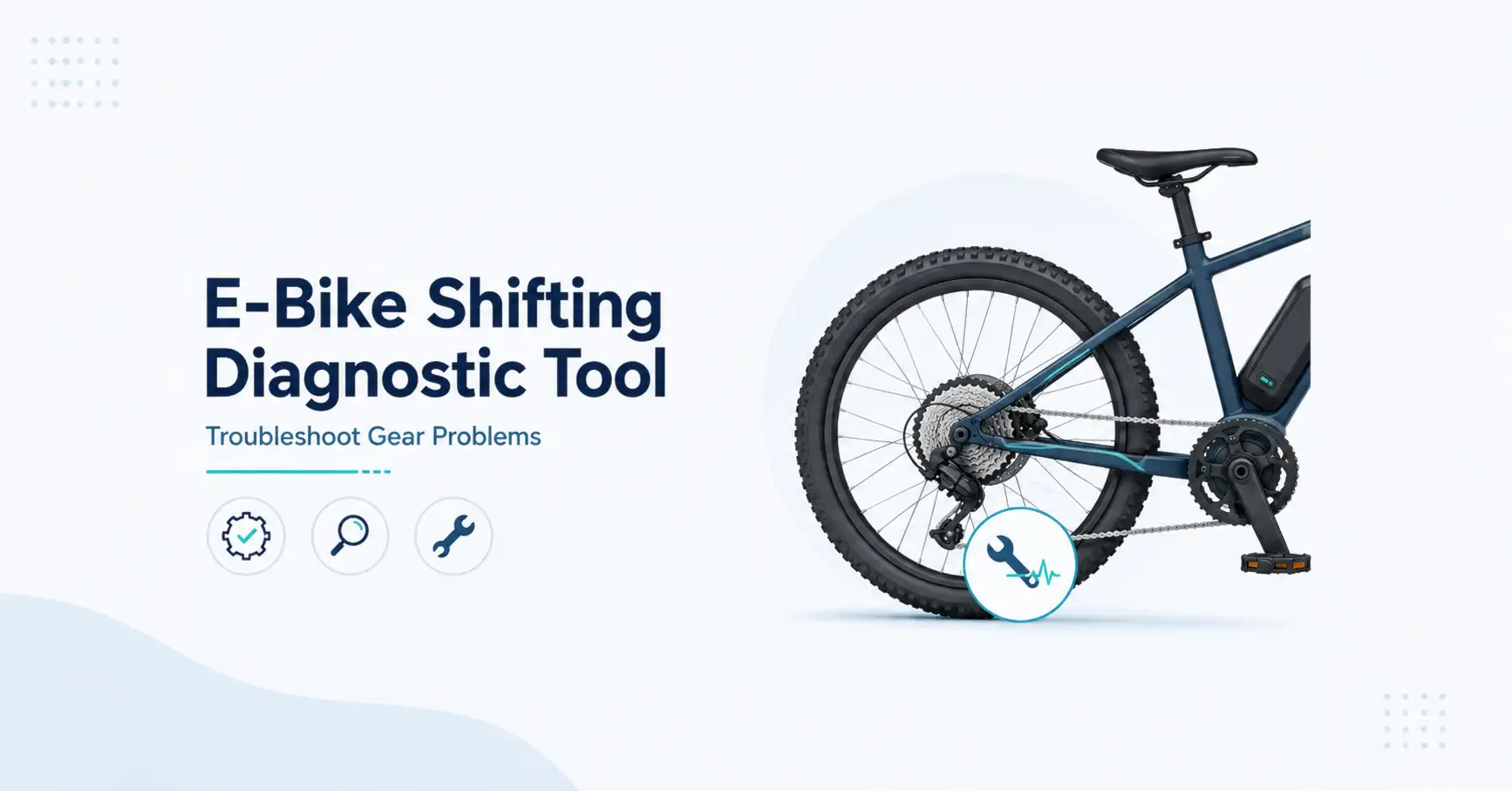
E-Bike Shifting Diagnostic Tool: Troubleshoot Gear Problems
Last Updated on August 28, 2026 by Kristina
Having trouble getting your e-bike to shift properly? This free E-Bike Shifting Diagnostic Tool asks a few simple questions about what your bike is doing and helps narrow down what you should check first.
You do not need to know much about derailleurs, cassettes, shift cables, or internal gear hubs to use it. Just choose the answers that best match what you are experiencing.
The tool can help point you toward common trouble areas such as derailleur indexing, cable problems, drivetrain wear, hanger alignment, electronic shifting, internal gear hubs, and problems that become more noticeable under motor load.
If you want the full explanation behind these problems and the repair steps, see my E-Bike Troubleshooting and Maintenance Guide.
Try the E-Bike Shifting Diagnostic Tool
Answer 6 quick questions about your shifting system, symptoms, when the problem started, motor-assist behavior, and where the problem happens. The tool will show you what to check first, what to check next, and whether the problem may be better handled by a bike shop.
Important: This tool mainly diagnoses rear shifting problems. If your bike has multiple front chainrings and the problem is with the front derailleur, the cause and adjustment procedure may be different.
Why Won’t My E-Bike Shift?
Answer 6 quick questions to narrow down what to check first when your e-bike shifts slowly, skips, misses gears, needs extra clicks, or will not shift at all.
This tool matches symptoms to common troubleshooting areas. It cannot confirm a mechanical or electrical failure without inspecting the bike. Follow the instructions for your exact drivetrain and e-bike system.
🔧 How This Tool Was Researched
This tool and the guidance on this page are based on manufacturer instructions, established safety guidance, technical references, and common rider experiences. Stop using or charging the bike if you notice smoke, swelling, unusual heat, damaged wiring, sparks, or a strong chemical odor.
What Can the E-Bike Shifting Tool Help Diagnose?
Poor shifting does not always mean the derailleur itself is broken. Several different drivetrain problems can produce similar symptoms, which is why the tool looks at more than one clue before suggesting what to inspect.
Derailleur Indexing
If one shifter click does not move the chain cleanly to the next rear cog, derailleur indexing may be slightly out of adjustment.
Common signs include needing an extra click, rattling between gears, hesitation before a shift, or a chain that seems to sit between neighboring cogs.
Shift Cable and Housing Problems
Mechanical derailleurs depend on a shift cable moving smoothly through its housing. Cable slack, corrosion, contamination, fraying, sharp bends, or damaged housing can all interfere with gear changes.
If the shifter clicks normally but the derailleur reacts slowly or inconsistently, the cable system is worth checking.
Bent or Misaligned Derailleur Hanger
The derailleur hanger is the small part that connects the rear derailleur to the bike frame. If it is knocked out of alignment, shifting may work properly in some gears and badly in others.
This becomes especially important if the problem began after the bike fell over, was transported, was bumped on the derailleur side, or arrived with poor shifting after shipping.
Accurate hanger alignment normally requires a dedicated alignment gauge. This is often a better job for a bicycle technician than a beginner repair.
Chain, Cassette, or Freewheel Wear
A worn chain or worn rear cogs may cause skipping, poor engagement, noise, and shifts that become much worse when you pedal hard.
If the chain mainly skips under load, see my guide explaining why an e-bike chain skips when pedaling hard.
Dirty or Poorly Lubricated Drivetrain
Dirt, grit, dried lubricant, and stiff chain links can interfere with smooth shifting. Cleaning and inspecting the drivetrain is one of the easiest checks to make before adjusting components.
My e-bike chain maintenance guide explains how to clean, lubricate, and inspect the chain without contaminating the brakes.
Rear-Wheel or Cassette Problems
If shifting changed immediately after the rear wheel was removed, make sure the wheel is seated correctly and the axle is secured according to the bike manufacturer’s instructions.
Unwanted movement in the cassette, freewheel, freehub, axle, or wheel bearings can also affect drivetrain behavior and should not be treated as a simple indexing adjustment.
Electronic Shifting Problems
Electronic shifting systems require a different troubleshooting approach from conventional cable-operated derailleurs.
Depending on the exact system, possible problems can involve power, battery charge, wiring, wireless communication, pairing, electronic adjustment, calibration, or manufacturer-specific fault codes.
Always use the official service instructions for your exact electronic shifting system before changing settings or disconnecting components.
Internal Gear Hub Problems
Internal gear hubs and continuously variable systems such as Enviolo do not use the same adjustment procedure as a conventional rear derailleur.
Depending on the system, slow shifts or incomplete ratio changes can involve cable adjustment, calibration, electronic controls, high input torque, or an internal hub problem.
Grinding, repeated slipping, or sudden loss of engagement deserves model-specific troubleshooting and may require professional service.
Why the Tool Asks About Motor Assistance
E-bike drivetrain problems can behave differently under motor load.
On a mid-drive e-bike, motor power is transmitted through the bicycle drivetrain. That means the chain, rear cogs, chainring, and shifting system may be carrying substantially more load than they would during light pedaling.
A chain or cog that appears to work normally during a gentle test may skip when you climb a hill or use stronger motor assistance.
That is why the tool asks whether the problem still happens with motor assistance turned off and whether it becomes worse while climbing or pedaling hard.
If you are unsure how motor type affects the drivetrain, see my E-Bike Motor Guide.
Why the Tool Asks What Happened Before the Problem Started
When a shifting problem started can be just as useful as what the drivetrain is doing.
A sudden problem after a fall or impact raises different questions than shifting that gradually becomes worse over several months.
The tool asks about:
- A fall or impact
- Transporting the bike
- Removing and reinstalling the rear wheel
- A newly assembled e-bike
- A recently installed chain, cassette, or freewheel
- Recent drivetrain service
- A problem that gradually became worse
Those clues help the tool decide whether alignment, wheel positioning, indexing, drivetrain wear, or another issue deserves attention first.
What Does “Check This First” Mean?
The results are not a percentage-based diagnosis and they do not prove that a particular component has failed.
Instead, the tool compares your answers with common symptom patterns and places the most useful inspections in a practical order:
- Check This First – the area your answers point toward most strongly.
- Check This Next – another reasonable explanation to investigate.
- Also Worth Checking – a related issue that could produce similar symptoms.
The goal is to help you avoid randomly adjusting parts until something changes.
When the Tool Will Tell You to Stop Riding
Some shifting problems are inconvenient. Others can create a meaningful safety risk.
The tool will stop the normal troubleshooting results when you report warning signs such as:
- The derailleur or chain moving toward the rear-wheel spokes
- A loose rear wheel, axle, cassette, freewheel, or hub
- A visibly bent derailleur or hanger
- Repeated sudden loss of drivetrain engagement
- Smoke, unusual battery heat, swelling, sparks, or a strong chemical or burning odor
Do not keep riding simply to reproduce one of these symptoms.
What Can I Reasonably Check Myself?
Many basic drivetrain inspections are reasonable for an e-bike owner who is comfortable doing simple bicycle maintenance.
Beginner-friendly checks may include:
- Inspecting the chain and cassette for dirt
- Cleaning and lubricating the chain
- Measuring chain wear with an appropriate chain-wear gauge
- Looking for visible cable or housing damage
- Making a very small indexing correction when the manufacturer’s instructions support it
- Checking whether the rear wheel is correctly seated and secured
If you are still learning how gears work, my guide to changing gears on an e-bike explains the basic relationship between gear choice, pedal pressure, hills, and drivetrain load.
When Is a Bike Shop the Better Choice?
I would generally recommend professional help when the problem involves:
- Derailleur-hanger alignment
- A visibly bent or damaged derailleur
- A derailleur approaching the spokes
- A loose rear wheel, cassette, freehub, freewheel, or hub
- A mechanical shifter that no longer pulls cable correctly
- Persistent electronic shifting faults
- An internal gear hub that slips, grinds, or loses engagement
- Shifting that remains inconsistent after reasonable cleaning and adjustment
If you have several symptoms and are not sure where to begin, you can also use the broader E-Bike Troubleshooting Tool.
Looking for more calculators and interactive resources? Visit the Electric Bike Explorer Tools Hub for more e-bike tools and troubleshooting resources.
Frequently Asked Questions
Can this tool tell me exactly what is wrong with my e-bike?
No. The tool matches your symptoms with common troubleshooting patterns and recommends what to inspect first. A confirmed mechanical or electrical diagnosis may require physically inspecting the bike.
Does this tool work for every e-bike?
It covers common mechanical rear derailleurs, electronic derailleur systems, and internal gear hubs, but individual drivetrains can have manufacturer-specific procedures. Always check the manual for your exact components before making adjustments.
Can I use the tool if I do not know what type of gears my e-bike has?
Yes. Choose “I’m not sure” for the shifting-system question. The tool will use more general troubleshooting information.
Why does the tool ask whether the bike shifts badly with the motor off?
That helps separate problems that happen regardless of motor assistance from problems that become more noticeable under higher drivetrain load.
Can a bad e-bike motor cause shifting problems?
A conventional mechanical derailleur does not depend on the motor to change gears. However, loss of motor assistance can sometimes feel like the bike is slipping or failing to accelerate. Electronic and integrated shifting systems may also communicate with the e-bike’s electrical system.
Why does my e-bike shift normally in a stand but skip when I ride it?
The drivetrain carries much more force while you are riding, especially when climbing or using a mid-drive motor. Wear or alignment problems can therefore become more obvious under load.
Should I adjust the derailleur limit screws if my e-bike will not shift properly?
Not as a first step. The H and L screws control the derailleur’s travel at the ends of the cassette. Randomly turning them can create new problems, including allowing the drivetrain to move too close to the spokes. Check indexing, cable condition, hanger alignment, and the manufacturer’s procedure first.
What if the tool says my chain or cassette may be worn?
Measure the chain with a chain-wear gauge appropriate for your chain and inspect whether skipping repeatedly happens on the same rear cogs. A worn cassette or freewheel may continue to skip even after a new chain is installed.
Can I copy the diagnostic results for my bike shop?
Yes. Use the Copy Results button at the end of the tool. The summary includes the symptoms you selected and the areas the tool recommends checking, which can help you explain the problem to a technician.
Important Safety Reminder
This tool is designed to help narrow down common shifting problems, not encourage unsafe repairs.
Turn the e-bike off before putting your hands near the drivetrain. Never activate the motor while your fingers, clothing, tools, or cleaning materials are close to the chain, cassette, chainring, derailleur, or rear wheel.
Stop riding if the drivetrain can enter the spokes, the rear wheel or hub is loose, the drivetrain repeatedly loses engagement, or a component appears significantly damaged.
Stop using or charging the e-bike if you notice smoke, unusual battery heat, swelling, sparks, or a strong chemical or burning odor. Do not open a lithium-ion battery pack.
Technical References
- Park Tool – Rear Derailleur Advanced Troubleshooting
- Park Tool – Rear Derailleur Hanger Alignment
- SRAM – Rear Gear Adjustment
- Shimano – LINKGLIDE Drivetrain Technology
- Enviolo – High Shift Forces and Delayed Shifting
- U.S. Consumer Product Safety Commission – Micromobility Safety Information

Kristina is not just an enthusiast but a true authority on electric bikes. Nestled in the coastal beauty of Virginia, Kristina has found the perfect backdrop for her passion for electric biking. As a dedicated wife and homeschooling mom, her life revolves around family, faith, and the thrill of adventure.
Originally hailing from Ohio, Kristina's journey with electric bikes began as a curiosity and quickly evolved into a deep expertise. Her blog is a testament to her love for electric biking, combining her fascination for eco-friendly transportation with her coastal lifestyle.
When she's not cruising the beach on her electric bike, you'll find Kristina indulging in her other loves: long walks along the shore, getting lost in a good book, and cherishing moments with her loved ones. With a heart as big as her love for animals, especially cats, Kristina brings a unique perspective to the electric bike world, grounded in her strong faith in God and her dedication to a sustainable lifestyle.
Through her blog, Kristina shares her extensive knowledge of electric bikes, offering valuable insights, tips, and recommendations to fellow enthusiasts. Whether you're a seasoned rider or a newcomer to the electric bike scene, Kristina's blog is your go-to source for all things electric biking, fueled by her passion, expertise, and the scenic beauty of coastal Virginia.