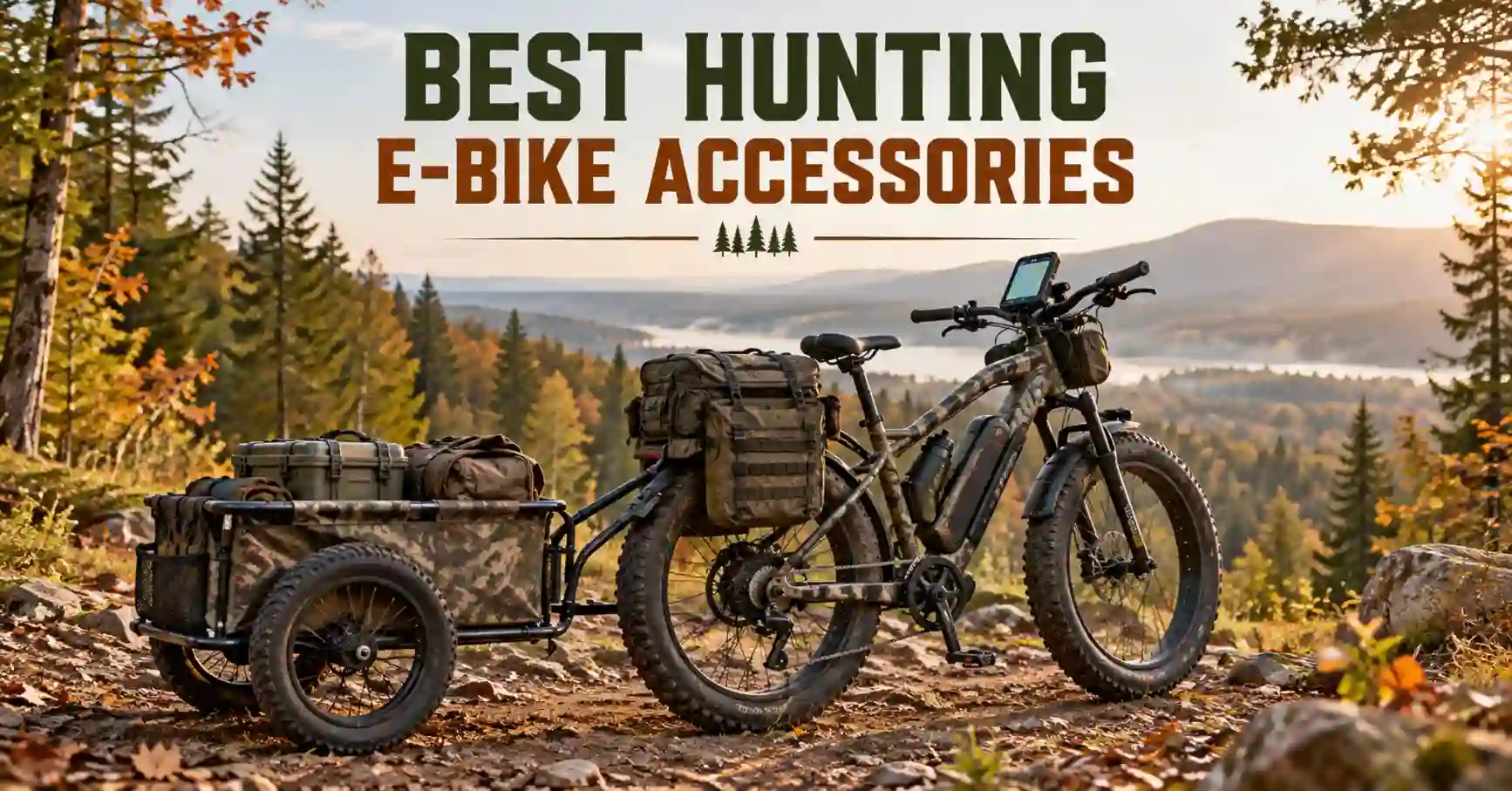
Best Hunting E-Bike Accessories: Trailers, Bags, GPS & Trail Gear
Last Updated on September 9, 2026 by Kristina
📚 Research-based buying guide: I have not personally tested every bike in this guide. These recommendations are based on current manufacturer specifications, safety documentation, warranty and return policies, independent testing, service information, and available rider feedback.
A good hunting e-bike can get you farther from the truck, but the bike itself is only part of the setup. The right hunting e-bike accessories can make it easier to carry gear, deal with a flat, navigate back to camp, extend your usable range, and haul equipment without turning the bike into an overloaded mess.
I would not buy every accessory marketed to hunters. I would start with the problems I actually need to solve. A hunter riding two miles down a maintained forest road needs a very different setup from someone towing equipment several miles over rough terrain.
If you are still choosing the bike itself, start with my best hunting e-bikes guide. For hunters specifically targeting whitetails, I also have a separate guide to the best e-bikes for deer hunting.
Quick Picks: The Hunting E-Bike Accessories I Would Prioritize
| Accessory | Best for | What matters most |
|---|---|---|
| Off-road cargo trailer | Stands, camp gear, bulky equipment, game retrieval where legal | Axle compatibility, towing capacity, width, braking impact |
| Waterproof panniers or cargo bag | Clothing, food, tools, electronics, optics | Rack fit, weather protection, secure mounting |
| Handheld GPS | Navigation away from cell service | Battery life, weather resistance, offline navigation |
| Tire repair kit and pump | Getting back after a puncture | Correct tube or tubeless supplies, tools, inflation capacity |
| Manufacturer-approved spare battery | Long approaches, hills, cold weather, range reserve | Exact compatibility, safe transport, added weight |
| Better lighting | Predawn and after-dark riding | Beam pattern, runtime, mounting, backup light |
| Heavy-duty hitch rack | Transporting a heavy hunting e-bike | Bike weight, tire width, wheelbase, receiver size |
Which Hunting E-Bike Accessories Do You Actually Need?
I think this is a better question than asking which accessories are considered essential for every hunter. The answer depends on the hunt.
| If You Mainly… | I Would Prioritize… |
|---|---|
| Scout or make short day trips | Repair kit, pump, lighting, small cargo bag, phone with offline maps |
| Hunt whitetails | Panniers, repair kit, lights, navigation, trailer when hauling stands or other bulky equipment |
| Travel deep into elk or backcountry terrain | Dedicated GPS, larger repair kit, range reserve, emergency gear, and a properly matched trailer when needed |
| Ride during cold hunting seasons | Extra range reserve, properly stored battery, gloves, lights, and navigation backup |
| Tow heavier loads | Compatible trailer, careful brake inspection, range planning, and secure low-mounted cargo |
| Hunt on public land | Offline navigation, current land-manager rules, repair gear, and a route plan |
If I am only making a short scouting trip, I do not need the same trailer-and-spare-battery setup I might want on a longer backcountry hunt. Buying for the actual ride keeps weight and cost under control.
🔎 Why You Can Trust This Guide
I compared current manufacturer specifications, compatibility information, load ratings, battery-safety guidance, land-management rules, and outdoor-use features rather than simply choosing products with camouflage or hunting branding.
I have not personally tested every accessory in this guide, so manufacturer specifications are treated as manufacturer claims unless independently verified. Affiliate relationships do not determine my recommendations. You can read more about Electric Bike Explorer’s research and editorial process.
1. An Off-Road Cargo Trailer Is the Most Useful Upgrade for Heavy Loads
If I could add only one major accessory to a hunting e-bike that regularly carries bulky equipment, I would probably choose a trailer before piling more weight on top of the bike.
A trailer can carry a tree stand, blind, camp equipment, cooler, tools, or other awkward cargo without stacking everything high over the rear wheel. It can also help keep the bike itself more manageable.
There is an important downside. Towing adds total weight and rolling resistance. Hills become harder, braking distances can increase, tight turns need more room, and battery consumption usually rises.
Burley Coho XC – Best for Narrow Trails
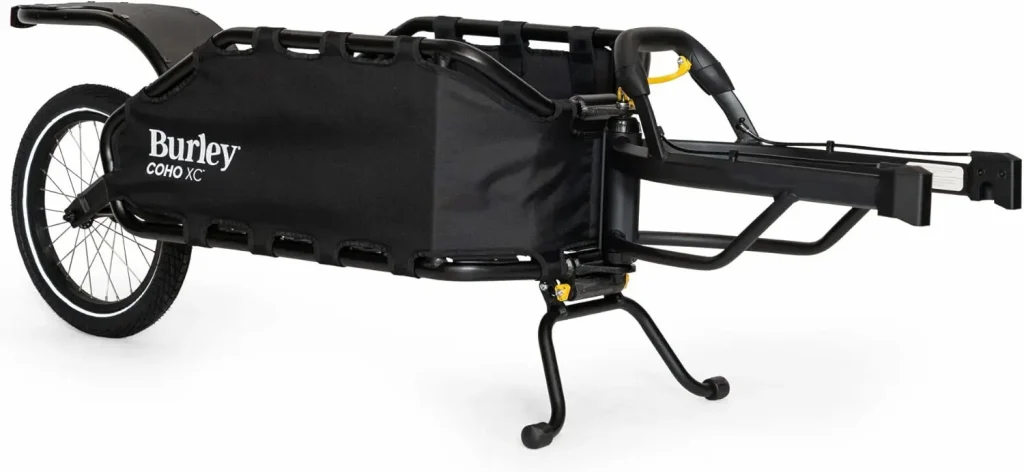
The Burley Coho XC is the trailer I find most interesting for hunters who need a narrow setup.
Burley currently rates it for up to 70 lb of cargo and lists a 70-liter cargo space. It uses one wheel, coil-spring suspension, and an adjustable-width yoke designed for hub widths from 126 mm to 197 mm.
The single-wheel layout keeps the trailer narrower than a typical two-wheel game trailer, which can be helpful on tighter routes.
The catch is compatibility. Burley requires a Coho-specific thru axle, 5 mm skewer, or nutted axle adapter, and the axle is sold separately. I would use Burley’s axle fit guide before ordering rather than assuming it will attach to a particular hunting e-bike.
QuietKat All-Terrain Game Trailer – Best for a Wider Stable Platform
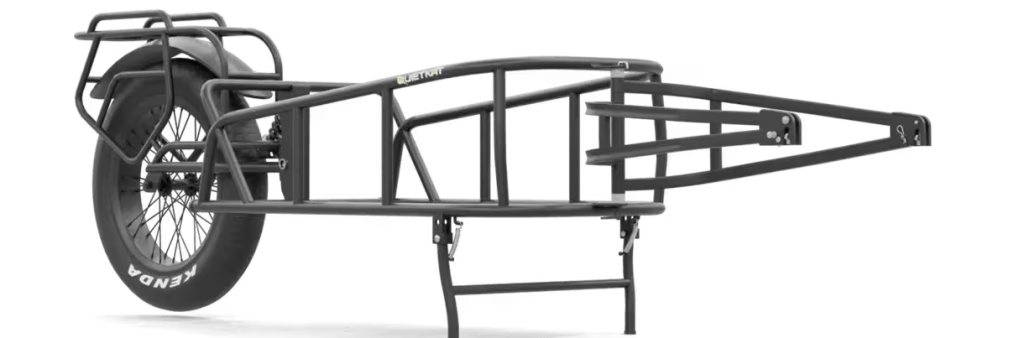
The QuietKat All-Terrain Game Trailer takes a different approach.
QuietKat lists a 47 x 18 in. cargo area, two 20 x 4 in. tires, a 38 lb trailer weight, and a manufacturer-rated load capacity of 100 lb.
I like the idea of a two-wheel platform for awkward loads because the trailer supports itself when stopped. The tradeoff is width. That can make it less convenient than a single-wheel trailer on tight routes.
QuietKat says the trailer connects using its included 3/8 in. threaded rear axle or 12 mm rear-axle connection. I would still verify the axle configuration on the specific bike before buying.
Availability checked September 8, 2026: QuietKat lists this trailer as In Transit – Arriving Soon.
Do Not Confuse Hand-Cart Capacity With Bike-Towing Capacity
This is one specification I think hunters should pay particular attention to.
Rambo’s aluminum game/hand cart, for example, is rated by Rambo for up to 300 lb when used as a hand cart. When attached to a Rambo bike, however, Rambo limits the load to 70 lb.
That is a huge difference.
Whenever I compare hunting trailers or carts, I want the actual towing capacity while attached to the bike, not the biggest load number displayed on the page.
You also need to respect the bike manufacturer’s limits. My guide to e-bike rider and cargo weight limits explains why bike payload, rider weight, rack capacity, cargo, and trailer ratings should not be treated as one interchangeable number.
2. Waterproof Panniers Are Often Better Than a Heavy Backpack
I prefer keeping reasonable cargo weight on the bike instead of carrying everything on my back. A heavy backpack can add strain and make rough riding less comfortable.
Panniers work especially well for lighter gear such as:
- rain gear
- gloves and spare layers
- food
- small tools
- first-aid supplies
- electronics
- straps
I would prioritize secure mounting over maximum volume. A huge bag that moves around on rough terrain is less useful than a smaller bag that stays securely attached.
QuietKat Waterproof Pannier Bag
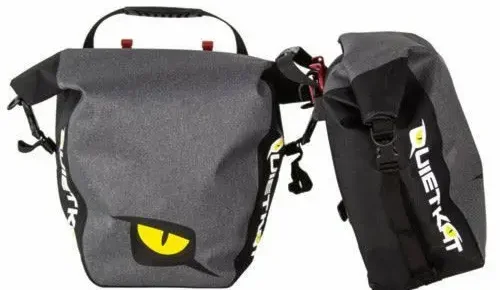
QuietKat lists its Waterproof Pannier Bag at 22 L with a dry-bag-style fold-and-clamp closure and quick-release attachment.
QuietKat describes the material as marine-grade and waterproof. It is designed to mount to compatible pannier racks or QuietKat trailer setups.
Availability checked September 8, 2026: QuietKat currently lists the pannier as In Transit – Arriving Soon, so I would check availability before depending on it for an upcoming hunt.
ORTLIEB Sport-Roller Plus – Good Waterproof General-Purpose Option
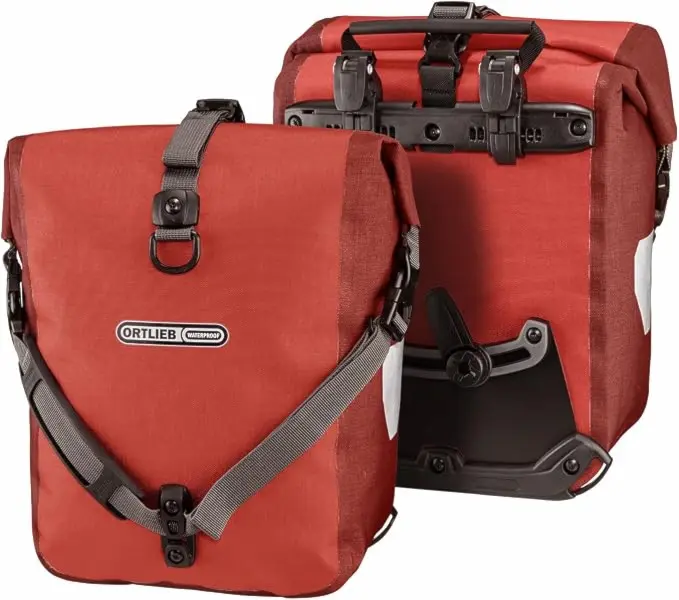
The ORTLIEB Sport-Roller Plus is not made specifically for hunting, but I actually think its design makes a lot of sense for rough outdoor use.
The panniers provide 25 L of total storage as a pair, with 12.5 L per bag. ORTLIEB uses abrasion-resistant Cordura fabric, a roll-top closure, reflective details, and its Quick-Lock2.1 mounting system. The bags carry an IP64 rating for protection against dust and splashing water.
I like these for clothing, food, tools, first-aid supplies, electronics, and other gear I want protected from rain, mud, and trail debris. The QL2.1 mounting hooks fit racks up to 16 mm and include inserts for smaller rack tubing. ORTLIEB also offers a separate 20 mm hook for some e-bike racks, so I would measure the rack tubing before ordering rather than assuming they will fit every hunting e-bike.
3. A Handheld GPS Can Be More Valuable Than Another Bike Upgrade
If I am riding several miles from the truck, navigation moves high on my list.
A smartphone can work very well when offline maps are downloaded in advance, but I would not make a phone my only navigation plan in remote terrain. Cold, battery drain, damage, or a dead phone can turn into a much bigger problem when cell coverage is poor.
Garmin eTrex Solar
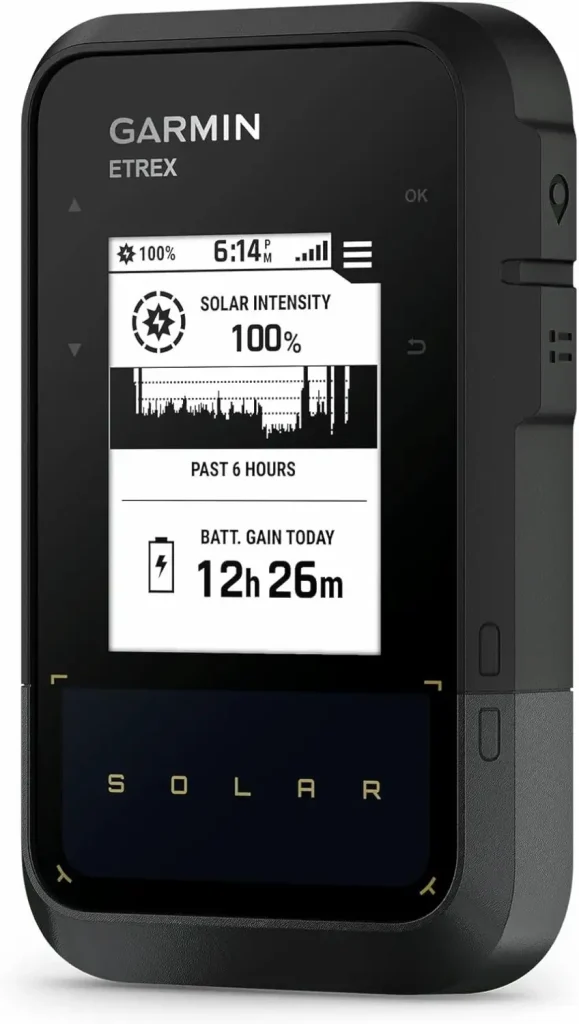
The Garmin eTrex Solar is one of the simpler dedicated handheld GPS options I would consider.
Garmin currently rates it for up to 200 hours using GPS-only tracking, up to 100 hours with GNSS and multi-band tracking, and up to 1,800 hours in expedition mode. It carries an IPX7 water-resistance rating.
Garmin also advertises unlimited battery life under 75,000-lux solar conditions. I would treat that as an ideal-condition manufacturer claim, not something I would count on beneath tree cover or during short, cloudy hunting-season days.
For me, the main appeal is simply having a dedicated navigation device with very long rated battery life as a backup to the phone.
4. Carry Tire Repair Gear Before Fancy Extras
A flat several miles into the woods can turn an easy ride into a long walk.
That is why I would buy repair equipment before comfort upgrades and many electronics.
For a tube-equipped hunting e-bike, my basic kit would include:
- a spare tube in the correct size
- tire levers
- a patch kit
- a compact pump capable of inflating the bike’s tires
- a temporary tire boot
- the correct tools for wheel removal
- a small multi-tool
For tubeless tires, I would carry the plugs, sealant-related supplies, and inflation equipment appropriate to that setup instead.
The wheel-removal point matters on e-bikes because a rear hub-motor wheel may require tools that a conventional bicycle wheel does not.
Park Tool TR-1 and TB-2
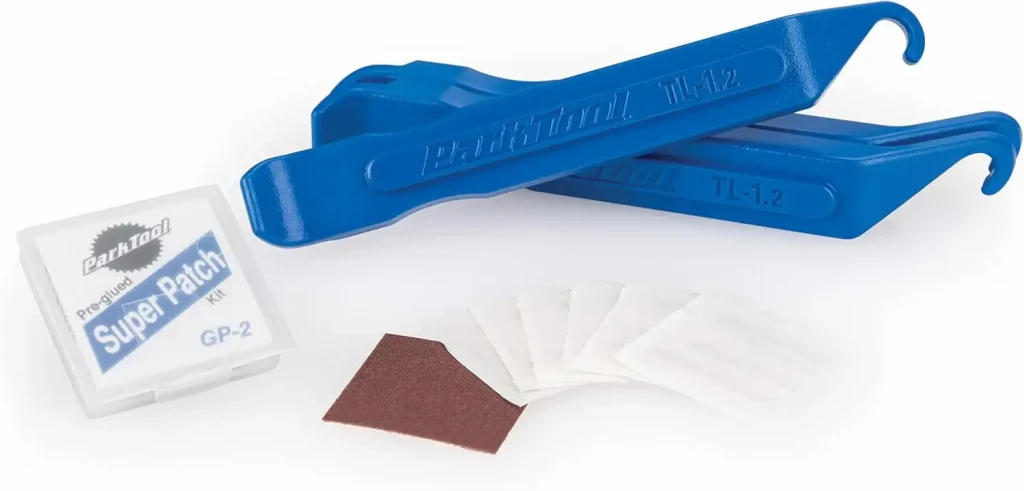
The Park Tool TR-1 includes tire levers and a pre-glued tube patch kit.
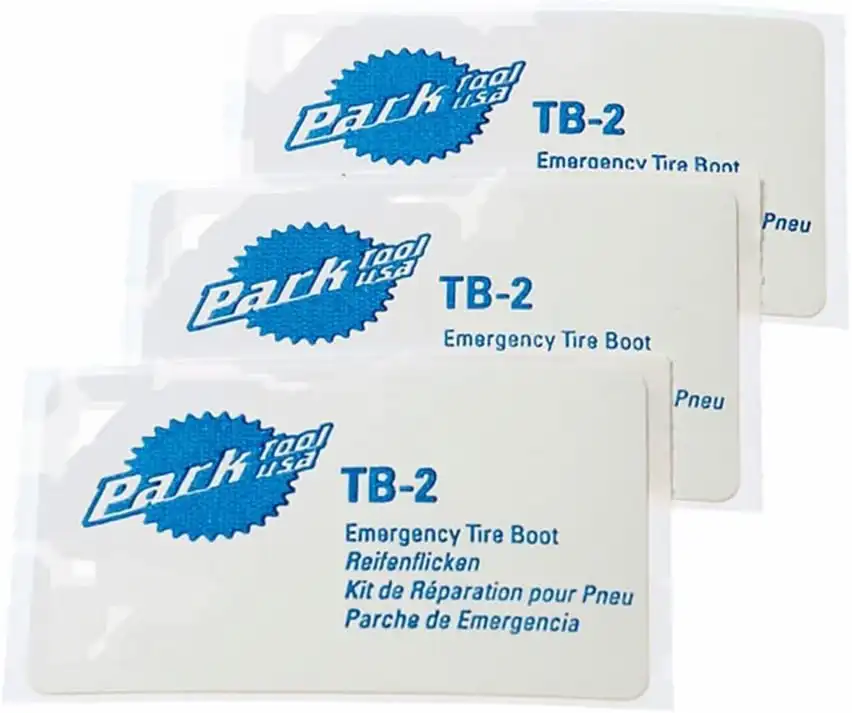
The Park Tool TB-2 Emergency Tire Boot is designed as a temporary repair for a damaged tire casing on tires that use inner tubes. Park Tool specifically says the TB-2 is not intended for tubeless tire systems and should be treated as a temporary fix.
Neither replaces a spare tube, pump, or proper repair tools. I see them as small additions that can improve the chance of getting back to the vehicle.
5. A Spare Battery Can Be Useful – But It Has to Be the Right Battery
Hunters often solve range anxiety by thinking about a second battery. Sometimes that makes sense, particularly for long approaches, steep terrain, cold weather, or trips where the loaded return ride may require more power than the ride in.
Before buying one, I would first estimate how much range I actually need. My guide to how much range a hunting e-bike really needs explains why terrain, temperature, rider weight, speed, assist level, and cargo matter so much.
If I carry a second battery, I would only use a battery confirmed as suitable for the exact e-bike system.
The U.S. Consumer Product Safety Commission advises riders to use replacement or secondary battery packs that have been tested and approved to work safely with the device and confirmed as suitable by the device manufacturer. CPSC also says to use the charger provided with or recommended for the device.
I would not buy a questionable generic battery or “universal” charger simply because the plug or voltage appears to match.
Cold Weather Deserves Extra Range Reserve
Hunting season often means cold mornings, and cold can temporarily reduce battery performance and usable range.
Bosch eBike Systems notes that as temperature decreases, battery performance is temporarily reduced and riders can expect less normal range in winter conditions. Bosch recommends storing and charging its batteries at room temperature before inserting them into the bike shortly before a cold-weather ride.
Those instructions are specific to Bosch batteries, so I would always follow the temperature guidance from the manufacturer of the battery on my own bike.
The practical lesson is simple: I would not plan a cold-weather hunting ride around the bike’s best-case summer range.
6. Protect a Spare Battery From Impact and Damage
A second battery adds substantial weight, and I would not let it bounce loose inside a metal basket or trailer.
I want a spare battery secured so it cannot:
- fall from the bike
- slam against hard tools or cargo
- have its terminals damaged
- shift enough to affect handling
- sit in standing water
I would also inspect a battery after a serious crash or impact.
If a lithium-ion battery shows swelling, unusual heat, smoke, leaking, damaged wiring, sparks, or a strong chemical odor, I would stop using or charging it and follow the manufacturer’s safety guidance.
7. Better Lighting Matters for Predawn and Evening Hunts
Hunting often means riding before sunrise or returning after dark.
A built-in e-bike headlight may be perfectly adequate for being seen around town, but that does not automatically mean it provides enough useful illumination on an unlit road or trail.
I would look for:
- a usable beam pattern rather than only a bright hotspot
- a mount that stays in position on rough ground
- rear visibility
- enough runtime for the expected ride
- a separate backup light or headlamp
I especially like having a separate headlamp. If I need to repair a tire, check a trailer connection, or walk a section, the light follows where I look instead of where the handlebars point.
8. Tire Protection Can Be Worth More Than a Speed Upgrade
Fat tires give many hunting e-bikes useful traction and flotation, but they are still vulnerable to thorns, sharp rock, wire, and trail debris.
Tire liners, inserts, sealant, puncture-resistant tires, and tubeless setups can all reduce certain puncture risks. The correct choice depends on the tire and rim system used on the bike.
I would address puncture prevention before hunting season rather than after the first long walk back to the truck.
I also would not describe any setup as flat-proof. Sidewall cuts, rim damage, valve failures, and large punctures can still leave a rider stranded.
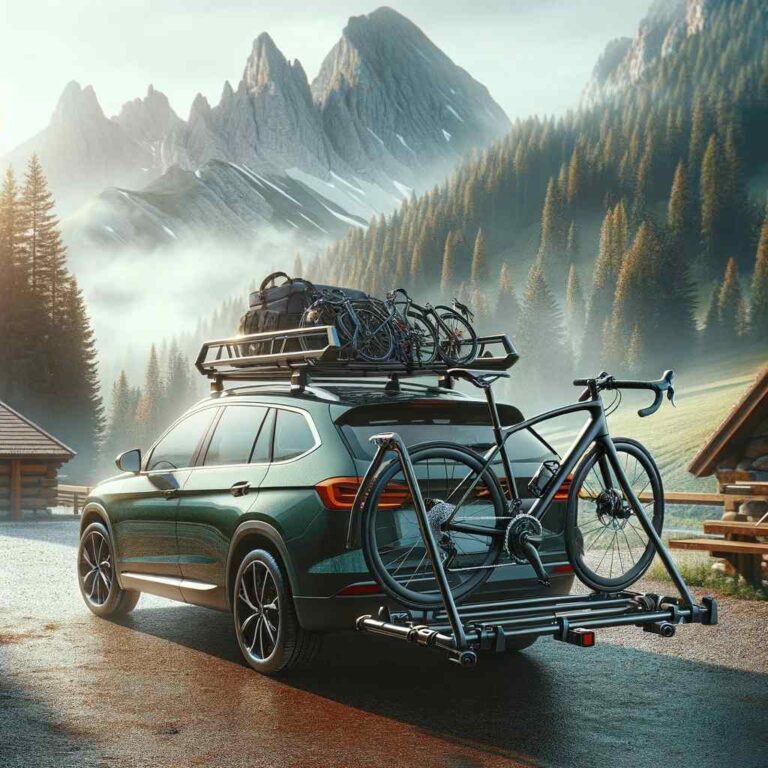
9. A Proper Heavy-Duty E-Bike Hitch Rack Is Easy to Overlook
Many hunting e-bikes are considerably heavier than conventional bicycles. The vehicle rack needs to be rated for the actual bike.
Before choosing one, I check:
- maximum bike weight for the exact tray position
- tire width
- wheelbase limit
- receiver size
- vehicle and road-use ratings
- whether a loading ramp is available
Young Electric 2-Bike E-Bike Hitch Rack – Good for Heavy Hunting E-Bikes
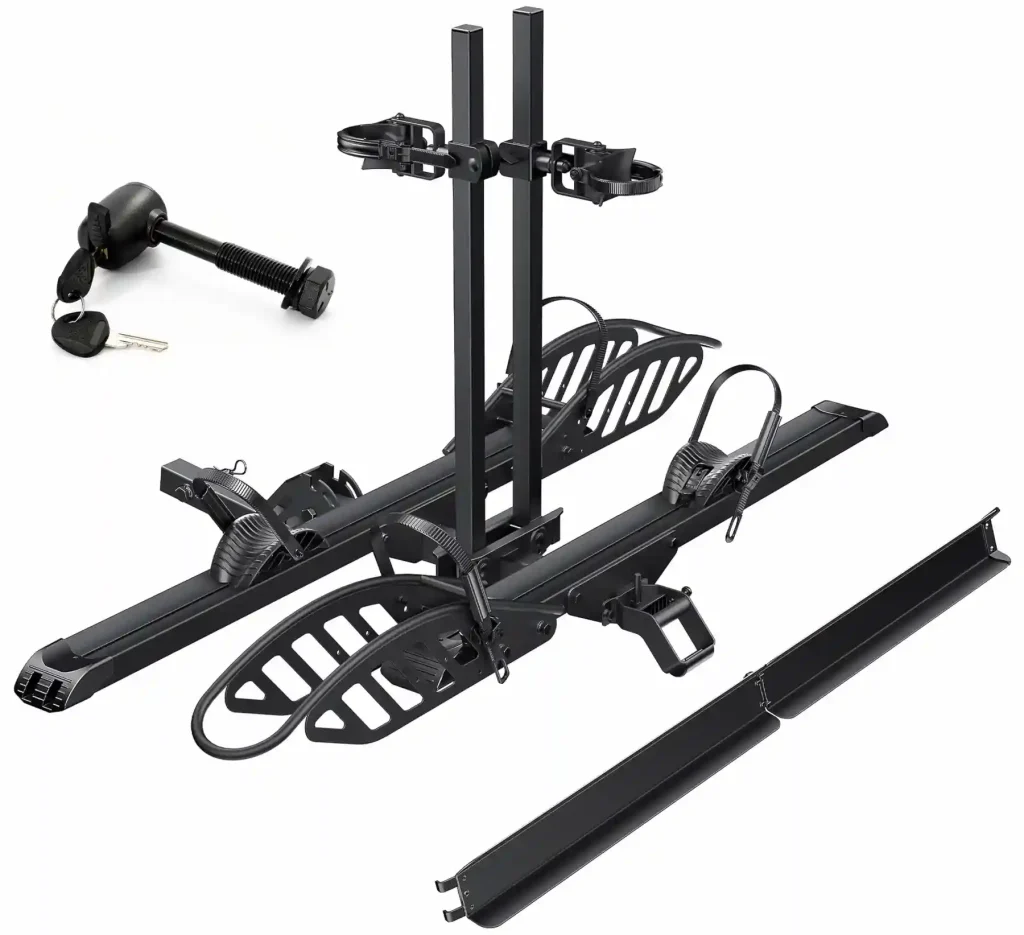
The Young Electric 2-Bike E-Bike Hitch Rack is another option I would consider for a heavy hunting e-bike, especially if lifting the bike onto a vehicle rack is difficult.
Young Electric rates its heavy-duty 2-bike models for up to 200 lb total, or 100 lb per bike. They fit 2-in. hitch receivers and accommodate tires up to 5 in. wide, which makes them suitable for many fat-tire hunting e-bikes. Some versions also include a loading ramp, which I think is particularly useful with bikes weighing 70, 80, or 90-plus pounds.
The models I checked accommodate wheelbases up to 50 in., so I would measure the hunting bike before ordering. I would also check the vehicle’s hitch tongue-weight rating because the weight of the rack itself plus the bikes must stay within the vehicle and hitch manufacturer’s limits.
Young Electric offers several versions of this rack, including models with ramps, locks, folding designs, and RV compatibility. I would choose the exact version based on the bike weight, tire width, wheelbase, vehicle, and whether I need a ramp rather than assuming every Young Electric rack has identical specifications.
10. Secure Cargo Matters More Than Maximum Cargo
One lesson I keep coming back to with hunting e-bikes is that maximum carrying capacity and sensible carrying capacity are not always the same thing.
A bike might have a large published payload number, but that does not mean I want a large amount of dense cargo stacked high behind the saddle.
Heavy cargo changes:
- steering
- braking
- hill climbing
- battery consumption
- low-speed balance
- traction
I would keep dense cargo as low and secure as practical and test the fully loaded setup somewhere easy before taking it deep into the woods.
Remember That the Return Trip May Be Much Heavier
This matters especially when the bike is being used during a hunt.
You may ride in with a relatively light setup and return with more equipment or a much heavier trailer. That means the trip out can require more battery, more braking, and more careful handling than the trip in.
I would plan my battery reserve around the heavier return trip rather than assuming that using half the battery on the ride in automatically means I have plenty left.
If the added load pushes the setup beyond the bike, rack, hitch, or trailer manufacturer’s limits, I would make another trip rather than overload it.
11. What About Bow or Firearm Carriers?
Hunters obviously need a secure way to transport their equipment, but I would not treat this as a universal accessory recommendation.
Any carrier needs to be compatible with the bike, mounted so that it does not interfere with steering, pedaling, braking, or the wheels, and used in accordance with the laws and hunting rules that apply where you are riding.
I would never ride with equipment loosely balanced across the handlebars or attached where it could enter a moving wheel.
Rules governing firearms, bows, hunting equipment, loaded weapons, hunting seasons, and transportation differ by jurisdiction and property. Check the applicable wildlife agency, land manager, and state or local law instead of assuming that an accessory marketed to hunters makes a particular method of transport legal.
12. Check Public-Land E-Bike Rules Before Building Your Setup
An expensive hunting setup is not very useful if the road or trail you planned to use does not permit your e-bike.
The Bureau of Land Management says qualifying e-bikes are currently allowed on BLM roads and trails open to off-highway vehicle use and in areas designated OHV-open.
For BLM roads and trails limited to bicycles or nonmotorized travel, e-bike use is allowed only when a BLM manager has issued the required written decision authorizing it. BLM specifically states that its e-bike rule did not automatically open nonmotorized trails to e-bikes.
BLM’s rule also applies only to qualifying Class 1, Class 2, and Class 3 e-bikes. Devices above the BLM definition, including bikes providing assistance above 28 mph or using more than 750W under the federal BLM definition, are managed differently.
Other federal, state, local, tribal, and private lands can have different rules, so I always check the agency responsible for the actual route.
You can start with my state-by-state e-bike law guide, but posted trail rules and the current land manager are the final check for a specific hunting location.
Three Hunting E-Bike Setups I Would Build
These are not rigid shopping lists. I think of them as starting points for different types of hunts.
Basic Day-Hunt or Scouting Setup
- spare tube or appropriate tubeless repair supplies
- tire levers and patch kit
- compact pump
- multi-tool and wheel-removal tools
- small rack bag or pannier
- headlight plus headlamp
- phone with offline maps
- basic first-aid supplies
This is the setup I would start with before spending much money on specialized hunting equipment.
Whitetail Hunting Setup
- water-resistant or waterproof panniers
- full tire-repair setup
- headlight and separate headlamp
- GPS or offline navigation backup
- secure equipment carrier appropriate to the hunt and local law
- trailer if I need to carry a stand, blind, or other bulky equipment
- straps for controlling cargo movement
For whitetails, I would pay particular attention to keeping the bike narrow and manageable through wooded access routes.
Backcountry or Elk-Style Setup
- dedicated handheld GPS plus phone backup
- larger repair and tool kit
- manufacturer-approved spare battery when the route justifies it
- properly matched cargo trailer
- emergency layers
- first-aid supplies
- headlight plus backup lighting
- secure food and water storage
- extra range reserve for the loaded return trip
This is where I become much more conservative about range. If a mechanical problem or low battery leaves me several miles from the vehicle, convenience quickly becomes a safety issue.
How Much Should You Budget for Hunting E-Bike Accessories?
I would not set one universal budget because the expensive items are optional for many riders. A hunter who already owns a suitable rack and does not need a trailer may spend very little compared with someone building a full backcountry setup.
These current examples give a better sense of the cost levels. Prices were checked September 8, 2026 and can change.
| Accessory | Current Example | Budget Impact |
|---|---|---|
| Basic puncture repair | Park Tool TR-1: $9.95; TB-2: $6.95, before adding a tube, pump, or multi-tool | Low |
| Waterproof pannier | QuietKat currently lists its 22 L pannier at $49.99 sale price | Low to moderate |
| Handheld GPS | Garmin eTrex Solar suggested retail price: $249.99 | Moderate |
| Two-wheel hunting trailer | QuietKat Game Trailer: $239.99 | Moderate to high |
| Single-wheel suspended trailer | Burley Coho XC currently listed at $415.96 on Burley’s site | High |
| Heavy-duty vehicle rack | 1UP Super Duty starts at $675 | High |
| Spare e-bike battery | Varies substantially by brand, capacity, and bike system | Usually high |
My advice is to spend first on reliability and safety. I would rather have the correct repair tools, navigation, and secure cargo storage than spend the same money on accessories that mostly add convenience.
Before I Leave the Truck: Hunting E-Bike Checklist
This is the checklist I would run through before heading down the trail:
- Battery is charged for the planned route.
- Spare battery is secured and compatible, if I am carrying one.
- Tires are inspected and inflated appropriately.
- Brakes feel normal and have adequate pad life.
- Wheels and axles are secure.
- Trailer hitch and axle connection are secure.
- Trailer load is within the towing limit.
- Cargo is strapped down and cannot enter a wheel.
- GPS or offline maps are ready.
- Repair kit, pump, and wheel-removal tools are packed.
- Headlight and backup light work.
- Hunting equipment is secured appropriately.
- The planned road or trail permits my e-bike.
- I have enough battery reserve for a potentially heavier return trip.
- Someone knows where I expect to be if I am heading into remote terrain.
I would rather discover a loose trailer connection or missing axle wrench next to the truck than several miles into a hunt.
Hunting E-Bike Accessories I Would Buy First
If I were starting with a bare hunting e-bike, I would not order ten accessories at once.
- Repair kit, spare tube or tubeless repair supplies, pump, and tools – because getting stranded matters more than having extra storage.
- Secure cargo storage – usually a rack bag or panniers.
- Navigation backup – especially outside reliable cell service.
- Lighting – because hunters frequently travel before sunrise or after dark.
- Trailer – when I genuinely have a hauling job that justifies it.
- Manufacturer-approved spare battery – when the actual route and conditions justify its cost and weight.
- Heavy-duty vehicle rack – if my existing rack is not properly rated for the bike.
After those basics, I would add comfort and convenience items based on how I actually use the bike.
Accessories I Would Not Buy Automatically
There are several things I would not consider essential simply because a hunting brand sells them.
- oversized cargo racks that encourage overloading
- unverified generic replacement batteries
- “universal” chargers without confirmed compatibility
- large bags that interfere with pedaling or the rear wheel
- trailers purchased before checking axle compatibility
- comfort upgrades before repair equipment
- accessories that duplicate equipment I already carry
I would rather have six pieces of equipment I trust than fifteen accessories hanging from the bike.
My Take
The best hunting e-bike accessories are the ones that make the bike more dependable and useful, not simply more impressive-looking.
For most hunters, I would prioritize puncture repair, secure storage, navigation, and good lighting before adding expensive specialty equipment. A trailer becomes extremely useful when there is a real hauling job to do, but I would choose between a narrow single-wheel trailer and a wider two-wheel platform based on the terrain and the bike’s actual compatibility.
I would also be conservative about batteries and cargo. A second battery should be approved for the bike, and every extra pound affects handling, braking, and range. Cold weather and a heavier trip out can reduce the margin you thought you had on the ride in.
If you are still deciding whether your current bike is suitable for this kind of use, compare it with my recommended hunting e-bikes and review my hunting e-bike range guide before spending heavily on accessories.
Disclosure: As an Amazon Associate, I earn from qualifying purchases. This comes at no extra cost to you and helps support the content on this site.
External Sources
- U.S. Consumer Product Safety Commission – Micromobility battery safety
- U.S. Consumer Product Safety Commission – Universal charger warning
- Bureau of Land Management – E-bikes on BLM-managed lands
- Bureau of Land Management – E-bike rule FAQ
- Bosch eBike Systems – Battery temperature and range
- Bosch eBike Systems – Winter battery care guidance

Kristina is not just an enthusiast but a true authority on electric bikes. Nestled in the coastal beauty of Virginia, Kristina has found the perfect backdrop for her passion for electric biking. As a dedicated wife and homeschooling mom, her life revolves around family, faith, and the thrill of adventure.
Originally hailing from Ohio, Kristina's journey with electric bikes began as a curiosity and quickly evolved into a deep expertise. Her blog is a testament to her love for electric biking, combining her fascination for eco-friendly transportation with her coastal lifestyle.
When she's not cruising the beach on her electric bike, you'll find Kristina indulging in her other loves: long walks along the shore, getting lost in a good book, and cherishing moments with her loved ones. With a heart as big as her love for animals, especially cats, Kristina brings a unique perspective to the electric bike world, grounded in her strong faith in God and her dedication to a sustainable lifestyle.
Through her blog, Kristina shares her extensive knowledge of electric bikes, offering valuable insights, tips, and recommendations to fellow enthusiasts. Whether you're a seasoned rider or a newcomer to the electric bike scene, Kristina's blog is your go-to source for all things electric biking, fueled by her passion, expertise, and the scenic beauty of coastal Virginia.