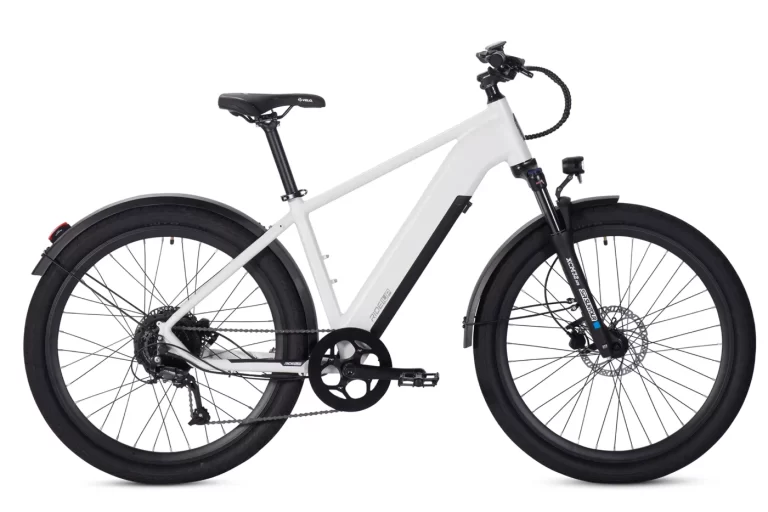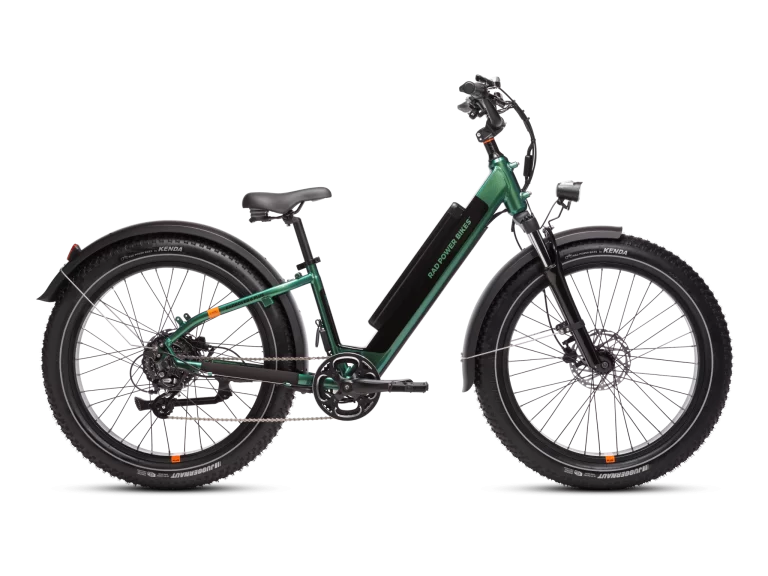
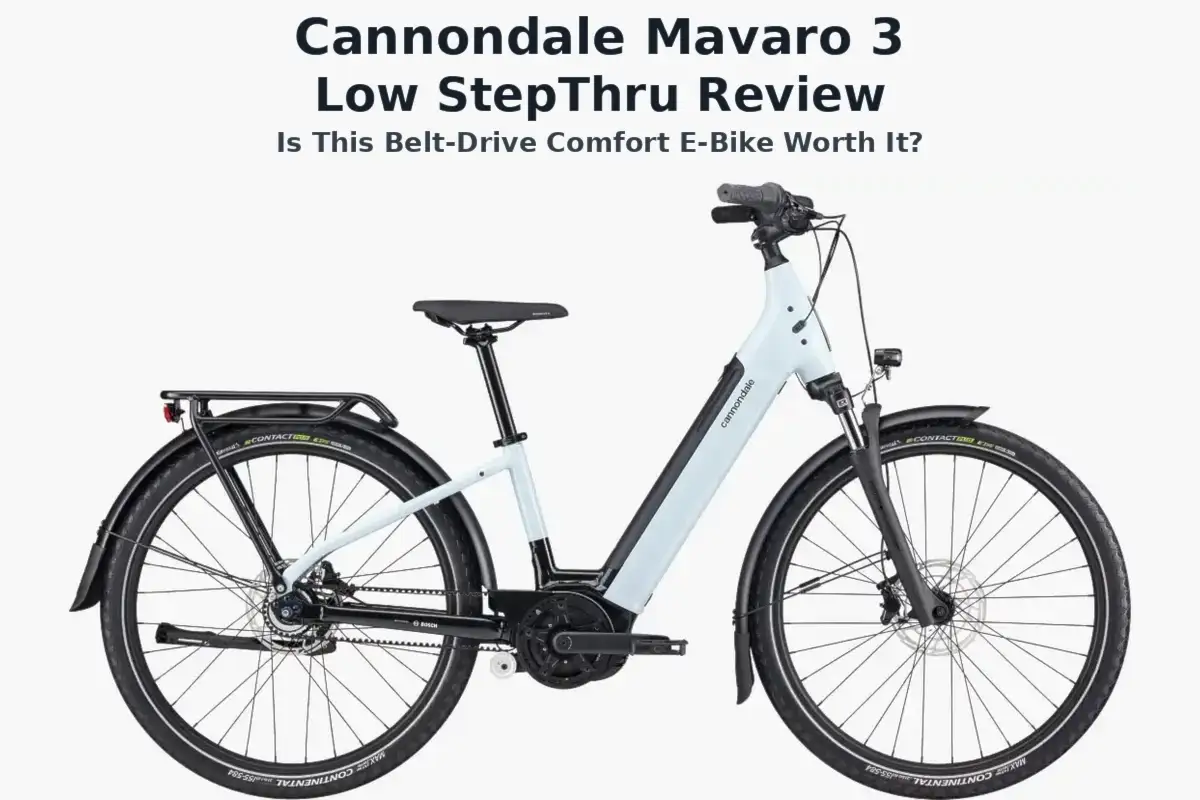
Cannondale Mavaro 3 Low StepThru Review: Is This Belt-Drive Comfort E-Bike Worth It?
Last Updated on November 7, 2026 by Kristina

📚 Research-Based Review – Built from independent sources, specs, and user reports
Introduction
The Cannondale Mavaro 3 Low StepThru makes the most sense for someone who wants everyday riding to involve less fuss. My interest in this bike is its combination of easy access, a practical drivetrain, and the ability to work with a local shop. Those are useful priorities for a commuter or recreational rider who expects to keep a bike for several years.
Its appeal depends on what you expect from electric assistance. Riders who want to keep pedaling and receive help along the way are the intended audience. Someone who needs throttle-only travel, a folding frame, or maximum hill-climbing assistance should compare other options first.
An indexed Cannondale U.S. sale listing shows $2,999 against a $3,999 reference price. The current product-page text does not expose a selected size’s checkout price or inventory, so treat $2,999 as a reference offer to confirm with the seller, not a guaranteed available price.
Quick Verdict
Electric Bike Explorer Score: 8.2/10 — Very Good
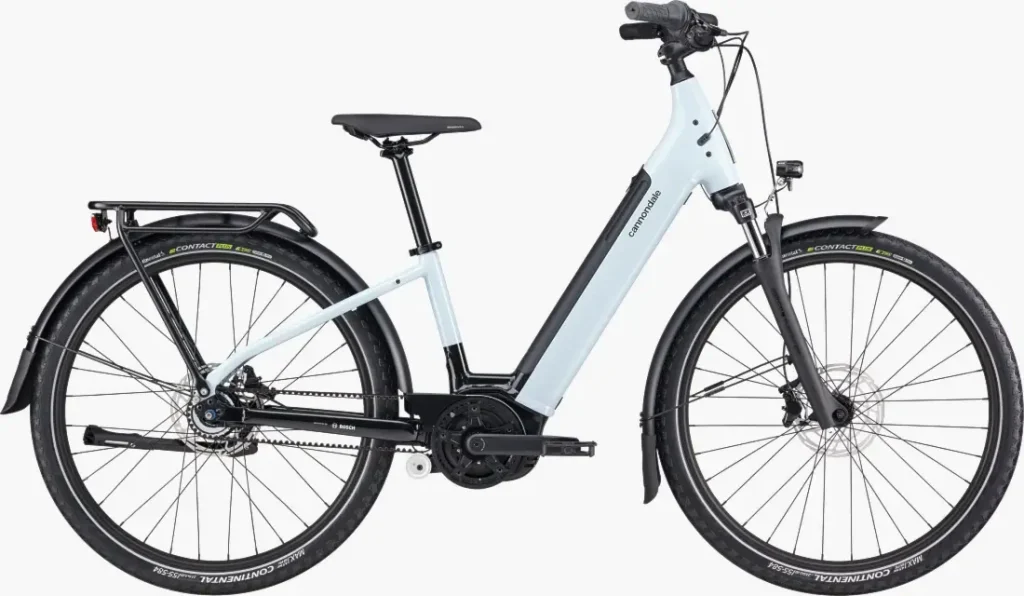
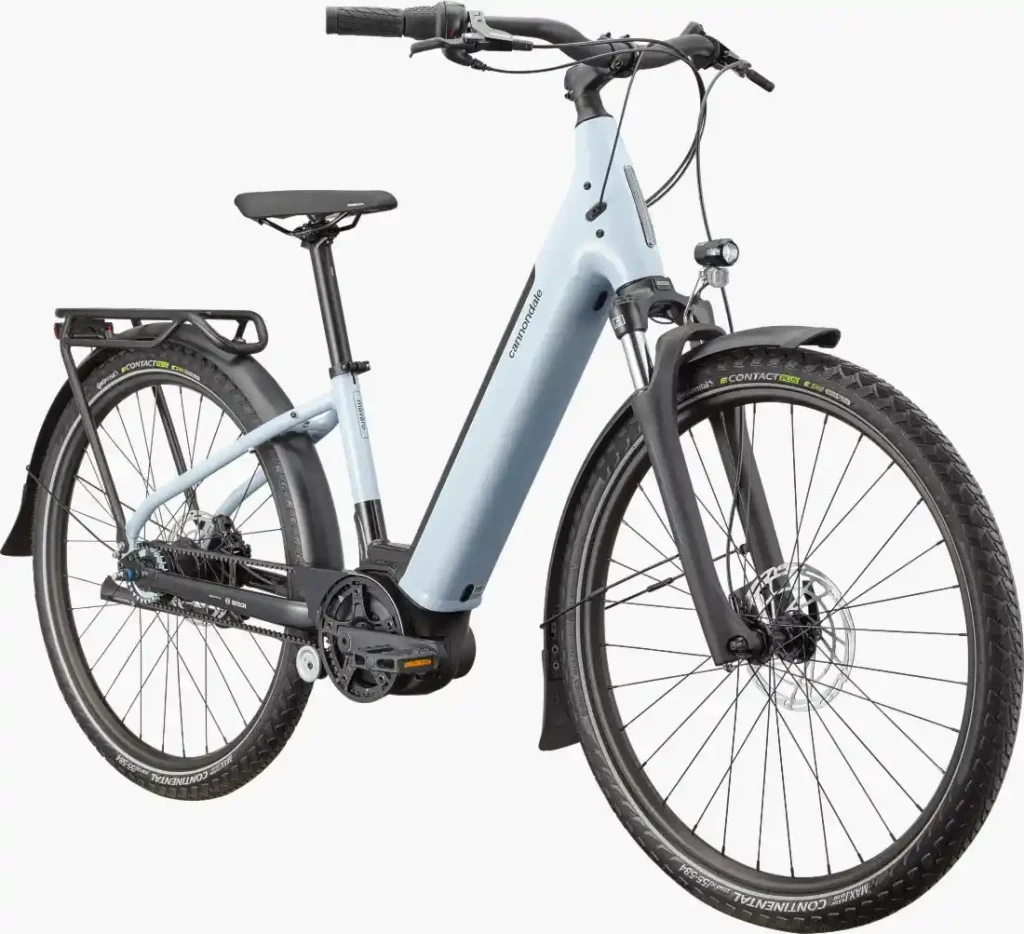
The Cannondale Mavaro 3 Low StepThru is a promising comfort commuter on paper, pairing easy frame access with Bosch mid-drive assistance, a Gates belt, and internal hub gears. I would consider it for everyday rides and errands if a local dealer confirms the fit, weight, and exact equipment.
Best reason to buy: You want a lower-maintenance belt-drive commuter with the convenience of local dealer support.
Main drawback: There is no throttle, and published U.S. fit and complete-bike weight details need to be confirmed before buying.
🔎 Why You Can Trust This Guide
I compare official specifications, safety information, independent testing, support policies, and real-world rider feedback. Affiliate relationships do not determine which products I recommend or how they are ranked. You can read more about how Electric Bike Explorer reviews and ranks e-bikes.
For broader comparisons, see EBE’s best step-through e-bikes and best Class 1 e-bikes.
Important Specifications
The component table follows the U.S. specification sheet, cross-checked against dealer listings where they agree.
Specification conflicts: Cannondale’s marketing copy mentions an Intuvia display, while its detailed sheet specifies Purion 200. Its generic tire field also conflicts with the size-specific tire description. This review follows the detailed entries. Ask the dealer to confirm display, tires, charger, included pedals, and accessories on the actual stock bike.
✅ Pros
- A compelling choice for riders who want fewer routine drivetrain chores.
- Local fitting and service can make ownership easier.
- Practical equipment reduces the number of commuter accessories to source separately.
- A useful alternative for riders who prefer participating in the pedaling effort.
- Potentially appealing sale value when the bike fits the intended use.
❌ Cons
- Unsuitable for someone who requires throttle-only riding.
- Less motor headroom than I would prioritize for demanding loaded climbs.
- Missing clearly published weight and fit details complicate online comparison.
- Limited exact-build performance testing makes real-world range harder to judge.
- Regional and dealer specification differences require extra checking.
- A belt drivetrain still requires competent servicing and correct setup.
Ride Quality, Comfort, and Handling
My expectation is that this bike will appeal most to riders who want a relaxed daily routine. The first test should be whether you can get on, start, stop, and put a foot down without feeling stretched or crowded. A low opening alone cannot answer those questions.
I would assess the bike over the same rough pavement you normally ride. Suspension can reduce some front-end impacts, but it cannot guarantee saddle comfort or eliminate every bump. Try seated riding for long enough to notice pressure on your hands, hips, and back. Avoid judging the fit from a brief lap around the parking lot.
Do not assume it will be easy to lift because it is easy to mount. Ask the shop to weigh the assembled bike, then check your intended storage and vehicle-rack arrangement. For a shorter rider, minimum saddle height and reach matter more than the size letter printed on the frame.
Motor Power and Hill Performance
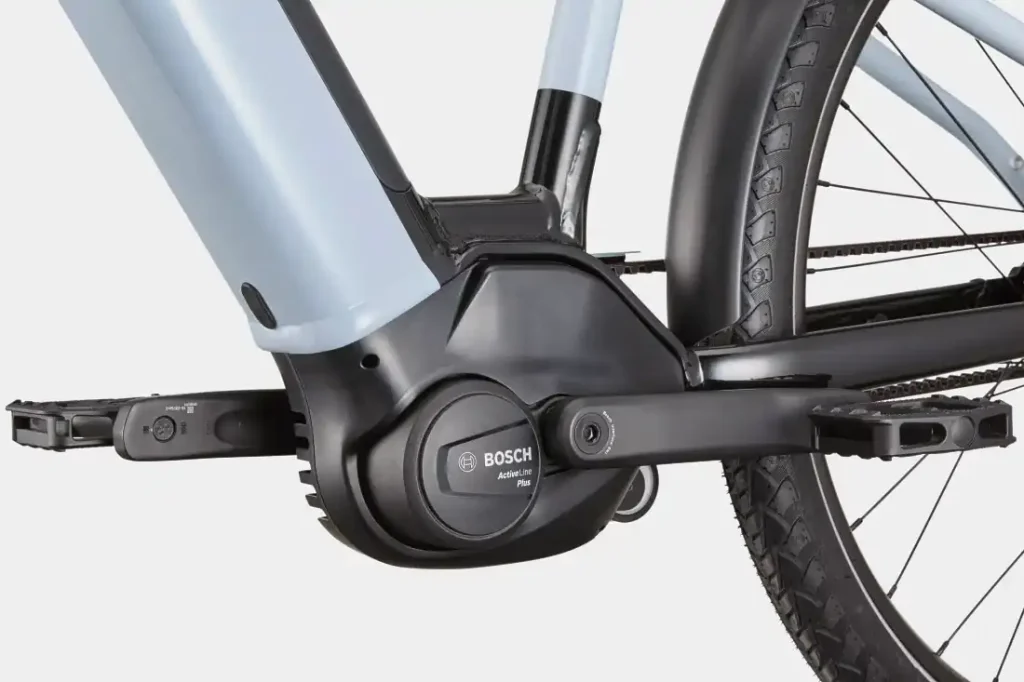
Bosch documents 250W rated continuous output, up to 50Nm, and up to 340% support for the relevant Active Line Plus Smart System family. Its stated start-up behavior is smooth and calm. Current Bosch maximum-power figures can depend on software, battery, and hub compatibility, so I would not attach an unverified peak-output claim to this stock bike.
The useful comparison is how much help you receive on your own route. Motor wattage labels alone do not provide that answer. A mid-drive uses the bicycle’s gearing, which makes gear choice relevant to climbing; it also means the rider should be comfortable shifting appropriately.
I would test a standing start on your steepest ordinary hill before committing. If you expect to carry groceries or other loads, discuss those conditions with the dealer. This is not a review where I can substantiate a particular climbing speed, maximum gradient, or load-carrying hill result.
Belt Drive and Shifting
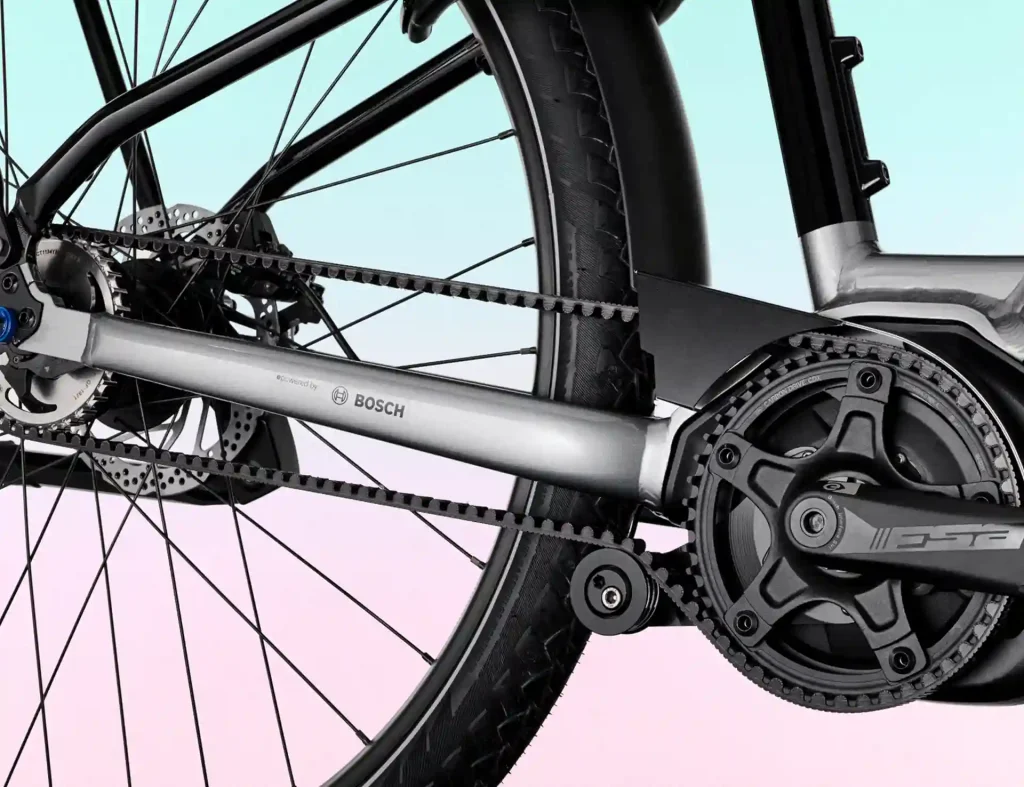
Gates states that its bicycle belt system does not need lubrication. It still requires cleaning, correct alignment, appropriate tension, and inspection. A damaged belt or poorly set-up drivetrain needs attention; reduced routine maintenance is not an excuse to ignore it.
For a buyer, the key question is whether the available gearing suits both ends of the route. Check the lowest gear on a climb and the highest gear at your normal cruising speed. Ask the shop to demonstrate correct shifting technique and how to recognize an adjustment problem. I would not buy solely because the words “belt drive” appear on the specification sheet.
Battery, Range, and Charging
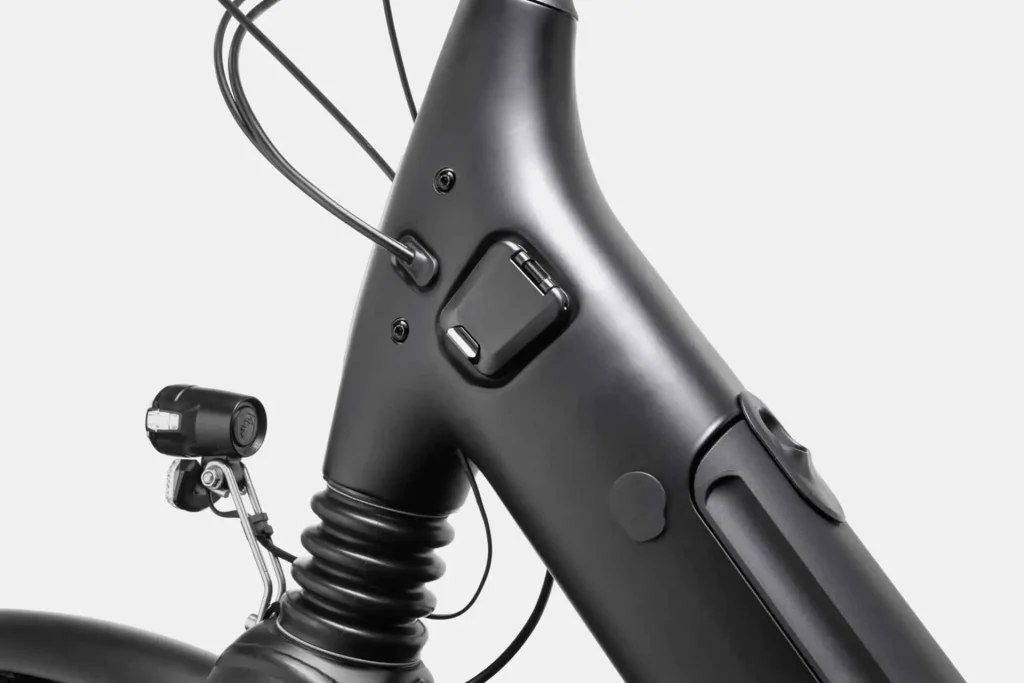
Treat the range figure in the specification table as a favorable-condition claim rather than a trip guarantee. I did not locate an independently documented full-discharge test of this exact U.S. build with enough detail to reproduce the conditions.
For perspective, the following is calculated planning arithmetic, using the nominal capacity rather than measured usable energy:
| Assumed consumption | Arithmetic range from 500Wh |
|---|---|
| 10Wh per mile | 50 miles |
| 15Wh per mile | About 33 miles |
| 20Wh per mile | 25 miles |
These assumptions are illustrative, not a prediction or test result. Hills, assistance level, speed, temperature, load, and battery age can change consumption. Plan a reserve and learn your own route before relying on a maximum-distance outing.
Because charger listings disagree, I would obtain the supplied charger’s model and the matching Bosch charging-time guidance before quoting a full-charge time. Have the dealer demonstrate battery removal and refitting; make sure you can perform both comfortably before pickup.
Display and Technology
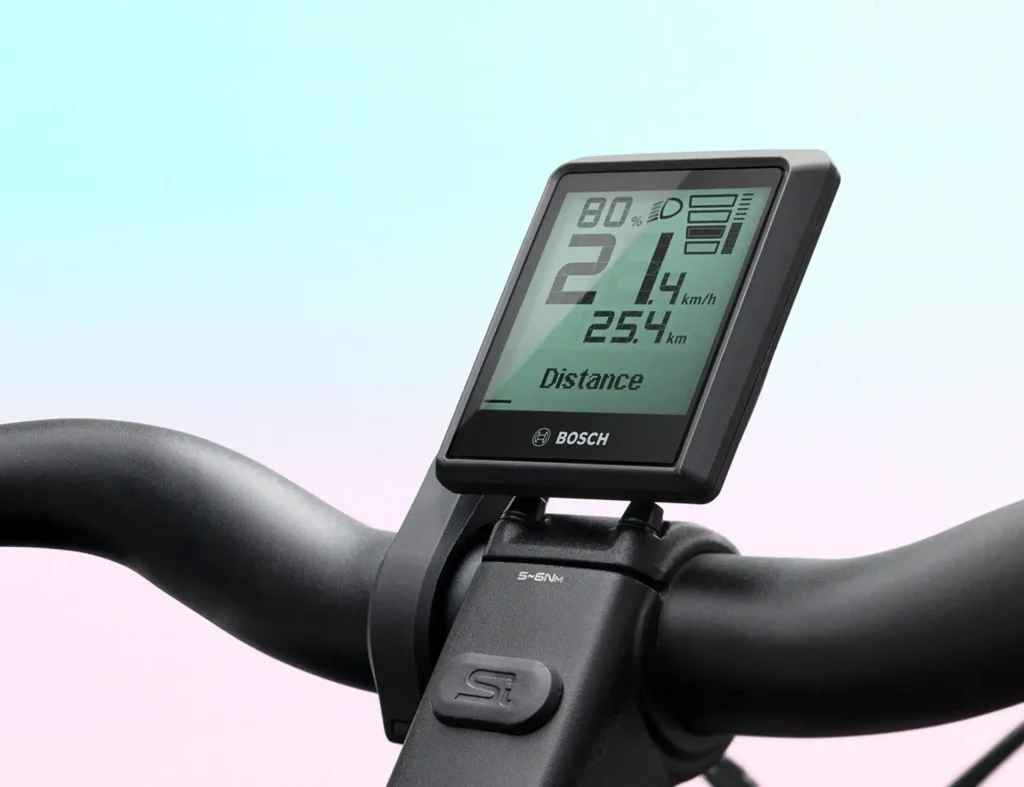
Bosch’s Purion 200 combines controls and an approximately 1.6-inch color display. Bosch documents Bluetooth updates, display customization, walk-assist controls, and compatibility with additional display options. It does not provide external-device charging.
The compact screen may suit someone who wants an uncluttered cockpit, but check text visibility with your usual riding glasses. Ask the dealer to demonstrate the eBike Flow connection, available assistance modes, and the functions supported by the installed software.
Do not assume every feature advertised across Bosch’s ecosystem is included. GPS tracking, ABS, extra displays, and paid connected services require separate compatibility and equipment checks. For me, the most useful technology is the functionality the owner understands and will actually use.
Braking and Everyday Equipment
The documented hardware is appropriate to consider for an urban comfort bike, but I have no measured stopping-distance result to report. A useful test ride should include controlled braking at low speed, checking lever reach and whether modulation feels manageable.
Bring a loaded pannier or discuss your luggage setup with the dealer. Check heel clearance, bag attachment, light visibility, and rack compatibility. Confirm passenger or child-seat suitability separately; a rack’s load number does not by itself establish approval for carrying a child.
What Riders Are Saying
The most relevant firsthand account I found came from a Canadian owner who explicitly described an Active Line Plus, Purion 200, belt drive, and seven-speed internal hub. After about 120km, they reported satisfaction with comfort and handling, appreciated Bosch customization, and valued buying through a local shop. That is useful early ownership feedback, not long-term durability evidence.
This is a self-reported early ownership account from Canada, not a verified U.S. test bike. It cannot establish a reliability rate or typical customer experience. I excluded a separate secondhand gearing complaint because its exact regional build could not be confirmed.
Reported Testing: What Is Actually Verified?
| Performance question | Evidence available for this review |
|---|---|
| Full-charge real-world range | No credible exact-build instrumented result located |
| Hill speed and climbing time | No verified exact-build result located |
| Measured stopping distance | Not located |
| Comfort and handling | Limited firsthand owner feedback; no EBE ride test |
| Long-term electrical reliability | Insufficient model-specific evidence for a firm conclusion |
I would rather leave those measurements unfilled than borrow results from a Mavaro Neo SL, a different motor, or another regional drivetrain.
Unboxing and Assembly
For this model, Cannondale’s current U.S. online listing sends bicycles to an authorized shop for professional assembly and pickup, rather than home delivery. It advertises free shipping and assembly for qualifying orders and approximately ten business days to pickup, subject to availability.
That changes the practical ownership experience: the buyer should use the handover as an opportunity to learn the bike, rather than expect a home unboxing tutorial. I have not inspected its shipping carton or timed assembly.
Before leaving the shop:
- Confirm the ordered size, components, accessories, and charger.
- Check fit, lever reach, tire setup, and the agreed load limits.
- Have the mechanic demonstrate shifting, battery removal, and display operation.
- If the dealer permits a pre-acceptance test ride, resolve rubbing, shifting, or fit problems and clarify how riding affects return eligibility before accepting the bike.
- Collect battery keys, manuals, receipt, registration information, and service contacts.
Ask whether an initial adjustment visit is included. Third-party sellers can have different delivery, assembly, and pedal-inclusion arrangements.
Warranty
Cannondale separates coverage for models introduced before 2026 from newer models. Its earlier policy provides a lifetime frame warranty for the registered original owner, one year for Cannondale-branded components and paint, and separate manufacturer terms for non-Cannondale components. Claims go through an authorized retailer, with proof of purchase; normal wear is excluded and labor is the owner’s responsibility under that policy.
The newer policy uses “lifetime of product” wording for applicable frames. A 2026 purchase date does not automatically establish which model-introduction policy applies.
Have the seller identify the applicable policy for your serial number and provide the Bosch battery/motor terms in writing. I have not verified an exact-stock-unit Bosch warranty document, so I am not assigning a blanket motor or battery warranty duration here.
Returns
Cannondale’s U.S. direct-purchase policy allows eligible bicycle returns within 15 days of receipt, with a Return Authorization. The bicycle must be new and unused, complete with the required original items. Noncompliant returns may be refused or assessed $175 or 10% of purchase price, whichever is greater. The RA is valid for 14 days.
That is not a 15-day riding trial. For a $2,999 purchase, 10% would be $299.90. Cannondale’s direct policy does not cover purchases from third-party retailers; obtain that seller’s terms before paying.
Customer Service and Ownership Support
Cannondale directs owners toward their local shop first. Its U.S. contact page lists 1-800-BIKE-USA (800-245-3872) and weekday support hours of 9 a.m.–5 p.m. Eastern.
The presence of a dealer network is an advantage, but it does not establish how quickly your nearest shop will respond. I have not tested Cannondale’s support response time or warranty-claim handling.
Before buying, ask who performs Bosch diagnostics, whether they service internal hubs and belt systems, what routine labor costs, and how they handle replacement battery orders. A helpful answer to those questions can matter more than another accessory bundled with the bike.
Financing
Cannondale offers Affirm at checkout. Its disclosures state 0–36% APR, subject to eligibility and purchase amount, with a down payment potentially required. A 0% offer is not guaranteed for every applicant or purchase.
For illustration only, $2,999 divided into twelve equal payments at 0% interest is approximately $249.92 per month, before taxes and fees. That calculation is not a quoted loan offer. Compare the actual APR, total repayment, and term shown at checkout; a dealer may offer different financing.
Electric Bike Explorer Score
Overall Score: 8.2/10 — Very Good
This is a research-based editorial score, not a firsthand riding or laboratory-test rating. The belt drivetrain and practical equipment are key strengths, while exact-build range testing and certain fit details remain unverified.
Score Breakdown
Each category carries equal weight. Scores total 65.5 out of 80, giving 8.1875/10, rounded to 8.2/10. These are comparative editorial judgments; the decimals do not imply measured performance.
| Category | Score | Reason for the assessment |
|---|---|---|
| Comfort and accessibility | 8.5/10 | Approachable design, but individual fit still needs a test ride |
| Motor suitability | 7.5/10 | Appropriate everyday assistance; less compelling for demanding climbs |
| Battery and range confidence | 7.0/10 | Useful capacity, with no verified exact-build range test located |
| Drivetrain and routine upkeep | 9.0/10 | Strong case for riders who dislike regular chain maintenance |
| Braking and equipment | 8.5/10 | Practical commuter package; stopping performance remains unmeasured here |
| Display and technology | 8.0/10 | Useful system integration, with a compact screen |
| Service and ownership support | 8.5/10 | Dealer route is valuable, although local execution and labor costs vary |
| Value if available at $2,999 | 8.5/10 | Attractive if its ownership benefits match your needs |
Should You Buy the Mavaro 3?
I would put this bike on a shortlist if you want a comfortable everyday companion and regard local service as part of the purchase. The most persuasive reason to buy is a good match between your riding habits, the drivetrain, and the shop supporting it. If the $2,999 offer is available in your size, it improves the case, but it does not replace a test ride.
My preferred buyer is someone who intends to pedal, ride regularly, and keep routine upkeep manageable. Before paying, I would want that rider to demonstrate comfortable starts and stops, test both ends of the gearing, and confirm that storing and transporting the bike is realistic. I would also want the dealer to resolve the specification questions rather than simply repeat a website description.
I would choose differently if the rider needs throttle propulsion, regularly climbs demanding hills with a load, or must lift the bike frequently. I would also hesitate if the purchase depends on achieving the advertised maximum range every day. The available evidence does not justify that expectation. The calculated range examples above are arithmetic illustrations only; they are not evidence that the bike achieves those distances.
My final buying checks would be the actual assembled weight, rider and total weight limits, fit measurements, exact charger, applicable warranty, and seller-specific return terms. With those questions answered and a successful test ride, the Mavaro is a credible comfort-bike candidate. Until then, the 8.2/10 EBE score remains a research-based assessment with limited performance evidence.
Alternative 1: Specialized Turbo Como 4.0 — For More Motor and Battery Headroom
The U.S. Como 4.0 page checked lists $3,999.99, a 70Nm mid-drive, 710Wh battery, assistance up to 28 mph, an 80mm fork, suspension seatpost, and Shimano CUES nine-speed chain drivetrain. Its claimed range reaches 90 miles in Eco; that is a manufacturer claim.
I would compare it when stronger assistance and a more substantial comfort package justify spending more. This particular Como listing uses a conventional chain drivetrain with the associated routine care; it is not the separate Como IGH belt-drive version. For riders who dislike the Mavaro’s gearing on a test ride, the Como also provides a different drivetrain to evaluate.
Choose the Mavaro if reducing chain-related chores is central to your decision. Choose the Como if its additional assistance, fit, and comfort features prove more useful on your own route. Confirm the exact model year and local inventory because Como configurations vary.
Read my full review of the Specialized Turbo Como 4
Alternative 2: Velotric Discover 3 — For Throttle Convenience and a Larger Battery
Velotric lists a 750W rear-hub motor with 75Nm, a 730Wh battery, a removable throttle, selectable torque/cadence sensing, an air fork, and a suspension seatpost. Its up-to-80-mile range is a manufacturer claim. It uses a chain drivetrain rather than the Mavaro’s belt system.
I would compare this bike if a throttle is a practical requirement or if you want more control over how pedal assistance responds. The purchase decision should still include fit, handling, and a realistic service plan. Hub and mid-drive torque figures do not translate directly into comparative climbing performance.
Choose the Mavaro if its riding character and dealer arrangement suit you better. Choose the Discover 3 if throttle access and selectable pedal response solve more of your daily riding needs. Check the current price, selected configuration, and a nearby shop’s willingness to service it before ordering.
Read EBE’s Velotric Discover 3 review ·
Explore More E-Bikes Before You Buy
Still deciding which electric bike is right for you? Electric Bike Explorer has more resources to help you compare your options and make a confident decision.
🔍 Compare E-Bikes Side by Side
Use our free side by side e-bikes comparison tool to explore different electric bikes and compare their motor power, battery capacity, weight, and features.
⭐ Explore More Electric Bike Reviews
Want to see how other e-bikes stack up? Browse our Electric Bike Reviews hub for detailed reviews organized by brand and riding style, including commuter, cruiser, step-through, and fat-tire models.

Kristina is not just an enthusiast but a true authority on electric bikes. Nestled in the coastal beauty of Virginia, Kristina has found the perfect backdrop for her passion for electric biking. As a dedicated wife and homeschooling mom, her life revolves around family, faith, and the thrill of adventure.
Originally hailing from Ohio, Kristina's journey with electric bikes began as a curiosity and quickly evolved into a deep expertise. Her blog is a testament to her love for electric biking, combining her fascination for eco-friendly transportation with her coastal lifestyle.
When she's not cruising the beach on her electric bike, you'll find Kristina indulging in her other loves: long walks along the shore, getting lost in a good book, and cherishing moments with her loved ones. With a heart as big as her love for animals, especially cats, Kristina brings a unique perspective to the electric bike world, grounded in her strong faith in God and her dedication to a sustainable lifestyle.
Through her blog, Kristina shares her extensive knowledge of electric bikes, offering valuable insights, tips, and recommendations to fellow enthusiasts. Whether you're a seasoned rider or a newcomer to the electric bike scene, Kristina's blog is your go-to source for all things electric biking, fueled by her passion, expertise, and the scenic beauty of coastal Virginia.