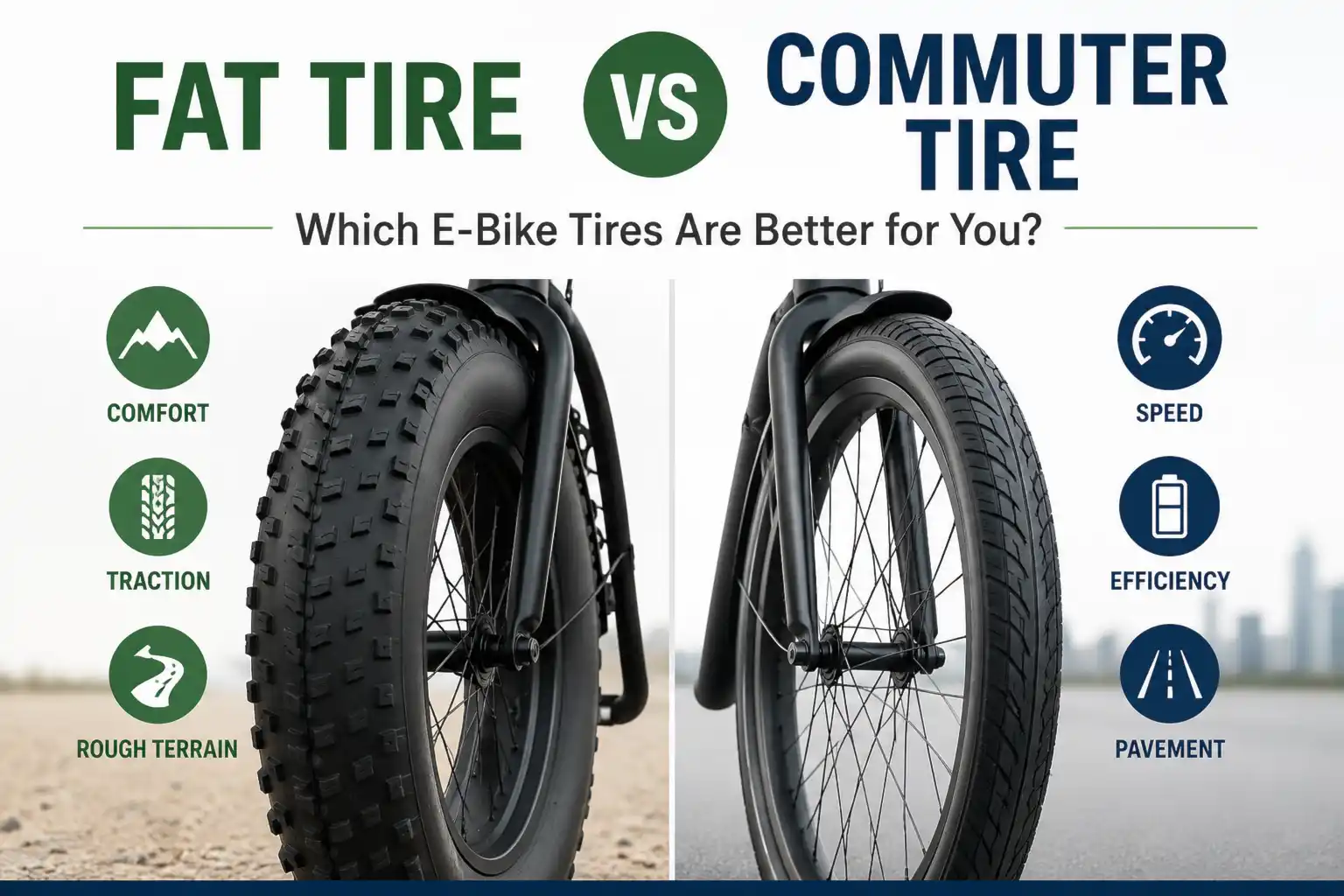
Best E-Bike Tires: Top Picks for Commuting, Off-Road and Cargo Rides
Last Updated on August 2, 2026 by Kristina
📚 Research-based buying guide: I have not personally tested every bike in this guide. These recommendations are based on current manufacturer specifications, safety documentation, warranty and return policies, independent testing, service information, and available rider feedback.
The best e-bike tire depends on where you ride and what matters most to you. For daily commuting, I recommend the Schwalbe Marathon E-Plus when puncture protection is the priority. For aggressive trail riding, the Maxxis Minion DHF and DHR II combination offers much stronger braking and cornering traction. Cargo riders should start with the Schwalbe Motion Pick-Up, while the Kenda Juggernaut Pro is my fat-bike pick for snow and sand.
This guide explains the tradeoffs rather than treating every tire as interchangeable. A heavily reinforced commuter tire may feel slow on an e-MTB, and a soft, aggressive trail tire can wear quickly on pavement. Riders who are still choosing a bike can start with my complete e-bike buying guide. For inspections, pressure checks, and other ownership basics, see the e-bike troubleshooting and maintenance guide.
Disclosure: This article may contain affiliate links. If you purchase through one of these links, I may earn a commission at no extra cost to you. As an Amazon Associate, I earn from qualifying purchases. Affiliate relationships do not determine which tires I recommend or how they are ranked.
⭐ Quick Picks
- Best fat-bike tire for snow and sand: Kenda Juggernaut Pro
- Best overall commuter tire: Schwalbe Marathon E-Plus
- Best lighter urban tire: Continental Pure CONTACT
- Best comfort-focused commuter and cargo hybrid: Continental eCONTACT Plus
- Best mixed-terrain and all-season tire: Schwalbe Johnny Watts 365
- Best aggressive e-MTB combination: Maxxis Minion DHF front and Minion DHR II rear
- Best dedicated cargo tire: Schwalbe Motion Pick-Up
Best E-Bike Tires Comparison
| Tire | Best for | Main strength | Main tradeoff | E-bike suitability | Setup |
|---|---|---|---|---|---|
| Schwalbe Marathon E-Plus | High-mileage commuting and touring | Very strong puncture protection | Heavy and less lively | E-50 marked | Tube-type |
| Continental Pure CONTACT | Urban riders who want efficiency | Faster, lighter road feel | Less appropriate for loose trails | E-bike-ready versions available | Confirm exact version |
| Continental eCONTACT Plus | Comfort commuting and light cargo use | Protection, stability, and comfort | Heavier than a performance city tire | ECE-R75 / E-50 | Tube-type |
| Schwalbe Johnny Watts 365 | Pavement, gravel, and easy trails | Four-season versatility | Not a mud or downhill specialist | E-50 marked | Version dependent |
| Maxxis Minion DHF / DHR II | Aggressive e-MTB riding | Cornering and braking traction | High rolling resistance on pavement | Select e-bike-rated casings and sizes | Many versions are tubeless-ready |
| Schwalbe Motion Pick-Up | Long-tail and front-loader cargo bikes | Load stability and puncture protection | Heavy, firm casing | ECE-R75 / E-50 | Tube-type |
| Kenda Juggernaut Pro | Fat bikes on snow and sand | Flotation with relatively low weight | Not ideal for high-mileage pavement | Confirm bike, load, and speed compatibility | Tubeless-ready versions available |
Important: Tire names can cover several widths, diameters, compounds, and casings. The rating shown above may not apply to every version sold under the same model name. Match the complete ETRTO size and product code, not just the marketing name.
🔎 Why You Can Trust This Guide
I compare official specifications, safety information, independent testing, support policies, and real-world rider feedback. Affiliate relationships do not determine which products I recommend or how they are ranked. You can read more about how Electric Bike Explorer reviews and ranks e-bikes.
Want to See More Electric Bike Explorer in Google Search?
Add Electric Bike Explorer as a preferred source to see more of our e-bike law guides, safety updates, reviews, buying guides, and troubleshooting posts when they are relevant to your searches.
1. Schwalbe Marathon E-Plus – Best Overall Commuter Tire
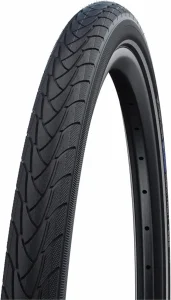
The Schwalbe Marathon E-Plus is my top choice for riders who value puncture protection and dependable daily transportation more than low weight. Schwalbe uses its Smart DualGuard construction and ADDIX E compound, and current versions are marked for E-50 use. This makes it a logical match for heavier commuter and touring e-bikes that spend most of their time on pavement.
The thick protective construction is the reason to buy it, but it is also the main compromise. The Marathon E-Plus is noticeably heavier and firmer than a supple performance tire. That extra rotating weight matters less on a motor-assisted commuter than on an unassisted road bike, but riders may still notice slower steering and a less lively feel.
Why It Stands Out
- Strong protection against common road debris
- Reflective sidewall options improve side visibility
- Built for high-mileage commuting and touring
- E-50 marking on current listed versions
Tradeoffs
- Heavy compared with faster urban tires
- Stiff casing can make installation more difficult
- Not designed for deep mud or aggressive mountain-bike cornering
2. Continental Pure CONTACT – Best Lighter Urban Tire
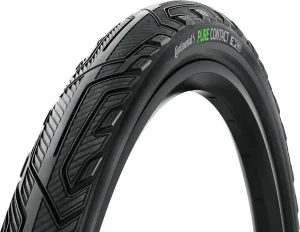
The Continental Pure CONTACT is the better fit for riders who want less of the heavy, armored feel associated with maximum-protection commuter tires. Continental positions it as a fast-rolling urban and e-bike tire with wet and dry traction, making it a good choice for paved commuting, fitness-oriented riding, and efficient city travel.
I would choose it over the Marathon E-Plus when ride feel and efficiency matter more than having the thickest possible protective belt. It can make a commuter feel quicker and more responsive, especially when replacing a bulky stock tire. The compromise is that a lighter tire is not the first choice for debris-heavy industrial routes or riders who would rather accept extra weight than repair a flat.
Why It Stands Out
- More responsive urban ride than heavily reinforced touring tires
- Designed to balance rolling efficiency with wet and dry grip
- Useful for riders who stay mostly on pavement
Tradeoffs
- Not intended for loose or technical off-road terrain
- Exact casing and size must be checked before purchase
- Less protection-focused than the heaviest commuter options
3. Continental eCONTACT Plus – Best Comfort-Focused Commuter and Cargo Hybrid

The Continental eCONTACT Plus sits between a quick city tire and a dedicated heavy cargo tire. Continental says it was engineered for the demands of modern e-bikes and cargo bikes up to 50 km/h, using its Safety Plus Pro Breaker for puncture protection and stability under higher loads.
This is a strong option for riders carrying groceries, a child seat, panniers, or regular work gear without needing the extremely stiff construction of a purpose-built cargo tire. The rounded road-oriented tread should also feel more natural on pavement than a knobby all-terrain tire.
Why It Stands Out
- Designed around e-bike acceleration, speed, and cargo use
- ECE-R75 and E-50 identification on current versions
- Good balance of comfort, protection, and road efficiency
Tradeoffs
- Heavier than a light urban performance tire
- Not an aggressive trail tire
- Not every width will fit behind existing fenders
4. Schwalbe Johnny Watts 365 – Best Mixed-Terrain and All-Season Tire
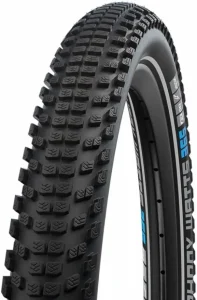
The Schwalbe Johnny Watts 365 is the most versatile option in this guide for riders who split their time between pavement, gravel roads, canal paths, hardpack, and easy forest trails. Its tread has enough structure for mixed surfaces without the constant vibration and drag of a full downhill tire. The ADDIX 4Season compound and siped tread are intended to improve year-round use, and listed versions carry an E-50 marking.
This tire makes sense on SUV-style e-bikes, trekking bikes, and hardtails used as all-purpose transportation. It is not a replacement for a studded winter tire on polished ice. Riders facing regular ice or packed snow should compare the dedicated options in my guide to winter e-bike tires.
Why It Stands Out
- Useful mix of road efficiency and off-road grip
- Four-season compound and tread design
- Quiet enough for everyday pavement compared with aggressive MTB tires
- E-50 marking on current listed versions
Tradeoffs
- Not as fast as a dedicated city tire
- Not aggressive enough for deep mud or downhill riding
- Wide sizes require careful frame and fender clearance checks
5. Maxxis Minion DHF and DHR II – Best Aggressive E-MTB Combination
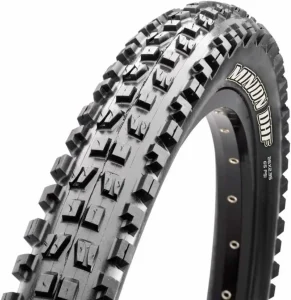
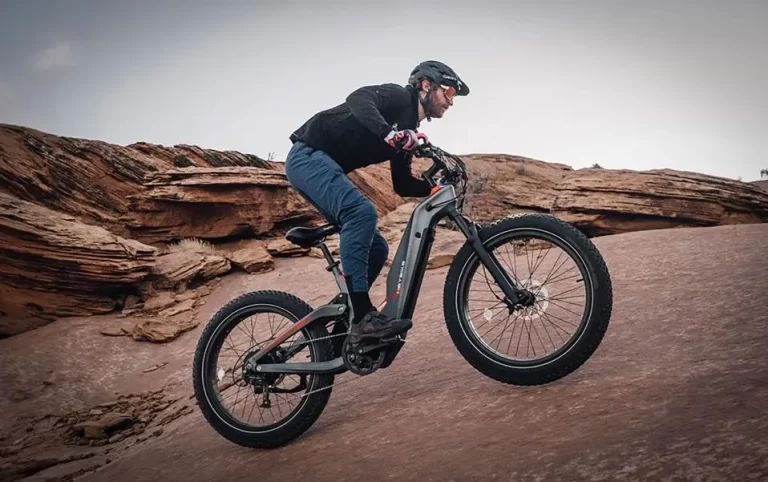
For demanding trail riding, I prefer a purpose-specific front and rear combination instead of using one all-round tire at both ends. The Maxxis Minion DHF is a proven front choice that balances rolling speed with braking and cornering traction. The Minion DHR II uses paddle-like center knobs for hard braking and is commonly paired at the rear.
The casing matters as much as the tread. Maxxis offers multiple compounds and casings, including EXO, EXO+, DoubleDown, and downhill constructions. Heavier e-MTBs and riders on rocky terrain may benefit from stronger sidewall and pinch-flat protection, but the stronger casing adds weight. Select versions are identified for e-bike use, so do not assume every Minion with the same name has the same rating.
This combination is overkill for pavement commuting. It will create more noise and rolling resistance, and the softer compounds may wear quickly on asphalt. It belongs on a bike that is actually ridden on steep, loose, rocky, or technical trails. Riders still choosing a trail bike can compare options in the best electric mountain bikes guide.
Why It Stands Out
- Excellent front cornering support and rear braking traction
- Wide selection of compounds, widths, and protective casings
- Tubeless-ready versions are widely available
- Suitable for trail, enduro, and gravity-focused riding when the correct version is chosen
Tradeoffs
- High rolling resistance and road noise
- Soft compounds can wear quickly on pavement
- Many similar-looking versions make ordering confusing
- Wide Trail versions require an appropriate internal rim width
6. Schwalbe Motion Pick-Up – Best Dedicated Cargo Tire

A cargo bike tire must do more than resist punctures. It also has to control sidewall flex and remain stable when the bike is carrying children, deliveries, or a heavy front box. The Schwalbe Motion Pick-Up uses a reinforced double carcass developed for cargo bikes, with high puncture protection and E-50 certification across the listed range.
This is my first choice for a long-tail or front-loader when the correct size is available. Schwalbe offers several diameters and widths because cargo bikes use more varied wheel sizes than ordinary commuters. Load capacity is specific to each size, so the figure for one Pick-Up version must not be copied to another. The bike, rim, tire, and wheel all have their own limits, and the lowest limit controls the safe load.
The downside is weight and installation effort. A stiff cargo casing can be difficult to seat, and the thumb test is unreliable for judging pressure. Use an accurate gauge and follow the pressure range printed on the sidewall. Riders comparing complete utility bikes can also see the best cargo e-bikes for commuting and family use.
Why It Stands Out
- Double carcass developed specifically for cargo bikes
- Strong puncture protection and stable loaded handling
- Wide selection of cargo-relevant diameters and widths
- ECE-R75 and E-50 certification on the current range
Tradeoffs
- Heavy and relatively stiff
- Can be difficult to install by hand
- Pressure must be checked with a gauge
7. Kenda Juggernaut Pro – Best Fat-Bike Tire for Snow and Sand
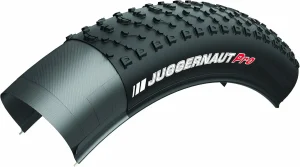
The Kenda Juggernaut Pro is a fat-bike tire built around a large casing for flotation in snow and other soft surfaces. Kenda lists the 26 x 4.0 Pro as a comparatively light option, and tubeless-ready versions can reduce rotating weight further when the rim is compatible.
This is a terrain-specific recommendation rather than a universal upgrade. A large fat tire can transform traction on snow, sand, and loose trails, but it will not make a heavy fat e-bike feel like a quick urban commuter. It can also self-steer on pavement when pressure is too low. Riders curious about the category can read why some e-bikes use fat tires or compare complete models in the best fat-tire e-bikes guide.
The Juggernaut Pro is not presented as a universal E-50 tire. Confirm that the specific version meets your bike manufacturer’s speed, load, rim, and use requirements. This is especially important on high-powered or moped-style bikes.
Why It Stands Out
- Large casing provides flotation on snow and sand
- Relatively low listed weight for a full-size fat tire
- Front and rear application
- Tubeless-ready versions available
Tradeoffs
- Not efficient for long paved commutes
- Pressure has a major effect on steering and rim protection
- Compatibility must be verified for e-bike speed and system weight
How to Choose the Right E-Bike Tire
Start With the ETRTO Number
The safest starting point is the ETRTO size printed on the tire sidewall, such as 55-622 or 60-584. The first number is the approximate inflated tire width in millimeters. The second is the bead-seat diameter of the rim. That second number must match. A 622 tire does not fit a 584 rim even though both may be sold with familiar inch-based labels.
Width is more flexible than diameter, but only within limits. A wider tire needs enough room inside the fork, frame, fenders, chain guard, and cargo-bike bodywork. It also needs a suitable rim width. Leave clearance for wheel flex, mud, and debris rather than checking the tire only while the bike is unloaded on a stand.
Match the Tread to the Surface You Actually Ride
A mostly smooth center tread reduces noise and energy loss on pavement. Small shoulder blocks can add confidence on gravel without making the tire feel like a downhill model. Tall, widely spaced knobs are useful on loose soil and mud because they can bite and clear debris, but they squirm and wear faster on asphalt.
Choose for the surface that causes the greatest risk, not the surface that looks most adventurous. A commuter who rides 95 percent pavement and 5 percent park path will usually be happier with an urban or mixed-terrain tire than an aggressive mountain-bike tread.
Balance Puncture Protection Against Weight and Comfort
Thick belts and reinforced casings reduce the chance that glass, thorns, or sharp debris will reach the tube. They can also make the tire heavier, firmer, and harder to mount. Maximum protection is worthwhile for commuters who cannot arrive late or cargo riders who do not want to unload a bike at the roadside. Performance-focused riders may accept more risk for a lighter and more supple tire.
No pneumatic tire is puncture-proof. Keep pressures within the stated range, remove embedded debris before it works through the casing, and carry a repair method appropriate to your setup. Useful additions such as a pump, tire levers, and repair kit are covered in my guide to the best e-bike accessories.
Understand E25, E-50, and ECE-R75 Labels
Manufacturers use e-bike markings to identify tires intended for the added forces and speeds of assisted bicycles. An E25 designation generally refers to standard pedal-assist use up to about 25 km/h, while E-50 or ECE-R75-marked versions are intended for faster speed-pedelec applications up to 50 km/h. The exact labeling and legal meaning can vary by market.
A tire label does not change the legal class of the bike, raise its permitted speed, or guarantee compatibility. Use the rating as one part of the decision alongside the bike manual, total system weight, rim dimensions, tire pressure, and local rules.
Check Load Capacity on Cargo and Heavy E-Bikes
Do not divide the bike’s total payload evenly between two tires. Weight distribution changes with the rider, battery, motor location, child seats, front boxes, rear racks, and braking. Cargo bikes can place much more weight on one wheel than the other.
Check the load limit for the exact tire size and pressure, then compare it with the rim, spokes, hub, frame, fork, and complete-bike limits. Never exceed the lowest stated limit. A strong tire cannot compensate for an overloaded wheel or frame.
Tube or Tubeless?
A tube setup is familiar, inexpensive, and easy for many shops to service. It is also vulnerable to pinch flats when pressure is too low. Tubeless setups can seal small punctures and allow lower trail pressures, but they require compatible rims and tires, fresh sealant, correctly installed valves and tape, and occasional maintenance.
Do not convert a tire or rim that is not approved for tubeless use. On high-load cargo bikes, follow the bike and tire manufacturer’s setup rather than assuming tubeless is automatically better.
Use Pressure as a Range, Not One Universal Number
The sidewall lists a permitted pressure range, not the perfect pressure for every rider. The correct setting depends on tire volume, rider and cargo weight, rim width, terrain, front-to-rear weight distribution, and whether the setup uses tubes or sealant.
Too much pressure can reduce grip and comfort. Too little can cause vague steering, rim strikes, pinch flats, casing damage, heat, or tire roll. Start within the manufacturer’s range and adjust gradually. Use a gauge because reinforced e-bike and cargo tires can feel firm even when underinflated. The calculators and ownership resources in the free e-bike tools hub can help with related setup decisions.
Useful Accessories for E-Bike Tire Repairs
A dependable tire is only part of a good roadside setup. I recommend carrying a pump, tire levers, a repair option for your tube or tubeless system, and a spare tube in the correct size. These accessories can help you handle a basic puncture without turning a minor problem into a long walk home.
Affiliate note: The product links below may earn Electric Bike Explorer a commission at no extra cost to you.
Topeak Road Morph G Pump With Gauge
The Topeak Road Morph G combines the portability of a frame pump with a fold-out foot support, flexible hose, T-style handle, and built-in pressure gauge. That design is easier to use than a very small hand pump when inflating wider commuter, cargo, or mountain-bike tires.
Best for: Riders who want one portable pump for accurate roadside inflation.
Before buying: Confirm that the pump head works with your Presta or Schrader valve. Riders with very large fat-bike tires may prefer a higher-volume mountain-bike or fat-bike pump.
Check the Topeak Road Morph G on Amazon
Park Tool TL-4.2 Tire Lever Set
The Park Tool TL-4.2 levers have wide, flat tips that help lift a tire bead over the rim. Their compact size makes them easy to carry in a saddlebag or repair pouch, and the spoke hooks help hold one lever in place while using the other.
Best for: Removing standard commuter, touring, gravel, and mountain-bike tires.
Before buying: Some heavily reinforced cargo and commuter tires have exceptionally tight beads. Work carefully around the rim and avoid using screwdrivers or other sharp metal tools that could damage the tire, tube, or rim.
Check the Park Tool TL-4.2 Tire Levers on Amazon
Slime 1022-A Tube Patch Kit
The Slime 1022-A kit includes rubber patches, a surface scuffer, and rubber cement for repairing small punctures in conventional inner tubes. It is inexpensive, compact, and useful as a backup when you have already used your spare tube.
Best for: Riders using tires with replaceable inner tubes.
Before buying: This kit is for tubes, not for repairing a damaged tire casing or plugging a tubeless tire. Allow the rubber cement to become tacky and follow the supplied instructions before applying the patch.
Check the Slime 1022-A Patch Kit on Amazon
KOM Cycling Tubeless Tire Repair Kit
The KOM Cycling kit includes a puncture reamer, insertion fork, and repair strips for holes that tubeless sealant cannot close by itself. Its compact aluminum body is easier to carry than a full workshop repair kit.
Best for: Tubeless road, gravel, mountain-bike, and compatible fat-bike tires.
Before buying: A plug kit does not replace a pump or CO2 inflator, and it cannot repair every sidewall tear or damaged tire bead. Tubeless riders should still carry a compatible spare tube for punctures that cannot be sealed on the trail.
Check the KOM Cycling Tubeless Repair Kit on Amazon
Park Tool TB-2 Emergency Tire Boots
A tire boot reinforces the inside of a tire when a cut is large enough for the tube to push through the casing. The Park Tool TB-2 uses a strong adhesive-backed material and takes up very little room in a repair kit.
Best for: Emergency roadside support for a cut tire casing.
Important: A tire boot is a temporary get-home repair. Reduce speed, monitor the damaged area, and replace a tire with exposed casing, a bulge, bead damage, or a significant sidewall cut before returning to normal riding.
Check the Park Tool TB-2 Tire Boots on Amazon
Do Not Forget the Correct Spare Tube
Even tubeless riders should consider carrying one spare tube. Match the tube to the tire diameter and width, and check whether the rim uses a Presta or Schrader valve. The valve must also be long enough to pass through the rim.
For more repair tools, safety equipment, locks, mirrors, and everyday riding gear, see my guide to the best e-bike accessories.
Common E-Bike Tire Buying Mistakes
- Ordering by wheel diameter alone: “26-inch” and “28-inch” labels can hide different widths and bead-seat dimensions. Use the complete ETRTO number.
- Assuming a model name means one tire: Compounds, casings, beads, and e-bike ratings can vary within the same family.
- Buying the widest tire that might fit: A tire needs safe operating clearance, not just enough room while stationary.
- Ignoring rim width: A very wide tire on a narrow rim can handle poorly, while a narrow tire on a wide rim can distort its profile.
- Using aggressive knobs for a road commute: More tread does not automatically mean more safety on pavement.
- Copying someone else’s pressure: Their weight, rim, tire size, terrain, and cargo may be completely different.
- Overlooking direction arrows: Some tires have different rolling directions for front and rear installation.
- Forgetting the valve and tube: Confirm tube width, valve type, and valve length when changing tire size.
Tires are one of the most useful changes a rider can make, but they should be chosen for a real problem rather than appearance. For other worthwhile changes, see the guide to practical e-bike modifications.
E-Bike Tire Maintenance
- Check pressure at least weekly and before long or heavily loaded rides.
- Inspect tread and sidewalls for cuts, cords, cracking, bulges, or embedded debris.
- Look for uneven wear that may indicate alignment, brake, suspension, or pressure problems.
- Confirm the tire bead remains evenly seated around the rim.
- Replace a damaged tire immediately if the casing is exposed, the sidewall bulges, or the bead is compromised.
- For tubeless systems, check sealant condition and valve function on the sealant maker’s schedule.
- After installing a new tire, recheck pressure and bead seating before the next ride.
Frequently Asked Questions
Can I use a regular bicycle tire on an e-bike?
Sometimes, but only when the tire manufacturer and bike maker allow it and the tire is suitable for the bike’s speed, total weight, rim, and intended terrain. An e-bike-specific or appropriately rated tire is the safer starting point for heavy commuters, cargo bikes, and faster assisted bikes.
Do e-bike tires need to be E-50 rated?
Not every e-bike requires an E-50 tire. Standard low-speed pedal-assist bikes may use tires marked for E25 or other compatible bicycle tires. Faster speed-pedelec applications should use the rating specified by the bike and tire manufacturer. A rating is not permission to ride faster than local law allows.
How long do e-bike tires last?
There is no reliable universal mileage. Tire life changes with compound, pressure, load, motor torque, braking, road surface, temperature, storage, and rear-wheel weight. Replace a tire based on condition, tread, casing integrity, and the manufacturer’s wear indicators rather than one generic mileage number.
Should I put the same tire on the front and rear?
For city and touring bikes, matching tires are common and simplify maintenance. Mountain-bike riders often use a grippier front tire and a rear tire designed for braking and drive traction. Cargo bikes should follow the manufacturer’s size and load recommendations for each wheel.
Are wider tires always better on an e-bike?
No. Wider tires can add comfort, traction, and load support, but they also add weight and may reduce clearance or efficiency. The best width is one that fits the rim and frame correctly and suits the surface and load.
Can I make my e-bike tires tubeless?
Only when both the tire and rim are tubeless-compatible and the conversion is allowed by the bike manufacturer. You will also need correct tape, valves, sealant, and installation technique. Do not assume a wide tire is automatically tubeless-ready.
Which tire should I choose for wet commuting?
Choose a quality road or mixed-terrain tire with a compound designed for wet grip, enough width for stable contact, and a tread appropriate to the surface. Proper pressure and adequate tread condition matter more than dramatic knobs on ordinary wet pavement.
My Take
For most riders who rely on an e-bike for daily transportation, the Schwalbe Marathon E-Plus is the safest default because its puncture protection can prevent the inconvenience of roadside repairs. Riders who care more about a lighter, quicker feel should look at the Continental Pure CONTACT, while the eCONTACT Plus is a sensible middle ground for comfort, commuting, and moderate cargo use.
The other picks are more specialized. The Johnny Watts 365 is the best one-tire compromise for pavement and easy trails. The Maxxis DHF and DHR II combination belongs on a true e-MTB, not a city bike. The Motion Pick-Up is the clear cargo recommendation when its exact size matches the bike. The Juggernaut Pro makes sense for snow and sand, but it should not be mistaken for an all-purpose pavement upgrade.
Before buying, photograph the full sidewall markings on your current tire and check the bike manual. Match the ETRTO diameter first, then confirm width, rim compatibility, clearance, load, pressure, tube or tubeless setup, and the rating of the exact version in the cart. That five-minute check prevents most expensive tire-ordering mistakes.
Disclosure: As an Amazon Associate, I earn from qualifying purchases. This comes at no extra cost to you and helps support the content on this site.
External Sources
- Schwalbe Marathon E-Plus official product information
- Continental Pure CONTACT official product information
- Continental eCONTACT Plus official product information
- Schwalbe Johnny Watts 365 official product information
- Maxxis Minion DHF official product information
- Maxxis Minion DHR II official product information
- Schwalbe Motion Pick-Up official product information
- Kenda Juggernaut Pro official product information
Prices, specifications, sizes, seller listings, and availability can change. Confirm the exact tire version and current details with the manufacturer or retailer before purchasing.
Kristina is not just an enthusiast but a true authority on electric bikes. Nestled in the coastal beauty of Virginia, Kristina has found the perfect backdrop for her passion for electric biking. As a dedicated wife and homeschooling mom, her life revolves around family, faith, and the thrill of adventure.
Originally hailing from Ohio, Kristina's journey with electric bikes began as a curiosity and quickly evolved into a deep expertise. Her blog is a testament to her love for electric biking, combining her fascination for eco-friendly transportation with her coastal lifestyle.
When she's not cruising the beach on her electric bike, you'll find Kristina indulging in her other loves: long walks along the shore, getting lost in a good book, and cherishing moments with her loved ones. With a heart as big as her love for animals, especially cats, Kristina brings a unique perspective to the electric bike world, grounded in her strong faith in God and her dedication to a sustainable lifestyle.
Through her blog, Kristina shares her extensive knowledge of electric bikes, offering valuable insights, tips, and recommendations to fellow enthusiasts. Whether you're a seasoned rider or a newcomer to the electric bike scene, Kristina's blog is your go-to source for all things electric biking, fueled by her passion, expertise, and the scenic beauty of coastal Virginia.