Best Electric Scooters Under $1,000 in 2026: 7 Picks Worth Buying
Last Updated on August 9, 2026 by Kristina
📚 Research-based buying guide: I have not personally tested every bike in this guide. These recommendations are based on current manufacturer specifications, safety documentation, warranty and return policies, independent testing, service information, and available rider feedback.
Introduction
You can buy a surprisingly capable electric scooter for less than $1,000, but I would not choose one based on speed alone. At this price, I care just as much about brakes, battery size, electrical safety certification, ride comfort, warranty coverage, replacement parts, and whether the scooter is realistic to carry or store.
My best overall value is the NIU KQi 300X. For riders who want more power and rough-road capability, the Segway ZT3 Pro adds substantial suspension and 11 in. all-road tires while staying below $1,000 at its current sale price. The NAVEE ST3 Pro is my comfort pick, while the Segway Max G2 remains a strong choice for riders who value a well-established commuter platform.
If this is your first scooter, start with my commuter scooter buying guide for help with range, brakes, portability, and other basics. I also recommend reading my electric scooter safety guide before riding in traffic.
Prices checked: August 6, 2026. Sale prices, specifications, and availability can change, so confirm the current product page before ordering.
Best Electric Scooters Under $1,000
| Scooter | Best For | Current Price | Top Speed | Claimed Range | Weight |
|---|---|---|---|---|---|
| NIU KQi 300X | Best overall value | $594.15* | 20-23.6 mph* | 37.3 mi | 48.7 lb |
| Segway ZT3 Pro | Power and rough roads | $849.99* | 24.9 mph | 43.5 mi at low speed | 65.5 lb |
| NAVEE ST3 Pro | Ride comfort | $699.99* | ~25 mph | 46.6 mi | 55.8 lb |
| Segway Max G2 | Proven commuter | $749.99* | 22 mph | 43 mi at low speed | 53.5 lb |
| VMAX VX2 Pro | Higher payloads | From $799 | 24 mph | 22-37 mi | 43.2-45 lb |
| Hiboy MAX Pro | Long-range value | $656.99 | 22 mph | 46.6 mi | 51.6 lb |
| Kaabo Mantis 8 | Compact dual-motor performance | $899 | 25 mph | 25 mi | 53 lb |
*NIU’s current U.S. KQi 300X page is internally inconsistent: the storefront headline says 20 mph while the detailed specification block lists 23.6 mph. I would confirm the current software, riding mode, and regional speed setting before buying if maximum speed matters to you.
Manufacturer maximum-range figures are usually measured under controlled conditions. They should not be treated as guaranteed real-world range.
How I Chose the Best Electric Scooters Under $1,000
I started with models that could be purchased in the United States for no more than $1,000 at the price I could verify on August 6, 2026. I then compared motor output, battery capacity, braking, suspension, tires, weight, payload, water resistance, warranty coverage, electrical safety information, and credible independent testing.
Electrical safety was an important filter. The U.S. Consumer Product Safety Commission recommends using micromobility products designed, manufactured, and certified for compliance with applicable consensus safety standards. CPSC also recommends using the supplied or manufacturer-recommended charger, remaining present while charging, and using only approved replacement battery packs.
UL 2272 applies to electrical systems for personal e-mobility devices such as electric scooters. Certification does not eliminate every possible battery or electrical problem, but it is a meaningful safety consideration. CPSC has said compliance with applicable UL standards significantly reduces the risk of injuries and deaths associated with micromobility-device fires.
I also did not automatically reward the scooter with the largest wattage number. A commuter riding 20 to 25 mph needs predictable brakes, good tires, a stable frame, usable range, and reasonable support after the sale more than a flashy peak-power claim.
🔎 Why You Can Trust This Guide
I compare official specifications, safety information, independent testing, support policies, and real-world rider feedback. Affiliate relationships do not determine which products I recommend or how they are ranked. You can read more about how Electric Bike Explorer reviews and ranks e-bikes.
Want to See More Electric Bike Explorer in Google Search?
Add Electric Bike Explorer as a preferred source to see more of our e-bike law guides, safety updates, reviews, buying guides, and troubleshooting posts when they are relevant to your searches.
1. NIU KQi 300X – Best Electric Scooter Under $1,000 Overall
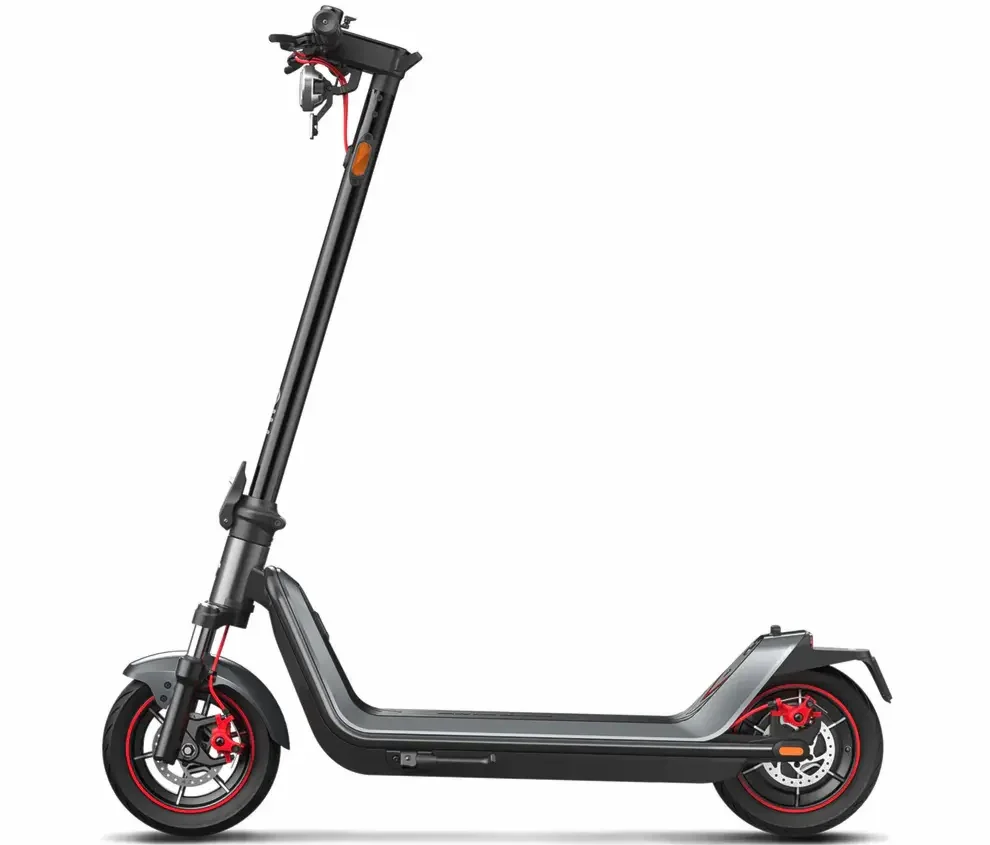
If I were trying to get the most complete scooter for the least money right now, the NIU KQi 300X would be at the top of my list.
NIU was listing it for $594.15 when I checked. It has a 500W rated motor with up to 1,000W maximum output, a 608.4Wh battery, 10.5 in. self-healing tubeless tires, hydraulic front suspension, front and rear disc brakes plus regenerative braking, turn signals, and UL 2272 certification. NIU lists the scooter at 48.7 lb with a 265 lb maximum rider weight.
There is one specification conflict worth knowing about. NIU’s U.S. storefront headline currently presents the KQi 300X as a 20 mph scooter, while the detailed specification block on the same product page lists a 23.6 mph top speed. Rather than pretend one number is definitive, I would treat 20 to 23.6 mph as the current advertised range and confirm the active regional or software setting before purchase.
NIU claims up to 37.3 miles of range. Real-world range can be substantially lower depending on riding speed, hills, rider weight, tire pressure, temperature, and acceleration. NIU also advertises a 2-year limited warranty covering major components including the battery and motor.
Why it stands out
You are getting a 608.4Wh battery, front suspension, strong braking hardware, tubeless tires, lighting, app features, documented UL 2272 certification, and a 2-year limited warranty for considerably less than $1,000.
Main tradeoff
At 48.7 lb, the KQi 300X is foldable but not especially easy to carry. I would think carefully before choosing it for a commute that involves several flights of stairs.
Best for
Commuters who want the strongest overall combination of current price, battery capacity, braking, comfort, and safety features.
2. Segway ZT3 Pro – Best for Power and Rough Roads
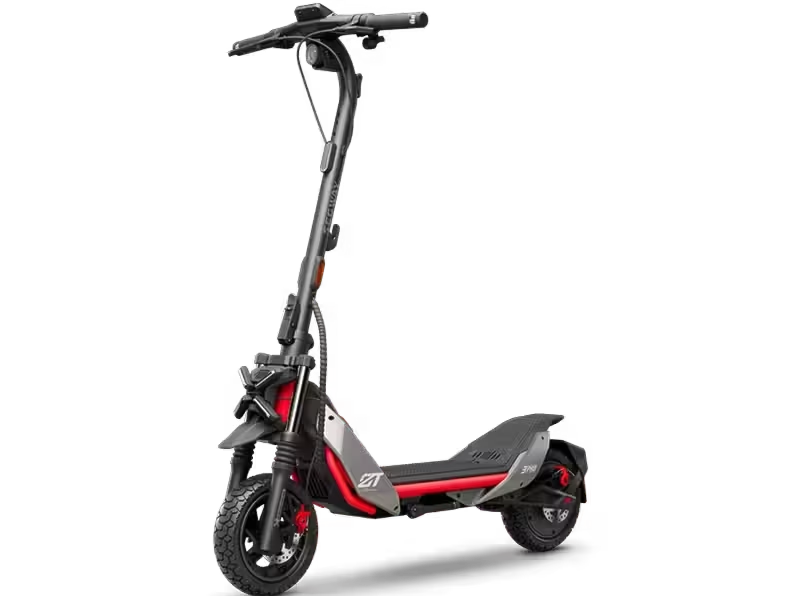
The Segway ZT3 Pro is my performance-oriented pick under $1,000 because it combines a stronger motor with much more substantial rough-road equipment than a typical commuter scooter.
Segway’s current Back-to-School promotion lists the ZT3 Pro at $849.99 through August 16, 2026. The U.S. model has a 650W nominal motor with up to 1,600W maximum output, a 597Wh battery, a 24.9 mph maximum speed, front double-telescopic suspension, rear spring suspension, and 11 in. all-road tubeless tires.
The range numbers need context. Segway claims up to 43.5 miles at about 9.3 mph but only about 18.6 miles at 24.9 mph under its specified test conditions. That is a much more useful comparison than quoting the 43.5-mile maximum by itself.
The scooter weighs 65.5 lb, supports up to 265 lb, uses front and rear disc brakes plus rear electronic braking, and carries an IPX5 body rating. It also supports traction control, AirLock, Apple Find My, and the Segway app.
Why it stands out
The combination of up to 1,600W maximum output, substantial front and rear suspension, 11 in. tires, 6 in. ground clearance, and dual disc brakes makes the ZT3 Pro one of the most capable scooters I found below $1,000.
Main tradeoff
At 65.5 lb, portability is the obvious weakness. This is not the scooter I would choose if you regularly need to carry it upstairs or onto public transportation.
Best for
Riders dealing with hills, broken pavement, gravel, or rougher routes who want more power and suspension than a typical lightweight commuter provides.
3. NAVEE ST3 Pro – Best for Ride Comfort

If cracked pavement, expansion joints, and rough city streets are your main complaint, the NAVEE ST3 Pro deserves a serious look.
NAVEE equips it with front and rear Damping Arm suspension, a 600W rated rear motor with 1,350W maximum output, a 596.7Wh battery, 10 in. self-healing tubeless tires, traction control, and a braking system combining a front drum brake, rear disc brake, and rear electronic braking. NAVEE’s U.S. specification lists a maximum speed of 40 km/h, or about 25 mph.
Best Buy was listing the ST3 Pro for $699.99 when I checked. The retailer identifies it as UL 2272 certified. Availability can change, and NAVEE’s own pages have shown inconsistent stock messaging, so I would confirm the seller and shipping status before ordering.
Independent RiderGuide testing reported roughly 30 to 32 miles of real-world range, below the manufacturer maximum but still substantial for daily commuting.
I have a more detailed NAVEE ST3 Pro review if ride quality is one of your highest priorities.
Why it stands out
The combination of a nearly 600Wh battery, front and rear suspension, 25 mph capability, smart features, strong braking equipment, and independent range testing makes it particularly attractive for imperfect city pavement.
Main tradeoff
At about 55.8 lb, it is noticeably heavier than lightweight commuter models.
Best for
Riders who prioritize comfort and stability over easy carrying.
4. Segway Max G2 – Best Proven Everyday Commuter
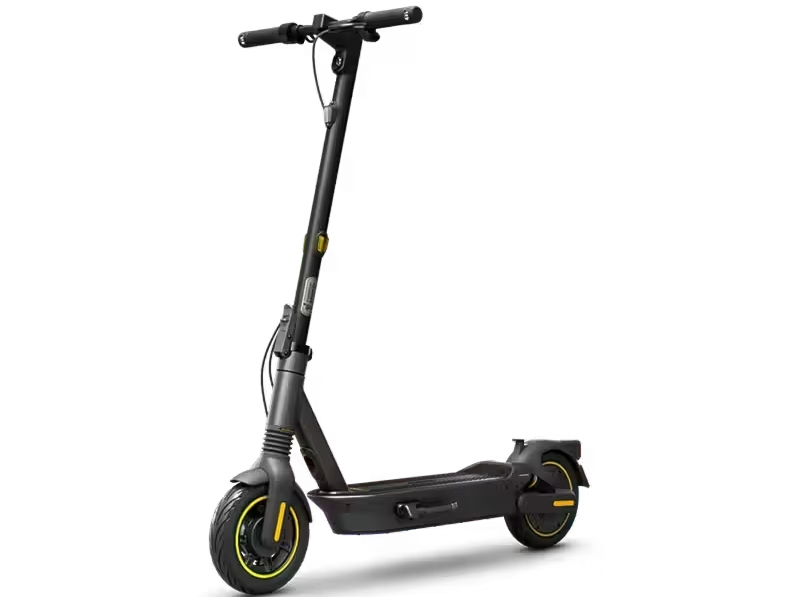
The Segway Max G2 is no longer Segway’s newest commuter scooter, but that does not make it irrelevant.
Segway’s current Back-to-School sale lists the Max G2 for $749.99 through August 16, 2026. The current promotion advertises a 22 mph maximum speed and up to 43 miles of range at 10 mph. The scooter also combines front and rear suspension, 10 in. self-sealing tubeless tires, traction control, Apple Find My support, and a 265 lb payload limit.
Independent testing gives the range claim more useful context. RiderGuide measured a 21.7 mph top speed and 26.6 miles of range in its hands-on testing. That is the kind of number I would use when judging whether a scooter can handle a daily round-trip commute with a reasonable buffer.
Why it stands out
A comfortable suspension system, established commuter design, strong app ecosystem, Apple Find My, and substantial independent testing make the Max G2 easier to evaluate than many newer scooters.
Main tradeoff
At 53.5 lb, it is not lightweight, and newer competitors can offer more peak power for similar money.
Best for
Riders who want a mature, widely used commuter platform rather than chasing the newest specification sheet.
5. VMAX VX2 Pro – Best for Higher Payloads
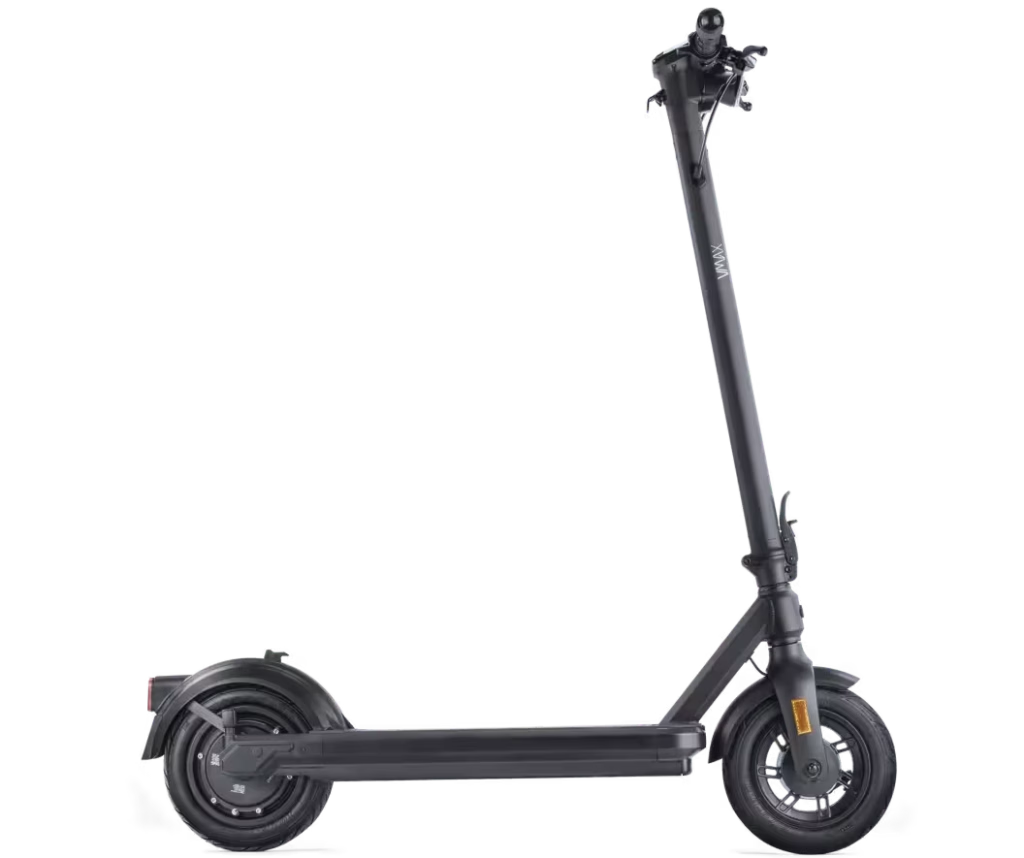
The VMAX VX2 Pro earns a place here because of a specification that is easy to overlook: its 287 lb maximum payload.
The VX2 Pro starts at $799 and uses a 48V system with up to 1,300W peak output. VMAX lists a 24 mph maximum speed and battery choices including a 499Wh LT version rated for up to 22 miles and a 768Wh GT version rated for up to 37 miles under VMAX’s stated test conditions.
VMAX states that the VX2 Pro is SGS certified for UL 2272 and backs the scooter with a 24-month warranty. Depending on the battery version, listed weight is roughly 43.2 to 45 lb. It uses 10 in. tubeless tires, a front drum brake, regenerative rear braking, and an IPX6 water-resistance rating.
Why it stands out
The 287 lb payload, 24 mph speed, manageable weight for its performance level, documented certification, and 2-year warranty give it a useful niche.
Main tradeoff
You need to pay close attention to the exact LT or GT version. Battery capacity, claimed range, charging time, weight, and final price vary by configuration.
Best for
Larger riders or commuters carrying extra gear who need more than the common 265 lb maximum payload.
6. Hiboy MAX Pro – Best Long-Range Value
The Hiboy MAX Pro is a much better fit for this guide than using a second NIU simply to fill the lightweight category. Hiboy currently lists it at $656.99, with a 500W rated motor and 650W peak output, a 48V 15Ah battery, 22 mph maximum speed, up to 46.6 miles of claimed range, 11 in. pneumatic tires, front and rear suspension, and a 265 lb payload limit. Hiboy lists the scooter at about 51.6 lb.
Another reason I like it for this guide is electrical safety documentation. Hiboy specifically states that the MAX Pro is UL 2272 certified. It also uses drum and electronic braking and carries an IPX4 water-resistance rating.
Why it stands out:
The combination of a large 48V 15Ah battery, 11 in. air-filled tires, dual suspension, 22 mph speed, and a current price well below $700 gives readers a strong long-distance commuter option without using another NIU or Segway.
Main tradeoff:
The 46.6-mile figure is a manufacturer maximum, not a guaranteed real-world result. It is also a 51.6 lb scooter, so I would not consider it especially portable.
Best for:
Longer commuters who prioritize range, tire comfort, and suspension over low weight.
7. Kaabo Mantis 8 – Best Compact Dual-Motor Scooter
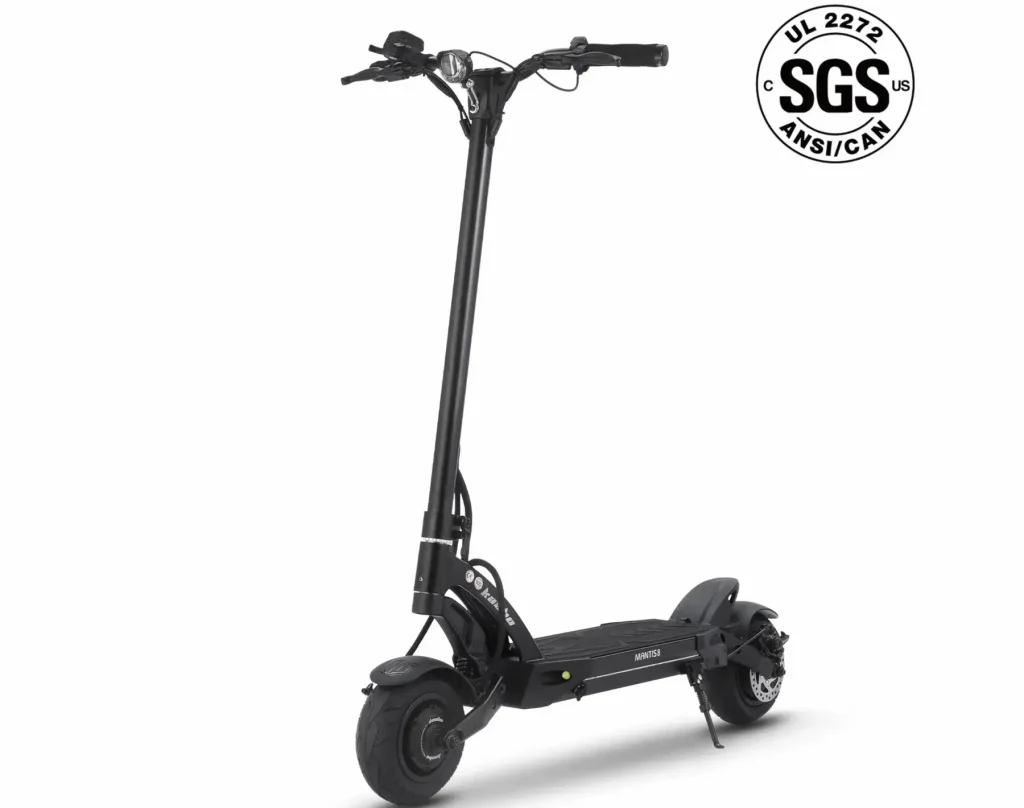
The Kaabo Mantis 8 gives the guide something the previous lineup was missing – a more performance-oriented scooter from an established performance-scooter brand without crossing the $1,000 ceiling.
Kaabo’s current U.S. product page lists the Mantis 8 at $899. It uses dual 500W motors, reaches up to 25 mph, carries a 48V 13Ah battery, claims up to 25 miles of range, weighs about 53 lb, and supports riders up to 265 lb. It also has front and rear suspension, 8 in. pneumatic tires, disc brakes with EABS, and an NFC-enabled display.
Why it stands out:
Dual motors are unusual in this price range, and they give the Mantis 8 a different reason to be here than the comfort-focused NAVEE or long-range Hiboy.
Main tradeoff:
The 25-mile claimed range is modest compared with the MAX Pro, KQi 300X, and several other scooters in this guide. Its smaller 8 in. pneumatic tires are also not what I would choose for very rough streets.
Best for:
Riders who want dual-motor acceleration and hill capability in a relatively compact scooter without spending more than $1,000.
How Much Real-World Range Do You Actually Need?
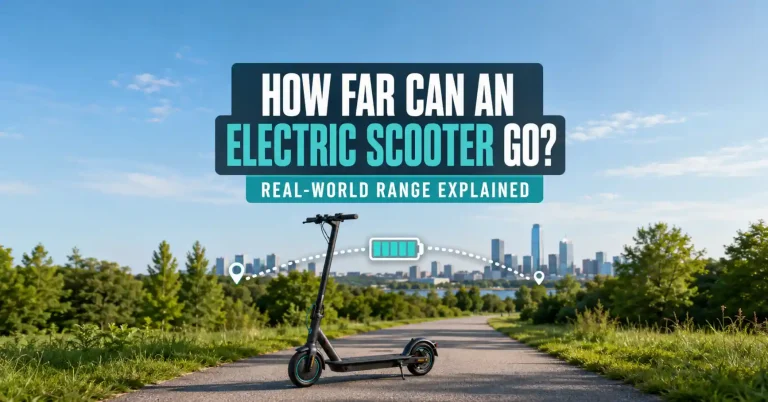
One of the biggest buying mistakes is choosing a scooter based entirely on the manufacturer’s maximum-range number.
Maximum range is often measured at a relatively low speed with a moderate-weight rider, a fresh battery, proper tire pressure, mild temperature, and flat pavement. Riding at maximum speed, climbing hills, carrying more weight, making frequent stops, or riding in cold weather can reduce range considerably.
The Segway ZT3 Pro is a good example. Segway claims 43.5 miles at approximately 9.3 mph but only about 18.6 miles at 24.9 mph. The Max G2 is currently advertised at 43 miles at 10 mph, while RiderGuide measured 26.6 miles in its independent test.
RiderGuide also reported roughly 30 to 32 miles from the NAVEE ST3 Pro, compared with NAVEE’s low-speed maximum of about 46.6 miles.
If range is your main concern, my long-range electric scooter guide goes deeper into what the numbers mean.
As a practical rule, I prefer buying considerably more rated range than the commute actually requires. That leaves a buffer for battery aging, weather, hills, detours, tire pressure, and days when you forget to start with a full charge.
What to Look for in an Electric Scooter Under $1,000
Battery capacity
Watt-hours are more useful than a vague “long range” claim. A 600Wh-class battery stores considerably more energy than a 350Wh battery, although motor efficiency, speed, rider weight, and other factors still influence actual range.
Brakes
At 20 to 25 mph, braking deserves serious attention. Look at the complete braking system rather than treating top speed as the most important performance number.
Tires
Larger pneumatic or tubeless tires generally deal with rough pavement better than very small solid tires. Self-healing or self-sealing designs can also reduce some puncture headaches.
Suspension
If your streets are rough, suspension may matter more than a few extra miles per hour. A scooter that looks impressive on paper can become uncomfortable if every pavement joint reaches your hands and feet.
Weight
Folding does not mean lightweight. A 55 to 65 lb scooter technically folds, but carrying one up several flights of stairs is a very different experience from carrying the 26.2 lb KQi Air.
Electrical certification
I give preference to clearly documented testing and certification such as UL 2272. CPSC recommends choosing micromobility products designed, manufactured, and certified for compliance with applicable consensus safety standards.
Support and warranty
Scooters eventually need tires, brakes, chargers, and sometimes proprietary electronic parts. A slightly slower scooter with a clear warranty and available support can be a better long-term purchase than a bargain performance model with little after-sale assistance.
Electric Scooter Accessories Worth Adding
A few well-chosen accessories can make an electric scooter safer, easier to use, and more practical for everyday trips.
- Helmet: Choose a properly fitted helmet with good coverage and ventilation.
- Strong lock: A folding lock, U-lock, or heavy-duty chain can help protect the scooter during short stops.
- Front and rear lights: Extra lighting improves visibility, especially at night or in low-light conditions.
- Rearview mirror: A handlebar-mounted mirror can make it easier to monitor traffic without turning around.
- Phone mount: A secure mount is useful for navigation, but it should not block the display or controls.
- Compact tire pump: Pneumatic and tubeless tires perform best when kept at the recommended pressure.
- Basic repair kit: Tire plugs, patches, tire levers, and a small multitool can help with minor roadside problems.
- Reflective gear: A reflective vest, ankle bands, or backpack cover can make riders easier to see.
- Storage bag: A small stem or handlebar bag can carry a lock, charger, tools, and personal items without affecting steering.
See my guide to the Best E-Bike Accessories for more helmets, locks, lights, mirrors, and riding gear that may also work well for electric scooter riders. Always confirm fit and compatibility before purchasing.
Common Electric Scooter Buying Mistakes
The first is buying the fastest scooter you can afford. Extra speed does not automatically make a scooter better, and it can make mistakes much less forgiving.
The second is believing maximum range literally. Look at battery capacity, the speed used for the manufacturer’s test, and independent range testing whenever possible.
The third is ignoring weight. If you have stairs, think seriously about what carrying 50 to 65 lb will feel like before assuming a folding scooter is portable.
The fourth is overlooking charging safety. CPSC recommends using the charger provided with or recommended by the manufacturer, remaining present while charging, following manufacturer instructions, unplugging the device when charging is complete, and using only approved replacement battery packs. CPSC has also warned against supposedly “universal” micromobility chargers that have not been tested and approved for the specific device.
FAQs
What is the best electric scooter under $1,000?
For the strongest overall value at the prices I verified on August 6, 2026, I would choose the NIU KQi 300X. Its 608.4Wh battery, hydraulic front suspension, dual disc brakes, tubeless tires, documented UL 2272 certification, and $594.15 current sale price make it difficult to beat. Just note the current NIU page’s conflicting 20 mph and 23.6 mph speed figures.
What is the most powerful electric scooter in this guide?
Based on manufacturer-listed maximum motor output, the Segway ZT3 Pro leads this group at up to 1,600W. It has a 24.9 mph maximum speed and is aimed more toward rougher roads and stronger hill performance than lightweight portability.
Which electric scooter is easiest to carry?
The NIU KQi Air is the clear winner at 26.2 lb. Most of the other higher-performance scooters in this guide weigh well over 40 lb.
Which scooter has the highest payload?
The VMAX VX2 Pro has the highest manufacturer-listed payload in this group at 287 lb.
Is a $1,000 electric scooter worth it?
For a frequent commuter, it can be. Moving above the cheapest scooter tier can buy you larger batteries, better tires, suspension, improved braking systems, turn signals, tracking features, clearer warranties, and documented electrical safety testing.
That does not mean you need to spend the entire $1,000. The KQi 300X and Segway E3 Pro show that there are strong options well below the ceiling.
My Take
The under-$1,000 electric scooter market is strong enough in 2026 that I do not think most riders need to spend the full $1,000 to get a capable everyday scooter. The better choice is to match the scooter to the way you actually ride.
For most people, I would still start with the NIU KQi 300X. Its combination of battery capacity, suspension, braking, tubeless tires, electrical safety certification, and current price gives it the strongest overall balance in this group.
If your route includes rough pavement, gravel, or steeper hills, the Segway ZT3 Pro makes more sense. It is heavier, but the larger tires, stronger motor, and more substantial suspension give it an advantage when conditions are less than perfect.
For riders who care most about comfort, I like the NAVEE ST3 Pro, while the Segway Max G2 remains a good choice for commuters who want an established platform with plenty of independent testing behind it.
The VMAX VX2 Pro is the better fit for riders who need a higher payload rating, and the Hiboy MAX Pro stands out for shoppers who want a large battery, suspension, 11 in. tires, and a strong claimed range without getting close to the $1,000 limit.
The Kaabo Mantis 8 is the most interesting alternative for riders who prioritize acceleration and hill performance. Its dual-motor setup gives it a different personality from the more traditional commuter scooters in this guide, although its smaller tires and more modest claimed range mean it will not be the right choice for everyone.
There is no single scooter here that is best for every rider. Before buying, think carefully about your commute distance, hills, road quality, scooter weight, rider payload, braking, warranty support, and whether you will need to carry the scooter regularly.
I would also treat every maximum-range number as a best-case figure rather than a promise. Check the current price and specifications before ordering, use the manufacturer-approved charger, wear appropriate protective gear, and confirm the electric-scooter rules where you plan to ride.
Disclosure: As an Amazon Associate, I earn from qualifying purchases. This comes at no extra cost to you and helps support the content on this site.
External Sources
- NIU KQi 300X official product page
- NIU KQi Air official product page
- Segway Back-to-School sale page
- Segway ZT3 Pro official specifications
- NAVEE ST3 Pro official specifications
- VMAX VX2 Pro official product page
- RiderGuide Segway Max G2 independent test
- RiderGuide NAVEE ST3 Pro independent test
- U.S. Consumer Product Safety Commission micromobility safety guidance
- CPSC warning on universal micromobility chargers

Kristina is not just an enthusiast but a true authority on electric bikes. Nestled in the coastal beauty of Virginia, Kristina has found the perfect backdrop for her passion for electric biking. As a dedicated wife and homeschooling mom, her life revolves around family, faith, and the thrill of adventure.
Originally hailing from Ohio, Kristina's journey with electric bikes began as a curiosity and quickly evolved into a deep expertise. Her blog is a testament to her love for electric biking, combining her fascination for eco-friendly transportation with her coastal lifestyle.
When she's not cruising the beach on her electric bike, you'll find Kristina indulging in her other loves: long walks along the shore, getting lost in a good book, and cherishing moments with her loved ones. With a heart as big as her love for animals, especially cats, Kristina brings a unique perspective to the electric bike world, grounded in her strong faith in God and her dedication to a sustainable lifestyle.
Through her blog, Kristina shares her extensive knowledge of electric bikes, offering valuable insights, tips, and recommendations to fellow enthusiasts. Whether you're a seasoned rider or a newcomer to the electric bike scene, Kristina's blog is your go-to source for all things electric biking, fueled by her passion, expertise, and the scenic beauty of coastal Virginia.