Best Ride1Up E-Bikes in 2026: Current Models Compared
Last Updated on October 1, 2026 by Kristina
📚 Research-based buying guide: I have not personally tested every bike in this guide. These recommendations are based on current manufacturer specifications, safety documentation, warranty and return policies, independent testing, service information, and available rider feedback.
Ride1Up’s lineup has changed significantly since this guide was first published. The 700 Series, Cafe Cruiser, and LMT’D V2 are now listed by Ride1Up as discontinued, while newer models such as the Portola 02 and TrailRush have taken their place.
If you want the quickest answer, the Portola 02 is my pick for folding value, the Vorsa for utility, the Roadster V3 for lightweight commuting, the TrailRush for trail riding, the Prodigy V2 for mid-drive touring, and the CF Racer1 for lightweight fitness riding. For moped-style riding, the established Revv1 family remains the safer known quantity, while the newer Revv1 EVO brings more ambitious battery technology but less real-world history.
New to electric bikes? My Electric Bike Buying Guide explains motor types, batteries, fit, brakes, range, and the ownership details that matter before you choose a specific model.
Quick Picks: Best Ride1Up E-Bikes in 2026
| Best for | Ride1Up model | Key reason | Main tradeoff |
|---|---|---|---|
| Folding and value | Portola 02 | 750W, 90Nm motor with switchable torque/cadence sensing | About 61 lb, so it is compact rather than truly lightweight |
| Utility and cargo flexibility | Vorsa | 440 lb payload rating and 150 lb removable rack on standard Vorsa | Heavier and bulkier than a city commuter |
| Lightweight commuting | Roadster V3 | 40 lb gravel setup with torque sensing | Smaller 360Wh battery than heavier utility bikes |
| Trails and eMTB riding | TrailRush | Brose mid-drive, 120mm fork, quad-piston brakes | Hardtail design, not full suspension |
| Touring and hills | Prodigy V2 | 90Nm Brose mid-drive with chain or belt/CVT options | More expensive and heavier than the Roadster V3 |
| Fitness and fast pavement/gravel | CF Racer1 | 28.6 lb carbon frame | Current-based cadence system rather than torque sensing |
| Established moped-style riding | Revv1 HT / FS / DRT | Powerful moped-style platform with multiple frame setups | Very heavy and higher-speed modes require legal caution |
| Newest moped-style tech | Revv1 EVO | 52V 20Ah semi-solid-state battery and 100Nm claimed torque | Newer, less proven, and shipping information currently conflicts |
How I Chose These Ride1Up Models
I compared Ride1Up’s current official model list, product specifications, motor and sensor type, battery capacity, claimed range, bike weight, payload, fit, brakes, suspension, and intended riding style. I also checked whether each model is still current instead of assuming that an older Ride1Up bike is still available simply because reviews remain online.
Manufacturer range figures are listed as claimed range, not guaranteed real-world results. Actual range can change substantially with rider weight, speed, hills, weather, tire pressure, throttle use, and assist level.
Best Folding Ride1Up: Portola 02
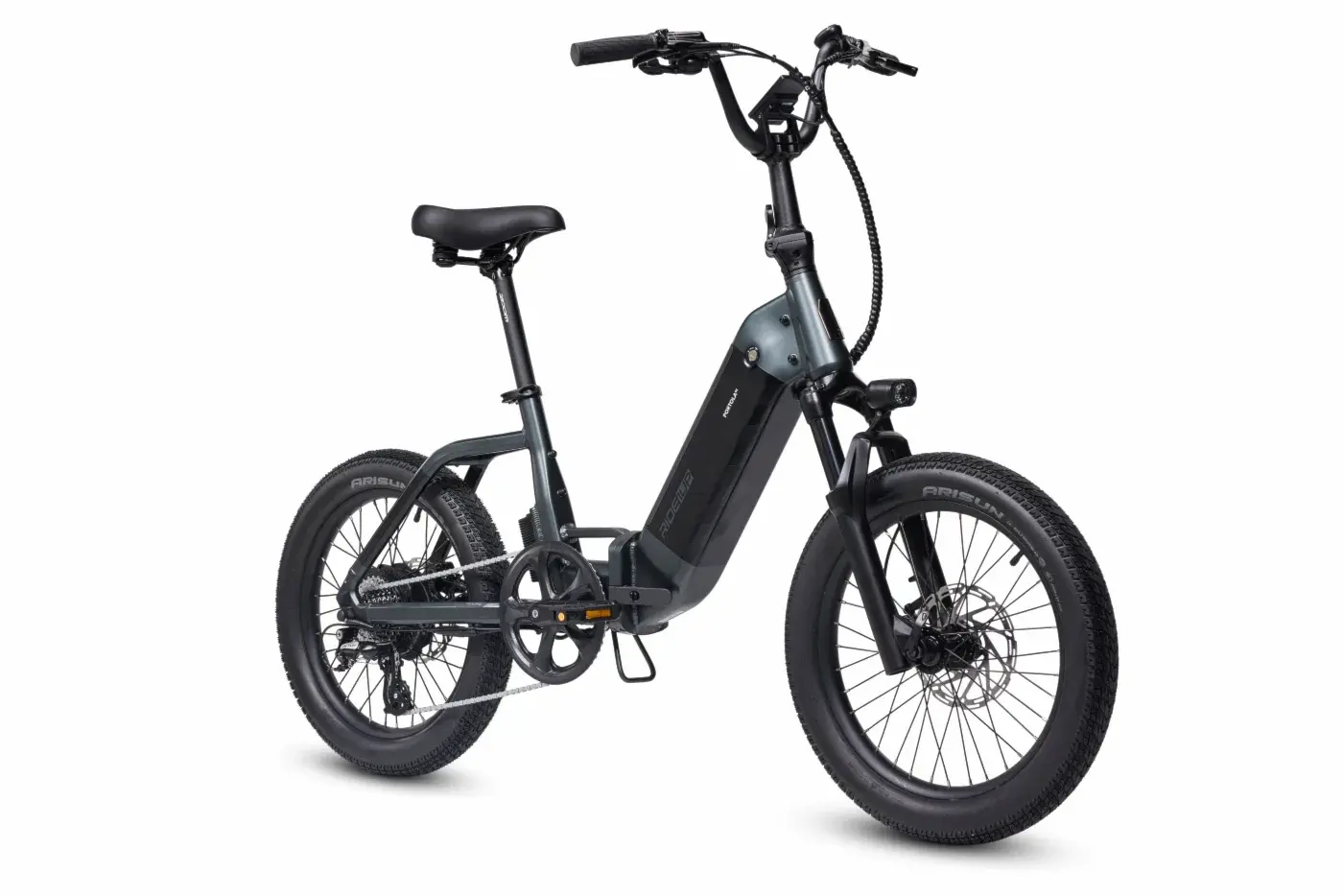
The Portola 02 is the current folding model I would start with for riders who need compact storage, RV or car transport, or a smaller-footprint commuter without giving up a full-power hub motor.
- Motor: 750W geared hub motor, 90Nm claimed torque
- Pedal assist: Ride1Up Intui-Drive dual torque/cadence system
- Battery options: 10Ah or 15Ah
- Claimed range: 25-45 miles with 10Ah, 30-60 miles with 15Ah
- Bike weight: about 61 lb for the Portola 02
- Why it stands out: folding frame, hydraulic brakes, 100mm fork, integrated lighting, and a 150 lb rated rear rack on the full Portola 02
Best for: apartment storage, RV travel, mixed commuting, and riders who want a folding bike with strong hill-climbing torque.
Main tradeoff: folding does not mean featherweight. At about 61 lb, this is still a substantial bike to lift into a vehicle or carry upstairs.
Best Ride1Up for Utility: Vorsa
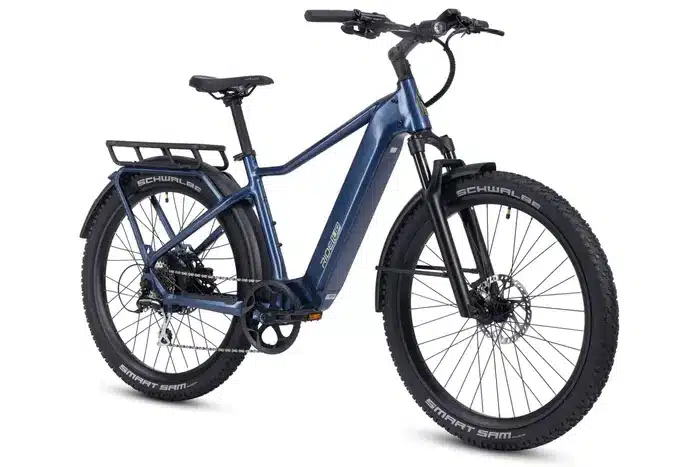
The Vorsa is Ride1Up’s strongest all-around utility choice for riders who want one bike for commuting, errands, cargo, and occasional passenger duty.
- Motor: 750W hub motor, 95Nm claimed torque
- Pedal assist: torque and cadence sensing
- Claimed range: 30-60 miles
- Payload: 440 lb on standard Vorsa and Vorsa FT
- Rear rack: 150 lb rated removable rack on standard Vorsa and Vorsa FT
- Weight: roughly 65 lb before add-ons for the standard Vorsa, with more weight as accessories are added
Best for: commuting with cargo, grocery runs, heavier loads, and riders who want more adaptability than a minimalist commuter.
Main tradeoff: the frame and cargo capability make it less convenient to carry, store, or load onto a rack than a Roadster V3.
Best Lightweight Commuter: Roadster V3

The Roadster V3 is the model I would choose if low weight, a more traditional bicycle feel, and everyday city use matter more than maximum battery size or cargo capacity.
- Motor: 500W Mivice hub motor, 50Nm claimed torque
- Battery: 360Wh
- Pedal assist: Intui-Drive torque sensor
- Claimed range: 20-40 miles
- Bike weight: 40 lb in the current gravel setup
- Drivetrain: chain or belt configurations depending on build
Best for: apartment dwellers, commuters who lift their bike regularly, and riders who prefer something that looks and handles closer to a conventional bicycle.
Main tradeoff: the smaller battery and lighter platform are less suited to heavy cargo and long throttle-heavy rides.
Read my Ride1Up Roadster V3 review
Best Ride1Up for Trails: TrailRush

The TrailRush is Ride1Up’s current trail-focused eMTB. One important correction from older EBE copy: the TrailRush is a hardtail, not a full-suspension eMTB.
- Motor: Brose TF Sprinter mid-drive, 90Nm claimed torque
- Battery: 504Wh
- Pedal assist: integrated torque sensing
- Claimed range: 30-50 miles
- Fork: 120mm RockShox Judy Silver TK air fork
- Brakes: quad-piston hydraulic
- Bike weight: 57-58 lb depending on frame size
Best for: riders who want a true mid-drive trail bike with quality suspension, braking, and drivetrain components without stepping into a much more expensive full-suspension category.
Main tradeoff: riders who need rear suspension for rougher technical terrain should look beyond the TrailRush hardtail design.
Read my Ride1Up TrailRush review
Best Touring Mid-Drive: Prodigy V2
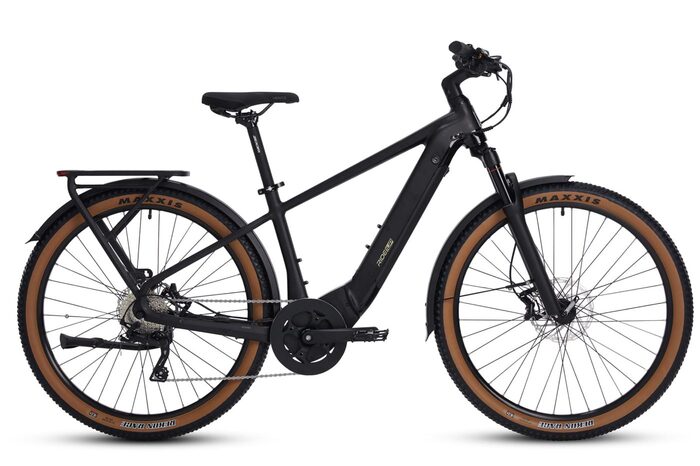
The Prodigy V2 is the better Ride1Up choice for riders who want the natural response and climbing advantages of a mid-drive but prefer a touring and commuting setup over a trail-specific eMTB.
- Motor: Brose TF Sprinter mid-drive, 90Nm claimed torque
- Battery: 504Wh
- Claimed range: 30-50 miles
- Bike weight: 58 lb for the chain version
- Drivetrain choices: 9-speed chain or Gates belt with Enviolo CVT
- Other useful features: 100mm front suspension and rear rack
Best for: longer rides, hilly routes, touring, and riders who prefer mid-drive power delivery.
Main tradeoff: it costs and weighs more than the Roadster V3, so it is less attractive when portability is the priority.
Read my Ride1Up Prodigy V2 review
Best Lightweight Performance Ride: CF Racer1
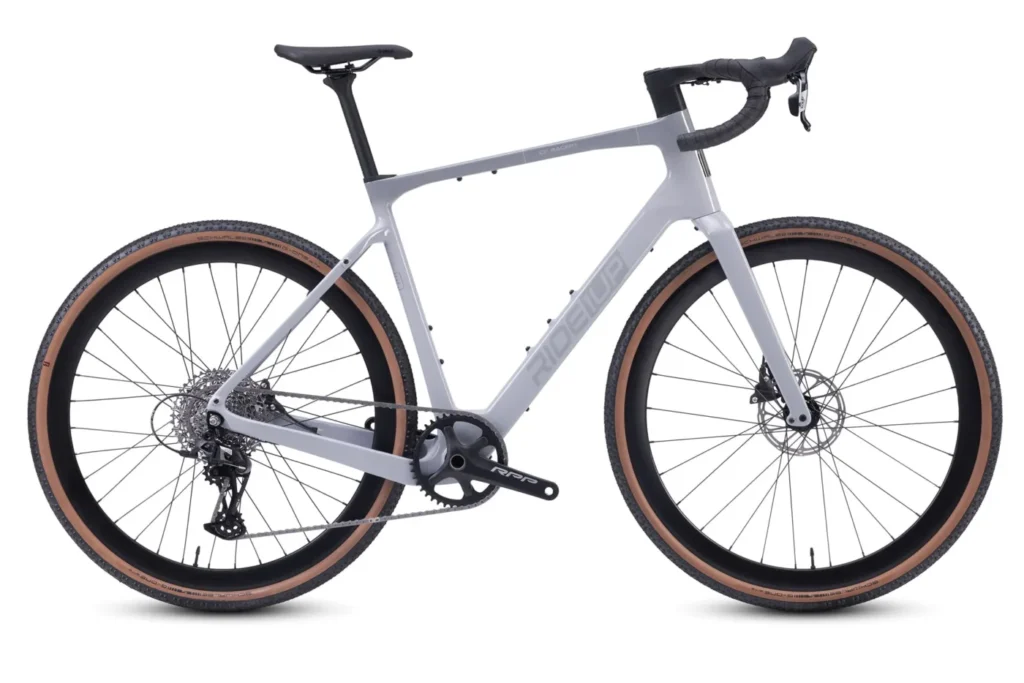
The CF Racer1 is the outlier in Ride1Up’s lineup. It is built more like a lightweight road or gravel bike with electric assistance than a conventional utility e-bike.
- Motor: 250W geared hub motor, 42Nm claimed torque
- Battery: 252Wh
- Pedal assist: Ride1Up R1CBC current-based cadence system
- Claimed range: 16-40 miles
- Bike weight: 28.6 lb
- Frame: carbon fiber
Best for: fitness riders, road and gravel riding, and anyone who values low weight over throttle-heavy utility riding.
Main tradeoff: unlike several other current Ride1Up models, the CF Racer1 does not use a torque sensor. Its R1CBC system is current-based cadence sensing, so do not choose it expecting the same pedal response as the Roadster V3, TrailRush, or Prodigy V2.
Read my full review of the Ride1UP CF Racer 1
Best Established Moped-Style Choice: Revv1
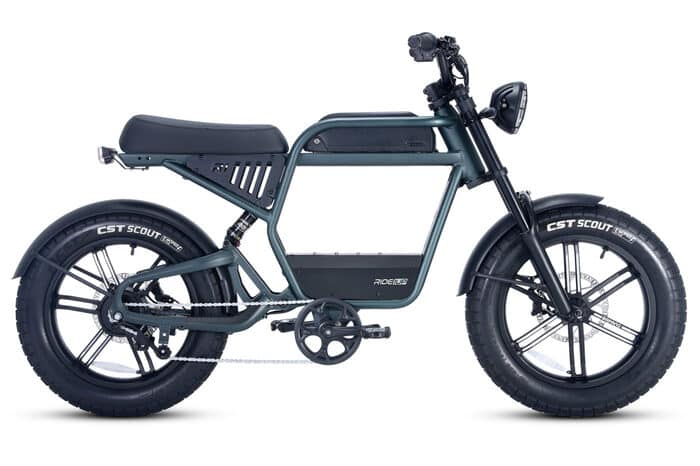
Ride1Up moved Revv1 to a dedicated website in January 2026, but the company says Revv1 is still part of the Ride1Up family. The HT, FS, and DRT versions remain the established choices for riders who specifically want a throttle-focused, motorcycle-inspired platform.
The current Revv1 family uses a 52V Bafang hub motor with 100Nm claimed torque and offers different frame and suspension setups. The HT is the lighter hardtail choice, while the FS and DRT add rear suspension and more off-road-oriented hardware.
Best for: riders who specifically want moped-style ergonomics, a large battery, throttle use, and heavier-duty road or private-property riding.
Main tradeoff: these are heavy bikes. Current versions run roughly from the low-80-lb range into the 90-lb range depending on configuration, making stairs and vehicle transport much harder than with a Roadster or CF Racer1.
Legal note: Ride1Up advertises additional class and higher-speed/off-road modes on Revv1 models. Availability of a setting does not mean it is legal on public roads, bike lanes, or trails where you ride. Check your state and local rules before changing the bike’s class or speed configuration.
Newest Moped-Style Option: Revv1 EVO
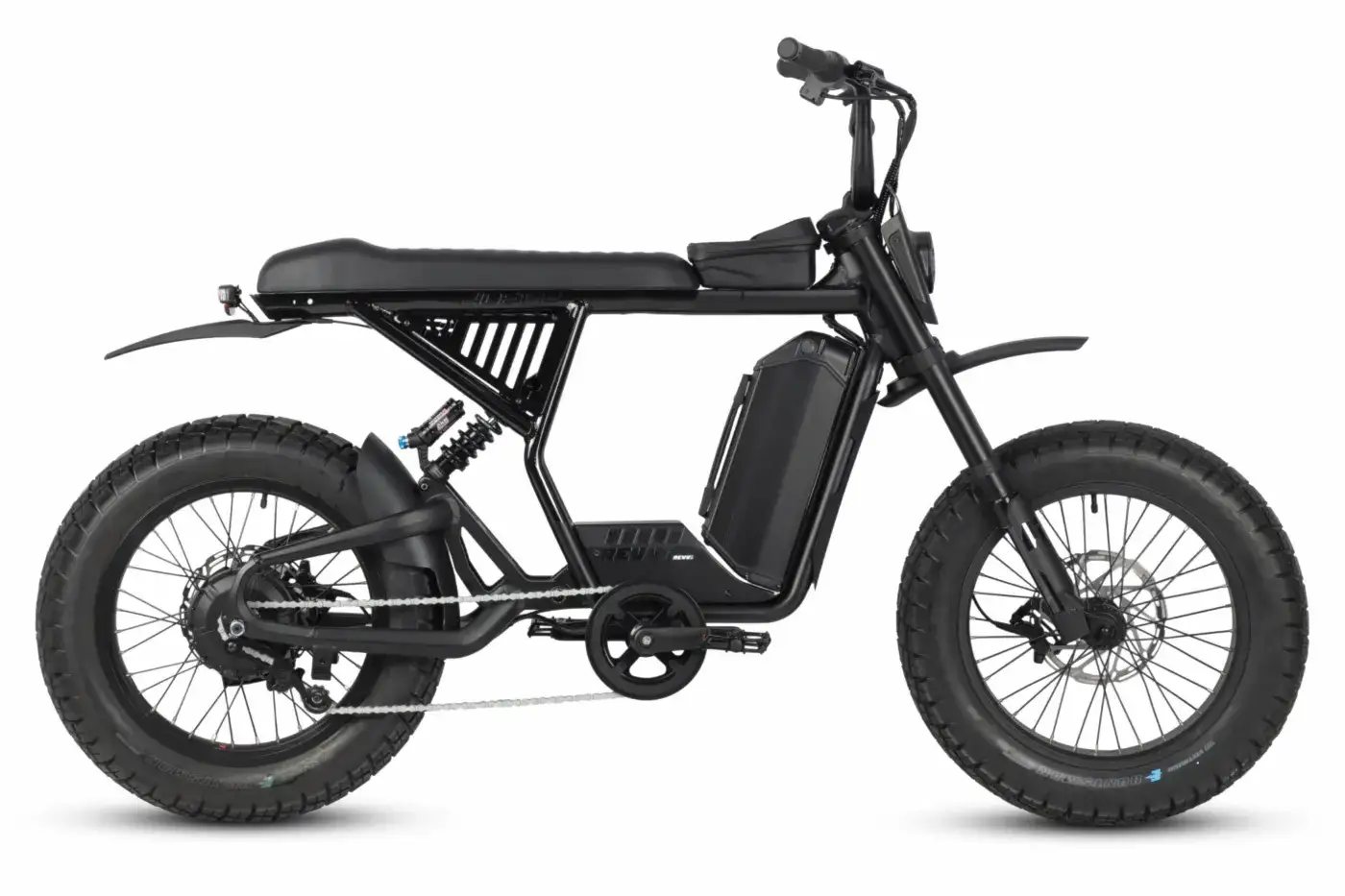
The Revv1 EVO is the newest and most experimental option in the Ride1Up family. Its headline feature is a 52V 20Ah semi-solid-state battery, paired with a 750W Bafang rear-hub motor and 100Nm of claimed torque.
- Battery: 52V 20Ah, 1,040Wh semi-solid-state
- Motor: 750W Bafang rear hub
- Claimed torque: 100Nm
- Claimed range: 30-60 miles
- Frame: full suspension
- Payload: 400 lb
- Bike weight: about 90 lb
Best for: riders attracted to the Revv1 format who specifically value fast charging, large battery capacity, and the EVO’s newer battery platform.
Main tradeoff: it is a newer platform with less independent production-bike history than the established Revv1 family. I would not treat Ride1Up’s battery-life, charging, and range claims as independently proven yet.
Availability note – October 1, 2026: Ride1Up’s own EVO pages currently conflict on timing. The dedicated Revv1 product page says shipping is expected in late October 2026, while other Ride1Up material has used broader Fall 2026 or earlier October language. Confirm the current estimated ship date before ordering.
Read my Ride1Up Revv1 EVO early-look review
What Happened to the 700 Series, Cafe Cruiser, and LMT’D V2?
Ride1Up’s current support documentation lists the 700 Series, Cafe Cruiser, and LMT’D V2 as discontinued. The original version of this guide recommended all three as current bikes, so I have removed them from the main picks rather than leaving readers with outdated buying advice.
That does not mean an existing owner suddenly has a bad bike. It means I would not build a new 2026 buying decision around a discontinued model unless you are deliberately shopping used, clearance, or remaining inventory and understand the implications for parts, support, and resale.
Hub Drive vs. Mid-Drive: Which Ride1Up Is Better for You?
Ride1Up now covers both hub-drive and mid-drive use cases. Portola 02, Vorsa, Roadster V3, CF Racer1, and the Revv1 family use rear-hub motors. TrailRush and Prodigy V2 use Brose mid-drives.
A hub-drive model is often the simpler choice for commuting, utility, throttle use, and lower purchase cost. A mid-drive uses the bike’s drivetrain and generally feels more natural on hills and technical terrain, which is why the TrailRush and Prodigy V2 make more sense for riders prioritizing climbing and pedal feel.
Weight and Storage Matter More Than the Spec Sheet Suggests
Do not overlook bike weight when comparing Ride1Up models. A 28.6 lb CF Racer1 and a roughly 90 lb Revv1 EVO solve completely different ownership problems even if both can assist at Class 3 speeds.
- Need to carry the bike upstairs: start with CF Racer1 or Roadster V3.
- Need folding storage: Portola 02 is the purpose-built choice, but remember it still weighs about 61 lb.
- Need cargo capacity: Vorsa makes more sense than trying to turn a lightweight commuter into a utility bike.
- Need trail control: TrailRush puts its weight and components toward off-road riding rather than portability.
- Have ground-level storage: Revv1 models become much easier to live with when you never need to carry them up stairs.
Which Ride1Up Should You Buy?
| If this sounds like you… | Start with… |
|---|---|
| I need a folding e-bike for commuting or travel | Portola 02 |
| I carry cargo, groceries, or a passenger | Vorsa |
| I want the lightest practical commuter | Roadster V3 |
| I ride actual mountain-bike trails | TrailRush |
| I want a comfortable mid-drive for roads and hills | Prodigy V2 |
| I ride for fitness and want a sub-30-lb e-bike | CF Racer1 |
| I want a proven moped-style Ride1Up | Revv1 HT / FS / DRT |
| I specifically want the newest Revv1 battery technology | Revv1 EVO, with an availability and evidence check before ordering |
My Take
Ride1Up’s current lineup is easier to understand once the discontinued models are removed. For most riders, I would start by deciding whether you need portability, cargo capacity, true trail performance, mid-drive climbing ability, or moped-style power. That choice narrows the lineup quickly.
The Portola 02 and Vorsa cover the broadest everyday needs, while the Roadster V3 and CF Racer1 make much more sense for riders who care about bike weight. TrailRush and Prodigy V2 are the stronger choices when a mid-drive matters. Revv1 is a different category entirely, and I would only choose it if the heavy moped-style format is genuinely what you want.
Before buying, confirm the current price, availability, rider-height range, battery configuration, return terms, and the e-bike class rules where you plan to ride. Ride1Up changes configurations and promotions, and the right model on paper still needs to fit your body, storage situation, and local rules.
Browse the Current Ride1Up Lineup

Kristina is not just an enthusiast but a true authority on electric bikes. Nestled in the coastal beauty of Virginia, Kristina has found the perfect backdrop for her passion for electric biking. As a dedicated wife and homeschooling mom, her life revolves around family, faith, and the thrill of adventure.
Originally hailing from Ohio, Kristina's journey with electric bikes began as a curiosity and quickly evolved into a deep expertise. Her blog is a testament to her love for electric biking, combining her fascination for eco-friendly transportation with her coastal lifestyle.
When she's not cruising the beach on her electric bike, you'll find Kristina indulging in her other loves: long walks along the shore, getting lost in a good book, and cherishing moments with her loved ones. With a heart as big as her love for animals, especially cats, Kristina brings a unique perspective to the electric bike world, grounded in her strong faith in God and her dedication to a sustainable lifestyle.
Through her blog, Kristina shares her extensive knowledge of electric bikes, offering valuable insights, tips, and recommendations to fellow enthusiasts. Whether you're a seasoned rider or a newcomer to the electric bike scene, Kristina's blog is your go-to source for all things electric biking, fueled by her passion, expertise, and the scenic beauty of coastal Virginia.