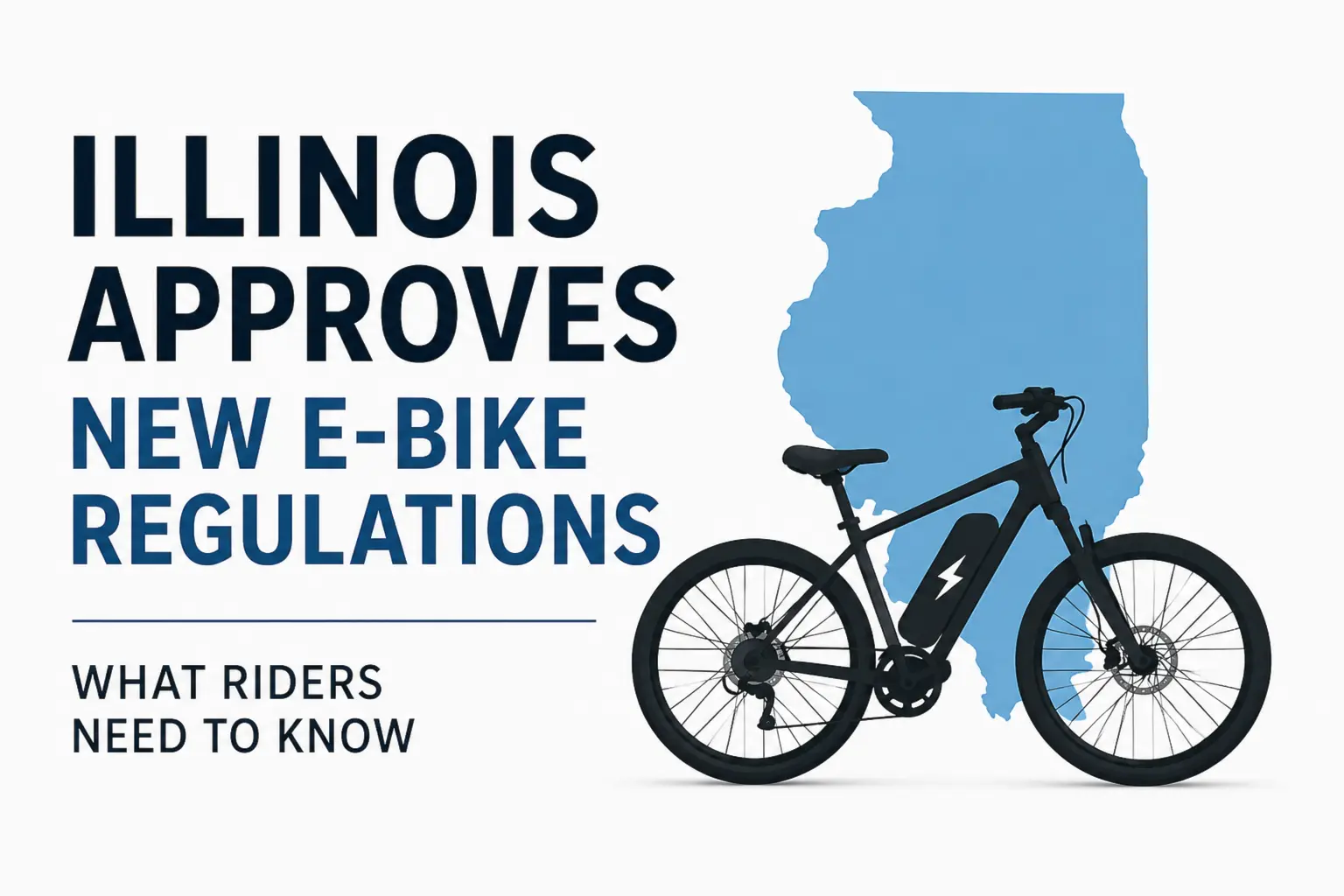
Illinois Approves New E-Bike Regulations Targeting High-Speed E-Motos
Last Updated on June 5, 2026 by Kristina
Illinois lawmakers have approved a major micromobility bill that could significantly change how certain electric bikes and e-motos are regulated across the state.
The legislation now awaits the signature of Governor JB Pritzker. If signed, most provisions would take effect on January 1, 2027. The bill is designed to create statewide rules for electric bikes, electric scooters, e-motos, electric skateboards, electric unicycles, and other emerging micromobility devices.
Supporters say the goal is to improve safety and eliminate confusion caused by a patchwork of local regulations that currently vary from city to city. Illinois Secretary of State Alexi Giannoulias has been one of the primary advocates behind the legislation.
If you ride in Illinois, you may also want to review our Illinois E-Bike Laws Guide and compare regulations in our State-by-State E-Bike Laws Guide.
What Illinois Riders Need to Know
Illinois lawmakers have approved legislation that would create new statewide rules for e-bikes, e-scooters, e-motos, and other electric micromobility devices.
For most riders using legal Class 1, Class 2, and Class 3 e-bikes, very little would change.
The biggest impact would be on high-speed e-bikes and e-motos capable of traveling faster than 28 mph. Those vehicles would be regulated more like motor vehicles and could require registration, insurance, licensing, and other requirements if the bill becomes law.
Current Rules vs Proposed Rules
| Category | Current Illinois Framework | Proposed Changes |
|---|---|---|
| Class 1 E-Bikes | Treated as bicycles | Remain e-bikes |
| Class 2 E-Bikes | Treated as bicycles | Remain e-bikes |
| Class 3 E-Bikes | Treated as bicycles with existing restrictions | Remain e-bikes |
| E-Bikes Over 28 MPH | Regulatory gray area in some situations | Classified as motor vehicles |
| E-Motos | Subject to varying interpretations and local rules | Motor vehicle regulations apply |
| Bike Path Access | Allowed for legal e-bikes where permitted | High-speed devices prohibited |
| Statewide Rules | Mixture of local regulations | Uniform statewide framework |
Illinois Is Not Banning E-Bikes
Some headlines may make it sound like Illinois is cracking down on all electric bikes, but that is not what this legislation does.
The primary goal of the bill is to distinguish traditional low-speed e-bikes from high-powered e-motos and other electric vehicles capable of exceeding 28 mph.
State officials have repeatedly stated that the legislation is intended to address safety concerns involving faster electric vehicles operating on bike paths, trails, and other shared-use facilities.
For riders using a standard Class 1, Class 2, or Class 3 e-bike, the proposal is not expected to dramatically change everyday riding.
What Would Change Under the New Illinois Rules?
One of the biggest changes involves higher-speed electric bikes and e-motos.
Under the proposal, electric bikes and similar devices capable of exceeding 28 mph would no longer be treated as traditional e-bikes. Instead, they would be regulated similarly to motorcycles and other motor vehicles.
Owners of these vehicles would be required to:
- Hold a valid driver’s license
- Register the vehicle
- Carry insurance
- Obtain a title where applicable
- Follow motor vehicle regulations
These higher-speed vehicles would also be prohibited from operating on bike paths and bike lanes.
Operators of higher-speed devices classified as motor vehicles would also become subject to Illinois DUI laws.
Age Requirements Included
The legislation also establishes age requirements for various categories of electric mobility devices.
According to reporting on the bill:
- Riders must be at least 15 years old to operate Class 1 and Class 2 e-bikes
- Riders must be at least 16 years old to operate Class 3 e-bikes
- Additional age requirements apply to certain micromobility devices
As with any pending legislation, riders should review the final signed law once available to confirm the exact requirements that apply to their specific vehicle.
Why Illinois Says Changes Are Needed
State officials argue that existing laws have not kept pace with the rapid growth of electric mobility devices.
When Illinois originally adopted e-bike regulations, most electric bicycles closely resembled traditional bicycles and operated within well-defined speed limits.
Today, some e-motos and modified electric bikes are capable of traveling well beyond traditional e-bike speeds while still appearing similar to bicycles.
Supporters of the legislation point to increasing conflicts on trails, rider safety concerns, and confusion among riders, law enforcement agencies, and local governments as reasons for creating a clearer statewide framework.
Will My E-Bike Be Affected?
For many Illinois riders, the answer is probably no.
| If You Ride… | Likely Impact |
|---|---|
| Class 1 E-Bike (20 mph pedal assist) | Minimal |
| Class 2 E-Bike (20 mph throttle) | Minimal |
| Class 3 E-Bike (28 mph pedal assist) | Minimal |
| Modified E-Bike Over 28 mph | Significant |
| E-Moto | Significant |
| Electric Motorcycle | Already regulated |
If your e-bike falls within the traditional three-class system, this legislation is primarily aimed at preserving that distinction while creating separate rules for higher-powered vehicles.
Riders using modified bikes or e-motos should pay close attention to the final version of the law if it is signed.
What This Means for Illinois E-Bike Riders
For riders using standard Class 1, Class 2, and Class 3 electric bikes, the impact may be relatively small.
Most federally recognized and Illinois-recognized e-bikes already fall within the traditional three-class system and are limited to speeds of 20 mph or 28 mph depending on classification.
The biggest impact would likely be felt by riders using:
- E-motos
- Modified electric bikes
- High-powered off-road electric motorcycles
- Electric bikes capable of exceeding 28 mph
Those vehicles could face registration, insurance, licensing, and roadway requirements similar to motorcycles or mopeds.
Helpful Resources for Illinois Riders
If you ride in Illinois, these resources may help you better understand current regulations and trail access rules:
➡️ State-by-State E-Bike Laws Guide
My Take
Personally, I think Illinois is trying to address a real issue, but the details will matter.
I’ve said for a while that there is a significant difference between a typical Class 1 or Class 2 e-bike and some of the high-powered e-motos that are showing up on bike paths today.
A 20 mph commuter e-bike ridden responsibly is not the same thing as a 45 mph or 50 mph electric motorcycle.
Where lawmakers need to be careful is making sure they do not create confusion for owners of legitimate Class 1, Class 2, and Class 3 e-bikes.
Millions of riders use these bikes for commuting, transportation, recreation, and exercise every day.
If Illinois keeps the traditional three-class e-bike system intact while applying motor vehicle requirements only to higher-speed electric vehicles, that seems like a reasonable approach.
The bigger challenge will likely be enforcement.
Many of the concerns that sparked this legislation involve modified bikes or riders already ignoring existing rules. New regulations can help provide clarity, but consistent enforcement will ultimately determine how effective they are.
For most Illinois riders using a legal Class 1, Class 2, or Class 3 e-bike, this proposal likely will not change much.
For riders operating high-speed e-motos on bike paths and shared-use trails, however, the rules could become substantially stricter if Governor Pritzker signs the bill.
For more news on electric bikes click here
Final Thoughts
Illinois appears poised to become one of the latest states to draw a clearer line between traditional e-bikes and higher-speed electric vehicles.
While some riders may worry that the state is cracking down on e-bikes, the legislation is largely focused on addressing concerns surrounding e-motos and other electric vehicles that exceed the limits of the traditional three-class system.
For now, riders should continue following existing Illinois e-bike laws and watch for updates as the legislation moves to Governor Pritzker’s desk.
External Sources
Illinois Secretary of State Office
https://www.ilsos.gov
WTTW News
https://news.wttw.com
Ride Illinois
https://rideillinois.org
MyJournalCourier
https://www.myjournalcourier.com/news/article/illinois-e-bikes-scooters-rules-22282714.php

Kristina is not just an enthusiast but a true authority on electric bikes. Nestled in the coastal beauty of Virginia, Kristina has found the perfect backdrop for her passion for electric biking. As a dedicated wife and homeschooling mom, her life revolves around family, faith, and the thrill of adventure.
Originally hailing from Ohio, Kristina's journey with electric bikes began as a curiosity and quickly evolved into a deep expertise. Her blog is a testament to her love for electric biking, combining her fascination for eco-friendly transportation with her coastal lifestyle.
When she's not cruising the beach on her electric bike, you'll find Kristina indulging in her other loves: long walks along the shore, getting lost in a good book, and cherishing moments with her loved ones. With a heart as big as her love for animals, especially cats, Kristina brings a unique perspective to the electric bike world, grounded in her strong faith in God and her dedication to a sustainable lifestyle.
Through her blog, Kristina shares her extensive knowledge of electric bikes, offering valuable insights, tips, and recommendations to fellow enthusiasts. Whether you're a seasoned rider or a newcomer to the electric bike scene, Kristina's blog is your go-to source for all things electric biking, fueled by her passion, expertise, and the scenic beauty of coastal Virginia.




This is the most stupid thing i have ever seen just let kids be kids and this is an opportunity for getting outside with these e-bikes just make sure the only illegal ones are the ones that go over 50 mph.
I understand where you’re coming from. Getting kids outside and active is definitely a positive thing, and I don’t think most people would disagree with that.
The concern behind these regulations isn’t really traditional e-bikes. It’s the growing number of high-powered e-motos and similar vehicles that can reach speeds far beyond what most bike paths, sidewalks, and shared-use areas were designed for.
One of the challenges lawmakers are trying to address is where to draw the line between an e-bike and something that functions more like a motorcycle. Some people will agree with the new rules, and others won’t, but the goal appears to be balancing rider freedom with public safety.
I appreciate you sharing your perspective.