
Jacksonville Approves 15 MPH E-Bike Limit for Sidewalks and Shared Paths
Last Updated on September 27, 2026 by Kristina
Update – September 27, 2026: Jacksonville City Council voted 19-0 on September 22 to approve a substituted version of Ordinance 2026-570. The Council-approved measure would set a 15 mph limit for e-bikes on sidewalks and shared-use paths, retain an under-16 helmet requirement, and eliminate the earlier proposal to prohibit riders younger than 11. The ordinance is awaiting the mayor’s signature, and the city’s official legislative record does not currently list an effective date.
Jacksonville has moved much closer to adopting new local rules for electric bicycles. The City Council approved a substituted version of Ordinance 2026-570 on September 22, replacing important parts of the proposal first introduced in July.
The biggest changes are the sidewalk and shared-use-path speed limit and the proposed minimum riding age. The Council-approved substitute uses a 15 mph limit rather than the earlier 10 mph proposal, and the earlier restriction on riders younger than 11 was removed. Riders should also remember that Florida’s statewide rules still matter. See my Florida e-bike laws guide for the broader state framework.
This story has developed since the original July proposal. You can follow more Electric Bike Explorer news and updates as local and state e-bike rules continue to change.
Current Status of Jacksonville Ordinance 2026-570
Jacksonville’s official legislative record shows that City Council substituted and approved Ordinance 2026-570 by a 19-0 vote on September 22, 2026. As of September 27, the city’s record lists the ordinance as awaiting the mayor’s signature and does not list an effective date.
That distinction matters. Council approval is a major step, but I am not describing these provisions as currently effective Jacksonville law while the official record still shows mayoral action pending.
What Changed From the Original Jacksonville E-Bike Proposal?
| Issue | Original July proposal | Council-approved substitute |
|---|---|---|
| Sidewalk/shared-use-path speed | 10 mph proposal | 15 mph limit |
| Minimum riding age | Would have prohibited riders younger than 11 | Under-11 restriction removed |
| Helmet requirement | Under-16 helmet provision | Under-16 helmet provision retained |
| Status | Proposed legislation | Approved by City Council 19-0; awaiting mayor’s signature |
The changes are important for families and everyday riders. The final Council vote did not simply approve the July proposal unchanged. The substitute relaxed the proposed sidewalk speed limit and removed the proposed minimum age while retaining a helmet provision for riders under 16.
15 MPH Limit on Sidewalks and Shared-Use Paths
The Council-approved version would set a 15 mph maximum for e-bikes on sidewalks and shared-use paths. That is higher than the 10 mph limit discussed in the original proposal.
A local operating limit is different from an e-bike’s legal class or maximum assisted speed. Riders who are unsure about those distinctions can review my guide to Class 1, Class 2, and Class 3 e-bikes.
Jacksonville Removed the Proposed Under-11 Restriction
One of the most significant revisions concerns young riders. The July version would have prohibited children younger than 11 from operating an e-bike. The Council-approved substitute removed that minimum-age provision.
That does not mean age and safety concerns disappeared from the ordinance. The approved substitute retains an under-16 helmet requirement, according to reporting on the final Council action.
Regardless of local requirements, a properly fitted helmet remains an important safety measure. My e-bike helmet guide explains features worth considering for higher-speed electric-bike riding.
Careless, Unsafe, and Reckless Riding
The Council-approved substitute also addresses careless, unsafe, or reckless operation. This is an area where riders should pay attention to the ordinance’s final signed text and any implementation guidance from Jacksonville before assuming exactly how individual situations will be enforced.
I am not listing specific final penalties here because I could not independently verify every penalty provision from the final ordinance text available through the city’s public legislative interface as of September 27.
Why Jacksonville Is Looking at E-Bike Safety
The Jacksonville debate is part of a broader discussion in Florida about young riders, higher-speed electric two-wheelers, helmets, sidewalks, and how local governments should respond to rapidly increasing e-bike use.
Florida lawmakers also considered statewide changes through Senate Bill 382 earlier in 2026. Governor Ron DeSantis vetoed that legislation, leaving local governments and existing state law especially important in determining how riders are regulated. Read my coverage of the Florida e-bike bill veto for that background.
What Jacksonville Riders Should Do Now
- Do not assume the new 15 mph provision is already in effect while the city’s official record still lists the ordinance as awaiting the mayor’s signature.
- Continue following current Florida and Jacksonville rules that already apply.
- Watch for mayoral action and an official effective date.
- Parents should pay particular attention to helmet requirements and the type of electric bike a child is riding.
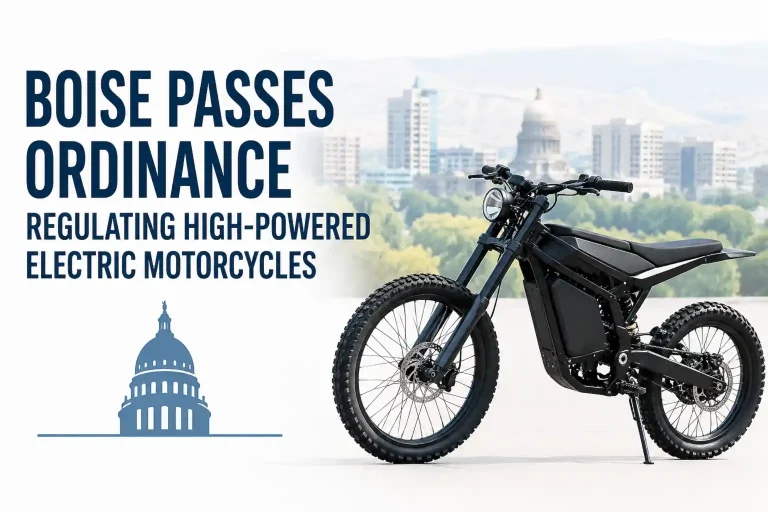
- Remember that high-powered electric motorcycles and other electric two-wheelers may not qualify as legal e-bikes simply because they are marketed using e-bike terminology.
What Happens Next?
The next key step is mayoral action. As of September 27, Jacksonville’s legislative system lists Ordinance 2026-570 as awaiting the mayor’s signature and does not provide an effective date.
I will treat the ordinance as pending rather than effective until the official record confirms the next step. If the mayor signs it or Jacksonville publishes an effective date or implementation guidance, this article should be updated again.
My Take
The September substitute is meaningfully different from what Jacksonville first considered in July. For riders, the most noticeable changes are straightforward: 15 mph instead of the proposed 10 mph sidewalk/shared-use-path limit, and no under-11 operating ban in the Council-approved version.
The remaining question is when, and in exactly what final form, these provisions become enforceable. Until Jacksonville’s official record reflects mayoral action and an effective date, riders should not confuse Council approval with a rule that is already in force.
📰 How This Story Was Verified
This report is based on available official documents, agency statements, meeting records, court filings, or other primary sources, with reliable reporting used for additional context. I clearly distinguish proposals from rules that have been finally approved or taken effect.
Sources
- Jacksonville City Council – Ordinance 2026-570 legislative record
- News4JAX – report on the September 22 Council vote and substitute
- Florida Politics – coverage of the revised Jacksonville e-bike ordinance

Kristina is not just an enthusiast but a true authority on electric bikes. Nestled in the coastal beauty of Virginia, Kristina has found the perfect backdrop for her passion for electric biking. As a dedicated wife and homeschooling mom, her life revolves around family, faith, and the thrill of adventure.
Originally hailing from Ohio, Kristina's journey with electric bikes began as a curiosity and quickly evolved into a deep expertise. Her blog is a testament to her love for electric biking, combining her fascination for eco-friendly transportation with her coastal lifestyle.
When she's not cruising the beach on her electric bike, you'll find Kristina indulging in her other loves: long walks along the shore, getting lost in a good book, and cherishing moments with her loved ones. With a heart as big as her love for animals, especially cats, Kristina brings a unique perspective to the electric bike world, grounded in her strong faith in God and her dedication to a sustainable lifestyle.
Through her blog, Kristina shares her extensive knowledge of electric bikes, offering valuable insights, tips, and recommendations to fellow enthusiasts. Whether you're a seasoned rider or a newcomer to the electric bike scene, Kristina's blog is your go-to source for all things electric biking, fueled by her passion, expertise, and the scenic beauty of coastal Virginia.