Are E-Bikes Worth It? Real Costs, Benefits, and When Buying One Makes Sense
Last Updated on September 12, 2026 by Kristina
Electric bikes can be worth the money, but the answer depends much more on how often you will use one than on any single specification or advertised range number.
For many people, an e-bike is worth it when it will be used regularly for commuting, errands, recreation, hills, headwinds, or replacing some short car trips. It may not be worth the extra cost if you only expect to ride a few times a year, have nowhere secure to store it, do not have a safe place to ride, struggle with the added bike weight, or expect it to replace a car for trips it cannot realistically handle.
This guide breaks down the real benefits, costs, and limitations of electric bikes so you can decide whether buying an e-bike makes sense for your lifestyle.
If you’re completely new to electric bikes, the Start Here e-bike guide covers the basics. You can also use the E-Bike Buying Guide to compare motors, batteries, fit, brakes, and other features that matter when choosing a bike.
Quick Answer: Are E-Bikes Worth It?
For many riders, yes – e-bikes are worth it when they solve a real transportation, mobility, fitness, or recreational need and actually get used.
They tend to provide strong value for people who commute regularly, replace some car trips, run local errands, deal with hills or headwinds, want to ride farther than they would on a regular bicycle, or simply find that pedal assistance encourages them to ride more often.
The value is much lower when the bike sits unused, there is no safe or legal route to ride, secure storage is unavailable, or the bike is too heavy for the rider’s storage and transportation needs.
An e-bike also does not have to replace a car completely to be worthwhile. For many households, replacing only some local trips can still make the bike useful.
🎥 Video: Are E-Bikes Worth It in Real Life?
This video offers another look at the everyday advantages and trade-offs of owning an e-bike.
When an E-Bike Is Worth the Money
An electric bike tends to provide the most value when pedal assistance changes what is practical for you.
Regular commuting: Assistance can make a work commute easier to repeat several days a week, especially when the route includes hills, wind, stop-and-go riding, or a distance that feels inconvenient on a traditional bicycle.
Replacing short car trips: An e-bike can work well for trips to work, stores, appointments, restaurants, schools, or other nearby destinations when safe routes are available. Federal Highway Administration data from the 2022 National Household Travel Survey show that 46% of personal vehicle trips were under 5 miles. That does not mean every short trip is suitable for an e-bike, but it shows how many everyday trips fall within potentially bikeable distances.
Errands and local transportation: A rack, basket, or panniers can turn an e-bike into useful everyday transportation for groceries and smaller loads.
Hills and headwinds: This is one of the most noticeable advantages of electric assistance. A route that feels discouraging on a regular bicycle may become much more practical.
Riding farther: Some riders find that assistance allows them to explore farther from home without worrying as much about having enough energy for the return trip.
Older riders and people who benefit from pedal assistance: An e-bike can reduce the effort required for hills, starts, and longer rides without assuming that every older rider needs electric assistance. Fit, stability, bike weight, and confidence at low speeds still matter.
Recreation and exercise: An e-bike can still be worthwhile even when it never replaces a car. If assistance gets you outside and riding several times a week, the value may be recreational rather than financial.
Reducing transportation expenses: Households that regularly substitute an e-bike for paid transportation may see meaningful savings, but the amount depends on which costs are actually avoided.
Frequent use: The purchase is easier to justify when the bike becomes part of your regular routine. A bike used several times per week usually delivers more practical value than one that spends most of the year in storage.
Pros and Cons of Electric Bikes
Like any transportation option, electric bikes have meaningful advantages and trade-offs.
✅ Pros
- Pedal assistance can make hills, headwinds, and longer rides easier.
- They can make commuting and local errands practical for riders who might otherwise drive.
- Electricity for charging is inexpensive.
- They can make carrying groceries or other cargo easier when the bike is properly equipped and within its rated limits.
- They can still provide meaningful physical activity when the rider pedals.
- Some riders find they ride more often because they worry less about hills, fatigue, or the return trip.
❌ Cons
- They generally cost more upfront than comparable traditional bicycles.
- The motor and battery usually make them heavier.
- The battery gradually loses capacity and may eventually need replacement.
- Electronics and proprietary parts can make some models harder or more expensive to repair.
- Secure storage and theft protection become especially important with a higher-value bike.
- Range varies with terrain, assist level, speed, temperature, rider and cargo weight, tire pressure, and battery condition.
- Where and how an e-bike can legally be used varies by jurisdiction and vehicle classification.
What Does an E-Bike Really Cost to Own?
The old idea that every e-bike costs only a couple hundred dollars per year to own is too simple. Electricity is cheap, but meaningful ownership costs can also include maintenance, wear parts, security, professional service, accessories, and eventually a replacement battery.
Initial Purchase Cost
The first cost is the bike itself. Prices vary widely depending on the frame, battery, motor system, components, cargo capacity, dealer support, warranty, and brand. Budget models can cost under $1,000, while well-supported commuter, cargo, mountain, and premium dealer bikes can cost several thousand dollars.
I would focus less on finding the lowest sticker price and more on whether the bike fits you, uses a battery and charger you can support safely, has adequate brakes, and has replacement parts and service available.
You may also need to budget for a helmet, a quality lock, lights, cargo bags or panniers, professional assembly, or a vehicle rack that can safely support the bike’s weight.
Ongoing Operating Cost
Charging is usually one of the smallest expenses. The U.S. Energy Information Administration reported an average residential electricity price of 18.34 cents per kWh in June 2026.
At that rate, 0.5 kWh of electricity costs roughly 9 cents and 0.75 kWh costs roughly 14 cents before charging losses. Your actual charging expense depends on battery size, charging frequency, local electricity rates, and charger efficiency.
Maintenance is more variable. Tires, tubes, sealant, brake pads, chains, cassettes, cables, bearings, and other bicycle components eventually wear out. Higher mileage, heavier loads, hills, wet conditions, and higher speeds can increase wear.
Long-Term Ownership Cost
The battery is a consumable component. It normally loses usable capacity gradually with age and use, and it may eventually need replacement even when the rest of the bike is still serviceable.
Replacement costs vary greatly by system. In September 2026, manufacturer replacement-battery listings I checked ranged from about $350 for some Rad Power Bikes packs to $1,200-$1,300 or more for some Specialized proprietary batteries. Prices can change, but the spread shows why I recommend checking replacement-battery availability and current price before buying rather than assuming every battery will cost the same.
Long-term ownership can also include professional electrical diagnostics, replacement displays or controllers, motor service, a new charger, and model-specific parts.
Hidden Costs Buyers Often Forget
- a quality lock or more than one lock for higher-risk parking
- a properly fitted helmet
- replacement brake pads, tires, tubes, chains, and other wear parts
- periodic tune-ups or professional service
- an eventual replacement battery
- panniers, baskets, racks, or other cargo accessories
- a vehicle rack rated for the weight of the e-bike
- optional insurance or additional theft coverage when appropriate
- proprietary chargers, displays, controllers, batteries, or other replacement components
If theft coverage matters to you, do not assume a homeowners or renters policy automatically covers every e-bike in every situation. Definitions, deductibles, sublimits, and off-premises coverage can vary. My e-bike theft and homeowners insurance guide explains what to check with your insurer.
There is no single annual ownership figure that applies to every rider. Someone riding a few hundred easy miles each year will have very different costs from a commuter putting thousands of miles on a heavier bike.
For a more detailed transportation-cost breakdown, see my electric bike vs car cost comparison.
AAA’s most recent Your Driving Costs figure available as of September 2026 estimated an average annual cost of $11,577 to own and operate a new vehicle under its 2025 study assumptions, including a five-year ownership period and 15,000 miles of driving per year. That number should not be treated as automatic e-bike savings. If you keep your car, many fixed vehicle costs remain even when you replace some trips with an e-bike.
How Long Does It Take for an E-Bike to Pay for Itself?
There is no universal break-even period because it depends on what the e-bike replaces.
If you buy an e-bike mainly for recreation, I would not judge it purely as a financial investment. Its value may come from riding more often, exercising, exploring new routes, or simply enjoying cycling.
If you use it instead of car trips that involve fuel, parking, tolls, transit fares, or additional vehicle wear, you may recover the purchase cost more quickly. But you should only count expenses you actually avoid.
For example, keeping a car normally means you still have expenses such as registration, insurance, and depreciation even when you drive it less.
The best way to estimate payback is to use your own numbers. Enter your actual driving and riding costs into the E-Bike Savings Calculator instead of relying on a generic break-even estimate.
Who Benefits Most From an Electric Bike?
Are E-Bikes Worth It for Commuting?
Commuting is one of the strongest potential use cases for an e-bike, but the route matters as much as the distance.
Before buying specifically for work, consider your commute distance, hills, bike lanes or shoulders, traffic conditions, secure parking, charging options, weather, and what you need to carry.
A short commute can still be a poor e-bike trip if the only available route feels unsafe. On the other hand, a somewhat longer commute can work very well when there is good bike infrastructure and secure storage at both ends.
Think about whether the bike would realistically replace some car or transit trips rather than assuming it will. If commuting is your main goal, explore the current Best Commuter E-Bikes guide.
Riders in Hilly or Windy Areas
Electric assistance can make climbing hills and riding into headwinds significantly easier than on a traditional bicycle.
This is one situation where an e-bike can change how useful cycling feels in everyday life rather than simply making the same ride a little faster.
Are E-Bikes Worth It for Older Riders and Beginners?
They can be, but age alone is not a reason to buy an electric bike.
Pedal assistance can reduce the effort required for hills, starts, and longer rides. Step-through frames and more upright riding positions can also make some bikes easier to mount and more comfortable for certain riders.
At the same time, beginners and older riders should pay close attention to bike weight, fit, stability, low-speed handling, and ease of mounting and dismounting. A powerful bike that feels awkward while stopped may be a poor fit even if its specifications look impressive.
You can use the e-bike size and fit tool as a starting point. If easier mounting is a priority, see the current step-through e-bike guide.
People Running Local Errands
Racks, baskets, panniers, and cargo accessories can make e-bikes especially useful for nearby shopping and everyday errands.
Make sure the bike and accessories are rated for the weight you plan to carry.
E-Bike vs Regular Bike: Is the Extra Cost Worth It?
A traditional bicycle still has major advantages. It is generally cheaper, lighter, mechanically simpler, and easier to transport.
If you already enjoy riding the distances and terrain you need without assistance, a regular bicycle may be the better value.
An e-bike can justify the extra cost when assistance changes what you can realistically do. It can help with hills and headwinds, make cargo easier to move, extend comfortable riding distances, and make commuting practical for riders who might otherwise drive.
Neither is universally better. The better purchase is the bike that fits your needs and that you will genuinely use.
What Trips Can an E-Bike Replace?
Many riders find e-bikes especially useful for short local trips such as:
- commuting to work or school
- grocery runs and errands
- trips to the gym
- visiting nearby restaurants or shops
- local appointments
- neighborhood transportation
Whether those trips are realistic depends on your route, weather, available bike infrastructure, parking security, cargo needs, and local e-bike rules.
An e-bike does not have to handle every household trip to be useful. Many owners keep their car and use the bike only for the trips that make sense.
Real-World Scenarios
A 5-Mile Commuter Replacing Several Car Trips Each Week
This can be a strong e-bike use case if the route is safe and secure parking is available. The rider has enough distance for pedal assistance to be useful and is replacing trips that would otherwise involve driving costs.
The actual savings depend on fuel use, parking, vehicle wear, and whether the car remains in the household.
A Recreational Rider Who Wants Help With Hills
This rider may never save money compared with driving because the e-bike is not replacing transportation. It can still be worth buying if assistance makes riding more enjoyable and leads to regular use.
Someone Who Rides Only a Few Times Per Year
The value is harder to justify. Unless there is a specific reason electric assistance is needed, a traditional bicycle, rental, or other option may cost less and require less battery-related upkeep.
A Household Keeping Its Car but Replacing Local Errands
This is a realistic way to use an e-bike. The car remains available for highways, long trips, several passengers, and severe weather, while the e-bike handles suitable local trips.
The bike does not need to replace the entire car to provide practical value.
When an E-Bike Might Not Be Worth It
Electric bikes work well for many riders, but they are not the best solution for every situation.
I would think carefully before buying if several of these apply to you:
- You expect to ride only a few times per year. A less expensive traditional bicycle may provide better value.
- You do not have safe riding routes. Electric assistance does not make an unsafe road or missing bike connection safer.
- You do not have secure storage. Theft risk is an important ownership consideration for a higher-value bike.
- You have difficulty lifting or moving a heavy bike. Motor and battery weight matters for stairs, car racks, RV storage, and loading.
- Most of your transportation involves long highway trips. An e-bike is not a practical substitute for a car in many long-distance situations.
- You regularly need to transport several passengers. Some cargo e-bikes can carry passengers within their rated limits, but they do not replace a multi-passenger vehicle for every household.
- Weather prevents practical riding for much of the year. Snow, extreme heat, rain, darkness, road salt, and local road maintenance can affect real-world usefulness.
- Repair support and replacement parts are difficult to obtain. Proprietary electronics can make a bike much harder to keep running if the manufacturer does not provide long-term support.
- You are choosing a very cheap bike only because the specifications look impressive. Battery quality, brakes, fit, service, warranty support, and parts availability matter too.
If a very low purchase price is the main attraction, read Are Cheap E-Bikes Worth It? before deciding.
Is an E-Bike Worth It for Me? A Simple Decision Table
| Situation | Likely Value |
|---|---|
| Short daily commute with a safe route | Often high |
| Replacing regular car trips | Often high, depending on costs actually avoided |
| Hilly riding or frequent headwinds | Often high |
| Recreational riding several times a week | Often high if assistance helps you ride more |
| Need help riding farther or carrying cargo | Often high |
| Only riding a few times per year | Usually lower |
| No secure storage | Potential problem |
| No safe or legal route | Potential deal breaker |
| Long highway-distance transportation | Poor substitute for a car |
| Difficulty lifting or handling a heavier bike | Depends on the bike and storage needs |
What to Consider Before Buying an E-Bike
Battery Range
Battery capacity matters, but it does not determine range by itself. Assist level, speed, hills, wind, temperature, rider and cargo weight, tire pressure, and battery condition all affect how far an e-bike can travel.
Treat very high advertised maximum-range numbers as manufacturer claims unless the conditions are explained or supported by independent testing.
For more detail, see How Far Can an E-Bike Go on One Charge? and Electric Bike Battery Capacity Explained.
Motor Power
Do not choose an e-bike from wattage alone. Terrain, rider and cargo weight, motor type, gearing, controller programming, legal classification, and how the motor delivers assistance all affect real-world performance.
Learn more in What Motor Power Do You Need on an E-Bike?.
Bike Weight and Fit
E-bikes are usually heavier than comparable traditional bicycles because of the motor, battery, wiring, and often heavier frames or components.
Think beyond riding. Make sure you can walk the bike, turn it around in a tight space, get it through your doorway, store it, and put it on a vehicle rack if needed.
If weight is a major concern, see How Heavy Are E-Bikes?.
How Long Do E-Bikes Last?
There is no responsible universal lifespan for an e-bike.
Useful life depends on battery condition and charging habits, motor and electrical quality, frame and component quality, mileage, climate and storage conditions, maintenance, parts availability, and manufacturer support.
Lithium-ion batteries are consumable components and gradually lose capacity. Rather than relying on a promised number of years, check whether a genuine replacement battery is available and what it costs.
The U.S. Consumer Product Safety Commission advises riders to use the charger supplied or recommended by the manufacturer and to use only replacement or secondary battery packs that have been tested, approved, and confirmed as suitable for the device.
Repairs and Replacement Parts
Before buying, find out whether local shops will service the bike and whether parts such as batteries, chargers, displays, controllers, brake components, derailleur hangers, and other model-specific items are obtainable.
A bargain bike becomes much less attractive if a failed proprietary part cannot be replaced.
Local E-Bike Laws
E-bike laws vary by jurisdiction and can affect classification, speed, access, helmet rules, age requirements, registration, licensing, or insurance requirements.
Do not assume the rules are identical everywhere. Review the State-by-State E-Bike Laws Guide and confirm current local requirements for the places where you plan to ride.
Do E-Bikes Still Provide Exercise?
Yes, they can.
A 2026 systematic review covering 31 studies and 11,890 participants found that e-bike riding generally required less physiological effort than conventional cycling but commonly still reached at least moderate physical-activity intensity.
The review also found evidence that e-bikes may help reduce barriers to cycling, although the researchers noted that stronger long-term studies are still needed.
How much exercise you get depends on how you ride. Assist level, throttle use, terrain, ride length, and how much you pedal all matter.
If you’re interested in the fitness side of riding, see E-Bikes and Exercise – Get Fit and Have Fun!.
FAQs
Are e-bikes worth the money compared with regular bikes?
They can be when assistance helps you commute, ride farther, handle hills, carry cargo, or replace trips you would otherwise drive. If you already enjoy your routes on a regular bicycle and do not need assistance, a lighter and less expensive traditional bike may be the better value.
How long does an e-bike last?
There is no universal number of years. Battery condition, motor and electrical quality, frame and component quality, mileage, climate, maintenance, parts availability, and manufacturer support all affect useful life. The battery is a consumable component and may need replacement before the rest of the bike does.
Do e-bikes require a lot of maintenance?
They require normal bicycle maintenance for tires, brakes, drivetrain, wheels, and fasteners, plus attention to the battery, charger, and electrical system. Maintenance needs vary considerably with mileage, rider and cargo weight, weather, riding conditions, and the particular bike.
Can an e-bike replace a car?
It can replace some car trips for many riders, especially local commuting and errands. Replacing a car completely is a different question. Highway travel, several passengers, severe weather, long distances, and large cargo needs may still make a car more practical.
How long does it take to charge an e-bike?
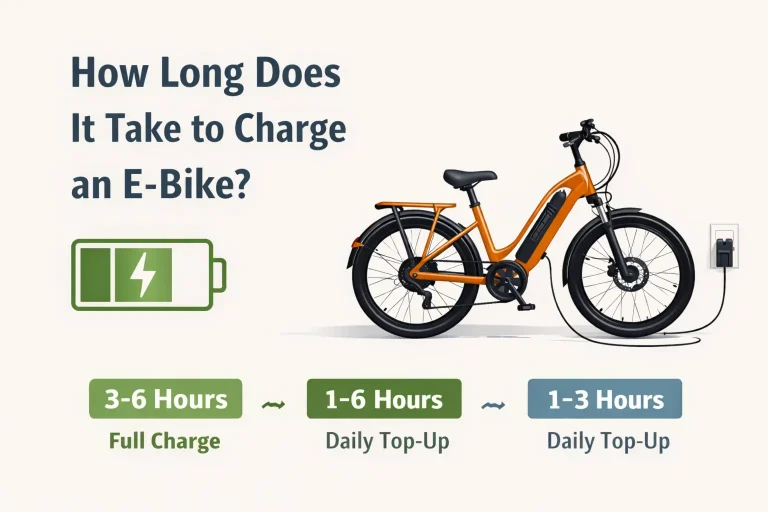
Charging time depends on battery capacity, charger output, starting charge level, temperature, and the manufacturer’s charging system. Follow the manufacturer’s instructions rather than assuming every e-bike needs the same amount of charging time.
My Take
I think an e-bike is worth it when it solves a real problem and gets used.
If pedal assistance turns a difficult commute into a realistic one, makes local errands easier, helps you handle hills, lets you ride farther, or simply makes you want to ride several times a week, the value can be substantial.
I would not choose one simply because the motor has a big wattage number, the advertised range looks impressive, or the price is unusually low. The best value does not necessarily come from buying the cheapest e-bike.
Fit, reliability, braking, battery quality, safe charging, replacement parts, service access, secure storage, and long-term manufacturer support all matter. A slightly more expensive bike that fits you well and can be repaired may provide better value than a cheaper bike that becomes difficult to maintain.
If you’re still exploring your options, the full E-Bike Buying Guide can help you compare bike types, features, and budgets.
📖 Read Next
Best Commuter Ebikes for 2026: Top Picks for Every Rider & Budget
5 Best Electric Bikes for Long-Distance Commuting
10 Common Mistakes New E-Bike Commuters Make (and How to Avoid Them)
Best E-Bike for DoorDash Delivery: Top Picks for Couriers
High-Quality Electric Bikes Under $3,000
Best Cargo E-Bikes for Commuting in 2025: A Comprehensive Guide
External Sources
- U.S. Energy Information Administration – Electric Power Monthly
- AAA – 2025 Your Driving Costs
- Federal Highway Administration – Our Nation’s Highways 2026
- U.S. Consumer Product Safety Commission – Micromobility Safety
- PubMed – 2026 Systematic Review of E-Bikes and Physical Activity
- PeopleForBikes – State-by-State Electric Bike Laws
- Rad Power Bikes – Replacement Batteries and Chargers
- Specialized – U2 Replacement Battery
- Specialized – X2 Series Replacement Battery

Kristina is not just an enthusiast but a true authority on electric bikes. Nestled in the coastal beauty of Virginia, Kristina has found the perfect backdrop for her passion for electric biking. As a dedicated wife and homeschooling mom, her life revolves around family, faith, and the thrill of adventure.
Originally hailing from Ohio, Kristina's journey with electric bikes began as a curiosity and quickly evolved into a deep expertise. Her blog is a testament to her love for electric biking, combining her fascination for eco-friendly transportation with her coastal lifestyle.
When she's not cruising the beach on her electric bike, you'll find Kristina indulging in her other loves: long walks along the shore, getting lost in a good book, and cherishing moments with her loved ones. With a heart as big as her love for animals, especially cats, Kristina brings a unique perspective to the electric bike world, grounded in her strong faith in God and her dedication to a sustainable lifestyle.
Through her blog, Kristina shares her extensive knowledge of electric bikes, offering valuable insights, tips, and recommendations to fellow enthusiasts. Whether you're a seasoned rider or a newcomer to the electric bike scene, Kristina's blog is your go-to source for all things electric biking, fueled by her passion, expertise, and the scenic beauty of coastal Virginia.