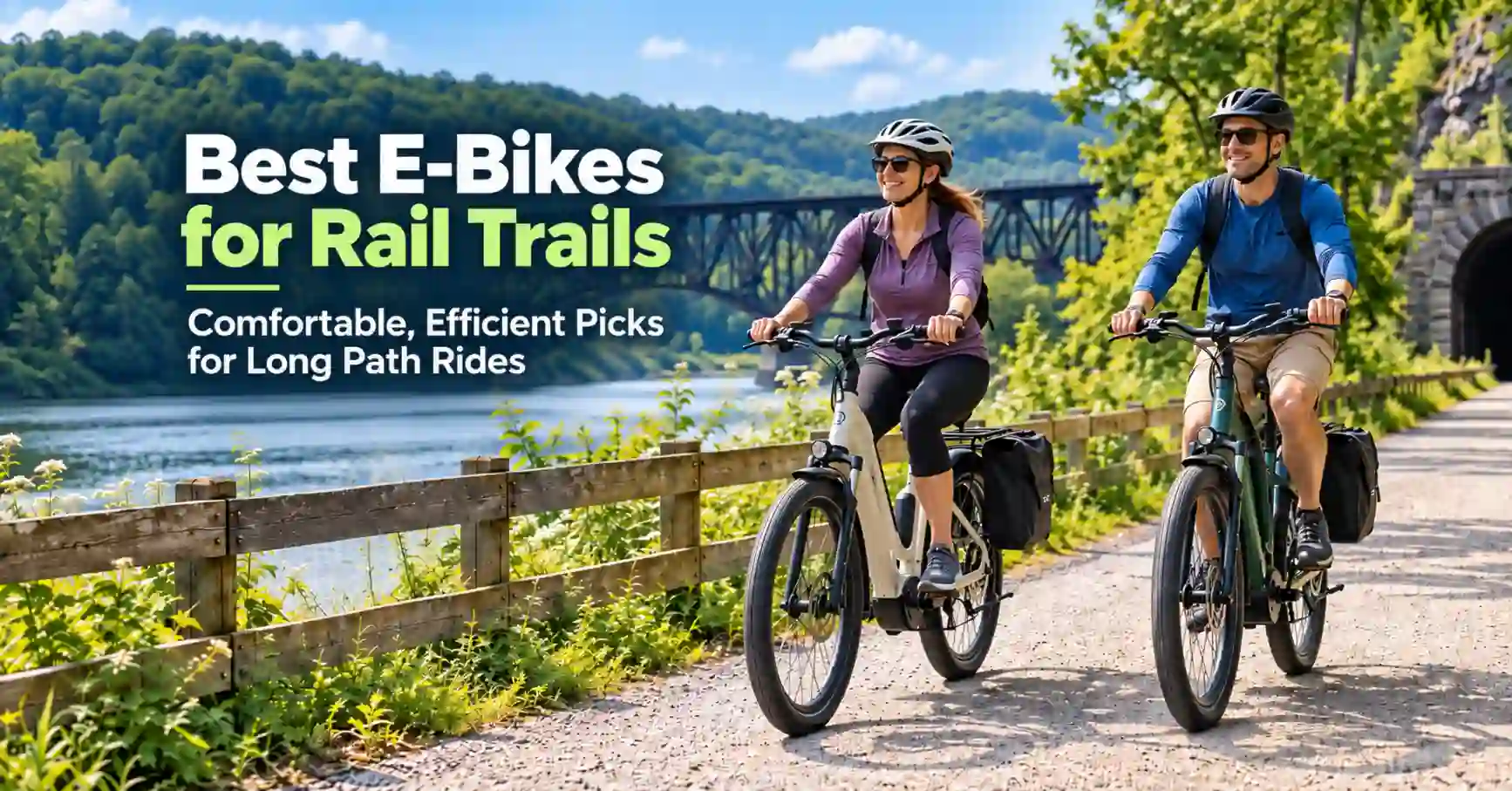
Best E-Bikes for Rail Trails: Comfortable, Efficient Picks for Long Path Rides
Last Updated on September 19, 2026 by Kristina
📚 Research-based buying guide: I have not personally tested every bike in this guide. These recommendations are based on current manufacturer specifications, safety documentation, warranty and return policies, independent testing, service information, and available rider feedback.
Rail trails are some of the best places to enjoy an electric bike. Long stretches of pavement or crushed stone, gentle grades, fewer intersections, and scenic surroundings make them ideal for relaxed rides that can easily turn into 20-, 40-, or even 60-mile days.
The best e-bikes for rail trails are not necessarily the fastest or most powerful. I would prioritize comfort, efficient pedal assist, manageable weight, dependable brakes, tires that work well on pavement and packed gravel, and a class setting that is actually allowed on the trail you plan to ride. If you are still comparing e-bike types, my complete E-Bike Buying Guide explains motors, batteries, fit, brakes, and other basics. You should also review the Class 1, Class 2, and Class 3 e-bike guide before choosing a trail bike.
Prices and availability checked September 17, 2026. Prices, promotions, colors, bundles, and inventory can change. Range figures in this guide are manufacturer claims or estimates unless clearly stated otherwise.
⭐ Quick Picks: Best E-Bikes for Rail Trails
👉 Short on time?
See today’s e-bike deals and limited-time discounts, then compare top picks below.
🔎 Why You Can Trust This Guide
I compared official specifications, safety information, current pricing, warranty information, trail-class considerations, and the features that matter most on longer path rides. Affiliate relationships do not determine which products I recommend or how they are ranked.
You can read more about the site’s methodology in how Electric Bike Explorer picks and ranks e-bikes.
Comparison Chart
| Bike | Price Checked | Weight | Motor | Battery | Claimed Range | Trail-Friendly Strength | Main Tradeoff |
|---|---|---|---|---|---|---|---|
| Aventon Level 4 ADV | $2,799 | 61 lb | Mid-drive, 100Nm, 750W peak | 800Wh | Up to 110 miles | Class 1 by default, balanced mid-drive feel, 100 mm fork | Higher price and 61 lb weight |
| Gazelle Ultimate C8 | $3,499 sale price shown | 54 lb excluding battery | Bosch Active Line Plus mid-drive, 50Nm | 500Wh | Up to 94 miles in Eco | 20 mph Class 1-style setup, belt drive, internal hub | Premium price and smaller battery |
| Velotric Discover 3 | $1,999 | 61 lb | 750W hub, 75Nm | 730Wh | Up to 80 miles | Comfort system, 80 mm air fork, 2.4 in. tires, 440 lb capacity | Heavier and configurable to speeds many trails do not allow |
| Velotric Breeze 1 | $1,699 | 48 lb | 750W hub, 65Nm | Removable battery | Up to 70 miles advertised; Velotric FAQ notes 50-60 miles can vary by conditions | Low weight, upright position, easy handling | No front suspension on the standard bike |
| Lectric XPress2 Cruiser | $1,399 | 54 lb without battery | 750W rear hub, 1,310W peak | 672Wh | Up to 60 miles | Torque sensor, 80 mm fork, upright cruiser geometry | Current color listings checked were preorder and the bike can reach 28 mph |
Before You Buy: Rail-Trail E-Bike Rules Matter
Do not assume that an e-bike is allowed on a rail trail simply because it is legal on nearby streets. Rails-to-Trails Conservancy explains that in many states the default is for Class 1 and Class 2 e-bikes to be permitted on trails while Class 3 is not, but local jurisdictions and trail managers can override those defaults.
That is one reason I give extra weight to bikes that arrive as Class 1 or can be configured to a lower permitted class. Before a trip, check posted trail rules and the managing agency. My guide to where you can ride an e-bike is a good starting point, but the specific trail manager is the final authority for that path.
Important: If a bike can be switched to Class 3 or 28 mph operation, that capability does not mean that setting is permitted on a shared-use rail trail. Use the legal configuration for the trail and ride at a speed appropriate for pedestrians, other cyclists, crossings, and sight distance.
Who This Guide Is For – and Who It Is Not For
This guide is for riders planning recreational trips on paved rail trails, crushed-limestone paths, hard-packed multiuse trails, greenways, canal paths, and similar routes. It is especially useful for riders who want to stay comfortable for several hours rather than maximize speed.
It is not primarily a guide to technical mountain-bike trails, deep sand, snow, loose off-road terrain, or high-speed road riding. A fat-tire or full-suspension e-bike can be useful in those environments, but the added tire drag and overall weight are usually unnecessary on a typical rail trail.
1. Aventon Level 4 ADV – Best Overall for Long Rail-Trail Rides
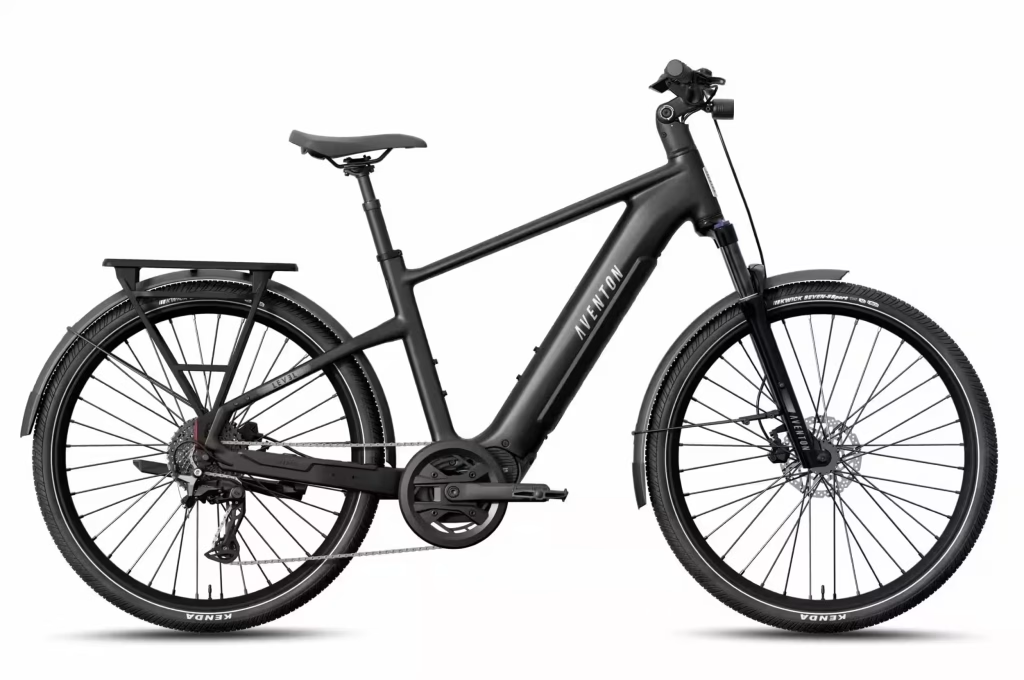
The Aventon Level 4 ADV is my strongest all-around match for riders who want to cover serious distance while keeping a bicycle-like pedaling feel. Unlike the Level 4 REC hub-drive version, the ADV uses Aventon’s Ultro S mid-drive motor with 100Nm of torque and a Shimano CUES 10-speed drivetrain.
The biggest rail-trail advantage is its combination of a Class 1 default configuration, an 800Wh battery, a claimed range up to 110 miles, 100 mm suspension fork, suspension seatpost, adjustable stem, and 27.5 x 2.2 in. tires. Aventon lists the bike at 61 lb with a 300 lb total weight limit.
Mid-drive power also makes sense when a converted rail corridor includes long grades. The motor works through the drivetrain, so the rider can use lower gears efficiently rather than depending entirely on a rear hub motor.
Why it stands out: Long claimed range, Class 1 setup out of the box, balanced mid-drive handling, strong climbing ability, hydraulic disc brakes, and a comfort-oriented suspension package.
Tradeoff: At $2,799 when checked, it costs considerably more than the hub-drive value picks. It is also still a 61 lb e-bike, so riders lifting it onto a rack need to plan accordingly.
2. Priority Current Plus – Best Premium Low-Maintenance Pick
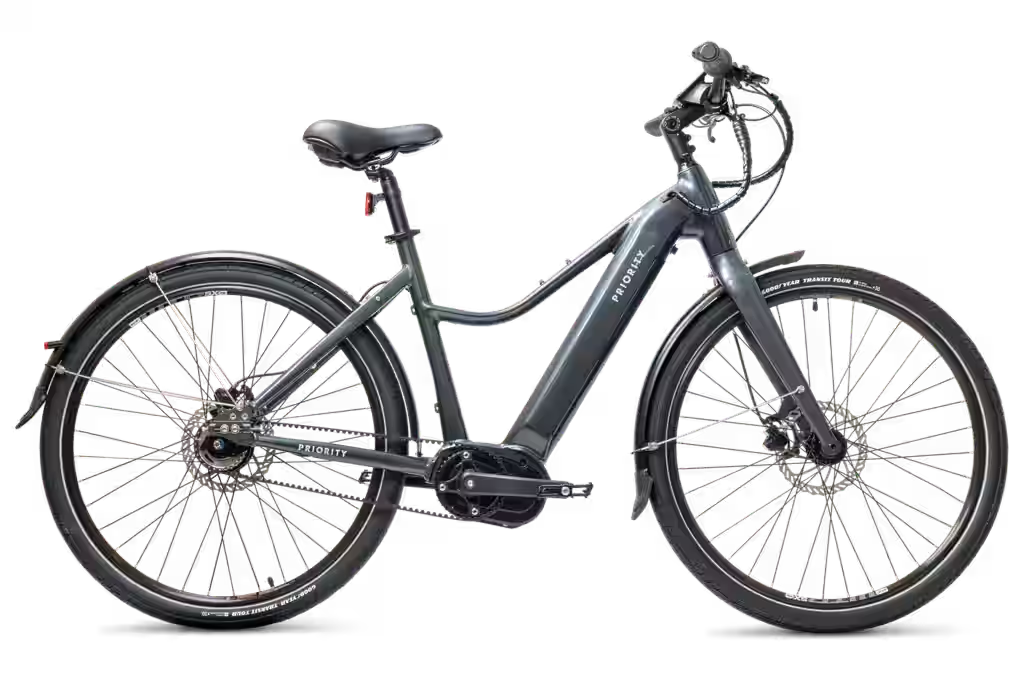
The Priority Current Plus is a strong choice for rail-trail riders who want a quiet, low-maintenance drivetrain without giving up long-distance capability. It combines a Gates Carbon Drive belt with your choice of a Shimano Inter-5 internal hub or Enviolo continuously variable hub, so there is no exposed derailleur and no traditional chain to oil.
Priority pairs that drivetrain with a 500W torque-sensing mid-drive motor producing up to 140Nm of torque and a removable 720Wh battery. The company lists a range of 20-75 miles depending on pedal-assist level, throttle use, rider weight, terrain, wind, temperature, and other riding conditions. The Shimano version weighs about 55 lb, while the Enviolo version weighs about 56.5 lb with the battery, pedals, and fenders installed.
For longer path rides, the Current Plus also gets several comfort details right. It uses an upright riding position, a height-adjustable stem, ergonomic grips, a gel-padded saddle, and 650b x 50 mm puncture-resistant tires designed to absorb vibration on uneven paths. Hydraulic disc brakes with 180 mm rotors provide stopping power, while full fenders, integrated lights, and accessory mounts make it easier to set the bike up for touring.
Why it stands out: Gates belt drive, internal gearing, powerful mid-drive assistance, 720Wh battery, upright comfort, relatively manageable weight, and very little routine drivetrain maintenance.
Tradeoff: The Current Plus ships as a Class 2 e-bike with a throttle and a 20 mph setting, and it can be changed to Class 3 at 28 mph. Some rail trails permit only Class 1 e-bikes or prohibit throttles, so riders need to check the rules for the specific trail and use the permitted configuration. It also uses a rigid fork rather than front suspension, although its 50 mm tires help absorb smaller bumps.batteries on several lower-priced bikes here. Riders using high assist will not get anything close to the maximum Eco estimate.
3. Velotric Discover 3 – Best Comfort and High-Payload Value
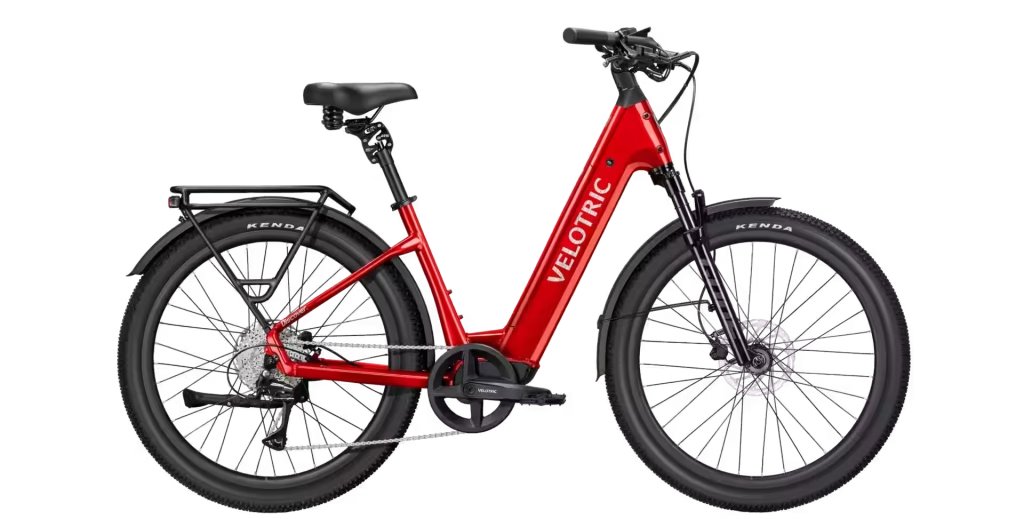
The Velotric Discover 3 is a strong match for riders who want a plush, confidence-inspiring bike without stepping up to premium mid-drive pricing. Velotric lists a 750W hub motor with 75Nm of torque, a 730Wh battery, up to 80 miles of claimed pedal-assist range, and Class 1/2/3 switching.
For rougher crushed-stone rail trails, the comfort hardware is a major advantage. The Discover 3 uses an 80 mm air-suspension fork, suspension seatpost, ergonomic saddle and grips, adjustable stem, and 27.5 x 2.4 in. puncture-resistant tires. It also has hydraulic disc brakes with 180 mm rotors.
Velotric lists the bike at 61 lb and gives it a 440 lb maximum bike load capacity, which is unusually generous for this category. The battery is listed as UL 2271 certified, and the bike is listed with UL 2849 certification.
Why it stands out: A lot of comfort, high payload capacity, useful air suspension, large tires without moving into oversized fat-tire territory, and strong value at the $1,999 price checked.
Tradeoff: It is heavier than the Breeze 1 and can be configured for Class 3 speeds. Riders need to set it to a class and speed permitted by the trail they are using.
Read my full review of the Velotric Discover 3
4. Velotric Breeze 1 – Best Lightweight Comfort Pick
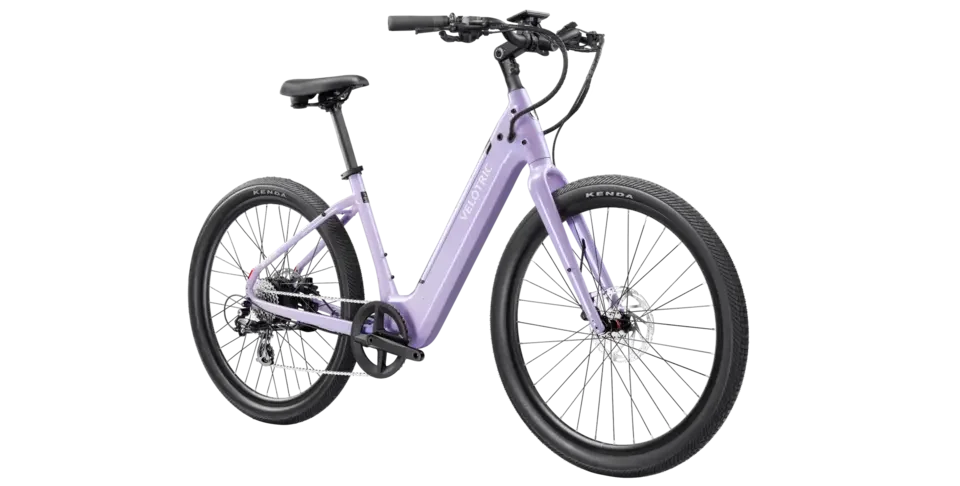
The Velotric Breeze 1 fills an important gap in this list: it is a full-size comfort e-bike that weighs only 48 lb. That matters when loading a bike onto a hitch rack, maneuvering around a trailhead, walking through a gate, or simply handling the bike at low speed.
Velotric lists a 750W motor with 65Nm of torque and advertises up to 70 miles of maximum range. Its own FAQ is more conservative, noting roughly 50-60 miles can vary with terrain, assist level, tire pressure, rider weight, and wind. I would plan a long rail-trail outing around the more conservative expectation rather than the headline maximum.
The Breeze 1 ships as Class 2 at 20 mph and can be adjusted to Class 1 or Class 3 where legal. It has a 330 lb total load rating, an upright comfort-focused position, and UL 2849/UL 2271 certification information published by Velotric.
Why it stands out: The 48 lb weight makes it much easier to transport and manage than most comfort e-bikes in this price range, while still offering a large-rider fit range and strong motor assistance.
Tradeoff: The standard bike does not have the front suspension that makes the Discover 3 and Level 4 ADV especially comfortable on washboard or broken surfaces. On rough crushed stone, tire pressure and an optional suspension seatpost can matter.
Read my full review of the Velotric Breeze 1
5. Lectric XPress2 Cruiser – Best Budget Pick

The Lectric XPress2 Cruiser offers an unusually complete package around the $1,399 price point. Lectric lists a 750W rear hub motor, torque-sensing pedal assist, 80 mm SR Suntour suspension fork, hydraulic disc brakes, 27.5 x 2.1 in. tires, and a claimed range up to 60 miles.
The cruiser version uses a step-through frame and upright geometry and fits riders from about 5 ft. 2 in. to 6 ft. 3 in. Lectric lists a 330 lb payload capacity and a 54 lb bike weight without the battery. The XPress2 is certified to UL 2849, and Lectric lists a one-year warranty.
There is one important availability note: the XPress2 Cruiser color listings I checked on September 17, 2026 were marked as preorder with shipping the week of September 28. Buyers should verify the current ship date before ordering.
Why it stands out: Torque sensing, hydraulic brakes, real front suspension, relatively low price, and a comfortable cruiser layout.
Tradeoff: It can reach 28 mph and includes throttle capability, so trail rules need extra attention. The one-year warranty is also shorter than the two-year electrical coverage offered by some competitors.
Read my full review of the Lectric Xpress 2
Other E-Bikes Worth Considering
Velotric Discover M – A Strong Mid-Drive Alternative
The Velotric Discover M deserves a close look if you like the Discover 3’s comfort but want mid-drive efficiency and stronger climbing behavior. Velotric lists a 500W mid-drive motor with 100Nm, an 801.6Wh battery, a 95-mile claimed pedal-assist range, 80 mm air suspension, suspension seatpost, hydraulic disc brakes, and a 60 lb bike weight.
I did not put both Discover models in the main five because the guide would become too concentrated on one brand. Choose the Discover M instead of the Discover 3 if natural mid-drive assistance and longer rolling climbs matter more than saving money.
Gazelle Arroyo C5 Elite – Best for Very Upright Comfort
The Gazelle Arroyo C5 Elite is worth considering for riders who want a more relaxed, upright position than the Ultimate C8. It uses a Bosch Performance Line mid-drive with 75Nm, a 540Wh battery, Gates belt drive, Shimano Nexus 5-speed internal hub, 50 mm suspension fork, suspension seatpost, and hydraulic disc brakes.
Gazelle lists it at 59.5 lb excluding the battery and gives the same 94-mile Eco estimate shown in its detailed range table. The tradeoff is price and weight, but riders prioritizing upright comfort may prefer its posture to the sportier Ultimate.
Aventon Pace 5 REC – Good for Smooth Paved Rail Trails
The Aventon Pace 5 REC remains a worthwhile comfort cruiser, especially for riders who spend most of their time on smooth paved greenways. Aventon lists a 750W hub motor, 733Wh battery, claimed range up to 75 miles, hydraulic disc brakes, a low step-through frame, swept-back handlebars, adjustable stem, and a wide comfort saddle.
I moved it out of the top five because it overlaps with the other comfort hub-drive bikes and does not have a suspension fork. On smooth pavement that may not matter, but the difference becomes more noticeable on rough crushed limestone or washboard sections.
How to Choose an E-Bike for Rail Trails
Favor Natural Pedal Assist
Long path rides feel better when assistance builds smoothly with your pedaling. Torque sensors and well-tuned mid-drive systems generally feel more natural than abrupt cadence-only power. That does not automatically make a mid-drive better for every rider, but it is a meaningful advantage when you plan to pedal for several hours.
Do Not Shop by Maximum Range Alone
Manufacturer range numbers are useful for comparison, but they are not promises. Rider weight, cargo, temperature, wind, hills, tire pressure, surface, speed, and assist level can change range dramatically. If your planned route is 50 miles with few charging options, I would not buy a bike solely because its product page says “up to 50 miles.” Build in a reserve.
Think Carefully About Weight
A 70 lb bike may feel fine once the motor is helping, but rail-trail trips often include car racks, gates, stairs, hotel storage, trailhead barriers, or sections where you need to push the bike. If transport is part of the trip, compare the bike’s actual weight and your rack’s per-bike capacity before purchasing.
Use Enough Tire – But Not More Than You Need
For pavement and packed crushed stone, roughly 2.0- to 2.4-in. tires provide a useful mix of comfort, traction, and efficiency. Very wide fat tires can be helpful on sand, snow, and loose terrain, but they add weight and rolling resistance that many rail-trail riders do not need.
Fit Matters More on Long Rides
An e-bike that feels fine for 10 minutes can become uncomfortable after two hours. Pay attention to saddle height, reach, handlebar position, wrist angle, and standover. If you are unsure which frame size to choose, use the Electric Bike Explorer size and riding-position calculator before ordering.
Check Brakes, Certification, and Support
Hydraulic disc brakes are a strong choice for heavier e-bikes and long rides. I also prefer brands that clearly document battery or electrical-system certification and make replacement batteries, manuals, warranty information, and support easy to find.
Common Rail-Trail E-Bike Buying Mistakes
- Buying for top speed instead of trail rules. A 28 mph setting may be useless on a trail that permits only Class 1.
- Assuming maximum advertised range is typical. Plan around your conditions and leave a battery reserve.
- Choosing oversized fat tires for mostly smooth paths. More tire is not automatically better for efficiency.
- Ignoring bike weight until the first road trip. Check your rack, lift height, and whether battery removal reduces transport weight.
- Skipping fit. Long rides expose reach, saddle, and handlebar problems quickly.
- Forgetting basic trail gear. A helmet, mirror, water, flat-repair supplies, pump, lock, and weather layer can matter more than another motor-power upgrade. My best e-bike accessories guide covers useful safety and comfort gear.
Gear Up for Longer Rail-Trail Rides
A good rail-trail e-bike is only part of the setup. On longer rides, a few well-chosen accessories can make the trip more comfortable, safer, and much easier if you have a flat, need to carry extra water, or stop in a trail town along the way.
- Comfortable e-bike helmet: Look for good ventilation, an easy-to-adjust fit system, and strong rear coverage for longer recreational rides.
- Handlebar or helmet mirror: A mirror makes it easier to spot faster cyclists approaching from behind without repeatedly turning your head.
- Rear rack bag or panniers: Useful for carrying water, snacks, a jacket, charger, repair kit, and other supplies without loading everything onto your back.
- Compact tire repair kit: Carry tire levers, patches or a spare tube, and the correct tools for removing your wheel if needed.
- Portable bike pump or compact inflator: A small pump can save a ride if you lose tire pressure several miles from the trailhead.
- Quality bike lock: Bring a dependable lock if you plan to stop at restaurants, visitor centers, shops, or trail towns along the route.
- Extra front and rear lights: Even daytime riders can benefit from added visibility in tunnels, heavily shaded sections, road crossings, or when a ride runs later than expected.
- Phone or GPS mount: Helpful for navigation, checking trail mileage, locating food or water stops, and keeping your phone accessible without holding it.
- Water bottles or hydration pack: Long rail trails can have surprisingly large gaps between refill points, especially in warmer weather.
- Small first-aid kit: A few bandages, antiseptic wipes, and basic supplies take up little space and can be useful when you are several miles from your vehicle.
For more ideas, see my guide to the best e-bike accessories for helmets, mirrors, locks, lights, repair gear, storage, and other practical riding essentials.
Frequently Asked Questions
Is a Class 3 e-bike allowed on rail trails?
Sometimes, but not universally. Rails-to-Trails Conservancy notes that many states default to allowing Class 1 and Class 2 on trails while excluding Class 3, but local managers can set different rules. Check the specific trail before riding.
Is a mid-drive or hub-drive e-bike better for rail trails?
Both can work well. Mid-drives usually feel more bicycle-like and use the bike’s gearing efficiently on long climbs. Hub drives are simpler and often less expensive. On relatively flat rail trails, comfort, battery size, weight, and assist tuning can matter more than motor location.
How much range should I look for?
For 20- to 30-mile outings, most modern full-size e-bikes provide plenty of capacity when ridden conservatively. For 40- to 60-mile rides, I would look for a larger battery, efficient assist, and a realistic buffer rather than relying on a maximum claimed number. Riders planning very long out-and-back routes should identify charging options or consider a compatible spare battery.
Are fat-tire e-bikes good for crushed-limestone rail trails?
They can work, but they are rarely necessary. A conventional 2.0- to 2.4-in. tire usually provides plenty of volume for well-maintained crushed limestone while keeping weight and rolling resistance lower.
Should I use a throttle on a rail trail?
Only if the trail rules permit the bike class and throttle operation. Even where legal, shared paths call for low speeds and predictable behavior around walkers, children, dogs, equestrians, intersections, and blind corners.
My Take
For a rider planning frequent long rail-trail trips, I would start with the Aventon Level 4 ADV because its Class 1 default, mid-drive system, 800Wh battery, suspension, and long-distance focus line up unusually well with this use case. The Gazelle Ultimate C8 is the more refined low-maintenance choice if a belt drive, Bosch system, dealer support, and 20 mph assistance are worth the premium.
The Velotric Discover 3 makes the most sense for riders who put comfort and payload capacity ahead of low weight. The Breeze 1 is the opposite kind of standout – at 48 lb it is much easier to transport and maneuver than most full-size comfort bikes. For buyers trying to keep the price near $1,400, the Lectric XPress2 Cruiser brings a lot of useful hardware, but I would confirm current inventory and trail-class requirements before buying.
No single e-bike is the right choice for every rail trail. Match the bike to the surface, distance, your fit, how you transport it, and the rules of the trails you actually plan to ride.
Read Me Next
- Compare these bikes to others → Best Commuter E-Bikes
- Not sure about budget? → Budget E-Bike Guide
- Want to learn first? → E-Bike Buying Guide
- See more ebike reviews → E-Bike Reviews
Disclosure: As an Amazon Associate, I earn from qualifying purchases. This comes at no extra cost to you and helps support the content on this site.

Kristina is not just an enthusiast but a true authority on electric bikes. Nestled in the coastal beauty of Virginia, Kristina has found the perfect backdrop for her passion for electric biking. As a dedicated wife and homeschooling mom, her life revolves around family, faith, and the thrill of adventure.
Originally hailing from Ohio, Kristina's journey with electric bikes began as a curiosity and quickly evolved into a deep expertise. Her blog is a testament to her love for electric biking, combining her fascination for eco-friendly transportation with her coastal lifestyle.
When she's not cruising the beach on her electric bike, you'll find Kristina indulging in her other loves: long walks along the shore, getting lost in a good book, and cherishing moments with her loved ones. With a heart as big as her love for animals, especially cats, Kristina brings a unique perspective to the electric bike world, grounded in her strong faith in God and her dedication to a sustainable lifestyle.
Through her blog, Kristina shares her extensive knowledge of electric bikes, offering valuable insights, tips, and recommendations to fellow enthusiasts. Whether you're a seasoned rider or a newcomer to the electric bike scene, Kristina's blog is your go-to source for all things electric biking, fueled by her passion, expertise, and the scenic beauty of coastal Virginia.