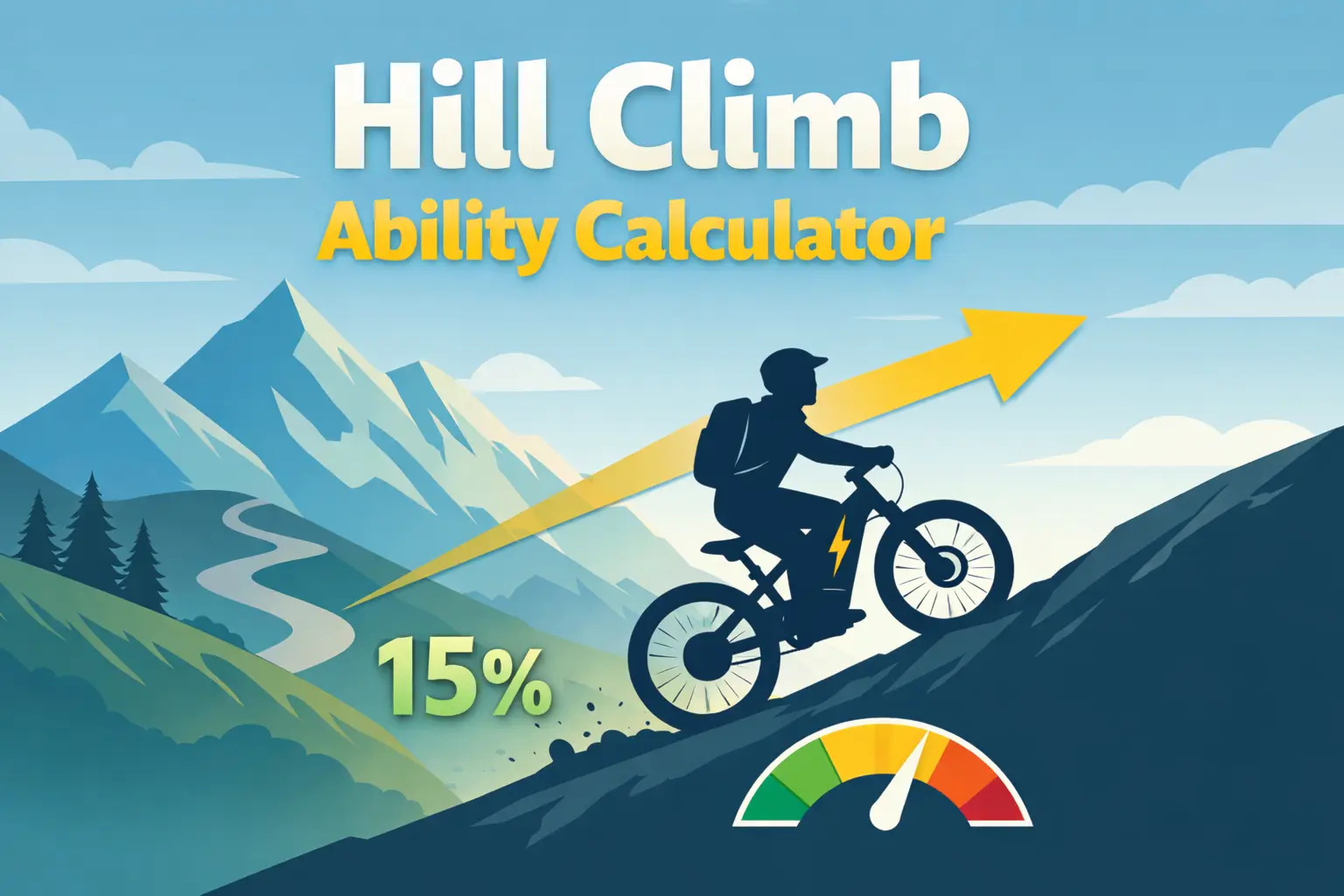
E-Bike Hill Climb Calculator: Estimate Hill Climbing Ability
Last Updated on March 26, 2026 by Kristina
Not all e-bikes climb hills equally well. Some feel strong and steady on steep grades, while others slow down fast once the road tilts up, especially with a heavier rider, extra cargo, or a lower-powered motor.
This e-bike hill climb calculator helps you estimate how well a setup may handle hills based on motor power, torque, rider weight, cargo, terrain, and pedaling effort. It is not a lab test, but it can give you a practical real-world estimate that is useful when comparing bikes or figuring out whether your current e-bike is a good match for hilly riding.
If you are trying to decide between a commuter e-bike, cargo e-bike, folding e-bike, or mid-drive model for hills, this tool can help you understand what really matters.
Looking for more helpful tools? You can also browse the full E-Bike Calculators and Tools Hub for range, size, savings, battery, and motor calculators.
What Matters Most for Climbing Hills
In general, mid-drive e-bikes with solid torque and the right gearing usually climb hills better than hub motor bikes with similar watt ratings. But rider weight, cargo, wheel size, battery voltage, and how much you pedal also make a big difference.
Use the calculator below to get a better estimate for your setup.
What This Calculator Helps You Estimate
This hill climb ability calculator is designed to help answer questions like:
- Can my e-bike handle steep hills?
- Is a 500W or 750W e-bike enough for hills?
- How much torque do I need for climbing?
- Do hub motors struggle on hills?
- Will a cargo e-bike still climb well with extra weight?
- How much does rider pedaling help on hills?
The result gives you an estimated climbing speed, a hill difficulty score, and a practical climbing verdict based on your inputs.
What Affects E-Bike Hill Climbing the Most?
Motor Power
Motor wattage affects how much power the bike can put into climbing, especially once speed starts dropping on steeper grades. Higher power usually helps, but wattage alone does not tell the whole story.
Torque
Torque matters a lot when starting on a hill or climbing at lower speeds. In many real-world situations, a bike with better torque feels stronger on hills than a bike that just has a bigger watt number on paper.
Rider and Cargo Weight
The more total weight the motor has to move uphill, the harder the climb becomes. That includes your body weight, the bike itself, and any extra cargo or gear.
Hill Grade
A mild hill and a steep hill can feel completely different on the same bike. Even a good e-bike may feel slow or strained once grades get steeper.
Motor Type
Mid-drive motors usually do better on climbs because they can work through the bike’s gears. Hub motors can still climb, but they often struggle more on long, steep, low-speed hills.
Rider Effort
Even moderate pedaling can noticeably improve hill climbing. If two riders use the same bike on the same hill, the one who pedals more will usually get better climbing performance.
Surface and Traction
Pavement is easier than loose gravel, rough trail, or soft terrain. A bike may have enough power for a hill on the road but struggle more off-road because of traction and rolling resistance.
How to Use This E-Bike Hill Climb Calculator
Enter your rider weight, bike weight, cargo load, motor power, torque, hill grade, and riding conditions. You can also choose a bike type preset to make things easier if you do not want to guess every setting from scratch.
After you hit the calculate button, the tool will estimate:
- climbing speed
- hill difficulty
- how well the bike matches the hill
- torque support level
- heat risk on long climbs
This makes it easier to compare setups before buying, or to understand why your current e-bike feels strong or weak on hills.
Can Your E-Bike Handle Hills?
Use this calculator to estimate how well an e-bike may climb hills based on motor power, torque, total weight, terrain, and rider effort. Choose a preset if you want a quick starting point, then fine-tune the inputs below.
Your Hill Climb Result
How to Read Your Results
Strong Climber
If the calculator shows a strong climber result, your setup should feel confident on the selected hill. This is usually what riders want if they live in a hilly area or regularly carry extra weight.
Capable Climber
A capable climber result means the bike should handle most everyday hills fairly well. It may slow down on longer or steeper grades, but it is still a solid fit for normal hilly riding.
Moderate Climber
This result usually means the bike can climb hills, but it will not feel especially strong once the grade gets steeper. Riders may need to pedal more or accept slower climbing speeds.
Marginal on Steep Hills
If you get this result, your bike may still make the climb, but it is likely to feel strained. This is where motor type, torque, total weight, and hill length become much more important.
Poor Hill Match
A poor hill match means the setup is probably not ideal for the conditions you entered. That does not always mean the bike is bad, only that it may be a better fit for flatter terrain or lighter loads.
Do You Need a Mid-Drive E-Bike for Hills?
Not always. A good hub motor e-bike can still handle moderate hills, especially if it has enough power and torque and the rider is willing to pedal. But for steeper hills, longer climbs, heavier riders, cargo loads, or mountain riding, a mid-drive usually has the advantage.
That is one reason many riders looking for the best e-bike for hills end up comparing mid-drive vs hub motor models more closely than just looking at wattage alone.
Common Reasons an E-Bike Struggles on Hills
The bike is heavier than expected
Weight matters more on hills than on flat roads. Heavy bikes, heavy riders, and extra cargo all increase the demand on the motor.
Torque is too low
Some bikes look decent on paper because the watt number sounds fine, but the torque is not strong enough for lower-speed climbing.
The hill is longer than it looks
A bike may handle a short steep section but struggle on a long sustained climb where heat buildup and speed loss become more noticeable.
The rider is using little or no pedaling
Even some stronger e-bikes benefit a lot from rider input on hills.
The terrain is loose or rough
Gravel, trail surfaces, and soft terrain increase rolling resistance and can make a climb feel much harder than the same grade on pavement.
Who This Calculator Is Most Helpful For?
This tool is especially useful for:
- commuters who deal with hills every day
- riders comparing 500W vs 750W e-bikes
- riders deciding between hub drive and mid-drive bikes
- cargo e-bike shoppers
- folding e-bike buyers in hilly areas
- heavier riders trying to avoid underpowered bikes
- anyone comparing real-world hill performance before buying
FAQs
Yes, many 500W e-bikes can climb hills, especially moderate ones. But total rider weight, torque, motor type, and how much you pedal all affect how well it will perform.
Both matter, but torque often matters more for low-speed climbing feel and hill starts. Wattage helps too, especially on longer climbs.
In many cases, yes. Mid-drive bikes usually climb hills better because they can use the bike’s gears more effectively.
Some do, especially on long, steep climbs at lower speeds. But stronger hub motor bikes can still do well on moderate hills.
Yes. Heavier riders and heavier total loads make hills harder for the motor to handle.
Yes. Even light to moderate pedaling can noticeably improve hill climbing and reduce strain on the motor.
It can. Higher-voltage systems often feel stronger under load, especially when paired with a capable controller and motor setup.
Want to compare more e-bike numbers? Visit the E-Bike Calculators and Tools Hub to explore more tools for range, battery size, rider fit, and power.
Final Thoughts
If you live in a flat area, almost any decent e-bike may feel fine. But if you deal with regular hills, steep streets, rough terrain, or extra cargo, hill climbing ability matters a lot more than many buyers expect.
This calculator will not replace a real test ride, but it can help you narrow down what kind of motor, torque, and bike setup makes the most sense for your terrain.
If your result looks borderline, that is often a sign to pay closer attention to motor type, torque, total system weight, and whether the bike is really designed for hilly riding.
Read This Next
- Best E-Bike Motors
- Torque vs Wattage: What Actually Matters?
- How Much Torque Do You Need for Hills?
- Best Electric Bikes for Hills
- E-Bike Buying Guide

Kristina is not just an enthusiast but a true authority on electric bikes. Nestled in the coastal beauty of Virginia, Kristina has found the perfect backdrop for her passion for electric biking. As a dedicated wife and homeschooling mom, her life revolves around family, faith, and the thrill of adventure.
Originally hailing from Ohio, Kristina's journey with electric bikes began as a curiosity and quickly evolved into a deep expertise. Her blog is a testament to her love for electric biking, combining her fascination for eco-friendly transportation with her coastal lifestyle.
When she's not cruising the beach on her electric bike, you'll find Kristina indulging in her other loves: long walks along the shore, getting lost in a good book, and cherishing moments with her loved ones. With a heart as big as her love for animals, especially cats, Kristina brings a unique perspective to the electric bike world, grounded in her strong faith in God and her dedication to a sustainable lifestyle.
Through her blog, Kristina shares her extensive knowledge of electric bikes, offering valuable insights, tips, and recommendations to fellow enthusiasts. Whether you're a seasoned rider or a newcomer to the electric bike scene, Kristina's blog is your go-to source for all things electric biking, fueled by her passion, expertise, and the scenic beauty of coastal Virginia.


concord urbandfold is a good bike . can conquer hills . thanks walmart.
Thanks for sharing! Glad to hear the Concord Urbanfold is handling the hills well for you. Always nice to hear some real-world feedback from someone actually riding it!