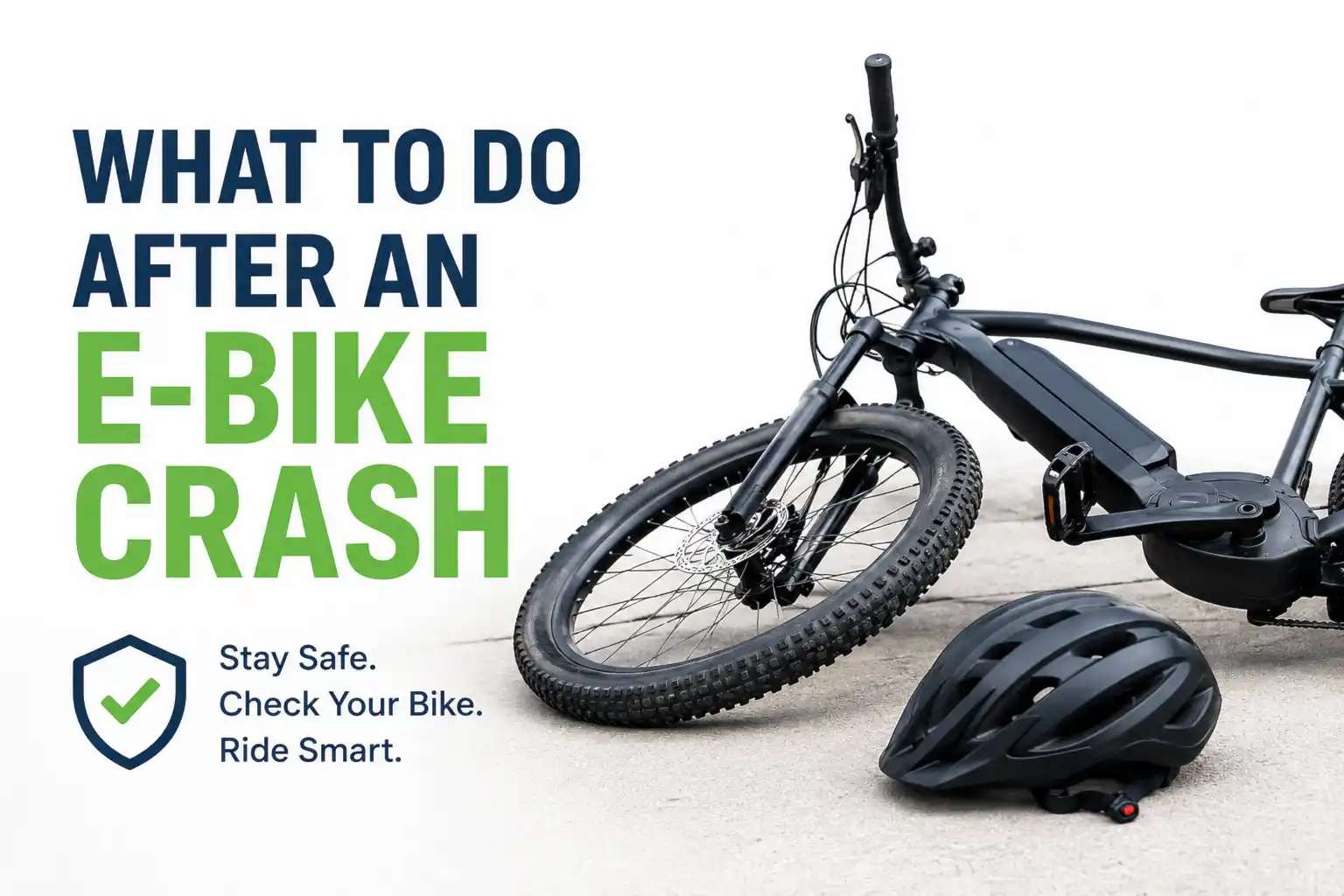
What to Do After an E-Bike Crash: A Step-by-Step Guide for Riders
Last Updated on June 4, 2026 by Kristina
Disclosure: As an Amazon Associate, I earn from qualifying purchases. This comes at no extra cost to you and helps support the content on this site.
Introduction
E-bike crashes can happen to anyone. Whether it’s a low-speed tip-over in a parking lot, a collision with a vehicle, or a crash caused by loose gravel, knowing what to do after an e-bike accident can help protect your health, your rights, and your bike.
I’ve seen plenty of riders focus immediately on checking their bike while ignoring injuries that may not show symptoms right away. In my opinion, the most important thing after any e-bike crash is slowing down, staying calm, and following a step-by-step process.
In this guide, I’ll explain exactly what to do after an e-bike accident, how to inspect your electric bike for damage, when to seek medical attention, and how to safely return to riding.
If you’re new to riding, I also recommend reading our E-Bike Safety Tips for Beginners, How Far Does It Take an E-Bike to Stop?, and E-Bike Visibility Tips guides to help reduce your risk of future accidents.
How This Guide Helps You
If you’ve recently been involved in an e-bike crash, it’s easy to focus on your bike before checking yourself for injuries. In this guide, I’ll walk you through the steps to take immediately after an accident, how to assess potential injuries, when to seek medical attention, how to inspect your e-bike for hidden damage, and what to do before riding again.
This guide is based on bicycle safety recommendations, injury prevention resources, transportation safety guidance, and manufacturer inspection practices to help riders make informed decisions after an e-bike accident.
☑ Quick E-Bike Crash Checklist
If you’ve just been involved in an e-bike crash, start here:
- Move to safety if possible
- Check yourself for injuries
- Call 911 if necessary
- Document the scene
- Exchange information
- Inspect your e-bike
- Replace damaged safety gear
- Monitor for concussion symptoms
- Test ride cautiously before returning to normal riding
What Should You Do Immediately After an E-Bike Crash?
The first few minutes after an e-bike crash are critical.
1. Move to a Safe Location
If possible, move yourself and your e-bike out of traffic.
If you’re on a road, bike lane, or busy trail, getting to a safe area should be your first priority.
However, do not move if you suspect a serious neck, back, or head injury.
2. Check Yourself for Injuries
Adrenaline can hide pain.
Even if you think you’re fine, take a few moments to check for:
- Head injuries
- Cuts and abrasions
- Shoulder pain
- Wrist injuries
- Knee injuries
- Back pain
- Dizziness
- Confusion
- Difficulty walking
If you hit your head, seek medical evaluation immediately, especially if you experience:
- Headache
- Nausea
- Vomiting
- Blurred vision
- Memory issues
- Dizziness
3. Call Emergency Services If Necessary
Call 911 immediately if:
- Someone is seriously injured
- A motor vehicle is involved
- The roadway is blocked
- You suspect a concussion
- There is significant property damage
Even if injuries seem minor, a police report can be valuable if insurance claims become necessary later.
When Should You Seek Medical Attention After an E-Bike Accident?
Many e-bike crash injuries don’t become obvious until hours later.
I always tell riders to be cautious after a fall because soreness often appears the next day.
Consider medical evaluation if you experience:
- Head impact
- Loss of consciousness
- Persistent pain
- Neck stiffness
- Shoulder pain
- Difficulty moving a joint
- Numbness or tingling
- Swelling
According to the CDC, symptoms of concussion can sometimes appear hours or days after a head injury.
Even a seemingly minor crash can result in injuries that are not immediately noticeable.
What If a Car Hit Your E-Bike?
Crashes involving motor vehicles require additional steps.
If a car, truck, motorcycle, or other vehicle was involved:
- Call police immediately
- Obtain driver information
- Collect insurance information
- Photograph the vehicle and license plate
- Get witness contact information
- Request a copy of the accident report
- Seek medical evaluation even if injuries seem minor
Many crash-related injuries don’t become apparent until after the adrenaline wears off.
Exchange Information If Another Person Was Involved
If another cyclist, pedestrian, or driver was involved, collect:
- Name
- Phone number
- Address
- Insurance information
- Vehicle information (if applicable)
Avoid arguing or assigning blame at the scene.
Simply gather facts and document what happened.
Take Photos of Everything
One of the biggest mistakes riders make after an e-bike crash is failing to document the scene.
Take photos of:
- Your e-bike
- Damage to the bike
- Injuries
- The roadway
- Trail conditions
- Vehicle damage
- Traffic signs
- Weather conditions
These photos can be extremely helpful later.
Crash Type Comparison Chart
| Crash Type | Biggest Risk | First Priority |
|---|---|---|
| Road Crash | Traffic | Move to safety |
| Trail Crash | Isolation | Assess injuries |
| Parking Lot Crash | Hidden bike damage | Inspect bike |
| Vehicle Collision | Injury and insurance issues | Call police |
What If You Crash on a Trail?
Trail crashes often present different challenges than road crashes.
If you crash on a trail:
- Move off the trail if possible
- Watch for approaching riders
- Use your phone to share your location if emergency assistance is needed
- Carefully inspect your bike before continuing
- Be especially cautious before riding steep descents
Before your next trail ride, you may also want to check our Trail Access Checker and State-by-State E-Bike Laws Guide.
How to Inspect Your E-Bike After a Crash
Even if your bike appears fine, hidden damage can create safety issues later.
Before riding again, inspect the following areas carefully.
Check the Frame
Look for:
- Cracks
- Dents
- Paint fractures
- Bent tubing
Pay close attention around:
- Head tube
- Bottom bracket
- Rear triangle
- Suspension mounting points
If you find any frame damage, stop riding immediately.
Inspect the Handlebars and Stem
Make sure:
- Handlebars are straight
- Stem bolts remain tight
- Controls function correctly
Twisted handlebars are common after crashes.
Examine the Wheels
Spin both wheels and look for:
- Wobbling
- Bent rims
- Broken spokes
- Tire damage
A damaged wheel can fail unexpectedly.
Check the Brakes
Your brakes are one of the most important safety systems on an e-bike.
Inspect:
- Brake rotors
- Brake levers
- Brake pads
- Hydraulic lines
If braking feels weak, see our guide on Why Are My E-Bike Brakes Weak?
Inspect Electrical Components
After an e-bike crash, examine:
- Battery mount
- Battery case
- Wiring harnesses
- Display
- Controller area
- Motor cables
Look for:
- Pinched wires
- Loose connectors
- Cracked displays
- Damaged battery housings
Signs of battery damage can include:
- Cracks
- Swelling
- Excessive heat
- Smoke
- Strange odors
- Leaking fluids
If you notice battery damage, discontinue use immediately until the battery can be professionally inspected.
Test the Bike Before Your Next Ride
Before returning to normal riding:
- Check throttle operation
- Verify pedal assist works properly
- Test all brake functions
- Confirm lights work
- Check tire pressure
Start with a slow test ride in a safe area.
🎥 Watch: How to Inspect Your Electric Bike for Damage After a Crash
If you’re unsure what crash-related damage looks like, this video provides a helpful visual walkthrough of common inspection points, including the frame, wheels, brakes, handlebars, and other critical components. I recommend watching it before performing your own post-crash inspection.
Post-Crash E-Bike Inspection Checklist
| Component | Check For |
|---|---|
| Frame | Cracks, dents |
| Fork | Bending, misalignment |
| Wheels | Wobble, broken spokes |
| Tires | Cuts, sidewall damage |
| Brakes | Rotor damage, weak braking |
| Handlebars | Twisting, cracks |
| Battery | Cracks, looseness |
| Wiring | Pinched or exposed cables |
| Display | Cracks, error messages |
Do Not Ride Your E-Bike Again Until It Is Repaired If:
- The frame is cracked
- A wheel is bent
- A brake rotor is damaged
- Handlebars are bent or cracked
- The battery is cracked or swollen
- Wiring is exposed
- The fork or suspension is damaged
- The bike makes unusual noises after the crash
Common E-Bike Crash Injuries
Some of the most common electric bike accident injuries include:
- Road rash
- Wrist fractures
- Shoulder injuries
- Collarbone fractures
- Knee injuries
- Concussions
- Facial injuries
This is one reason I strongly recommend wearing a properly fitted helmet every ride, even for short trips.
What Safety Gear Should You Replace After a Crash?
Replace Your Helmet
This is one of the most important steps.
Most helmet manufacturers recommend replacing a helmet after any crash where the helmet takes an impact, even if no visible damage is present.
The foam liner inside the helmet can become compromised and may not provide the same level of protection in a future crash.
Inspect Other Safety Gear
Check:
- Gloves
- Knee pads
- Elbow pads
- Mirrors
- Lights
- Phone mounts
Crash damage may weaken these items.
Recommended Safety Gear After a Crash
➡️ Replace any damaged helmet immediately.
➡️ Consider upgrading your front and rear lights to improve visibility.
➡️ Install a handlebar mirror to improve awareness in traffic.
➡️ Wear reflective gear if you frequently ride at dawn, dusk, or night.
➡️ See our complete guide to Must-Have E-Bike Accessories.
Should You File an Insurance Claim?
If another vehicle was involved or significant property damage occurred, contact your insurance company as soon as possible.
Keep:
- Photos
- Police reports
- Medical records
- Repair estimates
- Receipts
The more documentation you have, the smoother the process usually becomes.
How Long Should You Wait Before Riding Again?
There is no one-size-fits-all answer.
Return to riding only when:
- Injuries have healed
- Your bike has been inspected
- Safety equipment has been replaced if needed
- You feel confident riding again
After a serious crash, some riders benefit from starting with short rides in low-traffic areas before returning to their normal routes.
How to Reduce Your Risk of Future E-Bike Crashes
While no rider can eliminate risk completely, these habits can significantly improve safety:
- Wear a certified helmet
- Use front and rear lights
- Ride predictably
- Maintain safe speeds
- Keep tires properly inflated
- Inspect brakes regularly
- Increase visibility with bright clothing
- Follow local e-bike laws
You may also find these resources helpful:
- E-Bike Safety Tips for Beginners
- E-Bike Visibility Tips
- How Far Does It Take an E-Bike to Stop?
- State-by-State E-Bike Laws Guide
- Trail Access Checker
- E-Bike Classes Explained
How We Researched This Guide
This guide was created using information from bicycle safety organizations, transportation safety agencies, injury prevention resources, and manufacturer recommendations regarding post-crash inspections and rider safety.
We reviewed guidance from the CDC, National Highway Traffic Safety Administration (NHTSA), Consumer Product Safety Commission (CPSC), League of American Bicyclists, and PeopleForBikes to help riders understand the appropriate steps to take following an e-bike accident.
As with all safety-related content on Electric Bike Explorer, this article is intended for educational purposes and should not replace professional medical, legal, or mechanical advice.
FAQs
Move to a safe location if possible, assess injuries, and call emergency services if needed.
Only after carefully inspecting the bike and confirming there is no damage that could affect safety.
Yes. Most helmet manufacturers recommend replacing helmets after a significant impact.
Common injuries include road rash, wrist injuries, shoulder injuries, knee injuries, collarbone fractures, and concussions.
Yes. Impacts can damage battery housings, internal cells, connectors, and mounting systems. Any damaged battery should be professionally inspected.
If another person, vehicle, or significant property damage is involved, filing a police report can help document the incident and may be useful for insurance claims.
Final Thoughts
An e-bike crash can be frightening, but what you do afterward matters just as much as the crash itself.
I always recommend focusing on three priorities first: your safety, proper documentation, and a thorough bike inspection.
Most crashes are survivable learning experiences, but overlooking injuries or mechanical damage can create bigger problems later.
Take your time, make sure you’re healthy, ensure your bike is safe to ride, and don’t rush back onto the road until you’re ready.
Not sure where to go next?
Some riders are brand new. Others are fixing a problem or thinking about a new bike. Choose what fits you.
Learn & Get Comfortable
Understand how e-bikes work and what to expect when riding.
Improve Your Current Ride
If your bike isn’t performing how you want, learn what affects speed, range, and power.
Compare Better Bikes
Looking for something that fits your riding style? Start here.
- Best Electric Bikes for Beginners
- Recommended Commuter Ebikes
- Most Comfortable City E-Bikes
- Best Fat Tire Ebikes
- Top Folding Ebikes
- Best Step Through Ebikes
- Top Cargo Electric Bikes
- Best Lightweight Ebikes
- Best Long Range Ebikes
- Top Moped Style E-Bikes
- E-bike Reviews
🛒 Ready to Buy?
Top picks and current availability from trusted brands.
👉 Still deciding?
Take our E-Bike Recommendation Quiz to get matched with the right riding style in under two minute
External Sources
https://www.cdc.gov/traumatic-brain-injury
https://www.nhtsa.gov/road-safety/bicycle-safety
https://www.cpsc.gov/Safety-Education/Safety-Guides/Bikes

Kristina is not just an enthusiast but a true authority on electric bikes. Nestled in the coastal beauty of Virginia, Kristina has found the perfect backdrop for her passion for electric biking. As a dedicated wife and homeschooling mom, her life revolves around family, faith, and the thrill of adventure.
Originally hailing from Ohio, Kristina's journey with electric bikes began as a curiosity and quickly evolved into a deep expertise. Her blog is a testament to her love for electric biking, combining her fascination for eco-friendly transportation with her coastal lifestyle.
When she's not cruising the beach on her electric bike, you'll find Kristina indulging in her other loves: long walks along the shore, getting lost in a good book, and cherishing moments with her loved ones. With a heart as big as her love for animals, especially cats, Kristina brings a unique perspective to the electric bike world, grounded in her strong faith in God and her dedication to a sustainable lifestyle.
Through her blog, Kristina shares her extensive knowledge of electric bikes, offering valuable insights, tips, and recommendations to fellow enthusiasts. Whether you're a seasoned rider or a newcomer to the electric bike scene, Kristina's blog is your go-to source for all things electric biking, fueled by her passion, expertise, and the scenic beauty of coastal Virginia.