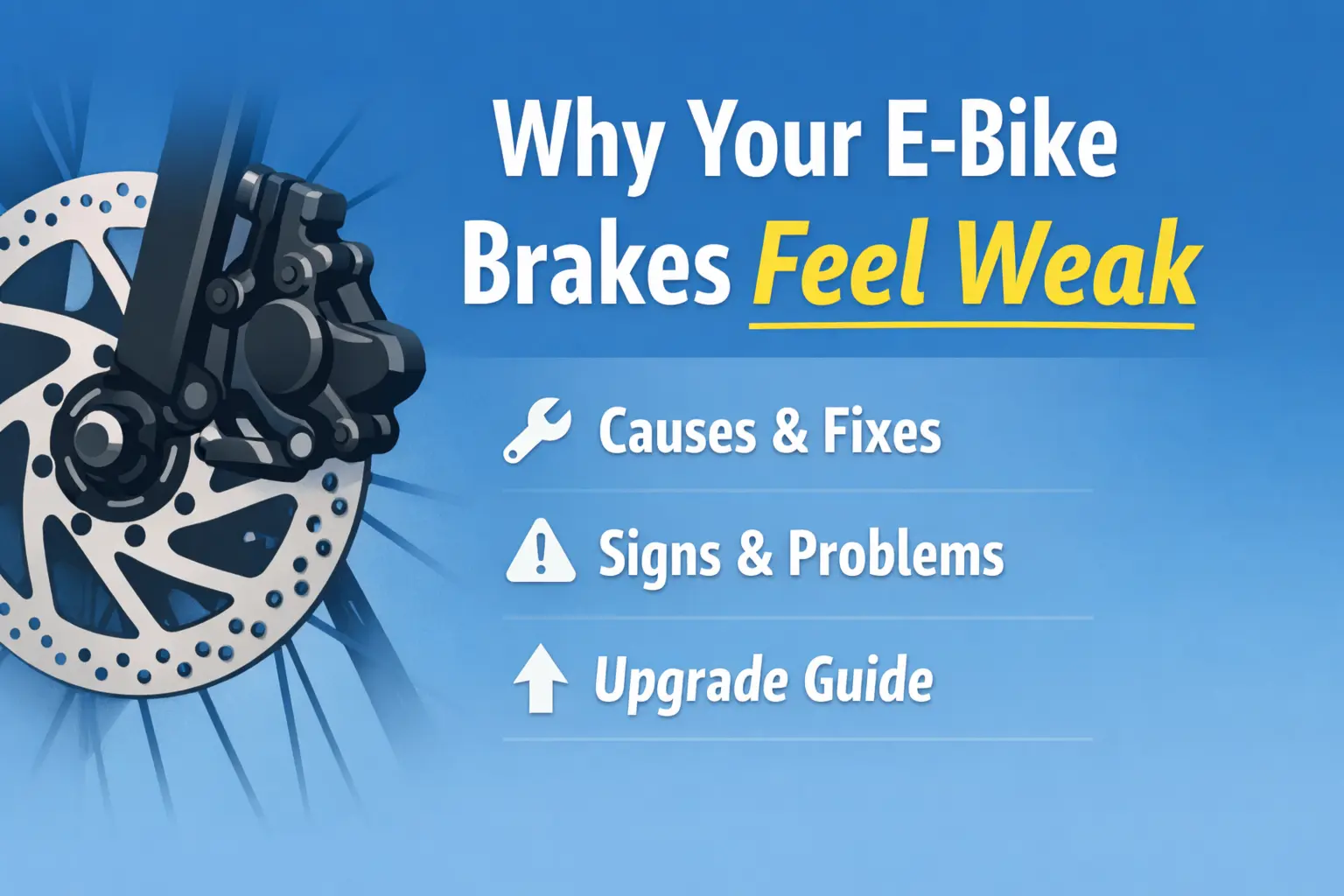
Why Your E-Bike Brakes Feel Weak (Causes + Fixes That Actually Work)
Last Updated on April 16, 2026 by Kristina
Disclosure: As an Amazon Associate, I earn from qualifying purchases. This comes at no extra cost to you and helps support the content on this site.
If your e-bike brakes feel weak, soft, or slow to stop, it’s not something to ignore. E-bikes are heavier and often faster than traditional bikes, which means braking performance plays a major role in safety.
Before assuming you need an expensive upgrade, start with the basics. Many common electric bike brake problems come down to simple issues like worn pads, contamination, cable tension, or air in the system.
If you want to understand how braking fits into overall safety and performance:
👉 New to e-bikes? Start with the full E-Bike Buying Guide to understand what actually matters for safety, performance, and braking
👉 Explore all E-Bike Tools and Calculators to check range, braking, sizing, and real-world performance
Why Trust This Guide
This guide focuses on real-world e-bike braking performance, not just specs. It’s built around the most common rider-reported issues, manufacturer guidance, and practical fixes that actually improve stopping power.
Because e-bikes are heavier and can maintain higher speeds than traditional bikes, braking issues show up faster and matter more.
How to Tell If Your E-Bike Brakes Are Too Weak
Here are the most common warning signs:
- You need to pull the brake lever hard to slow down
- Your bike takes longer than expected to stop
- The brake lever feels spongy or inconsistent
- You hear squealing, scraping, or grinding
- Braking gets worse on downhills
- Stopping feels less predictable than before
💡 If your braking feels inconsistent or delayed, your system is likely underperforming.
📖 Read Next
E-Bike Troubleshooting & Maintenance Guide
E-Bike Battery Guide: Types, Charging, Range, Lifespan, and Care
Understanding eBike Voltage: 36V vs 48V vs 52V — Which Is Right for You?
Top 10 E-Bike Maintenance Mistakes That Damage Your Motor (and How to Avoid Them)
E-Bike Software Updates: Why They Matter & How to Get Them
How to Build Your Own Ebike From Scratch
What Weak Brakes Feel Like at Different E-Bike Speeds
Braking issues become more noticeable as speed increases:
- Around 15 mph: Slight delay but manageable
- Around 20 mph: Longer stopping distance becomes noticeable
- 25+ mph: Brakes may feel underpowered
- Downhill riding: Heat buildup can reduce braking effectiveness
Even small issues become more serious at higher speeds or on heavier bikes.
The Most Common Causes of Weak E-Bike Brakes
1. Worn Brake Pads
One of the most common causes of reduced braking performance.
Signs:
- weak stopping power
- squealing or grinding
- thinner pad material
Fix:
- replace worn pads
- use higher-quality compounds if needed
According to Park Tool, worn pads are a leading cause of poor braking performance.
2. Contaminated Brake Pads or Rotors
Contamination reduces friction quickly.
Signs:
- squealing
- slippery braking feel
- inconsistent performance
Fix:
- clean rotors with isopropyl alcohol
- replace pads if contamination is severe
3. Hydraulic Brakes Need Bleeding
Air in hydraulic systems reduces braking force.
Signs:
- spongy lever feel
- lever pulls too far
Fix:
- bleed the system
- inspect fluid condition
Shimano notes proper hydraulic maintenance is essential for consistent braking.
4. Mechanical Brakes Need Adjustment
Cable systems lose tension over time.
Signs:
- loose lever feel
- delayed braking response
Fix:
- adjust cable tension
- check alignment
5. Glazed Brake Pads
Overheating can harden pad surfaces.
Signs:
- reduced bite
- weak braking after hills
Fix:
- sand lightly or replace pads
6. Rotor Size Is Too Small
Smaller rotors can struggle with higher speeds or heavier bikes.
Signs:
- weak braking at higher speeds
- brake fade on hills
Fix:
- upgrade rotor size if compatible
PeopleForBikes highlights increased braking demand for faster, heavier bikes.
7. Heavy Bike or Cargo Load
More weight increases stopping distance and brake stress.
Fix:
- upgrade pads or brakes
- consider larger rotors
8. Low-Quality Brake Components
Some systems are underpowered from the start.
Fix:
- upgrade pads, rotors, or full brake system
👉 Compare the best e-bike brake kits (hydraulic and mechanical upgrades for stronger stopping power)
🎥 This short video shows common brake issues, how they develop, and simple maintenance steps that can restore your stopping power.
Before you replace your entire brake system, most issues can be fixed with a few key parts:
Brake Pads – most common fix for weak stopping
Hydraulic Brake Bleed Kit – restores pressure
Full Brake Kit – best if your system is worn out
What Weak Brakes Usually Mean Based on Brake Type
Mechanical Disc Brakes
- more frequent adjustments needed
- lower braking power
Fix:
- adjust cables
- upgrade pads
- consider hydraulic upgrade
Hydraulic Disc Brakes
- stronger performance but require maintenance
Fix:
- bleed system
- clean rotors
- replace pads
Mechanical vs Hydraulic E-Bike Brakes
| Feature | Mechanical | Hydraulic |
|---|---|---|
| Power | Moderate | Strong |
| Lever feel | Heavier | Smooth |
| Maintenance | Easier | More involved |
| Best for | Light use | Commuting, hills, cargo |
💡 Hydraulic brakes generally provide stronger, more consistent braking.
How Much Stopping Distance Should You Expect?
Stopping distance on an e-bike can vary a lot depending on real-world conditions. Unlike cars, there is no fixed number you can rely on because braking performance depends on multiple factors working together.
What affects stopping distance most
- Speed – The biggest factor. As speed increases, stopping distance increases rapidly
- Rider + bike weight – More weight requires more force to stop
- Brake type and condition – Hydraulic vs mechanical, pad wear, rotor size
- Tire grip – Wider, higher-quality tires can improve traction
- Surface conditions – Wet roads, gravel, sand, or debris increase stopping distance
What this means in real-world riding
- At moderate speeds, most well-maintained e-bikes stop predictably
- At higher speeds (20+ mph), stopping distance increases quickly
- On hills, braking systems work harder and can lose effectiveness due to heat
- Heavier setups (cargo, passengers) require noticeably more stopping distance
💡 A small drop in brake performance can feel minor at low speed but becomes much more noticeable at higher speeds.
Why stopping distance increases so quickly
Stopping distance is not linear. When you double your speed, you more than double the braking demand.
That means:
- going from 15 → 20 mph is a noticeable increase
- going from 20 → 28 mph is a big jump in braking demand
This is why Class 3 e-bikes and heavier bikes often need stronger braking systems.
How to reduce your stopping distance
- keep brake pads fresh
- clean rotors regularly
- avoid contamination
- use proper braking technique (firm, controlled braking instead of dragging)
- consider stronger brakes if your riding demands it
You can use the Stopping Distance Calculator below to see how your setup compares based on speed, weight, and brake condition.
Common Rider Mistakes That Cause Weak Brakes
Many riders assume weak brakes are just part of riding an e-bike, but in reality, small habits often reduce braking performance over time.
1. Touching rotors with oily or dirty hands
Brake rotors need clean metal surfaces to create friction.
Even a small amount of:
- chain oil
- grease
- dirt
can reduce braking power significantly.
Better approach:
- avoid touching rotor surfaces
- clean rotors regularly with appropriate cleaner
2. Dragging brakes on long descents
Holding your brakes lightly for long periods creates heat buildup.
This can lead to:
- brake fade
- glazed pads
- reduced stopping power
Better approach:
- use controlled, firm braking instead of constant light pressure
- give brakes time to cool when possible
3. Ignoring early signs of wear
Brakes rarely fail suddenly. Performance usually declines gradually.
Common early signs:
- slight increase in stopping distance
- softer lever feel
- minor noise
Better approach:
- check pads regularly
- address small issues early
4. Using low-quality replacement parts
Cheap brake pads or components can reduce braking performance.
Common issues:
- poor heat resistance
- faster wear
- inconsistent braking
Better approach:
- choose reliable pad compounds
- match parts to your riding style (commuting, hills, cargo)
5. Waiting too long between maintenance
E-bike brakes work harder than standard bike brakes, especially on heavier bikes or at higher speeds.
Delaying maintenance can lead to:
- reduced performance
- uneven braking
- more expensive repairs later
Better approach:
- inspect brakes regularly
- clean and adjust as needed
- replace worn parts before performance drops significantly
Why these mistakes matter
Most weak brake issues don’t come from a single failure – they build up over time.
Fixing these habits can often improve braking performance without needing a full upgrade.
Quick Fix Checklist
Before upgrading anything:
- check brake pad wear
- clean rotors
- test lever feel
- adjust cables (if mechanical)
- inspect for contamination
- test ride safely
When Weak Brakes Are a Maintenance Issue vs a Hardware Limitation
Not all weak brakes mean you need an upgrade.
Maintenance Issue (Fixable)
- brakes used to feel strong
- performance declined over time
- squealing or inconsistency
- improvement after cleaning
Fixes:
- replace pads
- clean rotors
- adjust or bleed system
Hardware Limitation (Upgrade Needed)
- brakes always felt weak
- riding at higher speeds
- heavy bike or cargo
- weak braking on hills
- fixes didn’t help
Upgrades:
- hydraulic brakes
- larger rotors
- better pads
Quick Rule
- got worse → fix it
- never strong → upgrade it
Not sure what your weak brakes are trying to tell you? This tool matches the symptom you notice with the most likely cause and gives you a practical next step.
Quick Brake Issue Checker
Quick Brake Issue Checker
Select the options below to get a likely cause and next step.
Brake Safety Calculator
Use this calculator to estimate how much stress your braking system is under based on speed, weight, terrain, and brake type.
Brake Safety Calculator
Stopping Distance Calculator
Stopping distance changes quickly based on speed, weight, terrain, and brake setup. This tool gives a more realistic estimate so you can see how your setup performs.
E-Bike Stopping Distance Calculator
Estimate your stopping distance based on your setup and riding conditions.
These tools provide estimates only. Real-world braking depends on many factors including tire grip, terrain, rider reaction time, and brake condition. Always test brakes safely before riding.
When You Should Upgrade Your E-Bike Brakes
Not every rider needs a brake upgrade. But certain riding conditions put much more demand on your braking system - and that’s when upgrades make a real difference.
You should strongly consider upgrading your brakes if:
1. You regularly ride at higher speeds (20–28 mph)
At higher speeds, braking demand increases quickly.
- stopping distance grows faster than most riders expect
- small brake weaknesses become much more noticeable
- stock or entry-level brakes may feel underpowered
💡 If you ride a Class 3 e-bike or often cruise above 20 mph, stronger brakes provide more control and confidence.
2. Your e-bike is heavy (or carries extra weight)
Many e-bikes weigh 50–80 lbs before adding the rider.
Add:
- groceries
- cargo
- child seats
- trailers
…and braking demand increases significantly.
Signs your brakes are struggling with weight:
- longer stopping distance
- brakes feel “overworked”
- reduced performance on hills
3. You ride hills or long descents
Downhill riding creates heat, and heat reduces braking performance.
- brakes can fade over time
- pads can glaze
- rotors can overheat
If you ride hills regularly:
- larger rotors help manage heat
- hydraulic brakes provide more consistent performance
4. Your brakes still feel weak after basic fixes
If you’ve already:
- replaced brake pads
- cleaned rotors
- adjusted cables or bled the system
…and braking still feels weak, your system may simply be underpowered.
💡 This is the clearest sign it’s time to upgrade rather than keep adjusting.
Additional signs it’s time to upgrade
- braking feels inconsistent at higher speeds
- you need to pull the lever very hard to stop
- brakes work fine at low speed but struggle at higher speeds
- you don’t feel confident stopping in traffic or emergencies
What Upgrading Your Brakes Actually Improves
Upgrading isn’t just about “more power.” It improves multiple parts of your riding experience:
- shorter, more controlled stopping
- better modulation (more precise control, not just on/off)
- less hand fatigue on longer rides
- more consistent performance, especially on hills
- increased confidence in traffic and emergency situations
Common Upgrade Paths
If you decide to upgrade, here are the most effective improvements:
- switch from mechanical → hydraulic disc brakes
- upgrade to larger rotors (180 mm or 203 mm)
- install higher-quality brake pads
- upgrade to a full brake kit designed for e-bikes
👉 Compare the best e-bike brake kits for stronger, more reliable stopping power
Quick Decision Guide
- If your brakes got worse over time → fix them
- If your brakes never felt strong enough → upgrade them
Safety Reminder
⚠️ Weak brakes reduce control and increase risk, especially on faster or heavier e-bikes.
The U.S. Consumer Product Safety Commission emphasizes the importance of proper braking systems for rider safety.
Final Thoughts
Most weak brake issues come down to:
- worn pads
- contamination
- adjustment issues
- heat buildup
- underpowered systems
Start with simple fixes. Upgrade when needed.
Not sure where to go next?
Some riders are brand new. Others are fixing a problem or thinking about a new bike. Choose what fits you.
Learn & Get Comfortable
Understand how e-bikes work and what to expect when riding.
Improve Your Current Ride
If your bike isn’t performing how you want, learn what affects speed, range, and power.
Compare Better Bikes
Looking for something that fits your riding style? Start here.
- Best Electric Bikes for Beginners
- Recommended Commuter Ebikes
- Most Comfortable City E-Bikes
- Best Fat Tire Ebikes
- Top Folding Ebikes
- Best Step Through Ebikes
- Top Cargo Electric Bikes
- Best Lightweight Ebikes
- Best Long Range Ebikes
- Top Moped Style E-Bikes
- E-bike Reviews
🛒 Ready to Buy?
Top picks and current availability from trusted brands.
👉 Still deciding?
Take our E-Bike Recommendation Quiz to get matched with the right riding style in under two minute

Kristina is not just an enthusiast but a true authority on electric bikes. Nestled in the coastal beauty of Virginia, Kristina has found the perfect backdrop for her passion for electric biking. As a dedicated wife and homeschooling mom, her life revolves around family, faith, and the thrill of adventure.
Originally hailing from Ohio, Kristina's journey with electric bikes began as a curiosity and quickly evolved into a deep expertise. Her blog is a testament to her love for electric biking, combining her fascination for eco-friendly transportation with her coastal lifestyle.
When she's not cruising the beach on her electric bike, you'll find Kristina indulging in her other loves: long walks along the shore, getting lost in a good book, and cherishing moments with her loved ones. With a heart as big as her love for animals, especially cats, Kristina brings a unique perspective to the electric bike world, grounded in her strong faith in God and her dedication to a sustainable lifestyle.
Through her blog, Kristina shares her extensive knowledge of electric bikes, offering valuable insights, tips, and recommendations to fellow enthusiasts. Whether you're a seasoned rider or a newcomer to the electric bike scene, Kristina's blog is your go-to source for all things electric biking, fueled by her passion, expertise, and the scenic beauty of coastal Virginia.