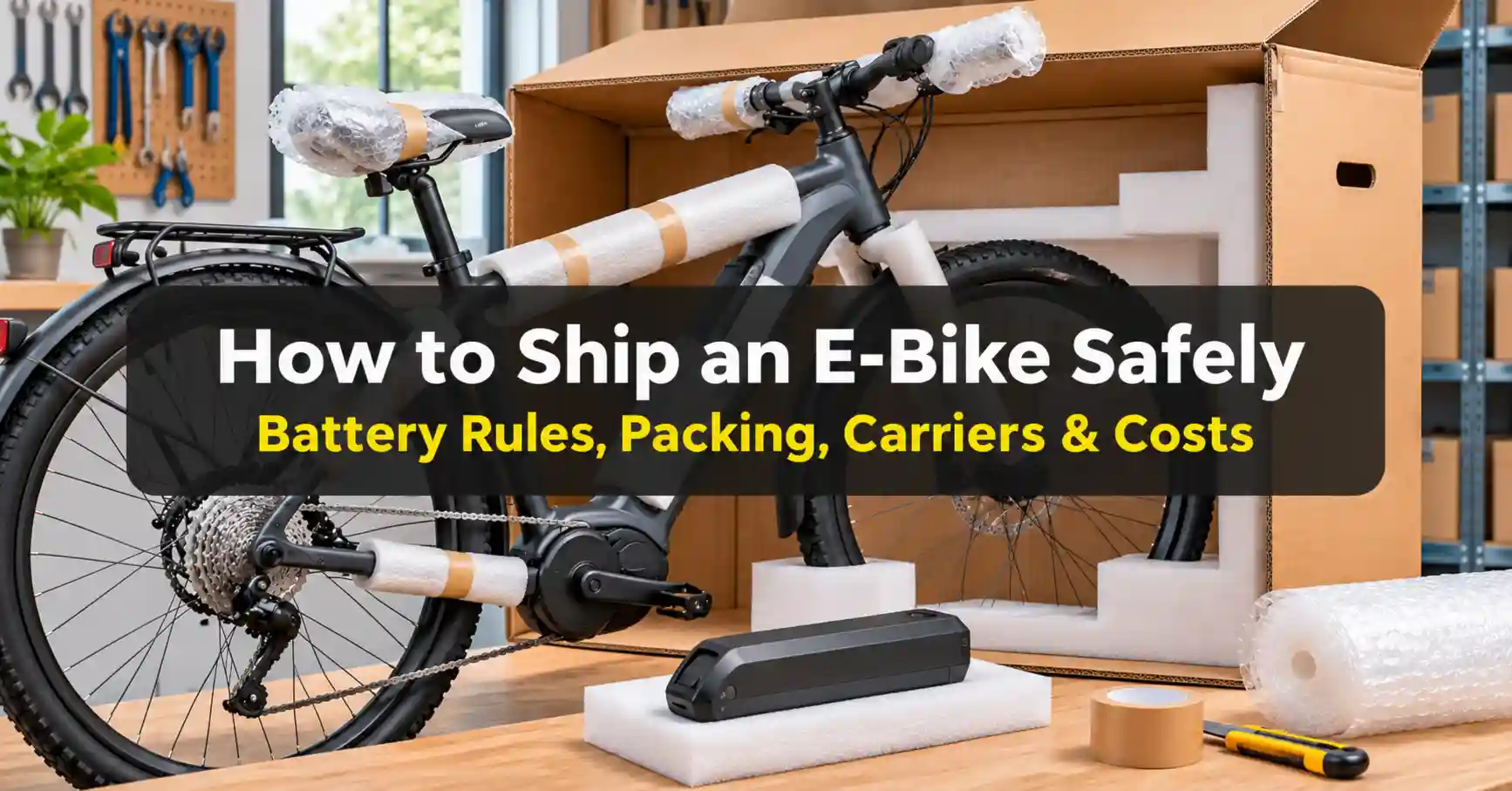
How to Ship an E-Bike Safely: Battery Rules, Packing, Carriers & Costs

Can you ship an e-bike with its battery? Sometimes, yes, but you need a service that accepts battery-powered bicycles and you have to follow its packing and documentation rules. You cannot simply put an e-bike in a regular bike box, buy any shipping label, and assume the lithium battery is covered.
This guide compares current U.S. carrier options, explains how to get a realistic shipping quote, and walks you through preparing the bike safely. It focuses on sending a complete electric bike by a shipping service, rather than carrying it on a vehicle. If you’re planning to drive with the bike instead, see my guide to transporting an e-bike. If you’re selling it to someone out of town, start with the used e-bike selling guide too.
Quick decision: For a working e-bike with its original functioning battery installed, start by checking a specialist such as BikeFlights. ShipBikes has a temporary holiday-period restriction through January 16, 2027, so confirm whether its service can accept your specific container and shipment before relying on it. For a loose battery, a damaged battery, or an international shipment, stop and confirm the specific requirements before packing anything. Ordinary USPS service generally is not an option for the large lithium batteries used in most e-bikes.
Which Services Can Ship an E-Bike?
These are the providers and restrictions I could verify from their published policies. This is a U.S.-focused comparison, checked November 11, 2026. Acceptance can depend on the exact bike, battery, service, destination, packaging, and the shipper’s eligibility.
| Service | What its published policy says | Best next step |
|---|---|---|
| BikeFlights | Ships eligible complete e-bikes with functioning batteries installed, by ground service within the contiguous 48 states. No standalone e-bike batteries. | Use its e-bike booking and packing instructions, not standard bike instructions. |
| ShipBikes | Temporary restriction: Effective November 4, 2026, ShipBikes says it is not shipping bicycles through January 16, 2027, except when using its own containers. Its normal published policy also requires the e-bike battery installed and excludes lithium-battery e-bike shipments to Alaska or Hawaii. | Contact ShipBikes before planning a shipment. Do not assume its ordinary cardboard-box service is available during the restriction; if eligible, confirm the specific container and all weight/dimension rules. |
| UPS directly | Has specific rules for battery-powered vehicles and hazardous-materials shipments, including restrictions by service and battery condition. | Ask UPS whether your exact e-bike shipment is accepted under the selected service and which paperwork and markings apply. |
| FedEx directly | Its bike-shipping page directs e-bike shippers to lithium-battery rules and FedEx Express dangerous-goods services. Acceptance can require advance arrangements. | Confirm approval, route, classification, packing and acceptance with FedEx’s dangerous-goods team. |
| USPS | Its ordinary lithium-ion mailability rules have a 100 Wh battery limit, below the capacity of most e-bike batteries. | Do not assume a typical e-bike or its battery is mailable. Check the current postal restrictions first. |
Important: BikeFlights may use a major carrier to move a package, but that does not mean you can independently buy a regular ground label from that carrier and get the same e-bike service or exception. The service you book and the instructions attached to that service matter.
Can You Ship an E-Bike With the Battery Installed?
Yes, with some approved services. For instance, BikeFlights’ e-bike shipping service covers a single bike with a fully functioning battery installed or contained in the frame. It limits those shipments to ground transportation in the lower 48 states. Its packing requirements include reducing the charge to below 30%, preventing the bike from turning on, and using strong protective packaging.
ShipBikes’ published conditions also require the lithium battery to remain installed in the bicycle and exclude loose lithium-ion batteries. As of November 11, 2026, its website additionally announces a temporary holiday shipping restriction through January 16, 2027, except for its own containers. Check acceptance before booking. An installed-battery policy is not permission to add a spare pack.
Installed, removed, and spare batteries are not the same shipment
- Battery installed in the bike: Some approved services accept the complete bike under their specific battery-powered-vehicle procedures.
- Battery removed from the bike: The bicycle without its lithium battery may qualify for ordinary bike shipping, but this does not automatically solve shipping the battery separately.
- Spare or loose battery: Treat this as a separate hazardous-materials shipping question. Do not put an extra pack into the box unless the provider explicitly approves that configuration.
- Damaged, defective, swollen, overheating, or safety-recalled battery: Do not send it through a normal e-bike parcel service. Ask the manufacturer, recall administrator, or a qualified hazardous-materials shipping specialist for the approved procedure.
The federal Hazardous Materials Regulations distinguish battery-powered vehicles from standalone lithium batteries. They also distinguish what the law may permit from what a particular carrier chooses to accept. PHMSA’s lithium-battery shipping guidance is the official starting point. Do not choose your own hazardous-materials classification or warning label based on a generic online example; follow the rules and markings specified for your approved shipment.
How Much Does It Cost to Ship an E-Bike?
There is no meaningful nationwide flat rate. Your quote depends on where the bike starts and ends, the actual packed weight, the box’s external dimensions, the approved service, and any pickup, packing, or coverage charges. An inexpensive shipping label can become an expensive shipment if the box is oversized or the entered measurements are wrong.
To get a usable comparison, ask two or more eligible services to quote the same fully packed bike. Record the amount you would actually pay, not a starting price for a smaller traditional bicycle.
| Cost to check | Your quote |
|---|---|
| Base shipping charge | $________ |
| Approved bike box and protective materials | $________ |
| Professional bike-shop packing, if needed | $________ |
| Pickup, delivery, or additional handling charges | $________ |
| Optional shipping protection or declared-value charges | $________ |
| Total before any later adjustments | $________ |
Why box dimensions can change the price
Carriers consider not just pounds but also box size. One common measurement is length + 2 × width + 2 × height. For an illustrative box measuring 60 × 12 × 30 inches, the calculation is 60 + 24 + 60 = 144 inches. That is a dimension calculation, not a price quote or confirmation that any particular carrier will accept the box.
For example, ShipBikes’ published standard cardboard-box limits are 156 inches by that measure and 80 pounds total, but its temporary holiday restriction means the normal option should not be assumed available until the company confirms it. Measure after the bike, padding, and box are assembled. Round the measurements as the provider instructs, and check its current additional-handling and oversize terms before ordering.
Real packaging price example: When checked November 11, 2026, BikeFlights displayed a $99.95 list price for its Bike Box Large, before box delivery, but its product page also displayed sold out. That price is for the box, not bike shipping. Its listed maximum packed weight is 85 pounds. Confirm stock, alternatives, and current pricing before budgeting.
How to Pack an E-Bike for Shipping Safely
Use your chosen service’s e-bike instructions and the bike manufacturer’s handling guidance as the controlling directions. The checklist below helps you organize the job, but it is not a substitute for an approved hazardous-materials shipping procedure.
1. Confirm the bike and battery are eligible
Find the make and model, actual packed-bike weight, battery watt-hours (Wh), and whether the battery is functioning normally. Look for physical damage, swelling, unusual heat, corrosion, exposed wiring, or an applicable unresolved recall. If you notice warning signs, stop. My guide to an e-bike battery getting hot explains when riding and charging should stop. Contact the manufacturer for safe next steps rather than trying to mail the battery yourself.
2. Confirm the correct shipping service before disassembling
Tell the provider it is an electric bicycle and whether the battery is installed. Verify the route, battery rules, maximum box dimensions, total weight, labeling, pickup location, and any advance approval. If the bike has two batteries or a nonstandard electrical system, explain that before you purchase a label.
3. Power down and secure the electrical parts
For BikeFlights, its published procedure says to reduce a functioning battery to below 30% charge, turn the system off, remove keys, and make accidental activation impossible. Do not treat this percentage as a universal rule for all services. Do not deliberately damage, short, over-discharge, open, or modify the pack.
4. Get a box rated for the bike’s size and weight
A heavy e-bike needs a strong box and adequate dense protective padding. Confirm the packaging complies with the service’s actual limits. If you still have the original shipping inserts, they may be useful, but do not assume the manufacturer’s original freight package automatically qualifies for the parcel service you booked.
5. Prepare the bicycle without damaging components
Depending on the frame and approved box, you may need to remove the pedals and front wheel, lower the saddle, or turn or detach the handlebars. Follow the manufacturer’s instructions and use a bike shop when the job involves unfamiliar brakes, stem hardware, internal cables, or heavy components. Protect loose brake rotors, displays, electrical connectors, derailleur parts, and the motor area. Avoid tension on wiring or hydraulic lines, and secure small parts in a labeled bag so they cannot move around inside the box.
6. Keep the bike from moving in transit
Use firm padding and supports at contact points. Nothing should be able to strike the battery, motor, display, or frame when the carton is laid on its side or shifted. Secure the wheel, pedals, saddle, and accessories separately as your packer’s instructions require. Before closing, take pictures showing the bike’s condition and how it was protected.
7. Close, measure, label, and hand off correctly
Seal the box according to the approved instructions, then measure and weigh the finished package. Check the exact labels and markings requested by your service. Do not copy a hazard sticker from another shipment, and do not casually remove required markings. BikeFlights has specific instructions about old freight hazmat markings for its own parcel service; those instructions should not be applied to unrelated shipments. Use the approved pickup or drop-off location and keep the receipt and tracking number.
E-Bike Shipping Checklist
Use the quick checklist below while preparing your bike, or open the free one-page printable version if you would rather work from paper. It is intended to catch practical mistakes that can result in delays, rejected packages, or unexpected charges.
Free Printable E-Bike Shipping Checklist
Get a clean, single-page checklist you can use before booking, packing, and handing off your e-bike. It includes boxes for carrier details, battery capacity, packed dimensions, and 12 essential checks.
Opens the printable PDF in a new tab. Choose Print in your browser or PDF viewer, or save a copy for later. Only the checklist will print, not the article or ads.
Before You Ship
- ☐ I confirmed the provider accepts my exact e-bike, battery setup, and destination.
- ☐ The battery is functioning normally, with no unsafe symptoms or unresolved applicable recall.
- ☐ I followed the provider’s specific battery-charge and power-off instructions.
- ☐ I confirmed the box type, maximum dimensions, and packed weight.
- ☐ I protected the frame, battery, motor, display, wheels, and loose parts.
- ☐ I photographed the bike and the inside of the packed box.
- ☐ I measured and weighed the fully packed box, not just the bike.
- ☐ I used the approved markings, label, and pickup or drop-off instructions.
- ☐ I checked shipping protection, exclusions, and the claim deadline.
- ☐ I saved my booking confirmation, photos, receipt, and tracking number.
Shipping an E-Bike to Alaska, Hawaii, or Another Country
Do not assume that a shipment sold as “ground” stays on a truck for the entire trip. Alaska, Hawaii, and international routes can involve aircraft or ocean transport, different classifications, and additional carrier rules. BikeFlights does not offer its complete, battery-installed e-bike shipping service outside the lower 48 states. ShipBikes also excludes lithium-battery e-bike shipments to Alaska or Hawaii under its published rules, and its temporary holiday shipping restriction currently limits ordinary bookings even within the contiguous states.
Removing the battery may let you ship the bicycle itself through a different service, but a separate lithium-battery shipment still needs an eligible carrier and compliant handling. For an overseas move, work with a qualified specialist who can confirm the destination country’s rules and the transport method. If your real goal is taking the bike on an airline trip rather than shipping it as freight, see whether you can take an electric bike on a plane.
What About Damaged or Recalled E-Bike Batteries?
This is the situation where ordinary shipping advice becomes especially risky. PHMSA treats damaged, defective, and safety-recalled lithium batteries as a special category with strict packaging and transport requirements. They are prohibited from air transport, and normal consumer e-bike shipping services generally do not accept them.
Do not conceal a damaged battery, put it in a regular bike box, or mail it on the theory that “ground shipping is safe.” Contact the battery manufacturer or recall administrator and request written return or recycling instructions. For end-of-life packs, use the guidance in my e-bike battery recycling and disposal guide, and verify the current requirements with the receiving organization.
How to Protect Yourself if the Bike Is Damaged in Transit
Shipping protection is not always the same as a blanket insurance policy. Read what is covered, how the bike must be packed, whether batteries or accessories are excluded, and the deadline for reporting damage. A declared value does not necessarily guarantee a full payout.
- Before pickup: Photograph all sides of the bike, its serial number, the working display if appropriate, the protective packing, and the closed box.
- Keep records: Save the service confirmation, packed dimensions and weight, declared items, handoff receipt, and tracking number.
- On arrival: Ask the recipient to photograph any outside damage before opening, keep all packing, and report problems within the carrier’s stated deadline.
- For a sale or return: Agree in writing who is paying shipping, who is arranging packing, and who is responsible for filing a claim. A manufacturer-approved return should follow its own authorization and label instructions. My e-bike return-policy guide explains why return fees and procedures vary.
Frequently Asked Questions
Can I ship my e-bike without removing the battery?
Yes, if your selected shipping service expressly accepts the complete bike with its functioning battery installed. BikeFlights publishes an installed-battery e-bike service. ShipBikes also describes an installed-battery requirement but currently restricts bicycle shipments until January 16, 2027, except with its own containers. Confirm actual acceptance of the exact service before buying a label.
Can I use USPS to mail my e-bike battery?
Not for a typical high-capacity e-bike lithium-ion battery. USPS generally prohibits mailing lithium-ion batteries over 100 Wh, while common e-bike packs are considerably larger. Do not rely on instructions intended for small laptop or tool batteries.
Can I ship an e-bike with a 500 Wh or 750 Wh battery?
A battery capacity above 100 Wh does not automatically prohibit every battery-powered vehicle shipment under federal hazardous-materials rules. But that does not mean every parcel carrier will accept the bike. Ask the provider about the installed battery, shipping classification, route, and its current service requirements.
Should I remove the battery before shipping?
Only if the chosen service or manufacturer instructs you to do so. BikeFlights requires the battery to be installed for its eligible complete e-bike service, and ShipBikes normally specifies the same condition for accepted e-bike shipments. ShipBikes’ temporary service restriction still applies. A removed battery may need entirely separate hazardous-materials arrangements.
Can I drop a packed e-bike at any UPS Store?
Do not assume so. BikeFlights recommends a scheduled pickup or an approved UPS Customer Center for its e-bike shipments and advises against assuming every independently operated UPS Store will accept the package. Follow the location instructions on your actual booking.
What is the cheapest way to ship an electric bike?
Compare eligible-service quotes using the exact same packed dimensions, weight, and destination. Include the price of the box, professional packing if needed, pickup charges, and any shipping protection. A quoted base rate alone is not enough to choose confidently.
Why You Can Trust Electric Bike Explorer: This is a research-based guide, not a claim that I personally shipped an e-bike through every carrier. I compared the published instructions from specialist bicycle shippers, major carriers, USPS, and the U.S. Department of Transportation. Where acceptance or costs depend on your particular shipment, I’ve said so rather than promising a universal price or permission.
My take: I would start with a provider that specifically explains how it handles complete e-bikes instead of trying to adapt a regular bicycle label. Then I would get the bike safely packed, compare the total price including protection, and keep thorough photos and handoff records. If the battery is questionable, I would resolve that before treating shipment as an ordinary errand.
Want more Electric Bike Explorer guides in Google? You can add Electric Bike Explorer as a Preferred Source where the feature is available.
Official Sources and Carrier Policies
Carrier policies, prices, and dangerous-goods rules can change. These are the primary documents checked for this guide. Always recheck the rules before booking a shipment.
- BikeFlights: E-Bike Shipping Requirements and E-Bike Packing Instructions
- ShipBikes: Temporary 2026-27 Restriction and Published Shipping Conditions
- UPS: Hazardous-Materials Service Rules
- FedEx: How to Ship a Bike, Including E-Bikes
- USPS Postal Inspection Service: Lithium Battery Mailing Restrictions
- PHMSA: Transporting Lithium Batteries
- BikeFlights: How Dimensions and Weight Affect Rates
- BikeFlights: Bike Box Large Specifications and Price

Kristina is not just an enthusiast but a true authority on electric bikes. Nestled in the coastal beauty of Virginia, Kristina has found the perfect backdrop for her passion for electric biking. As a dedicated wife and homeschooling mom, her life revolves around family, faith, and the thrill of adventure.
Originally hailing from Ohio, Kristina's journey with electric bikes began as a curiosity and quickly evolved into a deep expertise. Her blog is a testament to her love for electric biking, combining her fascination for eco-friendly transportation with her coastal lifestyle.
When she's not cruising the beach on her electric bike, you'll find Kristina indulging in her other loves: long walks along the shore, getting lost in a good book, and cherishing moments with her loved ones. With a heart as big as her love for animals, especially cats, Kristina brings a unique perspective to the electric bike world, grounded in her strong faith in God and her dedication to a sustainable lifestyle.
Through her blog, Kristina shares her extensive knowledge of electric bikes, offering valuable insights, tips, and recommendations to fellow enthusiasts. Whether you're a seasoned rider or a newcomer to the electric bike scene, Kristina's blog is your go-to source for all things electric biking, fueled by her passion, expertise, and the scenic beauty of coastal Virginia.