
Best E-Bikes for College Students in 2026: 10 Campus-Friendly Picks
Last Updated on September 19, 2026 by Kristina
Introduction
Electric bikes can be one of the most practical ways for college students to get around campus, commute from an off-campus apartment, reach early classes, or make quick trips to work and the grocery store.
However, the best e-bike for a college student is not necessarily the fastest or most powerful model. Weight, battery safety, storage, theft protection, comfort, campus rules, and access to an approved charging location may matter much more than maximum motor output.
For this updated guide, I focused on e-bikes that offer a useful balance of affordability, manageable weight, dependable components, removable batteries where possible, and practical features for everyday transportation.
Students who are still comparing different styles may also want to read my Best Commuter E-Bikes, Best Budget E-Bikes, and Best Folding E-Bikes for Small Apartments and Dorms guides.
Specifications, prices, and availability were checked on July 16, 2026. Manufacturer prices and promotions can change.
⭐ Quick Picks: Best E-Bikes for College Students by Category
Best Overall E-Bike for College Students: Velotric Tempo
Best Budget Folding E-Bike: Lectric XP Lite 2.0
Best Lightweight Sporty Commuter: Ride1Up Roadster V3
Best Ultra-Light Campus Commuter: Mokwheel FLINT
Best Lightweight Folding E-Bike: Urtopia Carbon Fold 2
Best Low-Maintenance Comfort E-Bike: Tenways CGO800S
Best Bike-Shop Commuter: Trek FX+ 1
Best Budget Comfort E-Bike: Retrospec Chatham Rev 3
👉 Short on time?
See today’s best college e-bikes and limited-time discounts, then compare top picks below.
Best E-Bikes for College Students Comparison Chart
| E-Bike | Best For | Approximate Current Price | Listed Weight | Manufacturer-Claimed Range | Motor and Assisted Speed |
|---|---|---|---|---|---|
| Velotric Tempo | Best overall college e-bike | $1,499 | 39 lbs | Up to 60 miles | 350W nominal, 650W peak; adjustable up to 28 mph |
| Lectric XP Lite 2.0 | Best budget folding e-bike | From $799 | 49 lbs | Up to 45 miles standard or 80 miles long-range | 300W nominal, 819W peak; 20 mph |
| Ride1Up Roadster V3 | Best lightweight sporty commuter | About $1,395, depending on configuration | About 40 lbs | Approximately 20–40 miles | 500W rear hub motor; up to 28 mph pedal assist |
| Mokwheel FLINT | Best ultra-light campus commuter | $1,399.99 | 36 lbs | Up to 70 miles | 350W nominal, 550W peak; 20 mph |
| Urtopia Carbon Fold 2 | Best lightweight folding e-bike | $1,899 | 35 lbs without accessories | Up to 40 miles; up to 95 miles with optional second battery | 250W nominal, 500W peak; 20 mph |
| Tenways CGO800S | Best low-maintenance comfort e-bike | $1,699 in available colors | 46 lbs | Up to 53 miles | 350W rear hub motor; 20 mph |
| Aventon Level 4 REC | Best security-focused e-bike for off-campus students | $1,999 | 68.5 lbs | Up to 75 miles | 750W nominal, 1,188W peak and up to 1,440W in Boost Mode; Class 2 convertible to Class 3 |
| Trek FX+ 1 | Best bike-shop commuter | From $2,199.99 | About 48.7 lbs | Up to 50 miles | Up to 60Nm; Class 2 or Class 2/Class 3 depending on version |
| Retrospec Chatham Rev 3 | Best budget comfort e-bike | $999.99 | 58 lbs | Up to 42 miles | 350W rear hub motor; 20 mph |
| Kingbull Literider 2.0 | Best heavy-duty folding e-bike | Current sale price around $979 | 71 lbs | Up to 55 miles | 750W rear hub motor; 20 mph default, adjustable up to 28 mph |
Prices and promotions can change. All ranges are manufacturer estimates rather than guaranteed real-world results. Actual range depends on rider and cargo weight, assist level, hills, speed, temperature, wind, tire pressure, and other riding conditions.
🔍 Why You Can Trust Electric Bike Explorer
Electric Bike Explorer is dedicated to providing honest, well-researched, and easy-to-understand information for e-bike riders. Whenever possible, I personally test the e-bikes, accessories, and products I review. When I can’t test something directly, I rely on careful research, manufacturer specifications, real-world rider feedback, official sources, and trusted industry information.
For law guides, I review state statutes, local ordinances, transportation agencies, park rules, and official government resources whenever possible. For e-bike news, I review the original reporting along with available town documents, meeting agendas, proposed ordinances, police statements, government notices, and other primary sources. I also make a clear distinction between a proposal, an approved rule, and a law that has already taken effect.
For troubleshooting and safety guides, I focus on practical explanations, common rider experiences, manufacturer guidance, and safe maintenance practices.
My goal is to help you make informed decisions, understand the rules where you ride, solve common e-bike problems, and get the most out of your electric bike safely.
Want to know how I score bikes and research my guides? Read my full review and ranking process
Want to See More Electric Bike Explorer in Google Search?
Add Electric Bike Explorer as a preferred source to see more of our e-bike law guides, safety updates, reviews, buying guides, and troubleshooting posts when they are relevant to your searches.
Check Your College’s E-Bike Rules Before Buying
Before ordering an e-bike, check both the university’s transportation policies and its residence hall rules.
Campus policies vary considerably. The University of Alabama, for example, tells students not to bring micromobility devices into university buildings, residence halls, or Greek housing. It directs riders to use designated outdoor charging stations. Other universities allow some bicycles indoors or establish different registration, parking, class, and battery requirements.
Some campuses also establish their own operating rules. BYU limits rideable devices on campus sidewalks to approximately walking speed, while UCSB permits only pedal-assist operation on campus bike paths and restricts which e-bike classes may use those paths.
Before buying, ask your college:
- Are privately owned e-bikes allowed on campus?
- Can an e-bike be stored inside a residence hall?
- May a removable battery be brought inside?
- Where can the battery legally be charged?
- Does the school require UL 2849 certification?
- Are Class 2 or Class 3 e-bikes restricted?
- Are throttles permitted on campus paths?
- Is there a campus speed limit?
- Is e-bike registration required?
- Where can an e-bike be parked overnight?
A lightweight e-bike with a removable battery may seem ideal until you discover that the battery cannot be charged inside your residence hall. A folding bike may also be impractical if the school requires all e-bikes to remain outdoors.
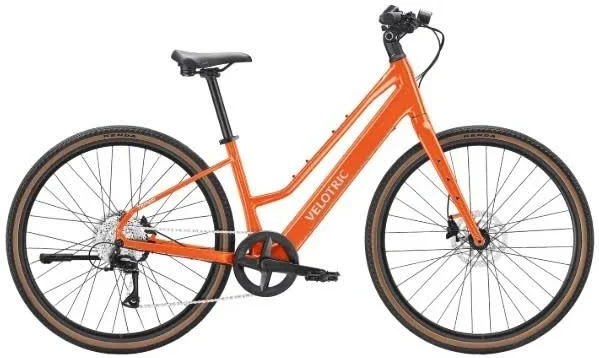
1. Velotric Tempo – Best Overall E-Bike for College Students
Price: $1,499
Weight: 39 pounds; 34 pounds without the battery
Claimed range: Up to 60 miles with pedal assist
Motor: 350W nominal, 650W peak, 45Nm
Battery: Removable and lockable 374Wh battery
Speed: 20 mph default; adjustable from 12 to 28 mph
Maximum load: 330 pounds
The Velotric Tempo is my best overall choice because it combines low weight, a removable battery, a broad rider-fit range, hydraulic brakes, multiple gears, tracking support, and clearly listed electrical safety certifications.
Velotric lists the Tempo at 39 pounds, or 34 pounds without its battery. It uses a 350W rear hub motor that reaches 650W peak output, a 374Wh removable battery, an eight-speed Shimano drivetrain, and Shimano hydraulic disc brakes with 180mm rotors. The manufacturer lists up to 60 miles of pedal-assist range and up to 40 miles when using the throttle.
The Tempo also includes Apple Find My, Android Find Hub, NFC unlocking, a removable thumb throttle, integrated lights, rear turn signals, and Class 1, 2, and 3 settings. Velotric lists both UL 2849 and UL 2271 certification.
Another reason it fits this guide is its sizing. The Tempo is offered in high-step and mid-step frame configurations, with listed rider-height ranges extending from approximately 4 feet 10 inches to 6 feet 4 inches depending on the frame and size.
The primary drawback is that a rack and fenders may add to the final cost. Students must also make sure they select a class and speed setting permitted by their campus.
This is the model I would place first for students who want a lightweight everyday commuter without giving up a removable battery, throttle, gears, strong brakes, or tracking features.
Best for: campus commuting, apartments, moderate hills, students who want a removable battery, shorter riders, tracking features, and manageable weight
Skip it if: you need a folding bike, front suspension, an included cargo rack, or a price below $1,000
Students focused on everyday transportation should also compare it with my Best Commuter E-Bikes guide.
➡️ Read My Velotric Tempo Review
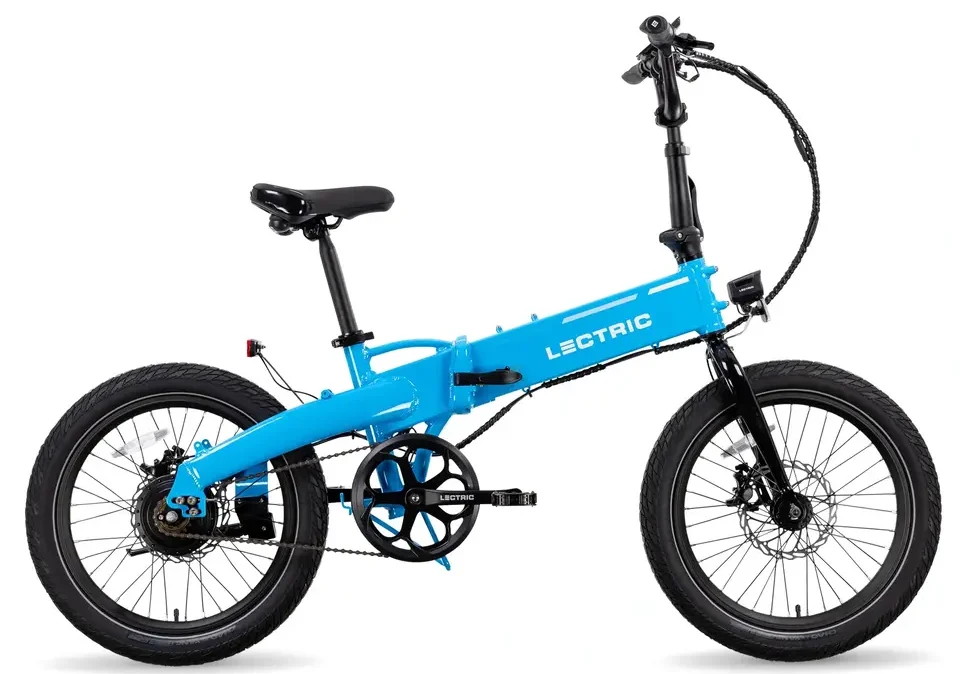
2. Lectric XP Lite 2.0 – Best Budget Folding E-Bike
Starting price: $799
Weight: 49 pounds
Claimed range: Up to 45 miles with the standard battery or 80 miles with the optional long-range battery
Motor: 300W nominal, 819W peak, 28Nm
Battery: 375Wh standard or 672Wh long-range
Speed: 20 mph
Maximum load: 275 pounds
The Lectric XP Lite 2.0 is my budget folding pick for students who need compact storage without moving into the 60- or 70-pound weight range of many fat-tire folders.
Lectric currently lists the standard model at $799 and 49 pounds. It has a 300W rear hub motor with up to 819W peak output, hydraulic disc brakes with 180mm rotors, a half-twist throttle, and Class 1 or Class 2 operation.
The standard 375Wh battery has a manufacturer-claimed range of up to 45 miles. The optional 672Wh long-range battery increases the claim to as much as 80 miles. Lectric lists the e-bike as certified to UL 2849 and both battery options as certified to UL 2271.
The XP Lite 2.0 is designed to fit riders from approximately 4 feet 8 inches to 6 feet 2 inches. Folded dimensions are listed at approximately 36 by 16 by 27 inches.
The standard configuration uses a single-speed drivetrain and cadence sensor. That keeps the bike relatively simple, but it will not feel as natural as a torque-sensor bike and may be less suitable for steep hills.
A rear rack and fenders may be optional rather than standard, so students should calculate the complete accessory cost before ordering.
Best for: strict budgets, folding storage, relatively flat campuses, shorter riders, vehicle transportation, and short daily commutes
Skip it if: you have steep hills, need a high payload capacity, want a torque sensor, or must carry the bike up several flights every day
Students comparing Lectric’s models should also read my Lectric XP Lite 2.0 vs. Lectric XP4 comparison.
➡️ Read My Lectric XP Lite 2.0 Review
3. Ride1Up Roadster V3 – Best Lightweight Sporty Commuter

Starting price: Approximately $1,395, depending on configuration
Weight: About 40 pounds
Claimed range: 20–40 miles
Motor: 500W rear hub motor, 50Nm
Speed: Up to 28 mph pedal assist on the chain-drive version
Maximum load: 300 pounds
The Ride1Up Roadster V3 is one of the best choices for a student who wants an electric commuter that looks and handles more like a traditional city bicycle.
Ride1Up lists it at approximately 40 pounds with a 500W hub motor, 50Nm of torque, an Intui-Drive torque sensor, hydraulic disc brakes, and a claimed range of approximately 20 to 40 miles. It is listed as certified to ANSI/CAN/UL 2849.
Roadster V3 specifications vary by configuration. Ride1Up offers belt-drive and chain-drive options as well as rigid and suspension configurations. The chain model has multiple gears and is listed for pedal assistance up to 28 mph.
Ride1Up also describes its Samsung-cell battery as integrated, lockable, and removable. The torque sensor should provide a smoother and more natural response than a basic cadence-sensor commuter.
The Roadster’s lighter frame makes it more practical for apartments and occasional stairs than a large folding utility bike. However, the sportier riding position and rigid version may feel firm on broken pavement.
Students should review the exact configuration carefully because motor assistance, drivetrain, fork, price, and included equipment can differ.
Best for: lightweight commuting, paved roads, students who prefer a traditional bicycle feel, moderate hills, and sporty riding
Skip it if: you want an upright cruiser position, a very low step-through frame, large included rack, fat tires, or a folding frame
➡️ Read My Ride1Up Roadster V3 Review
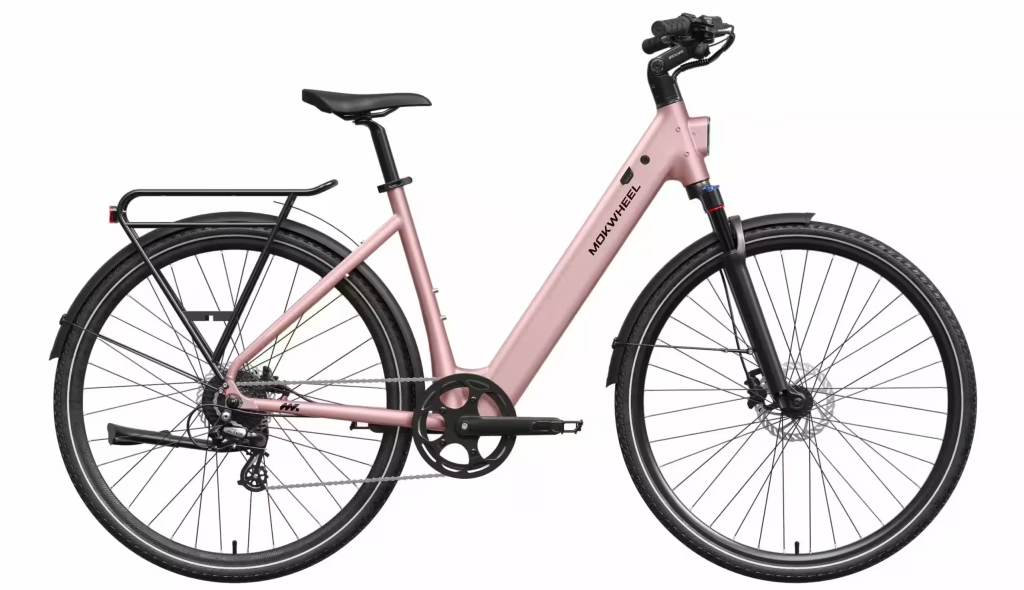
4. Mokwheel FLINT – Best Ultra-Light Campus Commuter
Price: $1,399.99
Listed weight: 36 pounds
Claimed range: 50–70 miles
Motor: 350W nominal, 550W peak, at least 40Nm
Battery: Removable 36V 10Ah battery
Speed: 20 mph pedal assist
Maximum load: 350 pounds for the step-over model
The Mokwheel FLINT stands out because Mokwheel lists it at only 36 pounds while still including a removable battery, eight-speed drivetrain, hydraulic brakes, fenders, and rear rack.
Mokwheel lists a 350W motor with 550W peak output, a torque-and-cadence sensor system, Shimano eight-speed drivetrain, 700-by-45c tires, hydraulic disc brakes, and a claimed range of 50 to 70 miles. The bike is currently listed at $1,399.99, with fenders and a rear rack included.
The removable battery is especially useful for students who have an approved indoor charging location. The 350-pound load rating for the step-over version is also unusually high for such a light commuter. Mokwheel says the step-through version has a lower 300-pound load capacity.
There is an important certification qualification. Mokwheel says the FLINT’s 36V 10Ah battery “complies with UL standards,” but the current product page does not identify a complete-bike UL 2849 certification. I would not describe the full electrical system as UL 2849 certified without model-specific documentation.
Students attending a university that requires specific certification should ask Mokwheel for documentation and confirm whether the campus will accept it before purchasing.
The FLINT is otherwise one of the most campus-friendly models in this guide because of its weight, rack, fenders, gearing, and removable battery.
Best for: stairs, apartments, daily commuting, carrying books or panniers, students who want an included rack and fenders, and riders needing a higher load capacity
Skip it if: your university requires verified complete-system UL 2849 certification, you need suspension, or you want a folding frame
Students prioritizing portability should also compare it with my Best Lightweight Electric Bikes guide.
➡️ Read My Mokwheel Flint Review
5. Urtopia Carbon Fold 2 – Best Lightweight Folding E-Bike

Price: $1,899
Weight: 35 pounds without accessories
Claimed range: Up to 40 miles with the standard battery or up to 95 miles with the optional second battery
Motor: 250W nominal, 500W peak, 42Nm
Battery: Removable 244.8Wh seatpost battery
Speed: 20 mph
Maximum load: 220 pounds
The Urtopia Carbon Fold 2 is the best choice in this guide for students who genuinely need to carry a folding e-bike.
Urtopia lists the Carbon Fold 2 at 35 pounds without accessories. It uses a carbon-fiber frame and fork, an eight-speed drivetrain, torque sensor, Tektro hydraulic disc brakes, 18-by-2-inch tires, and a removable 244.8Wh battery built into the seatpost.
The standard manufacturer range claim is up to 40 miles. An optional second battery raises the combined claim to as much as 95 miles. The optional battery, throttle, rear rack, and hidden AirTag mount should not be described as standard equipment.
Urtopia lists the complete bike as UL 2849 certified and the removable battery as certified to UL 2271. The bike is designed for riders from approximately 5 feet 1 inch to 6 feet 1 inch.
The main limitation is its 220-pound total weight limit. That total needs to account for the rider, clothing, lock, backpack, and any cargo. It will not be appropriate for every student.
The $1,899 price is also much higher than the Lectric XP Lite 2.0, but the difference in carrying weight is substantial. A 35-pound folder is far more realistic for stairs than a 60- or 70-pound folding fat-tire bike.
Best for: students who must carry a folding e-bike, small apartments, vehicle transportation, trains, limited storage, and riders below the total weight limit
Skip it if: the combined rider-and-cargo weight could exceed 220 pounds, you want a standard throttle without buying an accessory, or you need a lower-priced folding bike
Students with limited space should also read my Best Folding E-Bikes for Small Apartments and Dorms guide.
6. Tenways CGO800S – Best Low-Maintenance Comfort E-Bike

Price: $1,699
Weight: 46 pounds
Claimed range: Up to 53 miles
Motor: 350W rear hub motor
Battery: Portable and removable battery
Frame: Step-through
Rider height: Approximately 5 feet 1 inch to 6 feet 3 inches
The Tenways CGO800S is the comfort-focused pick for students who want an upright position, step-through frame, front suspension, and low-maintenance belt drive.
Tenways lists the CGO800S with a 350W rear hub motor, removable 21700-cell battery, magnetic torque sensor, Gates carbon belt drive, and SR Suntour suspension fork. The listed weight is 46 pounds, and the manufacturer claims up to 53 miles of range.
The Gates belt drive is a major benefit for students who do not want to regularly clean and lubricate a chain. The upright position and suspension fork should also make it more comfortable than a rigid, sporty city commuter on damaged campus pavement.
Tenways states that its CGO-series bikes, including the CGO800S, are UL 2849 certified and UL 2271 recognized.
The current U.S. product page lists Pebble Grey and Sky Blue at $1,699 and Midnight Black as sold out. The page also provides an Add to Cart option and says select orders ship from the United States, although its general storefront label displays conflicting sold-out wording. I would describe it as available in select colors and verify inventory before publishing or purchasing.
The single-speed belt drive keeps maintenance low but provides less gearing flexibility than a chain-driven eight-speed bike. Students with steep hills may need to contribute more pedaling effort.
Best for: comfort, shorter riders, upright riding, step-through access, low maintenance, rough pavement, removable battery charging, and flat or moderately hilly campuses
Skip it if: you need multiple gears for steep hills, want the lightest possible bike, require a folding frame, or need a budget model
Students looking for a comfortable daily ride should also compare it with my Best Comfort E-Bikes guide.
Read my full review of the Tenways CGO800S
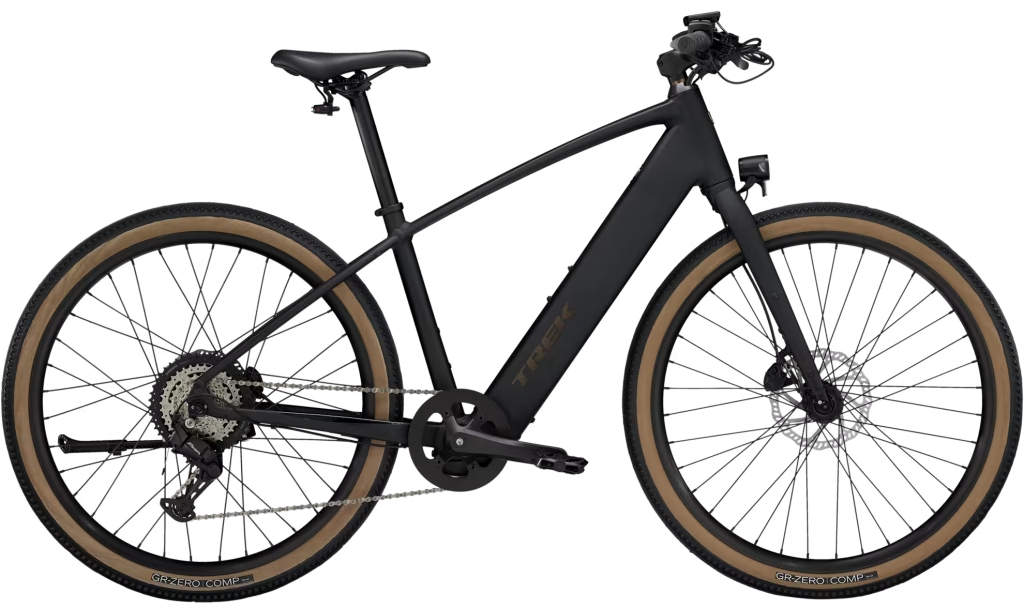
7. Trek FX+ 1 – Best Bike-Shop Commuter
Starting price: Approximately $2,199.99, depending on model and version
Weight: About 49 pounds
Claimed range: Up to 50 miles
Battery: Approximately 520Wh
Torque: Up to 60Nm
Class: Class 2 or Class 2/Class 3 hybrid, depending on version
The Trek FX+ 1 is the option I would consider for a student or parent who values professional assembly, local fitting, test rides, and access to an established bicycle-dealer network.
Trek lists the current FX+ 1 family with up to 50 miles of claimed range, a 520Wh battery, up to 60Nm of torque, and Class 2 or Class 2/Class 3 configurations. A current FX+ 1S listing shows a weight of approximately 48.73 pounds and a starting price of $2,199.99.
The bike includes mounts for racks and fenders, but students should check whether those accessories are included with the exact model or need to be purchased separately. Trek’s Central app supports ride settings, navigation, ride information, and other connected functions.
Trek lists the FX+ 1S electrical system as certified to UL 2849.
The most important advantage is not a particular motor specification. It is the ability to visit a Trek dealer for sizing, assembly, maintenance, and warranty assistance. That may be worth the higher price for a student who does not want to troubleshoot a direct-to-consumer e-bike.
The battery is integrated into the frame, so students need an approved charging location where the entire bicycle can be positioned near an outlet.
Students should also verify the exact e-bike class. A faster version may not be permitted on every campus path.
Best for: local bike-shop support, professional assembly, sizing help, paved commuting, students who prefer an established bicycle brand
Skip it if: you need a removable battery, folding frame, included rack and fenders, or a price below $2,000
8. Retrospec Chatham Rev 3 – Best Budget Comfort E-Bike
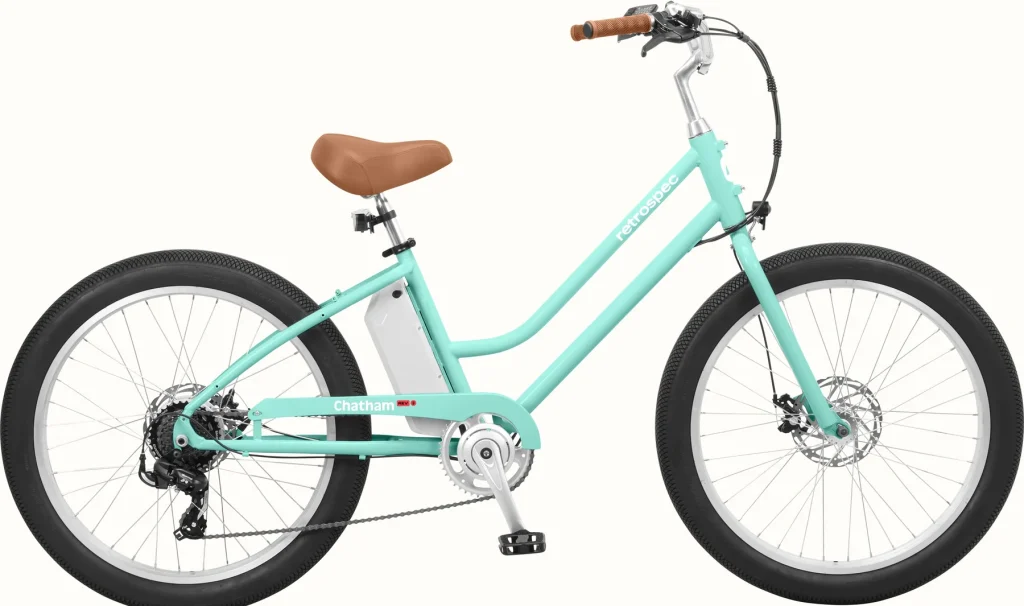
Price: $999.99
Weight: 58 pounds
Claimed range: Up to 42 miles
Motor: 350W
Speed: 20 mph
Recommended total weight limit: 350 pounds, including the bike
The Retrospec Chatham Rev 3 is the more affordable upright comfort option in the guide.
Retrospec lists the Chatham Rev 3 at $999.99 with up to 42 miles of claimed range, a 20 mph top speed, three-inch tires, an upright cruiser position, throttle, integrated headlight, and Tektro mechanical disc brakes.
The manufacturer lists a 58-pound bike weight. Its 350-pound recommended weight limit includes the bike, which means the usable rider-and-cargo allowance is lower than 350 pounds once the bike’s own weight is included.
Retrospec says the bike has been tested and certified to UL 2849 and UL 2271.
The swept-back handlebars and padded cruiser saddle should appeal to students who dislike a forward sporty position. The three-inch tires add cushioning, although this model does not provide the low weight of the Tempo, Roadster V3, FLINT, or Carbon Fold 2.
A basket, rear rack, and fenders are sold separately. This is also not a bike I would recommend carrying up regular stairs.
Best for: upright comfort, ground-floor storage, casual campus riding, relatively flat areas, and students with a budget near $1,000
Skip it if: you must carry the bike upstairs, need hydraulic brakes, want an included rack, or prefer a sporty lightweight commuter
Prefer a more relaxed, upright riding position? Compare additional comfort-focused options in my Best Cruiser E-Bikes guide.
9. Kingbull Literider 2.0 – Best Heavy-Duty Folding E-Bike

Current sale price: Approximately $979
Weight: 71 pounds
Claimed range: Up to 55 miles under ideal conditions
Motor: 750W rear hub motor
Battery: Removable 720Wh battery
Speed: 20 mph default; adjustable up to 28 mph
Maximum load: 400 pounds
Rear-rack capacity: 150 pounds
The Kingbull Literider 2.0 is included for students who need more carrying capacity than most lightweight campus bikes can provide.
Kingbull lists the Literider 2.0 with a 750W hub motor, 720Wh battery, cadence sensor, hydraulic brakes, 20-by-4-inch tires, and front suspension. The bike is configured as Class 2 by default and can be adjusted to Class 3 where permitted. Throttle speed remains limited to 20 mph.
Its 400-pound maximum capacity and 150-pound rear-rack rating make it useful for a larger rider or someone carrying substantial books, groceries, work equipment, or other cargo. Kingbull lists the model as certified to UL 2849.
The major drawback is its 71-pound weight. Although the frame folds, this is not a dorm-stair e-bike. Folding helps reduce its storage footprint, but it does not make the bike easy to lift.
I would only recommend it to students with ground-level storage, an elevator, a garage, or a secure bicycle room. Students should also verify whether a 750W fat-tire Class 2 or Class 3 bike is allowed on their campus.
Best for: larger riders, high payload needs, cargo, rough roads, off-campus apartments, ground-floor storage, and students needing a strong rear rack
Skip it if: you live in an upper-floor walk-up, must carry the bike regularly, ride primarily through crowded pedestrian zones, or want a traditional lightweight bicycle feel
Students who need a higher-capacity bike should also read my Best E-Bikes for Heavy Riders guide.
➡️ Read My Kingbull Literider 2 Review
10. Aventon Level 4 REC – Best Security-Focused E-Bike for Off-Campus Students
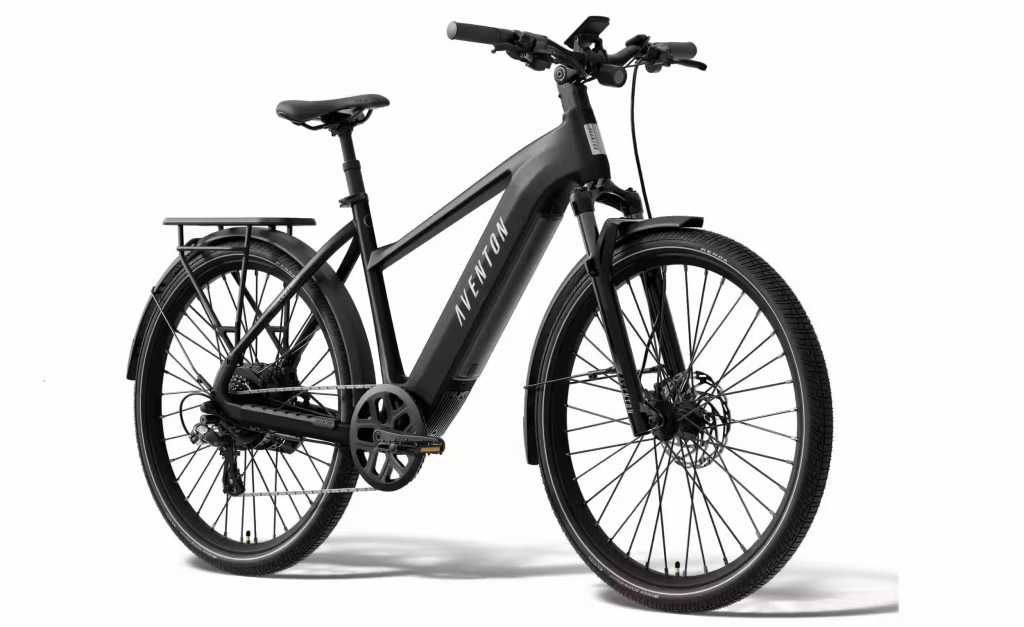
Price: $1,999
Weight: 68.5 pounds
Claimed range: Up to 75 miles
Motor: 750W nominal, 1,188W peak and up to 1,440W in Boost Mode
Battery: Removable 36V 20Ah, 733Wh
Speed: Class 2, convertible to Class 3
Total weight limit: 300 pounds
The Aventon Level 4 REC is the security-focused pick for students who regularly park an e-bike on campus and want more built-in protection than a basic commuter provides.
Aventon lists the Level 4 REC with 4G/GPS connectivity, unusual-activity detection, an alarm, e-lock, remote notifications and an integrated rear-wheel lock. These features do not replace a high-security physical lock, but they provide useful additional protection when a bike must be left at a campus rack.
The Level 4 REC uses a 750W rear hub motor producing 80Nm of torque, with higher output available through Boost Mode. Its removable 733Wh battery has a manufacturer-claimed range of up to 75 miles. It is configured as a Class 2 e-bike and can be converted to Class 3 where permitted.
It also comes well equipped for daily transportation. Aventon includes a rear rack, full fenders, integrated lights, an 80mm suspension fork and a 50mm suspension seatpost. Hydraulic disc brakes, an eight-speed Shimano drivetrain and regenerative braking add to its commuter usefulness. Aventon lists the complete e-bike as UL 2849 certified.
The primary drawback is weight. At 68.5 pounds, the Level 4 REC is not practical for students who must carry their bike into a dorm or up several flights of stairs. It makes much more sense for an off-campus student with ground-floor storage, an elevator, a garage or a secure bicycle room.
Best for: off-campus commuting, regular campus parking, longer rides, carrying books and groceries, students who want GPS and built-in security
Skip it if: you must carry the bike upstairs, need a bike under 50 pounds, have very limited storage or primarily ride through crowded pedestrian areas
Students looking for a full-size daily commuter should also compare it with my Best Commuter E-Bikes guide.
➡️ Read My Aventon Level 4 REC Review
Also Consider: Puckipuppy Doberman
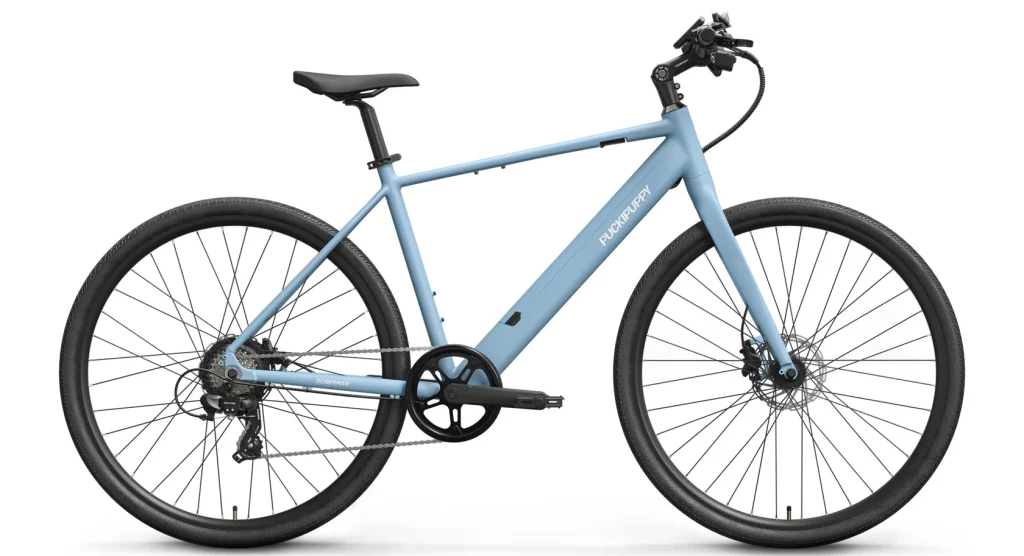
The Puckipuppy Doberman has several specifications that make it relevant for college students, but I would keep it outside the main top 10 until its complete electrical-system certification is finished.
Puckipuppy lists the Doberman at $999.99 with a 42-pound aluminum frame, 350W motor that reaches 600W peak output, torque-and-cadence sensing, hydraulic disc brakes, Shimano seven-speed drivetrain, a claimed range of 45 to 70 miles, and a 350-pound load capacity.
The battery is listed as certified to UL 2271 by SGS. However, Puckipuppy specifically states that UL 2849 certification for the Doberman is still in progress.
That does not automatically make it a bad e-bike. It means the certification status needs to be described accurately.
I would consider moving the Doberman into the main list once Puckipuppy confirms that model-specific UL 2849 certification has been completed.
Best for: budget-conscious students, lighter commuting, taller riders, hydraulic brakes, and a higher load rating
Skip it if: your college requires current UL 2849 certification or you need a low step-through frame
What College Students Should Look for in an E-Bike
Weight
Weight is one of the most important considerations for a student e-bike.
A bike weighing 35 to 45 pounds is usually easier to maneuver through an apartment entrance, elevator, crowded bicycle rack, or storage room than a 65- to 75-pound e-bike.
Students who must use stairs should pay more attention to the complete bike weight than to whether the bike folds. A 71-pound folding bike remains a 71-pound bike after it is folded.
Removable Battery
A removable battery can make charging and storage easier, especially for students who live in apartments or have access to an approved indoor charging area. Removing the battery can also reduce some of the bike’s weight before lifting it.
However, a removable battery does not automatically mean it can be charged inside a dorm. Always check the college’s housing and fire-safety policies first.
Students who prefer this feature can compare more options in my Best E-Bikes With Removable Batteries guide.
Battery Safety and Certification
UL 2849 evaluates the complete e-bike electrical system, including the motor system, battery, and charger. UL 2271 applies specifically to batteries used in light electric vehicles.
A battery can be certified to UL 2271 even when the complete e-bike has not been certified to UL 2849. This distinction matters because some colleges require complete-system certification before allowing an e-bike or battery in campus housing or designated storage areas.
That gives readers the essential warning before the recommendations without delaying the actual bike picks.
Security and Tracking
A student e-bike should have a frame that can be locked directly to a fixed bicycle rack. A removable battery, integrated tracking, NFC lock, or app-based motor lock can provide additional protection.
These features are not replacements for a strong U-lock or chain. Even an e-bike with Apple Find My should be physically secured.
Before taking an e-bike to campus, make sure you have a solid theft-prevention plan. Read my How to Lock and Protect Your E-Bike on Campus guide for practical locking and parking tips, then compare my Best E-Bike Locks to find a strong lock for everyday campus use.
Range
A student riding only two or three miles per day may not need a large battery. A smaller battery can reduce both weight and cost.
A larger battery makes more sense for students who:
- Live several miles off campus
- Commute to a job after class
- Ride in a hilly area
- Carry heavy loads
- Cannot charge every day
- Use the e-bike for most of their transportation
Never plan a commute around the manufacturer’s maximum range. Leave extra capacity for hills, cold weather, wind, detours, and battery aging.
Comfort
Lightweight city e-bikes often use rigid forks and narrower tires. These features reduce weight but may create a firmer ride on cracked pavement.
Students who need a more relaxed riding position may prefer an upright step-through bike such as the Tenways CGO800S or Retrospec Chatham Rev 3.
Service and Assembly
A direct-to-consumer e-bike may provide more equipment for the price, but it can require more assembly and remote troubleshooting.
A Trek or Specialized model may cost more, but local dealer assembly, test rides, sizing assistance, and repair support can be valuable for students who do not have tools or mechanical experience.
Are Folding E-Bikes Better for College Students?
Folding e-bikes can be useful, but only when the student has a specific reason to need the folding frame.
A folding bike may help with:
- Fitting the bike into a vehicle
- Reducing its footprint in an approved storage room
- Taking it home during school breaks
- Using public transportation
- Storing it in a small apartment
- Moving it through narrow doorways
However, folding does not mean lightweight.
The Urtopia Carbon Fold 2 weighs approximately 35 pounds, which makes it a realistic carrying option for some students. The Lectric XP Lite 2.0 weighs 49 pounds and may be manageable for occasional lifting.
The Kingbull Literider 2.0 weighs 71 pounds. Its frame folds, but most students will not want to carry it up stairs.
For students who must lift the bike frequently, actual weight is more important than whether the frame folds.
E-Bike Battery Safety for College Students
The U.S. Consumer Product Safety Commission advises owners to use only the charger supplied or recommended by the manufacturer, remain present while charging, and never charge a micromobility product while sleeping or away from home.
Students should also:
- Follow all university charging rules
- Never block a hallway, stairway, or exit
- Avoid universal or unapproved chargers
- Stop using a battery that is swollen, leaking, unusually hot, or damaged
- Allow a hot battery to cool before charging
- Keep the battery and charger dry
- Avoid modifying or rebuilding the battery
- Unplug the charger when charging is complete
- Have crash-damaged batteries inspected
- Use only manufacturer-approved replacement batteries
A certified electrical system reduces risk, but no lithium-ion battery should be treated carelessly.
How to Protect an E-Bike From Theft on Campus
A college student should have a complete security plan before riding an expensive e-bike to campus.
At minimum, I recommend:
- A high-quality U-lock or hardened chain
- A second lock for the other wheel
- Locking the frame directly to an approved fixed rack
- Removing the battery when practical and permitted
- Recording the frame serial number
- Registering the bike with campus police when available
- Keeping the receipt and current photographs
- Using Apple Find My, Android Find Hub, an AirTag, or a GPS tracker
- Avoiding isolated overnight parking
- Removing quick-release accessories
- Considering separate e-bike insurance
Tracking technology can help locate a stolen bike, but it cannot physically prevent the theft.
Essential E-Bike Gear (Quick Picks)
Before you choose your e-bike, these are the accessories most riders end up needing for safety and everyday use:
FAQs
Many colleges permit at least some e-bikes, but rules vary by school. Universities may restrict e-bike classes, throttles, speeds, parking locations, storage, charging, or access to certain campus paths.
Check the school’s current transportation, housing, and fire-safety policies before purchasing.
It depends on the university. Some schools prohibit e-bikes and similar devices inside residence halls. Others may allow certain bicycles or certified batteries under specific conditions.
Do not assume a folding frame or removable battery makes indoor storage permissible.
A student riding only a few miles per day may be comfortable with 20 to 30 miles of dependable range. A larger battery makes more sense for students who commute from farther away, work after class, face steep hills, or cannot charge every day.
Always leave extra capacity rather than relying on the maximum advertised figure.
A Class 3 e-bike may be useful for a longer road commute, but its 28 mph assisted speed may be unnecessary or prohibited in crowded campus areas.
Some universities restrict Class 3 models, limit speed, or permit only pedal-assist operation on specific paths. Confirm the rules and operate the bike at a speed appropriate for pedestrians and conditions.
Some universities require recognized certification, while others do not explicitly address it.
Even when it is not required, UL 2849 electrical-system certification and UL 2271 battery certification are important safety considerations.
The Urtopia Carbon Fold 2 and Mokwheel FLINT are the lightest models in this guide, at manufacturer-listed weights of approximately 35 and 36 pounds.
The Velotric Tempo and Ride1Up Roadster V3 are also relatively manageable at approximately 39 and 40 pounds.
The Lectric XP Lite 2.0 is my best budget folding choice at a starting price of $799.
The Retrospec Chatham Rev 3 provides an upright comfort option around $1,000, while the Puckipuppy Doberman is a promising lightweight alternative with the certification qualification explained above.
For a normal paved commute, I would start with the Velotric Tempo, Ride1Up Roadster V3, or Trek FX+ 1.
A larger student or someone carrying substantial cargo may benefit from the Kingbull Literider 2.0, provided there is ground-level storage.
A removable battery is usually more convenient because it allows charging separately from the bike and reduces lifting weight.
However, the student must still follow campus rules. Some schools prohibit bringing an e-bike battery inside even when it is removed from the bicycle.
Insurance requirements depend on state law, local law, and how the vehicle is classified.
Separate insurance may still be worth considering for theft and damage. Homeowners or renters insurance can have deductibles, coverage limits, and exclusions that reduce how much would be paid after a loss.
My Take
For most college students, I would prioritize weight, battery safety, security, and storage before motor power.
The Velotric Tempo offers the strongest overall combination of manageable weight, removable battery, tracking, hydraulic brakes, multiple frame sizes, and current certification disclosures.
The Lectric XP Lite 2.0 is the best starting point for a student who needs an affordable folding e-bike. The Urtopia Carbon Fold 2 is considerably more expensive, but it is the better option for someone who must regularly carry a folding bike.
The Mokwheel FLINT has excellent campus specifications, especially its 36-pound listed weight, included rack, removable battery, and high load capacity. However, I would verify its exact certification documentation if the school requires UL 2849.
The Tenways CGO800S is the model I would choose for a student who wants a more comfortable upright position and low-maintenance belt drive.
The Kingbull Literider 2.0 should only be considered when its high capacity is genuinely needed. It is too heavy for normal dorm stairs, despite having a folding frame.
No matter which model you choose, check campus storage and charging policies before placing an order. The best e-bike on paper will not be practical if the student has nowhere permitted to charge or secure it.
Disclosure: As an Amazon Associate, I earn from qualifying purchases. This comes at no extra cost to you and helps support the content on this site.

Kristina is not just an enthusiast but a true authority on electric bikes. Nestled in the coastal beauty of Virginia, Kristina has found the perfect backdrop for her passion for electric biking. As a dedicated wife and homeschooling mom, her life revolves around family, faith, and the thrill of adventure.
Originally hailing from Ohio, Kristina's journey with electric bikes began as a curiosity and quickly evolved into a deep expertise. Her blog is a testament to her love for electric biking, combining her fascination for eco-friendly transportation with her coastal lifestyle.
When she's not cruising the beach on her electric bike, you'll find Kristina indulging in her other loves: long walks along the shore, getting lost in a good book, and cherishing moments with her loved ones. With a heart as big as her love for animals, especially cats, Kristina brings a unique perspective to the electric bike world, grounded in her strong faith in God and her dedication to a sustainable lifestyle.
Through her blog, Kristina shares her extensive knowledge of electric bikes, offering valuable insights, tips, and recommendations to fellow enthusiasts. Whether you're a seasoned rider or a newcomer to the electric bike scene, Kristina's blog is your go-to source for all things electric biking, fueled by her passion, expertise, and the scenic beauty of coastal Virginia.