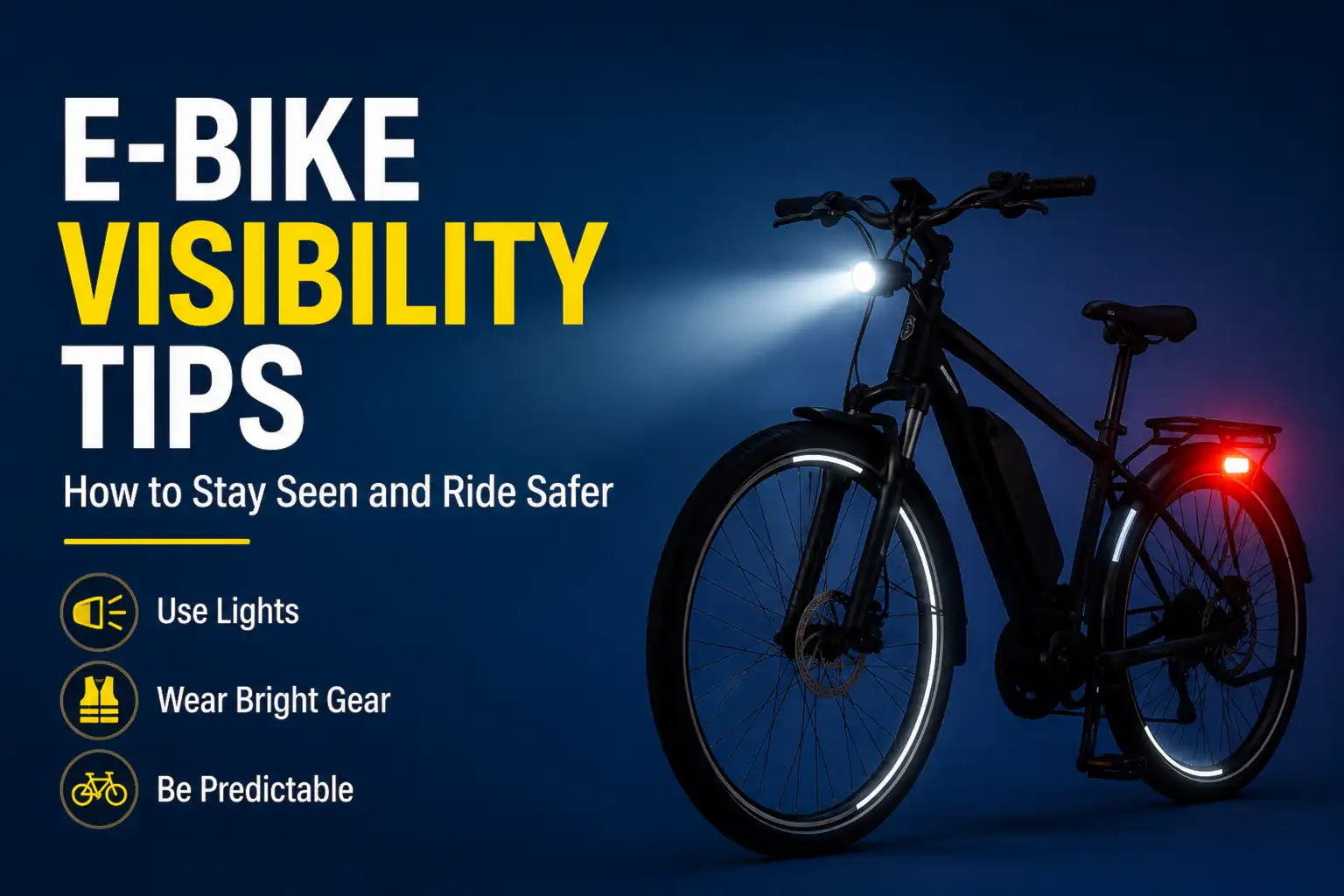
E-Bike Visibility Tips: How to Stay Seen and Ride Safer
Last Updated on June 3, 2026 by Kristina
Disclosure: As an Amazon Associate, I earn from qualifying purchases. This comes at no extra cost to you and helps support the content on this site.
If you’ve spent any amount of time riding an e-bike, you’ve probably had a moment where a driver seemed not to see you. I’ve had vehicles pull out unexpectedly, drift into bike lanes, or turn across my path. Most drivers aren’t trying to be careless. The reality is that e-bike visibility is one of the most important factors in staying safe on the road.
Whether you ride for commuting, recreation, errands, or fitness, improving your visibility can help reduce your chances of being involved in a crash.
In this guide, I’ll cover practical e-bike visibility tips, common mistakes riders make, visibility gear worth considering, and simple habits that can help you stay visible during the day, at night, and in challenging weather conditions.
Before heading out, I also recommend reviewing our State-by-State E-Bike Laws Guide, and How Far Does It Take an E-Bike to Stop? guide to better understand the factors that affect rider safety.
Who This Guide Is For (and Who It’s Not)
This guide is for you if:
- You ride on roads with vehicle traffic
- You commute on your e-bike
- You ride at dawn, dusk, or night
- You want to improve your overall e-bike safety
- You ride in rain, fog, or low-light conditions
- You want drivers to notice you sooner
This guide is not for you if:
- You only ride on private property
- You never ride near vehicles or pedestrians
- You are looking for e-bike repair or maintenance advice
Why E-Bike Visibility Matters
One of the biggest misconceptions I hear is:
“I can see the cars, so they can see me.”
Unfortunately, that isn’t always true.
According to the National Highway Traffic Safety Administration (NHTSA), many bicycle crashes occur because drivers fail to notice cyclists before turning, changing lanes, or entering intersections.
E-bike riders can be especially vulnerable because:
- E-bikes often travel faster than traditional bicycles
- Drivers may misjudge an e-bike’s speed
- Riders have a smaller profile than vehicles
- Poor lighting conditions reduce visibility
- Drivers may not expect a bicycle to be moving as quickly as an e-bike
The goal isn’t just to see the road.
The goal is to be seen.
✅ Before Every Ride: Quick Visibility Checklist
Before heading out, I recommend doing a quick visibility check:
- Front light working
- Rear light working
- Reflective gear visible
- Bright clothing when possible
- Helmet secured
- Battery charged
- Turn signals functioning (if equipped)
- Route planned
- Mirrors adjusted
These checks only take a minute and can significantly improve safety.
The Best E-Bike Visibility Tips for Everyday Riding
Use Front and Rear Lights Even During the Day
Many riders assume lights are only necessary at night.
I strongly disagree.
Modern daytime running lights can dramatically improve visibility in traffic.
For maximum visibility:
- Use a white front light
- Use a red rear light
- Keep lights on during daylight hours
- Use flashing modes where legal
Many newer commuter e-bikes include integrated lighting systems, but I still recommend checking brightness levels regularly.
Related Reading: Best Commuter E-Bikes for Daily Riding
Wear Bright or High-Visibility Clothing
Dark clothing can make riders surprisingly difficult to see.
Bright colors help drivers recognize you sooner.
Good choices include:
- Neon yellow
- Lime green
- Orange
- Bright red
- Reflective materials
If you frequently ride early in the morning or after sunset, consider a reflective vest or reflective jacket.
The goal isn’t to make a fashion statement.
The goal is to get noticed.
Add Reflective Gear to Your Bike
Reflective materials work differently than lights.
Instead of producing light, they reflect vehicle headlights back toward drivers.
Helpful additions include:
- Reflective wheel strips
- Reflective tire sidewalls
- Reflective pedals
- Reflective spoke clips
- Reflective frame stickers
Even small reflective additions can significantly improve nighttime visibility.
Position Yourself Where Drivers Can See You
Visibility isn’t just about gear.
It’s also about lane positioning.
Avoid riding:
- In vehicle blind spots
- Too close to parked cars
- Hidden behind larger vehicles
- Along areas blocked by obstacles
Instead:
- Ride predictably
- Stay visible within your lane position
- Signal your intentions clearly
- Confirm drivers have noticed you before crossing in front of them when possible
Many crashes occur because a driver never actually saw the cyclist.
How to Stay Visible at Intersections
Intersections are one of the most common locations for bicycle and e-bike crashes.
Drivers may be:
- Looking for cars instead of cyclists
- Turning without noticing riders
- Misjudging an e-bike’s speed
When approaching intersections:
- Slow slightly
- Prepare for sudden turns
- Avoid riding beside vehicles that may turn across your path
- Use lights even during the day
- Position yourself where drivers can see you
Personally, I become extra cautious at intersections because even bright lights cannot guarantee a driver has seen me.
Don’t Forget Side Visibility
Many riders focus on front and rear visibility but overlook side visibility.
This can be especially dangerous at:
- Intersections
- Driveways
- Parking lot exits
- Side streets
Drivers approaching from the side may only see your profile.
Helpful upgrades include:
- Reflective wheel strips
- Reflective sidewall tires
- Spoke reflectors
- Wheel lights
- Frame lighting
Side visibility becomes even more important after dark.
Visibility Tips for Riding at Night
Night riding requires additional precautions.
Use Brighter Lights Than You Think You Need
Light output depends on where you ride.
General recommendations:
- Urban areas with streetlights: 300-600 lumens
- Dark roads or trails: 800-1,500+ lumens
A brighter light not only helps others see you but also helps you spot hazards sooner.
Add Multiple Light Sources
One light is good.
Multiple lights are better.
Consider:
- Helmet-mounted lights
- Wheel lights
- Frame lights
- Backpack safety lights
Multiple light points make it easier for drivers to recognize you as a rider.
Keep Your Lights Charged
A dead light provides zero visibility.
Before every ride:
- Check battery levels
- Carry charging cables when possible
- Keep backup lights available
This is especially important if you rely on rechargeable lighting systems.
How to Stay Visible in Rain, Fog, and Bad Weather
Bad weather can dramatically reduce visibility.
In rain, fog, or mist:
- Turn lights on immediately
- Wear reflective gear
- Slow down
- Increase following distances
- Assume drivers have reduced visibility
Bright clothing becomes even more important during poor weather conditions.
You may feel visible, but drivers could be struggling to see through rain, fog, glare, or windshield reflections.
Related Reading: Can an E-bike Get Wet?
Does Helmet Color Make a Difference?
Many riders never think about helmet color.
While helmet color alone won’t prevent accidents, brighter helmets can help riders stand out in traffic.
Good choices include:
- White helmets
- Fluorescent yellow helmets
- Bright orange helmets
- Helmets with reflective elements
The more visible your upper body and head are, the easier it can be for drivers to notice you.
Visibility by Riding Condition
| Riding Condition | Recommended Visibility Setup |
|---|---|
| Bright Daylight | Front light, rear light, bright clothing |
| Dawn or Dusk | Lights, reflective gear, bright clothing |
| Night Riding | High-output lights, reflectors, helmet light |
| Rain | Lights, reflective clothing, slower speeds |
| Fog | Lights, reflective gear, extra caution |
Common Visibility Mistakes E-Bike Riders Make
Assuming Drivers See You
Never assume.
Always ride defensively.
Even if you have lights, reflective gear, and bright clothing, some drivers may still overlook you.
Riding Without Lights During Dawn or Dusk
Many riders underestimate how difficult it is to see cyclists during sunrise and sunset.
These transition periods often create challenging lighting conditions.
Wearing All Black at Night
Black jackets, black helmets, and black backpacks may look great, but they can significantly reduce visibility after dark.
Failing to Signal Turns
Hand signals help drivers understand your intentions.
Predictability is one of the most important aspects of visibility.
Improve Your Visibility Before Your Next Ride
Many visibility upgrades cost less than a tank of gas and can make a significant difference in helping drivers notice you sooner.
Consider adding:
➡️ A bright front light for daytime and nighttime riding
➡️ A powerful rear light with daytime flash mode
➡️ Reflective ankle bands or a reflective vest
➡️ A helmet with integrated lights and turn signals
➡️ Bar-end or rear-view mirrors to improve awareness
➡️ Reflective wheel or frame decals
→ You can also check out our guides to Best E-Bike Lights, Best E-Bike Mirrors, and Must-Have E-Bike Accessories
Visibility Is About Being Predictable
One of the biggest lessons I’ve learned from years of cycling and researching e-bike safety is this:
Visibility isn’t just about brightness.
It’s about predictability.
Drivers are more likely to notice riders who:
- Ride consistently
- Signal clearly
- Follow traffic laws
- Position themselves visibly
- Avoid sudden movements
The easier you are to understand, the easier you are to see.
Why I Take Visibility Seriously
I’ve researched hundreds of e-bike accidents, safety studies, rider reports, and traffic laws while building Electric Bike Explorer.
One common theme appears again and again:
Many crashes happen because a driver simply never saw the rider.
That’s why I consider visibility upgrades among the most important and affordable safety improvements any e-bike rider can make.
You don’t need a new bike to become safer.
Often, a good light, reflective gear, and smarter riding habits can make a meaningful difference.
How We Evaluated Visibility Recommendations
This guide was created using information from bicycle safety organizations, transportation agencies, cycling visibility research, and official roadway safety recommendations.
We reviewed guidance from the National Highway Traffic Safety Administration, Federal Highway Administration, bicycle advocacy organizations, and transportation safety resources to identify visibility practices that can help e-bike riders reduce risk and improve safety.
Our goal is to provide practical, research-backed information that everyday riders can actually use.
FAQs
In many situations, yes. Flashing lights often attract attention more effectively during the day.
Some areas restrict flashing front lights or have specific lighting requirements, so always check local regulations.
Both have advantages.
Flashing lights often attract attention during daylight hours, while steady lights can help drivers judge distance more accurately at night.
Absolutely.
Daytime running lights can help drivers notice you sooner and improve visibility in traffic.
Yes.
Reflective materials provide additional visibility when illuminated by vehicle headlights.
Bright colors generally provide the most benefit during daylight, while reflective materials become more effective when illuminated by headlights.
Bright fluorescent yellow, lime green, and orange are generally among the most visible colors during daylight conditions.
No.
As long as your lights are properly aimed and not blinding other road users, increased visibility is generally beneficial.
Helmet lights can improve visibility and help illuminate where you’re looking, especially during night riding.
If I could only choose one, it would be a quality rear light used both day and night.
Final Thoughts
Improving your e-bike visibility doesn’t require expensive upgrades.
Simple changes like using daytime lights, wearing brighter clothing, adding reflective gear, improving side visibility, and positioning yourself where drivers can easily see you can make a significant difference.
Personally, I treat visibility as one of the easiest safety upgrades any rider can make. The more noticeable you are, the more time drivers have to react, and that extra time can make all the difference.
If you’re building a complete safety setup, I also recommend reading:
➡️ How Far Does It Take an E-Bike to Stop?
➡️ State-by-State E-Bike Laws Guide
Stay safe, ride predictably, and make sure you’re seen.
External Sources
National Highway Traffic Safety Administration (NHTSA)
https://www.nhtsa.gov/road-safety/bicycle-safety
Federal Highway Administration Bicycle Safety Resources
https://highways.dot.gov/safety/pedestrian-bicyclist
League of American Bicyclists
https://bikeleague.org
National Safety Council Bicycle Safety
https://www.nsc.org/safety-first-for-road-users/bicycle-safety

Kristina is not just an enthusiast but a true authority on electric bikes. Nestled in the coastal beauty of Virginia, Kristina has found the perfect backdrop for her passion for electric biking. As a dedicated wife and homeschooling mom, her life revolves around family, faith, and the thrill of adventure.
Originally hailing from Ohio, Kristina's journey with electric bikes began as a curiosity and quickly evolved into a deep expertise. Her blog is a testament to her love for electric biking, combining her fascination for eco-friendly transportation with her coastal lifestyle.
When she's not cruising the beach on her electric bike, you'll find Kristina indulging in her other loves: long walks along the shore, getting lost in a good book, and cherishing moments with her loved ones. With a heart as big as her love for animals, especially cats, Kristina brings a unique perspective to the electric bike world, grounded in her strong faith in God and her dedication to a sustainable lifestyle.
Through her blog, Kristina shares her extensive knowledge of electric bikes, offering valuable insights, tips, and recommendations to fellow enthusiasts. Whether you're a seasoned rider or a newcomer to the electric bike scene, Kristina's blog is your go-to source for all things electric biking, fueled by her passion, expertise, and the scenic beauty of coastal Virginia.