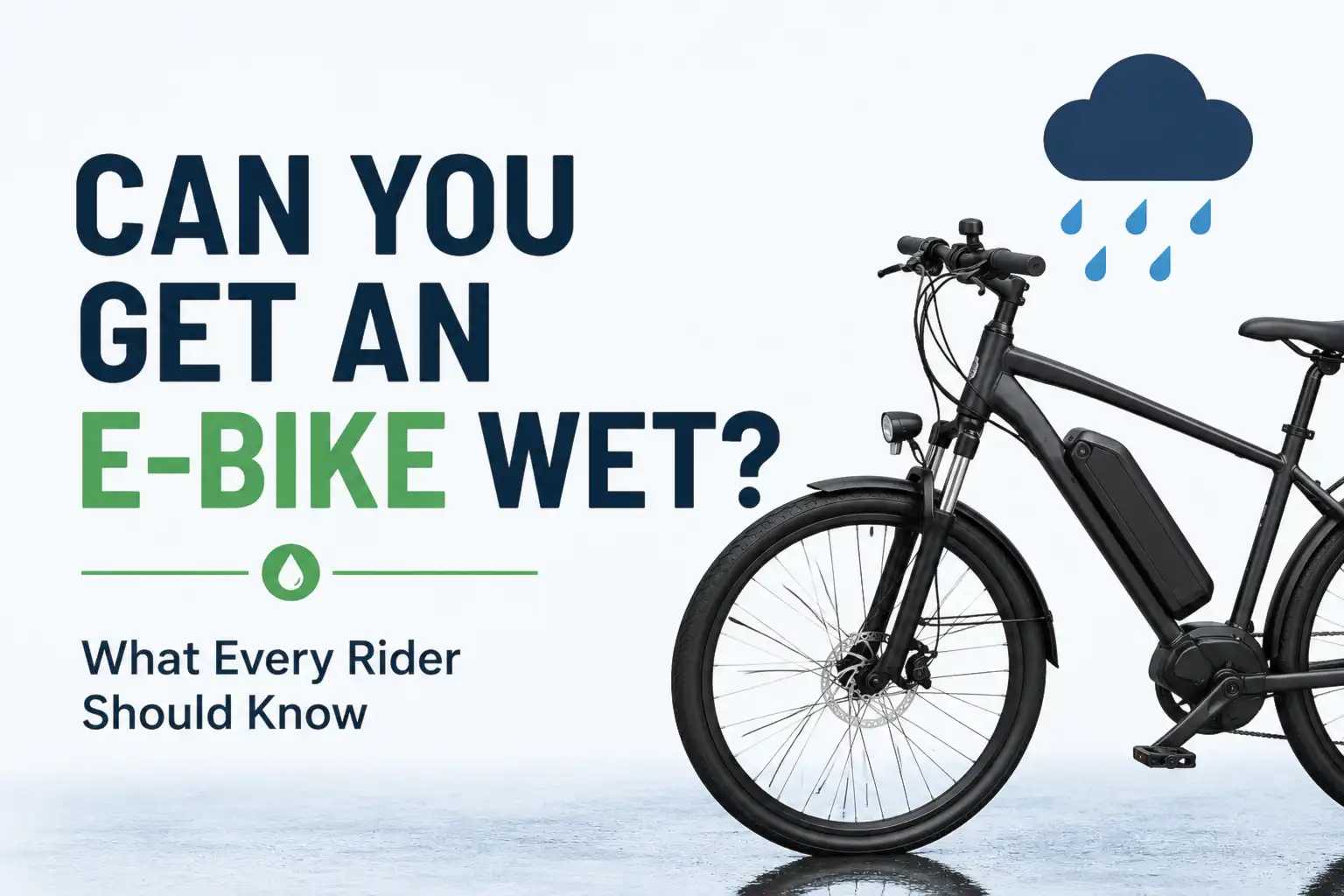
Can You Get an E-Bike Wet? What Every Rider Should Know About Riding in Rain and Wet Conditions
Last Updated on September 13, 2026 by Kristina
If you’ve ever been caught in a sudden rainstorm while riding, you’ve probably wondered:
Can an e-bike get wet?
The good news is that most modern electric bikes are designed to handle some exposure to water. Riding through light rain, wet roads, and occasional puddles is usually not a problem.
However, there is a big difference between getting an e-bike wet and soaking an e-bike with excessive water exposure.
Understanding that difference can help prevent expensive battery, motor, display, and wiring damage.
➡️ New to e-bikes? Start with our E-Bike Buying Guide to learn how electric bikes work and what features matter most.
➡️ Wondering how long your battery should last? Read our guide on How Long Do E-Bike Batteries Last?
➡️ Concerned about battery health? Check out our Battery Health Checker Tool.
How This Guide Helps You
This guide explains what happens when an e-bike gets wet, how modern batteries and motors are protected, what types of water exposure are generally safe, and how to prevent costly damage from rain, flooding, improper cleaning, and long-term moisture exposure.
Who This Guide Is For (and Who It’s Not)
This Guide Is For:
- Riders who commute in rainy weather
- Anyone storing an e-bike outdoors
- New e-bike owners concerned about water damage
- Riders who regularly encounter puddles and wet roads
- Anyone wondering if e-bike batteries are waterproof
This Guide May Not Be For:
- Riders looking for information about motorcycles or e-motos
- People repairing severe flood-damaged e-bikes
- Riders with submerged batteries or electronics that already stopped working
Can an E-Bike Get Wet?
Yes.
Most e-bikes can safely handle:
- Light rain
- Moderate rain
- Wet pavement
- Road spray
- Small puddles
- Morning dew
Manufacturers know riders will encounter weather. Modern e-bikes typically include sealed electrical connectors, protected wiring, weather-resistant displays, and battery casings designed to withstand normal outdoor use.
What e-bikes are generally not designed for is:
- Deep water crossings
- Flood conditions
- Pressure washing
- Extended submersion
- High-pressure water sprayed directly into electrical components
Most e-bikes are designed to be water-resistant, not fully waterproof. They can handle rain and wet roads, but prolonged exposure to water can still damage electrical components.
How Water Resistant Are E-Bikes?
Many quality electric bikes use components that meet various IP (Ingress Protection) ratings.
These ratings indicate how well electronic components resist dust and water.
| Rating | Protection Level |
|---|---|
| IPX4 | Splash resistant |
| IPX5 | Water jets from low pressure |
| IPX6 | Strong water spray |
| IPX7 | Temporary immersion |
| IP67 | Dustproof and temporary immersion |
Many e-bike systems from Bosch, Shimano, Yamaha, Brose, and Bafang are designed to handle rain and wet-weather riding.
However, it’s important to remember that a battery may have one IP rating while the display, motor, or connectors have different ratings. Manufacturers rarely provide a single waterproof rating for the entire e-bike.
That is why it is important to follow your manufacturer’s recommendations.
Is It Safe to Ride an E-Bike in the Rain?
In most cases, yes.
I ride year-round and have been caught in unexpected rain more than once. Most riders will eventually encounter wet weather.
The electrical systems on modern e-bikes are generally protected well enough to handle normal rain exposure.
That said, wet riding creates other concerns:
- Reduced braking performance
- Lower tire traction
- Longer stopping distances
- Slippery painted road markings
- Reduced visibility
In my opinion, these safety concerns are often a bigger risk than water damaging the bike itself.
➡️ You may also find our guide on How Far Does It Take an E-Bike to Stop? helpful.
➡️ If your brakes feel weak in wet conditions, see Why Are My E-Bike Brakes Not Stopping Well?
Can an E-Bike Battery Get Wet?
Yes, within reason.
Most e-bike batteries are housed in sealed enclosures designed to resist rain and splashing water.
You can typically ride in wet conditions without damaging the battery.
However, you should avoid:
- Submerging the battery
- Leaving battery terminals exposed
- Charging a wet battery
- Storing a battery in standing water
If your battery becomes wet:
- Remove it if possible.
- Dry the exterior.
- Inspect charging ports.
- Allow everything to dry before charging.
Never connect a charger to a battery that appears wet around the charging port.
Can an E-Bike Motor Get Wet?
Yes.
Hub motors and mid-drive motors are designed for outdoor use and generally tolerate rain and road spray very well.
Whether you ride a:
- Hub-drive e-bike
- Mid-drive e-bike
- Fat tire e-bike
- Commuter e-bike
the motor should handle ordinary wet-weather riding.
Problems typically occur when:
- Water enters through damaged seals
- The bike is submerged
- Bearings become contaminated
- Water remains trapped inside for long periods
Normal rain exposure is rarely an issue for a healthy motor.
Can You Ride Through Puddles?
Usually yes, but use common sense.
Small puddles are generally harmless.
Deep puddles can be risky because you may not know:
- How deep the water is
- What obstacles are underneath
- Whether water could reach sensitive electrical components
A good rule is to avoid any puddle deep enough to reach the motor housing, battery area, or electrical connectors.
When in doubt, go around it.
Can You Ride an E-Bike Through Flood Water?
No.
Flood water presents risks that go far beyond ordinary rain.
Flood water may contain:
- Dirt
- Salt
- Oil
- Chemicals
- Debris
- Hidden road hazards
Even if the bike appears fine afterward, contaminated water can accelerate corrosion and damage bearings, connectors, sensors, and electronics.
As a general rule, if water approaches the motor housing or battery area, avoid riding through it.
What Happens If an E-Bike Gets Too Wet?
Excessive water exposure can lead to:
Corrosion
Moisture can slowly corrode:
- Battery terminals
- Connectors
- Wiring
- Charging ports
Display Problems
Water intrusion can sometimes cause:
- Flickering screens
- Display errors
- Unresponsive buttons
Sensor Issues
Speed sensors, brake sensors, and pedal-assist sensors may malfunction if water enters damaged connectors.
Battery Problems
Water contamination can create charging issues or electrical faults.
Bearing Damage
Repeated exposure without proper maintenance can lead to premature bearing wear.
What If Your E-Bike Gets Soaked?
If your e-bike is exposed to heavy rain or excessive water:
- Turn the bike off.
- Remove the battery if possible.
- Dry visible moisture.
- Leave the bike in a dry, ventilated area.
- Allow several hours of drying time.
- Inspect charging ports and connectors.
- Do not charge the battery until everything is dry.
If the bike was submerged, contact the manufacturer or a qualified e-bike technician before riding.
Can You Leave an E-Bike Outside in the Rain?
Occasionally? Usually yes.
Permanently? Not recommended.
Repeated exposure to:
- Rain
- UV sunlight
- Humidity
- Temperature changes
- Salt air near coastal areas
can shorten the lifespan of batteries, displays, wiring, and metal components.
A garage, shed, covered porch, or quality bike cover is always the better option.
As someone who lives near the coast, I’ve seen how moisture and salty air can affect metal components over time, even when a bike isn’t being ridden.
Examples of E-Bikes Commonly Used in Wet Conditions
Many riders regularly use commuter e-bikes in rainy regions without issues.
Examples include:
- Aventon commuter models
- Lectric folding e-bikes
- Velotric commuter bikes
- Ride1Up commuter bikes
- Bikes equipped with Bosch drive systems
That doesn’t mean these bikes are waterproof. It simply shows that modern e-bikes are designed to handle everyday weather when properly maintained.
How to Protect an E-Bike From Water Damage
Dry Your Bike After Wet Rides
One of the simplest things you can do is wipe down your bike after riding in rain.
Pay special attention to:
- Battery contacts
- Charging ports
- Display area
- Electrical connectors
Store Your E-Bike Under Cover
Whenever possible:
- Keep it indoors
- Use a garage
- Store under a covered porch
- Use a quality bike cover
Reducing long-term exposure helps prevent corrosion.
Inspect Connectors Regularly
Look for:
- Cracked seals
- Loose plugs
- Corrosion
- Damaged wiring
Catching small issues early can prevent larger repairs later.
Keep Charging Ports Clean
Always close protective charging-port covers when not charging.
These small rubber covers play an important role in keeping water out.
Wet Roads, Road Salt, and Corrosion
Road salt can often be more damaging than rain itself.
If you ride during winter:
- Rinse off salt residue using low-pressure water.
- Dry the bike thoroughly.
- Lubricate the chain regularly.
- Inspect electrical connectors more frequently.
Salt can accelerate corrosion and shorten the life of metal and electrical components if left unattended.
➡️ See our Winter E-Bikes Guide for additional cold-weather riding tips.
Can You Wash an E-Bike?
Yes, but carefully.
The safest method is:
- Low-pressure garden hose
- Damp cloth
- Soft brush
- Mild soap
Avoid:
- Pressure washers
- High-pressure spray nozzles
- Direct spray into bearings
- Direct spray into displays
- Direct spray into charging ports
High-pressure water can force moisture past seals that would otherwise keep water out.
Many manufacturers specifically warn against pressure washing electric bikes.
E-Bike Water Myth vs Fact
| Myth | Fact |
|---|---|
| E-bikes cannot get wet. | Most e-bikes can safely handle rain and wet roads. |
| A waterproof battery means the whole bike is waterproof. | Different components may have different protection levels. |
| Pressure washing is safe. | Pressure washers can force water into bearings and electronics. |
| Riding in rain ruins batteries. | Normal rain exposure rarely damages a healthy battery. |
Signs Water May Have Damaged Your E-Bike
Watch for:
- Display won’t turn on
- Battery won’t charge
- Random power loss
- Error codes
- Flickering display
- Corrosion around connectors
- Unusual motor noises
If these symptoms appear after heavy rain or water exposure, stop riding until the issue is diagnosed.
Did your lights stop working after rain or washing? If your headlight, taillight, brake light, or turn signals are dead, flickering, or cutting out after water exposure, use my E-Bike Lights Not Working troubleshooting guide to narrow down the problem safely.
➡️ Try our E-Bike Troubleshooting Tool.
➡️ You may also find Why Won’t My E-Bike Turn On? helpful.
Common Mistakes Riders Make Around Water
Leaving the Bike Outside Constantly
Rain itself often isn’t the issue.
Weeks or months of repeated moisture exposure can create problems.
Charging a Wet Battery
Always allow charging ports to dry completely first.
Using a Pressure Washer
This is one of the fastest ways to force water into sensitive components.
Ignoring Corrosion
Small amounts of corrosion often become larger electrical problems over time.
🔎 How We Researched This Guide
This guide was created using manufacturer documentation from major e-bike system providers, bicycle maintenance best practices, rider experiences, and weather-resistance information from battery and motor manufacturers.
We reviewed guidance from Bosch eBike Systems, Shimano, PeopleForBikes, and consumer safety resources to better understand how modern e-bikes are designed to handle rain, moisture, and wet-weather riding. We also considered common maintenance recommendations used by experienced commuters and year-round riders.
FAQs
Most e-bikes can survive being left in the rain occasionally, but it is not something I recommend as a regular habit. Repeated exposure to rain, humidity, and temperature changes can increase corrosion and shorten the lifespan of batteries, displays, connectors, and other components. Whenever possible, store your e-bike indoors or under a covered area.
Most quality e-bikes can handle heavy rain for short periods, but visibility, traction, and braking performance become bigger concerns than the electrical system itself. If riding in heavy rain, reduce your speed, increase following distance, and inspect the bike afterward for moisture around charging ports and connectors.
Most e-bike batteries are water-resistant rather than fully waterproof. They are designed to handle rain and splashing water but are not intended to be submerged. Always dry the battery and charging port before charging if they become wet.
Yes, a low-pressure garden hose is generally safe for cleaning most e-bikes. Avoid high-pressure spray and never use a pressure washer, as high-pressure water can force moisture into bearings, electrical connectors, displays, and motor housings.
If your e-bike is submerged, turn it off immediately and remove the battery if possible. Do not attempt to charge or ride the bike. Allow it to dry completely and have it inspected by a qualified e-bike technician before using it again.
Small puddles are usually not a problem. The risk increases when water becomes deep enough to reach the motor, battery, or electrical connectors. Deep puddles can also hide potholes and debris that may damage the bike.
Normal rain exposure rarely damages a healthy e-bike motor. Most hub motors and mid-drive motors are designed for outdoor use. Problems are more likely to occur if water enters through damaged seals or if the motor is submerged.
Rain itself does not significantly reduce battery range. However, colder temperatures often accompany wet weather, and cold batteries can temporarily deliver less range. Wet roads may also increase rolling resistance slightly.
You should not charge an e-bike battery until the charging port and battery are completely dry. Charging a wet battery can increase the risk of electrical problems and may damage the battery or charger.
It depends on the manufacturer and the circumstances. Normal riding in rain is generally considered expected use, but damage caused by flooding, submersion, improper cleaning, or neglect may not be covered. Always review your manufacturer’s warranty terms for specific details.
Yes. Salt water is far more corrosive than fresh water and can damage connectors, wiring, bearings, and metal components. If your e-bike is exposed to salt water or ocean spray, rinse it with fresh water using low pressure, dry it thoroughly, and inspect it regularly for signs of corrosion.
Generally, a higher IP rating indicates greater protection against water and dust. However, an e-bike consists of multiple components, and the overall bike is only as water-resistant as its least-protected part. Always look at the ratings and guidance for the battery, motor, display, and other electronics individually.
Final Thoughts: Can an E-Bike Get Wet?
Yes, most e-bikes can safely get wet during normal riding conditions.
Rain, wet roads, and occasional puddles are part of everyday riding and are generally not a problem for a properly maintained electric bike.
The real dangers come from excessive water exposure, deep flooding, pressure washing, and poor long-term storage practices.
In my experience, the best approach is simple:
Ride in the rain if you need to, dry the bike afterward, keep connectors protected, and avoid treating your e-bike like a submarine.
With basic care, most quality e-bikes can handle wet conditions for many years.
Not sure where to go next?
Some riders are brand new. Others are fixing a problem or thinking about a new bike. Choose what fits you.
Learn & Get Comfortable
Understand how e-bikes work and what to expect when riding.
Improve Your Current Ride
If your bike isn’t performing how you want, learn what affects speed, range, and power.
Compare Better Bikes
Looking for something that fits your riding style? Start here.
- Best Electric Bikes for Beginners
- Recommended Commuter Ebikes
- Most Comfortable City E-Bikes
- Best Fat Tire Ebikes
- Top Folding Ebikes
- Best Step Through Ebikes
- Top Cargo Electric Bikes
- Best Lightweight Ebikes
- Best Long Range Ebikes
- Top Moped Style E-Bikes
- E-bike Reviews
🛒 Ready to Buy?
Top picks and current availability from trusted brands.
👉 Still deciding?
Take our E-Bike Recommendation Quiz to get matched with the right riding style in under two minute
External Sources
Bosch eBike Systems
https://www.bosch-ebike.com
Shimano E-Bike Systems
https://bike.shimano.com
PeopleForBikes
https://www.peopleforbikes.org
U.S. Consumer Product Safety Commission
https://www.cpsc.gov

Kristina is not just an enthusiast but a true authority on electric bikes. Nestled in the coastal beauty of Virginia, Kristina has found the perfect backdrop for her passion for electric biking. As a dedicated wife and homeschooling mom, her life revolves around family, faith, and the thrill of adventure.
Originally hailing from Ohio, Kristina's journey with electric bikes began as a curiosity and quickly evolved into a deep expertise. Her blog is a testament to her love for electric biking, combining her fascination for eco-friendly transportation with her coastal lifestyle.
When she's not cruising the beach on her electric bike, you'll find Kristina indulging in her other loves: long walks along the shore, getting lost in a good book, and cherishing moments with her loved ones. With a heart as big as her love for animals, especially cats, Kristina brings a unique perspective to the electric bike world, grounded in her strong faith in God and her dedication to a sustainable lifestyle.
Through her blog, Kristina shares her extensive knowledge of electric bikes, offering valuable insights, tips, and recommendations to fellow enthusiasts. Whether you're a seasoned rider or a newcomer to the electric bike scene, Kristina's blog is your go-to source for all things electric biking, fueled by her passion, expertise, and the scenic beauty of coastal Virginia.